Blog

  • National Fajita Day – August 18th

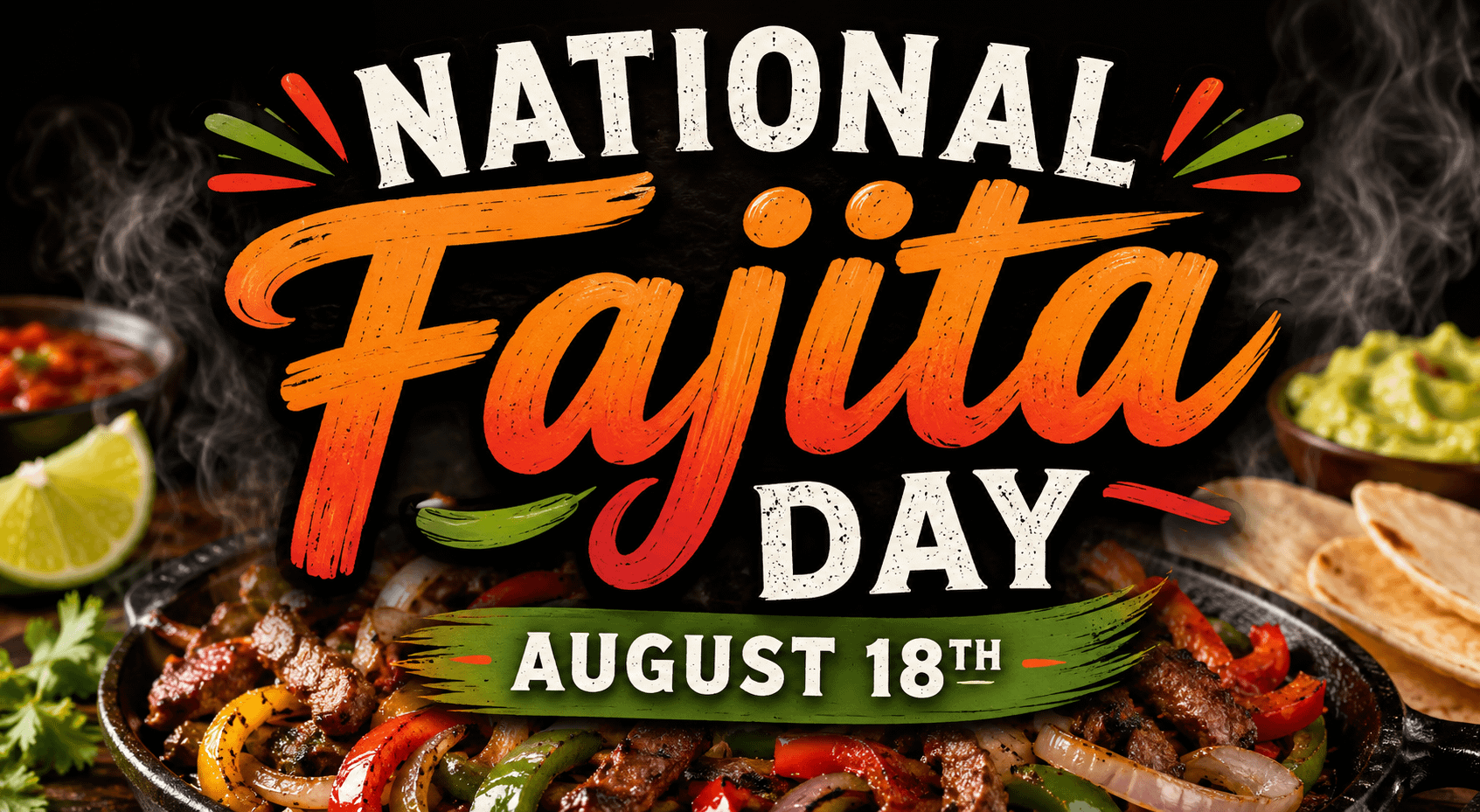
    National Fajita Day – August 18th

    Every year on August 18th, food lovers have a delicious reason to heat up the skillet, fire up the grill, warm the tortillas, and pile on the toppings for National Fajita Day.

    There are plenty of foods that taste amazing, but fajitas offer something extra: an experience.

    You often hear fajitas before you see them.

    That unmistakable sizzle travels through the restaurant as a hot skillet loaded with seasoned meat, peppers, and onions makes its way toward the table. Then comes the aroma—a mouthwatering combination of grilled meat, caramelized onions, roasted peppers, spices, and fresh lime.

    By the time the platter reaches the table, everyone nearby is paying attention.

    That’s part of the magic of fajitas.

    They’re colorful, customizable, flavorful, interactive, and perfect for sharing. Whether you love classic steak fajitas, chicken, shrimp, vegetables, or a massive combination platter, August 18th is the perfect day to celebrate one of the most recognizable dishes in Tex-Mex cuisine.

    What Is National Fajita Day?

    National Fajita Day is celebrated annually on August 18th as a day dedicated to enjoying and appreciating fajitas.

    It’s an opportunity to celebrate everything that makes this dish special—from its ranching roots and bold seasonings to the dramatic sizzling presentation that helped make fajitas a restaurant favorite.

    For some people, celebrating might mean visiting their favorite Mexican or Tex-Mex restaurant.

    For others, it means gathering friends and family around the backyard grill.

    And for home cooks, it’s the perfect excuse to pull out the cast-iron skillet and experiment with different proteins, vegetables, marinades, seasonings, tortillas, sauces, and toppings.

    However you celebrate, the centerpiece is the same:

    A hot, flavorful plate of fajitas.

    What Exactly Are Fajitas?

    Modern fajitas generally consist of strips of grilled or seared meat served with sautéed or grilled peppers and onions.

    Instead of arriving already wrapped in tortillas, the components are usually served separately.

    A typical fajita meal may include:

    • Seasoned steak, chicken, shrimp, or another protein
    • Grilled onions
    • Bell peppers
    • Warm flour or corn tortillas
    • Shredded cheese
    • Sour cream
    • Guacamole
    • Salsa
    • Pico de gallo
    • Fresh cilantro
    • Jalapeños
    • Lime wedges
    • Rice
    • Beans

    Everyone at the table can then build their own fajita.

    That customization is a big part of the appeal.

    One person might want steak, cheese, sour cream, and salsa.

    Someone else may pile on peppers, onions, guacamole, jalapeños, and cilantro.

    Another person might skip the meat entirely and create a vegetable-packed fajita.

    There really isn’t one single way to enjoy them.

    Where Did Fajitas Come From?

    The history of fajitas is closely connected to Mexican-American ranching culture in Texas.

    The word fajita is connected to the Spanish word faja, meaning a belt, sash, band, or strip. In food terminology, the name became associated with strips of meat and particularly with skirt steak.

    Historically, skirt steak wasn’t considered one of the premium cuts of beef.

    But ranch workers understood that tougher cuts could become incredibly flavorful when prepared correctly.

    Marinating, grilling over high heat, and slicing the meat thinly across the grain could transform skirt steak into something tender, smoky, juicy, and satisfying.

    What began as practical ranch cooking eventually became part of a much larger culinary tradition.

    Over time, fajitas moved beyond ranches, backyard gatherings, festivals, and regional cookouts and began appearing more prominently on restaurant menus.

    From Ranch Food to Restaurant Favorite

    One of the fascinating things about fajitas is how dramatically their reputation changed.

    A meal associated with an inexpensive cut of beef eventually became something people eagerly ordered in restaurants.

    Restaurants also discovered that fajitas had a major advantage:

    They advertised themselves.

    Think about what happens when someone orders fajitas in a busy restaurant.

    A server walks through the dining room carrying a sizzling skillet.

    People hear it.

    They smell it.

    They see the steam rising from the peppers and onions.

    Heads turn.

    Someone at another table inevitably wonders what just went by.

    The presentation creates excitement before the first bite is even taken.

    That combination of flavor and theater helped fajitas become a standout menu item.

    Why Do Fajitas Sizzle?

    The sizzling skillet has become one of the most recognizable parts of the fajita experience.

    Restaurants frequently serve fajitas on extremely hot cast-iron or metal platters. When the hot meat, vegetables, juices, or sauces hit the heated surface, they create the dramatic sizzling effect.

    The sound isn’t necessary for fajitas to taste delicious, of course.

    But it certainly makes them memorable.

    The sizzling presentation engages multiple senses at once.

    You hear the food.

    You smell the food.

    You see the steam.

    Then you taste it.

    Few dishes make such an entrance.

    Why Are Fajitas So Popular?

    There isn’t just one reason fajitas have remained popular.

    They’re Customizable

    Everyone can build their own meal.

    You control the protein, vegetables, toppings, sauces, and level of heat.

    They’re Great for Sharing

    A large platter of fajitas naturally works well as a communal meal.

    They’re Colorful

    Red, yellow, orange, and green peppers create a vibrant presentation.

    They’re Flavorful

    Chili powder, cumin, garlic, paprika, lime, grilled onions, and smoky meat create layers of flavor.

    They Can Be Simple or Elaborate

    A basic chicken-and-pepper fajita can be prepared fairly quickly, while a large fajita feast can include multiple proteins and an entire table filled with toppings.

    They Work for Many Occasions

    Fajitas are equally at home during a weeknight dinner, family gathering, backyard cookout, birthday celebration, game-day party, or restaurant meal.

    Classic Steak Fajitas

    When talking about traditional fajitas, steak deserves special attention.

    Skirt steak is strongly associated with classic fajitas because of its rich beef flavor.

    Flank steak is another popular option.

    A good steak fajita marinade might include:

    • Fresh lime juice
    • Olive oil
    • Garlic
    • Chili powder
    • Ground cumin
    • Paprika
    • Oregano
    • Salt
    • Black pepper
    • Fresh cilantro

    The steak can be marinated before being cooked over high heat.

    After cooking, allowing the steak to rest briefly helps preserve its juices.

    Then comes one of the most important steps:

    Slice against the grain.

    Cutting across the visible muscle fibers shortens them, making the steak easier to chew.

    Chicken Fajitas

    Chicken fajitas are another enormously popular option.

    Boneless chicken breasts work well, but chicken thighs can provide additional richness and moisture.

    Chicken pairs beautifully with classic fajita seasonings, including cumin, chili powder, paprika, garlic, oregano, pepper, and lime.

    The chicken can be grilled whole and sliced afterward or cut into strips before cooking.

    Either method can produce delicious results.

    Shrimp Fajitas

    Seafood lovers don’t have to miss the celebration.

    Shrimp fajitas provide a lighter alternative while still delivering plenty of flavor.

    Shrimp cooks quickly, making it especially convenient for busy weeknight dinners.

    Season the shrimp with chili powder, cumin, garlic, paprika, lime, salt, and pepper before quickly cooking it over high heat.

    Be careful not to overcook shrimp, as it can become rubbery.

    Pair it with charred peppers and onions for a colorful fajita platter.

    Vegetable Fajitas

    Fajitas don’t need meat to be satisfying.

    A vegetable fajita platter can include:

    • Bell peppers
    • Red onions
    • Mushrooms
    • Zucchini
    • Yellow squash
    • Corn
    • Tomatoes
    • Poblano peppers
    • Jalapeños
    • Black beans

    Mushrooms are especially useful because their savory flavor and meaty texture work beautifully with traditional fajita spices.

    Add guacamole, salsa, beans, and fresh lime, and you’ve got a satisfying meal filled with color and flavor.

    Combination Fajitas: Why Choose Just One?

    Sometimes choosing between steak, chicken, and shrimp is simply too difficult.

    That’s where combination fajitas come in.

    A large sizzling platter featuring multiple proteins is especially good when you’re sharing with friends or family.

    You might combine:

    Steak + Chicken

    Chicken + Shrimp

    Steak + Shrimp

    Or go all out with:

    Steak + Chicken + Shrimp

    Add several varieties of peppers and plenty of grilled onions, and you’ve created a fajita feast.

    The Importance of Peppers and Onions

    The meat might receive most of the attention, but fajitas wouldn’t be the same without peppers and onions.

    Bell peppers provide sweetness, crunch, color, and a slightly smoky flavor when cooked over high heat.

    Using multiple colors makes the dish especially appealing.

    Try combining:

    • Green bell peppers
    • Red bell peppers
    • Yellow bell peppers
    • Orange bell peppers

    Onions develop natural sweetness as they cook.

    The goal is usually to soften the vegetables while allowing them to develop browned or lightly charred edges.

    You don’t necessarily want them completely soft.

    A little texture makes each bite more interesting.

    Homemade Fajita Seasoning

    You don’t need a packet to make flavorful fajitas.

    A simple homemade seasoning mixture can include:

    • 2 teaspoons chili powder
    • 1 teaspoon ground cumin
    • 1 teaspoon paprika
    • 1 teaspoon garlic powder
    • ½ teaspoon onion powder
    • ½ teaspoon dried oregano
    • ½ teaspoon salt
    • ¼ teaspoon black pepper
    • Pinch of cayenne pepper, optional

    Adjust the quantities according to your preferences.

    Love heat?

    Add more cayenne or crushed red pepper.

    Prefer smoky flavors?

    Try smoked paprika.

    Love garlic?

    Add a little extra.

    That’s another advantage of cooking fajitas at home—you control everything.

    Easy Homemade Chicken Fajitas

    Want to celebrate National Fajita Day without leaving home?

    Try this simple version.

    Ingredients

    • 1½ pounds boneless chicken breasts or thighs
    • 3 bell peppers, sliced
    • 1 large onion, sliced
    • 2 tablespoons olive oil
    • 2 teaspoons chili powder
    • 1 teaspoon cumin
    • 1 teaspoon paprika
    • 1 teaspoon garlic powder
    • ½ teaspoon onion powder
    • ½ teaspoon oregano
    • Salt and pepper to taste
    • Juice of 1 fresh lime
    • 8–10 tortillas
    • Shredded cheese
    • Sour cream
    • Guacamole
    • Salsa or pico de gallo
    • Fresh cilantro
    • Lime wedges

    Instructions

    Step 1: Prepare the Chicken

    Slice the chicken into strips of roughly similar size so they cook evenly.

    Combine the chicken with chili powder, cumin, paprika, garlic powder, onion powder, oregano, salt, pepper, lime juice, and approximately one tablespoon of olive oil.

    Toss until thoroughly coated.

    Step 2: Heat Your Skillet

    Place a large cast-iron skillet or heavy pan over medium-high heat.

    Allow the skillet to become hot before adding the chicken.

    Step 3: Cook the Chicken

    Add the seasoned chicken to the skillet.

    Cook until browned on the outside and safely cooked through.

    Transfer it to a plate.

    Step 4: Cook the Vegetables

    Add the remaining olive oil if necessary.

    Add sliced peppers and onions.

    Cook over relatively high heat, stirring occasionally, until the vegetables become tender while developing browned edges.

    Step 5: Bring Everything Together

    Return the chicken to the skillet.

    Toss it with the peppers and onions until everything is hot.

    Add another squeeze of lime if desired.

    Step 6: Warm the Tortillas

    Warm tortillas individually in a dry skillet or wrap several together and gently warm them.

    Warm tortillas are softer, more flexible, and less likely to tear.

    Step 7: Build Your Fajitas

    Fill each tortilla with chicken, peppers, and onions.

    Then add your favorite toppings.

    Create the Ultimate Fajita Bar

    One of the best ways to celebrate National Fajita Day is by inviting people over and creating a build-your-own fajita bar.

    Instead of deciding what everyone wants, simply provide plenty of choices.

    Proteins

    Offer one or several:

    • Steak
    • Chicken
    • Shrimp
    • Seasoned vegetables

    Vegetables

    Prepare:

    • Grilled onions
    • Green peppers
    • Red peppers
    • Yellow peppers
    • Mushrooms
    • Corn
    • Jalapeños

    Toppings

    Set out bowls containing:

    • Shredded cheese
    • Sour cream
    • Guacamole
    • Pico de gallo
    • Salsa
    • Queso
    • Lettuce
    • Tomatoes
    • Cilantro
    • Green onions
    • Pickled onions
    • Jalapeños
    • Hot sauce
    • Lime wedges

    Tortillas

    Offer both flour and corn tortillas so guests can choose their favorite.

    Then let everyone build their own creation.

    It’s casual, interactive, and ideal for entertaining.

    Flour Tortillas or Corn Tortillas?

    This can be a serious debate among fajita fans.

    Flour tortillas are soft, flexible, and commonly associated with Tex-Mex-style fajitas. They tend to hold larger portions of meat, vegetables, and toppings without breaking.

    Corn tortillas provide their own distinctive flavor and can be an excellent alternative.

    There’s no reason you can’t serve both.

    After all, National Fajita Day should be about enjoying fajitas the way you like them.

    Don’t Forget the Guacamole

    Fajitas and guacamole make an excellent combination.

    The cool, creamy avocado balances the smoky heat of grilled meat and peppers.

    A basic guacamole can be made with:

    • Ripe avocados
    • Lime juice
    • Salt
    • Diced onion
    • Tomato
    • Cilantro
    • Jalapeño

    Mash everything together and serve immediately.

    If you prefer something simple, avocado, lime, and salt alone can still create a delicious topping.

    Salsa Makes Everything Better

    The right salsa can completely change the personality of your fajitas.

    Try:

    • Fresh pico de gallo
    • Roasted tomato salsa
    • Salsa verde
    • Corn salsa
    • Mango salsa
    • Pineapple salsa
    • Chipotle salsa
    • Spicy habanero salsa

    Sweet fruit-based salsas can be particularly good with shrimp or chicken fajitas.

    Side Dishes for Your Fajita Feast

    Fajitas can easily become the centerpiece of an impressive dinner.

    Complete your National Fajita Day meal with:

    • Mexican-style rice
    • Cilantro-lime rice
    • Refried beans
    • Black beans
    • Chips and salsa
    • Chips and queso
    • Guacamole
    • Street-corn-inspired sides
    • Fresh salad
    • Grilled vegetables
    • Tortilla soup

    For dessert, something cool and refreshing can provide a nice contrast to the spicy meal.

    What to Drink With Fajitas

    A bold, spicy meal deserves a refreshing drink.

    For adults who consume alcohol, classic choices might include margaritas or Mexican-style beer.

    Alcohol-free options can be just as refreshing.

    Try:

    • Lime sparkling water
    • Watermelon agua fresca
    • Horchata
    • Strawberry lemonade
    • Mango lemonade
    • Pineapple limeade
    • Cucumber-lime water
    • Virgin margaritas

    Citrus flavors work particularly well because their brightness complements grilled meat and spicy seasonings.

    Turn Leftover Fajitas Into Another Meal

    If you somehow end National Fajita Day with leftovers, don’t waste them.

    Leftover fajita meat, peppers, and onions are extremely versatile.

    Use them to make:

    Fajita Quesadillas

    Add leftovers and cheese between tortillas and cook until golden and crispy.

    Fajita Nachos

    Spread tortilla chips on a baking sheet, add fajita leftovers and cheese, then bake until melted.

    Fajita Breakfast Scramble

    Combine leftover meat and vegetables with scrambled eggs.

    Fajita Salad

    Place leftovers over lettuce with tomatoes, avocado, corn, beans, salsa, and lime.

    Fajita Burritos

    Add rice, beans, cheese, and leftovers to a large tortilla.

    Fajita Pizza

    Use chopped fajita meat, peppers, and onions as pizza toppings.

    One fajita dinner can easily become several different meals.

    How to Make Fajitas Healthier

    Fajitas can also be adjusted to fit different eating goals.

    Use lean chicken or shrimp as your protein.

    Load up on vegetables.

    Choose smaller tortillas.

    Use avocado instead of large amounts of sour cream.

    Add fresh salsa for flavor.

    Serve fajita ingredients over lettuce for a fajita salad.

    Or create a fajita bowl with rice, beans, grilled vegetables, protein, salsa, and avocado.

    The beauty of fajitas is their flexibility.

    Fajitas for Breakfast? Absolutely.

    National Fajita Day doesn’t have to wait until dinner.

    Transform leftover fajita ingredients into breakfast.

    Cook peppers, onions, and steak or chicken in a skillet, then add eggs.

    Top everything with cheese, avocado, salsa, and cilantro.

    Serve the mixture inside tortillas for breakfast fajitas, or pile everything over crispy breakfast potatoes.

    Host a National Fajita Day Party

    August is a great time for outdoor cooking, making National Fajita Day a perfect excuse for a backyard gathering.

    Set up the grill.

    Prepare several proteins.

    Cook large batches of peppers and onions.

    Create a topping station.

    Put cold beverages on ice.

    Play some music.

    Then let everyone build their own fajitas.

    You can even encourage guests to bring their favorite salsa, topping, or side dish.

    The meal becomes more than dinner—it becomes a social experience.

    Make National Fajita Day a Family Tradition

    Food traditions don’t have to revolve only around major holidays.

    Smaller celebrations can become some of the most memorable family traditions.

    National Fajita Day could become your annual:

    • Backyard fajita cookout
    • Family dinner night
    • Build-your-own fajita competition
    • New salsa tasting night
    • Favorite Mexican restaurant visit
    • Homemade guacamole challenge

    Take pictures each year and watch the tradition grow.

    Sometimes the simplest celebrations create the best memories.

    Fun Fajita Facts

    Here are a few fun things to remember while celebrating:

    Fajitas are strongly connected with skirt steak.
    Although today’s fajitas can include almost any protein, skirt steak is closely tied to the dish’s history.

    The name relates to strips or bands.
    The term traces back to faja, a Spanish word associated with a belt, sash, or strip.

    The sizzling platter became part of the experience.
    Modern restaurant fajitas are famous not just for their flavor but for their dramatic arrival.

    Fajitas are endlessly customizable.
    Traditional steak is only the beginning. Chicken, shrimp, vegetables, and creative combinations have expanded the category tremendously.

    They’re perfect for groups.
    Few meals make sharing and customization as easy as a large platter of fajitas surrounded by tortillas and toppings.

    More Ways to Celebrate National Fajita Day

    Need even more reasons to join the celebration?

    Try making your own fajita seasoning instead of buying a packet.

    Experiment with homemade tortillas.

    Try a new salsa recipe.

    Grill the fajitas outdoors.

    Visit a local Mexican or Tex-Mex restaurant you’ve never tried.

    Invite friends over for a fajita party.

    Make steak fajitas for lunch and shrimp fajitas for dinner.

    Create vegetarian fajitas using mushrooms and zucchini.

    Try breakfast fajitas the next morning with the leftovers.

    And, of course, share your National Fajita Day meal with friends and family.

    Fajitas Bring People Together

    Some foods are naturally social.

    Fajitas are one of them.

    When a sizzling skillet arrives in the center of a table, everyone starts reaching for tortillas and passing toppings around.

    “Can you pass the salsa?”

    “Who wants guacamole?”

    “Are there more tortillas?”

    “Who took the last piece of steak?”

    Those small interactions are part of what makes sharing food special.

    Meals provide opportunities to slow down, sit together, talk, laugh, reconnect, and make memories.

    National Fajita Day may sound like a simple food celebration—and it certainly can be—but it can also be another reason to gather around the table with people you care about.

    Celebrate the Sizzle on August 18th

    National Fajita Day on August 18th celebrates much more than meat, peppers, onions, and tortillas.

    It celebrates a dish shaped by regional cooking traditions that eventually became one of the most recognizable meals in Tex-Mex cuisine.

    It celebrates the transformation of simple ingredients into something incredibly flavorful.

    It celebrates creativity because no two fajita plates have to look exactly alike.

    And perhaps most importantly, it celebrates a meal that is simply fun to eat.

    You can keep things traditional with skirt steak, peppers, onions, and warm flour tortillas.

    You can make chicken fajitas loaded with guacamole.

    You can prepare sizzling shrimp with fresh lime.

    You can skip the meat and create a colorful vegetable feast.

    Or you can put steak, chicken, shrimp, peppers, onions, cheese, salsa, sour cream, and guacamole on the table and let everyone decide for themselves.

    However you build yours, make August 18th delicious.

    Fire up the grill.

    Heat the skillet.

    Slice the peppers.

    Caramelize the onions.

    Warm the tortillas.

    Prepare the salsa.

    Mash the avocados.

    Gather your friends and family.

    And when that skillet starts sizzling, you’ll know the celebration has officially begun.

    Happy National Fajita Day!

    Read More Holidays & National Days
  • National Ice Cream Pie Day – August 18th

    National Ice Cream Pie Day – August 18th

    National Ice Cream Pie Day: Celebrate August 18 With a Cool and Creamy Dessert

    Every year on August 18, dessert lovers have an especially delicious reason to reach into the freezer and celebrate National Ice Cream Pie Day.

    Few desserts capture the feeling of summer quite like ice cream, and few desserts feel as comforting and celebratory as pie. Put the two together, and you get a frozen treat that delivers the best of both worlds: a crunchy or chewy crust filled with smooth, creamy ice cream and finished with all the toppings you can imagine.

    Chocolate sauce? Absolutely.

    Whipped cream? Of course.

    Crushed cookies? Pile them on.

    Fresh strawberries? Even better.

    National Ice Cream Pie Day is all about having fun with dessert. Whether you make an elaborate homemade creation or pick up a ready-made pie from your favorite ice cream shop, August 18 is the perfect opportunity to enjoy a cold slice of something sweet.

    And because ice cream pie can be customized in so many different ways, there is a version for almost everyone.

    What Is National Ice Cream Pie Day?

    National Ice Cream Pie Day is observed annually on August 18 and celebrates the frozen dessert known as ice cream pie.

    Although the origins and creator of the food holiday aren’t widely documented, the celebration has become another fun opportunity to enjoy one of America’s favorite summertime treats.

    At its simplest, an ice cream pie consists of a pie crust filled with ice cream and frozen until firm.

    But simple doesn’t have to mean boring.

    Modern ice cream pies can include multiple layers of ice cream, fudge, caramel, fruit, cookies, brownies, candy, nuts, whipped cream, sprinkles, and countless other ingredients.

    That flexibility is part of what makes ice cream pie so much fun.

    What Exactly Is an Ice Cream Pie?

    Imagine taking everything you love about an ice cream sundae and turning it into a dessert you can cut into slices.

    That’s essentially an ice cream pie.

    The crust forms the base and provides texture, while ice cream becomes the filling. Once frozen, the pie can be decorated and served much like a traditional pie.

    Popular crust choices include:

    • Graham crackers
    • Chocolate sandwich cookies
    • Vanilla wafers
    • Chocolate chip cookies
    • Brownies
    • Pretzels
    • Shortbread cookies
    • Peanut butter cookies

    Then comes the most important decision: the ice cream.

    Vanilla, chocolate, strawberry, cookies and cream, mint chocolate chip, rocky road, butter pecan, coffee, cookie dough, peanut butter cup, caramel—the possibilities seem endless.

    You can use one flavor or create layers with two or three different varieties.

    Add toppings, freeze everything together, and you’ve created a dessert that looks impressive without necessarily requiring complicated baking skills.

    Ice Cream and Pie: Two Classics Become One

    Part of the appeal of ice cream pie comes from combining two desserts that have long been associated with celebrations.

    Pie has been served at family dinners, holidays, community gatherings, and celebrations for generations.

    Ice cream carries its own sense of nostalgia.

    For many people, memories of ice cream are connected with childhood—hearing the ice cream truck approaching, going to an ice cream parlor with family, enjoying a cone during vacation, making sundaes at home, or having ice cream after a summer barbecue.

    Ice cream pie brings those traditions together.

    It has the familiar shape and presentation of pie while delivering the refreshing sweetness of ice cream.

    A Brief History of Ice Cream

    Frozen desserts have existed in different forms for centuries.

    Long before modern refrigeration, people experimented with snow, ice, fruit, sweeteners, and flavored mixtures to create chilled treats.

    Over time, techniques improved and dairy-based frozen desserts became increasingly sophisticated.

    Ice cream eventually became enormously popular in the United States, particularly as refrigeration technology improved and commercial production made frozen desserts easier for ordinary families to enjoy.

    By the 20th century, ice cream was firmly established as an American favorite.

    Ice cream parlors, soda fountains, cones, sundaes, milkshakes, banana splits, ice cream sandwiches, and frozen cakes became part of popular food culture.

    It was only natural that creative cooks would eventually combine ice cream with another beloved dessert: pie.

    How Ice Cream Pie Became a Favorite Frozen Dessert

    There isn’t one universally accepted moment when someone invented ice cream pie.

    Instead, frozen pies developed alongside other icebox and freezer desserts.

    As refrigerators and home freezers became increasingly common, home cooks could experiment with desserts that needed to remain cold for long periods.

    Frozen pies offered several advantages.

    They could be made ahead of time.

    They didn’t always require baking.

    They could feed several people.

    And they were especially refreshing during hot weather.

    Recipes began appearing with cookie crusts, ice cream fillings, whipped toppings, chocolate sauces, and other ingredients.

    Today, ice cream pie remains a popular homemade dessert because it can be as simple or elaborate as the person making it wants.

    Why August Is Perfect for Ice Cream Pie

    National Ice Cream Pie Day arrives on August 18, right in the middle of summer’s warm weather.

    After spending a hot afternoon outdoors, few desserts sound better than something straight from the freezer.

    Ice cream pie works especially well for:

    • Backyard barbecues
    • Pool parties
    • Birthday celebrations
    • Family dinners
    • Summer cookouts
    • Neighborhood gatherings
    • Picnics
    • Game nights
    • Weekend celebrations

    Because the pie needs to remain frozen, you can prepare it hours—or sometimes even a day—ahead of your celebration.

    When dessert time arrives, simply remove it from the freezer, decorate it if necessary, slice, and serve.

    The Secret Is in the Crust

    Ice cream gets most of the attention, but the crust plays an important role.

    A good crust provides contrast.

    Soft, creamy ice cream becomes even more enjoyable when paired with something crunchy, chewy, salty, buttery, or chocolatey.

    Graham Cracker Crust

    A classic graham cracker crust works with almost any ice cream flavor.

    Try it with vanilla, strawberry, peach, banana, cheesecake, caramel, or butter pecan ice cream.

    Chocolate Cookie Crust

    Chocolate sandwich cookies create an intensely chocolatey base that pairs beautifully with:

    • Mint chocolate chip
    • Cookies and cream
    • Peanut butter
    • Vanilla
    • Chocolate
    • Coffee

    Pretzel Crust

    Want something different?

    A salty pretzel crust creates a fantastic sweet-and-salty combination.

    Try pairing it with caramel, chocolate, strawberry, or peanut butter ice cream.

    Brownie Crust

    For serious chocolate lovers, use brownies as the base.

    Press brownies into the bottom of the pie dish before adding softened ice cream.

    The combination creates something between an ice cream pie, brownie sundae, and ice cream cake.

    Choosing the Perfect Ice Cream

    This is where National Ice Cream Pie Day becomes especially fun.

    There really aren’t many rules.

    You can choose your favorite ice cream and build everything else around it.

    For a classic dessert, start with vanilla.

    Vanilla ice cream works with almost every sauce, cookie, candy, fruit, and crust imaginable.

    Chocolate lovers can go much richer.

    Use chocolate ice cream with a chocolate cookie crust, hot fudge, chocolate chips, brownie pieces, and chocolate shavings.

    Fruit lovers might prefer strawberry, raspberry, peach, cherry, or another fruity ice cream paired with fresh fruit.

    And if you can’t choose just one flavor?

    Use several.

    Layer Your Ice Cream Pie

    Creating layers can transform an ordinary ice cream pie into something spectacular.

    For example:

    Layer One: Chocolate ice cream
    Layer Two: Fudge sauce
    Layer Three: Vanilla ice cream
    Layer Four: Crushed cookies
    Top: Whipped cream and chocolate curls

    Or create a strawberry cheesecake version:

    Layer One: Cheesecake ice cream
    Layer Two: Strawberry sauce
    Layer Three: Strawberry ice cream
    Top: Whipped cream, graham cracker crumbs, and fresh strawberries

    The trick is allowing each layer to firm up slightly before adding the next one.

    It takes a little more time, but the finished slices can look incredible.

    Easy Homemade Ice Cream Pie Recipe

    You don’t need professional baking skills to make an impressive ice cream pie.

    Ingredients

    • 1 prepared 9-inch graham cracker or chocolate cookie pie crust
    • About 1½ quarts of your favorite ice cream
    • 1 cup whipped topping or homemade whipped cream
    • Chocolate or caramel sauce
    • Crushed cookies or candy
    • Sprinkles, nuts, fruit, or other desired toppings

    Directions

    Step 1: Soften the Ice Cream

    Remove the ice cream from the freezer and allow it to sit at room temperature for approximately 10–15 minutes.

    You want it soft enough to spread but not completely melted.

    Step 2: Fill the Crust

    Spoon the softened ice cream into your prepared crust.

    Use a spatula or the back of a spoon to spread the ice cream evenly.

    Step 3: Add Extras

    If desired, mix or layer crushed cookies, candy pieces, fudge, caramel, fruit, or other ingredients into the pie.

    Step 4: Freeze

    Cover the pie carefully and place it in the freezer.

    Freeze for at least 4–6 hours, preferably until completely firm.

    For an easy make-ahead dessert, prepare the pie the night before.

    Step 5: Decorate

    Before serving, top your ice cream pie with whipped cream.

    Add chocolate sauce, caramel, sprinkles, cookies, fruit, nuts, or candy.

    Step 6: Slice and Serve

    Allow the pie to sit at room temperature for several minutes before cutting.

    A knife warmed under hot water and wiped dry can make slicing easier.

    Serve immediately.

    Return leftovers to the freezer before they begin melting.

    Delicious Ice Cream Pie Ideas to Try

    National Ice Cream Pie Day gives you permission to get creative.

    Cookies and Cream Explosion Pie

    Start with a chocolate sandwich cookie crust.

    Fill it with cookies-and-cream ice cream.

    Top with whipped cream, crushed chocolate sandwich cookies, chocolate syrup, and mini chocolate chips.

    Chocolate Peanut Butter Cup Pie

    Use a chocolate cookie crust and fill it with peanut butter cup ice cream.

    Add a layer of chocolate fudge.

    Finish with whipped cream, chopped peanut butter cups, chocolate drizzle, and peanut butter drizzle.

    Strawberry Cheesecake Ice Cream Pie

    Use a graham cracker crust.

    Fill with strawberry cheesecake ice cream.

    Top with fresh strawberries, strawberry sauce, whipped cream, and crushed graham crackers.

    Mint Chocolate Chip Pie

    Combine a chocolate cookie crust with mint chocolate chip ice cream.

    Top with whipped cream, chocolate sauce, chocolate curls, and crushed chocolate cookies.

    Salted Caramel Pretzel Pie

    Use crushed pretzels for the crust.

    Add caramel ice cream and finish with caramel sauce, crushed pretzels, whipped cream, and a light sprinkle of sea salt.

    The combination of salty and sweet makes this one especially satisfying.

    Banana Split Ice Cream Pie

    Bring the classic ice cream parlor dessert into pie form.

    Use a graham cracker crust with layers of vanilla, chocolate, and strawberry ice cream.

    Top it with sliced bananas, strawberries, pineapple, chocolate sauce, whipped cream, chopped nuts, and cherries.

    S’mores Ice Cream Pie

    Start with a graham cracker crust.

    Fill it with chocolate or toasted marshmallow ice cream.

    Top with marshmallow cream, chocolate pieces, and crushed graham crackers.

    It combines two summertime favorites in one dessert.

    Brownie Fudge Ice Cream Pie

    Press brownies into the bottom of your pie dish.

    Add chocolate ice cream followed by fudge sauce and brownie chunks.

    Top with whipped cream and additional chocolate drizzle.

    This is definitely one for serious chocolate lovers.

    Create an Ice Cream Pie Bar

    Want to turn National Ice Cream Pie Day into a family activity?

    Create an ice cream pie topping bar.

    Make a basic vanilla, chocolate, or cookies-and-cream pie and allow everyone to customize their slice.

    Set out bowls containing toppings such as:

    • Chocolate chips
    • Crushed cookies
    • Brownie pieces
    • Sprinkles
    • Chopped nuts
    • Mini marshmallows
    • Gummy candies
    • Peanut butter cups
    • Fresh strawberries
    • Sliced bananas
    • Cherries
    • Chocolate sauce
    • Caramel sauce
    • Strawberry sauce
    • Whipped cream

    Kids can create colorful masterpieces while adults can experiment with their favorite combinations.

    It turns an ordinary dessert into an experience everyone can share.

    Host an Ice Cream Pie Taste Test

    Another fun way to celebrate is with a friendly taste-testing competition.

    Have several family members or friends create different ice cream pies without telling everyone which person made each one.

    Number the pies and let everyone sample a small slice.

    Vote for categories such as:

    Best Overall Pie

    Most Creative Flavor

    Best Presentation

    Best Crust

    Best Topping Combination

    Most Unexpected Flavor

    The prize can be something simple—perhaps the winner gets first choice of the leftovers.

    Make Mini Ice Cream Pies

    You don’t have to make one large pie.

    Mini ice cream pies are great for parties because everyone can have an individual dessert.

    Use small tart shells, mini graham cracker crusts, or cupcake liners.

    Add a scoop of softened ice cream and freeze.

    Before serving, let everyone decorate their individual pies.

    This is especially fun for children’s parties or family gatherings because each person gets to create exactly what they want.

    Don’t Be Afraid to Mix Sweet and Salty

    Some of the best ice cream desserts combine sweet and salty flavors.

    Try adding ingredients such as:

    • Pretzels
    • Salted peanuts
    • Peanut butter
    • Salted caramel
    • Potato chips
    • Roasted nuts

    A little salt can balance the sweetness of the ice cream and make chocolate or caramel flavors taste even richer.

    Don’t Forget Fresh Fruit

    Ice cream pie doesn’t have to be overloaded with candy.

    Fresh fruit can add color, freshness, and natural sweetness.

    Try:

    • Strawberries
    • Blueberries
    • Raspberries
    • Blackberries
    • Peaches
    • Bananas
    • Cherries
    • Pineapple

    Fresh berries are especially attractive when placed on top of whipped cream immediately before serving.

    Tips for Making the Perfect Ice Cream Pie

    A few simple tricks can make your homemade pie even better.

    Don’t Let the Ice Cream Melt Completely

    Softening and melting are different.

    The ice cream should be spreadable but still cold and thick.

    If it becomes liquid, the texture may change after refreezing.

    Freeze Between Layers

    When creating a multilayer pie, freeze the first layer for approximately 20–30 minutes before adding the next.

    This helps prevent the flavors from blending together too much.

    Chill the Crust

    If you’re making your own cookie crust, chill or freeze it before adding ice cream.

    A firm crust is easier to fill.

    Add Crunchy Toppings Last

    Cookies, pretzels, cereal, and other crunchy toppings can become soft in the freezer.

    For maximum crunch, add some of them immediately before serving.

    Let the Pie Rest Before Cutting

    A rock-hard frozen pie can be difficult to slice.

    Let it rest briefly at room temperature before cutting.

    Ice Cream Pie vs. Ice Cream Cake

    People sometimes use the terms interchangeably, but ice cream pies and ice cream cakes are generally different desserts.

    An ice cream pie is prepared in a pie crust or pie-shaped dish and cut into wedges.

    An ice cream cake usually contains layers of cake, ice cream, cookie crumbs, or other ingredients and is shaped more like a traditional cake.

    Both are delicious.

    But August 18 belongs to the pie.

    Ice Cream Pie Is Made for Birthdays Too

    Birthday cake may be traditional, but not everyone wants cake.

    For someone who loves ice cream, an ice cream pie can make a fantastic birthday dessert.

    Decorate the top with whipped cream and sprinkles, add candles, and suddenly your homemade frozen pie becomes the centerpiece of the celebration.

    You can even customize the flavor based entirely on the birthday person’s favorites.

    A Dessert That Brings Back Memories

    Food has an incredible ability to connect us with memories.

    A particular ice cream flavor might remind you of childhood.

    Chocolate chip might remind you of trips to the ice cream shop.

    Strawberry might remind you of summer vacations.

    Vanilla with chocolate syrup might bring back memories of homemade sundaes after dinner.

    Sometimes celebrating a food holiday isn’t really about the food itself.

    It’s about slowing down long enough to enjoy something familiar.

    National Ice Cream Pie Day gives families and friends another reason to gather around the table and make new memories while remembering old ones.

    Share a Pie With Someone

    You don’t have to keep the celebration to yourself.

    Make an extra ice cream pie for someone else.

    Surprise a neighbor.

    Bring one to a family gathering.

    Share slices with coworkers.

    Make one for someone celebrating a birthday.

    Invite friends over for dessert.

    Small gestures involving food can sometimes create wonderful moments of connection.

    How to Celebrate National Ice Cream Pie Day

    There are plenty of ways to celebrate August 18.

    Make your first homemade ice cream pie.

    Try a completely new ice cream flavor.

    Visit a local ice cream shop or bakery and see whether they offer frozen pies.

    Host an ice cream pie tasting party.

    Let your children or grandchildren decorate their own mini pies.

    Recreate a favorite childhood ice cream flavor.

    Experiment with an unusual crust.

    Surprise someone with a homemade dessert.

    Or keep things simple: grab a slice, sit outside on a warm August evening, and enjoy it.

    There doesn’t have to be anything complicated about the celebration.

    Fun Ice Cream Pie Challenge

    Here’s a fun challenge for National Ice Cream Pie Day:

    Choose one ingredient from each category.

    Crust:
    Graham cracker, chocolate cookie, brownie, pretzel, or vanilla wafer.

    Ice Cream:
    Vanilla, chocolate, strawberry, mint chocolate chip, cookies and cream, coffee, caramel, or peanut butter.

    Sauce:
    Chocolate, caramel, strawberry, peanut butter, or marshmallow.

    Crunch:
    Cookies, candy, nuts, pretzels, brownie pieces, or chocolate chips.

    Final Topping:
    Whipped cream, fruit, sprinkles, chocolate curls, or cherries.

    Put your choices together and see what kind of ice cream pie you create.

    You might discover a new favorite dessert.

    National Ice Cream Pie Day Is About Having Fun

    Not every holiday needs a serious meaning behind it.

    Some days simply give us an excuse to enjoy something that makes us smile.

    National Ice Cream Pie Day is one of those celebrations.

    It’s a reminder that summer won’t last forever, so enjoy the warm evenings, family gatherings, backyard cookouts, and frozen desserts while they’re here.

    Make something delicious.

    Share it with someone.

    Experiment with flavors.

    Take pictures.

    Laugh when the whipped cream doesn’t look perfect.

    And don’t worry if your homemade ice cream pie isn’t worthy of a professional bakery display.

    If everyone wants another slice, you’ve succeeded.

    Celebrate National Ice Cream Pie Day on August 18

    On August 18, celebrate National Ice Cream Pie Day with a dessert that’s cold, creamy, crunchy, sweet, and completely customizable.

    Whether your perfect slice includes chocolate and peanut butter, strawberries and cheesecake, caramel and pretzels, cookies and cream, or good old-fashioned vanilla with chocolate sauce, there is no wrong way to enjoy the day.

    National Ice Cream Pie Day is about taking two beloved desserts and turning them into one unforgettable summertime treat.

    So grab your favorite ice cream.

    Choose your crust.

    Add your favorite toppings.

    Put the pie in the freezer.

    Then gather your family or friends and enjoy a slice together.

    Because sometimes the sweetest celebrations are also the simplest.

    Happy National Ice Cream Pie Day! 🍦🥧

    Read More Holidays & National Days

  • National Pineapple Juice Day

    National Pineapple Juice Day

    There is something unmistakably cheerful about pineapple. Its bright golden color, sweet-and-tangy flavor, and tropical personality can make an ordinary drink feel like a miniature vacation. National Pineapple Juice Day is a celebration of that refreshing flavor and all the creative ways pineapple juice can be enjoyed.

    For some people, pineapple juice is a breakfast favorite served straight from the refrigerator. For others, it’s the ingredient that transforms a smoothie, tropical punch, cocktail, mocktail, marinade, or dessert.

    However you prefer it, National Pineapple Juice Day is an excellent excuse to pour yourself a glass, slice up some fresh pineapple, and appreciate one of nature’s most recognizable tropical flavors.

    From its fascinating history to its place in kitchens and bars around the world, there’s much more to pineapple juice than you might expect.

    Why Pineapple Juice Deserves Its Own Celebration

    Fruit juices come in countless varieties, but pineapple juice has a personality all its own.

    It’s sweet without being one-dimensional. The fruit’s natural acidity gives pineapple juice a tangy edge that makes every sip bright and refreshing.

    That balance also explains why pineapple juice works in so many recipes.

    It can complement sweet ingredients such as coconut and mango while also pairing surprisingly well with savory ingredients such as garlic, ginger, soy sauce, chicken, and pork.

    Few fruit juices can move so effortlessly from the breakfast table to the dinner table and then into an evening cocktail.

    National Pineapple Juice Day gives us a chance to celebrate that versatility.

    The Fascinating History of the Pineapple

    The story of pineapple begins in South America.

    Pineapples are believed to have originated in tropical regions of South America, where Indigenous peoples cultivated and enjoyed the fruit long before European exploration.

    As people traveled and traded throughout the Americas, pineapples spread into Central America and the Caribbean.

    Christopher Columbus encountered pineapple during his second voyage to the Americas in 1493. The fruit was eventually introduced to Europe, where it quickly attracted attention.

    But there was a problem.

    Pineapples require warm growing conditions, making them difficult to cultivate in much of Europe.

    Transporting fresh pineapples across the Atlantic was also challenging.

    Because of their rarity, pineapples became valuable luxury items.

    For wealthy Europeans, displaying a pineapple could become a symbol of prosperity and status.

    How the Pineapple Became a Symbol of Hospitality

    One of the most interesting parts of pineapple history is its association with hospitality.

    Because pineapples were once rare and expensive, serving one to guests was considered an impressive gesture.

    Over time, the pineapple became associated with welcoming visitors, generosity, friendship, and hospitality.

    That symbolism continues today.

    You can still find pineapple designs incorporated into home decorations, architecture, artwork, signs, serving dishes, and other items associated with welcoming guests.

    It’s fitting that a fruit once used to welcome visitors has become one of the world’s favorite ingredients for parties and celebrations.

    From Fresh Pineapple to Pineapple Juice

    Making pineapple juice is relatively straightforward.

    A ripe pineapple contains a significant amount of liquid within its flesh. When the fruit is crushed, pressed, or blended, that flavorful juice can be collected.

    Commercial pineapple juice production makes the drink widely available throughout the year.

    Depending on the product, you might find:

    • 100% pineapple juice
    • Pineapple juice from concentrate
    • Not-from-concentrate pineapple juice
    • Pineapple juice blends
    • Pineapple nectar
    • Pineapple-flavored beverages

    These aren’t necessarily the same thing.

    If you’re looking specifically for pineapple juice, check the ingredient list and nutrition label. Some pineapple drinks may contain added sugars or other fruit juices.

    Fresh Pineapple Juice vs. Store-Bought Pineapple Juice

    Both have advantages.

    Fresh pineapple juice offers a particularly vibrant flavor and allows you to control exactly what goes into your glass.

    Store-bought pineapple juice, meanwhile, is convenient, available year-round, and easy to keep on hand for drinks and recipes.

    Fresh juice may have more pulp and a slightly different texture depending on how it’s prepared.

    There’s no single correct choice.

    National Pineapple Juice Day can even become an opportunity to compare them. Pour a small glass of fresh pineapple juice alongside your favorite bottled or canned variety and see which one you prefer.

    How to Make Fresh Pineapple Juice at Home

    Making pineapple juice yourself is easier than many people realize.

    You’ll need:

    • 1 ripe pineapple
    • Cold water as needed
    • Ice
    • Fresh lime juice, optional

    Start by removing the pineapple’s leafy crown.

    Slice away the outer skin and remove any remaining tough spots. Cut the pineapple into chunks and place them into a blender.

    Add a small amount of cold water and blend until smooth.

    If you enjoy pulp, you can drink it as-is. For a smoother juice, strain the mixture through a fine-mesh strainer.

    Chill before serving or pour immediately over ice.

    A squeeze of fresh lime can provide another layer of acidity and make the pineapple flavor even brighter.

    How to Choose a Pineapple

    A delicious glass of fresh pineapple juice starts with good fruit.

    When choosing a pineapple, look for one that feels heavy for its size and appears fresh rather than dried out.

    The exterior color can vary depending on the variety and ripeness, so color alone isn’t always a perfect indicator.

    The aroma can provide another clue. A ripe pineapple may have a pleasantly sweet smell near its base.

    Avoid pineapples that smell fermented or have significant soft, leaking, or moldy areas.

    Once you’ve found a good pineapple, you’ll have plenty of possibilities beyond simply juicing it.

    The Nutrition Found in Pineapple Juice

    Pineapple juice isn’t just flavorful—it naturally provides several nutrients.

    One of the best-known is vitamin C, an essential nutrient that contributes to normal immune function and helps the body produce collagen.

    Pineapple also provides manganese, another essential nutrient involved in several processes within the body.

    However, there’s an important difference between drinking pineapple juice and eating whole pineapple.

    Whole fruit contains dietary fiber that is reduced when the fruit is processed into juice.

    Juice can also make it easy to consume more of the fruit’s naturally occurring sugars in a relatively short period because several pieces of fruit may contribute to one glass.

    For everyday nutrition, whole fruit offers advantages. Pineapple juice can still fit into a balanced eating pattern when enjoyed thoughtfully.

    What Is Bromelain?

    Pineapple is also known for containing bromelain, a group of protein-digesting enzymes found in the pineapple plant.

    You may have noticed bromelain’s effects without realizing it.

    Fresh pineapple can sometimes cause a tingling or slightly irritated sensation in the mouth. Its enzymes and acidity can contribute to that experience.

    Bromelain also helps explain why pineapple has traditionally been used in certain marinades.

    Because its enzymes interact with proteins, fresh pineapple can help tenderize meat.

    However, too much exposure can change meat’s texture more than intended, so timing matters when using fresh pineapple in marinades.

    Pineapple Juice for Breakfast

    Orange juice may dominate the traditional breakfast table, but pineapple juice deserves some attention too.

    Its bright flavor pairs nicely with:

    • Eggs
    • Pancakes
    • Waffles
    • French toast
    • Yogurt
    • Oatmeal
    • Breakfast sandwiches
    • Fresh fruit
    • Breakfast casseroles

    A small chilled glass can add tropical flavor to an otherwise familiar breakfast.

    You can also combine pineapple and orange juices for an easy tropical breakfast blend.

    Make a Pineapple Smoothie

    One of the easiest ways to use pineapple juice is in smoothies.

    Tropical Pineapple Smoothie

    Ingredients

    • 1 cup pineapple juice
    • ½ cup frozen pineapple
    • ½ cup frozen mango
    • 1 banana
    • ½ cup plain or vanilla Greek yogurt
    • Ice as needed

    Directions

    Place everything into a blender.

    Blend until smooth.

    If the smoothie is too thick, add another splash of pineapple juice. If it’s too thin, add more frozen fruit or ice.

    Pour into a chilled glass and enjoy.

    For additional flavor, try adding coconut, strawberries, peaches, oranges, or a small amount of fresh ginger.

    Pineapple and Coconut: A Classic Combination

    Few flavor combinations immediately suggest the tropics quite like pineapple and coconut.

    Pineapple contributes brightness and acidity while coconut adds richness and sweetness.

    Try combining pineapple juice with coconut water for a light, refreshing drink.

    For something creamier, blend pineapple juice with coconut milk, pineapple chunks, and ice.

    The result is a simple alcohol-free tropical drink that can feel indulgent without requiring complicated ingredients.

    Create a Pineapple Sunrise Mocktail

    You don’t need alcohol to make an impressive tropical beverage.

    Pineapple Sunrise Mocktail

    Ingredients

    • 4 ounces pineapple juice
    • 2 ounces orange juice
    • Splash of grenadine
    • Ice
    • Pineapple wedge or orange slice

    Directions

    Fill a tall glass with ice.

    Add the pineapple and orange juices.

    Slowly pour in a small splash of grenadine and allow it to settle toward the bottom of the glass.

    The different colors create a beautiful sunrise appearance.

    Garnish with pineapple or orange and serve.

    It’s colorful, simple, and perfect for parties where you want an alcohol-free option.

    Turn Pineapple Juice Into a Sparkling Refresher

    Another simple option requires only a few ingredients.

    Fill a glass with ice and add equal parts pineapple juice and sparkling water.

    Squeeze fresh lime over the top.

    Add mint and a pineapple wedge.

    The sparkling water lightens the sweetness while maintaining plenty of tropical flavor.

    For extra complexity, try adding fresh ginger.

    Pineapple Juice in Cocktails

    Pineapple juice has been a staple ingredient in tropical cocktails for generations.

    Its sweetness, acidity, and strong flavor allow it to stand up to spirits while blending well with numerous other ingredients.

    It commonly appears alongside:

    • Rum
    • Vodka
    • Tequila
    • Coconut
    • Orange
    • Lime
    • Grenadine
    • Cream of coconut
    • Other tropical fruit juices

    Perhaps its most famous appearance is in the Piña Colada, where pineapple and coconut combine with rum to create one of the world’s best-known tropical cocktails.

    Adults who choose to celebrate National Pineapple Juice Day with an alcoholic beverage should, of course, enjoy responsibly.

    Make a Tropical Pineapple Punch

    National Pineapple Juice Day is also an excellent excuse to make a punch for family gatherings, backyard parties, cookouts, or celebrations.

    Easy Tropical Pineapple Punch

    Combine:

    • 4 cups pineapple juice
    • 2 cups orange juice
    • 2 cups lemon-lime soda or sparkling water
    • Fresh pineapple chunks
    • Orange slices
    • Lime slices
    • Plenty of ice

    Mix everything together shortly before serving.

    You can adjust the sweetness by using sparkling water instead of soda.

    Serve it in a large pitcher or punch bowl and let guests help themselves.

    Freeze Pineapple Juice Into Popsicles

    Pineapple juice doesn’t have to stay in your glass.

    Pour it into popsicle molds and freeze it for an easy tropical frozen treat.

    Before freezing, add small pieces of:

    • Pineapple
    • Strawberry
    • Mango
    • Peach
    • Kiwi

    You can also blend pineapple juice with coconut milk before freezing for a creamier version.

    These frozen treats can be especially refreshing during hot summer weather.

    Make Pineapple Juice Ice Cubes

    Here’s another simple idea: freeze pineapple juice in an ice cube tray.

    Once frozen, use the cubes in sparkling water, lemonade, iced tea, fruit punch, smoothies, or other beverages.

    Instead of watering down your drink as regular ice melts, the pineapple cubes gradually add flavor.

    It’s an easy trick that can make ordinary drinks more interesting.

    Cooking With Pineapple Juice

    One of pineapple juice’s greatest qualities is that it doesn’t belong exclusively in beverages.

    Its sweet-and-tart character can add complexity to savory recipes.

    Pineapple juice is commonly incorporated into:

    • Chicken marinades
    • Pork marinades
    • Teriyaki sauces
    • Sweet-and-sour sauces
    • BBQ sauces
    • Glazes
    • Stir-fries
    • Hawaiian-inspired dishes

    It pairs particularly well with soy sauce, ginger, garlic, honey, brown sugar, and spicy peppers.

    Easy Pineapple Marinade

    Try combining:

    • ½ cup pineapple juice
    • ¼ cup soy sauce
    • 1 tablespoon brown sugar or honey
    • 2 cloves minced garlic
    • 1 teaspoon grated ginger

    Mix the ingredients thoroughly.

    This creates a sweet-and-savory flavor profile that can complement chicken or pork.

    Because fresh pineapple contains enzymes that can affect meat texture, avoid leaving meat in fresh pineapple-based marinades for excessively long periods.

    Always follow safe food-handling practices when marinating raw meat.

    Pineapple Juice in Desserts

    Pineapple juice can even make its way onto the dessert table.

    It can be incorporated into cakes, frostings, fruit salads, gelatin desserts, sorbets, popsicles, sauces, and tropical desserts.

    Try brushing pineapple juice over cake layers for additional moisture and flavor.

    You can also drizzle a small amount over a fresh fruit salad containing strawberries, mangoes, oranges, grapes, and pineapple.

    For something especially refreshing, freeze pineapple juice and scrape the frozen mixture periodically with a fork to create a simple granita-style dessert.

    Pineapple Juice Around the World

    Pineapple has become an internationally enjoyed fruit.

    It’s grown commercially in tropical and subtropical regions and appears in cuisines and beverages around the globe.

    Depending on where you travel, you may encounter pineapple in fresh juices, street beverages, fruit punches, desserts, sauces, curries, grilled dishes, rice dishes, and cocktails.

    Its global popularity shows just how adaptable pineapple can be.

    It doesn’t need to belong to one specific cuisine.

    Its bright flavor can complement countless culinary traditions.

    Host a Pineapple Juice Taste Test

    Want to turn National Pineapple Juice Day into a family or social activity?

    Hold a pineapple juice taste test.

    Buy several different varieties of pineapple juice and pour small samples into numbered cups.

    Don’t tell participants which brand is which.

    Have everyone rate each sample for:

    Sweetness

    Tartness

    Pineapple flavor

    Texture

    Overall favorite

    You might be surprised by how different the juices taste when compared side by side.

    You could also include homemade fresh pineapple juice and see whether people can identify it.

    Create Your Own Pineapple Juice Bar

    If you’re hosting a summer gathering, consider setting up a tropical beverage station.

    Start with chilled pineapple juice and offer additional ingredients such as:

    • Orange juice
    • Mango juice
    • Coconut water
    • Sparkling water
    • Lemon-lime soda
    • Fresh lime
    • Mint
    • Strawberries
    • Pineapple chunks
    • Frozen mango
    • Grenadine

    Guests can create their own pineapple combinations.

    Provide colorful straws, tropical glasses, and fruit garnishes to make the experience even more festive.

    Have a Tropical-Themed Celebration

    Why stop with the juice?

    Turn National Pineapple Juice Day into a tropical-themed evening.

    Decorate with bright colors.

    Serve grilled chicken, tropical fruit salad, coconut rice, pineapple salsa, or pineapple-inspired desserts.

    Create a playlist filled with relaxing summer music.

    Serve pineapple mocktails for everyone and optional cocktails for adults.

    Sometimes the best national-day celebrations are the ones that encourage us to gather around a table and enjoy something together.

    Interesting Pineapple Facts

    Here are a few fun facts to share while celebrating:

    A pineapple isn’t a single fruit in the botanical sense. It’s formed from many individual flowers whose fruits fuse together.

    Pineapples don’t grow on trees. They grow from low-growing plants with long, pointed leaves.

    A pineapple plant generally produces one primary fruit at a time.

    The leafy crown can potentially grow another pineapple plant.

    Pineapple became associated with hospitality partly because it was once rare and valuable in Europe and colonial America.

    The fruit sitting casually in today’s supermarket once carried an extraordinary amount of prestige.

    Ways to Celebrate National Pineapple Juice Day

    There are plenty of ways to participate without making the day complicated.

    You could:

    1. Pour yourself a cold glass of pineapple juice.
    2. Make fresh pineapple juice at home.
    3. Blend a pineapple smoothie for breakfast.
    4. Make a pineapple mocktail.
    5. Create a tropical cocktail if you’re an adult who drinks alcohol.
    6. Freeze pineapple juice into popsicles.
    7. Make pineapple juice ice cubes.
    8. Try pineapple juice in a marinade.
    9. Prepare a tropical fruit punch.
    10. Bake a pineapple-inspired dessert.
    11. Create a pineapple and coconut drink.
    12. Host a pineapple juice taste test.
    13. Set up a tropical beverage bar.
    14. Buy a fresh pineapple and experiment with a new recipe.
    15. Share your favorite pineapple creation with friends and family.

    Celebrate the Simple Things

    National Pineapple Juice Day might seem like a small celebration, and that’s part of its charm.

    Not every special day needs an elaborate event.

    Sometimes it’s simply an invitation to notice and enjoy something familiar.

    A cold glass of pineapple juice can remind you of summer afternoons, vacations, family cookouts, tropical destinations, favorite restaurants, or childhood treats.

    Food and drinks often become connected to memories.

    One flavor can transport us somewhere else for a moment.

    Pineapple has a way of doing exactly that.

    A Golden Glass of Tropical Flavor

    From its South American origins to its worldwide popularity today, pineapple has traveled an extraordinary journey.

    What was once an exotic luxury eventually became a familiar fruit available in supermarkets, restaurants, kitchens, juice aisles, and bars around the world.

    Pineapple juice carries that history in every golden glass.

    It’s refreshing enough to drink by itself, flavorful enough to transform a smoothie, versatile enough for cooking, and festive enough to become the centerpiece of a tropical celebration.

    National Pineapple Juice Day gives us a simple reason to appreciate all of those possibilities.

    So chill your favorite glass, add some ice, pour yourself some pineapple juice, and enjoy a little taste of the tropics.

    Whether you’re drinking it straight, blending it with coconut, turning it into a smoothie, creating a colorful mocktail, or experimenting with a new recipe, make the day your own.

    Here’s to sweet flavors, tropical vibes, and the refreshing taste of pineapple.

    Happy National Pineapple Juice Day! 🍍🥤🌴

    Read More Holidays & National Days

  • National Rum Day: Celebrating the Spirit of the Tropics

    National Rum Day: Celebrating the Spirit of the Tropics

    Every year on August 16, rum lovers, cocktail enthusiasts, bartenders, restaurants, and anyone who appreciates a little tropical flavor have a reason to celebrate National Rum Day.

    Rum is one of those spirits that can instantly create a feeling. A splash of rum mixed with pineapple and coconut can make you imagine a tropical beach. Fresh mint, lime, and rum can turn an ordinary afternoon into something that feels like a Caribbean getaway. A beautifully aged dark rum, meanwhile, can offer a completely different experience filled with notes of oak, vanilla, caramel, spice, and toasted sugar.

    But rum is much more than a tropical cocktail ingredient.

    Behind every bottle is a story connected to sugarcane, Caribbean culture, maritime history, colonial trade, cocktail innovation, and centuries of changing drinking traditions.

    Rum has been enjoyed by sailors, mixed into some of history’s most famous cocktails, used in desserts and cooking, and transformed into everything from inexpensive mixing spirits to carefully aged premium bottles.

    National Rum Day gives us an opportunity to celebrate all of it.

    Whether your favorite is a Mojito, Daiquiri, Piña Colada, Mai Tai, Rum Punch, Cuba Libre, or simply a glass of aged rum, August 16 is the perfect day to discover more about one of the world’s most fascinating spirits.

    What Is National Rum Day?

    National Rum Day is celebrated every year on August 16 in the United States.

    Like many unofficial food and beverage holidays, the exact origin of National Rum Day isn’t particularly clear. What is clear is why rum deserves its own celebration.

    Few spirits offer quite as much variety.

    Rum can be:

    • Light and refreshing
    • Rich and dark
    • Sweet and spicy
    • Bold and funky
    • Smooth and barrel-aged
    • Fruity and tropical
    • Simple enough for a two-ingredient mixed drink
    • Complex enough to slowly sip and appreciate on its own

    That diversity makes National Rum Day something different for everyone.

    One person might celebrate with a frozen Piña Colada beside the pool. Someone else might order a classic Daiquiri at a cocktail bar. Another person might enjoy a premium aged rum neat after dinner.

    You don’t even have to drink rum to participate. You could make rum cake, prepare a Caribbean-inspired meal, explore the history of rum, learn about sugarcane production, or create a tropical mocktail inspired by famous rum cocktails.

    What Exactly Is Rum?

    At its most basic level, rum is a distilled alcoholic spirit produced from sugarcane products.

    Most rum begins with either:

    Molasses — the thick, dark byproduct created during sugar production.

    or

    Fresh sugarcane juice — used in certain rum-making traditions, including rhum agricole.

    Those ingredients contain sugars that can be fermented.

    During fermentation, yeast converts those sugars into alcohol. The resulting fermented liquid is then distilled, creating a much stronger spirit.

    From there, the possibilities become enormous.

    The rum may be filtered and bottled relatively young.

    It might spend months or years aging inside barrels.

    It could be blended with other rums.

    It might be infused or flavored with spices.

    The producer may combine different distillation methods, barrel types, ages, or batches to create a particular house style.

    That’s why two bottles labeled “rum” can taste dramatically different from one another.

    The Story of Rum Begins With Sugarcane

    To understand rum, you first have to understand sugar.

    Sugarcane was cultivated long before modern rum existed. Over centuries, sugarcane cultivation spread across different parts of the world through trade, migration, conquest, and colonization.

    European colonial powers eventually established enormous sugar-producing operations throughout the Caribbean.

    Sugar became an incredibly valuable commodity.

    Producing refined sugar, however, created something else: molasses.

    Molasses was once considered a byproduct of sugar production, but people eventually discovered that it could be fermented and distilled.

    The result was rum.

    By the 17th century, rum production had become established in parts of the Caribbean.

    The spirit was inexpensive, relatively easy to transport, and increasingly popular.

    A beverage that began as a practical use for a sugar-production byproduct eventually became internationally recognized.

    Barbados and the Early Rum Industry

    Barbados is frequently associated with some of the earliest commercial rum production.

    The island became an important center of sugar cultivation during the 1600s, and rum production developed alongside the sugar industry.

    From there, rum-making traditions expanded and evolved throughout the Caribbean.

    Different islands developed their own production techniques, preferences, and flavor profiles.

    This regional diversity remains one of rum’s most interesting characteristics today.

    A Jamaican rum can taste dramatically different from a rum made in Barbados, Puerto Rico, Cuba, or Martinique.

    That’s part of the adventure of exploring rum.

    You’re not simply trying different brands.

    You’re experiencing different histories, climates, ingredients, distillation techniques, and cultural traditions.

    The Darker Side of Rum’s History

    Celebrating rum’s history also means acknowledging the painful history connected to its rise.

    Caribbean sugar plantations were deeply connected to European colonialism and the exploitation and enslavement of millions of people of African descent.

    Sugar production required enormous amounts of labor, and enslaved people were forced to work under brutal conditions.

    Because molasses was produced by the sugar industry and rum was produced from molasses, the early commercial rum trade became intertwined with this colonial economic system.

    Rum also became part of Atlantic trading networks involving Europe, Africa, the Caribbean, and North America.

    This history should not be erased when talking about the development of rum.

    National Rum Day can certainly be a fun celebration of cocktails and flavor, but understanding where rum came from gives us a more complete picture of the spirit’s complicated history.

    Rum Comes to Colonial America

    Rum didn’t remain confined to Caribbean islands.

    It became enormously popular throughout Britain’s North American colonies.

    Colonial merchants imported molasses from Caribbean sugar-producing regions and used it to produce rum in local distilleries.

    New England became particularly well known for rum production.

    By the 18th century, rum had become one of the most popular alcoholic beverages in colonial America.

    It was consumed in taverns, homes, ports, and communities throughout the colonies.

    Rum’s availability and popularity made it an important part of early American drinking culture.

    Eventually, American whiskey would become more dominant, especially as settlers expanded westward into regions better suited for growing grains.

    But rum had already secured its place in American history.

    Rum and the American Revolution

    Rum and molasses also became connected to political tensions between Britain and its American colonies.

    British attempts to regulate colonial trade in molasses affected merchants and distillers who relied on imported sugar products.

    The Molasses Act of 1733 attempted to impose duties on molasses imported into British North America from non-British colonies.

    Later, the Sugar Act of 1764 altered those duties while increasing enforcement.

    These laws were part of the larger system of taxation and trade regulation that contributed to growing resentment toward British authority.

    Rum wasn’t responsible for the American Revolution, of course, but sugar and molasses were part of the complicated economic environment surrounding colonial resistance.

    Rum Takes to the Sea

    Few beverages have become as closely associated with sailors as rum.

    Alcohol was commonly carried aboard ships during the age of sail. Eventually, rum became particularly important within the British Royal Navy.

    For generations, British sailors received a daily ration of rum.

    That tradition became so deeply connected to naval culture that its eventual end became a historic occasion.

    The Royal Navy discontinued the daily rum ration on July 31, 1970.

    The day became known as Black Tot Day.

    After centuries of tradition, the famous naval rum ration was gone.

    What Is Grog?

    The word grog is another famous term connected to rum and naval history.

    Rum rations were sometimes diluted with water, creating what became known as grog.

    Citrus juice could also be incorporated, depending on the circumstances and period.

    The practice of mixing rum with water helped create another chapter in the spirit’s maritime legend.

    Today, “grog” can refer to various alcoholic mixtures, especially drinks inspired by naval or tropical traditions.

    Rum and Pirates: History Meets Legend

    You can’t talk about rum without eventually talking about pirates.

    Pirates operating in the Caribbean during the age of sail would certainly have encountered rum. The spirit was widely produced and transported throughout the region.

    Ships carried barrels of alcohol, and rum was readily available in Caribbean ports.

    But popular culture greatly amplified the relationship.

    Books, movies, television programs, advertisements, and pirate-themed attractions transformed rum into almost the official drink of fictional piracy.

    Today, the image is practically inseparable:

    Pirates.

    Treasure maps.

    Tropical islands.

    Wooden barrels.

    And rum.

    The historical relationship may be more complicated than Hollywood suggests, but the cultural connection is now firmly established.

    How Rum Is Made

    Rum production can vary considerably depending on the country, producer, and desired style.

    However, most rum goes through several basic stages.

    Step 1: Sugarcane

    Everything begins with sugarcane.

    Producers may use molasses created during sugar production or fresh sugarcane juice.

    The choice has an enormous impact on the eventual flavor.

    Step 2: Fermentation

    Yeast is introduced to the sugar-rich liquid.

    The yeast consumes sugars and produces alcohol along with various flavor compounds.

    Fermentation can dramatically influence a rum’s personality.

    Shorter fermentation may create a cleaner spirit, while longer or specialized fermentation methods can contribute more intense aromas and flavors.

    Step 3: Distillation

    The fermented liquid is distilled.

    Rum can be produced using different types of stills, including pot stills and column stills.

    Pot stills are often associated with heavier, richer spirits, while column stills can produce lighter and cleaner styles.

    Some producers combine rums made using multiple distillation techniques.

    Step 4: Aging

    Some rum is bottled young, while other rum is aged inside barrels.

    Barrel aging can transform the spirit.

    Over time, rum interacts with the wood and develops additional flavor, color, and complexity.

    Common characteristics may include:

    • Vanilla
    • Caramel
    • Toffee
    • Oak
    • Baking spices
    • Coconut
    • Dried fruit
    • Tobacco
    • Chocolate
    • Toasted sugar

    Climate plays an important role as well.

    Rum aging in warm tropical environments can interact with barrels relatively quickly compared with spirits stored in cooler climates.

    Step 5: Blending

    Master blenders may combine different barrels, ages, or styles of rum to create a consistent final product.

    Blending is an art of its own.

    A producer may combine lighter and heavier rums or different ages to create complexity and balance.

    Step 6: Bottling

    After aging and blending, the rum may be filtered, adjusted to the desired bottling strength, and packaged for sale.

    Then it begins its journey to bars, restaurants, stores, and home cocktail enthusiasts around the world.

    Understanding the Different Types of Rum

    One of the easiest ways to explore rum on National Rum Day is to compare different styles.

    White Rum

    White rum is generally lighter in flavor and appearance.

    Some white rums are aged and then filtered to remove much of their color.

    White rum works especially well in refreshing cocktails where you want the rum to complement rather than dominate the other ingredients.

    Popular white-rum cocktails include:

    • Mojito
    • Daiquiri
    • Cuba Libre
    • Rum Punch
    • Piña Colada

    Gold or Amber Rum

    Gold rum typically has more barrel influence than many white rums.

    It can provide flavors such as vanilla, caramel, toasted sugar, and mild spice.

    Gold rum is versatile enough for both cocktails and simple mixed drinks.

    Dark Rum

    Dark rum generally offers richer and more pronounced flavors.

    Depending on the bottle, you might encounter notes of molasses, caramel, spice, oak, coffee, chocolate, or dried fruit.

    Dark rum is particularly popular in tropical cocktails where a stronger rum flavor is desired.

    Aged Rum

    Aged rum is where many people discover just how sophisticated rum can become.

    Quality aged rum may be enjoyed neat, over a large ice cube, or with a tiny splash of water.

    A carefully aged rum can offer layers of oak, vanilla, caramel, spice, fruit, and roasted flavors.

    Spiced Rum

    Spiced rum contains added spices and flavorings.

    Common flavors include:

    • Vanilla
    • Cinnamon
    • Nutmeg
    • Clove
    • Allspice

    Spiced rum works particularly well with cola, ginger beer, apple cider, pineapple juice, and other flavorful mixers.

    Overproof Rum

    Overproof rum contains significantly more alcohol than typical standard-strength rum.

    These powerful spirits can add intensity and flavor to cocktails but should be measured carefully.

    More alcohol doesn’t automatically mean better rum.

    Balance is always important.

    Rhum Agricole

    Rhum agricole is traditionally produced from fresh sugarcane juice rather than molasses.

    It is especially associated with French Caribbean traditions, including Martinique.

    Its flavor can be noticeably different from molasses-based rum, often displaying grassy, earthy, herbal, or vegetal characteristics.

    For someone accustomed only to sweeter commercial rum, tasting rhum agricole can be an entirely new experience.

    Rum Around the Caribbean

    The Caribbean isn’t one single rum-producing culture.

    Different islands and countries have developed their own traditions.

    Jamaica

    Jamaican rum is famous for bold aromas and intense flavors.

    Some Jamaican rums have fruity, funky characteristics that immediately stand out in cocktails.

    Barbados

    Barbados has one of the world’s oldest rum traditions.

    Many Barbadian rums are known for balance and complexity.

    Puerto Rico

    Puerto Rico has become a major center of modern rum production and is especially associated with lighter Spanish-influenced styles.

    Cuba

    Cuban rum traditions helped influence many classic cocktails, particularly drinks emphasizing lighter, cleaner styles of rum.

    The Mojito, Daiquiri, and Cuba Libre all have strong Cuban connections.

    Martinique

    Martinique is particularly famous for rhum agricole.

    Fresh sugarcane juice gives these spirits a character distinctly different from many molasses-based Caribbean rums.

    Exploring rum geographically can be one of the most interesting ways to celebrate National Rum Day.

    Famous Rum Cocktails

    Rum has helped create some of the world’s most recognizable cocktails.

    The Daiquiri

    The traditional Daiquiri is beautifully simple.

    Rum.

    Fresh lime juice.

    Sugar.

    That’s essentially it.

    Modern frozen daiquiris can be delicious, but they’re very different from the original classic cocktail.

    A properly made traditional Daiquiri is crisp, refreshing, tart, slightly sweet, and perfectly balanced.

    The Mojito

    The Mojito combines rum with fresh mint, lime, sugar, and soda water.

    Few cocktails feel more refreshing on a warm summer afternoon.

    The Piña Colada

    Rum, pineapple, and coconut come together in one of the most recognizable tropical cocktails ever created.

    Whether blended or shaken, the Piña Colada practically tastes like a vacation.

    The Cuba Libre

    At first glance, the Cuba Libre resembles a simple rum and cola.

    The important difference is fresh lime.

    That little burst of citrus transforms the drink.

    The Mai Tai

    The Mai Tai is one of the legendary cocktails associated with tiki culture.

    A proper Mai Tai highlights rum rather than burying it underneath excessive sweetness.

    Dark ‘n’ Stormy

    Dark rum and ginger beer create a bold combination of sweetness, spice, and refreshing carbonation.

    Rum Punch

    There isn’t one universal recipe for rum punch.

    That’s part of the fun.

    Rum punches frequently combine rum with tropical fruit juices, citrus, sweeteners, spices, and sometimes multiple types of rum.

    Make a Classic Daiquiri for National Rum Day

    If you’ve never made a traditional Daiquiri, August 16 is the perfect opportunity.

    Ingredients

    • 2 ounces white rum
    • 1 ounce freshly squeezed lime juice
    • 3/4 ounce simple syrup
    • Ice

    Directions

    Add the rum, lime juice, and simple syrup to a cocktail shaker filled with ice.

    Shake thoroughly until chilled.

    Strain into a chilled cocktail glass.

    That’s it.

    Three ingredients.

    One classic cocktail.

    It’s an excellent reminder that great drinks don’t have to be complicated.

    Tropical National Rum Day Punch

    Hosting a gathering?

    A tropical rum punch can bring plenty of summer flavor.

    Ingredients

    • 2 ounces rum
    • 2 ounces pineapple juice
    • 1 ounce orange juice
    • 1/2 ounce fresh lime juice
    • 1/2 ounce grenadine
    • Ice
    • Orange slice, pineapple wedge, or lime wheel for garnish

    Directions

    Fill a shaker with ice.

    Add rum, pineapple juice, orange juice, lime juice, and grenadine.

    Shake until thoroughly chilled.

    Strain into a glass filled with fresh ice.

    Add your garnish and enjoy responsibly.

    For additional carbonation, top it with a splash of sparkling water.

    Build Your Own Rum Tasting

    National Rum Day can also be an opportunity to actually learn about rum rather than simply mixing another cocktail.

    Choose several contrasting styles.

    For example:

    • White rum
    • Gold rum
    • Dark rum
    • Aged rum
    • Spiced rum
    • Rhum agricole

    Pour only small tasting portions.

    Begin by smelling each rum before tasting it.

    Look for different aromas.

    Do you notice vanilla?

    Caramel?

    Fruit?

    Grass?

    Molasses?

    Oak?

    Spice?

    Then take a small sip.

    Notice how the flavor develops.

    Some rums may taste sweet and approachable. Others may be dry, funky, earthy, spicy, or intensely aromatic.

    Comparing them side by side can completely change your understanding of rum.

    Rum Isn’t Just for Cocktails

    Rum also has a long history in cooking and baking.

    Its combination of sweetness, spice, fruit, and caramelized flavors makes it particularly useful in desserts.

    Popular rum-inspired foods include:

    • Rum cake
    • Bananas Foster
    • Bread pudding with rum sauce
    • Rum balls
    • Chocolate rum cake
    • Rum raisin desserts
    • Pineapple rum cake
    • Rum caramel sauce
    • Fruitcake
    • Rum-glazed desserts

    Rum can also appear in savory recipes.

    A small amount can add complexity to barbecue sauces, marinades, glazes, and tropical-inspired dishes.

    Dark and spiced rums are especially useful when paired with ingredients such as brown sugar, pineapple, bananas, coconut, vanilla, cinnamon, and caramel.

    Why Rum Works So Well With Tropical Flavors

    Rum’s association with tropical cocktails isn’t accidental.

    Many ingredients commonly paired with rum come from regions where sugarcane and rum production became culturally important.

    Rum naturally complements:

    • Pineapple
    • Coconut
    • Mango
    • Passion fruit
    • Orange
    • Lime
    • Banana
    • Guava
    • Ginger
    • Mint

    Citrus provides acidity.

    Fruit contributes sweetness and aroma.

    Herbs provide freshness.

    Spices create depth.

    Rum ties everything together.

    That’s why bartenders have been able to create such an enormous variety of rum cocktails.

    Throw a National Rum Day Party

    August is an ideal time for a tropical-themed gathering.

    You could create a simple National Rum Day celebration with tropical decorations, Caribbean-inspired food, music, and a small cocktail menu.

    Consider serving two or three drinks rather than trying to offer everything.

    For example:

    Classic Daiquiri

    Mojito

    Tropical Rum Punch

    You could also offer alcohol-free tropical drinks so everyone has something festive to enjoy.

    Food could include jerk chicken, grilled pineapple, coconut rice, tropical fruit, seafood, plantains, or Caribbean-inspired appetizers.

    For dessert, serve rum cake or banana bread pudding.

    The goal doesn’t need to be drinking heavily.

    Make the celebration about food, history, music, flavors, and good company.

    Create a Rum Cocktail Bar at Home

    Another fun idea is setting up a small make-your-own cocktail station.

    Provide:

    • Rum
    • Fresh lime juice
    • Pineapple juice
    • Orange juice
    • Coconut cream
    • Ginger beer
    • Cola
    • Soda water
    • Simple syrup
    • Fresh mint
    • Lime wedges
    • Orange slices
    • Pineapple
    • Ice

    Guests can experiment with different combinations.

    Make sure everyone knows the approximate amount of alcohol in each serving, and encourage measured pours rather than free-pouring.

    Celebrate Without Alcohol

    National Rum Day doesn’t have to exclude anyone who doesn’t drink.

    Many famous rum cocktails can inspire delicious mocktails.

    Try combining pineapple juice, lime, coconut, ginger beer, mint, sparkling water, or tropical fruit syrups.

    You could create an alcohol-free Mojito with mint, lime, simple syrup, and soda water.

    Or make a tropical cooler using pineapple, orange, lime, and sparkling water.

    The tropical flavors associated with rum culture can be enjoyed without alcohol.

    Interesting Rum Facts

    Here are a few things that make rum especially fascinating.

    Rum is made from sugarcane products. Molasses is extremely common, although some styles use fresh sugarcane juice.

    Rum has deep Caribbean roots. Commercial rum production developed in the Caribbean centuries ago.

    Rum was once enormously important in colonial America. New England became a significant center of rum distillation.

    Sailors received rum rations. The British Royal Navy maintained its famous tradition until 1970.

    Warm climates influence aging. Tropical temperatures can accelerate interactions between the spirit and its barrel.

    White rum isn’t necessarily unaged. Some white rums spend time in barrels before being filtered to remove much of their color.

    Not all rum tastes sweet. Depending on how it’s produced, rum can be dry, grassy, earthy, funky, spicy, smoky, fruity, or woody.

    Rum can be a serious sipping spirit. Premium aged expressions can offer complexity comparable to other barrel-aged spirits.

    Rum and Tiki Culture

    Rum also became central to the development of tiki cocktail culture during the 20th century.

    Tiki bars became famous for elaborate tropical environments and complex cocktails incorporating different rums, fruit juices, citrus, syrups, spices, and decorative garnishes.

    Some drinks combined multiple styles of rum in a single glass.

    The objective wasn’t simply to make something strong or sweet.

    The best tiki cocktails were carefully constructed so different rums contributed different characteristics.

    One might provide richness.

    Another might add aroma.

    Another could contribute strength or depth.

    The result could be extraordinarily complex.

    Modern bartenders continue rediscovering and reinterpreting these tropical cocktail traditions.

    The Art of Aging Rum

    One of the most interesting areas of modern rum appreciation involves aged expressions.

    As rum rests inside a wooden barrel, chemical reactions gradually alter its aroma, flavor, texture, and color.

    The barrel can contribute vanilla, spice, caramel, toasted wood, and other characteristics.

    Meanwhile, some alcohol and water naturally evaporate during aging.

    This evaporation is commonly referred to as the angel’s share.

    Because Caribbean climates are generally warmer than many traditional whiskey-aging regions, evaporation and barrel interaction can happen relatively quickly.

    That makes tropical aging particularly fascinating.

    How to Enjoy Aged Rum

    If you purchase a quality aged rum for National Rum Day, try tasting it without immediately adding mixers.

    Pour a small amount into a glass.

    Let it rest briefly.

    Smell it gently rather than taking an aggressive inhale.

    Take a small sip.

    Allow the rum to move across your palate.

    Look for different flavors.

    You might notice:

    Vanilla.

    Caramel.

    Oak.

    Banana.

    Coconut.

    Dried fruit.

    Chocolate.

    Coffee.

    Baking spices.

    Molasses.

    Every bottle is different.

    You can also add a few drops of water and see whether additional aromas become noticeable.

    National Rum Day and Summer

    August 16 arrives during the heart of summer in the United States, making the timing almost perfect.

    Rum cocktails naturally complement warm weather.

    Picture a backyard cookout with grilled food and Mojitos.

    A poolside afternoon with Piña Coladas.

    A summer evening with Rum Punch.

    Or a quiet sunset with a traditional Daiquiri.

    Rum’s tropical reputation makes it feel almost designed for summer celebrations.

    Pairing Rum With Food

    Rum can pair surprisingly well with food.

    Lighter rum cocktails work nicely with seafood, grilled chicken, tacos, citrus-marinated dishes, and fresh salads.

    Dark and aged rums complement richer foods such as barbecue, roasted pork, smoked meats, chocolate desserts, caramel, and grilled fruit.

    Spiced rum pairs naturally with cinnamon, apples, bananas, vanilla, and other warm dessert flavors.

    For a National Rum Day dinner, you could build an entire menu around complementary flavors.

    Start with tropical fruit or seafood.

    Serve jerk chicken or grilled pork.

    Add coconut rice and plantains.

    Finish with rum cake or grilled pineapple.

    Enjoy National Rum Day Responsibly

    National Rum Day is meant to be enjoyable, but responsible drinking should always be part of the celebration.

    If you choose to drink alcohol:

    Eat before and while drinking.

    Drink water throughout the celebration.

    Measure cocktail ingredients instead of guessing.

    Know the strength of what you’re drinking.

    Give yourself plenty of time between drinks.

    Never drink and drive.

    Arrange a designated driver, rideshare, taxi, or other safe transportation when necessary.

    And remember that choosing not to drink alcohol is always perfectly acceptable.

    You can enjoy the food, history, flavors, and atmosphere of National Rum Day without consuming alcohol.

    A Spirit With Centuries of Stories

    Rum has traveled an extraordinary path.

    It began with sugarcane.

    It developed alongside the Caribbean sugar industry.

    It became intertwined with colonial trade and slavery.

    It traveled aboard ships.

    It became part of naval tradition.

    It entered colonial American taverns.

    It became connected with pirates in history and popular culture.

    It helped inspire some of the world’s greatest cocktails.

    It became a cornerstone of tropical and tiki drinking traditions.

    And today, rum can be found everywhere from neighborhood bars and backyard cookouts to prestigious cocktail programs and collections of premium aged spirits.

    Few spirits can tell quite as many stories.

    Celebrate National Rum Day on August 16

    When National Rum Day arrives on August 16, you have plenty of ways to join the celebration.

    Make a traditional Daiquiri and discover how impressive three simple ingredients can become.

    Mix a refreshing Mojito.

    Blend a tropical Piña Colada.

    Prepare a pitcher of Rum Punch for friends.

    Bake a homemade rum cake.

    Taste several different rum styles.

    Learn about Caribbean rum-producing traditions.

    Explore the complicated history connecting rum, sugar, trade, colonialism, and maritime culture.

    Or simply sit back with your favorite rum cocktail and enjoy a summer evening.

    National Rum Day is ultimately about appreciating a spirit that has influenced drinking culture for centuries.

    From Caribbean sugarcane fields to colonial taverns, naval ships, tropical resorts, tiki bars, modern cocktail lounges, and home kitchens, rum has become much more than an ingredient.

    It has become part of history, culture, food, travel, and celebration.

    So here’s to National Rum Day on August 16—a day to discover a new cocktail, learn a little history, enjoy some tropical flavor, and appreciate one of the world’s most versatile spirits.

    Celebrate responsibly, enjoy the experience, and raise a glass to the long and fascinating story of rum.

    Join the Conversation

    What’s your favorite rum drink—a Mojito, Piña Colada, Daiquiri, Mai Tai, Rum Punch, Cuba Libre, rum and cola, or something else?

    Share your favorite and let others know what you’ll be enjoying for National Rum Day!

    Read More Holidays & National Days
  • Loss of a Child: A Pain Like No Other

    Loss of a Child: A Pain Like No Other

    The loss of a child is a grief that words can scarcely capture—a wound that cuts deeper than any other, altering life in ways that can never be undone. It is not just the absence of a beloved son or daughter; it is the shattering of dreams, the silencing of laughter, and the aching emptiness of what could have been.

    Parents are meant to outlive their children. This unwritten law of life is so deeply ingrained in our hearts that when it is broken, it feels as though the very order of the world has collapsed. Whether the child is an infant, a teenager, or an adult, the pain of their passing is profound and relentless. Time may change the shape of grief, but it never erases it.

    The Unseen Depth of Grief

    Grieving parents often find themselves in a world that moves forward while their own has stopped. The rest of the world might expect them to “heal” or “move on,” but those phrases don’t capture the reality of this loss. Healing from the death of a child does not mean forgetting. It means learning, painfully and slowly, how to live in a life that will always be missing someone you love beyond measure.

    The grief is not only emotional—it is physical. Sleepless nights, aching hearts, and a sense of heaviness can follow a parent for years. Even joyful moments can feel bittersweet, shadowed by the absence of the one who should be there.

    Coping and Surviving

    There is no roadmap for surviving the loss of a child, but there are ways parents can find moments of light in the darkness:

    Allow yourself to grieve fully. There is no timeline and no “right way” to mourn.

    Seek out support. Connecting with others who have experienced this kind of loss can provide comfort and understanding that words cannot.

    Honor their memory. Whether through stories, memorials, charity work, or personal rituals, keeping a child’s memory alive can give meaning to the pain.

    Accept help. Grief can be exhausting, and leaning on others is not a sign of weakness.

    Love That Never Fades

    The love a parent feels for their child does not end with death. It endures—quietly, fiercely, and forever. While the world may measure life in years, a parent measures it in moments shared and in the indelible mark their child left on their heart.

    To lose a child is to carry an ache that never truly leaves, but also to carry a love that is just as eternal. In that love, parents often find the strength to keep going—not because the pain lessens, but because the bond with their child is too precious to be forgotten.

    A Father’s Guide to Surviving the Loss of a Child

  • National Men’s Grooming Day – Celebrating Confidence, Style, and Self-Care

    National Men’s Grooming Day – Celebrating Confidence, Style, and Self-Care

    National Men’s Grooming Day is a celebration of self-care, confidence, personal hygiene, and taking pride in how you present yourself to the world. Observed annually on the third Friday in August, the day encourages men to spend a little extra time taking care of themselves.

    For some men, that might mean finally scheduling an overdue haircut. Others might trim their beard, enjoy a clean shave, start using moisturizer, experiment with a new hairstyle, upgrade their skincare routine, or find a new favorite cologne.

    But National Men’s Grooming Day can represent something bigger than looking good.

    It can serve as a reminder that men deserve self-care too.

    Life gets busy. Between work, family, relationships, financial responsibilities, household chores, and everything else competing for our attention, personal care can easily become something we rush through.

    National Men’s Grooming Day gives men an excuse to slow down, look after themselves, and perhaps make a few healthy grooming habits part of their everyday routine.

    What Is National Men’s Grooming Day?

    National Men’s Grooming Day celebrates the importance of men’s grooming and encourages men to take care of their personal appearance.

    Grooming can include everything from basic hygiene to haircare, skincare, shaving, beard maintenance, nail care, oral hygiene, fragrance, and personal style.

    The celebration isn’t about creating unrealistic expectations for how men should look.

    Instead, it’s about encouraging men to find grooming habits that make them feel clean, comfortable, healthy, and confident.

    For one person, that might mean a five-minute morning routine.

    For another, it might involve visiting the barber every few weeks, maintaining a carefully shaped beard, collecting fragrances, experimenting with hairstyles, and following a dedicated skincare routine.

    Both approaches are perfectly fine.

    Your grooming routine should work for you.

    Men’s Grooming Has Changed Over the Years

    Men have practiced grooming for thousands of years.

    Different civilizations throughout history developed their own traditions surrounding hair, facial hair, bathing, fragrance, clothing, and personal presentation.

    Beards have moved in and out of fashion. Hairstyles have changed dramatically. Shaving tools have evolved from simple blades into sophisticated razors and electric grooming systems.

    The modern men’s grooming industry has expanded far beyond shaving cream and aftershave.

    Walk through a store today and you’ll find entire sections dedicated to men’s personal care.

    There are facial cleansers, moisturizers, beard oils, beard balms, mustache waxes, specialized shampoos, conditioners, hair styling products, body washes, exfoliating products, razors, trimmers, fragrances, eye creams, sunscreen, and countless other products.

    Men have more options than ever.

    However, having more choices doesn’t mean grooming needs to become complicated.

    The best grooming routine is usually the one you can realistically maintain.

    Grooming Is About More Than Appearance

    It’s easy to assume grooming is simply about looking attractive.

    Appearance certainly plays a role, but grooming can also contribute to how prepared and confident you feel.

    Consider how you feel immediately after getting a great haircut.

    You may find yourself looking in the mirror a little more often.

    Your clothes might suddenly seem to look better.

    You might walk with slightly more confidence.

    Nothing fundamental about you has changed. You’re still the same person.

    But you’ve invested some time in yourself.

    That small investment can influence how you approach the rest of your day.

    Grooming can become a ritual that says:

    I’m taking care of myself today.

    And sometimes that message is important.

    The Connection Between Grooming and Confidence

    Confidence can’t be purchased in a bottle of cologne or created by the perfect haircut.

    Real confidence goes much deeper.

    However, feeling comfortable with your appearance can remove one unnecessary distraction.

    Think about preparing for an important occasion.

    Maybe you’re going on a first date.

    Perhaps you’re attending a wedding.

    You could be preparing for a job interview, business meeting, family gathering, reunion, graduation, or special dinner.

    Most people naturally spend a little extra time getting ready for important events.

    They shower.

    They style their hair.

    They shave or trim their beard.

    They choose clothes carefully.

    They might wear their favorite fragrance.

    Why?

    Because when you feel put together, you often feel more prepared to walk into the situation with confidence.

    Grooming doesn’t create your value.

    It simply helps you present yourself in a way that makes you feel ready.

    Start With the Basics: Personal Hygiene

    Before expensive grooming products, complicated skincare routines, or trendy hairstyles, there are the fundamentals.

    Basic personal hygiene is the foundation of good grooming.

    Regular bathing or showering helps remove sweat, dirt, and odor.

    Using deodorant or antiperspirant can help manage body odor.

    Washing your hair appropriately for your hair type helps keep your scalp and hair clean.

    Brushing and flossing your teeth supports oral hygiene.

    Keeping fingernails and toenails clean and trimmed helps maintain a neat appearance.

    Wearing clean clothing is equally important.

    These habits aren’t glamorous, but they’re the foundation upon which everything else is built.

    You can own the most expensive cologne in the world, but it won’t replace good hygiene.

    Find a Haircut That Works for You

    A haircut is one of the quickest ways to refresh your appearance.

    But don’t assume you need to follow every current hairstyle trend.

    The best haircut is one that works with your hair type, lifestyle, face shape, workplace, personal style, and maintenance preferences.

    Some men enjoy visiting the barber every couple of weeks to keep their haircut looking sharp.

    Others prefer longer hairstyles that require less frequent cutting.

    Neither is automatically better.

    The important thing is finding something you enjoy and can maintain.

    If you’re unsure what style would work for you, ask your barber or stylist.

    A skilled professional may be able to recommend a haircut based on your hair texture, growth pattern, and how much styling you’re willing to do every morning.

    National Men’s Grooming Day is an excellent excuse to finally make that appointment.

    The Barbershop Experience

    For many men, visiting the barbershop is about more than getting a haircut.

    Barbershops have historically served as social spaces where men can talk, relax, laugh, exchange stories, discuss sports, and temporarily step away from everyday responsibilities.

    There’s also something satisfying about sitting in the barber’s chair and allowing someone else to handle the details.

    A fresh haircut.

    A beard lineup.

    A warm towel.

    A professional shave.

    A few minutes where your only responsibility is sitting still.

    That experience can become its own small form of self-care.

    Beard Grooming and Maintenance

    Beards have become an important part of men’s personal style.

    But growing a beard and maintaining a beard are two different things.

    Even if you prefer a rugged appearance, a little maintenance can help keep facial hair looking intentional.

    Depending on your beard length, grooming might include:

    • Washing your beard regularly.
    • Trimming uneven growth.
    • Cleaning up the neckline.
    • Maintaining cheek lines.
    • Brushing or combing your beard.
    • Using beard oil to moisturize the hair and skin.
    • Applying beard balm for additional control.
    • Trimming your mustache away from your mouth.

    You don’t necessarily need every beard product available.

    Experiment until you find what works for your facial hair and skin.

    The Art of the Clean Shave

    Not everyone wants facial hair.

    A clean-shaven appearance remains a classic choice.

    If shaving frequently irritates your skin, improving your shaving technique may help.

    Start by softening facial hair with warm water.

    Use a shaving cream or gel that provides adequate lubrication.

    Use a clean, sharp razor.

    Avoid repeatedly scraping the same area unnecessarily.

    After shaving, rinse your face and consider applying a gentle moisturizer or post-shave product.

    Your skin may respond differently to various razors and products, so finding the right combination may take experimentation.

    Skincare Isn’t Just for Women

    One of the biggest changes in modern men’s grooming has been the growing recognition that skincare isn’t gender-specific.

    Everyone has skin.

    And everyone’s skin deserves care.

    You don’t need a complicated ten-step routine.

    A simple men’s skincare routine can begin with three basics:

    Cleanse. Moisturize. Protect.

    Use a facial cleanser appropriate for your skin.

    Apply moisturizer to help keep your skin hydrated.

    And when you’re spending time outdoors, use appropriate sun protection.

    That’s enough for many men to establish a strong foundation.

    Additional products can always be added later depending on your individual needs.

    Don’t Forget Your Hands and Nails

    Your hands are constantly visible.

    Yet nail care is frequently overlooked in men’s grooming.

    You don’t need polished nails or professional manicures unless that’s something you enjoy.

    Basic maintenance is enough.

    Trim your fingernails.

    Clean underneath them.

    Take care of rough cuticles.

    Use hand lotion if your skin becomes dry or cracked.

    And yes, men can absolutely get professional manicures.

    Taking care of your hands isn’t a gender issue.

    It’s grooming.

    Take Care of Your Feet Too

    Feet may spend most of the day hidden inside shoes, but they still deserve attention.

    Keep toenails trimmed and clean.

    Wash and dry your feet thoroughly.

    Wear clean socks.

    Replace worn-out shoes when necessary.

    If your feet become excessively dry, moisturizing them may help keep the skin comfortable.

    Foot care becomes especially important for people who spend long hours standing or walking.

    Oral Hygiene Is Part of Grooming

    You can have an incredible haircut and expensive clothing, but your smile is often one of the first things people notice.

    Brush your teeth regularly.

    Floss.

    Clean your tongue.

    Replace your toothbrush when needed.

    Stay current with appropriate professional dental care.

    Good oral hygiene isn’t simply cosmetic—it is an important part of overall personal care.

    And a confident smile never goes out of style.

    Find a Fragrance That Fits Your Personality

    Fragrance is one of the finishing touches of men’s grooming.

    Some men enjoy fresh citrus scents.

    Others prefer woody, spicy, smoky, aquatic, clean, or musky fragrances.

    There is no universal “best” cologne.

    The right fragrance is the one you enjoy wearing.

    However, fragrance should usually be discovered rather than announced.

    A little can go a long way.

    You want someone standing near you to think, “That smells good,” rather than having your cologne arrive before you do.

    Grooming Includes Your Clothing

    Personal grooming and personal style naturally overlap.

    You don’t need designer clothes or expensive shoes to look put together.

    Fit, cleanliness, and condition often matter more than the label.

    A basic outfit can look great when it fits properly and is paired with good grooming.

    Keep your clothes clean.

    Replace items that have become excessively worn.

    Choose clothes that fit comfortably.

    Take care of your shoes.

    And develop a style that reflects your personality.

    You don’t have to dress like everyone else.

    You just want your appearance to feel intentional.

    Grooming at Different Stages of Life

    Your grooming routine doesn’t have to remain the same forever.

    What worked when you were 20 might not work when you’re 40, 50, 60, or beyond.

    Hair changes.

    Skin changes.

    Facial hair changes.

    Your lifestyle changes.

    Your preferences change.

    Instead of fighting every sign of aging, consider adjusting your grooming routine to work with where you are today.

    Gray hair can look great.

    Gray beards can look distinguished.

    A receding hairline doesn’t eliminate your ability to have a great hairstyle.

    Aging isn’t something grooming needs to hide.

    Grooming can simply help you look and feel your best at every stage of life.

    Grooming Doesn’t Require Perfection

    Social media has created an endless stream of images showing seemingly perfect hair, flawless skin, perfectly shaped beards, designer clothing, expensive watches, luxury fragrances, and carefully constructed lifestyles.

    Remember that you’re often seeing a curated image.

    Real people have wrinkles.

    Hair gets messy.

    Beards grow unevenly.

    Skin develops blemishes.

    Bodies change.

    Nobody looks perfectly groomed every moment of every day.

    Don’t turn self-care into another unrealistic standard you have to achieve.

    The goal is not perfection.

    The goal is taking care of yourself.

    You Don’t Need to Spend a Fortune

    Good grooming can become expensive if you allow it to.

    There’s always another product promising better hair, smoother skin, a fuller beard, a closer shave, or a more impressive fragrance.

    You don’t need all of it.

    Start with essentials.

    A quality toothbrush.

    Basic dental products.

    Soap or body wash.

    Deodorant.

    Shampoo appropriate for your hair.

    A razor or beard trimmer if needed.

    A basic facial cleanser.

    Moisturizer.

    Sun protection.

    A comb or brush.

    Nail clippers.

    Everything beyond that is optional.

    Buy additional products because they genuinely improve your routine—not simply because advertising convinced you that you need them.

    Build a Grooming Routine You Can Actually Maintain

    The secret to grooming isn’t buying products.

    It’s consistency.

    A complicated routine you abandon after four days isn’t particularly useful.

    Create something realistic.

    Your morning routine might include showering, brushing your teeth, washing your face, applying moisturizer, fixing your hair, using deodorant, and adding a small amount of fragrance.

    Your evening routine could include brushing and flossing, cleansing your face, and applying moisturizer.

    Once a week, you might trim your nails, maintain your beard, clean your grooming tools, and prepare clothes for the week.

    Every few weeks, you might visit your barber.

    Simple routines become powerful when repeated consistently.

    Clean Your Grooming Tools

    National Men’s Grooming Day is also a good opportunity to inspect the tools you’re using.

    When was the last time you cleaned your electric trimmer?

    How old is your razor blade?

    Is your hairbrush full of old hair?

    Does your toothbrush need replacing?

    Are your nail clippers clean?

    Do you have grooming products that expired two years ago sitting in the back of the cabinet?

    Spend a few minutes cleaning and organizing everything.

    Throw away empty containers.

    Replace worn-out tools.

    Clean your razor or trimmer according to its instructions.

    Sometimes organizing your grooming supplies is enough to motivate you to improve your routine.

    Make Your Bathroom Work for You

    Organization can make good habits easier.

    Instead of keeping grooming products scattered throughout drawers and cabinets, organize the items you use most frequently.

    Keep your toothbrush easily accessible.

    Place your cleanser near the sink or shower.

    Keep your moisturizer somewhere you’ll remember to use it.

    Store your beard trimmer and accessories together.

    When products are easy to access, you’re more likely to use them consistently.

    Grooming Before Important Moments

    There are certain times when a little extra grooming can help you feel prepared.

    Before a job interview.

    Before a date.

    Before a wedding.

    Before an important business meeting.

    Before having professional photographs taken.

    Before a vacation.

    Before attending a reunion.

    Before celebrating a birthday.

    But you don’t need a special occasion to look after yourself.

    Sometimes Tuesday morning is enough of a reason.

    Taking pride in yourself shouldn’t only happen when someone else is going to notice.

    Grooming as a Form of Self-Respect

    There is a meaningful difference between grooming for approval and grooming for yourself.

    If your entire routine exists because you’re worried about what other people think, it can become exhausting.

    Instead, consider grooming an expression of self-respect.

    You’re taking care of the body carrying you through life.

    You’re giving yourself a few minutes of attention.

    You’re showing up for yourself before showing up for everyone else.

    That’s a healthier reason to care about grooming.

    Men’s Self-Care Shouldn’t Be Embarrassing

    Some men were raised with the idea that self-care is unnecessary or somehow unmanly.

    But there is nothing weak about taking care of yourself.

    Getting a haircut isn’t weakness.

    Using moisturizer isn’t weakness.

    Taking care of your teeth isn’t weakness.

    Enjoying a professional shave isn’t weakness.

    Wanting to smell good isn’t weakness.

    Taking care of your skin isn’t weakness.

    These are simply personal-care habits.

    Men can be strong, hardworking, responsible, masculine, independent, and still enjoy taking care of themselves.

    Those ideas aren’t in conflict.

    Try Something New for National Men’s Grooming Day

    If you’ve followed exactly the same routine for years, use National Men’s Grooming Day as an excuse to experiment.

    Get a different haircut.

    Try growing facial hair.

    Shave your beard.

    Experiment with beard oil.

    Buy a new fragrance.

    Try a facial cleanser.

    Start moisturizing.

    Visit a traditional barbershop.

    Try a professional shave.

    Organize your bathroom.

    Replace your old grooming tools.

    Upgrade your toothbrush.

    Buy a new outfit.

    Try a hairstyle you’ve always wondered about.

    You don’t have to completely reinvent yourself.

    One small change can make your routine feel new again.

    Ways to Celebrate National Men’s Grooming Day

    National Men’s Grooming Day can be celebrated in whatever way feels right for you.

    Here are a few ideas:

    • Schedule a haircut.
    • Get your beard professionally trimmed.
    • Enjoy a clean shave.
    • Try a new hairstyle.
    • Start a simple skincare routine.
    • Replace an old razor.
    • Clean your electric trimmer.
    • Organize your grooming supplies.
    • Trim your fingernails and toenails.
    • Buy a fragrance you’ve been wanting to try.
    • Treat yourself to a professional shave.
    • Get a manicure or pedicure.
    • Upgrade your toothbrush.
    • Clean out expired grooming products.
    • Buy a new shirt or outfit.
    • Take extra time getting ready.
    • Ask your barber for grooming advice.
    • Encourage another man to practice self-care.
    • Take a relaxing shower without rushing.
    • Do something that makes you feel refreshed and confident.

    Encourage the Men in Your Life

    National Men’s Grooming Day doesn’t have to be something you celebrate alone.

    Encourage your father, son, brother, husband, boyfriend, friend, coworker, or another important man in your life to take care of himself.

    A grooming-related gift can also be a fun way to recognize the day.

    It could be something simple like shaving supplies, beard care products, skincare, a barber gift certificate, a new toiletry bag, or a favorite fragrance.

    But encouragement doesn’t necessarily require buying anything.

    Sometimes simply telling someone, “Take a little time for yourself today,” is enough.

    Make Grooming Part of a Bigger Self-Care Routine

    While National Men’s Grooming Day focuses on appearance and personal care, it can also become a starting point for thinking about self-care more broadly.

    Taking care of yourself means more than maintaining your haircut.

    It means getting appropriate rest.

    It means eating well.

    It means staying active.

    It means managing stress.

    It means maintaining relationships.

    It means making time for things you enjoy.

    It means paying attention when your body tells you something isn’t right.

    And it means understanding that constantly taking care of everyone else while completely ignoring yourself isn’t sustainable.

    A haircut won’t solve life’s problems.

    But taking an hour for yourself might remind you that your needs matter too.

    Confidence Comes From More Than the Mirror

    There’s nothing wrong with wanting to look good.

    Enjoy the haircut.

    Wear the cologne.

    Shape the beard.

    Put on your favorite clothes.

    Take pride in your appearance.

    But don’t confuse appearance with worth.

    Your character matters more than your hairstyle.

    How you treat people matters more than your clothing.

    Your integrity matters more than your fragrance.

    Your kindness matters more than your beard.

    Your reliability matters more than having perfect skin.

    Grooming should enhance your confidence—not become the foundation of your identity.

    Celebrate Yourself This National Men’s Grooming Day

    National Men’s Grooming Day is ultimately an invitation to invest a little time in yourself.

    Maybe you’ve been putting off that haircut.

    Maybe your beard could use some attention.

    Maybe you’ve never considered skincare before.

    Maybe your bathroom cabinet needs to be cleaned out.

    Maybe you’ve been using the same cologne for fifteen years and you’re ready for something different.

    Or perhaps you simply need permission to spend a little time doing something for yourself.

    Take it.

    Stand in front of the mirror and appreciate the person looking back at you—not because he’s perfect, but because he’s still showing up.

    Take care of your appearance because you respect yourself.

    Take care of your health because your body matters.

    Take care of your confidence because how you feel matters.

    And take care of yourself even when nobody else is watching.

    This National Men’s Grooming Day, get the haircut, trim the beard, enjoy the shave, clean up your routine, wear your favorite fragrance, put on something that makes you feel good, and walk out the door with your head held high.

    Because grooming isn’t about becoming someone else.

    It’s about taking care of the man you already are.

    Happy National Men’s Grooming Day!

    Read More Holidays & National Days
  • National Lemon Meringue Pie Day – A Zesty Slice of Sweetness

    National Lemon Meringue Pie Day – A Zesty Slice of Sweetness

    Every year on August 15, dessert lovers have an especially sweet—and slightly tart—reason to celebrate: National Lemon Meringue Pie Day.

    Few desserts are as instantly recognizable as a beautiful lemon meringue pie. A flaky, buttery crust supports a smooth, vibrant lemon filling, while a generous cloud of meringue rises above it all. The top is lightly toasted until golden peaks appear, creating a dessert that looks every bit as impressive as it tastes.

    Lemon meringue pie brings together flavors and textures that seem made for one another. The lemon filling is bright and tangy. The meringue is light and sweet. The crust adds buttery richness and just enough crispness to complete every bite.

    It’s the kind of dessert that can feel nostalgic and elegant at the same time.

    For some people, lemon meringue pie brings back memories of Sunday dinners, holidays, family reunions, neighborhood bakeries, or visits to an old-fashioned diner. For others, it’s simply one of those classic desserts that deserves to be enjoyed whenever the opportunity presents itself.

    And on August 15, you don’t even need an excuse.

    So grab a fork and get ready to celebrate one of America’s classic pies.


    What Is National Lemon Meringue Pie Day?

    National Lemon Meringue Pie Day is an unofficial food holiday celebrated annually on August 15.

    The day is dedicated to enjoying and appreciating the famous dessert made from three main components:

    • A flaky pastry crust
    • A tart and creamy lemon filling
    • A fluffy meringue topping

    Although the origins of the observance itself aren’t particularly clear, the dessert it celebrates has a fascinating culinary history.

    Like many food holidays, the celebration doesn’t require complicated traditions. You can participate simply by enjoying a slice of lemon meringue pie.

    But if you’re feeling adventurous, August 15 is also a great opportunity to learn how to make one yourself.


    What Makes Lemon Meringue Pie So Special?

    At first glance, lemon meringue pie appears fairly simple.

    Crust.

    Lemon filling.

    Meringue.

    But those three components create an impressive collection of contrasting flavors and textures.

    The Crust

    A traditional pastry crust provides the foundation.

    When properly baked, it should be flaky, slightly crisp, and buttery enough to complement the filling without overpowering it.

    The Lemon Filling

    Then comes the heart of the dessert.

    The lemon filling typically combines fresh lemon juice, lemon zest, sugar, egg yolks, water, butter, and a thickening ingredient such as cornstarch.

    It should be smooth, creamy, bright, and unmistakably lemony.

    Most importantly, it needs balance.

    A great lemon meringue pie shouldn’t taste overwhelmingly sour, but it shouldn’t be so sweet that the lemon disappears either.

    The Meringue

    Finally, there’s the part that gives the dessert its dramatic appearance.

    Meringue is traditionally made by beating egg whites and sugar until the mixture becomes glossy and capable of forming peaks.

    It’s then spread generously over the lemon filling.

    Once browned, those peaks develop beautiful golden edges while the inside remains light and airy.

    Put everything together and one bite can deliver crisp, creamy, tart, sweet, buttery, and fluffy textures and flavors.

    That’s a lot happening in a single slice of pie.


    A Brief History of Lemon Meringue Pie

    Lemon meringue pie didn’t suddenly appear from a single recipe. Instead, it developed gradually as different culinary traditions came together.

    Lemons had already been used in European cooking for centuries. Their bright acidity made them particularly valuable for desserts, sauces, beverages, preserves, and custards.

    Lemon custards and puddings eventually became popular dessert preparations.

    Pastry, of course, had an even longer history.

    Meringue added the final piece.

    European cooks discovered that beating egg whites could create a light foam that became even more stable and sweet when sugar was added.

    Eventually, pastry, lemon custard, and meringue found their way onto the same dessert.

    And something wonderful happened.


    Elizabeth Goodfellow and Early American Lemon Desserts

    One name frequently associated with the development of lemon meringue-style desserts in America is Elizabeth Goodfellow.

    Goodfellow was a respected Philadelphia pastry cook and cooking instructor during the early 19th century.

    She operated a pastry shop and cooking school and became known for teaching women culinary techniques that would influence American cooking.

    Her students recorded recipes and methods associated with her instruction, helping preserve parts of her culinary legacy.

    Desserts involving lemon custard and meringue eventually became increasingly recognizable throughout the 1800s.

    Over time, recipes evolved into what we now recognize as lemon meringue pie.


    Why Lemon and Meringue Work So Well Together

    One reason lemon meringue pie has endured is the balance between acidity and sweetness.

    Imagine eating the lemon filling by itself.

    Depending on the recipe, it could be intensely tart.

    Now imagine eating a large spoonful of sweet meringue.

    Delicious—but potentially very sweet.

    Put them together and they balance each other.

    The lemon cuts through the sweetness of the meringue, while the meringue softens the sharpness of the citrus.

    Then the pastry crust adds another layer of richness.

    It’s a great example of how contrasting flavors can create something better together than they would separately.


    The Importance of Fresh Lemons

    If you’re making lemon meringue pie from scratch, lemons obviously play the starring role.

    Fresh lemon juice delivers acidity and brightness.

    But don’t forget the zest.

    The outer yellow portion of a lemon’s peel contains aromatic oils that provide powerful lemon fragrance and flavor.

    That’s why many recipes use both lemon juice and lemon zest.

    The juice provides tartness.

    The zest provides aroma.

    Together, they create that unmistakable citrus flavor.

    Just remember to zest only the yellow exterior. The white portion beneath the peel, known as the pith, can be bitter.


    The Science Behind Meringue

    Meringue looks almost magical.

    You begin with ordinary egg whites, whip them, and suddenly they expand into a fluffy white cloud several times their original volume.

    But there’s science behind the transformation.

    Egg whites contain proteins.

    As the whites are whipped, those proteins unfold and form structures around tiny air bubbles. The more air incorporated into the mixture, the larger and fluffier it becomes.

    Sugar helps stabilize the foam while adding sweetness.

    The result is a glossy mixture capable of forming those signature peaks.

    However, meringue can be temperamental.

    Even a small amount of grease or egg yolk can make it difficult for egg whites to whip properly.

    That’s why bakers often make sure bowls and beaters are extremely clean before preparing meringue.


    Soft Peaks vs. Stiff Peaks

    If you’ve ever followed a meringue recipe, you’ve probably encountered terms such as soft peaks and stiff peaks.

    But what do they actually mean?

    Soft peaks occur when you lift your whisk or beaters and the meringue forms a peak that gently folds over.

    Stiff peaks stand upright and hold their shape.

    For lemon meringue pie, the egg whites are generally whipped until they can create strong, glossy peaks capable of supporting the decorative topping.

    That’s what creates those beautiful mountains and swirls you see on professionally prepared pies.


    Why the Meringue Has Golden Peaks

    One of the most attractive parts of lemon meringue pie is its toasted appearance.

    The meringue begins bright white.

    After baking or browning, the raised portions turn golden brown.

    The result is a dramatic mixture of white, cream, caramel, and golden tones across the top.

    Some bakers create tall peaks with a spoon.

    Others make smooth waves.

    Professional pastry chefs may pipe elaborate patterns onto the pie.

    Whatever method is used, browning the meringue transforms a relatively simple topping into the dessert’s signature feature.


    A Classic Homemade Lemon Meringue Pie Recipe

    Want to celebrate National Lemon Meringue Pie Day in the kitchen?

    Try making your own.

    Ingredients

    For the Pie

    • 1 baked 9-inch pastry crust
    • 1 1/2 cups granulated sugar
    • 1/3 cup cornstarch
    • 1 1/2 cups water
    • 4 large egg yolks
    • 1/2 cup fresh lemon juice
    • 1 tablespoon finely grated lemon zest
    • 2 tablespoons butter

    For the Meringue

    • 4 large egg whites
    • 1/2 teaspoon cream of tartar
    • 1/2 cup granulated sugar
    • 1/2 teaspoon vanilla extract

    Directions

    Step 1: Prepare the Crust

    Bake your favorite homemade or prepared 9-inch pie crust according to its instructions.

    The crust should be completely baked before adding the lemon filling.

    Set it aside while preparing the remaining components.

    Step 2: Make the Lemon Filling

    Combine the sugar and cornstarch in a medium saucepan.

    Gradually whisk in the water.

    Cook over medium heat while stirring regularly until the mixture begins thickening.

    Meanwhile, lightly beat the egg yolks in a separate bowl.

    Slowly whisk a small amount of the hot sugar mixture into the egg yolks.

    This process is called tempering.

    It gradually raises the temperature of the egg yolks so they don’t immediately scramble when introduced to the hot filling.

    Once tempered, slowly whisk the egg yolk mixture back into the saucepan.

    Continue cooking briefly while stirring.

    Remove from the heat.

    Stir in the fresh lemon juice, lemon zest, and butter.

    Your filling should be smooth, glossy, and beautifully yellow.

    Pour the warm lemon mixture into the baked pie crust.

    Step 3: Prepare the Meringue

    Place the egg whites in a clean mixing bowl.

    Add the cream of tartar.

    Beat until the egg whites become foamy and begin forming soft peaks.

    Gradually add the sugar while continuing to beat.

    Don’t dump all the sugar in at once.

    Slowly incorporating it helps produce smoother, more stable meringue.

    Continue beating until stiff, glossy peaks form.

    Add the vanilla extract and mix briefly.

    Step 4: Top the Pie

    Spread the meringue over the warm lemon filling.

    Make sure the meringue reaches all the way to the crust around the edge.

    This helps create a seal.

    Use the back of a spoon or spatula to create decorative swirls and peaks.

    Step 5: Bake

    Bake at approximately 350°F until the meringue develops a beautiful golden color.

    Watch it carefully.

    Meringue can go from beautifully toasted to overly browned surprisingly quickly.

    Remove the pie from the oven and allow it to cool.

    For clean slices, give the filling plenty of time to set before cutting.


    Common Lemon Meringue Pie Problems

    Making lemon meringue pie can sometimes test a baker’s patience.

    Several things can go wrong, but understanding them can help you create a better pie.

    Runny Lemon Filling

    A lemon filling that doesn’t set properly may not have cooked long enough or may have an incorrect balance of liquid and thickener.

    Give the filling enough time to thicken during cooking and allow the finished pie to cool completely before judging its consistency.

    Meringue That Shrinks

    Sometimes meringue pulls away from the crust as the pie cools.

    Spreading the meringue all the way to the crust can help create a better seal.

    Meringue That Weeps

    Tiny droplets can sometimes appear on meringue.

    This is often called “weeping.”

    Careful preparation, proper sugar incorporation, and avoiding overbaking can help produce a more stable topping.

    A Soggy Crust

    Nobody wants a soggy bottom crust.

    Fully baking the crust before adding the filling helps create a sturdier foundation for the finished pie.


    Creative Lemon Meringue Variations

    Traditional lemon meringue pie is wonderful, but creative bakers have developed plenty of variations.

    Mini Lemon Meringue Tarts

    Make individual tart shells and fill each one with lemon filling and meringue.

    They’re perfect for parties because everyone gets their own dessert.

    Graham Cracker Crust

    Replace traditional pastry with a sweet graham cracker crust.

    It creates a slightly different texture and flavor while still pairing beautifully with lemon.

    Lemon Meringue Bars

    Turn the traditional pie into portable dessert bars.

    A shortbread-style crust, lemon filling, and toasted meringue can deliver the same flavors in an easier-to-serve format.

    Lime Meringue Pie

    Swap lemon for lime to create a different citrus experience.

    Meyer Lemon Meringue Pie

    Meyer lemons tend to have a sweeter and less sharply acidic flavor than many standard lemons.

    Using them can create a softer citrus profile.


    What to Serve With Lemon Meringue Pie

    Lemon meringue pie already has plenty happening, so it doesn’t require much accompaniment.

    A good cup of coffee works beautifully.

    So does hot tea.

    On a warm August afternoon, consider serving it alongside:

    • Iced tea
    • Fresh-brewed coffee
    • Iced coffee
    • Sparkling water with lemon
    • Fresh berries
    • Strawberries
    • Blueberries
    • Raspberries

    Fresh berries are particularly good because they complement the citrus flavor without overwhelming it.


    Why Lemon Desserts Are Perfect for Summer

    National Lemon Meringue Pie Day falls right in the middle of August, making its timing especially appropriate.

    Summer is citrus dessert season.

    When temperatures rise, many people gravitate toward bright, refreshing flavors.

    Lemon delivers exactly that.

    Think about some of the desserts commonly enjoyed during warmer months:

    Lemon bars.

    Lemon cookies.

    Lemon cake.

    Lemon cheesecake.

    Lemon sorbet.

    Lemon icebox pie.

    And, of course, lemon meringue pie.

    The citrus flavor brings a refreshing quality that feels especially appropriate after a summer barbecue or outdoor meal.


    Lemon Meringue Pie at Family Gatherings

    Certain foods become connected to memories.

    You may not remember every conversation from a family dinner years ago, but you might remember the food sitting on the table.

    Maybe someone in your family always made lemon meringue pie.

    Maybe you remember watching a parent or grandparent carefully whip egg whites.

    Perhaps there was always one pie sitting beside the chocolate cake, cookies, and other desserts at holiday gatherings.

    Food can become part of a family’s history.

    Recipes are handed down.

    Handwritten recipe cards become treasured possessions.

    Techniques are taught from one generation to another.

    Eventually, a dessert becomes more than dessert.

    It becomes part of the story.


    The Classic American Diner Pie

    Lemon meringue pie also has strong connections to traditional American diner culture.

    Picture an old-fashioned diner.

    There’s coffee brewing behind the counter.

    A row of stools faces the kitchen.

    And somewhere near the register sits a glass display case filled with pies.

    Apple.

    Cherry.

    Chocolate cream.

    Coconut cream.

    And towering above them all might be a lemon meringue pie with golden peaks reaching toward the glass.

    Pie and coffee became a classic diner combination for generations of Americans.

    Even as food trends change, there’s something wonderfully nostalgic about sitting down with a cup of coffee and a slice of pie.


    Fun Facts About Lemons

    Lemon meringue pie wouldn’t exist without its signature citrus fruit.

    Here are a few interesting things about lemons:

    • Lemon trees are evergreen and can produce fruit throughout much of the year under suitable growing conditions.
    • Lemon juice contains citric acid, which creates its distinctive sour taste.
    • Lemon zest contains aromatic oils responsible for much of the fruit’s fragrance.
    • Lemons are used in both sweet and savory cooking.
    • Lemon juice is commonly used in beverages, marinades, sauces, desserts, and salad dressings.
    • Citrus fruits have traveled around the world through centuries of cultivation and trade.
    • California is one of the major lemon-growing regions in the United States.

    Fun Facts About Meringue

    Meringue deserves some attention of its own.

    There are several major styles of meringue used in baking.

    French Meringue

    This is one of the simplest styles.

    Sugar is gradually beaten into whipped egg whites.

    Swiss Meringue

    Egg whites and sugar are gently heated together before being whipped.

    The result is typically smooth and glossy.

    Italian Meringue

    Hot sugar syrup is gradually poured into whipping egg whites.

    This creates a particularly stable meringue frequently used in professional pastry making.

    Traditional home-style lemon meringue pie is commonly associated with straightforward whipped meringue techniques, although bakers can choose different approaches.


    How to Celebrate National Lemon Meringue Pie Day

    You don’t need to organize a huge event to enjoy August 15.

    Here are several ways to celebrate.

    Bake a Homemade Pie

    If you’ve never made lemon meringue pie before, today is the perfect excuse to try.

    Don’t worry if your first pie doesn’t look bakery-perfect.

    Homemade desserts don’t have to be perfect to be delicious.

    Visit a Local Bakery

    Stop by a neighborhood bakery and see whether lemon meringue pie is available.

    It’s a delicious way to celebrate while supporting a local business.

    Have Pie and Coffee With Someone

    Invite a friend, neighbor, coworker, or family member to share a slice.

    Sometimes the best celebrations are simply an excuse to spend time together.

    Have a Pie-Baking Contest

    Challenge friends or relatives to make their best lemon meringue pie.

    Then conduct a taste test.

    Categories could include:

    Best Flavor

    Best Crust

    Best Meringue

    Most Beautiful Pie

    Best Overall

    Of course, everyone wins because everyone gets pie.

    Try a New Lemon Dessert

    If lemon meringue pie isn’t available, celebrate lemon flavor in another way.

    Make lemon bars, lemon cookies, lemon cupcakes, or another citrus-inspired treat.

    Share Your Pie Online

    Take a picture of your lemon meringue pie before cutting it.

    Those toasted peaks deserve their moment.

    Use hashtags such as #NationalLemonMeringuePieDay, #LemonMeringuePie, #PieLovers, and #DessertLovers.


    Turn August 15 Into a Lemon Dessert Celebration

    If you’re hosting friends or family, why stop at one dessert?

    Create a lemon-themed dessert table.

    Serve lemon meringue pie alongside lemon bars, lemon cookies, lemon cupcakes, lemon pound cake, lemon cheesecake bites, and fresh lemonade.

    Add bowls of fresh berries for color.

    You could even have guests vote for their favorite lemon dessert.

    It turns a quirky food holiday into a memorable late-summer gathering.


    National Lemon Meringue Pie Day Is About Simple Enjoyment

    Not every celebration needs to be serious.

    Some days are simply about appreciating life’s small pleasures.

    National Lemon Meringue Pie Day is one of them.

    It’s an excuse to visit your favorite bakery.

    It’s an excuse to pull out an old family recipe.

    It’s an excuse to learn something new in the kitchen.

    It’s an excuse to invite someone over for dessert.

    And yes, it’s an excellent excuse to eat pie.

    Sometimes sharing dessert with someone can create a memory that lasts much longer than the dessert itself.


    A Slice of Nostalgia

    There’s something comforting about classic desserts.

    Food trends constantly change. New flavors appear, social media introduces elaborate creations, and restaurants continually reinvent familiar dishes.

    Yet the classics remain.

    Apple pie remains apple pie.

    Chocolate cake remains chocolate cake.

    And lemon meringue pie continues to stand proudly with its bright yellow filling and golden peaks.

    Maybe that’s because classic desserts aren’t simply about taste.

    They’re connected to memories.

    They’re connected to family.

    They’re connected to celebrations.

    They’re connected to people.

    A familiar flavor can suddenly remind us of a kitchen we haven’t seen in decades or someone who once sat beside us at the table.

    That’s one of the remarkable things about food.

    It doesn’t simply feed us.

    Sometimes it helps us remember.


    Celebrate National Lemon Meringue Pie Day on August 15

    On August 15, take a moment to appreciate one of the most recognizable desserts around.

    Enjoy the buttery crust.

    Taste the bright lemon filling.

    Dig into that fluffy meringue.

    Maybe make your own pie.

    Maybe support your neighborhood bakery.

    Maybe invite someone over and split a slice.

    Or maybe sit quietly with a cup of coffee and enjoy the whole experience yourself.

    However you choose to celebrate, National Lemon Meringue Pie Day is a reminder that sometimes happiness can be surprisingly simple.

    Sometimes it’s conversation around the kitchen table.

    Sometimes it’s discovering an old family recipe.

    Sometimes it’s baking something from scratch.

    And sometimes it’s nothing more complicated than a beautiful slice of lemon meringue pie waiting on a plate.

    Happy National Lemon Meringue Pie Day!

    Here’s to flaky crusts, tart lemon filling, towering golden meringue, treasured recipes, sweet memories, and one more reason to enjoy dessert on August 15.

    Read More Holidays & National Days

  • National Spirit of ’45 Day – Honoring the Legacy of the Greatest Generation

    National Spirit of ’45 Day – Honoring the Legacy of the Greatest Generation

    Each year on the second Sunday in August, Americans come together to celebrate National Spirit of ’45 Day, a time dedicated to honoring the courage, sacrifice, and unity of the men and women who lived through World War II. Established to keep alive the memory and values of what has often been called the Greatest Generation, this day reminds us of a time when the nation pulled together with a shared sense of purpose to overcome one of history’s greatest challenges.

    A Day of Remembrance and Gratitude

    National Spirit of ’45 Day was inspired by the iconic photograph of a sailor kissing a nurse in Times Square on August 14, 1945, the day World War II ended. This moment captured the collective relief, joy, and hope of an entire nation ready to rebuild and move forward. The holiday was officially recognized by Congress in 2010, ensuring that future generations would remember not only the events of the war but also the enduring values it brought to light—unity, selflessness, and perseverance.

    The Legacy of the Greatest Generation

    The men and women of the 1940s were more than just wartime heroes. They were innovators, community builders, and problem-solvers who shaped the modern United States. From the battlefields to the home front, they displayed unwavering commitment—whether serving overseas, working in factories, conserving resources, or volunteering in their communities.

    How to Observe National Spirit of ’45 Day

    Honor Veterans and Survivors – Visit local veterans’ organizations, participate in ceremonies, or simply thank someone from that generation for their service and contributions.

    Share Their Stories – Record or pass down personal accounts from family members who lived during World War II.

    Educate the Next Generation – Introduce young people to the history, culture, and lessons of the 1940s through books, documentaries, and museum visits.

    Act with the Spirit of Service – Volunteer, help a neighbor, or engage in community projects to carry forward the values of unity and sacrifice.

    Why It Still Matters Today

    In an era where the world often feels divided, National Spirit of ’45 Day calls us to remember a time when Americans stood side-by-side to face adversity. The resilience, hope, and determination of that generation remain as relevant as ever. By honoring them, we not only preserve their memory but also recommit ourselves to the ideals that helped them triumph over hardship.

    As we reflect on their sacrifices and achievements, we are reminded that the “Spirit of ’45” isn’t just about the past—it’s a timeless call to courage, community, and compassion.

    Read More Holidays & National Days

  • National Creamsicle Day – A Cool Celebration of a Summertime Classic

    National Creamsicle Day – A Cool Celebration of a Summertime Classic

    There are certain flavors that instantly feel like summer, and few combinations capture that feeling quite like orange and vanilla.

    Every year on August 14, National Creamsicle Day celebrates the cool, creamy, citrusy frozen treat that has been enjoyed by generations. The classic creamsicle—with its refreshing orange exterior and smooth vanilla ice cream center—is more than something sweet to eat on a hot afternoon. For many people, it’s a delicious reminder of childhood summers, neighborhood ice cream trucks, family vacations, swimming pools, backyard adventures, and simpler times.

    National Creamsicle Day gives us the perfect excuse to enjoy this nostalgic frozen favorite while appreciating the memories and traditions that have grown around summertime treats.

    Whether you celebrate with a traditional orange creamsicle, an orange-and-vanilla milkshake, a homemade frozen pop, or a creative creamsicle-inspired dessert, August 14 is all about enjoying one of summer’s most recognizable flavor combinations.

    What Is a Creamsicle?

    A traditional creamsicle combines two frozen desserts in one treat.

    The outside features a sweet and refreshing layer of orange-flavored ice, while the center contains creamy vanilla ice cream.

    It’s a simple combination, but that’s part of its appeal.

    The orange flavor is bright, sweet, and slightly tart. The vanilla center is smooth, mellow, and rich. Together, they create a balance that keeps the treat from feeling too heavy or too sugary.

    One bite might deliver mostly refreshing orange flavor.

    The next might include more vanilla.

    Eventually, the two begin melting together, creating the distinctive orange-and-cream flavor people have come to associate with the creamsicle.

    While orange remains the classic flavor, the basic idea of combining fruity frozen flavors with a creamy center has inspired many variations over the years.

    You might encounter combinations such as strawberry and vanilla, raspberry and cream, lemon and vanilla, lime and cream, mango and vanilla, or peach and cream.

    But when someone mentions a creamsicle, orange and vanilla are usually the flavors that immediately come to mind.

    The Early History of Frozen Treats on Sticks

    The creamsicle’s story is closely connected to the rise of frozen treats on sticks in the United States.

    One of the best-known stories begins with Frank Epperson, who is commonly credited with developing the frozen treat that eventually became known as the Popsicle.

    According to the popular story, Epperson was a child when he accidentally left a mixture of flavored soda powder and water outside overnight with a stirring stick still inside the cup. Cold temperatures froze the mixture around the stick.

    Years later, he began selling frozen treats based on the idea.

    Frozen desserts weren’t new, but putting a frozen flavored treat on a wooden stick made it especially convenient.

    There was no bowl.

    No spoon.

    No complicated preparation.

    You could simply unwrap it and eat it.

    As frozen novelties became increasingly popular during the early decades of the 20th century, manufacturers experimented with different flavors, textures, shapes, and combinations.

    Fruit-flavored ice pops became popular.

    Ice cream bars became popular.

    And eventually, frozen treats combining fruity exteriors with creamy ice cream centers found their place in America’s freezers.

    The orange-and-vanilla combination became one of the most enduring.

    Why Orange and Vanilla Became a Classic Combination

    Some flavors simply seem made for each other.

    Chocolate and peanut butter.

    Strawberries and cream.

    Apple and cinnamon.

    And, of course, orange and vanilla.

    Orange provides brightness and acidity. Vanilla adds richness and sweetness.

    When the two are combined, the vanilla softens the sharper citrus notes while the orange prevents the creamy vanilla flavor from becoming too heavy.

    The result is refreshing and indulgent at the same time.

    That balance helped the flavor combination move far beyond frozen pops.

    Today, “creamsicle” or “orange creamsicle” can describe almost anything featuring the familiar combination of orange and vanilla.

    You’ll find creamsicle-inspired:

    • Cakes
    • Cupcakes
    • Cookies
    • Cheesecakes
    • Pies
    • Milkshakes
    • Smoothies
    • Floats
    • Fudge
    • Pudding
    • Yogurt treats
    • Cocktails
    • Mocktails
    • Ice cream
    • Frozen desserts

    A flavor combination that began as a frozen summertime favorite has become an entire dessert category of its own.

    Why Creamsicles Bring Back So Many Memories

    Food and memory have a powerful relationship.

    A particular smell or flavor can suddenly transport us back decades.

    You might taste something you haven’t eaten since childhood and immediately remember where you were, who you were with, and what life felt like at the time.

    Creamsicles have that effect on many people.

    Maybe they remind you of summer vacation when there was no school and every morning seemed full of possibilities.

    Maybe you remember running through sprinklers in the backyard.

    Perhaps you spent afternoons riding bicycles around the neighborhood until someone called you home for dinner.

    Maybe you remember swimming at the community pool, playing baseball at the park, going camping with your family, or spending long afternoons at the beach.

    And somewhere in those memories might be a frozen treat.

    That’s what makes nostalgic foods special.

    We’re rarely remembering only the food.

    We’re remembering the life surrounding it.

    The Magic of the Neighborhood Ice Cream Truck

    For generations of children, few sounds created more excitement than the music of an approaching ice cream truck.

    You could hear it several blocks away.

    At first, the music might barely be noticeable.

    Then someone would yell:

    “The ice cream truck!”

    Suddenly, whatever game was happening stopped.

    Kids ran toward their houses looking for money.

    Parents searched through pockets, purses, kitchen drawers, or change jars.

    Then came the race back outside.

    Hopefully, the truck hadn’t already passed.

    Standing at the window of an ice cream truck felt like having dozens of possibilities.

    There were colorful ice pops, ice cream sandwiches, fudge bars, cones, character-shaped treats, frozen candy creations, and plenty of other choices.

    And somewhere on the menu, you might find the orange creamsicle.

    The experience wasn’t only about dessert.

    It was an event.

    That’s one reason frozen treats remain so deeply connected to childhood memories.

    Summer Was Different When We Were Kids

    National Creamsicle Day can also be an opportunity to remember how simple summer could feel when we were younger.

    Before adulthood brought schedules, responsibilities, deadlines, bills, and endless things to accomplish, summer days could seem incredibly long.

    You woke up wondering what adventure might happen.

    Maybe you rode your bicycle to a friend’s house.

    Maybe you played basketball until it got dark.

    Maybe you built forts.

    Maybe you went fishing.

    Maybe you spent hours swimming.

    Maybe you simply sat outside talking with friends.

    There didn’t always need to be a complicated plan.

    Sometimes a cold treat from the freezer was enough to make an ordinary afternoon feel special.

    Those simple moments often become some of our strongest memories.

    Creamsicles and the Taste of Nostalgia

    Nostalgia isn’t necessarily about believing everything was better in the past.

    It’s about recognizing that certain moments mattered.

    A creamsicle might remind you of your grandparents’ house.

    It might remind you of vacations with your parents.

    It might bring back memories of brothers, sisters, cousins, childhood friends, or neighbors you haven’t seen in years.

    You might remember sitting on the porch trying to eat your creamsicle before it melted.

    You might remember orange drops running down your fingers.

    You might remember laughing because someone else’s frozen treat fell off the stick.

    Small memories like these may not have seemed important when they happened.

    Years later, they can become priceless.

    How to Celebrate National Creamsicle Day

    There are plenty of delicious ways to celebrate August 14.

    The easiest is simply to enjoy a traditional creamsicle.

    Pick up a box at the grocery store, put them in the freezer, and enjoy one during the hottest part of the afternoon.

    But you can also use the day to experiment with the famous orange-and-vanilla flavor combination.

    Try making a creamsicle milkshake.

    Bake orange-and-vanilla cupcakes.

    Create a creamsicle float.

    Make homemade frozen pops.

    Blend an orange creamsicle smoothie.

    Prepare an orange-and-vanilla cheesecake.

    Or invite friends and family over for a creamsicle-themed dessert night.

    The celebration can be as simple or creative as you’d like.

    Make a Classic Orange Creamsicle Float

    One of the easiest creamsicle-inspired desserts is an orange creamsicle float.

    Ingredients

    • 2–3 scoops vanilla ice cream
    • Orange soda
    • Whipped cream, optional
    • Orange slice, optional
    • Maraschino cherry, optional

    Directions

    Place the vanilla ice cream into a tall glass.

    Slowly pour orange soda over the ice cream. Be careful because the soda can foam quickly when it touches the ice cream.

    Allow the ice cream to begin melting slightly into the orange soda.

    Top with whipped cream if desired.

    Garnish with an orange slice or cherry.

    Serve immediately with a straw and spoon.

    As the vanilla ice cream melts, it blends with the orange soda and creates the familiar creamy citrus flavor.

    Homemade Orange Creamsicle Pops

    You can also create your own version of the classic frozen treat.

    Ingredients

    • Orange juice
    • Vanilla yogurt
    • Milk or cream
    • Vanilla extract
    • Honey or another sweetener, optional

    Directions

    Combine vanilla yogurt with a small amount of milk or cream until smooth.

    Add a little vanilla extract.

    Pour orange juice partially into frozen-pop molds.

    Add some of the vanilla mixture.

    Continue layering the orange and vanilla mixtures until the molds are filled.

    Insert sticks and freeze until completely solid.

    The result won’t necessarily look exactly like the traditional version, but you’ll get that refreshing orange-and-vanilla combination.

    Orange Creamsicle Milkshake

    If you prefer something thick and creamy, turn the flavor into a milkshake.

    Combine vanilla ice cream with orange sherbet and a splash of milk.

    Blend until smooth.

    For extra orange flavor, add a small amount of orange juice or orange zest.

    Pour into a tall glass and top with whipped cream.

    It’s basically summer in a glass.

    A Lighter Creamsicle Smoothie

    You can also make a lighter version of the flavor combination.

    Try blending:

    • Fresh orange segments
    • Vanilla Greek yogurt
    • Ice
    • A splash of milk
    • Vanilla extract
    • A little honey if additional sweetness is needed

    Blend until smooth.

    The combination provides the familiar orange-and-vanilla taste while creating something closer to a breakfast or afternoon smoothie.

    Host a Creamsicle Dessert Bar

    National Creamsicle Day can become a fun family gathering.

    Set up a small dessert station with:

    • Vanilla ice cream
    • Orange sherbet
    • Orange soda
    • Whipped cream
    • Sprinkles
    • Orange slices
    • Vanilla cookies
    • Chocolate chips
    • Cherries
    • Crushed cookies
    • Waffle cone pieces

    Let everyone create their own creamsicle-inspired sundae or float.

    Children can build colorful creations while adults enjoy a nostalgic flavor from their own childhood.

    Sometimes the best celebrations are the easiest ones.

    Have a Creamsicle Taste Test

    Another fun idea is to purchase several different orange-and-cream frozen treats and conduct a family taste test.

    Rate each one based on:

    Orange flavor: Is it sweet, tart, or somewhere in between?

    Creaminess: How smooth is the vanilla center?

    Balance: Does one flavor overpower the other?

    Texture: Is the outside icy enough? Is the center creamy enough?

    Overall favorite: Which one would you buy again?

    You could even include homemade versions in the competition.

    Create New Memories With an Old Favorite

    Nostalgia is wonderful, but National Creamsicle Day doesn’t have to be only about looking backward.

    It can also be about creating new memories.

    Buy a box and share them with your children or grandchildren.

    Invite a friend over for creamsicle floats.

    Make homemade frozen pops together.

    Sit outside on a warm August evening and enjoy dessert while talking.

    Take something that reminds you of yesterday and make it part of today.

    Years from now, someone might remember that afternoon.

    The Science Behind Why Frozen Treats Are So Refreshing

    There’s a reason cold desserts are especially appealing during summer.

    When temperatures rise, our bodies naturally seek ways to cool down. Cold foods and beverages create an immediate cooling sensation in the mouth, which can feel especially satisfying after spending time outside.

    Fruit flavors such as orange also tend to taste bright and refreshing.

    Combine that with the cold temperature of the frozen treat and you have something perfectly suited for August weather.

    The vanilla center adds another sensory experience.

    Instead of eating something that’s entirely icy, you alternate between the firmer frozen orange layer and the softer creamy center.

    That contrast is part of what makes creamsicles so satisfying.

    Fun Creamsicle Facts

    Here are a few fun things to remember while celebrating National Creamsicle Day:

    • Orange and vanilla are the flavors most commonly associated with the classic creamsicle.
    • The treat combines the refreshing characteristics of an ice pop with the richness of ice cream.
    • Frozen treats on sticks became popular because they’re portable and don’t require bowls or utensils.
    • Orange-and-vanilla flavor combinations have expanded far beyond frozen desserts.
    • Creamsicle-inspired recipes now include cakes, pies, cookies, drinks, cheesecakes, and many other creations.
    • August is an ideal time to celebrate because the holiday arrives during some of the hottest weeks of summer in the United States.
    • Homemade creamsicle-inspired frozen pops can be made with only a few ingredients.

    Creamsicle Flavors Beyond Orange

    Orange may always be the classic, but there are plenty of other fruit-and-cream combinations worth trying.

    Strawberry and Vanilla

    Sweet strawberries pair naturally with creamy vanilla.

    Raspberry and Cream

    The slight tartness of raspberry provides a delicious contrast with vanilla.

    Peach and Vanilla

    This combination is perfect during peach season and can create a dessert reminiscent of peaches and cream.

    Lemon and Vanilla

    Lemon adds a stronger tart flavor that can be balanced beautifully by sweet vanilla.

    Mango and Cream

    Tropical mango makes a refreshing summertime variation.

    Pineapple and Vanilla

    Pineapple adds tropical sweetness and acidity that pairs well with creamy flavors.

    You can experiment with almost any fruit you enjoy.

    A Perfect Late-Summer Celebration

    August 14 arrives during the later part of summer.

    For many families, school may already be approaching or beginning.

    Vacations may be ending.

    The days are slowly becoming shorter.

    Summer won’t last forever.

    That’s another reason National Creamsicle Day feels perfectly timed.

    It gives us a reminder to enjoy summer while it’s still here.

    Sit outside.

    Enjoy the sunshine.

    Have dinner on the patio.

    Watch the sunset.

    Take an evening walk.

    And maybe finish the day with something cold from the freezer.

    Sometimes the Simplest Things Make Us Happy

    We often think happiness has to come from something big.

    A major accomplishment.

    An expensive vacation.

    A new purchase.

    A huge celebration.

    But some of life’s best moments are surprisingly ordinary.

    Eating ice cream with someone you love.

    Watching the sunset.

    Laughing with an old friend.

    Sitting outside on a summer evening.

    Hearing a song you haven’t heard in years.

    Or tasting something that suddenly brings back a childhood memory.

    National Creamsicle Day celebrates something incredibly simple.

    A frozen dessert.

    Yet that little frozen dessert can remind us that joy doesn’t always have to be complicated.

    A Treat That Connects Generations

    One reason classic foods survive is because they’re passed from one generation to another.

    Parents introduce children to foods they loved growing up.

    Grandparents share favorites with grandchildren.

    Eventually, younger generations create their own memories around those same foods.

    The setting changes.

    The people change.

    The world changes.

    But some traditions continue.

    A child eating an orange creamsicle today might experience the same excitement someone experienced decades ago.

    That’s a small but meaningful connection between generations.

    Slow Down and Enjoy the Moment

    There’s also something National Creamsicle Day can teach us beyond dessert.

    Frozen treats force us to pay attention.

    You can’t leave a creamsicle sitting around too long.

    It melts.

    You have to enjoy it while it’s there.

    In a small way, summer works the same way.

    The warm evenings won’t last forever.

    Children won’t stay young forever.

    Vacations end.

    Seasons change.

    Life moves forward.

    That’s why it’s important to notice the simple moments while we’re living them.

    We often don’t realize something is becoming a memory until years later.

    So enjoy the creamsicle.

    Enjoy the sunshine.

    Enjoy the conversation.

    Enjoy the people around you.

    Sometimes ordinary moments become the ones we miss most.

    National Creamsicle Day Is a Celebration of Summer

    National Creamsicle Day doesn’t require decorations, presents, or elaborate plans.

    It simply gives us another reason to enjoy summer.

    Maybe you celebrate by buying your favorite frozen treat.

    Maybe you make something homemade.

    Maybe you introduce your children or grandchildren to a dessert you loved when you were their age.

    Or maybe you sit outside alone for a few peaceful minutes and enjoy the familiar combination of orange and vanilla.

    There’s no wrong way to celebrate.

    Celebrate National Creamsicle Day on August 14

    On August 14, grab your favorite orange-and-vanilla frozen treat and celebrate National Creamsicle Day.

    Enjoy a traditional creamsicle straight from the freezer.

    Make an orange creamsicle float.

    Blend a milkshake.

    Create homemade frozen pops.

    Bake an orange-and-vanilla dessert.

    Or simply use the day as an excuse to enjoy something sweet during the final weeks of summer.

    And when you take that first bite, pay attention to where your memories take you.

    Maybe you’ll remember chasing the neighborhood ice cream truck.

    Maybe you’ll picture the house where you grew up.

    Maybe you’ll remember summer vacations, swimming pools, childhood friends, family gatherings, or afternoons that seemed like they would last forever.

    That’s the wonderful thing about nostalgic foods.

    They don’t just remind us of what we used to eat.

    They remind us of who we were, who we were with, and the moments that helped shape our lives.

    So this August 14, unwrap a creamsicle, find a comfortable place to sit, and enjoy a little taste of summer.

    Happy National Creamsicle Day!

    Read More Holidays & National Days

  • National Prosecco Day – August 13 – A Toast to Bubbles, Joy, and Celebration

    National Prosecco Day – August 13 – A Toast to Bubbles, Joy, and Celebration

    Every year on August 13, wine lovers have a wonderfully bubbly reason to raise their glasses and celebrate National Prosecco Day.

    Light, refreshing, fruity, and filled with delicate bubbles, Prosecco has grown from an Italian specialty into one of the world’s most recognizable sparkling wines. You’ll find it poured at weddings, served alongside weekend brunch, mixed into refreshing cocktails, paired with elegant dinners, and opened simply because someone decided an ordinary evening deserved a little celebration.

    National Prosecco Day arrives during the heart of summer, making August 13 an ideal time to chill a bottle, prepare a few appetizers, gather some friends, and enjoy a sparkling taste of Italy.

    But there is much more to Prosecco than bubbles.

    Behind every glass is a long tradition of Italian winemaking, distinctive grapes, beautiful wine-growing regions, and a style of sparkling wine that has become associated with friendship, food, relaxation, and celebration.

    So pour yourself a glass and discover what makes Prosecco worth celebrating.


    What Is National Prosecco Day?

    National Prosecco Day is celebrated annually on August 13 as a day dedicated to appreciating Prosecco and the culture surrounding this famous Italian sparkling wine.

    The celebration encourages people to learn more about Prosecco, discover different styles, experiment with sparkling cocktails, pair it with food, or simply enjoy a chilled glass with friends.

    You don’t need to be a wine expert to participate.

    That’s actually part of Prosecco’s charm.

    It can be sophisticated enough for an elegant dinner while remaining approachable enough for a casual backyard gathering.

    National Prosecco Day is ultimately about enjoying something refreshing while appreciating the moments and people that make life worth celebrating.


    What Exactly Is Prosecco?

    Prosecco is an Italian sparkling wine produced primarily from the Glera grape.

    Authentic Prosecco is associated with designated wine-producing areas in northeastern Italy, particularly within Veneto and Friuli-Venezia Giulia.

    While bottles can vary considerably, Prosecco is generally known for being aromatic, crisp, refreshing, and fruit-forward.

    Common aromas and flavors can include:

    • Green apple
    • Golden apple
    • Pear
    • Peach
    • Apricot
    • Lemon
    • Citrus
    • Melon
    • White flowers
    • Honeysuckle

    Depending on the particular bottle and style, you’ll find differences in sweetness, acidity, intensity, and carbonation.

    Some Prosecco is wonderfully dry and crisp, while other bottles offer a noticeably softer or sweeter experience.

    That’s one reason exploring different bottles can be so enjoyable.


    The Glera Grape: The Heart of Prosecco

    At the center of Prosecco is the Glera grape.

    Glera is a white grape known for producing fresh, aromatic wines with characteristics that lend themselves particularly well to sparkling wine production.

    The grape’s natural qualities help produce the bright fruit flavors and refreshing acidity that people commonly associate with Prosecco.

    Apple, pear, citrus, peach, and floral characteristics frequently emerge in the finished wine.

    The result is a sparkling wine that tends to feel fresh rather than heavy.

    That refreshing quality makes Prosecco especially enjoyable during warm weather—which makes an August celebration particularly appropriate.


    Where Does Prosecco Come From?

    Prosecco’s identity is closely connected to northeastern Italy.

    The designated production areas extend through portions of Veneto and Friuli-Venezia Giulia, regions known for their long agricultural and winemaking traditions.

    Within the broader Prosecco-producing territory are areas especially respected for their sparkling wines.

    One of the best-known is the hilly landscape surrounding Conegliano and Valdobbiadene.

    The vineyard-covered hills in this area are an important part of Prosecco’s cultural story and demonstrate just how deeply wine production has shaped the landscape and traditions of northeastern Italy.

    For generations, grape growers and winemakers have developed techniques suited to the climate, geography, and grapes of the region.

    When you pour authentic Prosecco, you’re therefore enjoying something closely tied to a particular place and winemaking tradition.


    A Brief History of Prosecco

    The story of Prosecco stretches back centuries, although the sparkling wine enjoyed today developed gradually as winemaking methods evolved.

    Wine has been produced throughout northeastern Italy for generations, with local grape varieties playing an important role in regional agriculture and culture.

    Over time, improvements in fermentation and sparkling wine production made it possible to create the consistently lively, aromatic style now associated with Prosecco.

    As production increased and transportation improved, Prosecco moved beyond regional markets.

    Italian restaurants introduced more people around the world to it.

    Travelers discovered it while visiting Italy.

    Bartenders incorporated it into cocktails.

    Restaurants began pouring it at brunch.

    Consumers looking for an approachable sparkling wine embraced it.

    Eventually, Prosecco became an international phenomenon.

    Today, opening a bottle feels perfectly natural whether you’re celebrating a wedding or simply enjoying Sunday brunch.


    Prosecco vs. Champagne: They Aren’t the Same

    One of the most common misconceptions about sparkling wine is that every bottle with bubbles is Champagne.

    It isn’t.

    Champagne and Prosecco are distinct wines with different geographical origins, grapes, production traditions, and flavor profiles.

    Champagne comes from the Champagne region of France.

    Prosecco comes from designated regions of northeastern Italy.

    Champagne traditionally uses grape varieties including Chardonnay, Pinot Noir, and Pinot Meunier.

    Prosecco is produced primarily from Glera.

    There is also an important difference in the way most bottles get their bubbles.

    Traditional Champagne generally undergoes its secondary fermentation inside individual bottles.

    Most Prosecco uses what is commonly called the Charmat or tank method.


    How Does Prosecco Get Its Bubbles?

    Those beautiful bubbles don’t appear by accident.

    During Prosecco production, a second fermentation typically takes place inside large pressurized tanks.

    During fermentation, yeast converts sugars into alcohol while producing carbon dioxide.

    Because the fermentation occurs within a sealed pressurized environment, that carbon dioxide becomes incorporated into the wine.

    The sparkling wine is then filtered and bottled while maintaining pressure.

    This production method helps retain the fresh, aromatic, fruit-forward characteristics that distinguish many Proseccos.

    Rather than emphasizing the toastier qualities often associated with long bottle-aged sparkling wines, Prosecco frequently highlights fresh fruit and floral characteristics.

    The result is something bright, lively, and immediately inviting.


    Understanding Prosecco Labels

    Walking into a wine shop and looking at several bottles of Prosecco can be confusing.

    You’ll encounter different classifications and sweetness levels.

    Knowing a few basic terms can make choosing a bottle easier.

    Prosecco DOC

    DOC stands for Denominazione di Origine Controllata.

    This classification identifies Prosecco produced according to established regulations within designated areas.

    Prosecco DOCG

    DOCG represents a more specific classification associated with certain historic production areas and stricter geographical standards.

    You may encounter names such as Conegliano Valdobbiadene Prosecco Superiore DOCG when browsing higher-tier bottles.

    You don’t need to memorize every classification to enjoy Prosecco, but understanding the labels can make exploring different bottles much more interesting.


    Is Prosecco Sweet or Dry?

    Here’s where wine terminology can sometimes surprise newcomers.

    Not every bottle labeled with a familiar-looking sweetness term tastes exactly how someone unfamiliar with wine terminology might expect.

    Prosecco is available across several sweetness levels.

    You’ll commonly encounter terms such as:

    Brut – generally a drier style and a popular choice for people who prefer less sweetness.

    Extra Dry – despite the name, it can actually taste slightly sweeter than Brut.

    Dry – generally sweeter still.

    Sweetness can dramatically influence how a Prosecco tastes and which foods complement it best.

    If you’ve tried Prosecco before and thought it was too sweet—or not sweet enough—you may simply need to explore another style.


    What Does Prosecco Taste Like?

    Every bottle is different, but Prosecco is often celebrated for fresh fruit and floral characteristics.

    Imagine biting into a crisp pear or green apple on a warm summer afternoon.

    Add hints of peach, lemon, flowers, and delicate sweetness, then combine those flavors with refreshing bubbles.

    That’s the general personality many people love about Prosecco.

    The bubbles provide energy and freshness while acidity keeps the wine lively.

    Because the flavor profile tends to be approachable, Prosecco can appeal even to people who don’t regularly drink wine.


    How Should Prosecco Be Served?

    Prosecco is generally at its best when served chilled.

    A cold serving temperature helps highlight its refreshing qualities and makes it particularly enjoyable during summer.

    Place the bottle in the refrigerator before serving or chill it in an ice bucket.

    Once opened, pour carefully because sparkling wine can foam quickly.

    You can serve Prosecco in traditional flutes, sparkling wine glasses, or regular wine glasses.

    A wider wine glass can actually provide more room for the aromas to develop, while a flute helps showcase the visual beauty of the bubbles.

    Ultimately, use the glass you enjoy.

    National Prosecco Day isn’t a wine exam.

    It’s a celebration.


    How to Open Prosecco Safely

    Movies make launching a sparkling wine cork across the room look exciting.

    In reality, a controlled opening is usually better.

    Start by removing the foil.

    Keep your thumb firmly over the cork while loosening the wire cage.

    Point the bottle away from yourself, other people, windows, and anything breakable.

    Hold the cork securely while slowly twisting the bottle, rather than aggressively twisting the cork.

    Allow the pressure to gently push the cork outward.

    A soft pop is all you need.

    Then pour and enjoy.


    The Best Foods to Pair With Prosecco

    One of Prosecco’s greatest strengths is how easily it pairs with food.

    Its acidity, fruitiness, and carbonation can complement everything from appetizers to desserts.

    Consider serving it with:

    • Prosciutto
    • Salami
    • Mild cheeses
    • Fresh mozzarella
    • Parmesan
    • Bruschetta
    • Olives
    • Shrimp
    • Crab
    • Smoked salmon
    • Sushi
    • Grilled fish
    • Chicken
    • Light pasta dishes
    • Salads
    • Fresh fruit
    • Pastries
    • Light desserts

    The bubbles can be particularly enjoyable with salty or rich foods because the sparkling wine refreshes your palate between bites.


    Build a Prosecco Charcuterie Board

    National Prosecco Day is a great opportunity to create a simple appetizer board.

    Start with a few cheeses.

    Add cured meats such as prosciutto and salami.

    Then include crackers or slices of crusty bread.

    Fill the remaining spaces with:

    • Grapes
    • Strawberries
    • Peaches
    • Pear slices
    • Olives
    • Almonds
    • Walnuts
    • Honey
    • Fig spread
    • Dark chocolate

    Place the board in the center of the table, open a chilled bottle, and you have an easy National Prosecco Day celebration.


    Why Prosecco Is Perfect for Brunch

    Few drinks have become as closely associated with brunch as sparkling wine.

    Prosecco works beautifully with many classic brunch foods because it is refreshing enough to accompany both savory and sweet dishes.

    Pair it with:

    • Eggs Benedict
    • Omelets
    • Breakfast potatoes
    • Smoked salmon
    • Avocado toast
    • French toast
    • Pancakes
    • Waffles
    • Croissants
    • Fresh berries
    • Fruit salad

    And, of course, Prosecco is also an excellent base for brunch cocktails.


    Classic Prosecco Cocktails

    One of the most enjoyable ways to celebrate National Prosecco Day is by turning your bottle into a refreshing cocktail.

    Bellini

    The Bellini is one of Italy’s most famous sparkling cocktails.

    Traditionally combining peach purée with Prosecco, it offers a simple mixture of fruit and bubbles that feels made for summer.

    August is an especially good time to enjoy one because fresh peaches are readily associated with the season.

    Aperol Spritz

    Another Italian classic combines Prosecco with Aperol and soda water.

    Serve over ice with an orange slice for a colorful bittersweet summer drink.

    Mimosa

    Although many sparkling wines can be used, Prosecco works wonderfully in a mimosa.

    Combine chilled Prosecco with orange juice for one of brunch’s most recognizable cocktails.

    Elderflower Prosecco Spritz

    Pair Prosecco with elderflower liqueur and sparkling water for something light, floral, and refreshing.

    Strawberry Prosecco

    Add sliced strawberries or strawberry purée to chilled Prosecco for an incredibly easy summer drink.

    Peach and Raspberry Prosecco

    Add a few fresh raspberries and peach slices to your glass before pouring in Prosecco.

    The presentation is beautiful, and the fruit adds a seasonal touch.


    Prosecco Rosé

    Traditional Prosecco isn’t the only option you might encounter.

    Prosecco Rosé adds another colorful dimension to the category.

    Its attractive pink appearance makes it especially popular for celebrations, summer gatherings, romantic dinners, showers, brunches, and special occasions.

    Depending on the bottle, you may notice strawberry, raspberry, citrus, floral, or red-fruit characteristics alongside the freshness associated with Prosecco.

    If you’ve never tried Prosecco Rosé, National Prosecco Day provides an excellent excuse.


    Host a Prosecco Tasting at Home

    Want to turn August 13 into a small event?

    Host a Prosecco tasting.

    You don’t need dozens of bottles.

    Choose three or four different styles and invite friends to compare them.

    Give everyone a small pour and ask them to consider:

    Appearance: Is it pale yellow, golden, or pink?

    Aroma: Do you notice apple, pear, peach, citrus, or flowers?

    Sweetness: Does it taste dry or noticeably sweet?

    Acidity: Does it feel crisp and refreshing?

    Bubbles: Are they delicate or lively?

    Finish: What flavors remain after swallowing?

    The point isn’t determining who knows the most about wine.

    It’s discovering what everyone enjoys.

    You might be surprised by which bottle becomes the favorite.


    Create an Italian-Inspired National Prosecco Day Dinner

    If you want to make National Prosecco Day more memorable, build an entire dinner around it.

    Appetizer

    Start with bruschetta topped with tomatoes, basil, garlic, and olive oil.

    First Course

    Serve a light pasta dish, perhaps with lemon, garlic, herbs, or seafood.

    Main Course

    Try grilled chicken, shrimp, fish, or another dish that won’t overwhelm the sparkling wine.

    Dessert

    Finish with fresh berries, peaches, a light cake, or another delicate dessert.

    Add chilled Prosecco throughout the meal, and suddenly an ordinary August evening feels like a miniature Italian celebration.


    Turn August 13 Into a Summer Patio Celebration

    National Prosecco Day arrives at one of the best times of year for outdoor entertaining.

    Set up a patio table or backyard gathering with chilled bottles, fresh fruit, appetizers, and music.

    String lights can transform an ordinary backyard into something special as the sun goes down.

    Keep the food simple.

    Serve cheese, crackers, bruschetta, shrimp, fruit, and small desserts.

    The point isn’t creating an elaborate event.

    It’s slowing down and enjoying a summer evening.


    Fun Ways to Celebrate National Prosecco Day

    There are countless ways to enjoy August 13.

    Open a bottle you’ve never tried.
    Explore a different producer, sweetness level, or Prosecco Rosé.

    Make Bellinis.
    Combine seasonal peaches with chilled Prosecco.

    Host brunch.
    Invite friends or family over for breakfast foods and sparkling cocktails.

    Prepare an Italian dinner.
    Pair your Prosecco with pasta, seafood, bruschetta, cheese, and fresh vegetables.

    Create a charcuterie board.
    Build an easy grazing board with Italian-inspired ingredients.

    Host a tasting.
    Compare several different bottles and discover your favorite.

    Toast someone important.
    Use the occasion to recognize someone who has made a positive difference in your life.

    Celebrate something small.
    Don’t wait for a major milestone. Raise a glass to progress, friendship, family, or simply another summer day.


    Why Has Prosecco Become So Popular?

    Part of Prosecco’s tremendous appeal is that it occupies a comfortable space between casual and celebratory.

    Opening a bottle instantly makes something feel a little more special.

    Yet you don’t necessarily need a formal occasion.

    It works at:

    • Weddings
    • Anniversaries
    • Birthday parties
    • Bridal showers
    • Holiday celebrations
    • Weekend brunches
    • Dinner parties
    • Backyard gatherings
    • Romantic dinners
    • Casual get-togethers

    That versatility has allowed Prosecco to become part of everyday social culture.

    People don’t only open sparkling wine when something enormous happens anymore.

    Sometimes Tuesday is enough.


    The Sound of Celebration

    There’s something unmistakable about opening sparkling wine.

    The bottle comes out of the refrigerator.

    Someone removes the foil.

    The wire cage loosens.

    Everyone nearby instinctively looks over.

    Then comes the familiar pop.

    Almost immediately, people expect something good to happen.

    Glasses appear.

    Someone starts pouring.

    A toast follows.

    That’s part of the magic surrounding sparkling wine.

    Before anyone even tastes it, opening the bottle changes the atmosphere.

    Prosecco doesn’t simply accompany celebrations.

    In many ways, it helps create them.


    Celebrate the Ordinary Moments Too

    National Prosecco Day also offers a simple reminder about life.

    We spend a lot of time waiting for major milestones before allowing ourselves to celebrate.

    We wait for birthdays.

    Weddings.

    Anniversaries.

    Promotions.

    Graduations.

    Retirement.

    Major accomplishments.

    But life is mostly made up of ordinary days.

    And ordinary days contain plenty of moments worth appreciating.

    Dinner with someone you love.

    Laughing with an old friend.

    Watching a summer sunset.

    Finishing something you’ve worked hard on.

    Getting through a difficult week.

    Receiving unexpected good news.

    Spending an evening with family.

    Finding a little peace after a stressful day.

    These moments may never appear on a calendar, but they still matter.

    Sometimes the best toast is simply:

    “Here’s to today.”


    Prosecco Is About Connection

    Wine has been bringing people around tables for generations.

    Food and drink become part of our stories because we often experience them alongside other people.

    Think about your favorite meals.

    Chances are you remember more than what you ate or drank.

    You remember who was sitting across from you.

    You remember the conversation.

    You remember the laughter.

    You remember the occasion.

    You remember how you felt.

    National Prosecco Day can therefore be more than a celebration of sparkling wine.

    It can be a celebration of connection.

    Call someone you haven’t seen recently.

    Invite friends over.

    Prepare dinner with your partner.

    Sit outside and watch the sunset.

    Raise a glass to someone you miss.

    Celebrate the people who have helped shape your life.

    Those are the moments worth remembering.


    A Toast to Summer

    August has a unique feeling.

    Summer isn’t quite over, but you can sense the season beginning to move forward.

    The days are still warm.

    The evenings are still long.

    Backyards are still filled with conversations.

    Vacations are still happening.

    Fresh summer produce is everywhere.

    National Prosecco Day lands right in the middle of this beautiful transition.

    That makes August 13 a wonderful opportunity to slow down before summer disappears.

    Sit outside.

    Enjoy dinner.

    Watch the sunset.

    Pour something sparkling.

    Put your phone down for a little while.

    Talk.

    Laugh.

    Enjoy the people around you.

    Summer always seems to pass faster than expected.

    Make some memories while it’s still here.


    National Prosecco Day – August 13

    National Prosecco Day on August 13 celebrates one of Italy’s most famous sparkling wines and everything people have come to associate with it—food, friendship, summer, laughter, connection, and celebration.

    You can celebrate with an elegant Italian dinner or a simple glass on the patio.

    Make a Bellini.

    Try Prosecco Rosé.

    Create a charcuterie board.

    Host a tasting.

    Invite friends over for brunch.

    Or simply chill a bottle and raise a glass at sunset.

    There doesn’t have to be a major accomplishment behind every toast.

    Sometimes being together is enough.

    Sometimes making it through another week is enough.

    Sometimes appreciating what you have right now is enough.

    So on August 13, pour a glass, enjoy the bubbles, and celebrate the moments—big and small—that make life special.

    Happy National Prosecco Day! 🥂🇮🇹

    A Final Toast

    Here’s to good food.

    Here’s to good friends.

    Here’s to family.

    Here’s to summer evenings.

    Here’s to laughter around the table.

    Here’s to new beginnings and unforgettable memories.

    And here’s to remembering that life doesn’t always need a special occasion before we allow ourselves to celebrate it.

    Cheers to National Prosecco Day!

    Read More Holidays & National Days