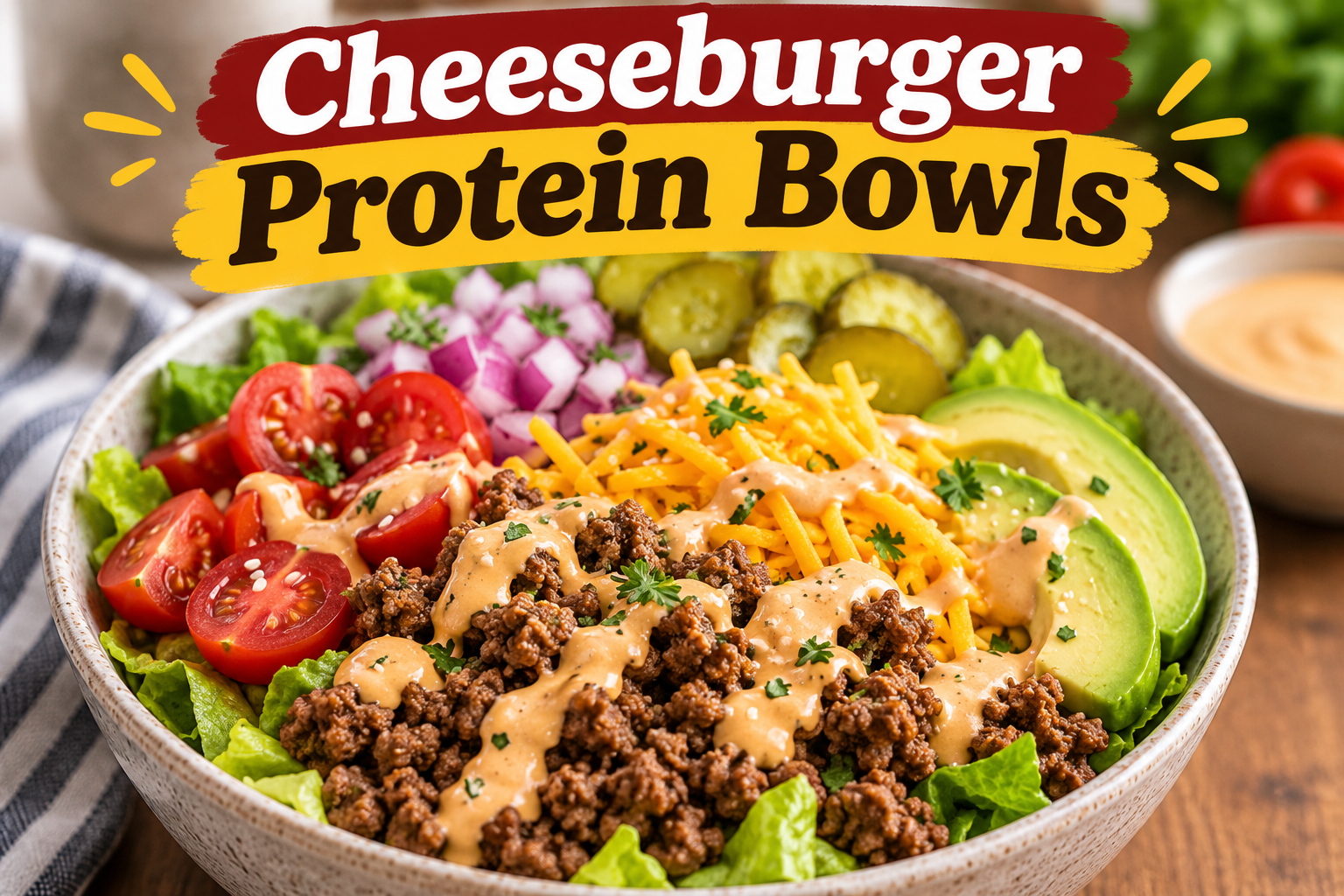
There is something undeniably satisfying about a juicy cheeseburger loaded with melted cheese, crisp lettuce, fresh tomatoes, crunchy pickles, and a delicious burger sauce. But what if you could enjoy all those classic cheeseburger flavors in a healthier, protein-packed meal without needing a bun?
That is exactly what Cheeseburger Protein Bowls deliver.
These delicious bowls combine seasoned lean ground beef, fresh vegetables, shredded cheese, and a creamy homemade burger sauce into one satisfying meal. They are easy to prepare, customizable, and perfect for busy weeknights, healthy lunches, or weekly meal prepping.
Whether you are trying to increase your protein intake, reduce refined carbohydrates, or simply enjoy a nutritious alternative to traditional fast food, cheeseburger protein bowls offer a flavorful solution.
Best of all, this recipe takes approximately 25 minutes from start to finish.
Why You Will Love Cheeseburger Protein Bowls
Cheeseburger protein bowls bring together everything people love about a classic cheeseburger while allowing you to adjust the ingredients to fit your nutritional goals.
Here are a few reasons these bowls deserve a place in your weekly meal rotation.
High in Protein: Lean ground beef provides a substantial amount of protein, helping support muscle maintenance and keeping meals satisfying.
Quick and Easy: With minimal preparation and simple ingredients, these bowls are ready in approximately 25 minutes.
Great for Meal Prep: Prepare several servings ahead of time for convenient lunches or dinners throughout the week.
Customizable: Add your favorite burger toppings, switch proteins, or include additional vegetables.
Lower-Carb Option: By skipping the traditional hamburger bun, you can reduce the carbohydrate content of your meal.
Family-Friendly: Everyone can build their own bowl with their favorite toppings.
Unlike traditional burgers that require assembling sandwiches, these protein bowls make it easy to enjoy every delicious ingredient with a fork.
Cheeseburger Protein Bowls Recipe
Prep Time
10 minutes
Cook Time
15 minutes
Total Time
25 minutes
Servings
4 bowls
Ingredients
For the seasoned ground beef:
-
1 pound lean ground beef (93% lean)
-
1 teaspoon olive oil
-
1 teaspoon garlic powder
-
1 teaspoon onion powder
-
1 teaspoon smoked paprika
-
½ teaspoon salt
-
½ teaspoon black pepper
-
1 tablespoon Worcestershire sauce
For the cheeseburger bowls:
-
4 cups chopped romaine lettuce
-
1 cup cherry tomatoes, halved
-
½ cup diced red onion
-
½ cup sliced dill pickles
-
1 cup shredded reduced-fat cheddar cheese
-
1 medium avocado, sliced (optional)
-
1 tablespoon sesame seeds (optional)
For the homemade burger sauce:
-
½ cup plain nonfat Greek yogurt
-
2 tablespoons ketchup
-
1 tablespoon yellow mustard
-
1 tablespoon finely chopped dill pickles
-
1 teaspoon pickle juice
-
½ teaspoon garlic powder
-
¼ teaspoon smoked paprika
Step-by-Step Instructions
Step 1: Prepare the Vegetables
Wash and thoroughly dry the romaine lettuce before chopping it into bite-sized pieces.
Slice the cherry tomatoes, dice the red onion, and prepare the dill pickles.
If using avocado, slice it shortly before serving to prevent browning.
Set the prepared vegetables aside while cooking the beef.
Step 2: Cook the Ground Beef
Heat the olive oil in a large skillet over medium-high heat.
Add the lean ground beef and break it apart using a wooden spoon or spatula.
Cook for approximately 6–8 minutes, stirring occasionally, until the beef is fully browned and reaches an internal temperature of 160°F.
Drain any excess grease if necessary.
Step 3: Season the Beef
Reduce the heat to medium.
Add garlic powder, onion powder, smoked paprika, salt, black pepper, and Worcestershire sauce.
Stir thoroughly to distribute the seasonings evenly throughout the beef.
Continue cooking for another 1–2 minutes to allow the flavors to combine.
Remove the skillet from the heat.
Step 4: Make the Burger Sauce
In a small mixing bowl, combine the Greek yogurt, ketchup, yellow mustard, chopped pickles, pickle juice, garlic powder, and smoked paprika.
Whisk until smooth and creamy.
Taste and adjust the seasoning as desired.
For a thinner consistency, add a small amount of water or additional pickle juice.
Refrigerate until ready to serve.
Step 5: Assemble the Cheeseburger Protein Bowls
Divide the chopped romaine lettuce evenly among four serving bowls.
Top each bowl with one-quarter of the seasoned ground beef.
Add cherry tomatoes, diced red onion, dill pickles, and shredded cheddar cheese.
Include avocado slices if desired.
Step 6: Add the Burger Sauce
Drizzle the homemade burger sauce over each bowl.
Sprinkle sesame seeds on top for an optional finishing touch.
Serve immediately while the beef is warm and the vegetables remain crisp.
Cheeseburger Protein Bowls Nutrition Information
These bowls provide a balanced combination of protein, vegetables, and fats.
Estimated nutrition per serving, including sauce and cheese, excluding optional avocado and sesame seeds
| Nutrient | Approximate Amount |
|---|---|
| Calories | 400 |
| Protein | 38 g |
| Carbohydrates | 13 g |
| Fat | 21 g |
| Fiber | 2 g |
| Sugar | 7 g |
| Sodium | 1,050 mg |
Nutritional values are estimates and vary depending on the exact brands, ingredients, and portion sizes used. Worcestershire sauce, pickles, cheese, and seasonings can contribute considerable sodium.
For additional protein, you can increase the lean beef portion, use extra Greek yogurt sauce, or add a hard-boiled egg.
How to Make Cheeseburger Protein Bowls Even Healthier
Although cheeseburger protein bowls can already fit into a balanced eating plan, a few simple ingredient adjustments can help tailor them to your goals.
Choose Lean Ground Beef
Using 93% lean ground beef helps reduce saturated fat compared with higher-fat ground beef.
For an even leaner option, consider 96% lean ground beef.
You can also substitute lean ground turkey or chicken for a different flavor and nutritional profile.
Add More Vegetables
Vegetables provide fiber, vitamins, minerals, and additional volume.
Consider adding shredded carrots, chopped cucumbers, sautéed mushrooms, roasted bell peppers, or shredded cabbage.
Increasing vegetable portions can make the bowls more filling without dramatically increasing calories.
Use Greek Yogurt Instead of Mayonnaise
Traditional burger sauces often contain mayonnaise.
Replacing most or all of the mayonnaise with plain Greek yogurt provides a creamy texture while adding protein and generally reducing total fat.
Control Cheese Portions
Cheddar cheese adds the familiar cheeseburger flavor.
Using a measured portion of reduced-fat cheese allows you to enjoy that flavor while managing calories and saturated fat.
Choose Your Carbohydrates
If you prefer a lower-carbohydrate meal, keep the lettuce base.
For a more substantial meal, add roasted potatoes, brown rice, quinoa, or sweet potatoes.
Carbohydrates are not inherently unhealthy, and including whole grains or starchy vegetables can be beneficial depending on your activity level and nutritional needs.
Delicious Cheeseburger Protein Bowl Variations
One of the greatest advantages of cheeseburger protein bowls is how easily they can be customized.
1. Bacon Cheeseburger Protein Bowl
Add one or two slices of cooked, crumbled bacon to each bowl.
Use sharp cheddar cheese and extra pickles for a smoky, savory flavor.
Turkey bacon can be substituted if preferred.
2. BBQ Cheeseburger Protein Bowl
Replace the traditional burger sauce with a small amount of barbecue sauce mixed with Greek yogurt.
Add diced red onion, shredded cheddar, and roasted corn.
This variation offers a sweet and smoky flavor.
3. Spicy Jalapeño Cheeseburger Bowl
Add sliced fresh or pickled jalapeños, pepper jack cheese, and a dash of hot sauce.
Mix a little hot sauce into the Greek yogurt dressing for an extra kick.
4. Mushroom Swiss Cheeseburger Bowl
Replace cheddar with Swiss cheese.
Sauté sliced mushrooms with a little olive oil and garlic until tender.
Layer the mushrooms over the seasoned beef for a rich, savory variation.
5. Keto Cheeseburger Protein Bowl
Use a lettuce base, full-fat cheddar cheese, and a low-sugar burger sauce.
Choose ketchup without added sugar if desired.
Include avocado for additional fat and creaminess.
Check the carbohydrate content of sauces and condiments to keep the bowl aligned with your daily keto goals.
6. Turkey Cheeseburger Protein Bowl
Substitute lean ground turkey for beef.
Season generously with garlic powder, onion powder, paprika, and Worcestershire sauce.
Cook ground turkey to an internal temperature of 165°F.
7. Cheeseburger and Roasted Potato Bowl
Add roasted potato cubes to the bottom of each bowl.
Top with seasoned ground beef, cheese, lettuce, pickles, and burger sauce.
This variation is especially satisfying after an active day.
Best Toppings for Cheeseburger Protein Bowls
The right toppings can transform a simple protein bowl into something that tastes like your favorite restaurant burger.
Classic toppings include shredded lettuce, diced tomatoes, pickles, cheddar cheese, and red onions.
For additional flavor, try caramelized onions, sautéed mushrooms, jalapeños, roasted peppers, or a small amount of crispy bacon.
If you enjoy extra crunch, add shredded cabbage or thinly sliced cucumbers.
Fresh herbs such as parsley or chives can also brighten the finished dish.
The key is balancing rich ingredients like beef and cheese with fresh vegetables and tangy toppings.
How to Meal Prep Cheeseburger Protein Bowls
Cheeseburger protein bowls are particularly convenient for meal prepping because most ingredients can be prepared in advance.
Prepare the Beef
Cook the seasoned ground beef according to the recipe instructions.
Allow it to cool slightly, then refrigerate promptly in airtight containers.
Divide the beef into four portions for convenient serving.
Store the Vegetables Separately
Wash and chop the lettuce, tomatoes, onions, and pickles.
Keep the lettuce separate from wetter ingredients to prevent sogginess.
Prepare the Sauce
Mix the Greek yogurt burger sauce and store it in a sealed container in the refrigerator.
Assemble When Ready
When it is time to eat, reheat the ground beef separately until steaming hot, ideally reaching 165°F.
Place it over fresh lettuce and add the remaining toppings.
Drizzle with burger sauce immediately before serving.
For food safety, refrigerate cooked beef within two hours of cooking, or within one hour if the surrounding temperature exceeds 90°F. Store at 40°F or below and use within 3–4 days.
Common Mistakes to Avoid
Even though cheeseburger protein bowls are easy to make, a few common mistakes can affect their flavor and texture.
Overcooking the Beef: Cooking ground beef for too long can make it dry. Cook it thoroughly to 160°F without continuing unnecessarily.
Using Too Much Sauce: Excessive dressing can overwhelm the fresh vegetables. Start with a modest amount and add more if needed.
Adding Hot Beef to Meal Prep Lettuce: Hot beef can wilt lettuce when stored together. Keep warm and cold ingredients separate until serving.
Skipping Seasonings: Ground beef needs sufficient seasoning to deliver that familiar cheeseburger flavor.
Using Watery Vegetables: Thoroughly dry washed lettuce and drain excess liquid from toppings.
Overloading the Bowl: Too many rich toppings can substantially increase calories. Choose portions that match your nutritional goals.
Frequently Asked Questions
Are Cheeseburger Protein Bowls Good for Weight Loss?
They can be a useful option for weight management because they provide substantial protein and can include plenty of low-calorie vegetables.
However, weight loss depends on overall calorie intake, activity, and other individual factors.
Choosing lean beef, measuring cheese portions, and controlling dressing amounts can help manage calories.
How Much Protein Is in a Cheeseburger Protein Bowl?
This recipe provides approximately 38 grams of protein per serving.
The exact amount depends on the type of beef, cheese, Greek yogurt, and portion sizes used.
Can You Make Cheeseburger Protein Bowls Without Beef?
Absolutely.
Ground turkey, ground chicken, plant-based crumbles, or cooked lentils can replace beef.
Each option changes the nutritional content and flavor.
Are Cheeseburger Protein Bowls Keto-Friendly?
They can be keto-friendly when made with low-carbohydrate vegetables and appropriate sauces.
Avoid sweetened condiments and high-carbohydrate additions if following a strict ketogenic eating plan.
Can You Eat Cheeseburger Protein Bowls Cold?
Yes, provided the cooked beef has been properly cooled, refrigerated, and stored safely.
However, many people prefer reheating the beef separately before assembling their bowls.
Can You Freeze Cheeseburger Protein Bowls?
The cooked ground beef freezes well, but fresh lettuce, tomatoes, and yogurt-based sauce generally do not maintain their original textures after freezing.
Freeze the cooked beef separately in an airtight container for approximately 2–3 months for best quality.
Thaw safely in the refrigerator before reheating.
What Can You Use Instead of Lettuce?
Cauliflower rice, brown rice, quinoa, roasted potatoes, and shredded cabbage all work well as alternative bases.
Choose the option that best fits your taste preferences and nutritional needs.
What to Serve With Cheeseburger Protein Bowls
Although these bowls can serve as a complete meal, you can pair them with additional sides when desired.
Air-fried sweet potato fries offer a satisfying contrast to the fresh vegetables.
Roasted broccoli, grilled zucchini, or a simple cucumber salad provide additional vegetables.
For a heartier meal, serve the bowls with roasted potato wedges or a small portion of whole-grain bread.
A refreshing glass of unsweetened iced tea, sparkling water, or lemon-infused water makes a simple beverage pairing.
Why High-Protein Meals Can Be Satisfying
Protein plays an important role in supporting muscle maintenance, tissue repair, and numerous functions throughout the body.
It also contributes to feelings of fullness, which can help some people manage hunger between meals.
Meals combining protein with fiber-rich vegetables and appropriate amounts of fat can provide satisfying nutrition.
Cheeseburger protein bowls bring these elements together in a convenient format.
However, a high-protein meal is not automatically healthier than other meals. Overall dietary quality, portion sizes, sodium, saturated fat, and individual nutritional needs remain important considerations.
Final Thoughts on Cheeseburger Protein Bowls
Cheeseburger Protein Bowls prove that eating a nutritious, protein-rich meal does not mean giving up the flavors of your favorite comfort foods.
With juicy seasoned ground beef, melted cheddar cheese, crisp vegetables, tangy pickles, and a creamy homemade burger sauce, every bite delivers the familiar taste of a classic cheeseburger.
These bowls are quick enough for busy weeknights, convenient for meal prepping, and versatile enough to accommodate different eating preferences.
Whether you are looking for a lower-carbohydrate dinner, a satisfying high-protein lunch, or a healthier homemade alternative to takeout, this recipe is worth adding to your weekly menu.
The best part? You get all the delicious cheeseburger flavor in one easy, satisfying bowl—no bun required.

Leave a Reply