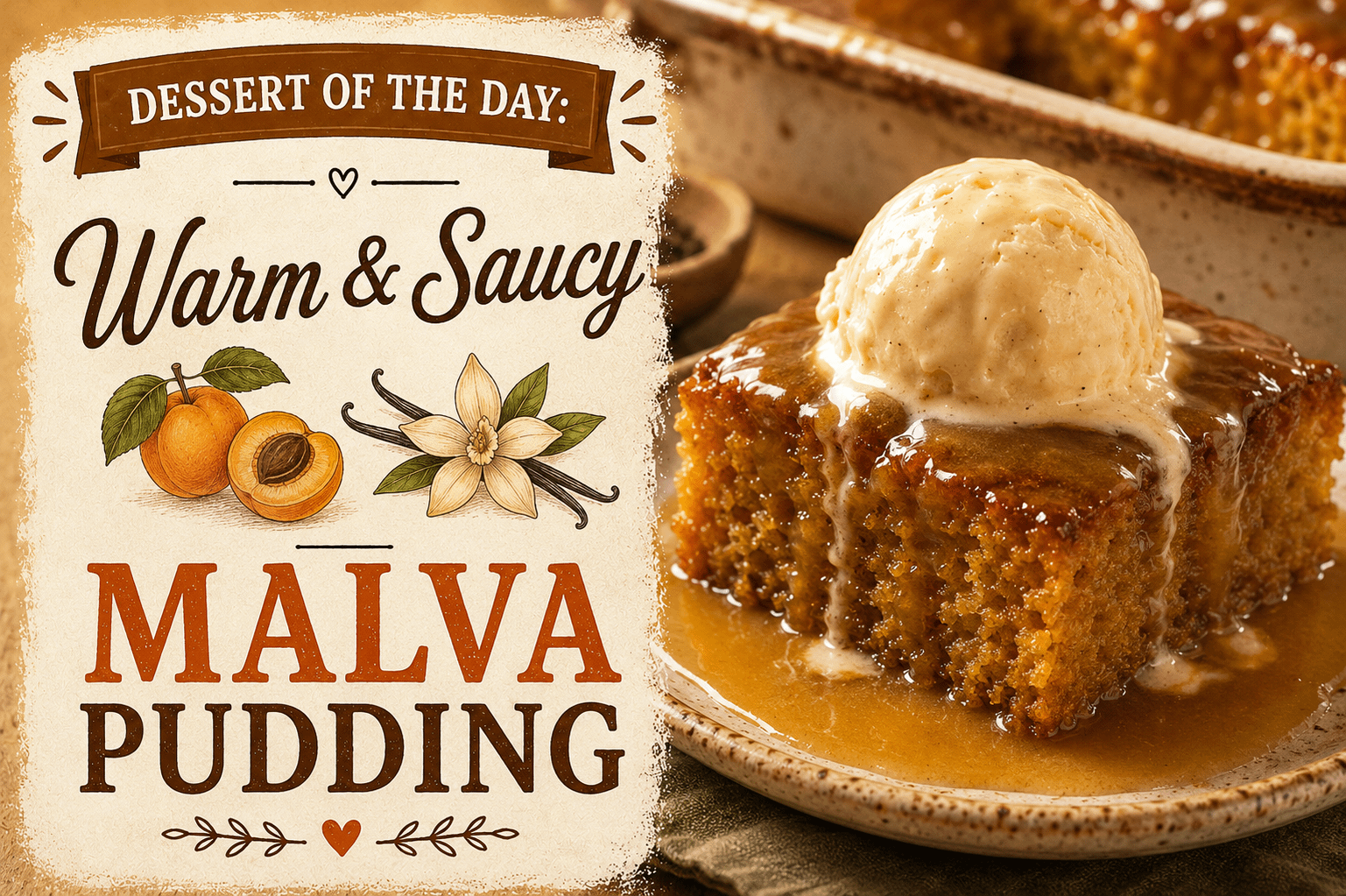
Some desserts impress with elaborate decorations, delicate layers, or complicated techniques. Malva pudding wins people over in a much simpler way: it is warm, wonderfully moist, deeply comforting, and covered in a buttery cream sauce that soaks into every bite.
Despite its name, Malva pudding is not a pudding in the American sense of a smooth custard eaten with a spoon. It is a soft, caramel-colored baked sponge dessert traditionally associated with South Africa. Once the cake comes out of the oven, a warm cream sauce is poured over the top. The sponge eagerly absorbs that rich sauce, creating a tender dessert with slightly crisp edges and an almost sticky center.
A small amount of apricot preserves adds subtle fruitiness without making the dessert taste strongly of apricot. Brown sugar creates warmth and depth, while vinegar and baking soda help give the sponge its characteristic light yet moist texture.
Serve Malva pudding warm with vanilla ice cream, whipped cream, custard, or fresh berries. It is ideal for holidays, Sunday dinners, potlucks, family gatherings, or any evening when you want a comforting homemade dessert.
What Makes Malva Pudding Special?
Malva pudding strikes a beautiful balance between familiar and unexpected.
At first glance, it may resemble an ordinary brown sugar cake. The real transformation happens after baking, when the warm sauce is slowly poured over the surface. Instead of sitting on top like frosting, the sauce travels through the sponge and becomes part of the dessert.
Every serving offers several irresistible qualities:
- A lightly caramelized surface
- A soft and springy sponge
- Buttery brown sugar flavor
- Subtle apricot notes
- A rich, sauce-soaked center
- Warm creaminess in every bite
It is decadent without needing layers of frosting or complicated decorations. The finished pudding looks rustic, warm, and welcoming—the kind of dessert that encourages everyone to gather around the table.
Why You Will Love This Recipe
Malva pudding deserves a place in your dessert collection for many reasons.
It Uses Familiar Ingredients
Most of the ingredients are ordinary baking staples, including flour, sugar, eggs, milk, butter, baking soda, and vanilla. Apricot preserves may be the only ingredient you need to pick up specifically for the recipe.
It Is Easier Than It Looks
The batter comes together in a few simple steps. There is no yeast, rolling, layering, piping, or complicated decorating involved.
It Can Be Made Ahead
Malva pudding reheats exceptionally well because its sauce helps it remain moist. You can bake it before a gathering and warm it shortly before serving.
It Is Perfect for Sharing
One baking dish produces approximately eight generous portions or up to twelve smaller servings. It is an excellent choice for dinner parties, holidays, potlucks, and family celebrations.
It Feels Comforting
Warm sponge, buttery sauce, and melting vanilla ice cream create the kind of dessert that makes an ordinary evening feel special.
Ingredients
For the Malva Pudding
- 1 cup all-purpose flour
- 1 teaspoon baking soda
- 1/4 teaspoon salt
- 1 large egg, at room temperature
- 3/4 cup packed light brown sugar
- 1 tablespoon smooth apricot preserves
- 1 tablespoon unsalted butter, melted
- 1 teaspoon white vinegar
- 1 teaspoon pure vanilla extract
- 1/2 cup whole milk
For the Cream Sauce
- 1/2 cup unsalted butter
- 3/4 cup packed light brown sugar
- 1/2 cup heavy cream
- 1/3 cup hot water
- 1 teaspoon pure vanilla extract
- Pinch of salt
For Serving
- Vanilla ice cream
- Homemade whipped cream
- Warm vanilla custard
- Fresh strawberries or raspberries
- Toasted pecans, optional
- Additional caramel sauce, optional
Equipment You Will Need
Malva pudding does not require specialized baking equipment. Gather the following before getting started:
- An 8-inch square baking dish
- Two medium mixing bowls
- A whisk
- A rubber spatula or wooden spoon
- A small saucepan
- Measuring cups and spoons
- A toothpick or thin skewer
- A ladle or large spoon
A ceramic, glass, or metal baking dish can be used. Baking times may vary slightly depending on the material and depth of your dish.
How to Make Malva Pudding
Step 1: Prepare the Oven and Baking Dish
Preheat the oven to 350°F.
Lightly grease an 8-inch square baking dish with butter or nonstick cooking spray. Make sure to coat the corners so the sticky edges of the pudding release more easily.
Set the prepared dish aside while you make the batter.
Step 2: Combine the Dry Ingredients
In a medium bowl, whisk together the all-purpose flour, baking soda, and salt.
Whisking helps distribute the baking soda evenly throughout the flour. This is important because unevenly mixed baking soda can leave unpleasant-tasting pockets in the finished dessert.
Set the dry mixture aside.
Step 3: Beat the Egg and Brown Sugar
Place the egg and brown sugar in a separate mixing bowl.
Whisk vigorously for approximately two to three minutes. The mixture should become slightly lighter, thicker, and smoother.
This step helps incorporate air into the batter and contributes to the pudding’s soft sponge texture.
You can use an electric mixer if desired, but a sturdy whisk works perfectly well.
Step 4: Add the Apricot Preserves
Add the apricot preserves to the egg and sugar mixture.
Whisk until the preserves are evenly incorporated and no large lumps remain.
Smooth preserves work best because they blend easily into the batter. If your preserves contain large pieces of fruit, finely chop or mash them before adding.
The apricot flavor will remain subtle. It adds a gentle fruitiness and complexity rather than making the entire dessert taste like an apricot cake.
Step 5: Add the Wet Ingredients
Pour the melted butter, white vinegar, and vanilla extract into the egg mixture.
Whisk until everything is thoroughly combined.
Do not worry about tasting vinegar in the finished pudding. It reacts with the baking soda and helps create the light, springy texture that allows the cake to absorb the sauce.
Step 6: Alternate the Flour and Milk
Add approximately one-third of the dry mixture to the wet ingredients and gently stir.
Pour in half of the milk and mix again.
Continue alternating the flour mixture and milk until everything has been added. Begin and end with the dry ingredients.
Stir only until the flour disappears. Overmixing can develop too much gluten and make the pudding tougher instead of soft and tender.
The finished batter should be smooth and pourable but not excessively thin.
Step 7: Bake the Pudding
Pour the batter into the prepared baking dish.
Use a spatula to spread it evenly into the corners and smooth the surface.
Bake for approximately 30 to 35 minutes. The pudding should be deeply golden brown, slightly puffed, and firm enough to spring back when gently touched.
Insert a toothpick into the center. It should come out clean or with a few moist crumbs attached.
Avoid opening the oven repeatedly during the first 25 minutes. A sudden drop in temperature can cause the center to sink before the structure has finished setting.
Step 8: Prepare the Cream Sauce
Begin making the sauce during the final ten minutes of baking.
Place the butter, brown sugar, heavy cream, hot water, vanilla extract, and a pinch of salt in a small saucepan.
Heat the mixture over medium-low heat, stirring frequently.
Once the butter melts and the sugar dissolves, allow the sauce to reach a gentle simmer. Continue cooking for approximately two to three minutes.
Do not boil it aggressively. You want a smooth, pourable sauce rather than a thick caramel.
Remove the saucepan from the heat and keep the sauce warm until the pudding comes out of the oven.
Step 9: Poke Holes in the Pudding
Remove the baked pudding from the oven.
While it is still hot, use a toothpick or thin skewer to make holes across the entire surface. Space the holes approximately one inch apart.
The holes create channels that help the warm sauce travel into the sponge.
Do not make the holes excessively large or tear apart the surface. Small, evenly spaced openings are all you need.
Step 10: Add the Warm Sauce
Slowly pour approximately half of the warm sauce over the hot pudding.
Pause for a minute and allow the sponge to absorb it.
Continue adding the remaining sauce gradually, paying special attention to the edges and corners.
It may initially look like there is too much liquid, but the pudding will absorb most of it as it rests. Pouring slowly is the key. If the sauce is added all at once, it may collect around the edges instead of soaking evenly into the center.
Step 11: Let It Rest
Allow the Malva pudding to rest for approximately 15 to 20 minutes before serving.
This waiting period gives the sauce time to soak into the sponge and helps the dessert develop its signature sticky, moist texture.
Malva pudding is best served warm rather than piping hot.
Tips for the Best Malva Pudding
Measure the Flour Carefully
Too much flour can make the sponge dense and prevent it from absorbing the sauce properly.
Spoon flour into the measuring cup and level it with the back of a knife. Avoid scooping directly from the bag because that can compact the flour.
Use Room-Temperature Ingredients
A room-temperature egg and slightly warmed milk blend more smoothly into the batter. Cold ingredients can cause melted butter to firm up before everything is properly combined.
Do Not Skip the Vinegar
The small amount of vinegar is essential to the texture. It reacts with the baking soda and helps the pudding rise.
White vinegar is the most neutral choice, but apple cider vinegar can be substituted if necessary.
Pour Warm Sauce Over Hot Pudding
Temperature matters. A hot sponge absorbs warm sauce much more effectively than a completely cooled dessert.
Try to have the sauce ready when the pudding leaves the oven.
Give the Sauce Time to Soak In
Malva pudding improves as it rests. Waiting at least 15 minutes before serving prevents the sauce from immediately running to the bottom of each plate.
Watch the Baking Time
Overbaking can produce a dry sponge that does not absorb the sauce as evenly. Begin checking the center at approximately 28 minutes, especially if you are using a metal pan.
Delicious Variations
The traditional version is wonderful, but Malva pudding is also easy to customize.
Orange Malva Pudding
Add one teaspoon of finely grated orange zest to the batter.
Replace one tablespoon of the hot water in the sauce with fresh orange juice. The citrus brightens the buttery sweetness and pairs beautifully with the apricot preserves.
Spiced Malva Pudding
Add 1/2 teaspoon ground cinnamon and a pinch of nutmeg to the flour mixture.
These warm spices make the pudding especially inviting during fall and winter.
Chocolate Malva Pudding
Replace two tablespoons of flour with two tablespoons of unsweetened cocoa powder.
Add 1/3 cup semisweet chocolate chips to the batter. The result combines Malva pudding’s soft, saucy texture with rich chocolate flavor.
Coconut Malva Pudding
Replace half of the whole milk with canned coconut milk.
Sprinkle toasted coconut over each serving for additional flavor and texture.
Coffee Caramel Malva Pudding
Dissolve one teaspoon of instant espresso powder in the hot water before adding it to the cream sauce.
The coffee helps balance the sweetness and deepens the caramel notes.
Nutty Malva Pudding
Add 1/2 cup finely chopped pecans or walnuts to the batter.
You can also sprinkle toasted nuts over the top immediately before serving.
Substitutions
If you are missing an ingredient, one of these substitutions may help.
Apricot Preserves
Peach preserves are the closest substitute. Orange marmalade can also work, although it will produce a brighter citrus flavor and may add a slight bitterness.
Whole Milk
Two-percent milk can be used with good results. Buttermilk will add more tanginess and may create an even softer crumb.
Heavy Cream
Half-and-half can be substituted, but the sauce will be lighter and slightly less rich.
Brown Sugar
Granulated sugar can be used in the batter, but brown sugar provides a deeper caramel flavor.
For the sauce, light or dark brown sugar will work. Dark brown sugar creates a stronger molasses flavor.
Unsalted Butter
Salted butter can be used. If you choose salted butter, omit the additional pinch of salt from the sauce.
How to Serve Malva Pudding
Spoon or cut the warm pudding into squares and place each serving in a shallow dessert bowl or on a small plate.
Make sure to scoop up some of the sauce from the bottom of the baking dish.
The classic finishing touch is vanilla custard, but there are many delicious options.
Try serving it with:
- A scoop of vanilla bean ice cream
- Freshly whipped cream
- Warm vanilla custard
- Salted caramel ice cream
- Fresh raspberries
- Sliced strawberries
- Toasted pecans
- Toasted coconut
- A light dusting of powdered sugar
- An additional spoonful of warm cream sauce
Vanilla ice cream provides an especially appealing contrast. The cold ice cream begins melting over the warm pudding and creates an extra creamy sauce on the plate.
Because Malva pudding is rich, coffee or unsweetened tea makes an excellent beverage pairing.
When to Serve Malva Pudding
This comforting dessert fits almost any occasion.
Serve it for:
- Sunday family dinner
- Thanksgiving
- Christmas
- Easter
- Birthday celebrations
- Potluck meals
- Dinner parties
- Cold-weather gatherings
- Family movie nights
- A cozy weekend dessert
It travels well in its baking dish, making it a practical choice for potlucks. Cover the dish tightly, transport it warm, and bring ice cream or whipped cream separately.
Make-Ahead Instructions
Malva pudding can be prepared one day before serving.
Bake the pudding and pour the sauce over it according to the recipe. Allow it to cool, cover the baking dish tightly, and refrigerate.
When you are ready to serve, remove the dish from the refrigerator and let it sit at room temperature for approximately 20 minutes.
Cover the dish loosely with foil and reheat it in a 300°F oven for 15 to 20 minutes or until warmed through.
If the pudding seems slightly dry after refrigeration, prepare a small amount of additional sauce and pour it over the surface before reheating.
How to Store Leftovers
Cover leftover Malva pudding tightly or transfer individual servings to an airtight container.
Store it in the refrigerator for up to four days.
To reheat an individual serving, place it on a microwave-safe plate and microwave in short intervals of approximately 20 seconds until warm. Avoid overheating it because the sauce can become extremely hot.
For several portions, cover the baking dish with foil and warm it in a 300°F oven.
Can You Freeze Malva Pudding?
Yes, Malva pudding can be frozen.
Allow it to cool completely before cutting it into individual portions. Wrap each piece securely and place the wrapped portions in a freezer-safe container.
Freeze for up to two months.
Thaw the pudding overnight in the refrigerator. Reheat it gently in the microwave or oven before serving.
For the freshest flavor and texture, consider adding only half of the sauce before freezing. Prepare a fresh half-batch of sauce to pour over the pudding while reheating.
Common Questions
Why Is My Malva Pudding Dry?
The most likely causes are too much flour, overbaking, or not adding enough sauce.
Measure the flour carefully, begin checking the pudding before the full baking time has passed, and pour the sauce over it while both are still warm.
Why Did My Pudding Sink?
A small amount of sinking is normal, especially after the sauce is added.
Significant sinking may happen if the oven door was opened too early, the batter was underbaked, or the baking soda was no longer active.
Can I Double the Recipe?
Yes. Double all ingredients and bake the pudding in a 9-by-13-inch baking dish.
The baking time will likely increase to approximately 35 to 45 minutes. Check the center with a toothpick before removing it from the oven.
Can I Reduce the Sweetness?
You can reduce the brown sugar in the batter to 1/2 cup.
The sauce creates much of the dessert’s sweetness, so you can also reserve a portion of it and serve the extra on the side. Keep in mind that the sauce is essential to the traditional texture.
Is Malva Pudding Served Warm or Cold?
It can be eaten cold, but it is at its best when served warm. Heating softens the butter in the sauce and restores the pudding’s rich, moist texture.
A Warm Dessert Worth Sharing
Malva pudding proves that a memorable dessert does not need complicated decorations or hours of preparation.
A simple apricot-infused sponge becomes something extraordinary when warm cream sauce is slowly poured over it. The surface turns glossy, the edges become sticky, and the center remains wonderfully soft.
Add a scoop of vanilla ice cream and you have a dessert that delivers warmth, sweetness, creaminess, and comfort in every spoonful.
Whether you prepare it for a holiday gathering, bring it to a potluck, or enjoy it at home after dinner, Malva pudding has all the qualities of a recipe people will ask you to make again.
Would you serve your warm Malva pudding with vanilla ice cream, whipped cream, or homemade custard?
Leave a Reply