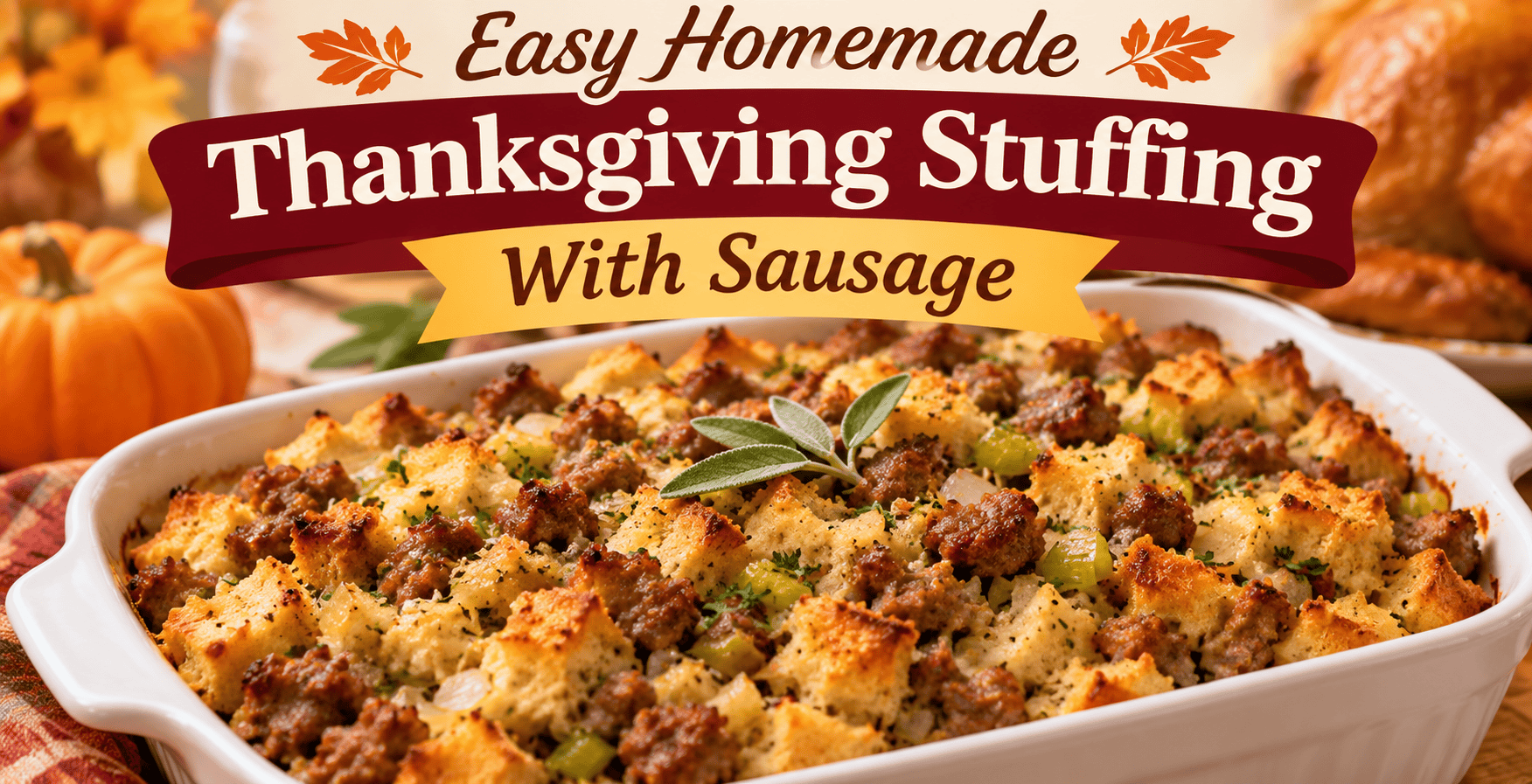
Thanksgiving dinner would not be complete without a warm, flavorful dish of homemade stuffing. While turkey often gets most of the attention, a delicious sausage stuffing can easily become one of the most requested dishes at the holiday table.
This Easy Homemade Thanksgiving Stuffing With Sausage combines savory breakfast sausage, toasted bread cubes, fresh vegetables, butter, herbs, and chicken broth to create a comforting side dish that is crispy on top, soft in the middle, and packed with traditional holiday flavors.
Whether you are hosting a large Thanksgiving gathering or preparing a smaller holiday meal, this homemade sausage stuffing is simple enough for beginners and delicious enough to become a family tradition.
Why You’ll Love This Homemade Sausage Stuffing
Homemade stuffing is one of those classic Thanksgiving dishes that brings comfort and familiar flavors to the dinner table.
Adding sausage gives traditional stuffing an extra layer of savory richness, making every bite more satisfying.
Here are a few reasons this recipe deserves a place on your Thanksgiving menu:
-
Easy to prepare: Simple ingredients and straightforward instructions make this recipe beginner-friendly.
-
Full of flavor: Sausage, onions, celery, butter, and fresh herbs create a delicious combination.
-
Perfect texture: The top becomes golden and slightly crispy while the inside stays tender and moist.
-
Make-ahead friendly: Prepare the ingredients ahead of time to make Thanksgiving cooking easier.
-
Great for leftovers: Reheat leftover stuffing alongside turkey, gravy, or other holiday favorites.
Best of all, you can customize this recipe with your favorite herbs, vegetables, or additional ingredients.
Easy Homemade Thanksgiving Stuffing With Sausage Recipe
Difficulty: Easy
Cooking method: Oven-baked
Ingredients
For this homemade Thanksgiving sausage stuffing, you will need:
-
1 pound mild or sage breakfast sausage
-
12 cups cubed day-old bread, approximately 1 pound
-
½ cup unsalted butter
-
1 large yellow onion, diced
-
3 celery stalks, finely chopped
-
3 cloves garlic, minced
-
2½–3 cups low-sodium chicken broth
-
2 large eggs, lightly beaten
-
2 tablespoons fresh parsley, chopped
-
1 tablespoon fresh sage, finely chopped
-
1 tablespoon fresh thyme leaves
-
1 teaspoon dried rosemary
-
½ teaspoon black pepper
-
½ teaspoon salt, or to taste
-
Butter or cooking spray for greasing the baking dish
Optional additions:
-
½ cup chopped pecans
-
½ cup dried cranberries
-
1 cup diced apples
-
½ cup sautéed mushrooms
-
½ teaspoon poultry seasoning
These optional ingredients can add sweetness, crunch, or additional savory flavor.
How to Make Thanksgiving Stuffing With Sausage
Step 1: Prepare the Bread
Preheat your oven to 350°F.
Cut your bread into approximately ¾-inch cubes if it is not already cubed.
Spread the bread cubes evenly across one or two large baking sheets.
Bake for approximately 10–15 minutes, stirring occasionally, until the bread is dry and lightly toasted.
Remove from the oven and allow it to cool.
Using slightly dried bread helps the stuffing absorb broth without becoming overly soggy.
Step 2: Cook the Sausage
Heat a large skillet over medium heat.
Add the breakfast sausage and cook for approximately 7–10 minutes, breaking it into small pieces with a wooden spoon.
Continue cooking until the sausage is browned and fully cooked to 160°F.
Transfer the cooked sausage to a large mixing bowl, leaving approximately 1 tablespoon of drippings in the skillet. Drain excess grease if necessary.
Step 3: Sauté the Vegetables
Add the butter to the same skillet.
Once melted, add the diced onion and chopped celery.
Cook over medium heat for approximately 5–7 minutes, stirring occasionally, until the vegetables begin to soften.
Add the minced garlic and cook for another minute.
The combination of butter, onions, celery, and garlic creates the traditional savory foundation of homemade Thanksgiving stuffing.
Step 4: Add the Herbs and Seasonings
Stir the parsley, sage, thyme, rosemary, black pepper, and salt into the sautéed vegetables.
Cook for approximately 30 seconds to release the herbs’ aromas.
Fresh sage and thyme are especially important because they give stuffing its familiar Thanksgiving flavor.
If you prefer a stronger herbal taste, add a small amount of poultry seasoning.
Step 5: Combine the Stuffing Ingredients
Add the toasted bread cubes to the large mixing bowl containing the cooked sausage.
Pour the sautéed vegetables and herb mixture over the bread.
Gently toss everything together until evenly distributed.
Gradually add 2½ cups of chicken broth, stirring gently.
The bread should feel moist but should not be swimming in liquid.
If the mixture seems too dry, add the remaining broth a little at a time.
Step 6: Add the Eggs
In a separate bowl, lightly beat the eggs.
Make sure the stuffing mixture has cooled enough that the eggs will not scramble when added.
Pour the beaten eggs over the stuffing and gently mix until combined.
The eggs help bind the ingredients together and create a tender texture during baking.
Step 7: Transfer to a Baking Dish
Lightly grease a 9-by-13-inch baking dish with butter or cooking spray.
Transfer the stuffing mixture into the prepared dish.
Spread it evenly without pressing it down too firmly.
Cover the baking dish tightly with aluminum foil.
Step 8: Bake Until Golden Brown
Bake the covered stuffing at 350°F for approximately 30 minutes.
Remove the foil and continue baking for another 15–20 minutes, or until the top becomes golden brown and slightly crispy.
Because the stuffing contains eggs and sausage, check that the center reaches 165°F with a food thermometer.
If you prefer an extra-crispy top, bake uncovered for a few additional minutes, watching carefully to prevent burning.
Step 9: Rest and Serve
Remove the stuffing from the oven and allow it to rest for approximately 5–10 minutes.
Sprinkle additional chopped parsley over the top if desired.
Serve warm alongside roasted turkey, mashed potatoes, homemade gravy, and your favorite Thanksgiving side dishes.
What Is the Best Bread for Homemade Thanksgiving Stuffing?
Choosing the right bread makes a noticeable difference in the texture and flavor of homemade stuffing.
You want bread that absorbs broth while maintaining enough structure to prevent the stuffing from turning mushy.
Some excellent options include:
1. French Bread
French bread has a sturdy texture and mild flavor, making it ideal for traditional sausage stuffing.
It absorbs broth beautifully while keeping its shape.
2. Sourdough Bread
Sourdough adds a slightly tangy flavor that complements savory sausage and fresh herbs.
Its chewy texture also creates a heartier stuffing.
3. White Sandwich Bread
Traditional white bread produces a softer, more classic Thanksgiving stuffing.
It is an affordable and convenient option for families preparing a large holiday meal.
4. Cornbread
Cornbread creates a Southern-style stuffing with a slightly sweet flavor and crumbly texture.
For a delicious variation, combine cornbread with regular bread cubes.
5. Italian Bread
Italian bread provides a balanced texture that works well with sausage, onions, celery, and poultry seasoning.
Best choice: For this recipe, French bread or sourdough provides an excellent balance of crispy edges and a moist center.
Tips for Making the Best Thanksgiving Sausage Stuffing
Even though this recipe is simple, a few cooking techniques can make your homemade stuffing even better.
Use Day-Old Bread
Fresh bread contains more moisture and can become overly soft when combined with broth.
Day-old bread or lightly toasted bread cubes absorb liquid more evenly.
Brown the Sausage Properly
Allow the sausage to develop some golden-brown edges while cooking.
Browning adds deeper savory flavor to the finished stuffing.
Don’t Add Too Much Broth
The amount of broth needed depends on the type and dryness of your bread.
Start with a smaller amount and gradually add more until the bread is evenly moistened.
Use Fresh Herbs When Possible
Fresh sage, thyme, and parsley give homemade stuffing a wonderful holiday aroma.
Dried herbs work as substitutes, but use approximately one-third as much dried herb as fresh.
Avoid Overmixing
Gently toss the ingredients together rather than stirring aggressively.
Overmixing can break down the bread cubes and produce a dense stuffing.
Bake Covered, Then Uncovered
Covering the stuffing during the first part of baking helps retain moisture.
Removing the foil near the end allows the top to develop a delicious golden crust.
Delicious Variations of Thanksgiving Sausage Stuffing
One of the best things about homemade stuffing is how easily you can adjust the ingredients to suit your family’s preferences.
1. Southern Cornbread Sausage Stuffing
Replace half or all of the regular bread cubes with dried cornbread.
Use sage breakfast sausage and add a little poultry seasoning for a traditional Southern flavor.
2. Apple and Sausage Stuffing
Add 1 cup of diced Granny Smith or Honeycrisp apples.
The apples provide a slightly sweet contrast to the savory sausage.
3. Cranberry Sausage Stuffing
Mix in ½ cup of dried cranberries before baking.
The cranberries add sweetness and a festive holiday touch.
4. Mushroom and Sausage Stuffing
Add 1 cup of sautéed mushrooms to the vegetable mixture.
Mushrooms create a deeper, earthy flavor that pairs beautifully with sausage.
5. Pecan Sausage Stuffing
Add ½ cup of chopped toasted pecans.
The pecans provide a pleasant crunch and a slightly nutty flavor.
6. Spicy Sausage Stuffing
Use hot Italian sausage instead of mild breakfast sausage.
Add a pinch of crushed red pepper flakes for additional heat.
7. Bacon and Sausage Stuffing
Mix ½ cup of cooked, crumbled bacon into the stuffing.
The combination of bacon and sausage makes this version especially savory.
8. Herb and Garlic Sausage Stuffing
Increase the garlic to five cloves and add extra parsley, thyme, and sage.
This variation is ideal for anyone who enjoys bold herbal flavors.
Can You Make Thanksgiving Sausage Stuffing Ahead of Time?
Yes. Making stuffing ahead of time can help reduce stress when preparing a large Thanksgiving dinner.
For the best combination of convenience and food safety, prepare the components separately.
One to Two Days Before Thanksgiving
Toast the bread cubes and store them in an airtight container once completely cool.
Cook the sausage and vegetable mixture, cool it promptly, and refrigerate it in a covered container.
Chop the herbs and store them separately.
Thanksgiving Day
Combine the bread cubes, sausage mixture, herbs, broth, and beaten eggs.
Transfer everything to a greased baking dish.
Bake according to the recipe instructions until the center reaches 165°F.
This approach allows you to prepare most of the ingredients in advance while keeping the final stuffing fresh and flavorful.
How to Store Leftover Sausage Stuffing
Leftover Thanksgiving stuffing can be just as delicious the following day when stored and reheated properly.
Refrigerating
Transfer leftover stuffing to an airtight container within two hours of cooking.
Refrigerate at 40°F or below for up to 3–4 days.
Freezing
Place cooled stuffing in a freezer-safe container or resealable freezer bag.
Freeze for approximately 2–3 months for the best quality.
Divide it into smaller portions so you can reheat only what you need.
Reheating
Place refrigerated stuffing in an oven-safe baking dish.
Add a small splash of chicken broth to restore moisture.
Cover with foil and reheat at 350°F until the center reaches 165°F.
Remove the foil near the end if you want to restore the crispy top.
You can also reheat individual portions in the microwave, stirring or rotating as needed for even heating.
What to Serve With Thanksgiving Sausage Stuffing
Homemade sausage stuffing pairs wonderfully with nearly every traditional Thanksgiving dish.
Some of the best combinations include:
-
Roasted Thanksgiving turkey
-
Homemade turkey gravy
-
Creamy garlic mashed potatoes
-
Green bean casserole
-
Sweet potato casserole
-
Roasted Brussels sprouts
-
Homemade cranberry sauce
-
Honey-glazed carrots
-
Buttery dinner rolls
-
Southern baked macaroni and cheese
For a complete Thanksgiving dinner, serve sausage stuffing with roasted turkey, mashed potatoes, gravy, green beans, and cranberry sauce.
The savory flavors of the stuffing balance especially well with the sweetness of cranberry sauce and sweet potatoes.
Frequently Asked Questions About Thanksgiving Sausage Stuffing
What Kind of Sausage Is Best for Thanksgiving Stuffing?
Mild breakfast sausage or sage breakfast sausage is ideal for traditional Thanksgiving stuffing.
Italian sausage also works, but it creates a slightly different flavor profile.
For a classic holiday taste, choose sage sausage.
Should Stuffing Be Moist Before Baking?
Yes. Stuffing should be evenly moistened before going into the oven.
The bread should feel soft and hydrated without excess liquid pooling at the bottom of the bowl.
Can I Make Stuffing Without Eggs?
Yes. You can omit the eggs if you prefer a looser, less bound stuffing.
The bread, broth, and butter will still create a flavorful side dish.
What Is the Difference Between Stuffing and Dressing?
Traditionally, stuffing refers to a bread mixture cooked inside a turkey, while dressing is cooked separately in a baking dish.
However, many families use the terms interchangeably.
This recipe is technically a baked dressing, although it is commonly called Thanksgiving stuffing.
Can I Use Store-Bought Stuffing Cubes?
Absolutely.
Plain, unseasoned stuffing cubes work well and can save preparation time.
If using seasoned stuffing cubes, reduce the added herbs and salt to avoid overpowering the dish.
Can I Cook This Stuffing Inside the Turkey?
For this recipe, baking it separately is the easier and more reliable method.
Cooking stuffing inside a turkey requires extra attention because the center of the stuffing must reach 165°F, which can complicate cooking the turkey evenly.
A casserole dish also produces the crispy top that many people love.
How Do You Keep Sausage Stuffing From Drying Out?
Use enough broth to moisten the bread, cover the baking dish during the first portion of cooking, and avoid baking longer than necessary.
If reheating leftovers, add a splash of broth before warming.
Can I Double This Recipe for a Large Thanksgiving Dinner?
Yes. Double the ingredients and divide the mixture between two 9-by-13-inch baking dishes.
Avoid packing the stuffing too tightly, and check both dishes for a safe internal temperature of 165°F.
Why Homemade Sausage Stuffing Is a Thanksgiving Favorite
Thanksgiving is about more than preparing a delicious meal. It is also about gathering around the table, sharing familiar traditions, and enjoying the dishes that make the holiday feel special.
Homemade sausage stuffing is one of those recipes that can bring back memories of family dinners, busy kitchens, and holiday celebrations.
The aroma of onions, celery, sage, and sausage cooking together creates an unmistakable Thanksgiving atmosphere.
And because the recipe is easy to customize, every family can develop its own special version.
Some prefer a softer stuffing with plenty of broth, while others enjoy a crispier top with extra herbs. Some add apples, cranberries, or pecans, while others keep everything simple and traditional.
There is no single perfect version. The best Thanksgiving stuffing is the one your family enjoys sharing.
Final Thoughts
This Easy Homemade Thanksgiving Stuffing With Sausage is a flavorful, comforting, and beginner-friendly side dish that deserves a place on your holiday menu.
With savory sausage, toasted bread cubes, buttery vegetables, fragrant herbs, and just the right amount of broth, it delivers everything people love about traditional Thanksgiving stuffing.
Whether you prepare it for a large family gathering, a small holiday dinner, or simply because you enjoy homemade comfort food, this recipe is an easy way to bring classic Thanksgiving flavors to your table.
What is your favorite way to make Thanksgiving stuffing—with sausage, cornbread, apples, or a traditional family recipe passed down through generations?
Leave a Reply