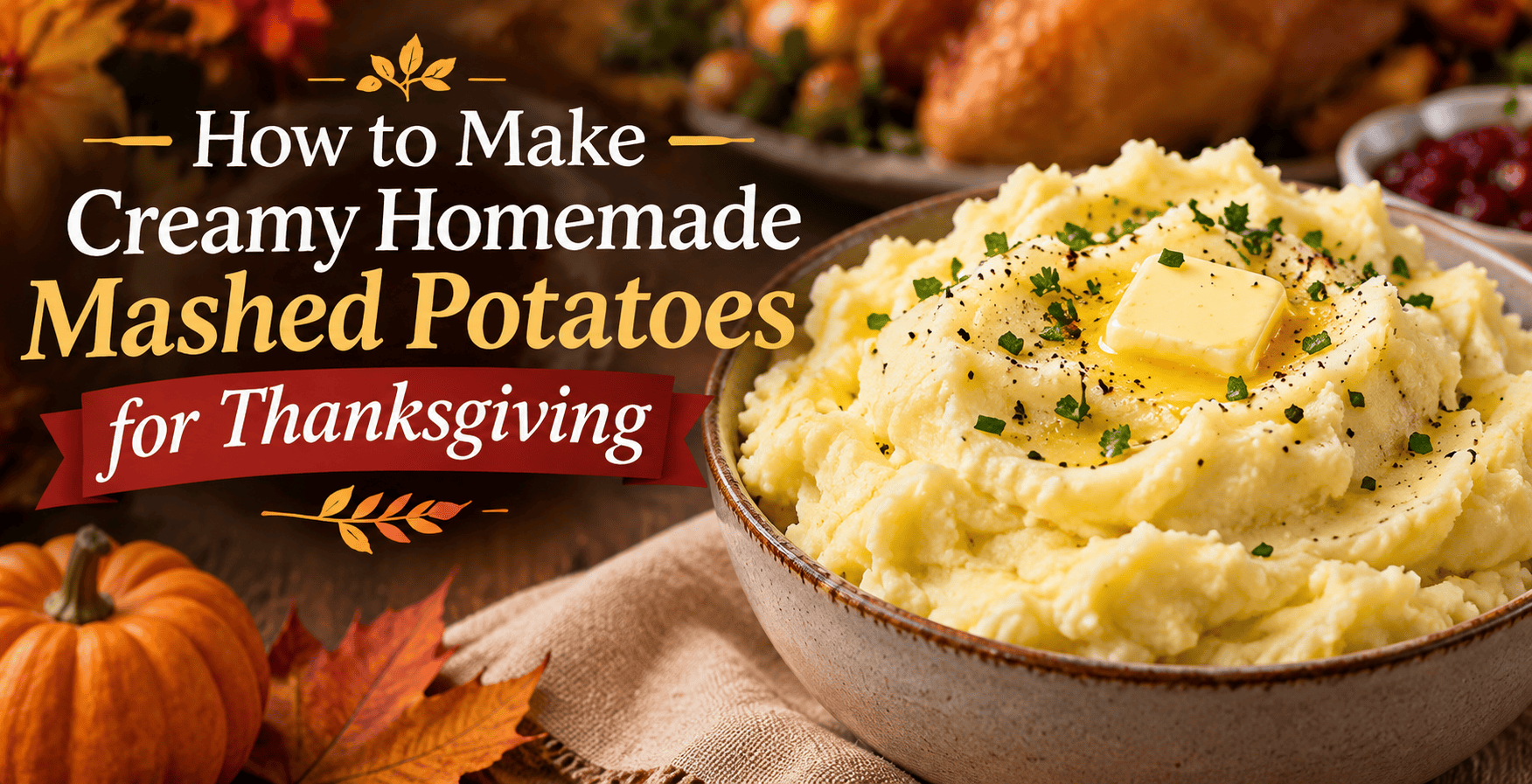
Thanksgiving dinner would not feel complete without a generous serving of creamy homemade mashed potatoes. Whether you enjoy them covered in rich turkey gravy, topped with melted butter, or served alongside roasted turkey and stuffing, mashed potatoes are one of the most beloved Thanksgiving side dishes.
There is something comforting about a bowl of fluffy, buttery mashed potatoes made from scratch. They bring warmth to the holiday table, complement nearly every traditional Thanksgiving dish, and remind us of the homemade meals shared with family and friends.
The best part is that making creamy homemade mashed potatoes is surprisingly simple. With the right potatoes, a few basic ingredients, and some helpful cooking techniques, you can prepare restaurant-quality mashed potatoes in your own kitchen.
In this guide, you will learn how to make creamy homemade mashed potatoes for Thanksgiving, including the best potatoes to use, common mistakes to avoid, make-ahead instructions, and delicious variations to try.
Why Homemade Mashed Potatoes Are Perfect for Thanksgiving
Homemade mashed potatoes have remained a Thanksgiving favorite for generations because they are affordable, delicious, and easy to prepare for a crowd.
Unlike instant mashed potatoes, homemade versions offer a naturally rich flavor and a texture you can customize to your preference.
Some families prefer their potatoes light and fluffy, while others enjoy an extra-creamy consistency with plenty of butter and cream.
Another advantage is that mashed potatoes pair beautifully with traditional Thanksgiving favorites such as roasted turkey, homemade gravy, green bean casserole, cranberry sauce, cornbread dressing, and glazed carrots.
They can also be prepared ahead of time, making Thanksgiving meal planning much easier.
Creamy Homemade Mashed Potatoes Recipe
RECIPE DETAILS
Total time
40 minutes
Servings
8 people
Difficulty
Easy
Prep / Cook
15 / 25 minutes
Ingredients for Creamy Homemade Mashed Potatoes
You only need a handful of ingredients to make delicious mashed potatoes from scratch.
Ingredient checklist
0 of 9
Choosing the Best Potatoes
The type of potato you use makes a big difference in the final texture.
Yukon Gold potatoes are an excellent choice for creamy mashed potatoes. They have a naturally buttery flavor and smooth texture that works beautifully with cream and butter.
Russet potatoes contain more starch and produce light, fluffy mashed potatoes. They absorb butter and cream very well.
For the best of both worlds, consider using half Yukon Gold and half Russet potatoes. This combination creates mashed potatoes that are both creamy and fluffy.
Avoid using waxy red potatoes if your goal is an especially smooth texture, since they can become dense when overworked.
Step-by-Step Instructions for Making Creamy Mashed Potatoes
Step 1: Peel and Cut the Potatoes
Begin by washing the potatoes thoroughly under cool running water.
Peel the potatoes using a vegetable peeler, removing any blemishes or dark spots.
Cut them into evenly sized pieces, approximately 1½ to 2 inches each.
Keeping the pieces similar in size helps them cook evenly.
Step 2: Boil the Potatoes
Place the cut potatoes into a large pot and cover them with cold water by about one inch.
Add a generous amount of salt to the water.
Starting with cold water allows the potatoes to heat gradually and cook more evenly.
Bring the water to a boil over medium-high heat, then reduce the heat slightly to maintain a gentle boil.
Cook for approximately 15–20 minutes, or until the potatoes are fork-tender.
You should be able to insert a fork into the potatoes without resistance.
Step 3: Drain and Dry the Potatoes
Once the potatoes are tender, carefully drain them using a colander.
Return the drained potatoes to the warm pot over very low heat for about one minute, stirring gently.
This helps remove excess moisture.
Removing extra water is an important step because watery potatoes can dilute the flavor and prevent the finished dish from becoming rich and creamy.
Step 4: Warm the Butter and Cream
While the potatoes are cooking, combine the butter and heavy cream in a small saucepan.
Warm over low heat until the butter melts completely.
If using garlic, add it to the butter and cream mixture and heat gently for a minute or two until fragrant.
Do not allow the mixture to boil vigorously.
Warm dairy ingredients blend more easily into the potatoes and help maintain a smooth texture.
Step 5: Mash the Potatoes
Use a potato masher or potato ricer to mash the hot potatoes.
For an especially smooth consistency, a potato ricer works beautifully because it breaks the potatoes into fine, fluffy pieces.
If you prefer a slightly rustic texture, a traditional potato masher is an excellent choice.
Avoid using a blender or food processor. These appliances can overwork the starch and turn mashed potatoes into a sticky, glue-like mixture.
Step 6: Add the Butter and Cream
Gradually pour the warm butter and cream mixture into the mashed potatoes.
Fold everything together gently with a wooden spoon or silicone spatula.
Add the warm milk a little at a time only if the potatoes need additional moisture.
Continue mixing just until the potatoes reach your desired consistency.
For extra richness, stir in the optional sour cream.
Step 7: Season to Taste
Add the salt and freshly ground black pepper.
Taste the mashed potatoes and adjust the seasonings as needed.
Remember that potatoes require enough salt to bring out their natural flavor.
Step 8: Serve Warm
Transfer the mashed potatoes to a large serving bowl.
Make a small well in the center and add an extra pat of butter.
Sprinkle with fresh parsley or chopped chives if desired.
Serve immediately alongside your favorite Thanksgiving dishes.
Secrets to Making the Creamiest Mashed Potatoes
Making exceptional mashed potatoes is not difficult, but a few small techniques can make a noticeable difference.
1. Start With Cold Water
Placing potatoes directly into boiling water can cause the outside to cook faster than the center.
Starting with cold water encourages even cooking.
2. Salt the Cooking Water
Potatoes absorb some seasoning while boiling.
Salting the water helps build flavor from the beginning rather than relying entirely on seasoning at the end.
3. Warm Your Dairy Ingredients
Cold butter and milk can cool down the potatoes and make them harder to combine smoothly.
Warm cream and melted butter incorporate more easily.
4. Avoid Overmixing
Overworking mashed potatoes releases excess starch and creates a gummy texture.
Mash gently and stop mixing once the potatoes are smooth.
5. Remove Excess Water
After draining, allow the potatoes to dry briefly in the warm pot.
This prevents watery mashed potatoes and helps the butter and cream create a richer texture.
6. Use Enough Butter
Butter contributes much of the flavor and luxurious mouthfeel that makes Thanksgiving mashed potatoes special.
For a lighter version, reduce the butter and replace part of the heavy cream with warm whole milk.
Delicious Thanksgiving Mashed Potato Variations
Traditional mashed potatoes are wonderful on their own, but there are several ways to customize them for your holiday dinner.
Garlic Butter Mashed Potatoes
Add roasted garlic cloves or gently sautéed minced garlic to the butter mixture.
Roasted garlic provides a mellow, slightly sweet flavor that complements the richness of the potatoes.
Cream Cheese Mashed Potatoes
Mix approximately 4 ounces of softened cream cheese into the hot mashed potatoes.
The cream cheese creates a thicker, tangier consistency.
This variation is particularly useful when preparing mashed potatoes ahead of time.
Sour Cream and Chive Mashed Potatoes
Add ½ cup sour cream and ¼ cup freshly chopped chives.
The sour cream introduces a subtle tang while the chives provide a fresh onion flavor.
Cheddar Cheese Mashed Potatoes
Stir in 1 cup freshly shredded sharp cheddar cheese while the potatoes are still hot.
Mix gently until the cheese melts.
For additional flavor, garnish with chopped green onions.
Southern-Style Buttermilk Mashed Potatoes
Replace some or all of the heavy cream with warm buttermilk.
Buttermilk gives the potatoes a slightly tangy flavor that pairs especially well with Southern-style Thanksgiving dishes.
Warm buttermilk gently without boiling it.
How to Make Mashed Potatoes Ahead of Thanksgiving
Preparing mashed potatoes ahead of time can save valuable kitchen space and reduce stress on Thanksgiving Day.
You can make mashed potatoes up to two days in advance.
Prepare the recipe as directed, then transfer the finished potatoes into a lightly buttered baking dish.
Allow them to cool briefly, cover, and refrigerate within two hours of cooking.
When ready to serve, add a few tablespoons of milk or cream to restore moisture.
Cover the baking dish with aluminum foil and reheat in a 350°F oven for approximately 30–45 minutes, depending on the amount and depth of the potatoes.
Stir occasionally if practical, and heat until the center reaches 165°F.
Add a little melted butter before serving.
How to Keep Mashed Potatoes Warm for Thanksgiving Dinner
Timing Thanksgiving dinner can be challenging when several dishes need to be ready simultaneously.
Fortunately, mashed potatoes can be held warm for a short period without losing their creamy texture.
Slow Cooker Method
Transfer freshly prepared mashed potatoes into a lightly buttered slow cooker.
Set the appliance to its warm setting.
Add a small amount of melted butter over the surface and keep the lid closed.
Stir occasionally and add warm milk if the potatoes begin to thicken.
Keep them at 140°F or hotter and avoid holding them for more than a few hours, since the texture may deteriorate.
Covered Pot Method
Place the mashed potatoes in a covered, heatproof bowl over a pot of gently simmering water.
Make sure the bottom of the bowl does not touch the water.
Stir occasionally to maintain a smooth consistency.
This gentle heating method helps prevent scorching.
Common Mistakes to Avoid When Making Mashed Potatoes
Even experienced home cooks sometimes encounter problems when preparing mashed potatoes.
Understanding these mistakes can help ensure your Thanksgiving side dish turns out perfectly.
Using the wrong potatoes: Waxy potatoes can become dense when mashed excessively. Yukon Gold and Russet potatoes generally produce better results.
Overcooking the potatoes: Potatoes that absorb too much water can become soggy and difficult to mash properly.
Adding cold milk: Cold dairy ingredients lower the temperature of the potatoes and can make mixing less efficient.
Using a food processor: High-speed blending can damage the potato texture and produce gummy mashed potatoes.
Not seasoning enough: Potatoes need adequate salt to bring out their natural flavor.
Adding too much liquid at once: Always add milk gradually because you can easily thin mashed potatoes, but thickening them again is more difficult.
What to Serve With Thanksgiving Mashed Potatoes
Creamy mashed potatoes complement nearly every traditional Thanksgiving main course and side dish.
Some especially delicious pairings include roasted Thanksgiving turkey with homemade gravy, Southern cornbread dressing, green bean casserole, glazed carrots, roasted Brussels sprouts, honey-glazed ham, and homemade dinner rolls.
One of the most popular combinations is mashed potatoes topped with homemade turkey gravy.
The smooth potatoes absorb the savory gravy, creating a comforting addition to the holiday meal.
How Much Mashed Potatoes Should You Make for Thanksgiving?
Planning the right amount of food is important, especially when hosting a large family gathering.
A practical guideline is approximately ½ pound of raw potatoes per person when mashed potatoes are served alongside several other dishes.
| Guests | Raw potatoes needed |
|---|---|
| 4 people | 2 pounds |
| 6 people | 3 pounds |
| 8 people | 4 pounds |
| 10 people | 5 pounds |
| 12 people | 6 pounds |
| 16 people | 8 pounds |
| 20 people | 10 pounds |
If your family especially enjoys mashed potatoes or you want leftovers, prepare a little extra.
How to Store and Reheat Leftover Mashed Potatoes
Leftover mashed potatoes can be enjoyed for several days after Thanksgiving.
Refrigerating
Transfer leftovers into airtight containers and refrigerate within two hours of serving.
Store in the refrigerator at 40°F or below for up to 3–4 days.
Freezing
Creamy mashed potatoes containing butter and cream generally freeze better than versions made with very little fat.
Place cooled potatoes into freezer-safe containers or bags.
Freeze for best quality for approximately 1–2 months.
Thaw overnight in the refrigerator before reheating.
Reheating
Reheat mashed potatoes in a saucepan over low heat, adding a splash of milk or cream to restore their consistency.
Stir gently until heated through to 165°F.
You can also reheat individual portions in the microwave, stirring between heating intervals.
Frequently Asked Questions About Thanksgiving Mashed Potatoes
What makes homemade mashed potatoes extra creamy?
Using Yukon Gold potatoes, warm heavy cream, plenty of butter, and a potato ricer helps create a smooth, creamy texture. Avoid overmixing, which can make potatoes gummy.
Is milk or heavy cream better for mashed potatoes?
Heavy cream produces richer, more luxurious mashed potatoes. Whole milk creates a lighter consistency. Using both allows you to balance richness and texture.
Should you peel potatoes before boiling them?
For smooth Thanksgiving mashed potatoes, peeling before boiling is convenient. However, potatoes can also be boiled with their skins on and peeled afterward.
Can you make mashed potatoes the night before Thanksgiving?
Yes. Prepare the potatoes the night before, refrigerate them promptly, and reheat with additional milk or cream before serving.
Why are my mashed potatoes gluey?
Gluey mashed potatoes usually result from excessive mixing, particularly when using a blender, food processor, or high-speed electric mixer.
How do you fix mashed potatoes that are too thick?
Add small amounts of warm milk or cream while gently folding the potatoes until they reach your desired consistency.
Can you make mashed potatoes without heavy cream?
Yes. Whole milk, half-and-half, or a combination of milk and butter can create delicious mashed potatoes without heavy cream.
What is the best way to mash potatoes without a masher?
A sturdy fork can work for small batches, although it may take more time. A potato ricer or food mill is another excellent option.
Final Thoughts on Making Creamy Homemade Mashed Potatoes for Thanksgiving
Creamy homemade mashed potatoes are one of those timeless Thanksgiving dishes that never go out of style.
Their rich buttery flavor, soft texture, and ability to complement everything from roasted turkey to homemade gravy make them an essential part of the holiday meal.
Whether you follow a traditional family recipe or experiment with garlic, cream cheese, sour cream, or cheddar, the secret to delicious mashed potatoes is choosing the right potatoes, cooking them properly, and combining them gently with warm butter and cream.
With a little preparation and attention to detail, you can create a bowl of homemade mashed potatoes that everyone around your Thanksgiving table will enjoy.
And sometimes, the simplest dishes are the ones that bring back the warmest holiday memories.
How does your family enjoy Thanksgiving mashed potatoes—with plenty of butter, covered in homemade gravy, or prepared using a special family recipe passed down through generations?
Leave a Reply