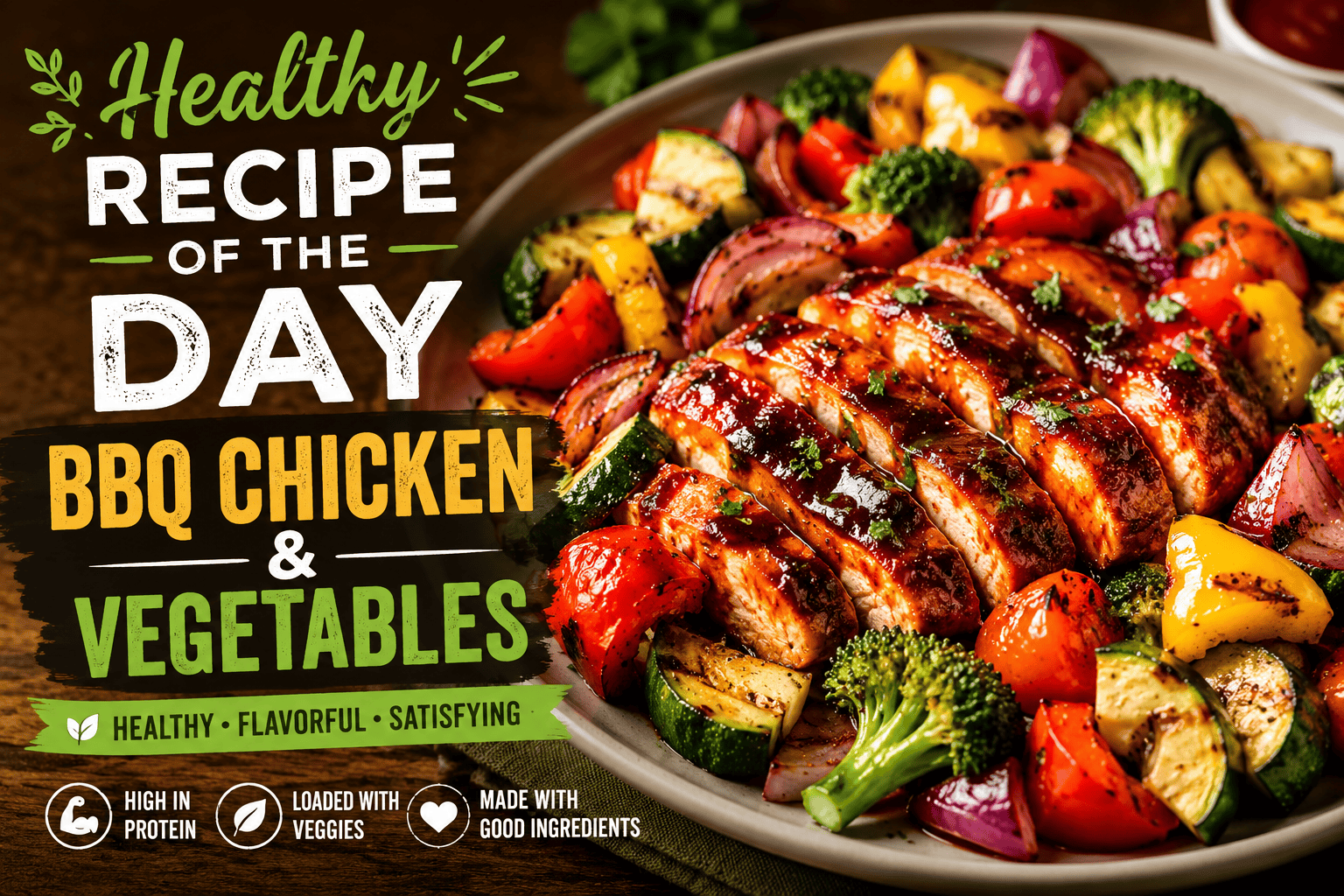
There’s something incredibly satisfying about the combination of smoky barbecue chicken and colorful vegetables. You get the familiar sweet and savory flavors of a backyard barbecue while still putting together a meal packed with lean protein and vegetables.
Today’s Healthy Recipe of the Day: BBQ Chicken and Vegetables is designed for those days when you want something flavorful and filling without making dinner overly complicated.
Tender chicken is seasoned with garlic, onion, and smoked paprika before being coated with barbecue sauce. Bell peppers, zucchini, yellow squash, broccoli, tomatoes, and red onion add color, texture, and plenty of vegetables to the plate.
Even better, you can prepare this recipe several different ways.
Roast everything on a sheet pan.
Cook it in a skillet.
Fire up the grill.
Turn it into BBQ chicken bowls.
Make colorful chicken and vegetable skewers.
Or prepare a big batch for lunches and dinners throughout the week.
However you make it, this is one healthy dinner that certainly doesn’t have to taste boring.
Why You’ll Love This Healthy BBQ Chicken Recipe
Healthy recipes are much easier to stick with when they actually taste good.
That’s exactly what makes BBQ chicken and vegetables such a useful recipe to keep in your regular meal rotation.
The barbecue sauce provides plenty of flavor, while the vegetables help make the meal substantial without requiring a heavy side dish.
You’ll also love this recipe because it’s:
High in protein. Chicken breast provides a generous amount of lean protein.
Loaded with vegetables. You’re getting several different vegetables in one meal.
Easy to customize. Change the vegetables, seasonings, sauce, or side dishes whenever you want.
Meal-prep friendly. Make several portions at once and you’ve got lunch or dinner ready for the next few days.
Family friendly. BBQ chicken is familiar enough that even people who aren’t enthusiastic about “healthy food” may enjoy it.
Great year-round. Grill it during summer or make the sheet-pan version when it’s too cold to cook outside.
Most importantly, it doesn’t require complicated ingredients or advanced cooking skills.
BBQ Chicken and Vegetables Recipe
Prep Time: 15 minutes
Cook Time: 25–30 minutes
Total Time: About 40–45 minutes
Servings: 4–6
Ingredients
For the BBQ Chicken
- 1 ½ pounds boneless, skinless chicken breasts
- ½ cup barbecue sauce
- 1 tablespoon olive oil
- 1 teaspoon smoked paprika
- 1 teaspoon garlic powder
- ½ teaspoon onion powder
- ½ teaspoon black pepper
- ¼ teaspoon salt
- ¼ teaspoon chili powder, optional
For the Vegetables
- 1 red bell pepper, cut into chunks
- 1 yellow or orange bell pepper, cut into chunks
- 1 medium zucchini, sliced
- 1 medium yellow squash, sliced
- 1 small red onion, cut into chunks
- 1 cup broccoli florets
- 1 cup cherry or grape tomatoes
- 1 tablespoon olive oil
- ½ teaspoon garlic powder
- ½ teaspoon smoked paprika
- ¼ teaspoon black pepper
- Pinch of salt
Optional Garnishes
- Chopped fresh parsley
- Fresh cilantro
- Sliced green onions
- Crushed red pepper flakes
- Freshly ground black pepper
- Extra barbecue sauce
- Lime wedges
How to Make BBQ Chicken and Vegetables
Step 1: Preheat the Oven
Preheat your oven to 425°F.
A relatively high oven temperature helps the vegetables roast instead of slowly steaming. You want some browned edges and caramelization while keeping the vegetables tender.
Line a large sheet pan with parchment paper or lightly coat it with cooking spray for easier cleanup.
Step 2: Prepare the Chicken
Pat the chicken breasts dry with paper towels.
If the chicken breasts are particularly thick, slice them horizontally into thinner pieces or pound them gently until they’re approximately the same thickness.
This helps the chicken cook more evenly.
Place the chicken in a large bowl.
Drizzle with olive oil and season with:
- Smoked paprika
- Garlic powder
- Onion powder
- Black pepper
- Salt
- Chili powder, if using
Rub the seasonings over both sides of the chicken.
At this stage, don’t completely cover the chicken with barbecue sauce. You’ll add most of the sauce later so it doesn’t burn during cooking.
Step 3: Prepare the Vegetables
Wash and dry all your vegetables.
Cut them into relatively similar-sized pieces so they cook at roughly the same rate.
Place the bell peppers, zucchini, yellow squash, red onion, broccoli, and tomatoes in a large bowl.
Drizzle with olive oil.
Sprinkle with garlic powder, smoked paprika, black pepper, and a small pinch of salt.
Toss until the vegetables are lightly coated.
You don’t need a lot of oil. The goal is simply to give the vegetables enough moisture to help them roast and develop some color.
Step 4: Arrange Everything on the Sheet Pan
Spread the vegetables across the sheet pan.
Arrange the chicken between the vegetables, leaving a little room around each piece when possible.
One important rule for sheet-pan meals is:
Don’t overcrowd the pan.
When vegetables are packed tightly together, the moisture they release becomes trapped and they begin steaming.
They’ll still cook, but you won’t get the same delicious roasted edges.
If you’re doubling the recipe, consider using two sheet pans.
Step 5: Begin Roasting
Place the sheet pan in the preheated oven.
Roast for approximately 15 minutes.
Remove the pan carefully.
Turn or stir the vegetables.
Now brush the chicken generously with barbecue sauce.
Return the pan to the oven.
Step 6: Finish Cooking
Continue roasting for another 5–10 minutes, depending on the thickness of your chicken.
Chicken should reach a safe internal temperature of 165°F at the thickest part.
A meat thermometer makes checking much easier.
Once the chicken is cooked, remove the sheet pan from the oven.
Brush the chicken with a little additional barbecue sauce if desired.
Allow the chicken to rest for approximately five minutes before slicing.
Why Add the BBQ Sauce Near the End?
This small step can make a big difference.
Most barbecue sauces contain some form of sugar, whether that’s brown sugar, honey, molasses, corn syrup, fruit concentrate, or another sweetener.
Sugar caramelizes quickly at high temperatures.
That’s delicious when controlled.
But leave sugary barbecue sauce under intense heat for too long and it can go from caramelized to burned.
Cooking the chicken mostly with dry seasonings and adding the BBQ sauce toward the end gives you a sticky, flavorful coating without as much risk of burning.
How to Choose a Healthier BBQ Sauce
You don’t have to give up barbecue sauce to make a healthier meal.
Instead, compare labels.
Pay particular attention to:
- Added sugar
- Sodium
- Serving size
- Calories
- Ingredient list
Some sauces are considerably sweeter than others.
You can also reduce the amount of barbecue sauce and increase the seasonings on the chicken.
Smoked paprika is especially helpful because it contributes a barbecue-style smoky flavor without adding sugar.
Make Your Own Simple BBQ Sauce
If you want more control over the ingredients, you can make a quick homemade barbecue sauce.
Combine:
- ½ cup tomato sauce
- 1 tablespoon tomato paste
- 1 tablespoon apple cider vinegar
- 1 tablespoon honey or maple syrup
- 1 teaspoon Worcestershire sauce
- ½ teaspoon smoked paprika
- ½ teaspoon garlic powder
- ¼ teaspoon onion powder
- Black pepper to taste
- Pinch of cayenne, optional
Stir everything together in a small saucepan.
Simmer over low heat for approximately 10 minutes, stirring occasionally.
Taste and adjust the sweetness, acidity, or spice level.
The Vegetables Are Just as Important as the Chicken
The chicken may be the star of the recipe, but don’t treat the vegetables like an afterthought.
Using several vegetables gives you different flavors and textures.
Bell peppers become sweeter as they roast.
Red onions soften and caramelize around the edges.
Broccoli develops slightly crispy roasted tips.
Zucchini and yellow squash become tender while soaking up the smoky seasonings.
Cherry tomatoes soften and release their natural sweetness.
Combined with BBQ chicken, you get something different in nearly every bite.
Use the Rainbow When Choosing Vegetables
One easy way to make meals more interesting is to use several colors.
For this recipe, you might have:
Red from bell peppers and tomatoes.
Yellow from peppers and squash.
Green from zucchini and broccoli.
Purple from red onions.
Besides providing different nutrients, colorful vegetables make your meal look much more appealing.
We often eat with our eyes before taking the first bite, and a colorful plate simply looks more inviting.
Don’t Overcook Your Vegetables
Nobody gets excited about mushy vegetables.
The goal is tender vegetables that still have some texture.
One challenge with this recipe is that different vegetables cook at different speeds.
Broccoli and onions can handle longer roasting.
Zucchini and squash cook relatively quickly.
Cherry tomatoes can become very soft if roasted too long.
If you prefer firmer vegetables, start roasting the broccoli, peppers, and onions first.
Add the zucchini, squash, and tomatoes approximately 10 minutes later.
This extra step isn’t required, but it gives you greater control over the final texture.
Try Different Vegetable Combinations
Use the recipe as a starting point rather than a strict rule.
You can easily substitute vegetables based on what’s in season or already sitting in your refrigerator.
Try adding:
- Mushrooms
- Asparagus
- Cauliflower
- Brussels sprouts
- Green beans
- Carrots
- Corn
- Eggplant
- Sweet potatoes
- Baby potatoes
- Snap peas
Just remember that harder vegetables such as carrots, potatoes, and sweet potatoes usually require more cooking time.
Cutting them into smaller pieces can help.
Grilled BBQ Chicken and Vegetables
When the weather is nice, take this recipe outside.
BBQ chicken tastes fantastic cooked over a grill because you get additional smoky and charred flavors.
Preheat your grill to medium-high heat.
Season the chicken as directed.
Place it on the grill and cook until nearly done, turning as necessary.
During the final few minutes, brush the chicken with barbecue sauce.
Continue grilling until the chicken reaches 165°F internally.
For the vegetables, use a grill basket so smaller pieces don’t fall through the grates.
Toss the vegetables occasionally until they’re tender and lightly charred.
Serve everything together with additional BBQ sauce on the side.
BBQ Chicken and Vegetable Skewers
Another fun option is turning the recipe into kabobs.
Cut the chicken into approximately 1-inch pieces.
Use vegetables such as:
- Bell peppers
- Red onion
- Zucchini
- Yellow squash
- Mushrooms
Thread alternating pieces of chicken and vegetables onto skewers.
Season everything before grilling.
Cook the skewers over medium-high heat, turning occasionally.
Brush with barbecue sauce toward the end of cooking.
Continue cooking until the chicken reaches 165°F.
If you’re using wooden skewers, soaking them in water before grilling can help reduce scorching.
These skewers are perfect for summer gatherings because they’re colorful, easy to serve, and portion-friendly.
Easy Skillet BBQ Chicken and Vegetables
No grill?
Don’t want to heat the oven?
Make everything in a large skillet.
Cut the chicken into bite-sized pieces.
Heat a small amount of olive oil in a large skillet over medium-high heat.
Add the seasoned chicken.
Cook until browned and nearly cooked through.
Transfer the chicken temporarily to a plate.
Add the vegetables to the same skillet.
Cook until tender-crisp.
Return the chicken to the skillet.
Pour in the barbecue sauce.
Stir everything together and continue cooking until the chicken reaches 165°F.
Dinner is done.
Turn It Into a BBQ Chicken Bowl
Bowls are one of the easiest ways to turn leftovers into an entirely different meal.
Start with a base such as:
- Brown rice
- Quinoa
- Cauliflower rice
- Wild rice
- Mixed greens
Add roasted vegetables.
Slice the BBQ chicken and place it on top.
Then add your favorite toppings.
Try:
- Green onions
- Cilantro
- Diced avocado
- Corn
- Black beans
- Tomatoes
- Jalapeños
- Plain Greek yogurt
- Lime juice
- Small drizzle of barbecue sauce
You can customize each bowl depending on what you have available.
Make a BBQ Chicken Salad
Another great way to use leftovers is a BBQ chicken salad.
Start with a large bowl of chopped romaine or mixed greens.
Add sliced leftover BBQ chicken and vegetables.
Then add:
- Corn
- Black beans
- Tomatoes
- Cucumber
- Red onion
- Avocado
Finish with a light dressing or a small drizzle of BBQ sauce mixed with plain Greek yogurt.
You get the flavor of BBQ chicken in a completely different meal.
What to Serve With BBQ Chicken and Vegetables
Although chicken and vegetables can make a satisfying meal by themselves, there are plenty of healthy sides you can add.
Brown Rice
Brown rice is simple, filling, and pairs beautifully with BBQ sauce.
Spoon the chicken and vegetables over the rice and allow the extra sauce to soak into it.
Quinoa
Quinoa provides additional protein and fiber and works especially well when you’re making BBQ chicken bowls.
Cauliflower Rice
If you want to increase the vegetable portion of the meal, cauliflower rice is an easy option.
Sweet Potatoes
Roasted or baked sweet potatoes complement the smoky-sweet flavor of barbecue sauce.
Corn on the Cob
BBQ chicken and corn are a classic summertime combination.
Green Salad
A crisp salad adds freshness and provides contrast to the warm roasted chicken and vegetables.
Healthy Meal Prep Made Easy
This recipe is particularly useful for meal prepping because all the major components can be prepared together.
Cook a large batch on Sunday and divide it between meal-prep containers.
For example:
Container 1: BBQ chicken + roasted vegetables + brown rice
Container 2: BBQ chicken + roasted vegetables + quinoa
Container 3: BBQ chicken + vegetables + cauliflower rice
Container 4: BBQ chicken + vegetables to add to a fresh salad later
Using slightly different bases can keep the meals from feeling repetitive.
Keep additional barbecue sauce in a separate container so you can add it after reheating.
How to Store Leftovers
Allow the chicken and vegetables to cool before transferring them to airtight containers.
Refrigerate leftovers promptly.
For best quality, enjoy them within approximately 3–4 days.
Store any extra barbecue sauce separately.
If you’re meal prepping salads, keep the lettuce separate from the warm ingredients until you’re ready to eat.
How to Reheat BBQ Chicken and Vegetables
There are several ways to reheat leftovers.
Microwave
The microwave is the fastest option.
Heat until the chicken is steaming hot throughout.
Skillet
A skillet is one of the best methods for maintaining texture.
Add the chicken and vegetables to a skillet over medium heat and cook until heated through.
Oven
Place leftovers on a baking sheet and warm them in a moderate oven until hot.
Avoid overheating the chicken because lean chicken breast can become dry.
A little additional barbecue sauce can help restore moisture.
Make It Spicy
If you like heat, there are plenty of ways to turn this into spicy BBQ chicken.
Add:
- Cayenne pepper
- Crushed red pepper
- Jalapeños
- Chipotle powder
- Hot sauce
- Spicy barbecue sauce
Chipotle is particularly good because it adds both heat and smoky flavor.
You could even make half the chicken mild and half spicy if you’re cooking for people with different preferences.
Make It Smokier
Want even more barbecue flavor?
Increase the smoked paprika slightly.
You can also add a small amount of:
- Chipotle powder
- Cumin
- Chili powder
- Smoked salt
Just remember that smoked salt contributes sodium, so use it sparingly.
Make It Sweeter
Some people love a sweeter BBQ flavor.
Instead of pouring on more sauce, try adding a small amount of natural sweetness.
A touch of honey can work.
You could also roast pineapple chunks alongside the vegetables.
Pineapple and BBQ chicken are an excellent combination because the sweet and tangy fruit contrasts with the smoky sauce.
Try BBQ Chicken and Pineapple
For a tropical variation, add fresh pineapple chunks.
Combine:
- Chicken
- Red bell pepper
- Green bell pepper
- Red onion
- Pineapple
Grill them as skewers or roast them together.
Brush the chicken with BBQ sauce near the end.
The pineapple caramelizes slightly as it cooks, giving you a combination of sweet, smoky, savory, and tangy flavors.
Add More Protein
Chicken already provides plenty of protein, but you can make your BBQ bowl even more substantial by adding:
- Black beans
- Chickpeas
- Quinoa
- Greek yogurt-based sauce
Beans are especially useful because they also contribute fiber.
Control the Portion Without Feeling Deprived
Healthy eating isn’t necessarily about making every portion tiny.
Instead, think about how the plate is balanced.
A simple approach is to make vegetables a large part of your plate, add a reasonable serving of chicken, and include a moderate portion of whole grains or another nutritious carbohydrate when desired.
The result can still be a generous-looking, satisfying meal.
Healthy Eating Doesn’t Have to Be Complicated
Sometimes people assume eating healthier requires unusual ingredients, complicated meal plans, or giving up everything they enjoy.
It doesn’t.
Simple changes can make a big difference.
Grill or roast instead of deep frying.
Choose lean protein more often.
Add more vegetables.
Watch heavily sweetened sauces.
Use spices and herbs generously.
Pay attention to portions.
Drink water with your meal.
And most importantly, make food that you genuinely look forward to eating.
That’s what makes healthy habits easier to continue.
Budget-Friendly Tips
Healthy meals don’t necessarily have to be expensive either.
Shop for vegetables that are in season or on sale.
Frozen vegetables can also work when fresh produce is expensive.
Buy larger packages of chicken when they’re discounted and freeze individual portions.
Store-brand barbecue sauces may cost considerably less than premium brands, so compare nutrition labels instead of assuming a more expensive sauce is automatically healthier.
And don’t throw away leftover vegetables.
If you’ve got half a pepper, part of an onion, broccoli, or zucchini left in the refrigerator, this recipe is an excellent way to use them.
Great for Cleaning Out the Refrigerator
This is one of those recipes where you don’t need exact vegetables.
Open your refrigerator and see what needs to be used.
A little broccoli?
Throw it in.
Half an onion?
Use it.
One lonely zucchini?
Perfect.
A handful of mushrooms?
Add those too.
Recipes like this can help reduce food waste while creating a different combination every time.
Perfect for Busy Weeknights
After a long day, complicated cooking is often the last thing anyone wants.
That’s where sheet-pan recipes really shine.
There aren’t multiple pots and pans.
You don’t need to stand over the stove.
Most of the cooking happens while you’re doing something else.
Prepare everything.
Put it on the pan.
Roast it.
Add sauce.
Finish cooking.
Serve.
And cleanup is relatively easy.
That’s a weeknight dinner win.
Perfect for Summer Cookouts Too
BBQ chicken doesn’t have to mean heavy sides and oversized portions.
You can build a lighter cookout around grilled chicken and vegetables.
Serve the chicken with grilled peppers, zucchini, onions, corn, and a large salad.
People can choose what they want and build their own plates.
You still get all the familiar smells and flavors of summer grilling while including plenty of vegetables.
Frequently Asked Questions
Can I use chicken thighs?
Absolutely.
Boneless, skinless chicken thighs are flavorful and tend to stay juicy during cooking.
They may require a slightly different cooking time, so always use internal temperature rather than time alone to determine doneness.
Can I use frozen vegetables?
Yes, although fresh vegetables generally roast better.
Frozen vegetables contain more moisture and may steam rather than brown.
If using frozen vegetables, avoid overcrowding the pan.
Can I make this ahead?
Yes.
You can chop the vegetables and season the chicken ahead of time.
Store them separately in the refrigerator until you’re ready to cook.
Can I make it without BBQ sauce?
Certainly.
Season the chicken heavily with smoked paprika, garlic, onion powder, pepper, and other spices.
You’ll end up with more of a smoky roasted chicken and vegetable dish.
Can I double the recipe?
Yes, but use two sheet pans.
Trying to fit twice as much food onto one pan will overcrowd it and prevent the vegetables from roasting properly.
Healthy Recipe of the Day Tip
Don’t focus only on removing foods from your diet. Look for ways to add nutritious ingredients to meals you already enjoy.
Love BBQ chicken?
Great.
Instead of giving it up, surround it with colorful roasted vegetables.
Love BBQ bowls?
Build one with vegetables, lean chicken, brown rice, and flavorful toppings.
Enjoy cookouts?
Grill vegetables alongside your chicken.
Healthy eating can often be about improving familiar meals rather than completely replacing them.
A Healthy Dinner Worth Repeating
The best healthy recipes are the ones you actually want to make again.
BBQ Chicken and Vegetables checks a lot of boxes.
It’s easy.
It’s colorful.
It’s customizable.
It’s protein-packed.
It’s loaded with vegetables.
It’s suitable for meal prep.
And most importantly, it’s full of flavor.
You can roast it on a busy weeknight, grill it on a summer afternoon, turn the leftovers into lunch bowls, or make colorful skewers for your next cookout.
There are enough variations that the basic recipe never has to feel exactly the same.
Final Thoughts
Healthy eating becomes much more enjoyable when you stop thinking of it as a choice between food that’s good for you and food that tastes good.
You can have both.
Today’s Healthy Recipe of the Day: BBQ Chicken and Vegetables brings together juicy chicken, smoky barbecue flavor, roasted vegetables, simple seasonings, and plenty of opportunities to customize the meal.
Make the sheet-pan version when you’re short on time.
Grill it when the weather is beautiful.
Turn it into skewers for your next cookout.
Prepare BBQ chicken bowls for the week.
Use leftover chicken on salads.
Or simply pile the chicken and colorful vegetables onto your plate and enjoy.
Sometimes healthy cooking really can be that simple.
Healthy Recipe of the Day: BBQ Chicken and Vegetables — smoky, colorful, satisfying, and proof that adding more vegetables doesn’t mean sacrificing the flavors you love.



Leave a Reply