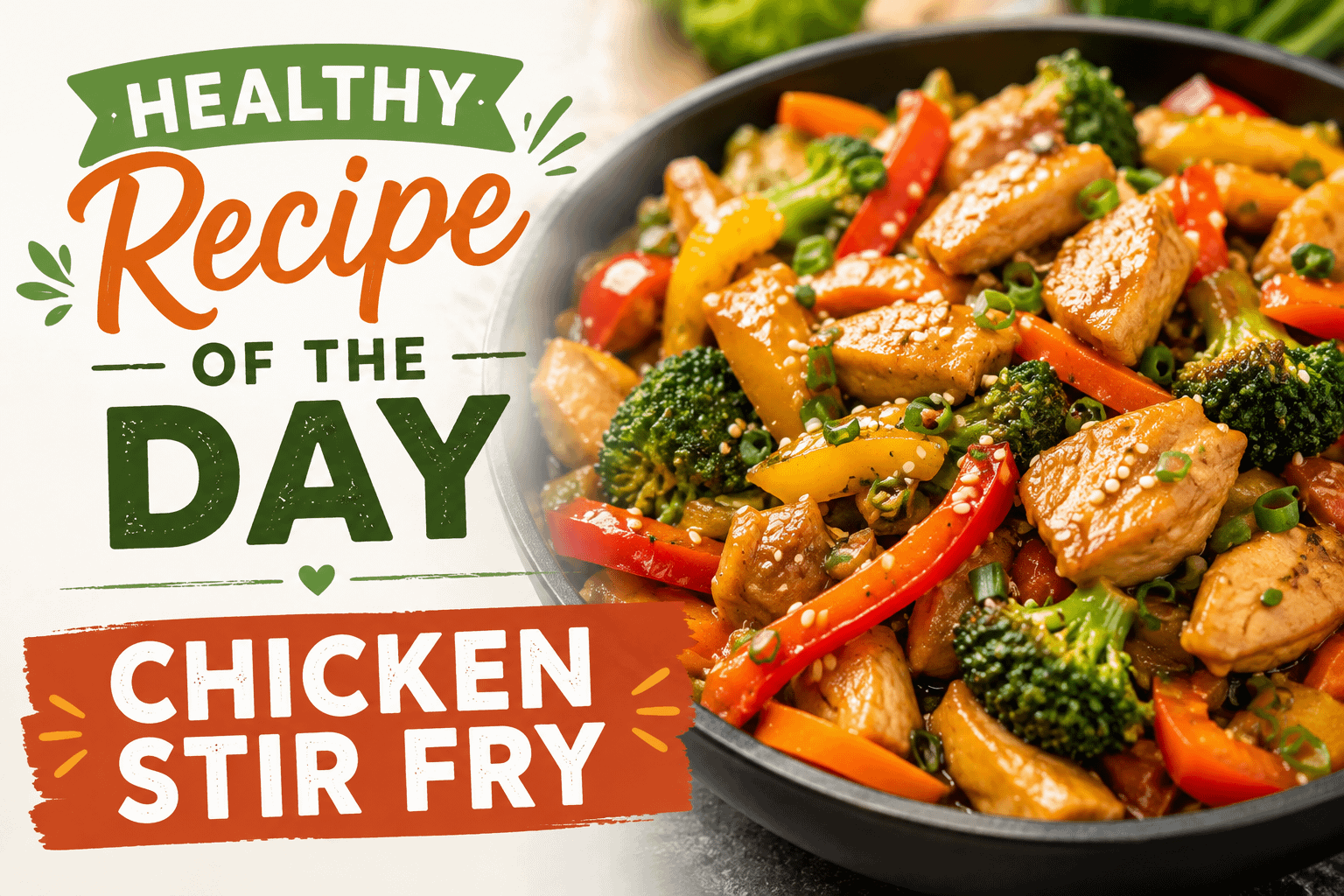
When you need a dinner that is fast, colorful, filling, and packed with fresh ingredients, a homemade chicken stir fry is one of the easiest meals to put on the table.
Today’s Healthy Recipe of the Day: Chicken Stir Fry combines tender pieces of chicken breast with broccoli, carrots, colorful bell peppers, fresh ginger, and garlic. Everything is tossed in a homemade sweet-and-savory sauce featuring honey, low-sodium soy sauce, toasted sesame oil, and just enough crushed red pepper to provide a little kick.
The recipe is inspired by the Easy Chicken Stir Fry from Mom On Timeout, which lists an 8-minute prep time and 10-minute cooking time, bringing the entire meal together in about 18 minutes. The original recipe makes four servings at approximately 343 calories and 26 grams of protein per serving.
That makes this a particularly useful recipe for busy evenings when ordering takeout sounds tempting but you would rather prepare something fresh at home.
A Healthy Dinner Doesn’t Have to Be Complicated
One of the biggest misconceptions about eating healthier is that every meal needs to involve complicated ingredients, extensive meal preparation, or foods that don’t leave you feeling satisfied.
It doesn’t.
Sometimes the simplest approach is the most sustainable: choose a lean protein, add plenty of vegetables, prepare everything with flavorful seasonings, and keep the cooking method straightforward.
Chicken stir fry does exactly that.
You get chicken for protein, several servings of colorful vegetables, and a flavorful sauce—all prepared in one skillet or wok.
There is also plenty of room for customization. You can increase the vegetables, change the vegetables according to what’s in your refrigerator, reduce the sweetness of the sauce, adjust the spice level, or choose a lighter side.
It is the kind of healthy recipe that doesn’t necessarily feel like you’re eating a “health food” meal.
It simply tastes like a delicious dinner.
Why You’ll Love This Chicken Stir Fry
There are plenty of reasons to keep this recipe in your regular dinner rotation.
It’s Fast
From beginning to end, you can have dinner ready in roughly 20 minutes.
That makes stir fry perfect for those evenings when you don’t have much time—or energy—to cook.
It’s Loaded With Vegetables
Broccoli, carrots, and red and yellow bell peppers give the dish plenty of color, texture, and variety.
It’s High in Protein
The original recipe provides approximately 26 grams of protein per serving.
Everything Cooks in One Skillet
Fewer pots and pans means less cleanup after dinner.
It’s Family-Friendly
The honey in the sauce provides a touch of sweetness, while the crushed red pepper flakes are optional. You can easily keep the dish mild for children or make it spicier for adults.
It’s Easy to Customize
You aren’t limited to broccoli, carrots, and peppers. Stir fry works with an enormous variety of vegetables.
It’s Great for Meal Prep
Make an extra batch and portion the chicken and vegetables into containers with brown rice, quinoa, or cauliflower rice for easy lunches.
Ingredients
For the Chicken and Vegetables
- 1 pound boneless, skinless chicken breast, cut into approximately 1-inch cubes
- Salt, to taste
- Black pepper, to taste
- 2 tablespoons olive oil, divided
- 2 cups broccoli florets
- ½ yellow bell pepper, cut into pieces
- ½ red bell pepper, cut into pieces
- ½ cup sliced baby carrots
- 2 teaspoons minced fresh ginger
- 2 garlic cloves, minced
For the Homemade Stir-Fry Sauce
- 1 tablespoon cornstarch
- 2 tablespoons cold water
- ¼ cup low-sodium chicken broth
- 3 tablespoons low-sodium soy sauce
- ¼ cup honey
- 1 tablespoon toasted sesame oil
- ½ teaspoon crushed red pepper flakes, optional
The sauce in the source recipe gets its sweetness from honey, savory character from soy sauce and chicken broth, and distinctive flavor from toasted sesame oil. Cornstarch and water help thicken it once the sauce reaches a boil.
Ingredient Spotlight: Chicken Breast
Boneless, skinless chicken breast is one of the easiest proteins to incorporate into quick weeknight dinners.
For stir fry, cutting the chicken into relatively small, uniform pieces is especially important.
Smaller pieces cook quickly, and keeping them similar in size helps everything finish cooking at approximately the same time.
You don’t want some pieces overcooked while larger pieces are still undercooked in the center.
Chicken breast also has a relatively mild flavor, which allows the garlic, ginger, sesame oil, honey, and soy sauce to become the stars of the dish.
If you prefer darker meat, boneless chicken thighs can also work. The source recipe specifically notes chicken thighs as an alternative.
Why Broccoli Works So Well in Stir Fry
Broccoli is practically made for stir fry.
The florets absorb the sauce while retaining some texture when cooked properly. The key is not cooking them for too long.
You aren’t trying to create extremely soft broccoli.
Instead, you’re aiming for crisp-tender vegetables.
That means the broccoli is cooked enough to be pleasant to eat while retaining a little bite.
Broccoli also adds a beautiful deep-green color that contrasts nicely with the red and yellow peppers and orange carrots.
Eating with your eyes matters, too. A colorful dinner can immediately look more appetizing.
Don’t Forget the Bell Peppers
Bell peppers bring sweetness, crunch, and color to the dish.
Using both red and yellow peppers creates an especially attractive stir fry, but you don’t have to follow those colors exactly.
You can use:
- Red bell peppers
- Yellow bell peppers
- Orange bell peppers
- Green bell peppers
- A combination of several colors
If peppers are particularly large, you may not need the entire pepper.
Save the remaining pieces for omelets, salads, wraps, sandwiches, or another stir fry later in the week.
Carrots Add Natural Sweetness and Crunch
Carrots provide another layer of color and texture.
Because carrots are denser than bell peppers, slicing them relatively thinly helps them cook quickly.
Baby carrots are convenient because you can simply slice them and add them to the skillet.
If you’re using whole carrots, peel and slice them into thin pieces.
You want them softened slightly while still retaining some crunch.
Garlic and Ginger: Small Ingredients With Big Flavor
Two of the most important ingredients in this entire dish are also among the smallest.
Garlic and ginger.
Fresh ginger gives stir fry its distinctive warm, slightly spicy flavor, while garlic provides depth and aroma.
Together, they transform simple chicken and vegetables into something much more interesting.
One important cooking tip: don’t add the garlic too early.
Garlic can burn relatively quickly.
The source recipe adds ginger and garlic after the vegetables have cooked until nearly crisp-tender, then cooks them for about another minute.
That’s enough time for the garlic and ginger to become aromatic without leaving them sitting in the hot skillet for too long.
The Homemade Stir-Fry Sauce
The sauce is where everything comes together.
You could certainly purchase bottled stir-fry sauce, but making your own gives you much greater control over the final flavor.
This sauce balances several different elements.
Honey
Honey provides sweetness and balances the saltiness of the soy sauce.
If you’re trying to reduce added sugar, you can experiment with using a smaller amount. Just remember that changing the quantity will also change the balance and consistency of the finished sauce.
Low-Sodium Soy Sauce
Soy sauce provides the salty, savory foundation.
Choosing low-sodium soy sauce can help reduce the overall sodium compared with standard varieties.
Chicken Broth
Chicken broth adds liquid and another layer of savory flavor.
Again, choosing a low-sodium version gives you more control.
Toasted Sesame Oil
A small amount goes a long way.
Toasted sesame oil has a strong, nutty aroma and gives the sauce much of its distinctive character.
Crushed Red Pepper
The crushed red pepper flakes are optional.
Add them if you enjoy a little heat, reduce them for a milder stir fry, or leave them out completely for a family-friendly version.
Cornstarch
Cornstarch is what transforms the sauce from a thin liquid into a glossy coating.
It’s first mixed with cold water to create a slurry. Once the completed sauce heats and briefly boils, it thickens and coats the chicken and vegetables.
How to Make Healthy Chicken Stir Fry
Step 1: Prepare Everything Before Cooking
Stir fry moves quickly.
This isn’t the type of recipe where you want to start chopping your vegetables after the chicken is already cooking.
Before turning on the stove:
- Cut the chicken
- Chop the broccoli
- Slice the peppers
- Slice the carrots
- Mince the garlic
- Mince the ginger
- Prepare the sauce
Once everything is ready, cooking becomes much easier.
Step 2: Make the Stir-Fry Sauce
In a medium bowl, whisk together:
- Cornstarch
- Cold water
Continue whisking until the cornstarch has dissolved.
Then add:
- Chicken broth
- Soy sauce
- Honey
- Toasted sesame oil
- Crushed red pepper flakes
Whisk everything together until well combined.
Set the bowl aside while you cook the chicken.
Step 3: Heat the Skillet
Add 1 tablespoon of olive oil to a large skillet or wok.
Heat over medium-high heat.
You want the skillet properly heated before adding the chicken.
A hot skillet helps the outside of the chicken develop flavor rather than simply steaming.
Step 4: Cook the Chicken
Add the cubed chicken to the skillet.
Season lightly with salt and black pepper.
Cook for approximately 3 to 5 minutes, or until the chicken is cooked through.
If you’re using a smaller skillet, cook the chicken in batches.
This is an important step.
Overcrowding the skillet traps moisture. Instead of browning, your chicken can begin steaming in the accumulated liquid.
Cooking in batches takes slightly longer, but the improved texture can be worth it.
Once cooked, transfer the chicken to a clean plate.
Step 5: Cook the Vegetables
Reduce the heat to medium.
Add the remaining tablespoon of olive oil.
Add:
- Broccoli
- Bell peppers
- Carrots
Cook while stirring occasionally.
The goal is crisp-tender vegetables.
They should soften but still retain their shape, color, and a little crunch.
Step 6: Add Garlic and Ginger
Once the vegetables are nearly finished, add the minced garlic and ginger.
Stir continuously and cook for approximately one minute.
At this point, your kitchen should smell incredible.
Step 7: Return the Chicken
Add the cooked chicken back to the skillet.
Toss everything together so the chicken and vegetables are evenly distributed.
Step 8: Add the Sauce
Before pouring in the sauce, whisk it again.
Cornstarch can settle while it sits, so giving the sauce another quick whisk helps ensure everything is properly combined.
Pour the sauce over the chicken and vegetables.
Gently stir.
Make sure everything gets coated.
Step 9: Bring the Sauce to a Brief Boil
Allow the sauce to come to a boil while stirring occasionally.
Let it boil for approximately one minute.
You should notice the sauce becoming thicker and glossier.
Once it coats the chicken and vegetables nicely, remove the skillet from the heat.
Step 10: Serve Immediately
Stir fry is at its best when served hot.
Spoon it into bowls and serve it by itself or over your favorite side.
The original recipe suggests rice or chow mein as serving options.
For a healthier spin, consider brown rice, quinoa, or cauliflower rice.
How to Build a Balanced Stir-Fry Bowl
One of the easiest ways to make chicken stir fry into a balanced meal is to think of your bowl in three parts.
Start With Vegetables
Make the vegetables a major part of your serving.
You can even double the vegetables in the recipe if you’d like.
Add Chicken
Include enough chicken to provide satisfying protein.
Choose Your Base
Then decide what you want underneath everything.
Some good choices include:
Brown rice: Hearty, familiar, and excellent at soaking up the sauce.
Quinoa: A useful alternative when you want something different from rice.
Cauliflower rice: Great when you want to increase the vegetables in your meal.
White rice: There’s nothing wrong with enjoying traditional rice while keeping portions appropriate for your needs.
You can also skip the base entirely and simply enjoy a larger portion of chicken and vegetables.
More Vegetables You Can Add
One of the greatest things about stir fry is flexibility.
The original recipe notes that vegetables such as snow peas, green beans, mushrooms, onions, sugar snap peas, and green onions can work well.
You could also experiment with:
- Zucchini
- Yellow squash
- Asparagus
- Cauliflower
- Bok choy
- Cabbage
- Water chestnuts
- Baby corn
- Celery
- Brussels sprouts
You don’t necessarily need to buy special vegetables specifically for stir fry.
Look inside your refrigerator.
If you have vegetables that need to be used before they go bad, a stir fry is often the perfect solution.
Turn Leftover Vegetables Into Dinner
This is one reason stir fry can also help reduce food waste.
Maybe you have:
Half a bell pepper from breakfast.
A handful of broccoli from another dinner.
A few mushrooms.
Half an onion.
One zucchini.
A couple of carrots.
Instead of letting those ingredients sit in the refrigerator until they’re eventually thrown away, chop them up and turn them into dinner.
Add chicken and a flavorful sauce, and suddenly those leftovers become a complete meal.
Healthy Chicken Stir Fry Meal Prep
This recipe is also useful when preparing meals ahead of time.
Cook the chicken and vegetables as directed and prepare your preferred base separately.
Divide everything into individual containers.
For example:
Container 1: Brown rice + chicken stir fry
Container 2: Quinoa + chicken stir fry
Container 3: Cauliflower rice + chicken stir fry
Container 4: Extra vegetables + chicken stir fry
Now you have several easy lunches or dinners ready to go.
When reheating leftovers, make sure the chicken is heated thoroughly.
Prep the Ingredients Ahead Instead
Another meal-prep strategy is preparing everything without actually cooking it.
Earlier in the day—or even the night before—you can:
Cut the chicken.
Wash and chop the vegetables.
Mince the garlic.
Mince the ginger.
Mix the sauce.
Store everything separately in covered containers in the refrigerator.
When dinner time arrives, most of the work is already finished.
All you need to do is cook.
Ways to Make Your Stir Fry Even Healthier
Healthy eating isn’t about making every meal perfect. Small adjustments can make a meaningful difference over time.
Here are a few ways you can modify this recipe.
Add More Vegetables
Probably the easiest option.
Double the broccoli or add mushrooms, snap peas, zucchini, onions, or cauliflower.
Use Less Sauce
If you’re watching sodium or added sugar, you don’t necessarily have to use every drop of sauce.
Start with less and add more if needed.
Reduce the Honey
If you prefer less sweetness, experiment with reducing the amount of honey.
Choose Low-Sodium Ingredients
Both the chicken broth and soy sauce can contribute sodium.
Choosing low-sodium versions can help.
Serve With Cauliflower Rice
This adds even more vegetables to the meal.
Use Brown Rice
If you prefer rice, brown rice is another satisfying option.
Watch the Portion of Sauce
The chicken and vegetables are already flavorful from the garlic, ginger, sesame oil, and cooking process. You may find you don’t need as much sauce as expected.
How to Prevent Soggy Stir Fry
One of the biggest differences between a great stir fry and an average one is texture.
Nobody wants a skillet filled with soggy vegetables swimming in liquid.
A few simple techniques help.
Use a Large Skillet
The ingredients need room.
Don’t Overcrowd the Chicken
Cook it in batches if necessary.
Don’t Overcook the Vegetables
Stop when they’re crisp-tender.
Have Everything Ready
The longer ingredients sit in the skillet while you’re looking for something else, the more likely they are to overcook.
Keep Things Moving
Stir regularly so ingredients cook evenly.
Add Sauce Near the End
The vegetables shouldn’t simmer in sauce for an extended period.
Fresh vs. Frozen Vegetables
Fresh vegetables generally provide excellent texture for stir fry, and the source recipe recommends fresh vegetables when possible.
But frozen vegetables can still be useful.
Sometimes convenience matters.
If a bag of frozen stir-fry vegetables makes the difference between cooking dinner and ordering something, use the frozen vegetables.
You may need to adjust cooking time because frozen vegetables release additional moisture.
Avoid overcooking them, and allow excess moisture to evaporate before adding your sauce.
Chicken Stir Fry Variations
Once you understand the basic method, you can create dozens of variations.
Spicy Chicken Stir Fry
Add additional crushed red pepper flakes or your favorite chili sauce.
Garlic Lover’s Chicken Stir Fry
Add another one or two cloves of garlic.
Chicken and Mushroom Stir Fry
Add sliced mushrooms with the other vegetables.
Chicken and Broccoli Stir Fry
Skip the carrots and peppers and double or triple the broccoli.
Chicken and Snap Pea Stir Fry
Add fresh sugar snap peas for extra crunch.
Cashew Chicken Stir Fry
Top each serving with a small amount of chopped unsalted cashews.
Pineapple Chicken Stir Fry
Add small pieces of pineapple near the end for a sweet-and-savory variation.
Extra-Veggie Chicken Stir Fry
Reduce the chicken slightly and dramatically increase the vegetables.
This is especially useful when you’re trying to incorporate more vegetables into your daily meals.
Make It Your Own
Recipes don’t always have to be followed exactly.
Think of this chicken stir fry as a foundation.
Once you’ve made it a few times, you’ll start figuring out exactly how you prefer it.
Maybe you love broccoli and want twice as much.
Maybe you don’t care for carrots.
Maybe mushrooms are your favorite.
Maybe you want significantly more garlic.
Maybe you want the sauce spicy.
Maybe you’d rather have almost no heat at all.
That’s the beauty of cooking at home.
You get to decide.
Approximate Nutrition Information
According to the nutrition information published with the original recipe, each of four servings contains approximately:
- 343 calories
- 26 grams protein
- 29 grams carbohydrates
- 13 grams fat
- 2 grams saturated fat
- 2 grams fiber
- 19 grams sugar
- 570 milligrams sodium
- 709 milligrams potassium
The nutrition information will change depending on ingredient brands, substitutions, portion sizes, and what you serve alongside the stir fry.
Why Protein Matters in a Satisfying Meal
One reason chicken stir fry can feel more satisfying than a plate made primarily from vegetables is the protein.
Protein is an important part of a balanced diet and can contribute to satiety.
Pairing chicken with vegetables also creates a meal with different textures and flavors, which can make healthy eating feel much less repetitive.
Instead of thinking:
“I need to eat something healthy tonight.”
Think:
“I’m going to make something delicious that happens to include plenty of nutritious ingredients.”
That mindset can make healthier eating feel much more sustainable.
The Importance of Eating More Color
Take one look at this chicken stir fry and you’ll notice something immediately.
Color.
Green broccoli.
Orange carrots.
Red peppers.
Yellow peppers.
Colorful meals aren’t just visually appealing—they naturally encourage you to include a wider variety of plant foods.
An easy challenge when preparing meals is to ask yourself:
How many colors can I put on my plate?
With this recipe, you’re already off to a great start.
A Better Option for Busy Weeknights
Busy nights are when healthy eating can become difficult.
You’re tired.
You’re hungry.
Everyone wants dinner.
You don’t want to spend an hour cooking and another half hour washing dishes.
That’s exactly why simple recipes like chicken stir fry are valuable.
The original recipe lists just 18 minutes from prep through cooking.
That’s faster than many takeout orders.
And while takeout absolutely has its place, having a handful of meals you know you can prepare quickly gives you another option.
Keep These Ingredients Around
If you enjoy this recipe, consider keeping some of the basic ingredients in your kitchen.
Pantry staples might include:
- Low-sodium soy sauce
- Toasted sesame oil
- Cornstarch
- Crushed red pepper flakes
- Brown rice
- Chicken broth
Then you only need to pick up chicken and vegetables.
Keeping basic stir-fry ingredients available makes it much easier to turn whatever vegetables you have into dinner.
What to Serve With Chicken Stir Fry
Chicken stir fry is satisfying enough to serve by itself, but there are plenty of sides that can round out the meal.
Try:
Brown Rice
A classic pairing that absorbs the sauce beautifully.
Cauliflower Rice
A lighter option that adds another vegetable to your plate.
Quinoa
A hearty alternative to traditional rice.
Steamed Vegetables
If you really want to load up on vegetables, serve even more on the side.
Cucumber Salad
Cool, crisp cucumbers provide a refreshing contrast to the warm stir fry.
Lettuce Cups
Spoon smaller portions of the chicken and vegetables into lettuce leaves for a fun alternative.
Cooking for a Family
Chicken stir fry is especially convenient when everyone likes slightly different foods.
You can prepare the basic chicken and sauce while adjusting the vegetables.
For example, if someone doesn’t like peppers, you can replace them with broccoli or carrots.
If someone loves mushrooms, add them.
If you’re feeding someone who doesn’t like spicy foods, leave the crushed red pepper out of the main skillet and add spice individually at the table.
That flexibility can make family dinners much easier.
Don’t Be Afraid to Experiment
Some of the best home-cooked meals happen when you stop worrying about making a recipe exactly the same every time.
Have leftover vegetables?
Add them.
Have chicken thighs instead of chicken breast?
Use them.
No red pepper?
Use orange.
Love ginger?
Add a little more.
Want extra crunch?
Top the finished dish with a few chopped nuts or sesame seeds.
Cooking should be practical, enjoyable, and adaptable to your household.
Why Homemade Meals Matter
Preparing meals at home gives you something restaurants and takeout can’t always provide:
control.
You control the ingredients.
You control the portion.
You control how much oil goes into the skillet.
You control the sweetness.
You control the sodium.
You control the vegetables.
You control the spice.
You can make the recipe work for you instead of trying to fit your eating habits around a predetermined meal.
That doesn’t mean every meal needs to be cooked from scratch.
It simply means recipes like this give you another practical option when you want one.
Healthy Eating Is About Consistency
One healthy dinner won’t completely transform your lifestyle.
One indulgent dinner won’t ruin it either.
Healthy eating is built through the choices you make repeatedly.
That’s why realistic recipes matter.
If a meal requires two hours of preparation, twelve specialty ingredients, and a mountain of dishes afterward, you probably aren’t going to make it very often.
But a colorful chicken stir fry that can be on the table in around 20 minutes?
That’s realistic.
And realistic habits are much easier to repeat.
Final Thoughts
Healthy eating doesn’t have to mean giving up flavor, eating tiny portions, or spending your entire evening preparing dinner.
Sometimes it can be as simple as heating a skillet and combining lean chicken, fresh vegetables, garlic, ginger, and a flavorful homemade sauce.
This Chicken Stir Fry is a great example.
It’s colorful.
It’s customizable.
It’s protein-packed.
It’s loaded with vegetables.
It’s easy enough for beginners.
And most importantly, it’s something you can realistically prepare on a busy weeknight.
The combination of tender chicken, crisp broccoli, sweet carrots and peppers, aromatic garlic and ginger, and a sweet-and-savory sesame sauce creates a meal that feels satisfying without being overly complicated.
Make it exactly as written the first time, then start experimenting.
Add mushrooms.
Double the broccoli.
Throw in snap peas.
Turn up the spice.
Serve it over brown rice.
Try cauliflower rice.
Use whatever vegetables are waiting in your refrigerator.
That’s what makes stir fry such a useful recipe to have in your collection.
Healthy Recipe of the Day
Chicken Stir Fry proves that a healthier dinner can still be quick, colorful, satisfying, and full of flavor.
With approximately 20 minutes, one skillet, chicken, fresh vegetables, and a simple homemade sauce, you can put a meal on the table that the entire family can enjoy.
Sometimes healthy eating doesn’t require a complicated plan.
It starts with one good meal.
And tonight, that meal might just be Chicken Stir Fry.
What’s your favorite vegetable to add to chicken stir fry—broccoli, bell peppers, carrots, mushrooms, snap peas, or something else?
Leave a Reply