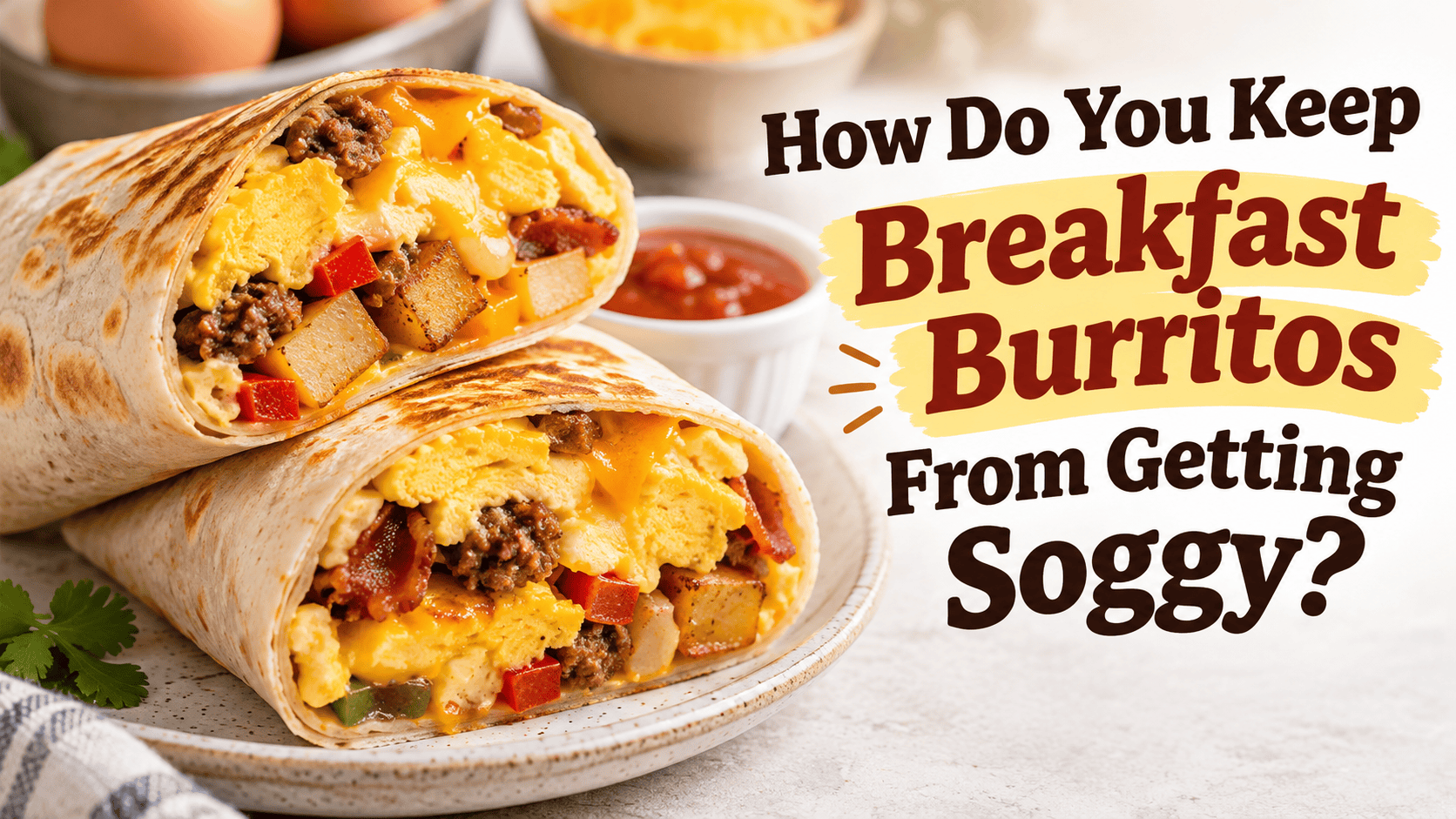
Breakfast burritos are one of the easiest and most satisfying meals to prepare for busy mornings. Filled with fluffy scrambled eggs, crispy bacon, savory sausage, melted cheese, and golden breakfast potatoes, they offer a complete breakfast wrapped in a convenient tortilla.
However, one common problem can turn a delicious breakfast burrito into a disappointing meal: sogginess.
Whether you are preparing breakfast burritos for immediate serving, making them ahead for the week, or freezing a large batch for future mornings, excess moisture can quickly ruin their texture. Instead of enjoying a warm tortilla filled with flavorful ingredients, you might end up with a soft, wet, or falling-apart burrito.
Fortunately, preventing soggy breakfast burritos is easier than you might think.
The secret to keeping breakfast burritos from getting soggy is controlling moisture, allowing hot ingredients to cool before wrapping, choosing the right fillings, and using proper storage and reheating techniques.
With a few simple adjustments, you can prepare breakfast burritos that stay delicious, hold their shape, and maintain a satisfying texture.
Why Do Breakfast Burritos Get Soggy?
Before learning how to prevent sogginess, it helps to understand what causes it.
Breakfast burritos become soggy when moisture from their fillings gets absorbed into the tortilla.
Several common ingredients and preparation mistakes contribute to this problem.
Excess Moisture From Scrambled Eggs
Scrambled eggs are one of the biggest sources of moisture in breakfast burritos.
Eggs naturally contain water, and improper cooking can leave excess liquid in the finished dish.
Adding too much milk, cream, or other liquids can make the problem worse.
When eggs continue releasing moisture after being wrapped, the tortilla absorbs that liquid and becomes soft.
Steam From Hot Ingredients
Wrapping breakfast burritos immediately after cooking is another common mistake.
Freshly cooked eggs, potatoes, sausage, and bacon release steam.
When these ingredients are sealed inside a tortilla, the steam becomes trapped and eventually condenses into water.
That moisture collects against the tortilla, causing sogginess.
Watery Vegetables
Vegetables such as tomatoes, mushrooms, onions, spinach, and bell peppers can release significant amounts of water during cooking.
If they are not properly prepared, that moisture ends up inside the burrito.
Excessive Sauces
Salsa, hot sauce, sour cream, and other breakfast condiments can add delicious flavor.
However, adding too much sauce directly inside a breakfast burrito can quickly make the tortilla wet.
Improper Storage
Even a perfectly prepared breakfast burrito can become soggy if stored incorrectly.
Wrapping warm burritos tightly in foil or plastic wrap traps moisture.
Refrigeration and freezing can also affect texture when burritos are not cooled, wrapped, and reheated properly.
1. Cook Scrambled Eggs Without Excess Moisture
One of the most effective ways to prevent soggy breakfast burritos is to prepare scrambled eggs correctly.
Eggs should be tender and fully cooked without being watery.
How to Prepare Eggs for Breakfast Burritos
-
Crack the eggs into a mixing bowl.
-
Whisk until the yolks and whites are combined.
-
Season lightly with salt and pepper.
-
Heat a nonstick skillet over medium-low heat.
-
Add a small amount of butter or oil.
-
Pour the eggs into the skillet.
-
Stir gently until they form soft curds and no liquid egg remains.
-
Remove from the heat before they become dry or rubbery.
Avoid adding large amounts of milk or cream.
Although these ingredients can produce creamy scrambled eggs, unnecessary liquid may increase the risk of sogginess.
Helpful tip: Allow scrambled eggs to cool slightly before adding them to your tortillas. This reduces trapped steam and helps preserve the texture of the burrito.
2. Let Your Breakfast Burrito Fillings Cool Before Wrapping
Cooling the fillings is one of the most important steps in preventing soggy breakfast burritos.
When hot ingredients are wrapped immediately, they release steam inside the tortilla.
That trapped steam eventually turns into moisture.
The Best Way to Cool Breakfast Burrito Fillings
After cooking your ingredients:
-
Transfer scrambled eggs to a shallow plate.
-
Spread cooked potatoes across a baking sheet.
-
Drain cooked bacon or sausage.
-
Allow sautéed vegetables to release their remaining steam.
-
Wait until the ingredients stop steaming before assembling.
For meal preparation, spreading the fillings into shallow containers helps them cool faster.
Do not leave cooked ingredients at room temperature for longer than two hours, or one hour when temperatures exceed 90°F.
If you are preparing a large batch, refrigerate the ingredients promptly in shallow containers rather than waiting for everything to reach room temperature.
The goal is to prevent steam buildup without compromising food safety.
3. Remove Excess Grease From Bacon and Sausage
Bacon and breakfast sausage are popular burrito fillings, but excess grease can create problems.
Grease may soak into tortillas, making them oily and unpleasantly soft.
Although grease is different from water, too much of it can still damage the tortilla’s texture.
How to Prepare Breakfast Meats Properly
For bacon:
-
Cook until it reaches your preferred crispness.
-
Transfer it to a paper towel-lined plate.
-
Allow excess grease to drain.
-
Chop into bite-sized pieces.
For sausage:
-
Cook thoroughly in a skillet.
-
Break the sausage into small crumbles.
-
Drain excess grease.
-
Transfer to a paper towel-lined plate if necessary.
Crispy bacon and properly drained sausage help produce a more satisfying breakfast burrito.
They also add texture that contrasts nicely with soft eggs and melted cheese.
4. Cook Breakfast Potatoes Until Crispy
Potatoes can make breakfast burritos more filling, but their preparation matters.
Soft, watery potatoes may contribute to a mushy filling.
Crispy roasted potatoes or skillet-fried breakfast potatoes generally work better.
How to Make Breakfast Potatoes for Burritos
Ingredients
-
2 medium russet potatoes
-
1 tablespoon olive oil
-
½ teaspoon garlic powder
-
½ teaspoon paprika
-
¼ teaspoon onion powder
-
Salt and black pepper to taste
Instructions
-
Preheat the oven to 425°F.
-
Wash and dice the potatoes into small cubes.
-
Pat the potatoes dry with paper towels.
-
Toss with olive oil and seasonings.
-
Spread them in a single layer on a baking sheet.
-
Roast for 25–35 minutes, turning halfway through.
-
Remove when golden brown and crispy.
-
Allow the potatoes to stop steaming before assembling the burritos.
Roasting helps remove surface moisture while creating a flavorful exterior.
Avoid adding excessive oil, which can make the finished burrito greasy.
5. Cook Vegetables Before Adding Them
Fresh vegetables add flavor, color, and nutrition to breakfast burritos.
However, some vegetables contain substantial amounts of water.
Adding them raw or insufficiently cooked can cause moisture problems, particularly when burritos are stored.
Vegetables That Can Make Breakfast Burritos Soggy
Common examples include:
-
Tomatoes
-
Mushrooms
-
Spinach
-
Bell peppers
-
Onions
-
Zucchini
These ingredients can still work well in breakfast burritos when prepared correctly.
How to Reduce Vegetable Moisture
Sauté vegetables until excess liquid evaporates.
For mushrooms, continue cooking until the liquid they release has mostly disappeared.
For spinach, cook until wilted and gently squeeze out excess moisture after cooling.
For tomatoes, remove the watery seed pockets or use a small amount of drained, cooked tomatoes.
For onions and peppers, sauté until softened and lightly browned.
Allow the cooked vegetables to stop steaming before combining them with other ingredients.
This simple step can make a significant difference in the final texture.
6. Choose the Right Tortillas
Not all tortillas perform equally well when making breakfast burritos.
The type, thickness, and size of tortilla can influence how well the burrito holds together.
Flour Tortillas
Large flour tortillas are generally the best option for traditional breakfast burritos.
They are flexible, easy to fold, and usually strong enough to hold multiple fillings.
Look for burrito-size tortillas measuring approximately 10–12 inches.
A sturdy tortilla is particularly helpful when making breakfast burritos for freezing.
Whole-Wheat Tortillas
Whole-wheat tortillas can also work well.
However, some varieties are less flexible and may crack when folded.
Warming them briefly before assembly helps.
Corn Tortillas
Corn tortillas are delicious but are generally smaller and more prone to cracking when used for large breakfast burritos.
They are better suited for breakfast tacos or smaller wraps.
Best choice: Use large, sturdy flour tortillas for breakfast burritos that need to be refrigerated, frozen, or reheated.
7. Create a Moisture Barrier With Cheese
Cheese does more than add flavor to breakfast burritos.
It can also help create a partial barrier between the tortilla and moist fillings.
A thin layer of shredded cheese placed directly against the tortilla can reduce contact with wetter ingredients.
How to Layer Breakfast Burrito Ingredients
Try assembling your burrito in this order:
-
Warm flour tortilla
-
Thin layer of shredded cheese
-
Cooked breakfast potatoes
-
Scrambled eggs
-
Cooked bacon or sausage
-
Sautéed vegetables
-
Additional cheese, if desired
Keep the fillings concentrated near the center of the tortilla.
The cheese will soften or melt when the burrito is heated, adding flavor while helping separate some of the moisture from the tortilla.
This technique is helpful, although cheese alone will not prevent sogginess if the fillings contain too much liquid.
8. Avoid Adding Salsa and Sour Cream Before Storage
Salsa and sour cream are delicious additions to breakfast burritos.
Unfortunately, they can also introduce unnecessary moisture.
This becomes especially problematic when burritos are prepared ahead of time.
The Best Way to Add Sauces
For breakfast burritos you plan to eat immediately, small amounts of sauce are usually fine.
For refrigerated or frozen burritos, consider leaving the sauces out until serving.
Instead, serve these toppings on the side:
-
Salsa
-
Sour cream
-
Hot sauce
-
Guacamole
-
Pico de gallo
-
Creamy chipotle sauce
This allows you to enjoy the flavor without compromising the tortilla during storage.
If you prefer salsa inside the burrito, choose a thick variety and drain off excess liquid first.
9. Do Not Overfill Your Breakfast Burritos
Overfilling is another common mistake.
A burrito packed with too many ingredients can become difficult to fold and more likely to tear.
It can also trap moisture in the center, particularly when the ingredients are still hot.
How Much Filling Should You Use?
For a 10-inch flour tortilla, start with approximately ¾ to 1 cup of filling.
Adjust according to the tortilla’s thickness and flexibility.
Leave enough space around the edges to fold the tortilla securely.
How to Roll a Breakfast Burrito
-
Place the fillings slightly below the center.
-
Fold the left and right sides inward.
-
Bring the bottom edge over the filling.
-
Tuck the tortilla tightly around the ingredients.
-
Continue rolling until completely sealed.
-
Place seam-side down.
A properly wrapped burrito holds together better during storage and reheating.
10. Toast Breakfast Burritos After Rolling
Toasting is one of the easiest ways to improve the texture of freshly prepared breakfast burritos.
It creates a lightly crisp exterior and helps seal the folded tortilla.
How to Toast a Breakfast Burrito
-
Heat a dry skillet over medium heat.
-
Place the wrapped burrito seam-side down.
-
Cook for approximately 1–2 minutes.
-
Turn and toast the opposite side.
-
Continue until the tortilla is lightly golden.
You can add a small amount of butter or oil for additional browning, but it is not necessary.
Toasting is especially effective for burritos being eaten immediately.
For meal-prep burritos, it is often better to toast them during reheating so the exterior is crisp when served.
How Do You Keep Make-Ahead Breakfast Burritos From Getting Soggy?
Make-ahead breakfast burritos are convenient because they allow you to prepare several breakfasts at once.
However, they require careful preparation and storage.
The most important rule is to minimize moisture before wrapping.
Best Method for Make-Ahead Breakfast Burritos
-
Cook all breakfast fillings thoroughly.
-
Drain excess grease and vegetable moisture.
-
Cool the fillings promptly until they stop steaming.
-
Warm the tortillas briefly so they are flexible.
-
Add a layer of cheese.
-
Arrange the fillings without overstuffing.
-
Roll each burrito tightly.
-
Wrap individually.
-
Refrigerate or freeze promptly.
Avoid placing steaming-hot burritos into airtight packaging.
For refrigerated burritos, store at 40°F or below and consume within 3–4 days.
This approach helps maintain both food safety and quality.
How Do You Freeze Breakfast Burritos Without Making Them Soggy?
Freezing breakfast burritos is an excellent way to prepare quick meals for busy mornings.
However, freezing does not automatically prevent moisture problems.
Ice crystals can form within the fillings, and moisture may migrate into the tortilla during thawing and reheating.
Step-by-Step Freezing Instructions
Step 1: Prepare Low-Moisture Fillings
Use fully cooked scrambled eggs, drained breakfast meats, roasted potatoes, and properly sautéed vegetables.
Avoid watery sauces and fresh tomatoes.
Step 2: Cool the Ingredients
Allow the cooked ingredients to stop steaming, using shallow containers and prompt refrigeration when necessary.
Step 3: Assemble the Burritos
Place the fillings inside large flour tortillas and roll tightly.
Step 4: Wrap Individually
Wrap each burrito securely in freezer-safe wrapping or foil.
For additional protection, place wrapped burritos inside a freezer-safe bag.
Remove excess air to reduce freezer burn.
Step 5: Label and Freeze
Write the preparation date on the packaging.
For best flavor and texture, aim to eat frozen breakfast burritos within 2–3 months.
Properly frozen burritos kept continuously at 0°F remain safe longer, although their quality may decline.
What Is the Best Way to Reheat Breakfast Burritos Without Making Them Soggy?
Reheating can make or break the texture of a breakfast burrito.
The microwave is convenient, but it can soften tortillas because moisture becomes trapped during heating.
Fortunately, several reheating methods can produce better results.
Reheating Breakfast Burritos in the Oven
The oven is a good option for reheating burritos evenly while helping the tortilla dry slightly.
Instructions
-
Preheat the oven to 350°F.
-
Remove any plastic wrapping.
-
Place the burrito on a baking sheet.
-
Cover loosely with foil to prevent excessive browning.
-
Heat a refrigerated burrito for approximately 15–25 minutes, depending on its size.
-
Remove the foil during the final few minutes for a crispier exterior.
-
Check that the center reaches 165°F before serving.
Frozen burritos will require additional time.
Reheating Breakfast Burritos in an Air Fryer
An air fryer is another excellent option for creating a crisp tortilla.
Instructions
-
Preheat the air fryer to 350°F.
-
Remove all wrapping.
-
Place the burrito in the basket.
-
Heat a refrigerated burrito for approximately 6–10 minutes.
-
Turn halfway through.
-
Continue heating until the center reaches 165°F.
Frozen burritos may require substantially longer, depending on their size and the air fryer.
If the outside browns before the center is hot, lower the temperature and continue cooking.
Reheating Breakfast Burritos in the Microwave
The microwave is the fastest method, but it requires care.
Instructions
-
Remove foil and non-microwave-safe packaging.
-
Place the burrito on a microwave-safe plate.
-
Cover loosely with a paper towel.
-
Microwave in short intervals, turning halfway through.
-
Continue until the center reaches 165°F.
-
Allow it to rest briefly before eating.
For better texture, finish the reheated burrito in a dry skillet for 1–2 minutes per side.
This combination provides microwave convenience with a crispier tortilla.
Should You Thaw Frozen Breakfast Burritos Before Reheating?
You can reheat breakfast burritos directly from frozen, but thawing them in the refrigerator first may improve heating consistency.
Frozen burritos sometimes develop hot outer layers while remaining cold in the center.
Thawing overnight in the refrigerator helps reduce this problem.
Never thaw breakfast burritos on the kitchen counter.
If reheating directly from frozen, use additional cooking time and check the internal temperature with a food thermometer.
The center should reach 165°F.
Best Breakfast Burrito Ingredients That Do Not Get Soggy Easily
Some ingredients are naturally better suited for make-ahead breakfast burritos than others.
| Better choices | Ingredients requiring extra care |
|---|---|
| Fully cooked scrambled eggs | Runny or undercooked eggs |
| Crispy bacon | Greasy bacon |
| Drained breakfast sausage | Sausage with excess grease |
| Roasted potatoes | Wet or mushy potatoes |
| Shredded cheddar cheese | Excessive creamy sauces |
| Sautéed bell peppers | Raw, watery peppers |
| Cooked, drained spinach | Wet spinach |
| Thick, drained salsa | Watery salsa |
Choosing the right combination of ingredients makes it easier to maintain a good texture.
Easy Breakfast Burrito Recipe That Won’t Get Soggy
This simple recipe uses ingredients and cooking methods that help reduce excess moisture.
Prep time: 15 minutes | Cook time: 25 minutes | Servings: 6 burritos
Ingredients
-
6 large flour tortillas
-
8 large eggs
-
½ pound breakfast sausage
-
2 medium russet potatoes, diced small
-
1 cup shredded cheddar cheese
-
½ cup diced bell peppers
-
¼ cup diced onion
-
1 tablespoon olive oil
-
½ teaspoon garlic powder
-
½ teaspoon paprika
-
Salt and black pepper to taste
-
Butter or cooking spray for the eggs
Instructions
Step 1: Cook the Potatoes
Preheat the oven to 425°F.
Toss diced potatoes with olive oil, garlic powder, paprika, salt, and pepper.
Spread on a baking sheet and roast for approximately 25–30 minutes, or until golden and tender.
Step 2: Cook the Sausage
Brown the breakfast sausage in a skillet over medium heat.
Break it into small pieces while cooking.
Drain any excess grease and set aside.
Step 3: Prepare the Vegetables
Sauté the bell peppers and onions until softened and excess moisture has evaporated.
Step 4: Scramble the Eggs
Whisk the eggs with salt and pepper.
Cook in a lightly greased nonstick skillet over medium-low heat until no liquid egg remains.
Step 5: Cool the Fillings
Spread the cooked ingredients in shallow containers and allow them to stop steaming.
If preparing burritos for later, refrigerate the fillings promptly.
Step 6: Assemble the Burritos
Warm the tortillas briefly to make them flexible.
Sprinkle each tortilla with shredded cheese.
Add potatoes, scrambled eggs, sausage, and vegetables.
Step 7: Roll Tightly
Fold the sides inward and roll each burrito securely.
Step 8: Toast or Store
For immediate serving, toast the burritos in a dry skillet until golden.
For meal preparation, wrap and refrigerate or freeze promptly.
Why This Recipe Works
This recipe helps prevent sogginess because:
-
The potatoes are roasted instead of boiled.
-
The sausage is drained before assembly.
-
The vegetables are cooked to remove excess moisture.
-
The eggs contain no added milk.
-
The cheese helps separate moist fillings from the tortilla.
-
The ingredients are allowed to stop steaming before wrapping.
The result is a flavorful breakfast burrito that is better suited for both immediate serving and meal preparation.
Common Mistakes That Make Breakfast Burritos Soggy
Even experienced home cooks can make small mistakes that affect breakfast burrito texture.
Wrapping Ingredients While They Are Too Hot
Hot fillings create trapped steam, which eventually becomes moisture.
Adding Too Much Salsa
Watery sauces soak directly into the tortilla.
Using Wet Vegetables
Vegetables that have not released their moisture during cooking may continue releasing it after wrapping.
Overcooking or Improperly Cooking Eggs
Overcooked eggs can release water as their proteins tighten, while undercooked eggs may contain unwanted liquid.
Storing Burritos Without Proper Wrapping
Poor packaging can expose burritos to freezer burn, while sealing steaming-hot fillings traps condensation.
Reheating Too Quickly
Using excessive heat may produce a hot exterior while leaving the center cold.
Overfilling the Tortilla
Too many ingredients make the burrito difficult to seal and can increase the risk of tearing.
Avoiding these mistakes can dramatically improve the finished meal.
Frequently Asked Questions
How do you keep breakfast burritos crispy?
Use low-moisture fillings, drain excess grease, and toast the wrapped burritos in a dry skillet. For make-ahead burritos, reheating in an oven or air fryer can help restore a crisp exterior.
Why are my frozen breakfast burritos watery?
Frozen breakfast burritos can become watery when their fillings contain excess moisture. Ice crystals form during freezing, and water may move into the tortilla during thawing and reheating. Cooling ingredients properly and avoiding watery sauces can help.
Should you wrap breakfast burritos in foil or plastic wrap?
Both can work when used correctly. Foil is useful for wrapping and oven reheating, while freezer-safe plastic wrap or bags can help protect against air exposure. Never microwave aluminum foil or non-microwave-safe plastic wrap.
Can you put salsa inside frozen breakfast burritos?
Yes, but thick, well-drained salsa works better than watery salsa. For the best texture, add salsa after reheating instead.
How long do homemade breakfast burritos last in the refrigerator?
Properly refrigerated breakfast burritos generally last 3–4 days when stored at 40°F or below.
What cheese works best in breakfast burritos?
Cheddar, Monterey Jack, pepper Jack, and Mexican-style cheese blends are all good choices. Shredded cheese melts easily and can help create a partial barrier between the tortilla and moist fillings.
Is it better to freeze breakfast burritos before or after cooking?
Cook the fillings before assembling and freezing breakfast burritos. Raw eggs, uncooked sausage, and other raw fillings are not suitable for a typical ready-to-reheat breakfast burrito.
Can you make breakfast burritos the night before?
Yes. Prepare the fillings, allow them to stop steaming, assemble the burritos, wrap securely, and refrigerate promptly. Reheat thoroughly the following morning.
How do you keep breakfast burritos from getting soggy in the microwave?
Use a paper towel to absorb some surface moisture, heat in intervals, and avoid excessive steaming. Finishing the burrito in a dry skillet can help restore a firmer tortilla.
Should you toast breakfast burritos before freezing?
You can, but toasting after reheating generally provides a fresher, crispier exterior. Toasting before freezing does not eliminate moisture released during thawing.
Final Thoughts: How Do You Keep Breakfast Burritos From Getting Soggy?
Keeping breakfast burritos from getting soggy comes down to one essential principle: control moisture at every stage of preparation, storage, and reheating.
Cooking eggs properly, draining bacon and sausage, roasting potatoes, sautéing vegetables, and allowing hot fillings to stop steaming before wrapping all help protect the tortilla.
Choosing sturdy flour tortillas, using cheese as a partial moisture barrier, avoiding excessive sauces, and wrapping burritos correctly can make an additional difference.
For make-ahead breakfast burritos, proper refrigeration and freezing help preserve their quality, while reheating in an oven, air fryer, or skillet can restore a satisfying exterior.
Whether you enjoy breakfast burritos fresh from the skillet or prepare a week’s worth of breakfasts in advance, these simple techniques can help you avoid the disappointment of a soggy tortilla.
With the right ingredients and a little attention to preparation, homemade breakfast burritos can stay flavorful, convenient, and delicious from the first bite to the last.

Leave a Reply