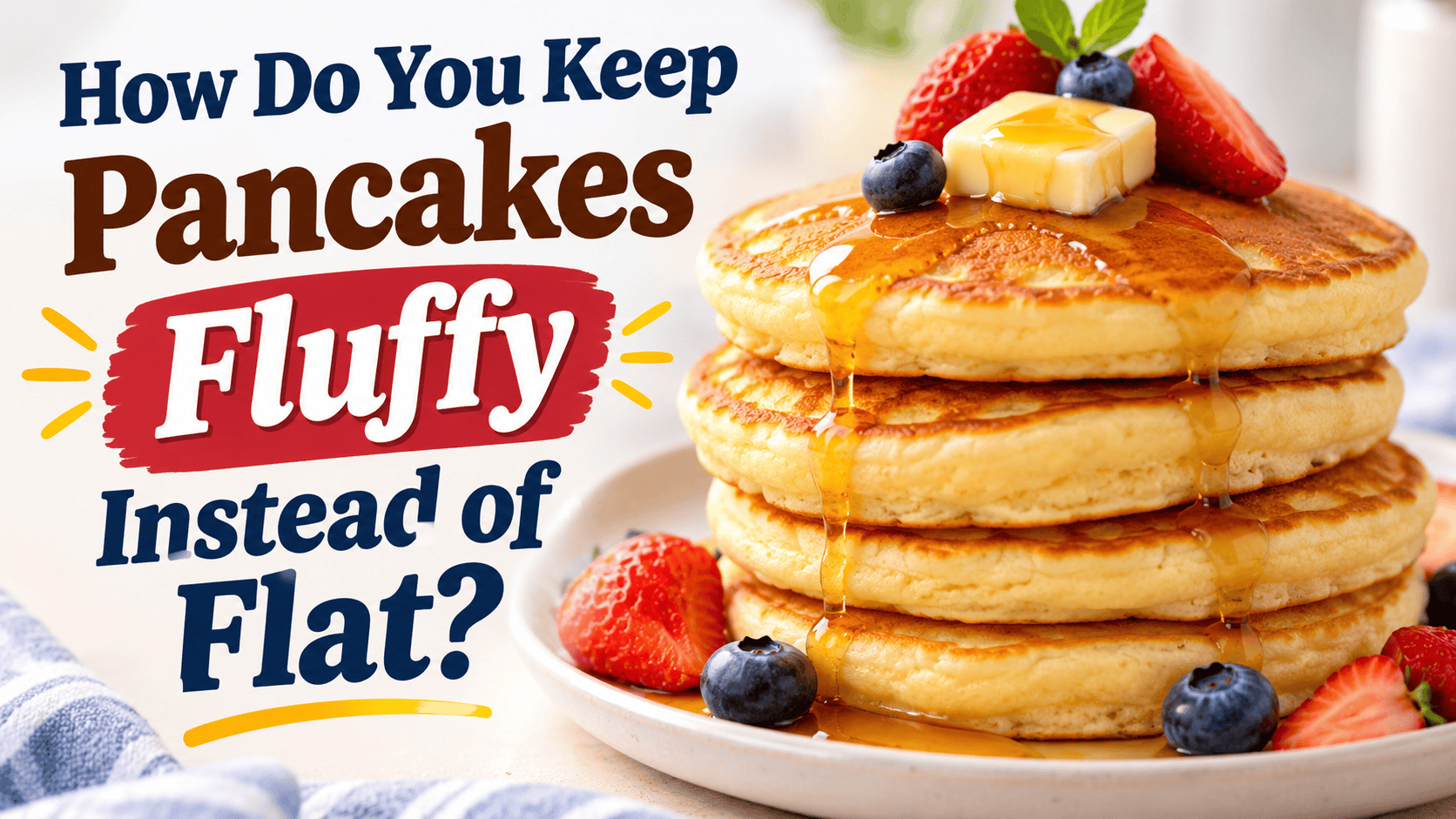
There is something special about a stack of thick, golden, fluffy pancakes served fresh from the skillet. Whether you are preparing a quick weekday breakfast, enjoying a relaxing weekend morning, or making a homemade brunch for family and friends, fluffy pancakes can turn an ordinary meal into something memorable.
However, making pancakes that stay light and fluffy is not always as simple as mixing ingredients and pouring batter onto a hot pan. Sometimes pancakes turn out thin, dense, rubbery, or completely flat, even when you follow a recipe.
The good news is that achieving fluffy pancakes does not require professional cooking skills or expensive ingredients. It comes down to understanding how pancake batter works, choosing the right ingredients, and using a few simple cooking techniques.
If you have ever wondered how to keep pancakes fluffy instead of flat, this guide explains the most common mistakes, the science behind fluffy pancakes, and the best ways to make thick, soft pancakes every time.
What Makes Pancakes Fluffy?
The secret to fluffy pancakes is creating and maintaining tiny air pockets inside the batter.
When pancakes cook, these air pockets expand, helping the batter rise and creating a light, tender texture.
Several ingredients and techniques contribute to this process.
Baking powder: Produces carbon dioxide bubbles that help pancakes rise.
Baking soda: Reacts with acidic ingredients, such as buttermilk or yogurt, to create additional bubbles.
Eggs: Provide structure and help hold the pancakes together as they rise.
Flour: Supplies the structure needed to support the air pockets.
Milk or buttermilk: Adds moisture and helps create the proper batter consistency.
Proper mixing: Prevents excessive gluten development, which can make pancakes tough.
Cooking temperature: Allows pancakes to rise and set without burning or collapsing.
When these elements work together, pancakes become thick, soft, and fluffy rather than thin and dense.
1. Use Fresh Baking Powder
One of the most important ingredients for fluffy pancakes is baking powder.
Baking powder is a leavening agent that produces gas bubbles when activated by moisture and heat.
These bubbles expand during cooking, helping pancakes rise.
However, baking powder gradually loses its effectiveness over time.
If your baking powder is old, your pancakes may remain flat even when you follow the recipe correctly.
How to Test Baking Powder
You can check whether your baking powder is still active with a simple kitchen test.
- Place 1/2 teaspoon of baking powder in a small bowl.
- Add approximately 1/4 cup of hot water.
- Watch for immediate bubbling and fizzing.
If the mixture bubbles vigorously, the baking powder is active.
If there is little or no reaction, replace it before making pancakes.
Fluffy pancake tip: Always use fresh baking powder and measure it carefully. Too little may produce flat pancakes, while too much can create an unpleasant flavor or cause excessive rising followed by collapse.
2. Avoid Overmixing the Pancake Batter
One of the biggest mistakes people make when preparing pancakes is mixing the batter until it becomes completely smooth.
Although smooth batter may seem ideal, excessive mixing can actually make pancakes dense and rubbery.
Flour contains proteins that form gluten when combined with liquid and mixed.
Some gluten is necessary to provide structure, but too much makes pancakes chewy instead of tender.
How to Mix Pancake Batter Properly
Start by combining your dry ingredients in one bowl and wet ingredients in another.
Pour the wet ingredients into the dry ingredients.
Gently stir until the flour is just incorporated.
Small lumps in the batter are perfectly acceptable.
Avoid using an electric mixer unless the recipe specifically requires one.
A spoon, whisk, or silicone spatula is usually sufficient.
Fluffy pancake tip: Stop mixing as soon as the dry flour disappears. A slightly lumpy batter generally produces more tender pancakes than one that has been aggressively mixed.
3. Make Sure Your Batter Is Not Too Thin
Pancake batter consistency plays a major role in determining whether pancakes turn out thick or flat.
If the batter contains too much liquid, it spreads quickly across the skillet.
This creates thin pancakes that may have difficulty maintaining their height.
A thicker batter spreads more slowly, allowing pancakes to develop a taller shape.
What Should Pancake Batter Look Like?
Ideal fluffy pancake batter should be thick but pourable.
When lifted with a spoon, it should fall slowly rather than run like water.
The batter should spread slightly after reaching the skillet without immediately becoming extremely thin.
If your batter seems watery, add flour one tablespoon at a time until it reaches the desired consistency.
If the batter is excessively thick and difficult to scoop, add a small amount of milk.
Fluffy pancake tip: Avoid adding large amounts of flour or milk at once. Small adjustments help maintain the proper balance of ingredients.
4. Let the Batter Rest Before Cooking
Allowing pancake batter to rest can improve its texture.
During resting, flour absorbs moisture, creating a more evenly hydrated batter.
This can help pancakes cook more consistently and develop a tender interior.
A short resting period also allows some gluten tension created during mixing to relax.
How Long Should Pancake Batter Rest?
For many traditional pancake recipes, approximately 5 to 10 minutes is sufficient.
However, the ideal resting time depends on the recipe.
Batter made with baking soda and acidic ingredients begins producing gas immediately, so leaving it too long may reduce some of its lifting power.
Double-acting baking powder provides another release of gas during cooking, making it more forgiving.
Fluffy pancake tip: Let the batter rest briefly while the skillet heats, then cook the pancakes without unnecessary delay.
5. Use Buttermilk for Extra-Fluffy Pancakes
Buttermilk is a popular ingredient in traditional fluffy pancake recipes.
Its mild acidity reacts with baking soda, producing carbon dioxide bubbles that help the pancakes rise.
Buttermilk also contributes a pleasant tangy flavor and tender texture.
Why Buttermilk Works So Well
Buttermilk provides several benefits:
- Helps activate baking soda.
- Adds moisture to the batter.
- Contributes a rich, slightly tangy flavor.
- Supports a tender pancake texture.
- Works well in thick pancake batters.
Can You Make Fluffy Pancakes Without Buttermilk?
Absolutely.
Regular milk combined with baking powder can produce excellent fluffy pancakes.
If your recipe specifically calls for buttermilk, you can make a simple substitute.
Add 1 tablespoon of lemon juice or white vinegar to a measuring cup, then add milk until the total volume reaches 1 cup.
Stir and allow it to stand for approximately 5 to 10 minutes.
This creates acidified milk that can work in many buttermilk pancake recipes, although it will not have exactly the same thickness or flavor as cultured buttermilk.
6. Cook Pancakes at the Right Temperature
Even perfectly prepared pancake batter can produce disappointing results when cooked at the wrong temperature.
If the skillet is too hot, the outside may brown before the inside finishes cooking.
If the skillet is too cool, pancakes may spread excessively and take longer to set.
What Temperature Is Best for Fluffy Pancakes?
A medium heat setting is usually ideal for stovetop cooking.
For an electric griddle, approximately 350°F is a useful starting point.
Actual cooking temperatures vary depending on the pan and equipment.
How to Tell When the Skillet Is Ready
Sprinkle a few drops of water onto the skillet.
The water should sizzle and evaporate rather than disappear instantly in an extremely hot burst.
Another useful test is cooking one small pancake before preparing the entire batch.
If it browns too quickly, reduce the heat.
If it remains pale for too long, increase the heat slightly.
Fluffy pancake tip: Consistent medium heat helps pancakes rise, cook through, and develop a golden exterior without burning.
7. Flip Pancakes Only Once
Flipping pancakes repeatedly can interfere with their texture.
As pancake batter cooks, the ingredients gradually form a structure that holds the expanding air pockets.
Turning pancakes too early can disturb that structure before the interior has properly set.
When Should You Flip Pancakes?
Watch for these signs:
- Bubbles appear across the surface.
- Some bubbles begin to burst.
- The edges start looking set rather than wet.
- The underside develops a golden-brown color.
Once these signs appear, gently slide a spatula underneath and flip the pancake.
Allow the second side to finish cooking without repeatedly turning it.
Depending on thickness and skillet temperature, the first side often takes approximately 2 to 3 minutes, while the second takes another 1 to 2 minutes.
Cooking times will vary.
Fluffy pancake tip: Avoid pressing down on pancakes with a spatula after flipping. Pressing can squeeze out air and compress their soft interior.
8. Use the Right Amount of Batter
The amount of batter poured into the skillet affects pancake thickness.
Very small amounts may produce thin pancakes, while excessively large pancakes can be difficult to cook evenly.
For traditional homemade pancakes, approximately 1/4 cup of batter per pancake is a useful starting point.
For larger pancakes, use about 1/3 cup.
Pour the batter gently onto the skillet and allow it to spread naturally.
Avoid using the back of a spoon to flatten the batter unless you specifically want thinner pancakes.
9. Separate the Eggs for Extra Height
If you want especially fluffy pancakes, separating the eggs can provide additional lift.
This technique is commonly used in recipes designed to create exceptionally airy pancakes.
How to Use Whipped Egg Whites
- Separate the egg yolks from the whites.
- Add the yolks to the wet ingredients.
- Prepare the batter as usual.
- Beat the egg whites until they form soft peaks.
- Gently fold the whipped whites into the finished batter.
- Cook immediately.
Whipped egg whites introduce additional air into the batter.
As the pancakes cook, that air expands and helps create a lighter texture.
Be careful not to overmix after adding the whipped whites.
Fluffy pancake tip: This method is especially useful when making thick, soufflé-style pancakes, although ordinary pancakes can be fluffy without separating eggs.
10. Avoid Using Too Much Oil or Butter
Butter and oil prevent pancakes from sticking, but using too much can affect their appearance and cooking.
Excess fat may cause uneven browning or give pancakes a greasy exterior.
A lightly greased skillet is usually sufficient.
Add a small amount of butter or neutral cooking oil, then spread it into a thin layer.
If necessary, wipe away excess fat with a paper towel using appropriate care around the hot surface.
For an effective nonstick skillet, very little added fat may be needed.
Easy Homemade Fluffy Pancake Recipe
Now that you understand the techniques, here is a simple homemade pancake recipe designed to produce thick, soft, fluffy pancakes.
Ingredients
Servings: Approximately 4
Yield: About 8 medium pancakes
Preparation Time: 10 minutes
Resting Time: 5 minutes
Cooking Time: 15 minutes
What You Will Need
- 1 1/2 cups all-purpose flour
- 3 1/2 teaspoons baking powder
- 1 tablespoon granulated sugar
- 1/2 teaspoon salt
- 1 1/4 cups milk
- 1 large egg
- 3 tablespoons unsalted butter, melted and slightly cooled
- 1 teaspoon vanilla extract (optional)
- Butter or neutral oil for the skillet
Instructions
Step 1: Combine the dry ingredients
In a large mixing bowl, whisk together the flour, baking powder, sugar, and salt.
Mix until evenly combined.
Step 2: Combine the wet ingredients
In a separate bowl, whisk together the milk, egg, melted butter, and vanilla extract.
Make sure the butter is not extremely hot when combining it with the egg.
Step 3: Prepare the batter
Pour the wet ingredients into the dry ingredients.
Gently stir until just combined.
Do not worry about small lumps.
The batter should be thick but still pourable.
Step 4: Rest the batter
Allow the batter to rest for approximately 5 minutes while heating the skillet.
Step 5: Heat the skillet
Place a nonstick skillet or griddle over medium heat.
Lightly grease the surface with butter or oil.
Step 6: Cook the pancakes
Pour approximately 1/4 cup of batter onto the skillet for each pancake.
Cook until bubbles appear on the surface and the edges begin to set.
Step 7: Flip carefully
Gently flip each pancake once.
Continue cooking until the second side is golden brown and the center is fully cooked.
Step 8: Serve immediately
Transfer the pancakes to a plate and serve warm with your favorite toppings.
Best Toppings for Fluffy Pancakes
Fluffy pancakes pair beautifully with a variety of toppings.
Some popular choices include:
- Pure maple syrup
- Fresh strawberries
- Blueberries
- Sliced bananas
- Whipped cream
- Honey
- Peanut butter
- Chopped pecans
- Cinnamon
- Warm fruit compote
For a classic breakfast, serve with butter and warm maple syrup.
Why Do Pancakes Turn Out Flat?
Flat pancakes usually result from one or more common preparation mistakes.
Understanding the cause makes it easier to correct the problem.
| Problem | Possible Cause | Solution |
|---|---|---|
| Pancakes are thin | Batter contains too much liquid | Reduce liquid or slightly increase flour |
| Pancakes do not rise | Baking powder is inactive | Use fresh baking powder |
| Pancakes are rubbery | Batter was overmixed | Stir gently until just combined |
| Pancakes collapse | Excess leavening or undercooked centers | Measure accurately and cook thoroughly |
| Pancakes spread too much | Batter is too thin | Use a thicker batter |
| Pancakes burn outside | Skillet is too hot | Reduce to medium heat |
| Pancakes are dense | Insufficient leavening or excessive mixing | Check ingredients and mixing technique |
Sometimes several small mistakes combine to produce flat pancakes.
Correcting the batter consistency, leavening, and cooking temperature often makes the biggest difference.
How Do You Keep Pancakes Fluffy After Cooking?
Making fluffy pancakes is only half the challenge.
Keeping them warm and soft while preparing the remaining batch is equally important.
Keep Pancakes Warm in the Oven
Preheat the oven to approximately 200°F.
Place cooked pancakes in a single layer on an oven-safe wire rack set over a baking sheet.
Transfer them to the oven while preparing the remaining pancakes.
The rack allows air to circulate and helps prevent the bottoms from becoming soggy.
Avoid leaving pancakes in the oven for extended periods because they can gradually dry out.
Avoid Stacking Them Too Early
Stacking hot pancakes immediately can trap steam.
This may soften their surfaces and create excess moisture.
For the best texture, allow pancakes to rest briefly on a wire rack before stacking.
Serve as Soon as Possible
Freshly cooked pancakes generally have the best texture.
Although they can be kept warm, serving them shortly after cooking preserves their softness and fluffy interior.
Can You Make Fluffy Pancakes Ahead of Time?
Yes. Homemade pancakes can be prepared in advance and reheated later.
This is especially convenient for busy mornings, family breakfasts, and weekly meal preparation.
How to Store Pancakes in the Refrigerator
Allow cooked pancakes to cool.
Place them in an airtight container and refrigerate promptly.
For best quality, use within 3 to 4 days.
How to Freeze Fluffy Pancakes
Freezing is an excellent option for preparing pancakes ahead of time.
- Allow pancakes to cool completely.
- Arrange them in a single layer on a baking sheet.
- Freeze until firm.
- Transfer to a freezer-safe container or bag.
- Separate layers with parchment paper if necessary.
For the best flavor and texture, use frozen pancakes within approximately 2 months.
How to Reheat Pancakes Without Making Them Flat
Reheat pancakes gently in a toaster, oven, or microwave.
A toaster or moderate oven can help maintain a pleasant exterior.
Microwaving works well for convenience, but excessive heating can make pancakes rubbery.
Avoid pressing or flattening pancakes during reheating.
Frequently Asked Questions About Fluffy Pancakes
Why Are My Pancakes Flat Even With Baking Powder?
Your baking powder may be old, the batter may be too thin, or you may have overmixed the ingredients.
Incorrect cooking temperatures can also affect how well pancakes rise.
Check the freshness of your baking powder and use a thick, gently mixed batter.
Does Adding More Baking Powder Make Pancakes Fluffier?
Not necessarily.
A small increase may improve rising in some recipes, but excessive baking powder can create an unpleasant taste and an unstable structure.
Pancakes may rise rapidly and then collapse.
Following a properly balanced recipe is more reliable than adding extra baking powder.
Is Milk or Water Better for Fluffy Pancakes?
Milk generally produces pancakes with a richer flavor and more tender texture.
Water can work in certain recipes, but it does not provide the same fat, protein, or flavor.
For traditional homemade pancakes, milk is usually the preferred choice.
Does Buttermilk Make Pancakes Fluffier?
Buttermilk can help create fluffy pancakes when paired with the correct amount of baking soda.
Its acidity supports the chemical reaction that produces gas bubbles.
However, regular milk and baking powder can also produce excellent results.
Should Pancake Batter Be Thick or Runny?
Fluffy pancake batter should be thick but pourable.
Very runny batter spreads quickly and generally produces thinner pancakes.
Extremely thick batter can be difficult to cook evenly.
The ideal consistency allows the batter to spread slowly while maintaining some height.
Why Do My Pancakes Rise and Then Go Flat?
Pancakes may collapse when their structure is not strong enough to support the air pockets created during cooking.
Possible causes include too much leavening, excessive liquid, or undercooked centers.
Measure ingredients accurately and allow pancakes to cook through before removing them from the skillet.
Can You Make Fluffy Pancakes Without Eggs?
Yes.
Egg-free pancake recipes can produce fluffy results using baking powder, properly balanced liquids, and suitable egg substitutes.
However, the texture may differ slightly because eggs contribute structure.
Should You Cover Pancakes While Cooking?
Covering the skillet can help trap heat and cook thicker pancakes more evenly.
However, it is not necessary for most traditional pancake recipes.
If using a lid, watch carefully because trapped steam can affect the surface texture.
Why Are Restaurant Pancakes So Fluffy?
Restaurants often use carefully balanced recipes, consistent griddle temperatures, and standardized batter portions.
Some also use buttermilk or specially formulated pancake mixes.
Fresh leavening agents and proper mixing techniques are important factors.
What Is the Biggest Secret to Fluffy Pancakes?
The biggest secret is combining fresh leavening ingredients with proper batter consistency and gentle mixing.
Even the best pancake recipe can produce flat results if the batter is overmixed or cooked incorrectly.
Final Thoughts: How Do You Keep Pancakes Fluffy Instead of Flat?
Making fluffy pancakes is easier when you understand what causes them to rise and what makes them lose their height.
Fresh baking powder, properly measured ingredients, a thick but pourable batter, and gentle mixing are essential for achieving a soft, airy texture.
Cooking at the correct temperature and flipping pancakes at the right moment also help preserve their structure.
If you want even more height, try using buttermilk or gently folding whipped egg whites into the batter.
Most importantly, remember that fluffy pancakes do not require complicated techniques. Small improvements in preparation and cooking can make a noticeable difference.
With a little practice, you can consistently prepare thick, golden, tender pancakes that taste just as good as they look.
The secret to keeping pancakes fluffy instead of flat is simple: create air in the batter, avoid overmixing, and give the pancakes enough time to rise and cook properly.


Leave a Reply