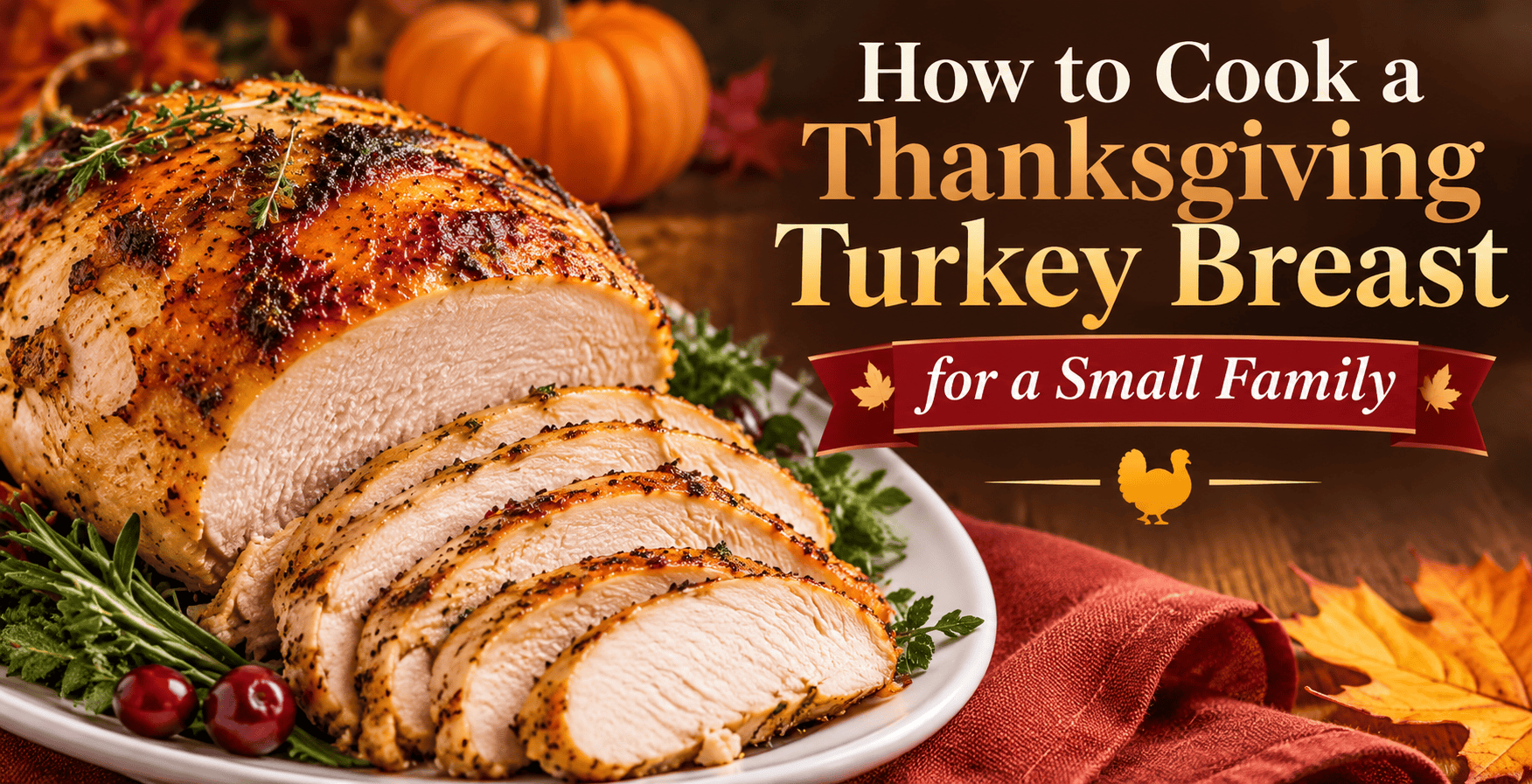
Thanksgiving dinner does not have to involve roasting an enormous turkey, spending an entire day in the kitchen, or preparing enough food to feed a crowd. For smaller families, couples, or anyone planning a more intimate holiday gathering, cooking a Thanksgiving turkey breast is one of the easiest ways to enjoy a traditional holiday meal without unnecessary leftovers or complicated preparation.
A perfectly roasted turkey breast delivers everything people love about Thanksgiving turkey: juicy, tender meat, golden-brown skin, delicious seasoning, and the comforting aroma of a holiday dinner cooking in the oven.
Unlike a whole turkey, a turkey breast requires less preparation, takes less time to roast, and is much easier to carve. It is also an excellent choice for families who prefer white meat.
Whether you are cooking Thanksgiving dinner for two, four, or six people, learning how to cook a turkey breast can make your holiday meal simpler, more affordable, and just as memorable.
This guide explains everything you need to know about selecting, seasoning, roasting, and serving a delicious Thanksgiving turkey breast for a small family.
Why Turkey Breast Is Perfect for a Small Thanksgiving Dinner
A traditional Thanksgiving turkey can weigh anywhere from 12 to 20 pounds or more. While that may be ideal for large family gatherings, smaller households often do not need that much food.
Turkey breast offers a practical alternative without sacrificing the traditional flavors of Thanksgiving.
Benefits of Cooking Turkey Breast
1. Perfect Portions for Small Families
A turkey breast provides enough meat for a smaller gathering without producing excessive leftovers.
2. Faster Cooking Time
Because turkey breast is smaller than a whole turkey, it generally requires less time in the oven.
3. Easier Preparation
There is no need to prepare an entire bird or manage different cooking temperatures for dark and white meat.
4. Easier Carving
Turkey breast is simpler to slice into attractive portions for serving.
5. Delicious White Meat
For families who prefer tender white turkey meat, roasting a breast is an excellent option.
6. Less Refrigerator Space
A turkey breast is easier to store, thaw, and refrigerate than a large whole turkey.
For anyone preparing a smaller Thanksgiving celebration, turkey breast offers convenience while maintaining the traditional holiday experience.
How Much Turkey Breast Do You Need Per Person?
One of the most important steps when planning Thanksgiving dinner is purchasing the correct amount of turkey.
The quantity depends on whether you choose a bone-in or boneless turkey breast.
| Family size | Bone-in turkey breast | Boneless turkey breast |
|---|---|---|
| 2 people | 2–3 pounds | 1–1½ pounds |
| 3–4 people | 3–4 pounds | 2–3 pounds |
| 5–6 people | 5–6 pounds | 3–4 pounds |
These estimates allow for a generous holiday serving, with the possibility of some leftovers.
For most families of four, a 3- to 4-pound bone-in turkey breast is a practical choice.
If you enjoy leftover turkey sandwiches, soups, or casseroles, consider purchasing a slightly larger breast.
Bone-In vs. Boneless Turkey Breast: Which Is Better?
Both bone-in and boneless turkey breasts can produce delicious Thanksgiving meals, but there are a few differences.
Bone-In Turkey Breast
Bone-in turkey breast is a popular option for traditional Thanksgiving dinners.
Advantages include:
-
Attractive presentation with golden roasted skin
-
Traditional roasted turkey flavor
-
Good moisture retention when cooked properly
-
Excellent pan drippings for homemade gravy
Bone-in turkey breast is especially appealing when you want your holiday meal to resemble a traditional roasted turkey dinner.
Boneless Turkey Breast
Boneless turkey breast is convenient for families who prefer easier preparation and carving.
Advantages include:
-
Easier slicing
-
Convenient storage
-
Often faster cooking, depending on thickness
-
Less waste from bones
Boneless turkey breast is particularly useful for small households that want a simple Thanksgiving meal.
Best choice: For a traditional Thanksgiving presentation, choose a bone-in, skin-on turkey breast. For convenience, a boneless turkey breast works beautifully.
Easy Thanksgiving Turkey Breast Recipe
This simple roasted turkey breast recipe uses butter, garlic, herbs, and traditional seasonings to create tender, flavorful turkey with beautifully browned skin.
Cooking time is approximate for a 3- to 4-pound bone-in breast. Always use the internal temperature to determine doneness.
Ingredients
-
1 bone-in, skin-on turkey breast (3–4 pounds), fully thawed
-
4 tablespoons unsalted butter, softened
-
3 cloves garlic, minced
-
1 tablespoon olive oil
-
1 teaspoon kosher salt, or to taste
-
1 teaspoon black pepper
-
1 teaspoon paprika
-
1 teaspoon dried thyme
-
1 teaspoon dried rosemary
-
½ teaspoon dried sage
-
1 small onion, quartered
-
1 lemon, halved
-
1 cup low-sodium chicken or turkey broth
-
2 sprigs fresh rosemary (optional)
-
2 sprigs fresh thyme (optional)
If your turkey breast has already been brined or contains an added salt solution, reduce the amount of additional salt.
Step-by-Step Instructions for Cooking Thanksgiving Turkey Breast
Step 1: Preheat the Oven
Preheat your oven to 350°F.
Position an oven rack in the lower-middle section to allow enough room for the turkey breast.
Lightly grease a roasting pan or baking dish large enough to hold the turkey.
A roasting rack is helpful because it allows hot air to circulate around the turkey, but it is not required.
Step 2: Prepare the Turkey Breast
Remove the turkey breast from its packaging.
Check for any gravy packets or other packaged items and remove them.
Pat the turkey dry using paper towels. Do not rinse raw turkey, because rinsing can spread bacteria around the kitchen.
Drying the skin helps it become golden and crisp during roasting.
Place the turkey breast on a roasting rack or in the prepared baking dish, skin-side up.
Step 3: Make the Garlic Herb Butter
In a small mixing bowl, combine:
-
Softened butter
-
Minced garlic
-
Olive oil
-
Salt
-
Black pepper
-
Paprika
-
Thyme
-
Rosemary
-
Sage
Mix until the ingredients form a smooth, seasoned butter.
This mixture adds flavor while helping the turkey develop a golden-brown exterior.
Step 4: Season the Turkey Breast
Carefully loosen the skin over the turkey breast using your fingers.
Spread some of the garlic herb butter directly onto the meat beneath the skin.
Rub the remaining butter over the outside of the turkey breast.
Make sure the top and sides are evenly coated.
Seasoning beneath the skin allows the herbs and garlic to flavor the meat directly rather than remaining only on the surface.
Step 5: Add Aromatics to the Pan
Arrange the quartered onion and lemon halves around the turkey breast.
Add the fresh rosemary and thyme sprigs if using.
Pour the chicken or turkey broth into the bottom of the roasting pan.
The broth helps prevent the drippings from burning and creates a flavorful base for homemade gravy.
Step 6: Roast the Turkey Breast
Place the turkey breast in the preheated oven.
Roast uncovered at 350°F.
A 3- to 4-pound bone-in turkey breast will often take approximately 1½ to 2¼ hours, depending on its shape, thickness, and your oven.
Begin checking the internal temperature early rather than relying entirely on cooking time.
If the skin becomes too dark before the turkey finishes cooking, loosely cover it with aluminum foil.
Step 7: Check the Internal Temperature
The most reliable way to determine whether turkey breast is fully cooked is with a meat thermometer.
Insert the thermometer into the thickest part of the breast without touching the bone.
The turkey must reach an internal temperature of 165°F.
Check more than one thick area to make sure the entire breast has reached a safe temperature.
Avoid overcooking, because turkey breast contains relatively little fat and can become dry.
Step 8: Let the Turkey Rest
Remove the turkey breast from the oven once it reaches 165°F.
Transfer it to a clean cutting board and loosely cover it with aluminum foil.
Allow it to rest for 15–20 minutes before carving.
Resting gives the juices time to redistribute throughout the meat.
Slicing immediately after roasting can cause more moisture to escape.
Step 9: Carve and Serve
For bone-in turkey breast, carefully cut along the breastbone to remove each breast section.
Place the meat on a cutting board and slice it against the grain.
Arrange the slices on a serving platter.
Spoon a little warm pan juice over the turkey before serving, if desired.
Garnish with fresh rosemary, thyme, or lemon slices for an attractive Thanksgiving presentation.
How Long Does It Take to Cook a Turkey Breast?
Cooking time depends on several factors, including weight, thickness, whether the breast contains bones, and oven temperature.
The following estimates are for fully thawed turkey breasts roasted at 350°F.
| Turkey breast size | Approximate cooking time |
|---|---|
| 2 pounds | 1–1½ hours |
| 3 pounds | 1¼–2 hours |
| 4 pounds | 1½–2¼ hours |
| 5 pounds | 2–2¾ hours |
| 6 pounds | 2¼–3 hours |
These times are planning estimates, not guarantees. Boneless and bone-in breasts may cook differently, and product packaging may provide more specific guidance.
Always confirm that the thickest portion reaches 165°F.
How to Keep Thanksgiving Turkey Breast Moist and Juicy
Turkey breast can dry out more easily than dark turkey meat because it contains less fat.
Fortunately, a few simple techniques can make a significant difference.
Use Butter Under the Skin
Seasoned butter adds richness and helps flavor the meat.
Avoid Overcooking
A meat thermometer is one of the most valuable tools for preparing juicy turkey breast.
Roast at a Moderate Temperature
Roasting at 350°F allows the turkey to cook evenly while developing a flavorful exterior.
Use Broth in the Roasting Pan
Broth helps protect the drippings from burning and provides moisture and flavor for gravy.
Allow the Turkey to Rest
Resting before slicing helps retain moisture.
Slice Against the Grain
Cutting across the muscle fibers produces more tender slices.
These simple techniques can turn an ordinary turkey breast into a delicious Thanksgiving centerpiece.
Easy Homemade Turkey Gravy From Pan Drippings
No Thanksgiving turkey dinner feels quite complete without homemade gravy.
Fortunately, the pan drippings from roasted turkey breast make an excellent starting point.
Ingredients
-
2 tablespoons turkey fat or butter
-
2 tablespoons all-purpose flour
-
1½ cups turkey drippings and low-sodium broth combined
-
Salt and black pepper to taste
Instructions
-
Pour the roasting pan juices through a strainer into a measuring cup.
-
Skim off excess fat, reserving 2 tablespoons if available.
-
Add enough broth to the strained juices to measure 1½ cups.
-
Melt the reserved fat or butter in a saucepan over medium heat.
-
Whisk in the flour and cook for approximately 1–2 minutes.
-
Slowly whisk in the broth mixture.
-
Simmer for 3–5 minutes, stirring until the gravy thickens.
-
Season with salt and black pepper.
Serve the gravy warm alongside sliced turkey breast and mashed potatoes.
Best Thanksgiving Side Dishes for a Small Family
A smaller Thanksgiving dinner does not mean giving up traditional holiday favorites.
The key is choosing a few delicious side dishes rather than preparing an overwhelming amount of food.
Some excellent options include:
-
Creamy garlic mashed potatoes
-
Traditional Thanksgiving stuffing
-
Green bean casserole
-
Southern-style baked macaroni and cheese
-
Sweet potato casserole
-
Honey-glazed carrots
-
Roasted Brussels sprouts
-
Homemade cranberry sauce
-
Buttery dinner rolls
-
Cornbread dressing
For a family of four, choosing three or four side dishes usually creates a satisfying holiday meal without producing excessive leftovers.
Simple Thanksgiving Dinner Menu for Four People
If you want a complete Thanksgiving dinner without spending all day cooking, consider this menu.
| Course | Dish |
|---|---|
| Main dish | Garlic herb roasted turkey breast |
| Side dish 1 | Creamy mashed potatoes |
| Side dish 2 | Green bean casserole |
| Side dish 3 | Traditional stuffing |
| Sauce | Homemade turkey gravy |
| Extra | Cranberry sauce |
| Dessert | Pumpkin pie |
This menu provides familiar Thanksgiving flavors while keeping preparation manageable.
You can also prepare several components ahead of time to make Thanksgiving Day easier.
How to Prepare Thanksgiving Turkey Breast Ahead of Time
Preparing your turkey breast in advance can reduce holiday stress.
Two to Three Days Before Thanksgiving
If the turkey breast is frozen, begin thawing it in the refrigerator.
Allow approximately 24 hours for every 4–5 pounds of turkey, and plan extra time if necessary.
Keep the turkey refrigerated at 40°F or below. Once thawed in the refrigerator, it can generally remain refrigerated for another 1–2 days before cooking.
One Day Before Thanksgiving
Prepare the garlic herb butter.
You can also season the turkey breast, cover it, and refrigerate it overnight.
Prepare side dishes that can safely be stored in the refrigerator until cooking.
Thanksgiving Morning
Remove the turkey from the refrigerator while you preheat the oven and prepare the roasting pan. Avoid leaving raw turkey at room temperature for extended periods.
Roast the turkey according to its size.
While it cooks, prepare mashed potatoes, vegetables, and other side dishes.
Once the turkey finishes roasting, allow it to rest while making gravy and warming the remaining dishes.
This simple approach makes Thanksgiving dinner easier to manage.
Common Mistakes to Avoid When Cooking Turkey Breast
Even a simple turkey recipe can go wrong if a few important details are overlooked.
Cooking a Partially Frozen Turkey Breast
A partially frozen breast takes longer to cook and may heat unevenly.
For the best results, thaw the turkey completely before roasting.
Using Too Much Salt
Some packaged turkey breasts are already seasoned, brined, or injected with a salt solution.
Read the packaging before adding additional salt.
Cooking by Time Alone
Oven temperatures and turkey breast thickness can vary.
Always use a thermometer to confirm doneness.
Skipping the Resting Period
Cutting into turkey immediately after cooking can cause more juices to escape.
Allow at least 15 minutes of resting time.
Slicing With the Grain
Slicing against the grain creates more tender pieces of meat.
Avoiding these mistakes will help produce consistently delicious results.
What to Do With Leftover Thanksgiving Turkey Breast
One of the advantages of cooking turkey breast is that leftovers are easy to transform into additional meals.
Some delicious leftover turkey ideas include:
-
Turkey and cranberry sandwiches
-
Creamy turkey noodle soup
-
Turkey pot pie
-
Turkey and cheese sliders
-
Turkey salad sandwiches
-
Turkey and rice casserole
-
Turkey quesadillas
-
Turkey and vegetable soup
-
Turkey macaroni and cheese
-
Turkey breakfast hash
Refrigerate cooked turkey within two hours of cooking in shallow, covered containers.
Leftover turkey generally keeps for 3–4 days in the refrigerator at 40°F or below.
For longer storage, freeze it in airtight containers or freezer-safe bags.
Reheat leftovers to 165°F.
Frequently Asked Questions About Thanksgiving Turkey Breast
Is turkey breast better than a whole turkey for a small family?
Turkey breast is often a better choice for small families because it requires less preparation, cooks faster, and produces a more manageable amount of food.
It is particularly useful when everyone prefers white meat.
Should I cover turkey breast with foil while cooking?
You can roast turkey breast uncovered to encourage browning.
If the skin begins getting too dark before the meat reaches 165°F, loosely cover the breast with foil.
What temperature should I cook turkey breast at?
An oven temperature of 350°F works well for roasting turkey breast.
Regardless of the oven temperature, the turkey must reach an internal temperature of 165°F.
Can I cook turkey breast without a roasting rack?
Yes.
Place thick onion slices or other sturdy vegetables beneath the turkey breast to elevate it slightly.
You can also roast it directly in a suitable baking dish.
Should I baste turkey breast while roasting?
Basting is optional.
It can add flavor to the exterior, but it is not necessary for keeping the meat juicy.
Opening the oven frequently can also increase cooking time.
Can I use frozen turkey breast?
Yes, but thawing it completely in the refrigerator before roasting is the easiest method for this recipe.
Never thaw turkey on the kitchen counter.
Can I make Thanksgiving turkey breast in a slow cooker?
Yes, turkey breast can be prepared in a slow cooker if it is fully thawed and the appliance and recipe are appropriate for its size.
However, slow cooking will not create the same crisp, golden skin as oven roasting.
The thickest part must still reach 165°F.
How do I reheat turkey breast without drying it out?
Place sliced turkey in a baking dish with a small amount of broth.
Cover tightly with foil and warm in a 300°F oven until the turkey reaches 165°F.
The added broth and covered dish help prevent excessive moisture loss.
Final Thoughts: A Delicious Thanksgiving Dinner Without Cooking a Whole Turkey
Thanksgiving is about more than the size of the turkey on the table. It is about sharing a meal, enjoying familiar traditions, and appreciating the people gathered around you.
For smaller families, cooking a Thanksgiving turkey breast is a wonderful way to celebrate without the expense, preparation, and leftovers associated with roasting a whole turkey.
With a simple garlic herb butter, the right roasting temperature, and careful attention to internal temperature, you can prepare a juicy, flavorful turkey breast that becomes the centerpiece of your holiday dinner.
Pair it with mashed potatoes, stuffing, homemade gravy, cranberry sauce, and a favorite Thanksgiving dessert, and you have everything needed for a traditional holiday feast.
Whether you are celebrating with two people, four people, or a few close loved ones, a beautifully roasted turkey breast proves that a smaller Thanksgiving dinner can still be filled with wonderful food, meaningful traditions, and lasting memories.
What is your favorite way to prepare Thanksgiving turkey: traditional roasted turkey, garlic herb turkey breast, or a family recipe passed down through generations?


Leave a Reply