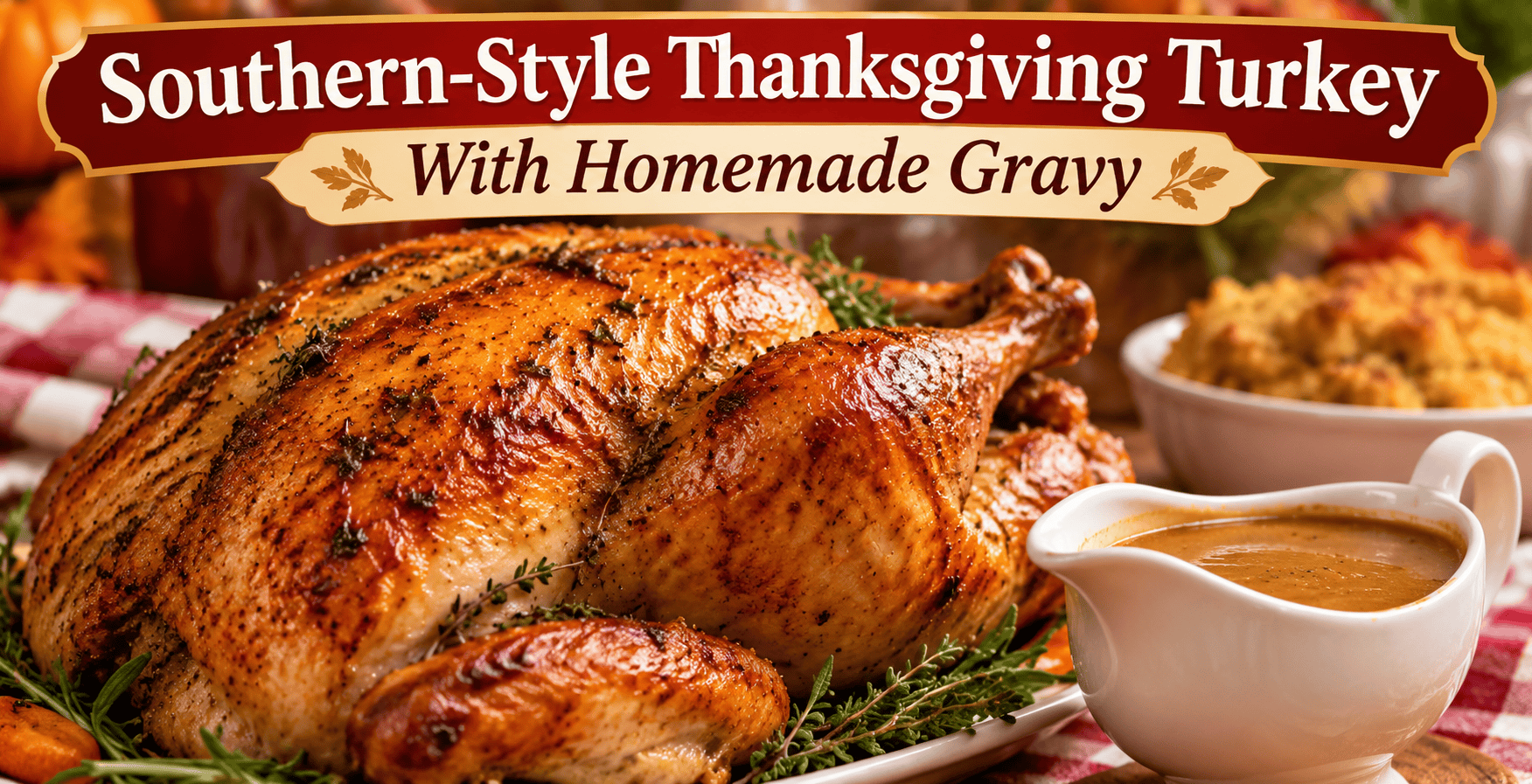
Thanksgiving dinner in the South is about more than putting food on the table. It is about family traditions, comforting flavors, homemade cooking, and bringing everyone together for a meal worth remembering. At the center of many Southern Thanksgiving celebrations is a beautifully roasted turkey, seasoned generously with herbs and spices, basted with buttery goodness, and served alongside rich homemade gravy.
Southern-Style Thanksgiving Turkey With Homemade Gravy combines everything people love about traditional Southern cooking. The turkey has golden, flavorful skin, juicy meat, and a delicious blend of garlic, paprika, thyme, sage, and butter. The homemade gravy is prepared with flavorful turkey drippings, creating a smooth, savory finishing touch.
Whether you are preparing your first Thanksgiving turkey or continuing a family tradition, this recipe will help you create a holiday centerpiece everyone can enjoy.
What Makes Southern-Style Thanksgiving Turkey Special?
Southern cooking is known for bold seasoning, rich flavors, and recipes made with care. Unlike a lightly seasoned turkey, Southern-style turkey often features a generous combination of butter, garlic, onion powder, paprika, herbs, and black pepper.
The goal is to create a turkey that tastes delicious throughout, not just on the surface.
Several traditional Southern cooking techniques make this recipe special.
-
Generous seasoning: A blend of Southern-inspired spices creates a savory flavor.
-
Herb butter: Butter mixed with garlic and herbs helps flavor the meat and promotes golden skin.
-
Aromatic vegetables: Onions, celery, and carrots add flavor to the roasting pan and drippings.
-
Homemade gravy: Turkey drippings become the foundation for a rich, flavorful gravy.
-
Slow, careful roasting: Moderate oven heat helps the turkey cook evenly without drying out.
The result is a comforting Thanksgiving turkey that pairs beautifully with cornbread dressing, mashed potatoes, collard greens, candied sweet potatoes, and homemade biscuits.
Southern-Style Thanksgiving Turkey Recipe
Prep Time: 30 minutes
Cook Time: Approximately 3–4 hours
Resting Time: 30–45 minutes
Servings: 10–12
Cooking times vary depending on the turkey’s weight, oven performance, and whether the bird is completely thawed.
Ingredients for Southern-Style Thanksgiving Turkey
For the Turkey
-
1 whole turkey (12–14 pounds), completely thawed
-
1 cup unsalted butter, softened
-
2 tablespoons olive oil
-
5 cloves garlic, minced
-
2 teaspoons smoked paprika
-
2 teaspoons garlic powder
-
2 teaspoons onion powder
-
2 teaspoons dried thyme
-
2 teaspoons dried sage
-
1 teaspoon dried rosemary
-
1 teaspoon black pepper
-
1–2 teaspoons kosher salt, adjusted for the turkey’s sodium content
-
1 teaspoon Cajun seasoning (optional)
-
1 large onion, quartered
-
3 celery stalks, chopped
-
3 carrots, chopped
-
1 lemon, halved
-
3 sprigs fresh rosemary
-
4 sprigs fresh thyme
-
2 cups low-sodium chicken or turkey broth
For the Homemade Turkey Gravy
-
¼ cup turkey fat from the drippings, or unsalted butter
-
¼ cup all-purpose flour
-
2–3 cups turkey drippings and low-sodium turkey or chicken broth
-
½ teaspoon garlic powder
-
½ teaspoon onion powder
-
½ teaspoon black pepper
-
¼ teaspoon dried sage
-
Salt to taste
How to Make Southern-Style Thanksgiving Turkey
Step 1: Prepare the Turkey
Begin by preheating your oven to 325°F.
Remove the turkey from its packaging and take out the neck and giblets from the cavities. Save them if you want to prepare additional broth for your gravy.
Pat the turkey dry using paper towels. Do not rinse raw turkey, as splashing water can spread bacteria around your kitchen.
Place the turkey breast-side up on a roasting rack inside a large roasting pan.
A completely dry surface helps the butter and seasoning adhere to the skin and encourages better browning during roasting.
Step 2: Prepare the Southern Herb Butter
In a medium mixing bowl, combine the softened butter, olive oil, minced garlic, smoked paprika, garlic powder, onion powder, dried thyme, sage, rosemary, black pepper, kosher salt, and optional Cajun seasoning.
Mix until the ingredients form a smooth, seasoned butter.
This mixture is the secret to creating the rich Southern flavor that makes this Thanksgiving turkey so delicious.
For additional flavor, add a little lemon zest or a pinch of cayenne pepper.
Step 3: Season the Turkey Generously
Carefully loosen the skin over the turkey breasts using your fingers. Work slowly to avoid tearing the skin.
Spread approximately one-third of the seasoned butter underneath the breast skin.
Rub the remaining butter over the outside of the turkey, including the breasts, thighs, legs, and wings.
Seasoning underneath the skin helps flavor the breast meat directly.
Make sure the entire bird is evenly coated.
If your turkey is already brined or enhanced with a salt solution, reduce the added salt to prevent an overly salty finished dish.
Step 4: Add the Aromatic Vegetables
Place the chopped onion, celery, and carrots in the bottom of the roasting pan.
Pour 2 cups of broth around the vegetables.
Place the lemon halves, fresh rosemary, and fresh thyme loosely inside the turkey cavity.
These ingredients provide additional aroma and flavor as the turkey roasts.
Avoid tightly packing the cavity, as this can interfere with even cooking.
Step 5: Roast the Turkey
Place the roasting pan in the preheated oven.
For a 12–14-pound unstuffed turkey, plan for approximately 3–4 hours, but begin checking the internal temperature early.
Roast the turkey uncovered initially so the skin can develop a beautiful golden-brown color.
If the breast or wings begin browning too quickly, loosely cover those areas with aluminum foil.
You may spoon pan juices over the turkey occasionally, but frequent basting is unnecessary and opening the oven repeatedly can increase cooking time.
The turkey is fully cooked when a food thermometer registers 165°F in the thickest part of the breast, the innermost thigh, and the innermost wing, without touching bone.
Temperature matters more than cooking time.
Step 6: Let the Turkey Rest
Once the turkey reaches the proper internal temperature, remove it from the oven.
Transfer it to a carving board and loosely cover it with aluminum foil.
Allow the turkey to rest for 30–45 minutes before carving.
Resting gives the juices time to settle, helping the meat stay moist when sliced.
Use this time to prepare your homemade Southern turkey gravy.
How to Make Homemade Southern Turkey Gravy
No Southern Thanksgiving turkey dinner is complete without homemade gravy.
The rich, savory drippings left behind after roasting contain delicious flavors from the turkey, butter, herbs, and vegetables.
Turning those drippings into gravy is one of the best ways to complete your holiday meal.
Step 1: Collect the Turkey Drippings
Carefully pour the liquid from the roasting pan through a fine-mesh strainer into a heatproof container.
Discard the strained solids or save the cooked vegetables for another use.
Allow the fat to rise to the surface, then separate approximately ¼ cup of fat for the gravy.
Reserve the flavorful liquid underneath.
If you do not have enough turkey fat, use unsalted butter to make up the difference.
Step 2: Make a Roux
Place a medium saucepan over medium heat.
Add the reserved turkey fat or butter.
Once heated, sprinkle in the flour while whisking continuously.
Cook for approximately 2–3 minutes, until the mixture turns lightly golden and develops a slightly nutty aroma.
This flour-and-fat mixture is called a roux, and it gives homemade gravy its smooth, thick consistency.
For a deeper Southern-style flavor, cook the roux slightly longer until it reaches a light caramel color, being careful not to burn it.
Step 3: Add the Turkey Broth
Slowly pour in 2 cups of reserved turkey juices and additional broth as needed, whisking constantly.
Continue whisking until the mixture is smooth.
Bring the gravy to a gentle simmer.
If the gravy becomes too thick, gradually add more broth until it reaches your preferred consistency.
Step 4: Season the Gravy
Add the garlic powder, onion powder, black pepper, and dried sage.
Taste before adding salt because turkey drippings can already contain considerable sodium.
Simmer for approximately 5–8 minutes, stirring occasionally, until the gravy thickens and the flour is fully cooked.
Step 5: Serve Warm
Pour the finished gravy into a gravy boat or serving bowl.
Serve it alongside freshly carved turkey, mashed potatoes, and Southern cornbread dressing.
For an extra-rich finish, whisk a small pat of butter into the gravy immediately before serving.
Tips for Making the Juiciest Southern Thanksgiving Turkey
A delicious Thanksgiving turkey requires more than the right ingredients. A few simple techniques can make a significant difference.
1. Completely Thaw Your Turkey
Never roast a partially frozen turkey using the timing for a fully thawed bird.
For refrigerator thawing, allow approximately 24 hours for every 4–5 pounds of turkey.
A 12–14-pound turkey generally needs about 3–4 days to thaw safely in the refrigerator.
Keep the refrigerator at 40°F or below.
2. Use Butter Under the Skin
One of the best ways to add flavor to turkey breast meat is to spread seasoned butter directly underneath the skin.
This allows the herbs and spices to flavor the meat while the skin protects it during roasting.
3. Do Not Overcook the Turkey
Overcooking is one of the most common reasons Thanksgiving turkey becomes dry.
Use a reliable meat thermometer rather than depending entirely on cooking time or the color of the juices.
4. Avoid Constantly Opening the Oven
Every time you open the oven door, heat escapes.
Instead of basting constantly, allow the turkey to roast undisturbed for longer periods.
Check the pan occasionally to ensure the drippings are not burning, adding a little broth when necessary.
5. Let the Turkey Rest Before Carving
Carving immediately after roasting allows more moisture to escape.
Resting helps preserve the turkey’s juiciness and makes carving easier.
Southern Side Dishes to Serve With Thanksgiving Turkey
A traditional Southern Thanksgiving dinner includes a variety of flavorful side dishes.
Here are some classic favorites that complement this turkey and gravy.
| Southern Side Dish | Why It Pairs Well |
|---|---|
| Southern cornbread dressing | Absorbs gravy and complements the turkey’s herbs |
| Creamy mashed potatoes | Perfect for rich homemade gravy |
| Southern collard greens | Adds a savory vegetable side |
| Candied sweet potatoes | Balances savory flavors with sweetness |
| Baked macaroni and cheese | Adds creamy Southern comfort |
| Southern green beans | Provides a simple, flavorful vegetable |
| Buttermilk biscuits | Delicious for soaking up extra gravy |
| Sweet potato casserole | Brings a classic holiday sweetness |
| Deviled eggs | A traditional Southern holiday appetizer |
| Homemade cranberry sauce | Adds brightness and tartness |
Combining several of these dishes creates a complete Southern-style Thanksgiving feast.
Southern-Style Thanksgiving Turkey Variations
One of the wonderful things about this recipe is how easily you can adjust the seasoning to match your family’s preferences.
Cajun Southern Thanksgiving Turkey
Add 1–2 teaspoons of Cajun seasoning to the herb butter and a pinch of cayenne pepper for additional heat.
Choose a low-sodium Cajun blend if your turkey has already been salted.
Garlic Butter Southern Turkey
Increase the fresh garlic to 8 cloves and add an extra teaspoon of garlic powder.
This variation creates a stronger garlic flavor that pairs beautifully with mashed potatoes.
Smoky Paprika Turkey
Use an additional teaspoon of smoked paprika and a small amount of ground cumin.
The paprika provides a deeper smoky flavor without requiring a smoker.
Southern Herb-Roasted Turkey
Increase the sage, thyme, and rosemary for a more traditional herb-forward Thanksgiving flavor.
This variation is especially delicious when served with cornbread dressing.
Spicy Southern Turkey
Add cayenne pepper, crushed red pepper flakes, or a small amount of hot sauce to the seasoned butter.
Start with small quantities so the spice complements rather than overwhelms the turkey.
How to Keep Thanksgiving Turkey Warm Before Serving
Thanksgiving cooking often involves preparing several dishes at once.
If your turkey finishes before the side dishes, keep it warm without drying out the meat.
Loosely cover the turkey with foil while it rests.
For longer delays, hold the cooked turkey at 140°F or above using a properly monitored warming setup. If you cannot maintain that temperature, refrigerate it within two hours of cooking and reheat later.
Avoid leaving cooked turkey sitting at room temperature for extended periods.
How to Store Leftover Southern Thanksgiving Turkey
Leftover Thanksgiving turkey can become the foundation for several delicious meals.
Proper storage keeps the meat safe and helps maintain its quality.
Refrigerator Storage
Remove the remaining meat from the bones and place it in shallow, airtight containers.
Refrigerate within two hours of cooking.
Cooked turkey can generally be stored in the refrigerator for 3–4 days at 40°F or below.
Freezer Storage
Place cooled turkey meat into freezer-safe containers or bags.
Remove as much air as possible to prevent freezer burn.
For best quality, use frozen cooked turkey within approximately 4–6 months.
Reheating Leftover Turkey
Place sliced turkey in a baking dish with a small amount of broth.
Cover with foil and warm in a 325°F oven until the meat reaches 165°F.
The added broth helps keep the turkey moist.
Reheat leftover gravy separately until it reaches a full rolling boil, stirring frequently.
What to Make With Leftover Thanksgiving Turkey
Southern-style Thanksgiving turkey is just as delicious the following day.
Here are several ways to transform leftovers into another comforting meal.
-
Southern Turkey and Dumplings: Simmer leftover turkey with broth, vegetables, and tender dumplings.
-
Turkey Pot Pie: Combine turkey, vegetables, and creamy gravy beneath a flaky pie crust.
-
Southern Turkey Sandwiches: Layer turkey, dressing, and cranberry sauce between slices of bread.
-
Turkey and Rice Casserole: Bake leftover turkey with rice, vegetables, and a creamy sauce.
-
Turkey Noodle Soup: Make a comforting soup with turkey, noodles, carrots, celery, and broth.
-
Turkey and Gravy Over Biscuits: Serve warm turkey and homemade gravy over freshly baked buttermilk biscuits.
These meals help reduce food waste while giving your family another opportunity to enjoy Thanksgiving flavors.
Frequently Asked Questions
What makes a turkey Southern-style?
Southern-style turkey typically features generous seasoning, butter, garlic, paprika, herbs, and savory aromatics. It is often served with homemade pan gravy and traditional Southern side dishes such as cornbread dressing and collard greens.
Should I cover my Thanksgiving turkey while roasting?
You do not need to cover the turkey for the entire cooking process.
Roasting uncovered helps develop golden skin. If the turkey browns too quickly, loosely cover the affected areas with foil.
How do I keep turkey breast from drying out?
Use seasoned butter underneath the skin, roast at a moderate temperature, monitor the internal temperature carefully, and allow the turkey to rest before carving.
Can I prepare the turkey the night before Thanksgiving?
Yes. You can season the turkey the night before and refrigerate it, covered or in a food-safe container, at 40°F or below.
This saves preparation time on Thanksgiving morning and allows the seasonings more time to flavor the surface.
Can I make the gravy ahead of time?
Yes. Prepare gravy ahead using turkey or chicken broth, then refrigerate it.
On Thanksgiving Day, reheat it thoroughly and stir in freshly collected turkey drippings for additional flavor.
How much turkey should I buy per person?
For a whole bone-in turkey, plan for approximately 1–1½ pounds per person.
For 10 guests, a 12–15-pound turkey generally provides enough for dinner, with the amount of leftovers depending on appetites and side dishes.
Can I use salted butter?
Yes, but reduce the additional salt in the recipe.
Unsalted butter gives you more control over the final seasoning, particularly when using Cajun seasoning or a pre-brined turkey.
Why is my homemade turkey gravy lumpy?
Lumps usually develop when liquid is added too quickly to the roux or when the mixture is not whisked thoroughly.
Add broth gradually while whisking continuously. If lumps remain, strain the gravy through a fine-mesh strainer.
Why Southern-Style Thanksgiving Turkey Is Worth Making
Southern-style Thanksgiving turkey is more than a holiday recipe. It represents the traditions, flavors, and comforting meals that bring people together.
The combination of seasoned butter, aromatic vegetables, carefully roasted turkey, and homemade gravy creates a dish that feels special without requiring complicated cooking techniques.
Every part of the recipe contributes to the final meal, from the garlic and herbs beneath the turkey skin to the rich pan drippings transformed into gravy.
Whether your Thanksgiving table is surrounded by a large extended family or a smaller gathering of loved ones, this turkey makes a delicious centerpiece.
Final Thoughts
Southern-Style Thanksgiving Turkey With Homemade Gravy is a classic holiday dish that combines juicy roasted turkey, bold Southern seasonings, golden skin, and rich homemade gravy.
With a little preparation, the right ingredients, and careful attention to cooking temperature, you can create a Thanksgiving dinner that tastes homemade, comforting, and full of flavor.
Serve it with Southern cornbread dressing, creamy mashed potatoes, collard greens, candied sweet potatoes, and warm buttermilk biscuits for a holiday feast everyone can enjoy.
The best Thanksgiving meals are not necessarily the most elaborate. They are the ones prepared with care, shared with loved ones, and remembered long after the dishes have been cleared.
What is your favorite Southern Thanksgiving side dish to serve alongside roasted turkey and homemade gravy?
Leave a Reply