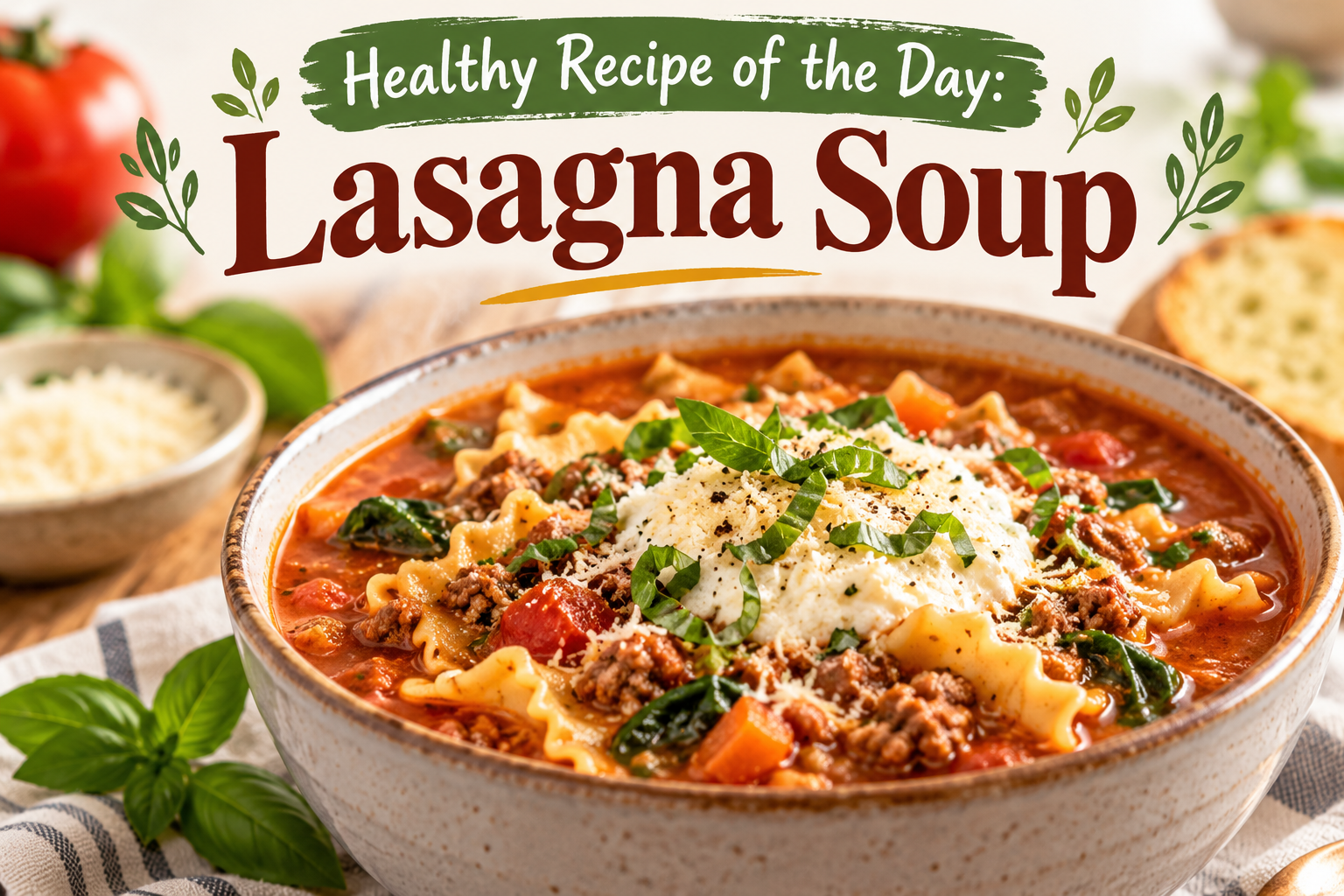
There is something special about a warm bowl of homemade lasagna. The rich tomato sauce, tender pasta, savory meat, creamy cheese, and Italian seasonings create a comforting meal that brings people together. But traditional lasagna can take considerable time to prepare, assemble, and bake.
What if you could enjoy those same delicious flavors in a healthier, easier, one-pot meal?
That’s where Healthy Lasagna Soup comes in.
This delicious recipe transforms everything you love about classic Italian lasagna into a hearty, satisfying soup. It combines lean ground turkey, nutrient-rich vegetables, whole-wheat pasta, flavorful tomatoes, and a creamy ricotta topping to create a balanced meal without sacrificing taste.
Whether you’re preparing dinner for your family, looking for a nutritious meal-prep option, or simply craving comfort food on a chilly evening, this healthy lasagna soup is an excellent choice.
Best of all, it comes together in approximately 40 minutes, making it perfect for busy weeknights.
Why Healthy Lasagna Soup Is Worth Making
Traditional lasagna is undeniably delicious, but depending on the recipe, it can contain substantial amounts of saturated fat, sodium, and calories.
Healthy lasagna soup offers a lighter alternative while maintaining the familiar flavors that make lasagna so popular.
By using lean protein, whole grains, vegetables, and moderate portions of cheese, you can create a filling and nutritious meal.
Benefits of This Recipe
-
High in protein: Lean ground turkey and ricotta cheese provide protein that helps support muscle maintenance and keeps you feeling satisfied.
-
Rich in vegetables: Spinach, zucchini, onions, and tomatoes contribute vitamins, minerals, and fiber.
-
Whole-grain goodness: Whole-wheat lasagna noodles provide more fiber than traditional refined pasta.
-
Lower in saturated fat: Using lean turkey instead of higher-fat ground beef helps reduce saturated fat.
-
Easy preparation: Everything cooks in one pot, minimizing cleanup.
-
Family-friendly: The familiar flavors of lasagna make this soup appealing to adults and children alike.
-
Great for meal prep: The soup base can be prepared ahead of time and stored for convenient meals.
This recipe demonstrates that eating healthier doesn’t mean giving up the foods you love.
Healthy Lasagna Soup Recipe
Ingredients
For the soup:
-
1 pound lean ground turkey (93% lean or higher)
-
1 tablespoon olive oil
-
1 medium yellow onion, diced
-
3 cloves garlic, minced
-
1 medium zucchini, diced
-
1 medium carrot, finely chopped
-
1 can (28 ounces) crushed tomatoes, preferably no-salt-added
-
1 can (14.5 ounces) diced tomatoes, preferably no-salt-added
-
4 cups low-sodium chicken broth
-
2 tablespoons tomato paste
-
2 teaspoons Italian seasoning
-
1 teaspoon dried basil
-
1 teaspoon dried oregano
-
½ teaspoon smoked paprika
-
¼ teaspoon crushed red pepper flakes (optional)
-
½ teaspoon black pepper
-
6 whole-wheat lasagna noodles, broken into bite-sized pieces
-
2 cups fresh baby spinach
-
Salt to taste
For the creamy cheese topping:
-
¾ cup part-skim ricotta cheese
-
¼ cup shredded part-skim mozzarella cheese
-
2 tablespoons grated Parmesan cheese
-
1 tablespoon chopped fresh parsley
-
¼ teaspoon garlic powder
Optional garnishes:
-
Fresh basil leaves
-
Chopped parsley
-
Additional Parmesan cheese
-
Freshly ground black pepper
-
Red pepper flakes
Step-by-Step Instructions
Step 1: Prepare Your Ingredients
Before cooking, wash and chop all vegetables.
Dice the onion, zucchini, and carrot into small, evenly sized pieces so they cook consistently.
Mince the garlic and break the whole-wheat lasagna noodles into approximately 1- to 2-inch pieces.
Having everything prepared before starting makes the cooking process easier and more enjoyable.
Step 2: Brown the Ground Turkey
Heat the olive oil in a large Dutch oven or soup pot over medium heat.
Add the lean ground turkey and cook for approximately 5–7 minutes, breaking it into smaller pieces with a wooden spoon.
Continue cooking until the turkey is no longer pink and reaches an internal temperature of 165°F.
If excess liquid or fat accumulates, carefully drain it before proceeding.
Using lean ground turkey provides the savory flavor associated with traditional lasagna while reducing saturated fat compared with higher-fat ground beef.
Step 3: Add the Vegetables
Add the diced onion, carrot, and zucchini to the pot.
Cook for approximately 4–5 minutes, stirring occasionally, until the vegetables begin to soften.
Add the minced garlic and cook for another 30–60 seconds, stirring continuously to prevent burning.
As the vegetables cook, they release natural flavors that contribute to the soup’s rich, comforting taste.
Step 4: Build the Tomato Broth
Stir in the tomato paste and cook for approximately one minute.
Add the crushed tomatoes, diced tomatoes, and low-sodium chicken broth.
Next, stir in the Italian seasoning, dried basil, oregano, smoked paprika, black pepper, and optional red pepper flakes.
Mix everything thoroughly.
Bring the mixture to a gentle boil, then reduce the heat and simmer for approximately 8–10 minutes.
This allows the tomatoes, herbs, vegetables, and turkey to develop a rich Italian-inspired flavor.
Step 5: Cook the Lasagna Noodles
Add the broken whole-wheat lasagna noodles directly to the simmering soup.
Stir well to prevent the pasta from sticking together.
Cook according to the pasta package instructions, generally 10–12 minutes, or until tender.
Because pasta absorbs liquid as it cooks, you may need to add a little additional broth or water.
For a thicker soup, allow the pasta to absorb more of the broth.
For a lighter, brothier consistency, add extra liquid until the soup reaches your preferred texture.
Step 6: Add the Spinach
Once the pasta is tender, stir in the fresh baby spinach.
Allow it to cook for approximately 1–2 minutes until wilted.
Spinach adds color, nutrients, and a mild flavor that blends beautifully with the tomato broth.
Taste the soup and adjust the seasonings as needed.
Step 7: Prepare the Ricotta Cheese Topping
While the soup finishes cooking, combine the part-skim ricotta, shredded mozzarella, Parmesan, parsley, and garlic powder in a small mixing bowl.
Stir until the ingredients form a creamy mixture.
This topping recreates the rich, cheesy experience of traditional lasagna without requiring large quantities of cheese throughout the soup.
Step 8: Serve and Enjoy
Ladle the hot lasagna soup into individual bowls.
Add a generous tablespoon or two of the ricotta mixture to each serving.
Garnish with fresh basil, parsley, or a small sprinkle of Parmesan.
As the cheese melts into the warm soup, it creates a creamy, delicious finish.
Serve immediately and enjoy.
Estimated Nutritional Information
Approximate values per serving, based on six servings and the listed ingredients. Actual nutrition varies with brands, portions, and any substitutions.
| Nutrient | Per serving |
|---|---|
| Calories | 350–410 |
| Protein | 30–35 g |
| Carbohydrates | 30–38 g |
| Total fat | 10–14 g |
| Fiber | 5–7 g |
| Sodium | 500–750 mg |
This soup provides a combination of protein, carbohydrates, vegetables, and dietary fiber, making it a satisfying main dish.
Choosing no-salt-added tomatoes and low-sodium broth helps manage the sodium content, especially when combined with moderate portions of cheese.
What Makes This Lasagna Soup Healthy?
1. Lean Protein Supports a Balanced Diet
Protein plays an important role in maintaining muscle, supporting tissue repair, and helping you feel satisfied after meals.
Ground turkey is an excellent option for this soup because it provides protein while offering a leaner alternative to traditional ground beef.
You can also substitute lean ground chicken or extra-lean beef.
For a vegetarian version, lentils or plant-based crumbles can replace the meat.
2. Tomatoes Provide Valuable Nutrients
Tomatoes are a major ingredient in this recipe.
They contain vitamin C, potassium, and lycopene, a naturally occurring antioxidant responsible for their red color.
Cooking tomatoes can improve the availability of lycopene, especially when combined with a small amount of fat, such as olive oil.
Tomatoes also create the rich, savory foundation that makes lasagna soup taste so satisfying.
3. Vegetables Add Fiber and Flavor
Zucchini, carrots, onions, and spinach contribute nutrients without dramatically increasing the calorie content.
Spinach provides vitamin K, folate, and other essential nutrients.
Carrots supply beta-carotene, which the body can convert into vitamin A.
Zucchini adds moisture, fiber, and a mild flavor.
Including several vegetables in one meal is an easy way to increase dietary variety.
4. Whole-Wheat Pasta Provides More Fiber
Traditional lasagna noodles are typically made from refined wheat flour.
Whole-wheat pasta generally contains more fiber and retains more of the grain’s natural nutrients.
Fiber supports digestive health and can help promote fullness.
Whole-wheat lasagna noodles also maintain a satisfying texture in the soup.
If whole-wheat lasagna noodles are unavailable, whole-wheat bow ties, rotini, or other pasta shapes work well.
5. Part-Skim Cheese Adds Creaminess
One of the best parts of lasagna is the cheese.
Instead of eliminating it, this recipe uses smaller amounts of part-skim ricotta and mozzarella.
The result is a creamy, flavorful topping that helps preserve the comforting qualities of traditional lasagna.
Healthy Variations to Try
One of the advantages of lasagna soup is its versatility. You can easily customize the recipe to accommodate different dietary preferences.
Vegetarian Lasagna Soup
Replace the ground turkey with cooked lentils, mushrooms, or plant-based protein.
Use low-sodium vegetable broth instead of chicken broth.
Lentils provide plant-based protein and fiber, while mushrooms contribute a savory, meaty texture.
High-Protein Lasagna Soup
For an additional protein boost, consider using chickpea or lentil pasta.
You can also increase the amount of lean ground turkey or add extra cottage cheese to the topping.
Keep in mind that additional protein ingredients will change the overall calorie content.
Low-Carb Lasagna Soup
Replace the lasagna noodles with zucchini ribbons or another non-starchy vegetable.
The result will not have exactly the same texture as traditional lasagna, but it will maintain many of the familiar flavors.
You can also reduce the pasta quantity rather than removing it entirely.
Spicy Lasagna Soup
If you enjoy a little heat, add crushed red pepper flakes, diced jalapeños, or a small amount of hot sauce.
Spicy Italian-style seasonings also pair nicely with the tomato broth.
Extra-Vegetable Lasagna Soup
Add chopped mushrooms, bell peppers, kale, or additional spinach.
This variation is especially useful when you have leftover vegetables in the refrigerator.
Adding more vegetables increases the volume of the soup while contributing additional nutrients.
Tips for Making the Best Lasagna Soup
A few simple cooking techniques can make a noticeable difference.
Don’t overcook the pasta. Whole-wheat noodles can become overly soft if left simmering too long. Check them frequently toward the end of cooking.
Use quality tomatoes. Since tomatoes form the base of the broth, their flavor significantly influences the final result.
Allow the broth to simmer. Giving the tomatoes, herbs, and vegetables time to cook together helps create a deeper flavor.
Add the cheese just before serving. Keeping the ricotta topping separate maintains its creamy texture.
Adjust the broth as needed. Lasagna soup naturally thickens as the pasta absorbs liquid.
Taste before adding salt. Broth, tomatoes, and cheese may already contribute enough sodium.
Finish with fresh herbs. Fresh basil or parsley adds brightness that balances the rich tomato flavors.
What to Serve With Healthy Lasagna Soup
Although lasagna soup is filling enough to serve as a complete meal, it also pairs nicely with several lighter side dishes.
Fresh Garden Salad
A salad with mixed greens, cucumbers, tomatoes, and a light vinaigrette adds freshness and crunch.
Roasted Vegetables
Roasted broccoli, asparagus, or Brussels sprouts provide additional fiber and nutrients.
Whole-Grain Garlic Bread
A small slice of whole-grain garlic bread is perfect for dipping into the tomato broth.
Brush lightly with olive oil and season with garlic instead of using large amounts of butter.
Steamed Green Beans
Green beans offer a simple, nutritious side dish that complements the richness of the soup.
For a lighter meal, enjoy the soup on its own with a few fresh herbs.
How to Store and Reheat Lasagna Soup
Lasagna soup is an excellent choice for meal preparation because it reheats well.
However, pasta continues absorbing liquid while stored, so a little planning helps maintain the best texture.
Refrigerator Storage
Allow the soup to cool slightly, then transfer it to shallow, airtight containers and refrigerate promptly, within two hours of cooking.
Store the soup in the refrigerator for up to 3–4 days.
For the best texture, store the ricotta topping separately.
Freezer Storage
Lasagna soup can be frozen for approximately 2–3 months for best quality.
For optimal results, freeze the soup base without the pasta or cheese topping.
When ready to serve, thaw the soup safely in the refrigerator, reheat it, and cook fresh pasta in the broth.
This prevents the noodles from becoming excessively soft.
Reheating Instructions
Reheat the soup on the stovetop over medium heat, stirring occasionally.
Add a splash of low-sodium broth or water if the soup has thickened.
Heat leftovers to an internal temperature of 165°F.
Add the ricotta mixture after reheating.
Common Mistakes to Avoid
Even though lasagna soup is easy to prepare, a few common mistakes can affect the final dish.
Adding Too Much Pasta
Pasta absorbs a surprising amount of broth.
Using too many noodles can turn the soup into a thick pasta dish rather than a soup.
Stick with the recommended amount and add extra broth if necessary.
Cooking the Soup Too Long After Adding Pasta
Extended simmering can make the noodles mushy.
If preparing the soup ahead of time, consider cooking and storing the pasta separately.
Using Too Much Cheese
Cheese adds wonderful flavor, but large portions can significantly increase saturated fat and calories.
A modest amount of flavorful cheese is often enough to create a satisfying meal.
Skipping the Vegetables
Vegetables contribute more than just nutrition.
They add texture, color, natural sweetness, and flavor.
Keeping them in the recipe makes the soup more balanced and interesting.
Forgetting to Adjust the Seasoning
Tomato-based soups often benefit from tasting and adjusting herbs, pepper, or acidity before serving.
A small amount of fresh basil can brighten the entire dish.
Frequently Asked Questions
Can I Make Healthy Lasagna Soup in a Slow Cooker?
Yes.
Brown the ground turkey in a skillet first, then transfer it to a slow cooker with the vegetables, tomatoes, broth, and seasonings.
Cook on low for approximately 5–6 hours or high for 3–4 hours, until the vegetables are tender.
Add the broken pasta during the final 20–30 minutes, checking frequently for doneness.
Stir in the spinach just before serving and add the ricotta topping to individual bowls.
Can I Use Ground Beef Instead of Turkey?
Absolutely.
Choose 90% lean or leaner ground beef to keep the recipe relatively low in saturated fat.
Drain excess fat after browning.
Can I Make This Recipe Gluten-Free?
Yes.
Substitute certified gluten-free pasta for the whole-wheat lasagna noodles.
Check the broth, seasonings, and other packaged ingredients to ensure they meet your dietary needs.
Can I Make Lasagna Soup Without Ricotta?
Yes.
You can use part-skim cottage cheese, a small amount of mozzarella, or simply omit the cheese topping.
For a smoother cottage cheese topping, blend it briefly before serving.
Is Lasagna Soup Good for Meal Prep?
Yes, especially when the pasta and soup base are stored separately.
This allows you to control the texture when reheating and helps prevent the noodles from absorbing too much liquid.
Can I Make This Soup Dairy-Free?
Yes.
Omit the cheese topping or use a dairy-free alternative that suits your preferences.
The tomato broth, vegetables, pasta, and protein will still provide plenty of flavor.
Why Homemade Healthy Comfort Food Matters
Eating well does not have to mean following restrictive diets or eliminating every favorite food.
In fact, one of the most practical approaches to healthier eating is learning how to modify familiar recipes.
Lasagna soup is a great example.
Instead of completely changing the dish, this recipe makes a few thoughtful adjustments.
Lean turkey replaces higher-fat meat. Whole-wheat noodles add fiber. Extra vegetables provide nutrients. A smaller portion of cheese delivers the creamy finish people expect from lasagna.
These adjustments allow you to enjoy a comforting meal while supporting a balanced eating pattern.
Homemade meals also give you greater control over ingredients, portions, and seasoning.
You decide how much salt to add, which vegetables to include, and how much cheese to serve.
Most importantly, nutritious food can still be delicious, satisfying, and enjoyable.
Making Healthy Eating Easier for Busy Families
One of the biggest challenges of maintaining healthy eating habits is finding time to prepare meals.
After a long day, complicated recipes can feel overwhelming.
That’s why one-pot meals like lasagna soup are so helpful.
They require fewer dishes, use accessible ingredients, and provide multiple servings.
You can prepare a large batch for dinner and enjoy leftovers for lunch the following day.
You can also chop the vegetables in advance or prepare the soup base over the weekend.
Keeping convenient, homemade meals available can make it easier to choose balanced options during a busy week.
And because this recipe tastes like traditional lasagna, it offers a familiar comfort-food experience that the entire family can enjoy.
Final Thoughts: A Healthier Way to Enjoy Classic Lasagna
Healthy Lasagna Soup proves that comfort food and nutritious eating can go hand in hand.
With tender whole-wheat pasta, lean ground turkey, colorful vegetables, rich tomato broth, and a creamy ricotta topping, this recipe delivers many of the flavors people love about traditional lasagna in a simpler, lighter format.
It is warm, satisfying, easy to prepare, and flexible enough to fit different preferences.
Whether you’re cooking for your family, preparing meals for the week, or simply looking for something comforting on a cool evening, this healthy lasagna soup deserves a place in your recipe collection.
Sometimes the best meals are the ones that bring together familiar flavors, wholesome ingredients, and the simple pleasure of sharing good food.
Would you prefer your lasagna soup loaded with extra vegetables, packed with protein, or topped with plenty of creamy cheese?
Whatever your preference, this recipe is easy to make your own.



Leave a Reply