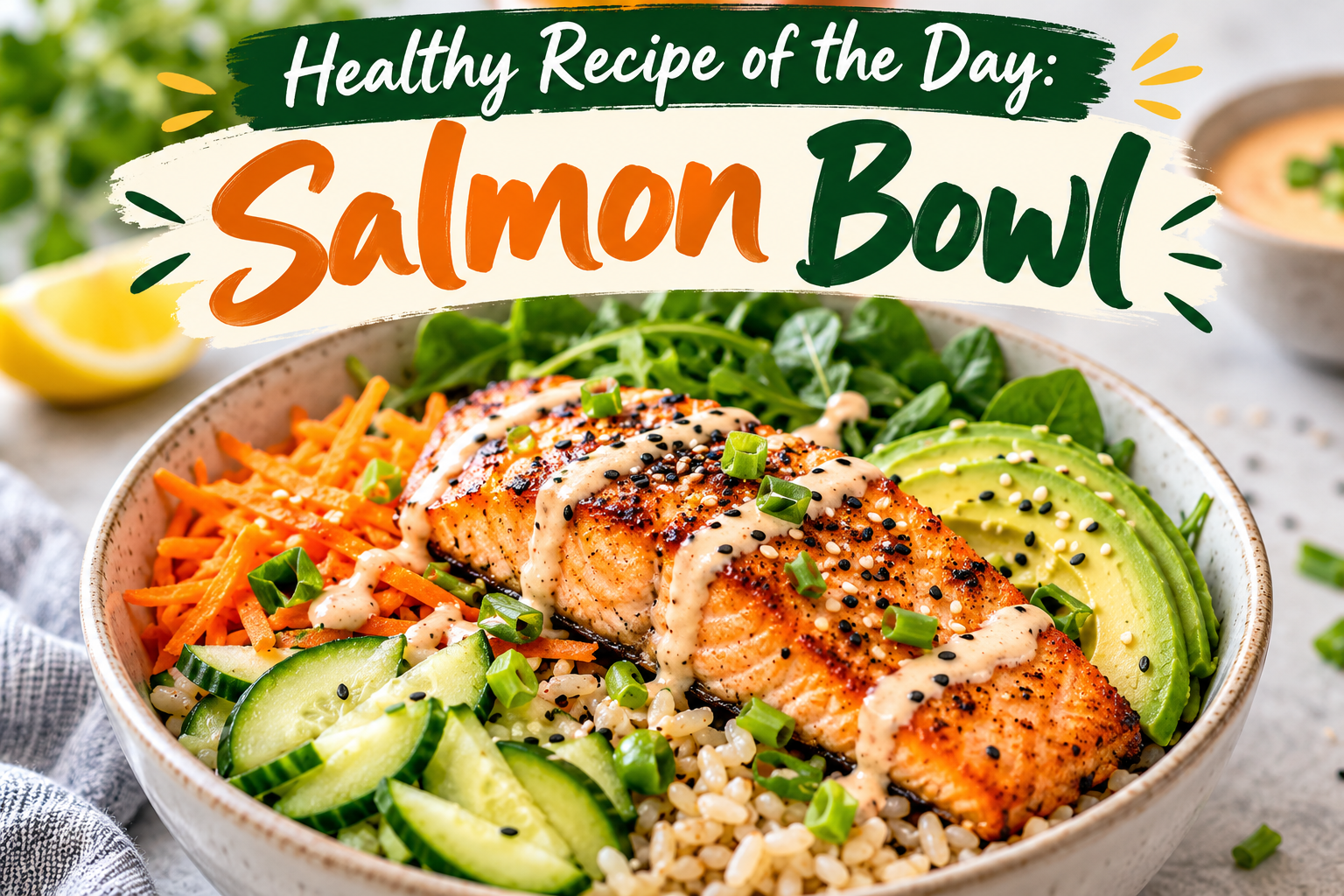
When it comes to preparing a healthy meal that is both satisfying and full of flavor, few dishes compare to a homemade salmon bowl. Combining tender, perfectly seasoned salmon with fluffy rice, crisp vegetables, creamy avocado, and a delicious homemade sauce, this meal offers an excellent balance of protein, healthy fats, fiber, and essential nutrients.
Whether you’re looking for a nutritious lunch, a quick weeknight dinner, or a meal-prep option that makes healthy eating easier, this Healthy Salmon Bowl Recipe deserves a place in your weekly rotation.
The best part? You don’t need complicated cooking techniques or expensive ingredients to create a restaurant-quality meal in your own kitchen.
This recipe is customizable, easy to prepare, and packed with fresh flavors that make healthy eating something to look forward to.
Why You’ll Love This Healthy Salmon Bowl
A healthy salmon bowl brings together everything you want in a balanced meal. It is colorful, delicious, filling, and surprisingly simple to prepare.
Here are a few reasons this recipe is worth trying:
-
Rich in protein: Salmon provides high-quality protein that supports muscle maintenance and overall health.
-
Heart-healthy fats: Salmon contains omega-3 fatty acids, while avocado provides beneficial monounsaturated fats.
-
Packed with vegetables: Cucumbers, carrots, edamame, and leafy greens add fiber, vitamins, and minerals.
-
Easy to customize: Swap the rice, vegetables, or sauce to match your preferences.
-
Perfect for meal preparation: Prepare several components ahead of time for convenient lunches and dinners.
-
Ready in approximately 30 minutes: Ideal for busy days when you want something nutritious without spending hours cooking.
Unlike many takeout bowls that may contain large amounts of sodium or heavy sauces, making your own allows you to control the ingredients and portions.
Healthy Salmon Bowl Recipe
30 minutes
2 servings
Prep time
15 minutes
Cook time
15 minutes
Ingredients
For the salmon:
-
2 salmon fillets (approximately 5 ounces each)
-
1 tablespoon olive oil
-
1 tablespoon reduced-sodium soy sauce
-
1 teaspoon honey
-
1 teaspoon fresh lemon juice
-
1 teaspoon garlic powder
-
½ teaspoon smoked paprika
-
¼ teaspoon black pepper
For the bowl:
-
1 cup cooked brown rice
-
1 medium avocado, sliced
-
1 cup cucumber, diced or sliced
-
1 medium carrot, shredded
-
½ cup shelled edamame, cooked
-
1 cup fresh spinach or mixed greens
-
2 tablespoons chopped green onions
-
1 teaspoon sesame seeds
For the healthy yogurt sauce:
-
¼ cup plain nonfat Greek yogurt
-
1 teaspoon reduced-sodium soy sauce
-
1 teaspoon fresh lime juice
-
½ teaspoon honey
-
½ teaspoon sriracha (optional)
-
1–2 teaspoons water, as needed
Step-by-Step Instructions
Step 1: Prepare the salmon
Begin by preheating your oven to 400°F (200°C).
Pat the salmon fillets dry using paper towels. Removing excess moisture helps the seasoning adhere and improves the texture during cooking.
In a small bowl, combine the olive oil, reduced-sodium soy sauce, honey, lemon juice, garlic powder, smoked paprika, and black pepper.
Brush the mixture evenly over both salmon fillets.
Place the salmon on a parchment-lined baking sheet, leaving a little space between each fillet.
Step 2: Cook the salmon
Transfer the baking sheet to the preheated oven.
Bake for approximately 12–15 minutes, depending on the thickness of your salmon.
For food safety, cook salmon until the thickest part reaches an internal temperature of 145°F (63°C), as measured with a food thermometer.
The fish should separate easily into flakes when cooked.
Once finished, remove the salmon from the oven and allow it to rest briefly.
Step 3: Prepare the brown rice
While the salmon cooks, prepare the brown rice according to the package instructions.
Brown rice is an excellent choice because it provides fiber, manganese, magnesium, and other nutrients.
For additional flavor, cook your rice using reduced-sodium vegetable broth instead of plain water.
Fluff the cooked rice with a fork before assembling your bowls.
Step 4: Prepare the vegetables
Wash and prepare your vegetables while the salmon is baking.
Slice the cucumber into thin rounds or bite-sized pieces. Shred the carrot, slice the avocado, and chop the green onions.
Cook the shelled edamame according to the package directions.
Wash and dry the spinach or mixed greens.
Keeping the vegetables fresh and crisp creates a wonderful contrast with the warm salmon and rice.
Step 5: Make the healthy yogurt sauce
In a small mixing bowl, combine the Greek yogurt, reduced-sodium soy sauce, lime juice, honey, and optional sriracha.
Whisk until smooth and creamy.
Add water, one teaspoon at a time, until the sauce reaches your preferred consistency.
This homemade sauce provides a creamy finish without relying on mayonnaise-heavy dressings.
Step 6: Assemble your salmon bowl
Divide the cooked brown rice evenly between two serving bowls.
Add a generous handful of spinach or mixed greens to each bowl.
Arrange the cucumber, shredded carrot, edamame, and sliced avocado around the rice.
Place one cooked salmon fillet in the center of each bowl.
Drizzle the homemade yogurt sauce over the ingredients.
Finish with chopped green onions and sesame seeds.
Serve immediately and enjoy!
Estimated Nutritional Information
Approximate values per serving, including the salmon, rice, vegetables, avocado, and yogurt sauce.
| Nutrient | Amount |
|---|---|
| Calories | 680 |
| Protein | 44 g |
| Carbohydrates | 45 g |
| Total fat | 37 g |
| Fiber | 12 g |
| Saturated fat | 6 g |
| Sodium | 650 mg |
These values are estimates. Actual nutrition will vary depending on salmon type, ingredient brands, portion sizes, and sauce quantities.
Health Benefits of Eating Salmon Bowls
1. Supports heart health
One of the greatest nutritional advantages of salmon is its omega-3 fatty acid content.
Salmon contains EPA and DHA, two types of omega-3 fatty acids associated with cardiovascular health.
Eating fish such as salmon regularly can contribute to a heart-healthy dietary pattern.
Avocado and olive oil also provide unsaturated fats, making this bowl a flavorful way to include beneficial fats in your meals.
2. Provides high-quality protein
Protein plays an essential role in maintaining muscle tissue, repairing cells, and supporting normal bodily functions.
Salmon is an excellent source of complete protein, meaning it contains all nine essential amino acids.
The Greek yogurt and edamame provide additional protein, helping make this meal satisfying.
3. Promotes digestive health
The combination of brown rice, vegetables, and avocado provides dietary fiber.
Fiber supports regular bowel movements and helps maintain digestive health.
It can also contribute to feelings of fullness, which may help with appetite management.
4. Provides important vitamins and minerals
This salmon bowl offers several valuable nutrients.
Salmon provides vitamin B12, selenium, and vitamin D, although amounts vary by type.
Carrots contain beta-carotene, which the body can convert into vitamin A.
Spinach provides folate and vitamin K.
Edamame contributes iron, fiber, and plant-based protein.
Avocado supplies potassium, folate, and vitamin E.
By combining several nutritious ingredients in one meal, you create a dish that supports a varied, balanced diet.
5. Helps maintain steady energy
Brown rice provides complex carbohydrates that supply energy for daily activities.
Pairing carbohydrates with protein, fiber, and healthy fats helps create a satisfying meal.
This makes salmon bowls a practical option for lunch or dinner, especially when you want something substantial without relying on highly processed convenience foods.
How to Make Your Salmon Bowl Even Healthier
Although this recipe already includes many nutritious ingredients, you can make several adjustments depending on your dietary needs.
Add more vegetables
Increase the volume of your bowl by adding broccoli, shredded cabbage, bell peppers, zucchini, or roasted Brussels sprouts.
Vegetables provide additional fiber and nutrients while introducing new textures and flavors.
Reduce the sodium
Choose reduced-sodium soy sauce, limit the amount used, or replace some of it with additional lemon or lime juice.
You can also season the salmon with garlic, herbs, and citrus rather than relying heavily on salty sauces.
Adjust the rice portion
Brown rice is nutritious, but you can modify the amount depending on your energy needs.
For a lower-carbohydrate variation, replace some or all of the rice with cauliflower rice.
For additional fiber and protein, try quinoa.
Control the sauce
A small amount of sauce can provide plenty of flavor.
Serving the sauce on the side allows everyone to choose how much they prefer.
Choose appropriate portions
Salmon is nutritious, but portion sizes should reflect your individual needs.
A serving of approximately 4–5 ounces of cooked salmon can fit comfortably into many balanced eating plans.
Delicious Salmon Bowl Variations
One of the biggest advantages of this recipe is its versatility. With a few ingredient changes, you can create an entirely different meal.
1. Teriyaki Salmon Bowl
Replace the original salmon seasoning with a homemade reduced-sodium teriyaki glaze.
Combine reduced-sodium soy sauce, ginger, garlic, honey, and a splash of rice vinegar.
Serve with steamed broccoli, carrots, and brown rice.
Top with sesame seeds and sliced green onions.
2. Spicy Salmon Bowl
For those who enjoy a little heat, add sriracha, chili flakes, or a small amount of chili garlic sauce to the salmon marinade.
Use the yogurt sauce with additional sriracha for a creamy, spicy finish.
Serve with cucumber, avocado, and shredded cabbage to balance the heat.
3. Mediterranean Salmon Bowl
Give your salmon bowl a Mediterranean-inspired twist.
Replace the brown rice with quinoa and add cherry tomatoes, cucumbers, Kalamata olives, and fresh parsley.
Season the salmon with oregano, garlic, lemon, and olive oil.
Finish with a light tzatziki sauce.
4. Tropical Salmon Bowl
For a refreshing variation, combine salmon with mango, pineapple, avocado, and cucumber.
Serve over brown rice or quinoa.
Finish with lime juice, fresh cilantro, and a sprinkle of chili powder.
The sweetness of the fruit pairs beautifully with the savory salmon.
5. Low-Carb Salmon Bowl
Replace the rice with cauliflower rice or a bed of mixed greens.
Add extra cucumber, avocado, spinach, and roasted vegetables.
Use a lemon-based dressing instead of a sweet sauce to reduce added sugar.
This version offers plenty of flavor while lowering the carbohydrate content.
Tips for Making the Perfect Salmon Bowl
Choose fresh or properly frozen salmon
Fresh salmon should have a mild smell and firm flesh.
Frozen salmon is also an excellent option and can be more affordable.
Thaw frozen salmon safely in the refrigerator before cooking.
Avoid overcooking
Salmon can become dry when cooked too long.
Use a food thermometer to confirm that it reaches the recommended safe temperature without cooking it unnecessarily longer.
Prepare ingredients in advance
You can save time by washing vegetables, cooking rice, and mixing the sauce ahead of time.
Store each component separately in the refrigerator until you’re ready to assemble the meal.
Add avocado just before serving
Avocado tends to brown after being cut.
For the freshest appearance and flavor, slice it immediately before eating.
A little lime or lemon juice can help slow browning.
Experiment with textures
A great salmon bowl combines warm, tender, crunchy, and creamy ingredients.
Try adding shredded cabbage, toasted sesame seeds, radishes, or fresh herbs to create additional contrast.
How to Meal Prep Salmon Bowls
Salmon bowls can make convenient meal-prep lunches when stored properly.
Begin by preparing the rice, cooking the salmon, and washing the vegetables.
Allow cooked ingredients to cool promptly before refrigerating them in shallow, covered containers.
Divide the rice, salmon, and suitable vegetables into individual meal-prep containers.
Store avocado and yogurt sauce separately.
Refrigerate cooked salmon and rice at 40°F (4°C) or below and use within 3–4 days. Refrigerate promptly, within two hours of cooking, or within one hour if the surrounding temperature exceeds 90°F.
When reheating, heat the salmon and rice thoroughly to 165°F (74°C).
Add the fresh vegetables, avocado, and sauce after reheating.
For the best texture, prepare only the number of servings you expect to eat within the recommended storage period.
What to Serve With a Salmon Bowl
Although a salmon bowl is already a complete meal, you can pair it with a few light side dishes.
A simple cucumber salad with rice vinegar adds refreshing acidity.
Steamed asparagus or roasted broccoli provides additional vegetables.
Miso soup can complement an Asian-inspired salmon bowl, although sodium content should be considered.
Fresh fruit, such as berries, oranges, or melon, makes a refreshing dessert.
If you’re serving salmon bowls for a family dinner, you can arrange the ingredients separately and let everyone build their own bowl.
This is particularly helpful when different family members have different food preferences.
Frequently Asked Questions
Is a salmon bowl healthy?
Yes. A salmon bowl made with vegetables, whole grains, and balanced portions can be a nutritious meal.
It provides protein, unsaturated fats, fiber, and a variety of vitamins and minerals.
Its overall nutritional value depends on the ingredients, preparation methods, sauces, and portion sizes.
Can I use frozen salmon?
Absolutely.
Frozen salmon works well in this recipe.
Thaw it safely in the refrigerator, pat it dry, and cook it according to the instructions.
Can I make a salmon bowl without rice?
Yes.
You can replace rice with quinoa, cauliflower rice, leafy greens, or another grain.
Choose whichever base best matches your nutritional preferences.
Is salmon good for weight management?
Salmon provides protein that can help you feel satisfied after eating.
A salmon bowl can fit into a weight-management eating plan when portions and overall calorie intake are appropriate.
No single food guarantees weight loss, but salmon can be part of a balanced approach.
Can I cook salmon in an air fryer?
Yes.
Preheat your air fryer to approximately 390°F (199°C).
Cook the salmon for roughly 7–10 minutes, depending on thickness and your appliance, checking that the thickest part reaches 145°F.
Air-fryer cooking times can vary significantly.
What sauce goes best with salmon bowls?
Several sauces complement salmon.
Greek yogurt sauce, light teriyaki sauce, lemon tahini dressing, and spicy yogurt sauce are all delicious options.
For this recipe, the homemade lime yogurt sauce provides a creamy texture and refreshing flavor.
Can I eat a salmon bowl cold?
Yes, provided the salmon and other ingredients were cooked, cooled, and stored safely.
Cold salmon bowls can be especially refreshing during warmer weather.
Keep them refrigerated until serving.
Why Homemade Salmon Bowls Are Better Than Takeout
Ordering a salmon bowl from a restaurant can be convenient, but making one at home offers several advantages.
First, you have complete control over the ingredients.
You can select your preferred salmon, grains, vegetables, and seasonings.
Second, homemade bowls make it easier to manage sodium, added sugar, and portion sizes.
Third, preparing several servings at once can help reduce the cost per meal compared with buying individual restaurant bowls.
Finally, cooking at home gives you the freedom to experiment with flavors and create a meal that matches your personal preferences.
A homemade salmon bowl doesn’t need to be complicated to taste delicious.
Sometimes the simplest combinations of fresh ingredients create the most satisfying meals.
Final Thoughts: A Healthy Salmon Bowl Worth Making Again
Healthy eating doesn’t have to mean sacrificing flavor, spending hours in the kitchen, or following complicated recipes.
This Healthy Salmon Bowl Recipe proves that nutritious meals can be colorful, satisfying, and easy to prepare.
With tender baked salmon, wholesome brown rice, crunchy vegetables, creamy avocado, and a flavorful homemade yogurt sauce, every bite delivers a delicious combination of textures and tastes.
Whether you’re preparing dinner for yourself, feeding your family, or planning lunches for the week, this recipe offers a convenient way to enjoy a balanced meal.
The flexibility of salmon bowls also means you can continue experimenting with different vegetables, grains, seasonings, and sauces without getting bored.
The next time you’re looking for a healthy meal that feels special but requires minimal effort, give this salmon bowl a try.
What’s your favorite way to enjoy a salmon bowl—with brown rice, quinoa, cauliflower rice, or extra vegetables?
Share your favorite combination and inspire someone else to try a delicious, healthy homemade meal!


Leave a Reply