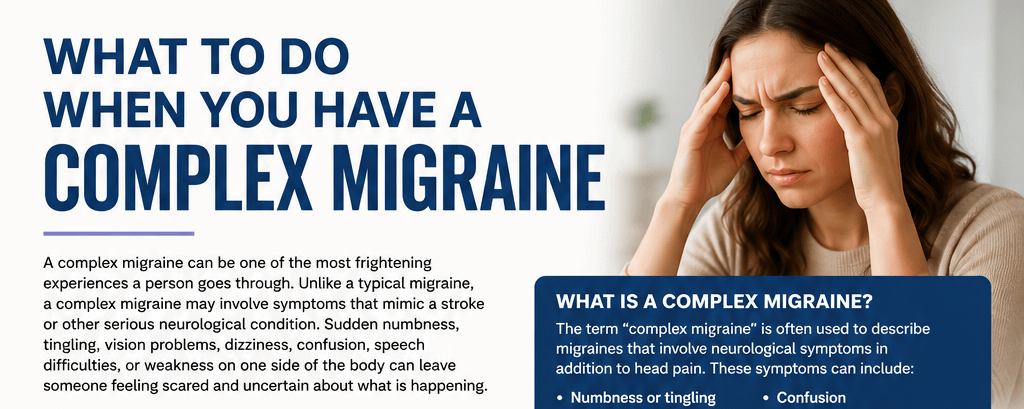
A complex migraine can be one of the most frightening experiences a person goes through. Unlike a typical migraine, a complex migraine may involve symptoms that mimic a stroke or other serious neurological condition. Sudden numbness, tingling, vision problems, dizziness, confusion, speech difficulties, or weakness on one side of the body can leave someone feeling scared and uncertain about what is happening.
While some complex migraines are not life-threatening, they should never be ignored—especially if symptoms are new, severe, or unusual.
What Is a Complex Migraine?
The term “complex migraine” is often used to describe migraines that involve neurological symptoms in addition to head pain. These symptoms can include:
Numbness or tingling
Temporary weakness
Vision changes or blind spots
Difficulty speaking
Dizziness or balance problems
Confusion
Sensitivity to light and sound
Intense throbbing headache
Nausea or vomiting
Some people experience aura symptoms before the headache begins, while others may experience neurological symptoms during or even without a severe headache.
Because the symptoms can resemble a stroke, it is important to take them seriously.
When to Seek Emergency Help
You should seek immediate medical attention if:
It is your first migraine with neurological symptoms
Symptoms appear suddenly and intensely
You have weakness or paralysis
You have difficulty speaking or understanding speech
You lose consciousness
Symptoms last longer than usual
You experience chest pain or severe confusion
Never assume symptoms are “just a migraine” without proper medical evaluation.
What to Do During a Complex Migraine
1. Stop What You’re Doing
As soon as symptoms begin, slow down and find a safe place to sit or lie down. Avoid driving, operating machinery, or continuing stressful activity.
Complex migraines can affect balance, coordination, and concentration.
2. Reduce Stimulation
Migraines often worsen with sensory overload. Try to move into a quiet, dark, calm environment.
Helpful steps include:
Turning off bright lights
Lowering screen brightness
Reducing noise
Closing your eyes
Resting in a cool room
Sometimes simply reducing stimulation can help prevent symptoms from escalating.
3. Hydrate
Dehydration is a common migraine trigger. Sip water slowly throughout the episode.
Avoid:
Excess caffeine
Alcohol
Sugary energy drinks
Electrolyte drinks may help some people recover more comfortably.
4. Take Prescribed Medication
If your doctor has prescribed migraine medication, take it exactly as directed at the earliest signs of symptoms.
Common treatments may include:
Triptans
Anti-nausea medication
Pain relievers
Preventive migraine medications
Do not take new medications without medical guidance, especially if you are unsure whether symptoms could be related to something more serious.
5. Monitor Your Symptoms
Keep track of:
When symptoms started
What symptoms appeared
How long they last
Possible triggers
Pain intensity
Foods, stress, sleep, or weather changes
A migraine journal can help doctors identify patterns and treatment options.
Common Migraine Triggers to Avoid
Many people with complex migraines discover certain triggers increase the likelihood of attacks.
Common triggers include:
Stress or anxiety
Lack of sleep
Dehydration
Skipping meals
Bright or flashing lights
Hormonal changes
Strong smells
Alcohol
Excess caffeine
Certain foods like aged cheese, processed meats, or artificial sweeteners
Identifying personal triggers can make a significant difference in reducing episodes.
Recovery After a Complex Migraine
After symptoms improve, many people experience what is called a “migraine hangover” or postdrome phase.
You may feel:
Exhausted
Mentally foggy
Emotionally drained
Sensitive to light or sound
Weak or sore
Give yourself time to recover fully. Rest, hydration, light meals, and sleep can help the body stabilize.
Long-Term Management
If you experience recurring complex migraines, it is important to work closely with a healthcare professional or neurologist.
Long-term management may include:
Preventive medications
Stress management
Sleep improvement
Regular exercise
Dietary adjustments
Trigger tracking
Routine medical follow-up
Ignoring recurring neurological symptoms can delay proper treatment and increase anxiety around future episodes.
Final Thoughts
A complex migraine can feel overwhelming and even terrifying, especially when symptoms affect speech, movement, or sensation. While migraines can be powerful, understanding how to respond calmly and safely can help reduce fear and improve recovery.
Listen to your body. Take symptoms seriously. Seek medical care when needed. And remember that managing migraines often involves both immediate care during attacks and long-term lifestyle adjustments that support overall neurological health.
Leave a Reply