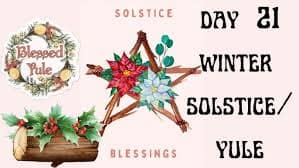
Yule is an ancient and deeply symbolic celebration marking the Winter Solstice, the shortest day and longest night of the year. Observed around December 21st in the Northern Hemisphere, Yule has been honored for thousands of years by early European cultures, including the Norse, Celts, and Germanic peoples. More than just a seasonal marker, Yule represents a sacred turning point in the natural cycle—the moment when darkness reaches its peak and the light begins its slow, steady return.
At the heart of Yule lies the powerful theme of rebirth. As the Sun appears to “stand still” on the horizon before beginning its journey higher into the sky, ancient people viewed this moment as the rebirth of the Sun itself. This return of light symbolized hope, renewal, and the promise of warmth and growth after months of cold and scarcity. For communities that depended heavily on the land, Yule was a reminder that life continues even when the world seems still and lifeless.
Many beloved winter traditions trace their roots directly back to Yule. Evergreens such as pine, fir, and holly were brought indoors to symbolize endurance, protection, and eternal life, as they remained green throughout the harsh winter months. Wreaths, with their circular shape, represented the endless cycle of life, death, and rebirth. The Yule log—often a massive piece of wood burned in the hearth for days—was central to the celebration. Families would decorate it with greenery, ribbons, or carvings and light it with embers saved from the previous year’s log, symbolizing continuity, luck, and blessings for the year ahead.
Fire and light played an essential role in Yule observances. Candles and bonfires were lit to honor the returning Sun and to drive away darkness. Each flame represented warmth, protection, and the inner light that sustains us during difficult times. These rituals reinforced the belief that light, though diminished, is never truly gone.
Yule is also a season of introspection and rest. Unlike festivals of abundance, Yule honors stillness and quiet reflection. It invites individuals to turn inward, acknowledge the challenges they have faced, and release what no longer serves them. This is a time to set intentions rather than resolutions—gentle promises rooted in patience, growth, and renewal. Nature itself rests during this season, teaching us the value of slowing down and conserving energy.
Modern Yule celebrations vary widely. Some observe it through pagan or spiritual rituals, honoring deities of the Sun or Earth. Others celebrate in simple, meaningful ways—lighting candles, sharing warm meals, exchanging handmade gifts, journaling, or spending time in nature. For many, Yule blends seamlessly with contemporary winter holidays, emphasizing togetherness, gratitude, and hope.
In today’s fast-paced world, Yule offers a powerful reminder to pause and reconnect—with nature, with loved ones, and with ourselves. It teaches that even in the longest night, light is being reborn. The darkness is not an ending, but a necessary part of transformation. Yule reminds us that every ending carries the seed of a new beginning, and that hope quietly grows, even when we cannot yet see it.
Read More Holidays & National Days
Leave a Reply