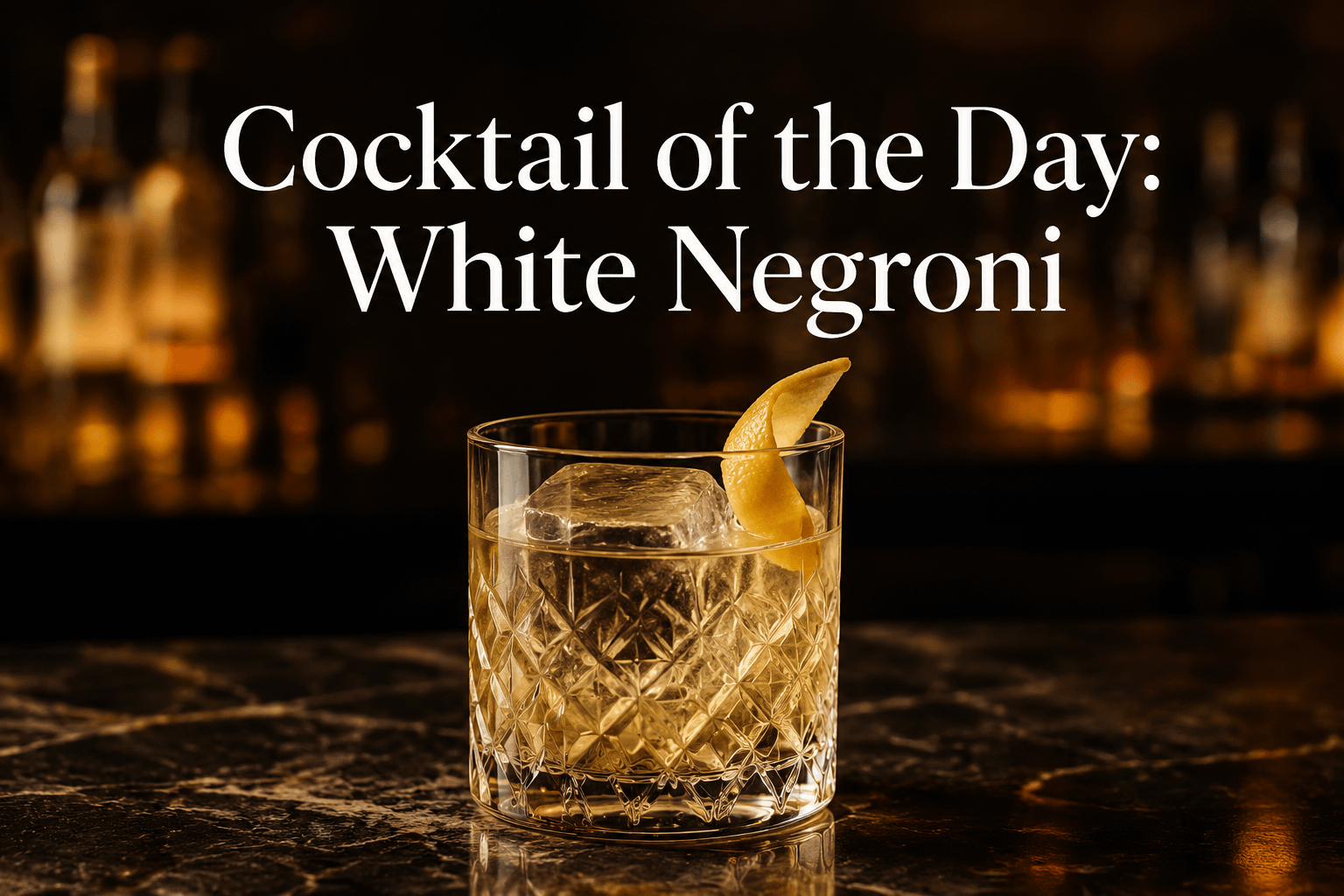
The classic Negroni is famous for its bold red color, bittersweet flavor, and equal-parts combination of gin, Campari, and sweet vermouth. The White Negroni takes that familiar formula in a completely different direction.
Instead of the dark fruit, caramel, and orange notes associated with the traditional drink, the White Negroni offers a lighter-looking blend of floral, citrus, herbal, and earthy flavors. Its pale golden appearance may seem delicate, but the cocktail still delivers the pleasantly bitter character that Negroni drinkers expect.
Made with gin, Lillet Blanc, and Suze, the White Negroni is sophisticated without being overly complicated. It requires only three primary ingredients, a mixing glass, ice, and a lemon twist. However, every ingredient brings a distinctive personality to the glass.
The result is an elegant cocktail that feels equally appropriate for a relaxed evening at home, an intimate dinner, or a gathering where you want to introduce guests to something beyond the usual martini or gin and tonic.
What Is a White Negroni?
A White Negroni is a modern variation of the traditional Negroni. It follows the same basic idea of combining a strong spirit, an aromatized wine, and a bitter liqueur.
The classic version uses gin, sweet vermouth, and Campari. The White Negroni replaces the sweet vermouth with Lillet Blanc and the Campari with Suze, a French liqueur known for its distinctive gentian flavor.
The word “white” refers primarily to the cocktail’s pale color rather than its ingredients. Depending on the brands and proportions used, the drink may appear light yellow, straw-colored, or golden.
Despite its bright appearance, this is not an especially sweet cocktail. Suze gives it a pronounced bitterness, while Lillet Blanc supplies gentle sweetness, citrus, and floral complexity. Gin holds everything together with botanical depth and a clean alcoholic backbone.
The History of the White Negroni
The White Negroni is considerably younger than the cocktail that inspired it.
British bartender Wayne Collins created the drink in 2001 while attending Vinexpo, a major wine and spirits exhibition in Bordeaux, France. Collins reportedly wanted to make a Negroni-style cocktail using French ingredients that were readily available during the event.
He combined gin with Lillet Blanc and Suze. Lillet filled the role normally occupied by vermouth, while Suze provided the necessary bitterness in place of Campari.
The original drink reportedly followed the equal-parts structure of a classic Negroni. Modern recipes frequently increase the gin and reduce the amount of Suze, producing a cocktail that remains bitter but allows more of the gin and Lillet to come forward.
The White Negroni gradually appeared on influential cocktail menus and developed an international following. It is now recognized as one of the most successful modern Negroni variations.
Its popularity demonstrates that a cocktail does not need a long history to become a respected classic. A balanced recipe, memorable flavor, and appealing appearance can establish a lasting place behind the bar.
What Does a White Negroni Taste Like?
The White Negroni is crisp, floral, herbal, citrusy, and distinctly bitter.
Gin supplies notes that may include juniper, coriander, citrus peel, flowers, roots, herbs, or spices. The exact character will depend on the gin you select.
Lillet Blanc introduces softer flavors of citrus, honey, flowers, and ripe fruit. It adds enough sweetness to balance the drink without turning it into a sugary cocktail.
Suze contributes the most unusual flavor. Its gentian root bitterness can seem earthy, grassy, floral, and slightly medicinal. This intensity is what gives the White Negroni its unmistakable personality.
A lemon twist finishes the cocktail with fragrant citrus oils. Although the garnish may appear decorative, its aroma has a noticeable effect on the drinking experience.
The first sip usually begins with citrus and botanical notes before moving into a gentle sweetness. The bitter gentian character then develops and lingers through the finish.
People who enjoy dry martinis, classic Negronis, bitter aperitifs, or herbal liqueurs are especially likely to appreciate it.
White Negroni Recipe
Ingredients
- 1½ ounces gin
- 1 ounce Lillet Blanc
- ½ ounce Suze gentian liqueur
- Lemon peel for garnish
- Ice for mixing and serving
Equipment
- Mixing glass or sturdy pint glass
- Bar spoon
- Jigger or small measuring cup
- Cocktail strainer
- Rocks glass
- Vegetable peeler or paring knife
Instructions
- Place a rocks glass in the freezer for several minutes if you prefer an especially cold cocktail.
- Fill a mixing glass approximately three-quarters full with fresh ice.
- Pour in the gin, Lillet Blanc, and Suze.
- Stir steadily for approximately 20 to 30 seconds. The outside of the mixing glass should become noticeably cold.
- Place one large ice cube in the chilled rocks glass.
- Strain the cocktail over the fresh ice.
- Cut a wide strip of lemon peel, avoiding as much of the bitter white pith as possible.
- Hold the peel over the cocktail with the yellow side facing the drink. Gently bend or squeeze it to release the fragrant oils across the surface.
- Rub the peel around the rim before placing it in the glass.
- Serve immediately and enjoy slowly.
Why This Cocktail Should Be Stirred
The White Negroni should be stirred rather than shaken.
Cocktails made primarily with spirits, fortified wines, and liqueurs are generally stirred because the technique chills and dilutes them while preserving a smooth, silky texture.
Shaking introduces tiny air bubbles and can make a drink temporarily cloudy. That is helpful for cocktails containing citrus juice, cream, egg white, or other ingredients that need vigorous mixing. It is unnecessary for the White Negroni.
Stirring is not merely a gentle way to combine the ingredients. It also controls temperature and dilution. A properly stirred White Negroni will be cold, balanced, and pleasantly smooth.
If the drink is not stirred long enough, it may taste overly strong or disjointed. If stirred for too long with wet, partially melted ice, it can become thin.
Large, solid ice cubes in the mixing glass provide reliable chilling with more controlled dilution.
Choosing the Right Gin
Gin forms the foundation of the White Negroni, so its flavor matters.
A traditional London dry gin is an excellent starting point. Its juniper-forward character can stand up to the bitterness of Suze while providing a crisp, familiar structure.
A citrus-forward gin creates a brighter version that complements Lillet Blanc and the lemon garnish. This style may be appealing to people trying a White Negroni for the first time.
Floral gin can produce an especially aromatic cocktail, but it should be selected carefully. Suze and Lillet already provide floral elements, so an intensely perfumed gin may overwhelm the balance.
Contemporary gins featuring cucumber, herbs, tea, or unusual botanicals can also work. They allow home bartenders to adjust the cocktail’s personality without changing the recipe itself.
The best option is a gin that you already enjoy in spirit-forward drinks. If you would not enjoy its flavor in a dry martini, it probably will not improve your White Negroni.
Understanding Lillet Blanc
Lillet Blanc is a French wine-based aperitif with fruit, citrus, floral, and honeyed characteristics. It plays an essential balancing role in the White Negroni.
Suze can be intensely bitter, so the gentle sweetness of Lillet prevents the cocktail from becoming too severe. At the same time, Lillet is lighter and brighter than the sweet vermouth used in a traditional Negroni.
Because it is wine-based, an opened bottle should be refrigerated. Keeping it cold and properly sealed will help preserve its flavor.
Lillet Blanc can also be served chilled on its own, poured over ice, combined with sparkling water, or used in other aperitif cocktails. That makes the bottle more versatile than it may initially appear.
Understanding Suze
Suze is a French bitter aperitif made with gentian root. It gives the White Negroni its pale golden color and distinctive bitter finish.
Gentian produces a different kind of bitterness than Campari. Instead of prominent bitter orange and dark spice, Suze leans toward earthy, grassy, root-like, and floral flavors.
Its assertive character means that a small adjustment can noticeably change the cocktail.
The half-ounce measurement in this recipe creates bitterness without allowing Suze to overpower the gin. Experienced bitter-cocktail drinkers may prefer increasing it slightly, while newcomers may enjoy starting with only a quarter ounce.
Adjusting the Suze is one of the easiest ways to personalize the drink.
Tips for Making the Best White Negroni
Measure Every Ingredient
The recipe contains only three liquids, which means small measuring errors can change the balance considerably. Use a jigger instead of estimating the amounts.
Use Fresh Ice
Ice that has absorbed freezer odors can negatively affect a spirit-forward cocktail. Fresh, clean ice produces a noticeably better drink.
Chill the Glass
A chilled glass helps the cocktail remain cold without requiring excessive dilution. Even five minutes in the freezer can make a difference.
Do Not Skip the Lemon Oils
Expressing the lemon peel over the cocktail adds a bright aroma that softens the perception of bitterness. Twist the peel directly over the surface rather than simply dropping it into the glass.
Taste Before Making Major Adjustments
Take a small taste after stirring. If the cocktail feels too strong, stir it for several more seconds. If it seems too bitter, reduce the Suze next time rather than adding a large amount of sweetener.
Keep Lillet Refrigerated
Once opened, Lillet Blanc should be treated more like wine than a shelf-stable spirit. Refrigerating it helps protect its delicate flavor.
White Negroni Variations
Equal-Parts White Negroni
For a bolder version inspired by the original formula, combine:
- 1 ounce gin
- 1 ounce Lillet Blanc
- 1 ounce Suze
This creates a much more intensely bitter drink.
Beginner-Friendly White Negroni
Use 1½ ounces of gin, 1¼ ounces of Lillet Blanc, and ¼ ounce of Suze. The result is softer and slightly sweeter while retaining the cocktail’s herbal character.
White Negroni Sbagliato
Replace the gin with sparkling wine. Build the ingredients over ice in a wine glass and stir gently. This creates a lighter, bubbly variation suitable for brunch or afternoon gatherings.
Mezcal White Negroni
Replace half or all the gin with mezcal. Its smoke and roasted agave flavors create an earthy variation that pairs especially well with gentian bitterness.
Grapefruit White Negroni
Use a grapefruit twist instead of lemon. Grapefruit reinforces the cocktail’s dry, bittersweet character and contributes a more complex citrus aroma.
White Negroni Spritz
Combine one ounce of gin, one ounce of Lillet Blanc, and a quarter ounce of Suze in a wine glass filled with ice. Top with sparkling water or dry sparkling wine for a longer, more refreshing drink.
Serving Ideas
The White Negroni is traditionally served in a rocks glass over one large ice cube. Large ice melts slowly, allowing the drink to remain cold without becoming watery too quickly.
It can also be served “up.” Stir the ingredients with ice and strain them into a chilled coupe or Nick and Nora glass. This presentation feels particularly elegant, though the cocktail will warm faster without ice.
Serve it before dinner as an aperitif. Its bitter and herbal qualities can help prepare the palate for a meal.
It also works well as a signature cocktail at a dinner party. The unusual pale color attracts attention, and the three-ingredient recipe makes preparation relatively manageable.
Food Pairings for a White Negroni
The cocktail’s bitterness, botanical character, and citrus aroma pair especially well with salty, creamy, or rich foods.
Consider serving it with:
- Marinated olives
- Salted almonds
- Prosciutto or salami
- Soft or aged cheeses
- Smoked salmon
- Grilled shrimp
- Crostini
- Roasted vegetables
- Mushroom appetizers
- Lemon-herb chicken
- Creamy pasta
- Dark chocolate with citrus
Salty foods can soften the perception of bitterness, while rich foods benefit from the cocktail’s palate-cleansing character.
Avoid pairing it with extremely sweet desserts. Excessive sweetness can make the drink taste more bitter by comparison.
Can You Prepare White Negronis in Advance?
White Negronis are easy to prepare ahead for a small gathering.
For six cocktails, combine:
- 9 ounces gin
- 6 ounces Lillet Blanc
- 3 ounces Suze
- 2 to 3 ounces cold filtered water
The added water replaces some of the dilution that would normally occur during stirring.
Pour the mixture into a clean bottle, seal it, and refrigerate until thoroughly chilled. When ready to serve, pour approximately three ounces over a large ice cube and garnish each glass with a fresh lemon twist.
Do not add the lemon peels to the bottle. Extended contact with the peel can introduce unwanted bitterness, and the fragrant oils are most effective when expressed immediately before serving.
Because the batch contains Lillet Blanc, keep it refrigerated and enjoy it while its flavor remains fresh.
A Refined Modern Classic
The White Negroni proves that a cocktail does not need numerous ingredients or complicated preparation to offer layers of flavor.
Gin provides botanical strength. Lillet Blanc contributes fruit, flowers, citrus, and gentle sweetness. Suze supplies the earthy bitterness that defines the drink. A lemon twist completes the experience with a bright, fragrant finish.
Its pale appearance makes it look subtle, but the flavor is confident and memorable. It is an excellent choice for adventurous drinkers, Negroni enthusiasts, and anyone interested in exploring bitter aperitif cocktails.
Make it according to the standard proportions the first time, then adjust the balance to suit your palate. Use more Lillet for softness, a little more Suze for bitterness, or a different gin to explore new botanical combinations.
Serve responsibly, take time to appreciate its evolving flavors, and let today’s Cocktail of the Day introduce you to one of the most elegant modern variations of the Negroni.
Would you prefer your White Negroni intensely bitter, slightly sweeter, or topped with sparkling wine?
Leave a Reply