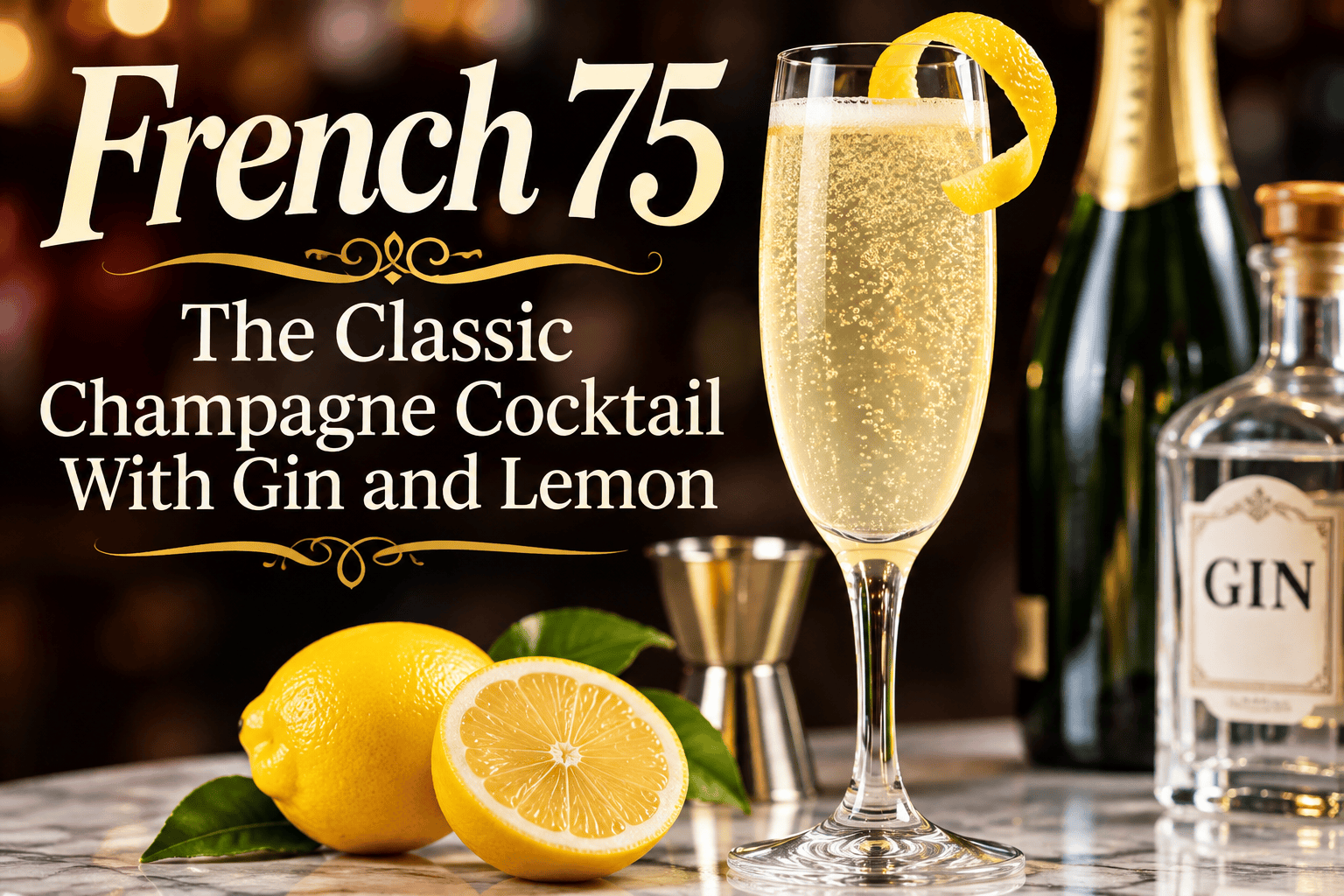
The French 75 is one of the most elegant and refreshing cocktails ever created. Combining the botanical character of gin, the bright acidity of fresh lemon juice, the sweetness of simple syrup, and the lively bubbles of Champagne, this timeless drink delivers a balance of sophistication and refreshment.
Whether you are celebrating a special occasion, hosting a holiday gathering, enjoying brunch, or simply exploring classic cocktails, the French 75 offers a memorable drinking experience.
Despite its delicate appearance, the French 75 has a surprisingly bold personality. Its name comes from a powerful French artillery gun used during World War I, reflecting the cocktail’s reputation for delivering a stronger kick than its sparkling presentation might suggest.
In this guide, you will discover how to make an authentic French 75, explore its fascinating history, learn the secrets to achieving the perfect balance of flavors, and find delicious variations to try at home.
What Is a French 75?
A French 75 is a classic sparkling cocktail traditionally made with gin, fresh lemon juice, simple syrup, and Champagne.
It belongs to the family of sparkling cocktails that combine spirits, citrus, sweeteners, and sparkling wine.
The drink is known for its crisp, citrus-forward flavor, gentle sweetness, botanical undertones, and elegant effervescence.
Unlike a traditional Champagne cocktail, which typically features sugar and bitters, the French 75 incorporates gin and lemon juice, creating a brighter and more complex flavor.
What Does a French 75 Taste Like?
A properly prepared French 75 offers several distinct flavor characteristics.
-
Bright and citrusy: Fresh lemon juice provides refreshing acidity.
-
Lightly sweet: Simple syrup balances the tartness without overpowering the drink.
-
Botanical: Gin contributes herbal, floral, and juniper notes.
-
Crisp and bubbly: Champagne adds lively carbonation and refreshing dryness.
-
Smooth and sophisticated: The combination creates a balanced cocktail with a clean finish.
The result is a sparkling drink that feels both celebratory and refreshing.
Classic French 75 Recipe
Ingredients
-
1 ounce gin
-
1/2 ounce freshly squeezed lemon juice
-
1/2 ounce simple syrup
-
3 ounces chilled Champagne
-
Ice cubes
-
Lemon twist for garnish
Instructions
-
Chill the glass. Place a Champagne flute or coupe glass in the refrigerator for several minutes before preparing the cocktail.
-
Combine the ingredients. Add gin, fresh lemon juice, and simple syrup to a cocktail shaker.
-
Add ice. Fill the shaker with ice cubes.
-
Shake well. Shake vigorously for approximately 10–15 seconds until the mixture is thoroughly chilled.
-
Strain. Strain the mixture into the chilled Champagne flute or coupe glass.
-
Add Champagne. Slowly top with approximately 3 ounces of chilled Champagne.
-
Garnish. Twist a strip of lemon peel over the glass to release its aromatic oils, then place it on the rim or inside the glass.
-
Serve immediately. Enjoy while the cocktail is cold and the Champagne remains bubbly.
Recipe Tips
For the best French 75, use freshly squeezed lemon juice rather than bottled juice. Fresh citrus produces a brighter flavor that complements both gin and Champagne.
Choose a dry Champagne, preferably Brut, to prevent the cocktail from becoming overly sweet.
Always add the Champagne after shaking the other ingredients. Shaking carbonated wine can create excessive pressure and cause the shaker to open unexpectedly.
The History of the French 75
The French 75 has a fascinating history connected to early twentieth-century cocktail culture, World War I, and the development of sophisticated sparkling drinks.
Origins During World War I
The cocktail takes its name from the French 75-millimeter field gun, officially known as the Canon de 75 modèle 1897.
This artillery weapon became famous for its rapid firing capability and effectiveness during World War I.
The cocktail’s name reflects the drink’s perceived strength and impact.
Although stories frequently connect the French 75 to wartime Paris, the precise origins of the modern recipe remain uncertain.
Early twentieth-century bartenders were already experimenting with combinations of gin, citrus, sugar, and sparkling wine.
Harry MacElhone and the French 75
Bartender Harry MacElhone is often associated with the cocktail’s early history.
He worked at prominent establishments in London and Paris and helped popularize numerous classic drinks.
A drink called the 75 appeared in his 1922 cocktail book, Harry’s ABC of Mixing Cocktails, although that early formula differed from today’s familiar Champagne-based French 75.
The modern combination of gin, lemon, sugar, and Champagne became more firmly established during the 1920s.
The French 75 in American Cocktail Culture
The French 75 eventually became popular in American bars, particularly during the decades surrounding Prohibition.
Its combination of sparkling wine and spirits appealed to drinkers seeking something festive yet substantial.
The cocktail appeared in influential recipe collections, including The Savoy Cocktail Book in 1930.
Over time, the French 75 became a staple of classic cocktail menus and developed a lasting association with celebrations, elegant gatherings, and New Orleans cocktail culture.
Why Is It Called a French 75?
The cocktail is named after the French 75-millimeter field gun used during World War I.
The weapon was known for its power and rapid firing rate.
The drink earned a similar reputation because its light, bubbly appearance can disguise the strength of the gin and Champagne combination.
The name captures the contrast between its refined presentation and its surprisingly potent character.
Choosing the Best Gin for a French 75
Gin plays an important role in determining the cocktail’s overall flavor.
Different styles of gin produce noticeably different results.
London Dry Gin
London Dry gin is the traditional and most dependable choice.
Its prominent juniper notes, citrus characteristics, and dry finish complement lemon juice and Champagne.
This style creates a crisp, balanced French 75.
Contemporary Botanical Gin
Modern botanical gins may feature floral, herbal, cucumber, or citrus-forward flavors.
These varieties can produce a softer, more aromatic cocktail.
They are particularly appealing when you want a lighter botanical profile.
Old Tom Gin
Old Tom gin is generally slightly sweeter than London Dry gin.
It can create a rounder cocktail with a smoother finish.
If using Old Tom gin, consider reducing the simple syrup slightly to maintain balance.
What Champagne Is Best for a French 75?
Champagne contributes much more than bubbles.
It influences the cocktail’s acidity, texture, aroma, and overall dryness.
Brut Champagne
Brut Champagne is generally the best choice.
Its dry character balances the sweetness of simple syrup while complementing fresh lemon juice.
Extra Brut Champagne
Extra Brut Champagne contains less residual sugar than standard Brut.
It produces a particularly crisp and dry cocktail.
This option works well for people who prefer less sweetness.
Prosecco
Prosecco is a popular alternative when Champagne is unavailable or outside your budget.
It often provides softer bubbles and fruitier flavors.
The resulting cocktail may taste slightly sweeter, depending on the bottle.
Cava
Spanish Cava is another excellent alternative.
Many dry Cavas offer refreshing acidity and a crisp finish that work beautifully in a French 75.
Although these alternatives make delicious sparkling cocktails, only sparkling wine produced under Champagne’s protected designation can properly be called Champagne.
How to Make Simple Syrup for a French 75
Simple syrup is one of the easiest cocktail ingredients to prepare at home.
Ingredients
-
1 cup granulated sugar
-
1 cup water
Instructions
-
Combine the sugar and water in a small saucepan.
-
Heat gently over medium-low heat.
-
Stir until the sugar dissolves completely.
-
Remove from heat and allow the syrup to cool.
-
Transfer to a clean, airtight container.
-
Refrigerate until needed.
A standard one-to-one simple syrup provides sweetness without adding noticeable flavor.
For best quality, prepare small batches, keep refrigerated, and discard the syrup if it develops cloudiness, mold, or an unusual smell.
French 75 Variations to Try
One of the reasons the French 75 remains popular is its versatility.
The original recipe provides an excellent foundation for creative variations.
1. Cognac French 75
Replace the gin with 1 ounce of Cognac.
The result is a richer cocktail featuring warm fruit, oak, and subtle vanilla characteristics.
Cognac-based versions are particularly associated with New Orleans cocktail traditions.
2. Elderflower French 75
Add 1/2 ounce elderflower liqueur and reduce the simple syrup to taste.
The floral sweetness complements lemon and sparkling wine.
3. Strawberry French 75
Muddle two fresh strawberries with the lemon juice and simple syrup before shaking.
Double-strain the mixture to remove pulp and seeds.
Top with Champagne and garnish with a strawberry slice.
4. Raspberry French 75
Muddle three fresh raspberries in the shaker before adding the remaining ingredients.
Shake, double-strain, and finish with Champagne.
This variation adds a delicate berry flavor and attractive pink color.
5. Lavender French 75
Replace regular simple syrup with culinary lavender syrup.
The floral aroma pairs beautifully with botanical gin.
Use lavender sparingly to avoid overpowering the drink.
6. Blood Orange French 75
Replace half the lemon juice with freshly squeezed blood orange juice.
The citrus combination creates a colorful cocktail with a slightly sweeter profile.
7. Rosemary French 75
Use rosemary-infused simple syrup and garnish with a fresh rosemary sprig.
The herbal character complements gin’s botanical flavors.
8. French 75 With Vodka
Replace the gin with vodka for a more neutral spirit profile.
This variation allows the Champagne and lemon flavors to stand out.
9. Grapefruit French 75
Replace half the lemon juice with fresh grapefruit juice.
The result is pleasantly tart with a subtle bitter citrus finish.
10. Holiday Cranberry French 75
Add 1/2 ounce unsweetened cranberry juice to the classic mixture.
Garnish with fresh cranberries and a rosemary sprig.
This festive variation works particularly well for Thanksgiving, Christmas, and New Year’s celebrations.
French 75 vs. Mimosa: What’s the Difference?
Both the French 75 and Mimosa are popular Champagne-based cocktails, but they offer very different drinking experiences.
| Feature | French 75 | Mimosa |
|---|---|---|
| Main ingredients | Gin, lemon, syrup, Champagne | Orange juice, Champagne |
| Flavor | Citrusy, botanical, crisp | Fruity, bright |
| Added spirit | Gin | None |
| Sweetness | Adjustable | Depends on juice and wine |
| Typical occasion | Celebrations, cocktail hour | Brunch, celebrations |
The French 75 generally has a more complex flavor profile and higher alcohol content because it includes gin.
A Mimosa is simpler and typically lighter in alcohol.
Best Glassware for Serving a French 75
Presentation is an important part of the French 75 experience.
Champagne Flute
A Champagne flute emphasizes the cocktail’s elegant appearance and helps preserve carbonation.
Its narrow shape also showcases the rising bubbles.
Coupe Glass
A coupe provides a classic vintage presentation.
Its wide bowl creates an attractive appearance and makes it easy to enjoy the cocktail’s citrus aroma.
However, carbonation dissipates more quickly in a coupe than in a flute.
Which Glass Is Better?
Both are appropriate.
Choose a Champagne flute when you want to emphasize bubbles and a traditional celebratory appearance.
Choose a coupe when you prefer vintage cocktail-bar elegance.
Common French 75 Mistakes to Avoid
Even a simple cocktail can become unbalanced when prepared incorrectly.
Using bottled lemon juice: Bottled juice may taste flatter or harsher than freshly squeezed lemon.
Adding too much simple syrup: Excess sugar can overpower the Champagne’s acidity and gin’s botanical notes.
Using warm Champagne: Warm sparkling wine loses its refreshing character and may foam excessively.
Shaking the Champagne: Carbonated wine should never be added to a sealed cocktail shaker.
Using overly sweet sparkling wine: Sweet wine combined with simple syrup can produce an unbalanced drink.
Serving in a warm glass: Chilled glassware helps maintain the cocktail’s temperature and carbonation.
When to Serve a French 75
The French 75 works beautifully for numerous occasions.
New Year’s Eve
Champagne and celebration naturally go together.
The French 75 offers a more complex alternative to serving sparkling wine alone.
Weddings and Anniversaries
Its elegant appearance makes it a memorable choice for receptions, anniversaries, and romantic dinners.
Holiday Parties
Cranberry, rosemary, and blood orange variations can complement seasonal celebrations.
Brunch Gatherings
The refreshing citrus flavor makes the French 75 an appealing brunch cocktail for adults who want something different from a Mimosa.
Summer Entertaining
Its bright acidity and sparkling finish make it particularly enjoyable during warm-weather gatherings.
How Strong Is a French 75?
Although the French 75 tastes light and refreshing, it contains both gin and Champagne.
Using 1 ounce of 40% ABV gin and 3 ounces of 12% ABV Champagne, the recipe contains approximately 0.76 U.S. fluid ounces of pure alcohol.
That equals roughly 1.3 U.S. standard drinks, before accounting for ingredient variations.
The alcohol content of the finished cocktail depends on the gin, Champagne, recipe proportions, and dilution from shaking.
Its bubbly presentation should not be mistaken for low alcohol content.
Frequently Asked Questions About the French 75
Is a French 75 made with gin or Cognac?
The modern classic French 75 is typically made with gin.
However, Cognac versions have a long-standing connection to New Orleans and offer a richer flavor.
Can you make a French 75 without Champagne?
Yes. Dry Prosecco, Cava, or another quality sparkling wine can be substituted.
The flavor may change depending on the wine’s sweetness and acidity.
Is a French 75 sweet?
A French 75 is generally balanced between sweet and tart.
The simple syrup provides sweetness, while fresh lemon juice and dry Champagne contribute acidity.
You can adjust the syrup to suit your preference.
Can you make a French 75 ahead of time?
You can combine the gin, lemon juice, and simple syrup ahead of time and refrigerate the mixture.
Add Champagne immediately before serving to preserve the bubbles.
Can you make a nonalcoholic French 75?
Yes. Replace gin with a nonalcoholic botanical spirit and Champagne with a dry nonalcoholic sparkling wine.
Add lemon juice and simple syrup as usual, adjusting the sweetness to taste.
What is the best garnish for a French 75?
A fresh lemon twist is the traditional garnish.
It adds citrus aroma without changing the cocktail’s balance.
Why is my French 75 too sour?
Excess lemon juice, insufficient syrup, or particularly acidic sparkling wine may cause excessive tartness.
Try adding a small amount of simple syrup to improve the balance.
Final Thoughts: Why the French 75 Remains a Timeless Classic
The French 75 represents everything that makes a classic cocktail memorable: a fascinating history, a simple recipe, balanced flavors, and an elegant presentation.
With just four main ingredients, gin, lemon juice, simple syrup, and Champagne, it transforms familiar flavors into something sophisticated and celebratory.
Its crisp citrus notes, botanical complexity, and sparkling finish make it suitable for everything from intimate dinners to major celebrations.
Whether you prefer the traditional gin-based recipe, a rich Cognac variation, or a fruit-inspired twist, the French 75 offers plenty of opportunities to experiment while preserving the spirit of the original.
For anyone interested in exploring classic cocktails, the French 75 deserves a permanent place in the recipe collection.
Sometimes the most memorable drinks are not the most complicated. They are the ones that bring a few carefully chosen ingredients together in perfect harmony.

Leave a Reply