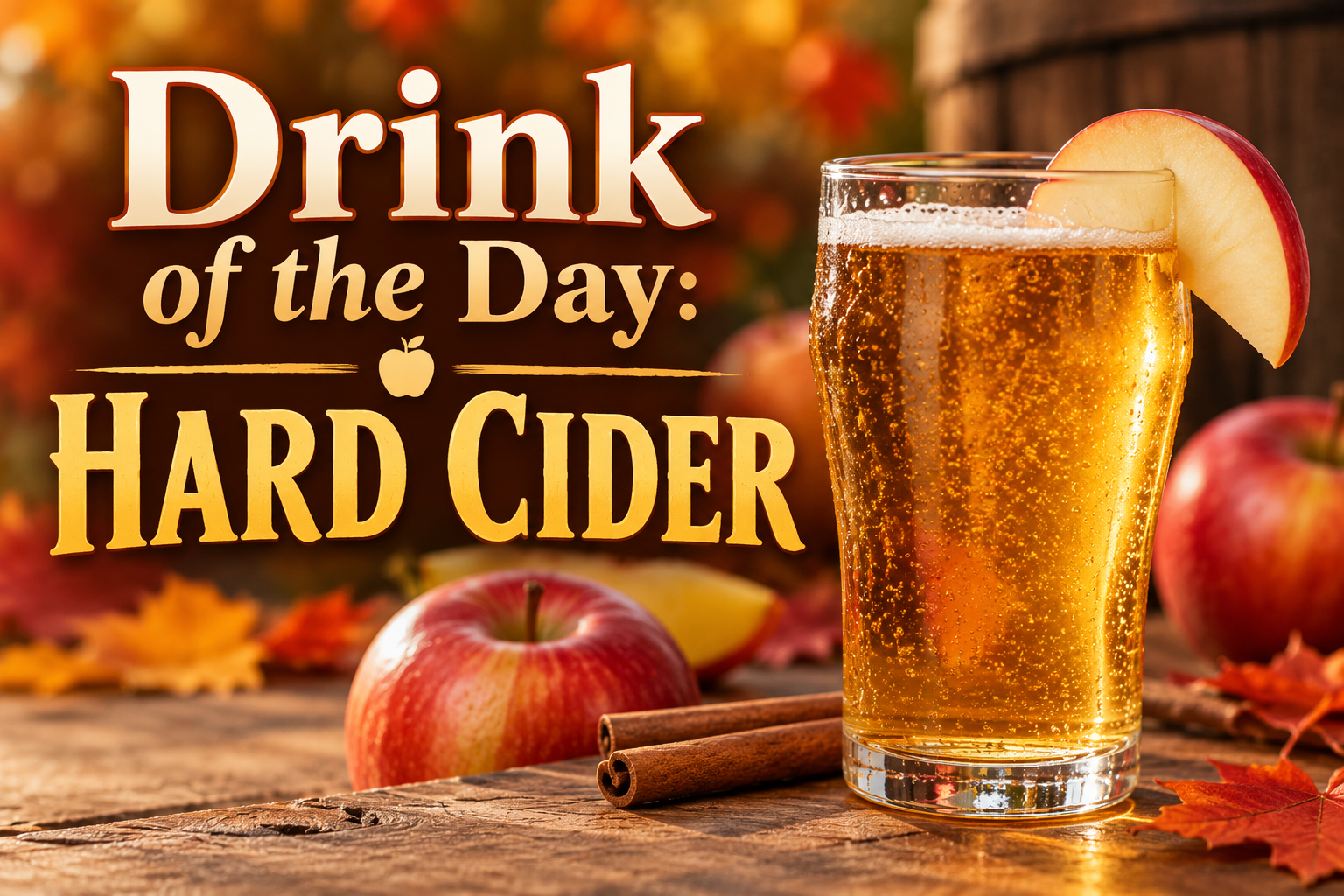
There is something special about the taste of fresh apples, especially when the weather begins to cool and the leaves change colors. Whether you are enjoying a peaceful autumn evening, gathering with friends around a fire, or simply looking for something different to sip, hard cider offers a delicious combination of crisp apple flavors, refreshing bubbles, and a smooth finish.
Hard cider has been enjoyed for centuries, and today it continues to be a popular alcoholic beverage among people who appreciate fruity, refreshing drinks. From traditional dry ciders to sweeter varieties infused with cinnamon, berries, or other fruits, there is a hard cider for almost every taste.
For today’s Drink of the Day, we are exploring everything that makes hard cider special, including its history, how it is made, different varieties, serving suggestions, food pairings, and ways to enjoy this classic apple beverage.
What Is Hard Cider?
Hard cider is an alcoholic beverage made by fermenting apple juice. Unlike regular apple cider, which is generally nonalcoholic, hard cider develops its alcohol content through a natural fermentation process.
During fermentation, yeast converts the sugars found in apple juice into alcohol and carbon dioxide. The result is a refreshing beverage that can range from sweet and fruity to dry, tart, and complex.
Hard cider is sometimes compared to beer or wine, but it has a character all its own.
While beer is typically brewed from grains and wine is commonly made from grapes, traditional hard cider begins with apples.
Depending on the apple varieties, fermentation process, and cider-making techniques, the finished beverage may have notes of fresh apples, citrus, honey, flowers, spices, or even earthy flavors.
Most commercial hard ciders contain approximately 4% to 8% alcohol by volume (ABV), although some varieties fall outside that range.
The History of Hard Cider
Hard cider has a long and fascinating history that stretches back thousands of years.
Fermented apple beverages were enjoyed in parts of Europe long before modern cider-making methods existed. Over time, cider production became particularly important in regions where apple orchards flourished.
England, France, and Spain developed distinctive cider traditions, many of which remain influential today.
In England, cider became a common agricultural beverage, especially in apple-growing regions. Traditional English ciders often feature complex flavors and a dry finish.
In France, particularly Normandy and Brittany, cider developed its own identity, with varieties ranging from sweet and lightly sparkling to dry and sophisticated.
Spain also established a strong cider culture, especially in Asturias and the Basque Country. Spanish sidra is often tart and traditionally poured from a height to aerate the drink.
Hard Cider in Early America
When European settlers arrived in North America, they brought apple seeds and cider-making traditions with them.
Apple orchards became an important part of colonial agriculture, and fermented cider was widely consumed.
During the colonial period, cider was a familiar beverage in many American households.
As the country developed, changing agricultural practices, immigration patterns, Prohibition, and consumer preferences contributed to cider’s decline in popularity.
However, hard cider experienced a revival in the late twentieth and early twenty-first centuries.
Today, American cider makers produce everything from traditional farmhouse-style ciders to creative modern varieties featuring fruit, spices, and other ingredients.
What Does Hard Cider Taste Like?
One of the most appealing qualities of hard cider is its variety of flavors.
Some hard ciders taste like biting into a freshly picked apple, while others offer a more sophisticated combination of acidity, tannins, and subtle fruit notes.
The flavor depends on several factors, including the apples used, fermentation methods, residual sugar, and aging.
Here are some of the most common flavor characteristics.
Sweet: Sweet hard ciders retain noticeable apple sweetness and are often approachable for people who enjoy fruity beverages.
Dry: Dry hard ciders contain relatively little residual sugar, creating a crisp finish that may resemble certain white wines.
Semi-dry: These ciders balance gentle sweetness with refreshing acidity.
Tart: Tart hard ciders emphasize acidity and can have a bright, refreshing character.
Spiced: Some seasonal ciders feature cinnamon, cloves, ginger, nutmeg, or other warming spices.
Fruit-infused: Modern cider makers sometimes add berries, cherries, pears, peaches, or tropical fruits to create distinctive flavor combinations.
How Hard Cider Is Made
Although cider production can become quite sophisticated, the basic process involves a few essential stages.
1. Selecting the apples
Cider makers begin by choosing apples based on their sweetness, acidity, and tannin content.
Some producers use familiar eating apples, while others select specialized cider apples that offer bitterness, complexity, and structure.
Blending several apple varieties can create a more balanced beverage.
2. Pressing the apples
The apples are washed, crushed, and pressed to extract their juice.
Fresh apple juice provides the natural sugars needed for fermentation.
3. Fermentation
Yeast converts the sugars in the juice into alcohol.
Fermentation can take several weeks or longer, depending on the process, temperature, and desired cider style.
4. Aging and flavor development
Some hard ciders are enjoyed relatively young, while others benefit from additional aging.
Aging can help flavors develop and become more integrated.
5. Carbonation and packaging
Hard cider may be still, lightly sparkling, or fully carbonated.
The finished beverage is packaged in bottles, cans, or kegs.
Commercial producers use controlled processes to maintain consistency, quality, and safety.
Drink of the Day: Classic Hard Cider
5 minutes
1 serving
For today’s featured drink, we are keeping things simple with a refreshing hard cider presentation that highlights the natural apple flavors.
This is an easy way to enjoy a commercially prepared hard cider with a few optional seasonal touches.
Ingredients
-
12 ounces chilled hard apple cider
-
2 thin fresh apple slices
-
1 cinnamon stick (optional)
-
Ice cubes (optional)
-
1 small sprig of fresh rosemary (optional)
Instructions
-
Chill the cider. Place your preferred hard cider in the refrigerator until cold.
-
Prepare the glass. Choose a pint glass, cider glass, or stemmed glass. Add ice if desired.
-
Pour the cider. Slowly pour 12 ounces of hard cider into the glass, allowing its natural carbonation to settle.
-
Add the apple garnish. Place one or two thin apple slices along the rim or directly into the drink.
-
Add seasonal flavor. For an autumn-inspired presentation, add a cinnamon stick or rosemary sprig.
-
Serve immediately. Enjoy while chilled to appreciate its refreshing apple flavor.
Preparation Tips
For a sweeter experience, select a sweet or semi-sweet cider.
For a crisp, refreshing finish, choose a dry hard cider.
If you prefer a stronger apple aroma, use freshly sliced apples as a garnish.
Avoid adding too many spices because they can overpower the cider’s natural flavors.
Popular Types of Hard Cider
Hard cider is not limited to one style. Different cider traditions and modern variations offer a wide selection of flavors and experiences.
1. Traditional Apple Hard Cider
Traditional apple hard cider focuses on the flavor of fermented apples.
Depending on the apples and production method, it may be sweet, dry, sparkling, or still.
This is an excellent starting point for anyone interested in discovering cider.
2. Dry Hard Cider
Dry hard cider contains little residual sugar and usually offers a clean, crisp finish.
It can pair especially well with savory foods because its acidity helps balance richer flavors.
3. Sweet Hard Cider
Sweet hard cider has a more noticeable apple sweetness.
It is often popular with people who enjoy fruity drinks and prefer less bitterness or dryness.
4. Spiced Hard Cider
Spiced hard cider is particularly popular during autumn and winter.
Cinnamon, cloves, ginger, and nutmeg can create a warm seasonal flavor profile.
Some varieties are served chilled, while others are gently warmed.
5. Berry Hard Cider
Berry-infused hard ciders may feature raspberries, blackberries, strawberries, or blueberries.
These fruits can introduce additional sweetness, tartness, and color.
6. Pear Cider
Pear cider is commonly called perry when made from fermented pears.
Although technically different from apple cider, it is often enjoyed by cider enthusiasts because of its delicate fruit character.
7. Hopped Hard Cider
Some cider makers introduce hops to add floral, herbal, citrus, or bitter notes.
Hopped cider can appeal to people who enjoy craft beer but want something with an apple-based foundation.
8. Barrel-Aged Hard Cider
Certain hard ciders are aged in wooden barrels.
This process may introduce notes of vanilla, oak, spice, or other complex flavors.
Why Hard Cider Is Popular During Fall
Autumn and apples have always shared a natural connection.
Apple picking, harvest festivals, pumpkin patches, cool evenings, and seasonal gatherings make fall an ideal time to enjoy apple-inspired beverages.
Hard cider fits naturally into this atmosphere.
Its crisp flavor complements cool weather, while spiced varieties bring familiar autumn aromas.
Hard cider is also versatile enough to be served at casual gatherings, holiday dinners, outdoor celebrations, or relaxing evenings at home.
During Halloween and Thanksgiving celebrations, cider can complement many traditional seasonal dishes.
However, hard cider is not exclusively a fall beverage.
Its refreshing qualities also make it enjoyable during spring and summer.
Best Foods to Pair With Hard Cider
One of the advantages of hard cider is how well it complements different foods.
Its acidity, fruit flavors, and varying levels of sweetness make it a versatile pairing option.
| Food | Recommended cider |
|---|---|
| Roast pork | Dry apple cider |
| Grilled chicken | Semi-dry cider |
| Sharp cheddar cheese | Traditional dry cider |
| Barbecue ribs | Semi-sweet cider |
| Spicy tacos | Sweet apple cider |
| Apple pie | Spiced or semi-dry cider |
| Pizza | Crisp sparkling cider |
| Roasted vegetables | Dry or farmhouse cider |
Hard Cider and Cheese
Hard cider pairs particularly well with cheese.
Sharp cheddar, creamy brie, aged gouda, and blue cheese can all complement different cider styles.
The acidity of cider can help balance the richness of cheese.
Hard Cider and Barbecue
Sweet and smoky barbecue flavors work well with fruity cider.
A semi-dry or lightly sweet cider can complement grilled meats without overpowering them.
Hard Cider and Thanksgiving Dinner
Hard cider can be a seasonal pairing for roasted turkey, stuffing, sweet potatoes, and other Thanksgiving favorites.
A dry cider can balance rich dishes, while a lightly spiced cider may complement traditional holiday flavors.
How to Serve Hard Cider
Serving hard cider properly can enhance its aroma and flavor.
Serve at the right temperature
Many commercial hard ciders taste refreshing when served chilled.
However, certain traditional or complex ciders may reveal more flavor when served slightly warmer than refrigerator temperature.
Follow the producer’s serving recommendations when available.
Choose the right glass
Hard cider can be served in several types of glassware.
A pint glass works well for casual drinking, while a wine glass can help concentrate aromas.
A stemmed cider glass can provide an elegant presentation for special occasions.
Consider carbonation
Some ciders are highly carbonated, while others are still.
Pour sparkling cider gently to preserve its bubbles without creating excessive foam.
Add simple garnishes
Fresh apple slices, cinnamon sticks, and rosemary can enhance the presentation.
For most traditional ciders, however, garnishes are optional.
The cider’s natural flavor should remain the centerpiece.
Hard Cider Versus Regular Apple Cider
Although their names are similar, hard cider and regular apple cider are different beverages.
| Feature | Hard cider | Regular apple cider |
|---|---|---|
| Alcohol | Contains alcohol | Generally nonalcoholic |
| Production | Fermented apple juice | Pressed apple juice |
| Flavor | Sweet to dry | Typically sweet and apple-forward |
| Carbonation | Still or sparkling | Usually still |
| Common use | Adult beverage | Family gatherings and seasonal drinks |
Regular apple cider is often served warm with cinnamon and other spices.
Hard cider is commonly served chilled, although certain varieties can also be gently warmed.
The most important distinction is that hard cider contains alcohol.
Is Hard Cider Gluten-Free?
Traditional hard cider made entirely from apples is naturally gluten-free.
However, not every commercially flavored cider is guaranteed to be gluten-free.
Some products may contain additional ingredients or be manufactured in facilities where gluten-containing ingredients are handled.
Anyone with celiac disease or gluten sensitivity should check the product label and manufacturer’s information before drinking.
Is Hard Cider Healthier Than Beer?
Hard cider and beer have different nutritional profiles, but neither should automatically be considered healthier.
Hard cider can contain significant amounts of sugar, particularly sweeter varieties.
Beer may contain more carbohydrates from grains, depending on its style and production.
Calories and alcohol content vary considerably between products.
Alcohol consumption also carries health risks, including increased cancer risk, so hard cider should not be treated as a health beverage.
For people who prefer to avoid alcohol, nonalcoholic apple cider and alcohol-free cider alternatives can offer similar seasonal enjoyment.
Fun Facts About Hard Cider
Hard cider has several interesting characteristics that make it different from many other alcoholic beverages.
-
Hard cider can be made using specialized apple varieties that are too bitter or tannic for many people to enjoy fresh.
-
Traditional cider can be still rather than sparkling.
-
Different countries have distinctive cider-making and serving traditions.
-
Some cider makers use wild yeast fermentation to create unique flavors.
-
Hard cider can range from very sweet to exceptionally dry.
-
Certain cider varieties are aged in oak barrels.
-
Perry is made from fermented pears rather than apples.
-
Apple tannins contribute structure and complexity to some traditional ciders.
-
Cider can be used in cooking, especially in sauces, marinades, and braised dishes.
-
Hard cider is produced in many regions around the world, wherever suitable apples are grown.
Creative Ways to Enjoy Hard Cider
Hard cider can be enjoyed on its own, but it also works as an ingredient in seasonal recipes and mixed drinks.
Warm Spiced Hard Cider
Gently warm hard cider with cinnamon, cloves, and orange slices.
Avoid boiling it, which can change the flavor and alcohol content.
Hard Cider Apple Spritz
Combine chilled hard cider with sparkling water and a fresh apple garnish for a lighter-tasting beverage.
The drink will still contain alcohol.
Hard Cider With Cranberry
Add a splash of cranberry juice to hard cider for a tart, colorful seasonal variation.
Hard Cider With Ginger
A small amount of ginger syrup or ginger beer can introduce a spicy flavor.
Hard Cider Float
For an indulgent adult dessert, pair a small serving of hard cider with vanilla ice cream.
The result is a creamy, apple-inspired treat.
Tips for Choosing a Good Hard Cider
With so many varieties available, choosing a hard cider can feel overwhelming.
Start by considering your personal taste preferences.
If you enjoy sweet drinks, look for labels indicating sweet or semi-sweet cider.
If you prefer crisp beverages with less sweetness, consider dry or extra-dry varieties.
Pay attention to alcohol content, carbonation, and additional flavors.
A cider labeled farmhouse-style may have a more rustic, complex character, while a modern fruit-flavored cider may emphasize approachable sweetness.
It is also worth exploring local cider makers, especially in regions known for apple orchards.
Trying different styles can help you discover the flavors you enjoy most.
Responsible Enjoyment
Hard cider is an alcoholic beverage and should be enjoyed responsibly by adults of legal drinking age.
Alcohol content can vary significantly, and a large serving or higher-ABV cider may contain more alcohol than expected.
Avoid drinking and driving, and consider nonalcoholic alternatives when appropriate.
People who are pregnant, taking medications that interact with alcohol, or managing certain medical conditions should avoid alcohol or follow medical guidance.
Enjoying a drink should never come at the expense of personal safety or the safety of others.
Final Thoughts: A Classic Apple Beverage Worth Discovering
Hard cider is more than just fermented apple juice. It represents centuries of agricultural tradition, craftsmanship, and appreciation for one of nature’s most familiar fruits.
From crisp and dry varieties to sweet, spiced, and fruit-infused creations, hard cider offers an impressive range of flavors.
Its versatility makes it suitable for many occasions, whether paired with a hearty autumn dinner, served at a holiday gathering, or enjoyed during a quiet evening.
For today’s Drink of the Day, hard cider celebrates the simple pleasure of apple flavor transformed into a refreshing adult beverage.
Whether you prefer traditional dry cider or a sweeter seasonal variety, there is plenty to discover in the world of hard cider.
What’s your favorite way to enjoy hard cider: crisp and cold, sweet and fruity, or warm with cinnamon and fall spices?

Leave a Reply