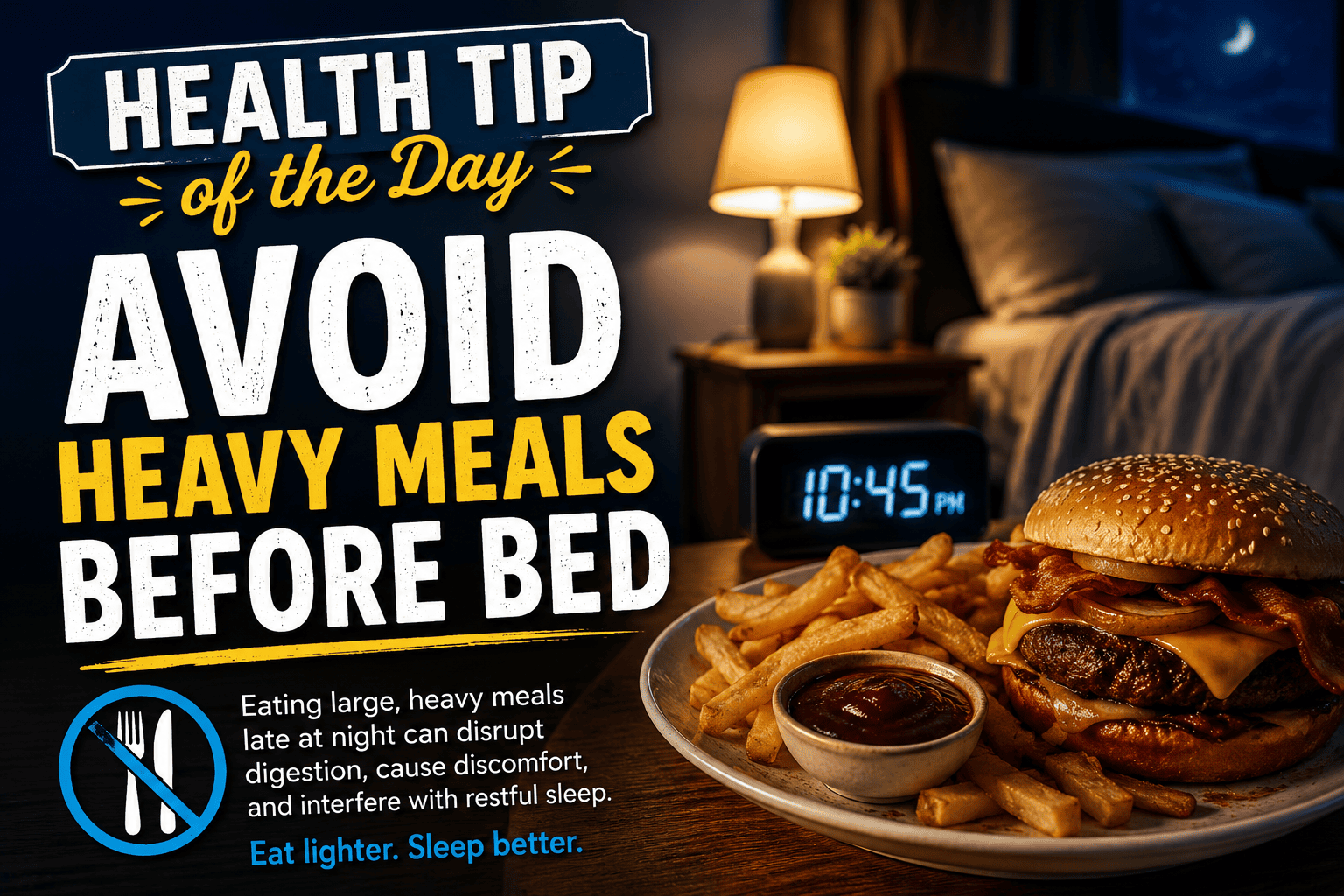
After a long day, sitting down to a big, satisfying meal can feel comforting. Sometimes dinner gets pushed later because of work, errands, family responsibilities, or simply a busy schedule. Other times, nighttime becomes an opportunity for extra snacking while watching television or relaxing.
But when bedtime is approaching, eating a large, heavy meal may not be the best choice for your body.
Health Tip of the Day: Avoid heavy meals before bed.
Giving your body some time between a substantial meal and going to sleep can support more comfortable digestion, reduce the likelihood of nighttime heartburn, and help you establish healthier eating and sleeping habits.
You don’t necessarily have to go to bed hungry. The goal is to recognize the difference between genuine hunger and eating a large meal simply because food is available, you’re bored, or late-night eating has become part of your routine.
Why Heavy Meals Before Bed Can Be Uncomfortable
Your digestive system doesn’t simply turn off when you go to sleep. Your body will continue digesting the food you’ve eaten.
However, lying down shortly after consuming a large meal can sometimes create problems.
A heavy dinner may leave you feeling overly full, bloated, uncomfortable, or restless when you’re trying to fall asleep. Foods that are particularly rich, fatty, spicy, or acidic may be especially troublesome for some people.
Think about how you feel after eating a huge holiday dinner. You might feel stuffed, sluggish, and ready to loosen your waistband.
That’s not necessarily the feeling you want when you’re climbing into bed.
Eating an appropriately sized dinner earlier in the evening gives your body more time to begin digestion before you lie down for the night.
Late-Night Meals and Heartburn
One of the biggest reasons to avoid heavy meals immediately before bed is acid reflux.
Acid reflux occurs when stomach contents travel backward into the esophagus. This can create the uncomfortable burning sensation commonly known as heartburn.
Lying down can make reflux more noticeable for some people because gravity is no longer helping keep stomach contents where they belong.
Someone might eat a large dinner, lie down shortly afterward, and suddenly experience burning in the chest or throat.
Other possible symptoms associated with reflux can include:
- A sour or acidic taste in the mouth
- Regurgitation
- Throat irritation
- Coughing
- Difficulty getting comfortable
- A feeling of fullness
- Burping
- Disrupted sleep
Not everyone experiences these symptoms, and different foods affect different people.
If you’ve noticed that heartburn frequently appears after late dinners, consider experimenting with eating dinner earlier and giving yourself more time before lying down.
Persistent or severe reflux symptoms should be discussed with a healthcare professional.
Give Yourself Time Between Dinner and Bed
Instead of finishing a large meal and immediately heading to bed, try creating some space between dinner and sleep.
For many people, finishing a substantial meal around two to three hours before bedtime can be a practical goal. Individual needs vary, particularly for people who have reflux or other digestive conditions.
For example, if you normally go to bed around 10:30 p.m., you might aim to finish dinner around 7:30 or 8:00 p.m. rather than eating a huge dinner at 10:00.
You don’t have to follow an exact schedule every night.
Life happens.
Sometimes you’re going to get home late. Sometimes you’re traveling. Sometimes a special event includes a late dinner.
Healthy living isn’t about following every recommendation perfectly.
It’s about what you do consistently.
Heavy Doesn’t Always Mean Unhealthy
It’s important to understand that a “heavy meal” doesn’t necessarily mean a meal containing unhealthy foods.
Even nutritious foods can become uncomfortable when consumed in very large quantities immediately before lying down.
A giant dinner containing chicken, vegetables, potatoes, salad, bread, and fruit might include plenty of nutritious foods, but the sheer amount of food could still leave you feeling extremely full.
Portion size matters.
Instead of thinking only about whether a food is “good” or “bad,” consider how much you’re eating and how close the meal is to bedtime.
A balanced dinner that leaves you comfortably satisfied rather than painfully stuffed is usually a better approach.
Be Careful With High-Fat Meals Late at Night
Fat is an essential nutrient, and healthy fats absolutely have a place in a balanced diet.
However, meals that are especially high in fat can take longer to digest and may worsen reflux symptoms for some people.
A late-night meal consisting of large portions of fried foods, pizza, burgers, creamy dishes, or similar foods may leave some people feeling overly full when bedtime arrives.
You don’t necessarily need to eliminate these foods.
Instead, consider timing and portion size.
If you’re going to enjoy a richer meal, having it earlier in the evening may give your body more time to digest it before you lie down.
Spicy Foods Can Be Another Trigger
Some people can eat extremely spicy foods without experiencing any problems.
Others aren’t so lucky.
Hot sauce, chili peppers, spicy wings, heavily seasoned dishes, and similar foods may contribute to heartburn or digestive discomfort in susceptible individuals.
If you frequently experience nighttime heartburn, pay attention to whether spicy evening meals seem to trigger your symptoms.
Keeping a simple food journal can help.
Write down what you ate, approximately when you ate it, and whether you experienced symptoms afterward.
Over time, you may begin noticing patterns.
Your body can provide valuable information when you pay attention to it.
Don’t Forget About Dessert
Dinner isn’t always the problem.
Sometimes it’s everything that happens afterward.
You might eat a perfectly reasonable dinner at 6:30 p.m. and then spend the next four hours snacking.
Ice cream at 8:00.
Cookies at 9:00.
Chips at 9:30.
Another snack at 10:00.
By bedtime, you’ve essentially consumed another meal.
Occasional nighttime treats aren’t automatically a problem, but mindless snacking can quickly add significant amounts of food without you realizing how much you’ve eaten.
Before grabbing another nighttime snack, ask yourself:
Am I actually hungry?
Sometimes the answer will be yes.
Other times, you might realize you’re eating because you’re bored, stressed, lonely, watching television, or simply following a habit.
Recognizing the difference can help you make more intentional choices.
What If You’re Actually Hungry Before Bed?
Avoiding heavy meals before bed doesn’t mean you should ignore genuine hunger.
If you’re truly hungry, a small snack may be more comfortable than trying to fall asleep while your stomach is growling.
Keep it simple.
Depending on your nutritional needs and tolerances, possible options might include a small serving of yogurt, fruit, oatmeal, whole-grain crackers, or another light snack.
The important word is small.
A bedtime snack and a second dinner are very different things.
You want something that takes the edge off your hunger without leaving you feeling stuffed.
People with diabetes, digestive disorders, or other health conditions may need individualized advice regarding meal timing and bedtime snacks, so their healthcare professional’s recommendations should take priority.
Slow Down While Eating Dinner
Sometimes people accidentally eat a heavy dinner because they’re eating too quickly.
When you’re extremely hungry, it’s easy to sit down and start eating rapidly.
Before you realize it, you’ve finished a large plate and gone back for seconds.
Slowing down gives you more opportunity to notice when you’re becoming comfortably satisfied.
Try putting your fork down occasionally.
Take a sip of water.
Have a conversation.
Chew your food thoroughly.
Give yourself time to enjoy the meal.
Dinner doesn’t need to become a race.
Plan Ahead for Busy Evenings
One of the most common reasons people eat huge meals late at night is poor planning.
Imagine skipping lunch, working all afternoon, running errands after work, and finally arriving home at 9:00 p.m.
You’re probably going to be extremely hungry.
When you’re that hungry, portion control becomes much harder.
Planning your meals and snacks throughout the day can help prevent the extreme hunger that leads to oversized late-night dinners.
Even having a simple dinner plan can make a difference.
You might prepare ingredients ahead of time, cook meals in batches, save leftovers, or keep convenient nutritious options available.
The easier you make healthy choices, the more likely you are to make them.
Create a Kitchen Closing Routine
Some people find it helpful to establish a general time when the kitchen “closes” for the evening.
This doesn’t have to be an absolute rule.
It’s simply a habit.
After dinner, you might:
- Put leftovers away.
- Clean the kitchen.
- Fill your water bottle for tomorrow.
- Prepare anything you need for breakfast.
- Brush your teeth.
- Turn off the kitchen lights.
These small actions can send a mental signal that eating for the day is mostly finished.
If you’re genuinely hungry later, you can still have something appropriate.
The goal isn’t restriction.
It’s intentional eating.
Pay Attention to Liquid Calories Too
Food isn’t the only thing that can add significantly to your nighttime intake.
Large sugary drinks, specialty coffees, milkshakes, and other calorie-dense beverages can sometimes function almost like another meal.
Alcohol can also affect sleep quality even if it initially makes you feel sleepy.
Caffeinated beverages consumed later in the day may interfere with sleep for people who are sensitive to caffeine.
Water is generally a simple choice when you’re thirsty in the evening, although drinking huge amounts immediately before bed may result in repeated bathroom trips during the night.
Again, balance matters.
Your Evening Routine Affects Your Morning
Healthy habits tend to connect with one another.
What you do at night can influence how you feel the next morning.
If you eat an enormous meal immediately before going to sleep and experience indigestion throughout the night, you might wake up feeling tired.
When you’re exhausted, exercising may become less appealing.
You might rely on extra caffeine.
You may crave convenient foods.
You may feel less motivated.
One evening decision can sometimes influence several decisions the following day.
On the other hand, a balanced dinner followed by a relaxing evening routine can help create a healthier rhythm.
Build a Balanced Dinner
Instead of focusing exclusively on what you shouldn’t eat, think about what you can include in a satisfying dinner.
A balanced meal might contain:
Protein: Chicken, turkey, fish, eggs, beans, lentils, tofu, or another protein source.
Vegetables: Add vegetables you enjoy in whatever form works for you—fresh, roasted, steamed, grilled, or sautéed.
Whole grains or other carbohydrates: Brown rice, quinoa, potatoes, whole-grain pasta, or whole-grain bread can provide energy and help create a satisfying meal.
Healthy fats: Nuts, seeds, avocado, olive oil, and similar foods can be included in appropriate portions.
You don’t have to build the perfect dinner.
Aim for something balanced, satisfying, and reasonable in portion size.
Don’t Turn This Into a Strict Food Rule
Nutrition advice can sometimes become unnecessarily rigid.
You don’t need to panic because you ate dinner later than usual.
Eating a heavy meal before bed once in a while isn’t going to erase every healthy choice you’ve made.
Birthday celebrations happen.
Vacations happen.
Family dinners run late.
Restaurants have long waits.
Schedules change.
Healthy habits should work in real life.
Focus on your overall routine rather than one isolated meal.
If most nights you can eat a balanced dinner and allow some time before going to sleep, you’re building a useful habit.
Make One Small Change Tonight
You don’t need to completely redesign your diet.
Start with one simple change.
If you normally eat dinner immediately before going to bed, try eating slightly earlier.
If earlier isn’t possible, consider making the late dinner smaller.
If nighttime snacking is your challenge, decide what you’ll have before you start watching television rather than repeatedly returning to the kitchen.
If heartburn is your concern, start paying attention to which foods and meal times seem to trigger it.
Small changes are easier to maintain than dramatic restrictions.
Consistency Matters More Than Perfection
Your health isn’t determined by one dinner.
It’s shaped by hundreds of everyday decisions made over weeks, months, and years.
Some days you’ll eat exactly how you planned.
Other days you won’t.
That’s normal.
The goal isn’t perfection.
The goal is developing habits that support your health more often than not.
Avoiding oversized meals immediately before bedtime is one small habit that can help some people feel more comfortable at night and support a better evening routine.
Eat enough to nourish your body.
Enjoy your food.
Pay attention to your hunger.
Notice how different meals make you feel.
And when possible, give your body a little time to digest dinner before you lie down for the night.
Health Tip of the Day
Avoid heavy meals right before bed. Try to finish larger meals a few hours before bedtime when your schedule allows, and choose a small snack instead of another full meal if you’re genuinely hungry later.
You don’t need to change everything tonight.
Sometimes improving your health begins with something as simple as changing when—and how much—you eat at the end of the day.
How long before bedtime do you usually eat your last meal of the day?



Leave a Reply