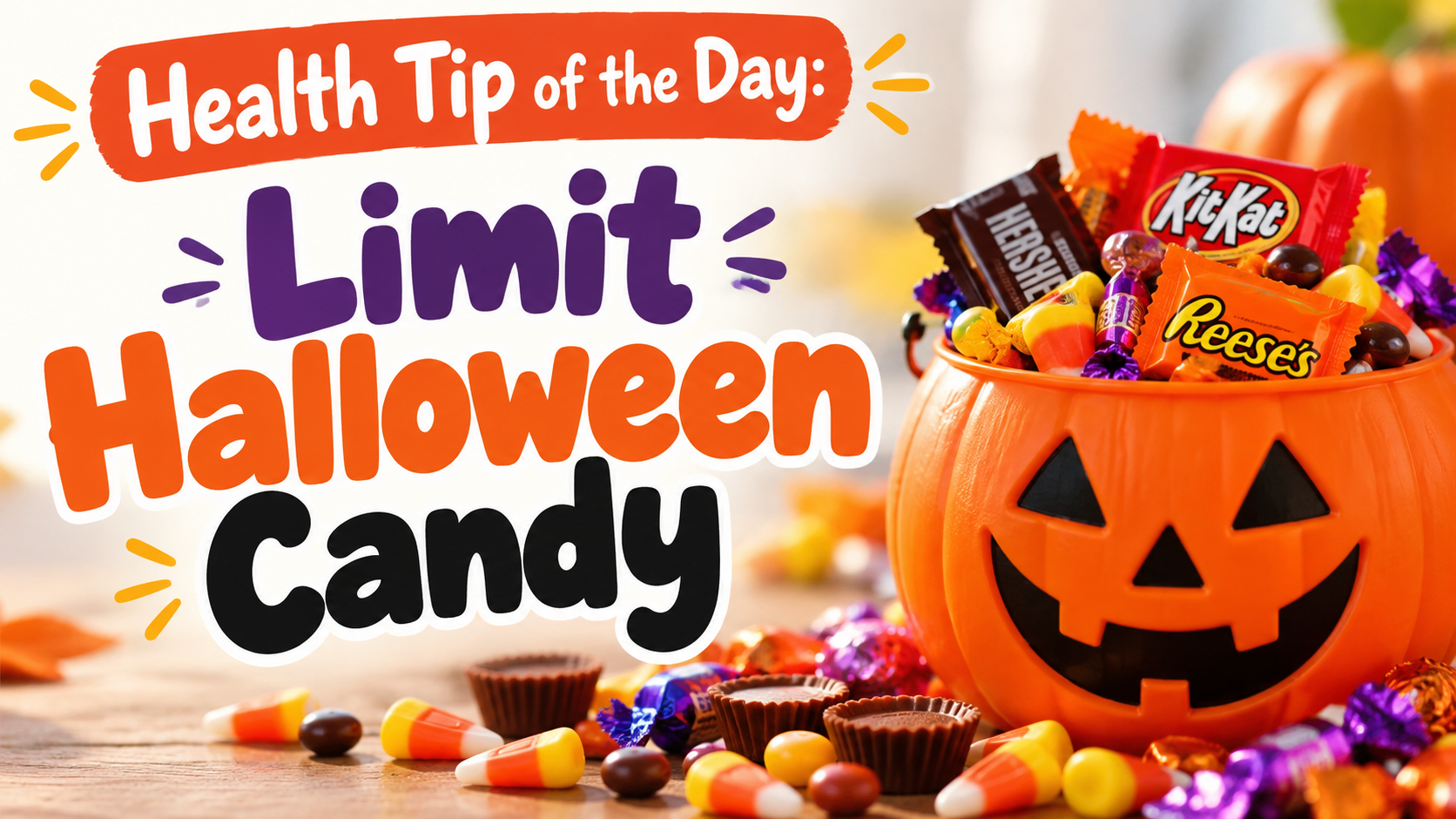
Halloween is one of the most exciting times of the year. From spooky decorations and creative costumes to haunted houses and trick-or-treating, there is something special about the holiday that brings out the kid in everyone. And, of course, Halloween wouldn’t be complete without candy.
Chocolate bars, gummy worms, candy corn, lollipops, peanut butter cups, and countless other sugary treats seem to be everywhere throughout October. Whether you’re a child collecting candy door-to-door or an adult sneaking a few pieces from the Halloween bowl, resisting those sweet temptations can be difficult.
However, while enjoying Halloween candy is part of the fun, eating too much can negatively affect your health.
Today’s Health Tip of the Day is simple: Limit Halloween candy, practice moderation, and make healthier choices without taking away the enjoyment of the holiday.
You don’t have to give up your favorite Halloween treats. Instead, learning how to enjoy them responsibly can help protect your teeth, maintain steady energy levels, and support your overall health.
Why Limiting Halloween Candy Matters
Halloween candy may taste delicious, but most traditional candies contain significant amounts of added sugar, and some also contain saturated fat.
Eating excessive amounts of candy regularly can contribute to several health concerns, especially when combined with an overall diet high in added sugar.
1. Too Much Sugar Can Affect Your Energy Levels
Have you ever eaten several pieces of candy and felt energized, only to become tired or sluggish afterward?
Sugary foods can cause blood glucose levels to rise, particularly when eaten alone. The body responds by releasing insulin to help regulate blood sugar.
For some people, especially those sensitive to blood sugar fluctuations, this can be followed by feelings of hunger or fatigue.
Rather than relying on candy for a quick energy boost, choose balanced meals and snacks containing protein, fiber, and healthy fats.
These nutrients help support more sustained energy throughout the day.
2. Halloween Candy Can Increase the Risk of Tooth Decay
One of the biggest concerns surrounding Halloween candy is its effect on dental health.
The bacteria in your mouth feed on sugars and produce acids that can weaken tooth enamel.
Frequent exposure to sugary foods increases the risk of cavities, especially when candy is consumed repeatedly throughout the day.
Sticky candies, such as caramels, gummies, and chewy fruit candies, can remain attached to teeth longer than some other treats.
Hard candies and lollipops can also be problematic because they often remain in the mouth for extended periods.
Healthy Halloween tip: Enjoy candy with or shortly after a meal rather than continuously snacking on it. Drink water afterward, brush twice daily with fluoride toothpaste, and floss regularly.
3. Excess Candy Can Contribute to Unwanted Weight Gain
Halloween candy often contains a considerable number of calories in relatively small portions.
Because candy usually provides little fiber or protein, it may not keep you feeling full for very long.
It’s easy to eat several pieces without realizing how quickly the calories add up.
Over time, regularly consuming more calories than your body needs can contribute to weight gain.
This doesn’t mean eating a chocolate bar on Halloween will automatically cause weight gain.
What matters most is your overall eating pattern and daily habits.
Enjoying occasional treats while maintaining balanced nutrition and regular physical activity is a healthier approach than completely eliminating foods you enjoy.
4. Excessive Added Sugar Can Affect Long-Term Health
A diet consistently high in added sugar may increase the risk of several health problems, including obesity, type 2 diabetes, and cardiovascular disease.
Sugar itself is not the only factor involved in these conditions. Genetics, physical activity, sleep, overall dietary patterns, and other health factors also play important roles.
However, reducing excessive added sugar is one practical way to support long-term health.
The American Heart Association recommends limiting added sugar to approximately:
-
Men: No more than 36 grams, or 9 teaspoons, per day.
-
Women: No more than 25 grams, or 6 teaspoons, per day.
These recommendations are general guidelines for adults, not individual medical prescriptions. Children’s recommended limits depend on age, with the American Heart Association recommending no more than 25 grams daily for children ages 2–18 and avoiding added sugar for children under 2.
A handful of Halloween candy can sometimes contain much of a person’s recommended daily amount.
That’s why checking nutrition labels and paying attention to serving sizes can make a difference.
10 Healthy Ways to Limit Halloween Candy
Halloween should be enjoyable, not stressful. You can celebrate the holiday, enjoy your favorite treats, and still make thoughtful decisions about your health.
Here are ten practical ways to avoid overdoing it.
1. Set a Reasonable Candy Limit
Before Halloween arrives, decide how much candy you or your children will enjoy.
Instead of eating directly from a large candy bag, select a few favorite pieces and put the rest away.
There is no universal number of pieces appropriate for everyone because candy sizes, nutritional needs, and individual health circumstances vary.
The goal is to establish reasonable portions without creating unnecessary guilt or strict food rules.
For children, parents can help establish consistent routines while allowing some flexibility.
2. Eat a Healthy Meal Before Trick-or-Treating
Heading out for Halloween activities on an empty stomach can make candy especially tempting.
Before trick-or-treating, prepare a balanced meal that includes protein, vegetables, whole grains, or other fiber-rich foods.
Some great Halloween dinner ideas include grilled chicken with roasted vegetables, turkey chili, vegetable soup with whole-grain bread, or a homemade chicken and rice bowl.
Eating beforehand can help reduce excessive hunger and make it easier to enjoy candy in moderation.
3. Choose Your Favorite Candy Instead of Eating Everything
Not every piece of candy needs to be eaten simply because it’s available.
After Halloween, sort through your candy collection and identify the treats you genuinely enjoy.
Keep your favorites and consider sharing or donating unopened extras through organizations that accept candy.
This encourages mindful eating rather than eating out of habit.
Remember, enjoying a small amount of something you love can be more satisfying than eating large amounts of candy you don’t particularly want.
4. Avoid Constant Snacking Throughout the Day
One of the easiest ways to consume excessive candy is by grabbing a piece every time you walk past the candy bowl.
A few pieces in the morning, several after lunch, and more while watching television can quickly add up.
Instead, consider enjoying your candy at a planned time, such as after a meal.
This can also reduce how frequently your teeth are exposed to sugar.
5. Drink Water Instead of Sugary Beverages
Halloween parties often feature soda, fruit punch, sweetened cider, and other sugary drinks.
Combining these beverages with large amounts of candy can significantly increase added sugar consumption.
Water is an excellent choice because it helps maintain hydration without adding sugar.
You can make water more festive by adding orange slices, strawberries, or cucumber.
Unsweetened sparkling water can also be a refreshing Halloween party option.
6. Keep Healthier Snacks Available
Candy doesn’t have to be the only food available during Halloween celebrations.
Offering nutritious snacks alongside traditional treats helps create a better balance.
Try apple slices with peanut butter, cheese and whole-grain crackers, plain yogurt with berries, air-popped popcorn, or sliced vegetables with hummus.
For a festive presentation, arrange fruit and vegetables into pumpkins, ghosts, or other Halloween shapes.
Remember to prepare snacks in age-appropriate sizes for young children to reduce choking risks.
7. Keep Candy Out of Sight Between Treat Times
Leaving a large bowl of candy on the kitchen counter can encourage mindless snacking.
Consider storing leftover candy in a cupboard or another designated location.
This doesn’t mean candy needs to be forbidden or treated as something bad.
It simply helps reduce automatic snacking when you aren’t actually hungry or interested in eating it.
8. Practice Mindful Eating
Mindful eating means paying attention to what you’re eating and how it makes you feel.
Instead of quickly eating several pieces of candy while distracted by television or your phone, take time to enjoy your favorite treat.
Notice its flavor, texture, and sweetness.
Ask yourself whether you’re still enjoying the candy or simply continuing because it’s there.
Slowing down can make treats more satisfying and help you recognize when you’ve had enough.
9. Stay Physically Active During Halloween
Halloween provides plenty of opportunities to get moving.
Walking around the neighborhood while trick-or-treating, exploring a pumpkin patch, dancing at a Halloween party, or enjoying a family walk can all contribute to physical activity.
Regular movement supports cardiovascular health, mood, and overall well-being.
However, exercise shouldn’t be viewed as punishment for eating candy.
You don’t need to earn your treats or work them off afterward.
Instead, focus on making physical activity an enjoyable part of your everyday routine.
10. Make Halloween About More Than Candy
Halloween offers so many memorable experiences beyond collecting sweets.
Spend time carving pumpkins, decorating your home, watching family-friendly Halloween movies, creating costumes, telling spooky stories, or enjoying seasonal activities.
When Halloween centers on fun, creativity, and spending time together, candy becomes just one part of the celebration.
How Much Sugar Is in Popular Halloween Candy?
The amount of sugar varies depending on the brand, portion size, and type of candy.
Here are approximate examples of sugar content in common Halloween treats.
| Halloween candy | Approximate sugar |
|---|---|
| Fun-size chocolate bar | 8–11 grams |
| Small peanut butter cup package | 9–16 grams |
| Fun-size chewy fruit candy package | 10–12 grams |
| 15 pieces of candy corn | 20–25 grams |
| Standard lollipop | 8–12 grams |
| Small gummy candy package | 10–18 grams |
These are illustrative ranges rather than verified values for specific products. Always check the nutrition label for the actual serving size and added sugar content.
It’s important to remember that sugar naturally present in whole fruit and unsweetened dairy products is different from added sugar when evaluating daily dietary recommendations.
Healthy Halloween Alternatives That Still Feel Like Treats
FUN AND NUTRITIOUS IDEAS
Banana ghosts
Cut bananas in half and decorate them with small chocolate chips to create ghost faces.
Clementine pumpkins
Peel clementines and place a small piece of celery on top to resemble a pumpkin stem.
Apple monster mouths
Use apple slices, nut or seed butter, and small fruit pieces to create funny monster faces.
Halloween yogurt parfaits
Layer plain yogurt with berries and a small amount of crushed graham crackers for a festive dessert.
Spooky popcorn mix
Combine air-popped popcorn with pumpkin seeds and a few chocolate pieces for a crunchy seasonal snack.
These alternatives aren’t intended to replace every piece of Halloween candy. They’re simply additional options that provide variety and valuable nutrients.
Helping Children Develop Healthy Halloween Candy Habits
For parents, Halloween can present a challenge.
Children naturally become excited about collecting candy, and the sight of a large bag of treats can make moderation difficult.
However, Halloween can also provide an opportunity to teach children healthy eating habits.
Rather than making candy completely forbidden, encourage balance and establish predictable routines.
Allow children to enjoy some of their favorite treats without making them feel guilty.
Avoid labeling foods as morally good or bad, and don’t use candy as a reward for behavior.
Parents can decide when and where snacks are offered while allowing children appropriate autonomy over how much they eat.
This approach can help children build a healthier relationship with food over time.
It’s also important to remember that children have different nutritional needs based on their ages, growth, activity levels, and medical circumstances.
If your child has diabetes, food allergies, or another condition requiring dietary management, follow their individualized care plan.
What to Do With Leftover Halloween Candy
After Halloween night, many households are left with more candy than they know what to do with.
Rather than feeling pressured to finish everything, consider a few alternatives.
You can save favorite pieces for occasional treats, share unopened candy with family or friends, or contact local organizations to see whether they accept candy donations.
Some dental offices and community groups occasionally organize candy collection programs.
You can also use small amounts of leftover candy in holiday baking projects.
There is no requirement to keep or consume every piece.
Can You Still Enjoy Halloween Candy While Trying to Lose Weight?
Absolutely.
Maintaining a healthy weight doesn’t require eliminating every sweet treat.
A sustainable eating pattern can include occasional candy while emphasizing vegetables, fruit, lean protein, whole grains, and other nutrient-rich foods.
The important thing is to consider your overall habits rather than focusing on one Halloween evening.
If you’re working toward a weight-management goal, choose portions that fit comfortably into your eating plan.
Avoid skipping meals to compensate for candy or following overly restrictive diets that leave you feeling deprived.
Healthy living is about consistency, not perfection.
Remember: One Night of Halloween Candy Doesn’t Define Your Health
It’s easy to become overly concerned about eating sweets during holidays.
However, a single day of enjoying more candy than usual doesn’t erase the benefits of your everyday healthy habits.
Your long-term health depends on patterns developed over weeks, months, and years.
What matters most is returning to your normal routine, staying hydrated, eating balanced meals, sleeping adequately, and remaining physically active.
There’s no need for extreme dieting, detox products, or excessive exercise after Halloween.
Simply continue making reasonable choices.
Health Tip of the Day: Enjoy the Candy, but Know Your Limits
Halloween is meant to be a time of laughter, excitement, creativity, and memorable experiences.
Candy is part of that tradition, and there is nothing wrong with enjoying your favorite Halloween treats.
However, learning to practice moderation can help protect your dental health, support balanced nutrition, and reduce excessive added sugar consumption.
Start with simple changes. Eat a nutritious meal before Halloween activities, choose candy you genuinely enjoy, drink plenty of water, and avoid constant snacking throughout the day.
Most importantly, remember that healthy living doesn’t mean giving up everything you love.
It means learning how to enjoy those things while still taking care of yourself.
A healthy Halloween isn’t about saying no to every sweet treat. It’s about knowing when you’ve had enough and making choices that help you feel your best.
Final Thoughts
As Halloween approaches, remember that the sweetest part of the holiday isn’t necessarily the candy.
It’s the memories you create, the laughter you share, the traditions you celebrate, and the time you spend with people who matter.
Enjoy that favorite chocolate bar. Have a few pieces of candy corn. Celebrate the season.
Just remember that moderation allows you to enjoy Halloween without letting sugar become the center of the celebration.
Today’s reminder: Enjoy the treats, cherish the memories, and make your health a priority—not just on Halloween, but every day of the year.
A Question for Readers
What’s your favorite Halloween candy, and how do you keep yourself from eating too much of it during the Halloween season?


Leave a Reply