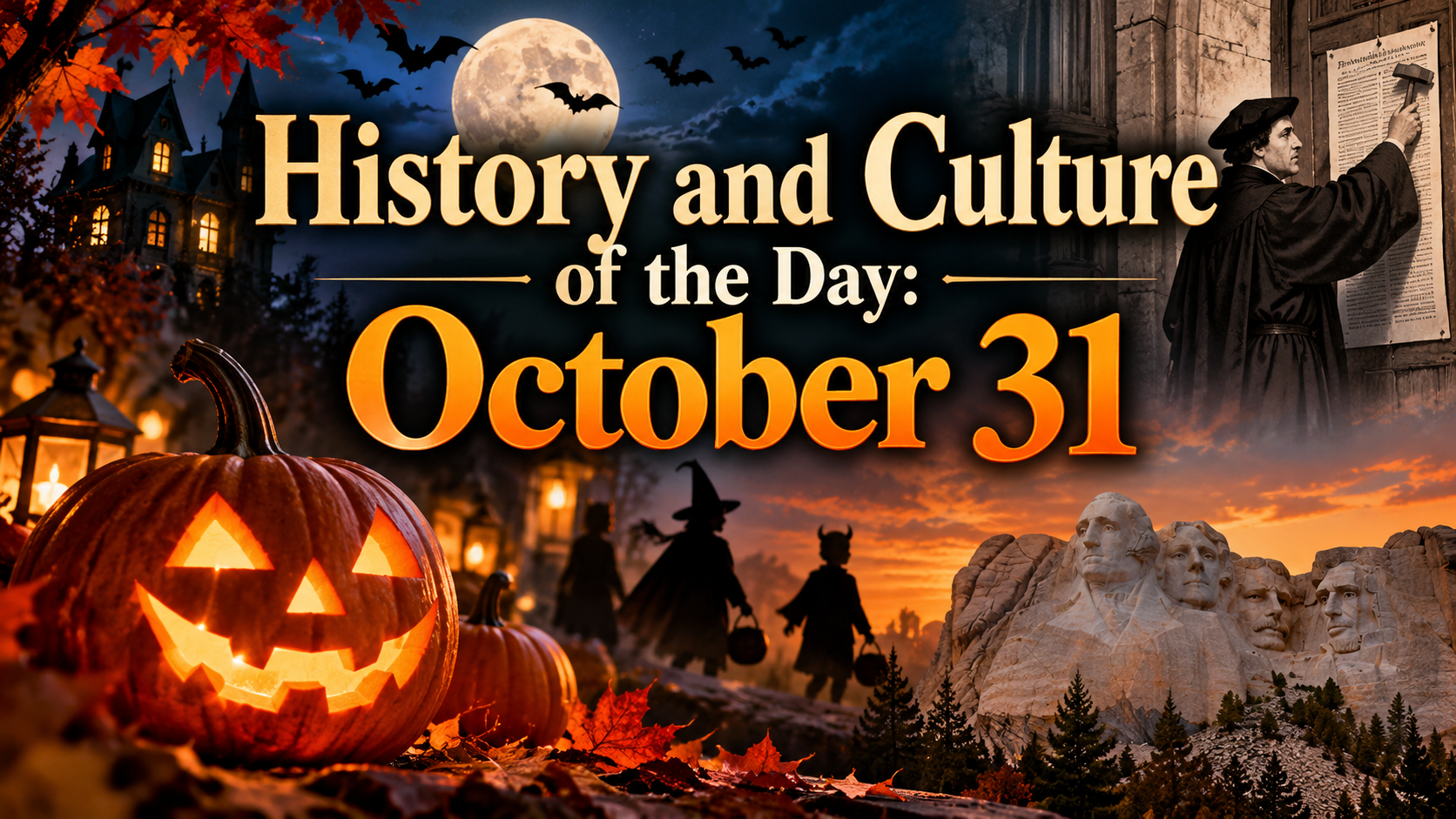
October 31 is one of the most recognizable dates on the calendar. Across the United States and around the world, people celebrate Halloween with costumes, decorated pumpkins, haunted houses, candy, spooky stories, and neighborhood gatherings. However, behind the costumes and celebrations lies a fascinating history stretching back more than 2,000 years.
Halloween is more than a night of ghosts, witches, and trick-or-treating. It is a holiday shaped by ancient Celtic traditions, Christian observances, immigration, folklore, and centuries of cultural change.
From the ancient festival of Samhain to modern American Halloween celebrations, October 31 tells a remarkable story about how traditions evolve while connecting generations.
Today, we explore the history, traditions, folklore, and cultural significance of October 31.
The Ancient Origins of Halloween
The roots of Halloween are commonly traced to Samhain, an ancient Gaelic festival marking the transition from the harvest season into winter.
For communities in Ireland and other Celtic regions, the changing seasons carried practical and spiritual significance. The end of October signaled shorter days, colder weather, and the approach of a difficult winter.
Samhain was traditionally observed around the beginning of November, with celebrations beginning on the preceding evening.
The festival marked a turning point in the agricultural calendar.
Livestock were brought in from summer pastures, communities prepared food supplies for winter, and seasonal gatherings helped people prepare for the colder months.
Samhain also became associated with supernatural beliefs.
According to traditions recorded in later Irish folklore, the boundary between the living and the supernatural world was considered especially permeable during this seasonal transition.
People told stories about spirits, otherworldly beings, and mysterious encounters.
Although historians debate how directly individual modern Halloween customs descend from ancient Samhain practices, the festival remains an important part of Halloween’s historical background.
Bonfires and Ancient Celebrations
Fire played an important role in many seasonal celebrations.
Communities gathered around large fires, which could symbolize protection, renewal, and the transition between seasons.
Some accounts describe rituals involving livestock, feasting, and communal gatherings.
The image of people gathered around fires on a cold autumn evening remains one of the most enduring representations of Halloween’s ancient past.
How Halloween Got Its Name
The name Halloween developed through its association with the Christian calendar.
November 1 is observed in many Western Christian traditions as All Saints’ Day, also called All Hallows’ Day.
The evening before became known as All Hallows’ Eve.
Over time, the name evolved into Halloween.
The Christian observances surrounding this period include:
-
October 31: All Hallows’ Eve
-
November 1: All Saints’ Day
-
November 2: All Souls’ Day in many Western Christian traditions
Together, these observances form part of the period traditionally known as Allhallowtide.
All Saints’ Day honors saints and holy people, while All Souls’ Day is associated with prayers and remembrance for the departed.
These Christian traditions developed alongside older European seasonal customs, creating a complex cultural history.
Halloween today reflects centuries of interaction between religious observances, regional folklore, and popular celebrations.
How Halloween Came to America
Halloween did not immediately become the nationwide celebration Americans recognize today.
During the colonial period, Halloween customs varied considerably by region.
Some communities maintained autumn festivals and harvest celebrations, while others discouraged practices associated with supernatural beliefs or religious traditions outside their own.
Halloween became more prominent in the United States during the nineteenth century.
Irish and Scottish immigrants brought customs, stories, games, and seasonal celebrations that contributed significantly to American Halloween traditions.
Immigration increased during the nineteenth century, particularly during and after the Great Irish Famine of the 1840s.
As immigrant communities established themselves, Halloween customs spread and adapted.
Neighborhood gatherings, seasonal games, storytelling, and costume traditions gradually became part of American popular culture.
By the late nineteenth and early twentieth centuries, Halloween was increasingly celebrated as a community holiday.
The History of Trick-or-Treating
One of Halloween’s most beloved traditions is trick-or-treating.
Every October 31, children dress in costumes and visit homes, asking for candy and other treats.
But where did this tradition begin?
Modern trick-or-treating developed from several older practices rather than one clearly documented origin.
Souling
In parts of medieval and early modern Europe, people practiced a tradition known as souling.
Individuals, sometimes including children and poorer members of communities, visited homes requesting food or small cakes.
These visits could be associated with prayers for the souls of the departed.
The tradition is often discussed as one historical influence on Halloween door-to-door customs.
Guising
Another important tradition was guising, particularly associated with Scotland and Ireland.
Children or other participants dressed in disguises and visited neighboring homes.
In exchange for food, fruit, or small gifts, they might perform songs, jokes, poems, or other entertainment.
These practices helped establish the connection between costumes, neighborhood visits, and treats.
Trick-or-Treating in America
The familiar American version of trick-or-treating became widespread during the twentieth century, particularly in the years following World War II.
Suburban growth, increased candy production, and family-oriented neighborhood celebrations helped popularize the tradition.
Television, advertising, and popular entertainment also contributed.
Today, trick-or-treating remains one of Halloween’s most recognizable activities.
For many families, it represents more than collecting candy. It creates memories of childhood, neighbors, costumes, and shared community traditions.
Why We Carve Pumpkins on Halloween
Few symbols represent Halloween more clearly than the glowing jack-o’-lantern.
Carving pumpkins has become a favorite October tradition, but its history began with different vegetables.
In Ireland and Scotland, people historically carved lanterns from turnips and other root vegetables.
These lanterns were sometimes associated with frightening away spirits or with local supernatural folklore.
One well-known Irish folktale tells of a character commonly called Stingy Jack.
According to versions of the legend, Jack tricked the Devil and eventually found himself unable to enter either heaven or hell.
He was condemned to wander with a small light carried inside a hollowed-out vegetable.
The story became associated with the term jack-o’-lantern.
When Irish immigrants arrived in North America, pumpkins provided a larger and easier-to-carve alternative to turnips.
Pumpkins were also widely available during the autumn harvest.
Over time, carved pumpkins became an essential symbol of American Halloween.
Today, jack-o’-lanterns range from simple smiling faces to elaborate works of art.
They decorate porches, windows, yards, and community events throughout October.
Why People Wear Halloween Costumes
Halloween costumes reflect a long history of disguise, folklore, entertainment, and cultural creativity.
Older European customs included dressing in unusual clothing, wearing masks, and disguising oneself during seasonal festivities.
Some traditions were associated with supernatural beliefs, while others emphasized mischief, performance, and community celebration.
In the United States, Halloween costumes became increasingly popular during the nineteenth and twentieth centuries.
Early costumes often included ghosts, witches, skeletons, and other frightening figures.
As Halloween developed into a commercial and family-centered holiday, costumes expanded to include fictional characters, historical figures, animals, superheroes, and celebrities.
Today, costumes allow people to express creativity, humor, imagination, and personal interests.
Halloween has become one of the few occasions when people of all ages can temporarily transform themselves into someone or something completely different.
The Meaning Behind Halloween Symbols
Halloween features numerous symbols that have developed through folklore, seasonal traditions, literature, and popular culture.
Black Cats
Black cats have long been connected with European folklore and superstitions.
During periods of witchcraft accusations, cats were sometimes associated with witches or supernatural powers.
These beliefs helped establish black cats as Halloween symbols.
Today, black cats are popular decorations, although the old superstitions have no factual basis.
Witches
Witches became associated with Halloween through centuries of European folklore, religious fears, and later fictional portrayals.
The familiar image of a witch wearing a pointed hat and riding a broom developed through changing artistic and literary traditions.
Modern Halloween witches are often portrayed as playful, magical, or mysterious characters.
Ghosts
Ghosts symbolize one of humanity’s oldest questions: what happens after death?
Stories about spirits and supernatural encounters appear across cultures and historical periods.
Because Halloween developed alongside traditions associated with the dead and the supernatural, ghost imagery became especially prominent.
Bats
Bats are nocturnal animals that naturally fit Halloween’s nighttime atmosphere.
Their association with darkness, caves, and later vampire folklore helped make them recognizable Halloween symbols.
Skeletons and Skulls
Skeletons and skulls symbolize mortality and the human relationship with death.
They appear in many cultural traditions, including Halloween decorations and remembrance celebrations around the world.
Although these symbols can appear frightening, they can also encourage reflection on life, death, and remembrance.
Halloween and the History of Haunted Houses
Haunted houses have become a major part of modern Halloween entertainment.
The fascination with haunted locations is much older than the commercial attractions seen today.
Ghost stories, mysterious buildings, abandoned castles, and supernatural legends have appeared in literature and folklore for centuries.
During the eighteenth and nineteenth centuries, Gothic literature helped popularize settings involving dark corridors, ancient mansions, unexplained noises, and frightening encounters.
Writers such as Horace Walpole, Mary Shelley, and Edgar Allan Poe contributed to the broader cultural fascination with horror and the supernatural.
Modern haunted attractions developed through a combination of theatrical entertainment, community events, amusement parks, and commercial Halloween experiences.
By the late twentieth century, elaborate haunted houses had become popular seasonal attractions.
Today, haunted houses use lighting, sound effects, actors, animatronics, and elaborate sets to create immersive experiences.
They demonstrate how Halloween has evolved from seasonal folklore into a major entertainment tradition.
Halloween Around the World
Although Halloween is strongly associated with the United States, October 31 and the surrounding days have cultural significance in many countries.
Different communities celebrate the season in ways that reflect their own histories and traditions.
Ireland
Ireland maintains a particularly strong connection to Halloween because of the historical importance of Samhain.
Modern Irish celebrations include costumes, bonfires in some communities, parties, and seasonal foods.
Traditional games and folklore remain part of Halloween’s cultural identity.
Scotland
Scottish Halloween traditions include guising, storytelling, and seasonal activities.
Older customs such as apple games and fortune-telling rituals influenced the development of modern Halloween entertainment.
Mexico
Mexico observes Día de los Muertos, or the Day of the Dead, primarily on November 1 and 2, with some celebrations beginning earlier.
Although it occurs near Halloween and shares themes involving death and remembrance, Día de los Muertos is a distinct cultural tradition.
Families honor deceased loved ones through photographs, flowers, candles, food, and carefully prepared offerings.
The celebration emphasizes remembrance, family connections, and continuing bonds with those who have died.
Japan
Halloween has become increasingly visible in Japan through costumes, themed attractions, decorations, and commercial celebrations.
Major cities and entertainment venues have hosted Halloween-related events.
Japanese Halloween celebrations often emphasize costume creativity and popular culture rather than traditional Western religious associations.
United Kingdom
Halloween is celebrated throughout parts of the United Kingdom, although customs differ across communities.
Costume parties, pumpkin carving, and trick-or-treating have become familiar activities.
In Scotland and Northern Ireland, older regional traditions remain especially relevant to the holiday’s cultural history.
October 31 and the Protestant Reformation
Halloween is not the only historically important event associated with October 31.
One of the most influential religious events in European history is traditionally dated to October 31, 1517.
On that date, German theologian Martin Luther is traditionally said to have posted his Ninety-Five Theses on the door of the Castle Church in Wittenberg.
The theses challenged practices surrounding indulgences within the Catholic Church.
Historians distinguish between the well-documented circulation of Luther’s theses and the traditional account of physically posting them on the church door.
Regardless of that detail, the publication of the theses became a defining moment in the Protestant Reformation.
The Reformation transformed European religious institutions, political relationships, education, and cultural life.
Many Protestant communities observe October 31 as Reformation Day.
This gives the date an additional layer of historical and religious significance beyond Halloween.
October 31 in American History
Several notable events in American history also occurred on October 31.
1864: Nevada Becomes the 36th State
On October 31, 1864, Nevada officially entered the United States as the 36th state.
Its admission occurred during the American Civil War under President Abraham Lincoln.
Nevada’s statehood was closely connected to the political circumstances of the war and the region’s growing mining economy.
The state became known as the Silver State because of its important silver deposits.
Nevada continues to recognize October 31 as the anniversary of its statehood, although the official state holiday may be observed on a nearby weekday.
1926: Harry Houdini Dies
Legendary escape artist and magician Harry Houdini died on October 31, 1926.
Houdini became famous for daring escapes from handcuffs, locked containers, straitjackets, and other seemingly impossible restraints.
His performances fascinated audiences around the world.
Houdini was also known for investigating and exposing fraudulent spiritualist practices.
His death on Halloween created a lasting connection between his legacy and the holiday’s themes of mystery and the supernatural.
1941: Work on Mount Rushmore Is Declared Complete
On October 31, 1941, construction work on the Mount Rushmore National Memorial came to an end.
Located in South Dakota’s Black Hills, the monument features the carved faces of four American presidents:
-
George Washington
-
Thomas Jefferson
-
Theodore Roosevelt
-
Abraham Lincoln
Sculptor Gutzon Borglum directed the project until his death in March 1941, after which his son Lincoln Borglum oversaw the remaining work.
The memorial became one of America’s most recognizable landmarks.
It also remains the subject of important discussions about the Black Hills’ significance to the Lakota people and the history of the land.
How Halloween Became a Major American Holiday
During the twentieth century, Halloween transformed from a collection of regional customs into a widely celebrated national tradition.
Several developments contributed to its popularity.
The growth of suburban neighborhoods created environments where children could safely participate in organized trick-or-treating.
Schools, churches, and community organizations began hosting Halloween parties and seasonal activities.
Candy manufacturers developed products and advertising campaigns specifically associated with Halloween.
Movies and television also helped shape Halloween’s cultural identity.
Classic horror characters, supernatural stories, and seasonal entertainment became closely associated with October.
Halloween gradually expanded beyond children’s activities.
Adults began organizing costume parties, decorating homes, visiting haunted attractions, and attending themed celebrations.
Today, Halloween influences retail businesses, entertainment, tourism, food, fashion, and neighborhood traditions.
It has become both a cultural celebration and a significant commercial event.
Halloween in Movies, Television, and Popular Culture
Popular entertainment has played a major role in shaping modern Halloween traditions.
Horror films, animated specials, television episodes, and seasonal music have made Halloween a recurring theme in American culture.
Movies such as Halloween (1978), directed by John Carpenter, helped establish the holiday as an iconic setting for horror storytelling.
Family-friendly films such as Hocus Pocus (1993) introduced younger audiences to playful supernatural adventures.
Television specials, including It’s the Great Pumpkin, Charlie Brown (1966), helped make Halloween a nostalgic family tradition.
These productions contributed to the imagery now associated with the holiday.
Pumpkin patches, falling leaves, haunted houses, costumes, and moonlit neighborhoods have become familiar symbols of the Halloween season.
For many Americans, watching favorite Halloween movies is now as traditional as carving pumpkins or handing out candy.
Why Halloween Traditions Continue to Change
One of the most interesting aspects of Halloween is its ability to evolve.
The holiday has changed repeatedly throughout history.
Ancient seasonal observances influenced later folklore and religious traditions.
European immigrants introduced customs that adapted to American communities.
The twentieth century brought commercial candy, mass-produced costumes, neighborhood trick-or-treating, and popular entertainment.
The twenty-first century has introduced new ways of celebrating through social media, elaborate decorations, themed events, and creative costume trends.
Some communities organize trunk-or-treat gatherings, where families distribute candy from decorated vehicles.
Others host fall festivals, costume parades, pumpkin-carving contests, or Halloween charity events.
These newer customs demonstrate that cultural traditions are not frozen in time.
They change as communities develop new ways to celebrate together.
The Importance of Halloween Memories and Family Traditions
Beyond its historical origins, Halloween holds personal meaning for many families.
The holiday often brings back memories of childhood costumes, neighborhood adventures, school celebrations, and time spent with loved ones.
Parents may remember taking their children trick-or-treating for the first time.
Grandparents may recall Halloween celebrations that looked very different from those of today.
Friends may remember decorating houses, attending costume parties, or watching frightening movies together.
These experiences become part of a family’s personal history.
For people who have lost someone they love, familiar holidays can also bring bittersweet memories.
A favorite costume, a carved pumpkin, or a neighborhood tradition may remind someone of a person who is no longer there to celebrate.
This is another reason cultural traditions matter.
They preserve memories and create connections between the past and present.
Halloween is not simply about what people do on October 31. It is also about the stories and memories carried from one generation to the next.
What Halloween Teaches Us About History and Culture
Halloween offers an interesting example of how history, religion, folklore, migration, and popular culture influence one another.
The holiday did not emerge from one single event or tradition.
Instead, it developed through centuries of cultural exchange.
Its history demonstrates several important lessons.
Traditions evolve over time. Customs that begin in one cultural setting can take on entirely different meanings in another.
Immigration shapes national culture. Irish and Scottish immigrants played an important role in spreading Halloween traditions throughout the United States.
Folklore preserves cultural identity. Stories about spirits, witches, and mysterious figures reveal how earlier generations understood the unknown.
Communities create shared memories. Neighborhood celebrations and family traditions help connect people across generations.
History remains part of everyday life. Even ordinary activities such as carving pumpkins and wearing costumes can reflect centuries of cultural development.
Understanding these connections gives Halloween a deeper meaning beyond its familiar decorations and entertainment.
Interesting Facts About October 31
Here are some fascinating historical and cultural facts associated with Halloween.
-
Halloween’s name comes from All Hallows’ Eve, the evening before All Saints’ Day.
-
Samhain was an important seasonal festival in Gaelic tradition.
-
Early jack-o’-lanterns were commonly carved from turnips rather than pumpkins.
-
Irish and Scottish immigration helped popularize Halloween customs in America.
-
Trick-or-treating became especially widespread in the United States during the mid-twentieth century.
-
Nevada became the 36th state on October 31, 1864.
-
Harry Houdini died on Halloween in 1926.
-
Mount Rushmore’s construction work concluded on October 31, 1941.
-
October 31 is observed as Reformation Day in many Protestant traditions.
-
Halloween continues to evolve as communities create new celebrations and family traditions.
Final Thoughts: October 31 Is a Celebration of History, Culture, and Tradition
October 31 represents much more than costumes, candy, and spooky decorations.
It is a date shaped by ancient seasonal celebrations, Christian observances, European folklore, immigration, American history, and modern entertainment.
From the traditions associated with Samhain to the growth of trick-or-treating in American neighborhoods, Halloween demonstrates how customs can travel across centuries and continents.
The date also marks significant historical events, including Nevada’s statehood, the death of Harry Houdini, and the completion of work on Mount Rushmore.
Perhaps the most meaningful part of October 31 is its ability to connect generations.
Families continue traditions passed down from parents and grandparents while creating new memories for their children.
Communities gather, stories are shared, and familiar seasonal activities remind us of celebrations from years gone by.
Whether you enjoy the history, the costumes, the folklore, or simply the excitement of autumn, October 31 offers an opportunity to appreciate the traditions that have shaped our culture.
History reminds us where our traditions began. Culture shows us how they continue to grow. And memories give those traditions meaning long after the celebrations have ended.
What is your favorite Halloween tradition, and how has the way you celebrate October 31 changed since you were a child?

Leave a Reply