Every day on the calendar contains pieces of the human story. Some dates are remembered for victories and celebrations, while others carry memories of tragedy, conflict, discovery, courage, and transformation.
August 9 is one of those dates.
Across centuries, August 9 has witnessed events involving architecture, literature, war, independence, sports, politics, entertainment, and social change. Some of these moments happened in a matter of seconds. Others unfolded over years or decades. Yet their influence continued long after the day itself ended.
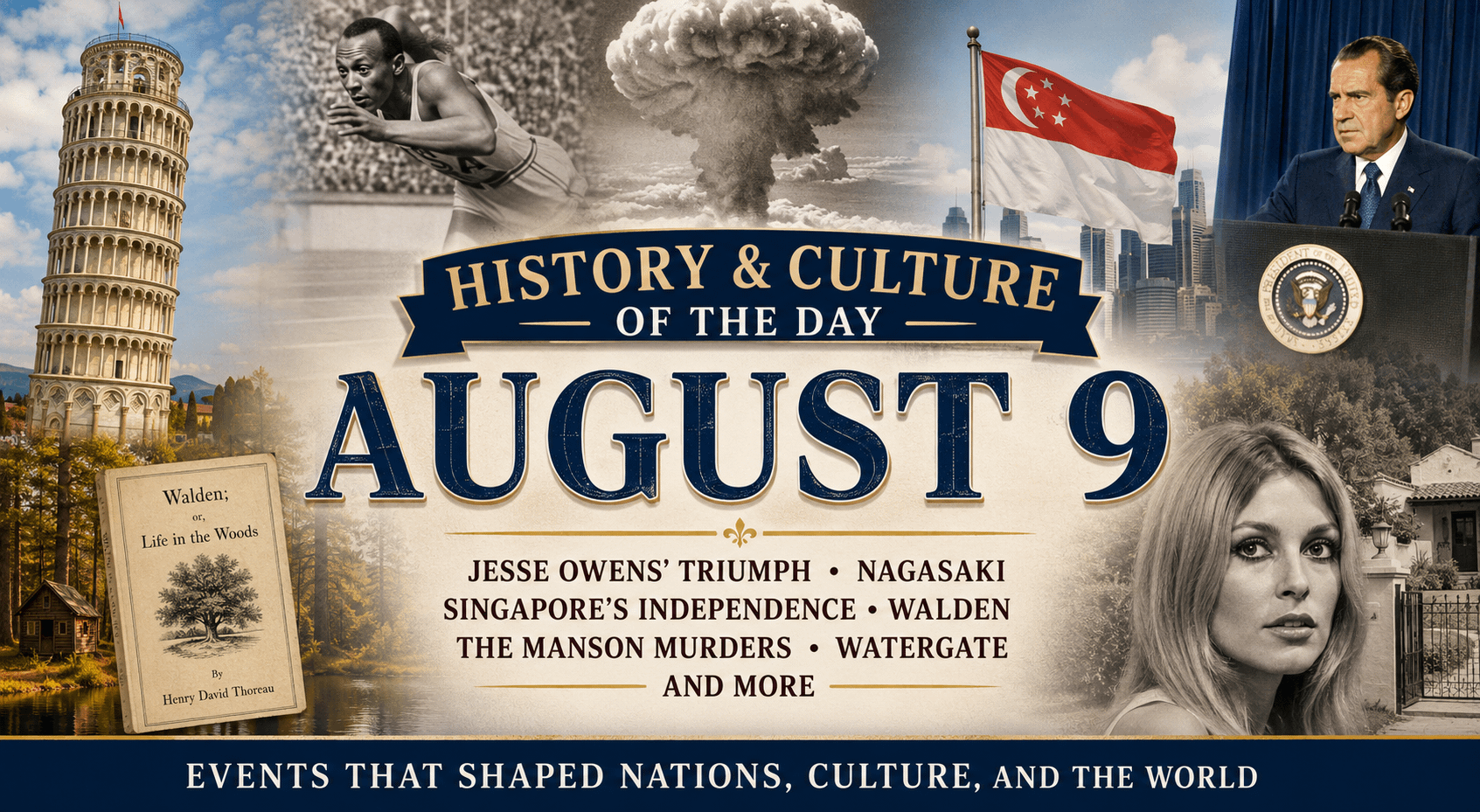
On August 9, construction began on what would become one of the world’s most recognizable towers. Henry David Thoreau published a book that challenged generations to reconsider what makes life meaningful. Jesse Owens completed one of the greatest performances in Olympic history. Nagasaki experienced the devastating power of an atomic bomb. Singapore began its journey as an independent nation. America experienced one of its most extraordinary presidential transitions.
Taken together, these stories demonstrate something important:
History isn’t simply about what happened. It is about what happened next.
Here is a deeper look at the history and culture connected with August 9.
1173 – Construction Begins on the Leaning Tower of Pisa
On August 9, 1173, construction traditionally is said to have begun on the bell tower of the cathedral complex in Pisa, Italy.
Today, almost everyone knows it by another name:
The Leaning Tower of Pisa.
The tower was intended to demonstrate the wealth and prestige of medieval Pisa. During this period, Pisa was an important maritime power, and impressive religious and civic architecture helped communities display their prosperity.
The tower was designed as a freestanding bell tower for Pisa Cathedral.
But construction soon encountered a problem that would ultimately make the building far more famous than its creators could ever have imagined.
The Tower Begins to Lean
The ground beneath the tower consisted of relatively soft soil that could not adequately support the enormous weight of the structure.
As construction progressed, the foundation began settling unevenly.
The tower started leaning.
For most buildings, such a structural problem would be considered a disaster. Builders attempted to compensate for the tilt as construction continued, creating the unusual curved appearance visible today.
Work on the tower stretched across generations, interrupted partly by periods of warfare and political instability.
Ironically, those interruptions may have helped prevent the tower from collapsing because the soil had additional time to settle.
Eventually, the structure was completed.
And the flaw that might have destroyed its reputation became its defining characteristic.
When Imperfection Becomes Identity
Today, the Leaning Tower of Pisa is one of the world’s most recognizable architectural landmarks.
Visitors travel from around the world to see it—and, of course, take photographs pretending to hold the tower upright.
Its cultural legacy provides an interesting reminder that perfection isn’t always what makes something memorable.
Sometimes the unexpected becomes the story.
Sometimes a flaw becomes an identity.
And sometimes something created centuries ago continues bringing people together through curiosity, history, and wonder.
1854 – Henry David Thoreau Publishes Walden
August 9 also holds an important place in American literary history.
On August 9, 1854, Henry David Thoreau’s Walden; or, Life in the Woods was published.
The book was inspired by the period Thoreau spent living in a small cabin near Walden Pond outside Concord, Massachusetts.
Beginning in 1845, Thoreau attempted to simplify his life.
He wanted to examine what people truly needed to live meaningfully.
Instead of chasing wealth, status, possessions, and social expectations, he focused on nature, observation, reflection, work, and independence.
What Does It Mean to Truly Live?
Walden was much more than a book about living in the woods.
Thoreau used his experience to explore deeper questions.
What do people actually need?
How much of life is spent pursuing things that don’t truly make us happy?
How often do people follow society’s expectations without questioning them?
What happens when we slow down long enough to examine our lives?
Those questions helped make Walden one of the most influential works in American literature.
Why Walden Still Matters
The world Thoreau lived in was very different from ours.
There were no smartphones.
No social media.
No 24-hour news cycle.
No endless stream of notifications.
Yet his central concern may be even more relevant today.
Modern culture constantly competes for our attention.
Advertising encourages us to purchase more.
Social media encourages comparison.
Technology keeps us connected almost constantly.
Thoreau’s work challenges readers to ask whether having more necessarily means living better.
That is one reason Walden continues to be read more than 170 years after its publication.
1936 – Jesse Owens Wins His Fourth Olympic Gold Medal
One of the most extraordinary athletic performances of the 20th century reached its conclusion on August 9, 1936.
American track-and-field athlete Jesse Owens competed in the 4×100-meter relay at the Summer Olympics in Berlin.
Owens and his American teammates won the gold medal.
For Owens, it was his fourth gold medal of the Games.
He had already won the:
- 100-meter sprint
- 200-meter sprint
- Long jump
The relay victory completed an Olympic performance that would become legendary.
More Than an Athletic Achievement
Owens’ victories carried enormous symbolism because of where the Olympics were being held.
Germany was controlled by Adolf Hitler and the Nazi regime.
Nazi ideology promoted racist theories about supposed Aryan superiority, and the government hoped the Olympics would showcase the strength of Nazi Germany.
Then Jesse Owens stepped onto the track.
A Black American athlete became one of the greatest stars of the Berlin Olympics.
Owens didn’t need to deliver a political speech.
His performance spoke for itself.
He ran.
He jumped.
He won.
Again and again.
The Complicated Reality Owens Returned Home To
There is another important part of Jesse Owens’ story.
Despite being celebrated internationally as an Olympic champion, Owens returned to a United States where racial segregation and discrimination remained widespread.
His Olympic medals could not protect him from racism.
That contradiction remains an important part of understanding his legacy.
Owens demonstrated what Black Americans could achieve on the world’s largest athletic stage while living in a society that often denied Black Americans equal treatment.
His accomplishments became part of a larger cultural history involving sports, race, equality, and opportunity.
The Cultural Power of Sports
Sports can sometimes accomplish something politics cannot.
They create moments that millions of people witness together.
For a few seconds on a track, an athlete can challenge stereotypes that have existed for generations.
Jesse Owens did exactly that.
His four gold medals remain among the most iconic accomplishments in Olympic history.
1945 – Nagasaki and the Atomic Age
August 9, 1945, represents one of the darkest moments in human history.
World War II had devastated countries across Europe, Asia, Africa, and the Pacific.
Germany had already surrendered in Europe, but fighting continued between Japan and the Allied powers.
Three days earlier, on August 6, the United States had dropped an atomic bomb on Hiroshima.
Then, on August 9, another atomic bomb was dropped on Nagasaki.
A City Changed in Seconds
The bomb exploded over Nagasaki with catastrophic force.
Buildings were destroyed.
Fires spread.
Families were separated.
Thousands of people died almost immediately.
Many others later died from burns, injuries, radiation exposure, and illnesses connected with the bombing.
For the people who survived, life would never return to what it had been before that morning.
Homes disappeared.
Families disappeared.
Neighborhoods disappeared.
The destruction demonstrated a terrifying reality:
Humanity had developed weapons capable of destroying cities almost instantly.
Japan Surrenders
Within days, Japan announced its intention to surrender.
World War II was ending.
For people who had lived through years of global warfare, the surrender brought enormous relief.
Soldiers could return home.
Families could begin rebuilding.
Countries could attempt to recover.
But the way the war ended created historical questions that remain debated today.
A Debate That Continues
Historians have spent decades debating the decision to use atomic weapons against Japan.
Supporters of the bombings have argued that they accelerated Japan’s surrender and prevented an invasion that could have resulted in enormous casualties among American, Allied, and Japanese forces and civilians.
Critics have questioned whether the bombings—particularly the second attack on Nagasaki—were necessary.
They point to the devastating civilian casualties and the unprecedented destructive power of nuclear weapons.
These debates continue because history rarely provides simple answers.
What is undeniable is the human suffering experienced by the people of Hiroshima and Nagasaki.
The Beginning of the Nuclear Age
The consequences of August 1945 stretched far beyond World War II.
The atomic bomb changed international politics.
Soon other nations developed nuclear weapons.
The United States and Soviet Union entered a nuclear arms race during the Cold War.
For generations, millions of people lived with the possibility that nuclear conflict could destroy entire cities—or potentially civilization itself.
Nuclear anxiety entered popular culture.
Movies imagined nuclear destruction.
Schools conducted emergency drills.
Families built fallout shelters.
Political leaders negotiated arms agreements.
Peace movements demanded disarmament.
Scientists debated their responsibility for creating powerful technologies.
The world had entered the nuclear age, and there was no going back.
1965 – Singapore Becomes an Independent Nation
August 9 carries a very different meaning in Singapore.
On August 9, 1965, Singapore became an independent country after separating from Malaysia.
Independence did not immediately guarantee prosperity.
Singapore faced enormous uncertainty.
The country had limited natural resources, unemployment problems, housing challenges, ethnic tensions, and concerns about security.
Its future was uncertain.
Building a Nation
Under Prime Minister Lee Kuan Yew and successive governments, Singapore pursued aggressive economic development.
The country invested heavily in:
education,
housing,
transportation,
infrastructure,
international trade,
manufacturing,
technology,
and financial services.
Over the following decades, Singapore experienced extraordinary economic growth.
A small island nation developed into one of the world’s most important commercial and financial centers.
National Day
Today, August 9 is celebrated as Singapore’s National Day.
The celebration often includes ceremonies, performances, military displays, fireworks, and expressions of national pride.
For Singaporeans, August 9 is more than another historical anniversary.
It represents the beginning of their independent national story.
1969 – The Murder of Sharon Tate and Four Others
August 9, 1969, became associated with one of the most infamous crimes in American history.
Actress Sharon Tate, who was pregnant, and four other people were murdered at a Los Angeles residence by followers of Charles Manson.
The killings shocked America.
Additional murders connected with Manson’s followers followed the next night.
Eventually, Manson and several members of his group were arrested, prosecuted, and convicted.
The End of an Era?
The murders became deeply embedded in American popular culture.
The late 1960s had been associated with enormous cultural change.
Young Americans challenged traditional ideas about music, politics, relationships, fashion, war, and authority.
The counterculture movement promoted peace and personal freedom.
But the Manson murders presented something far darker.
For some observers, the crimes symbolically represented the darker conclusion of the idealism associated with parts of the 1960s counterculture.
Books, movies, documentaries, podcasts, and television programs have continued examining the case decades later.
That continuing fascination demonstrates how certain crimes become more than criminal cases.
They become cultural events.
1974 – Richard Nixon Leaves the Presidency
American political history changed dramatically in August 1974.
The Watergate scandal had consumed the presidency of Richard Nixon.
The scandal began with the June 1972 break-in at the Democratic National Committee headquarters inside Washington’s Watergate complex.
Investigations gradually uncovered attempts to conceal connections to the Nixon administration.
Journalists investigated.
Congress held hearings.
Court battles followed.
Secret White House recordings became central evidence.
Public confidence in the presidency deteriorated.
Eventually, Nixon’s political position became impossible to maintain.
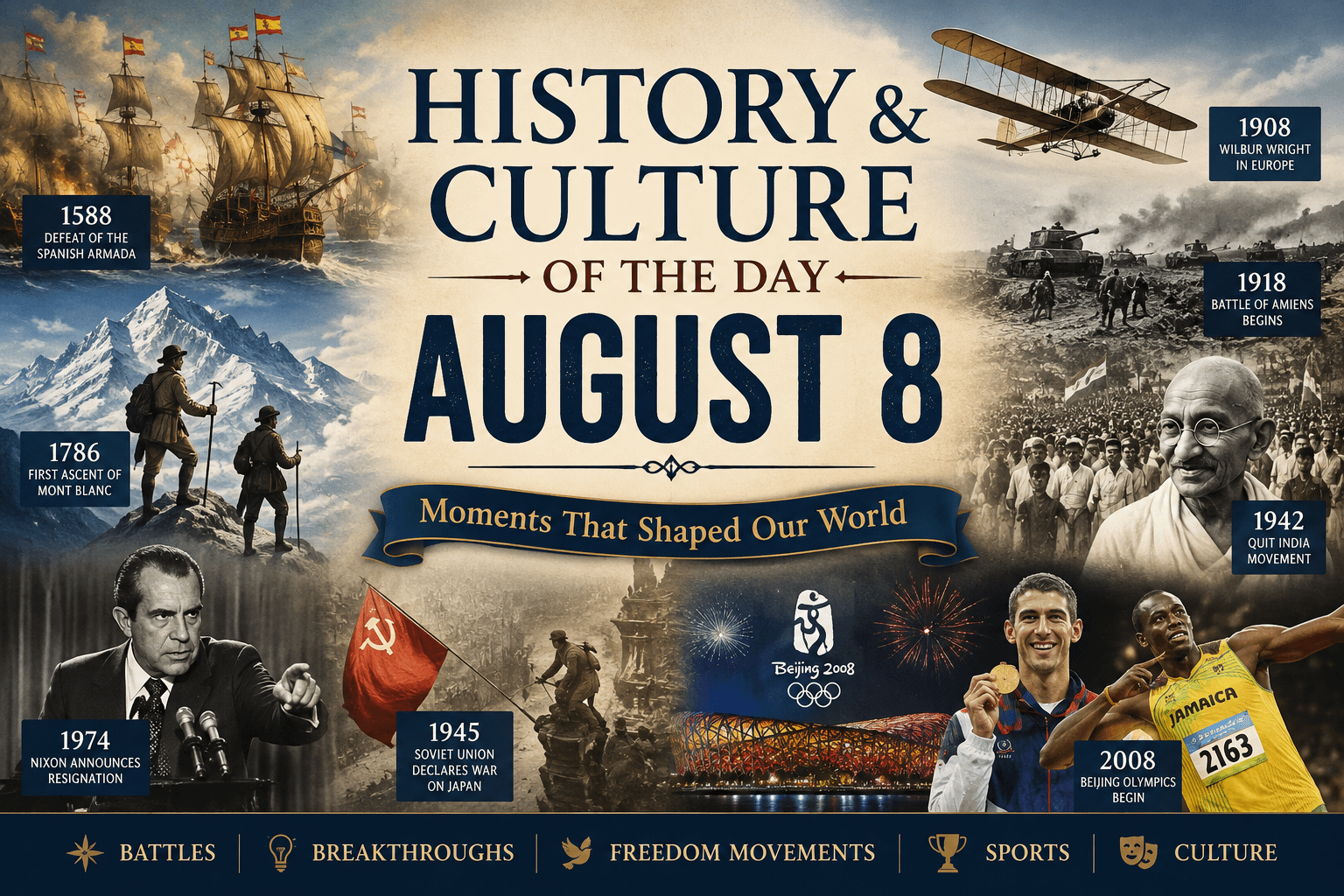
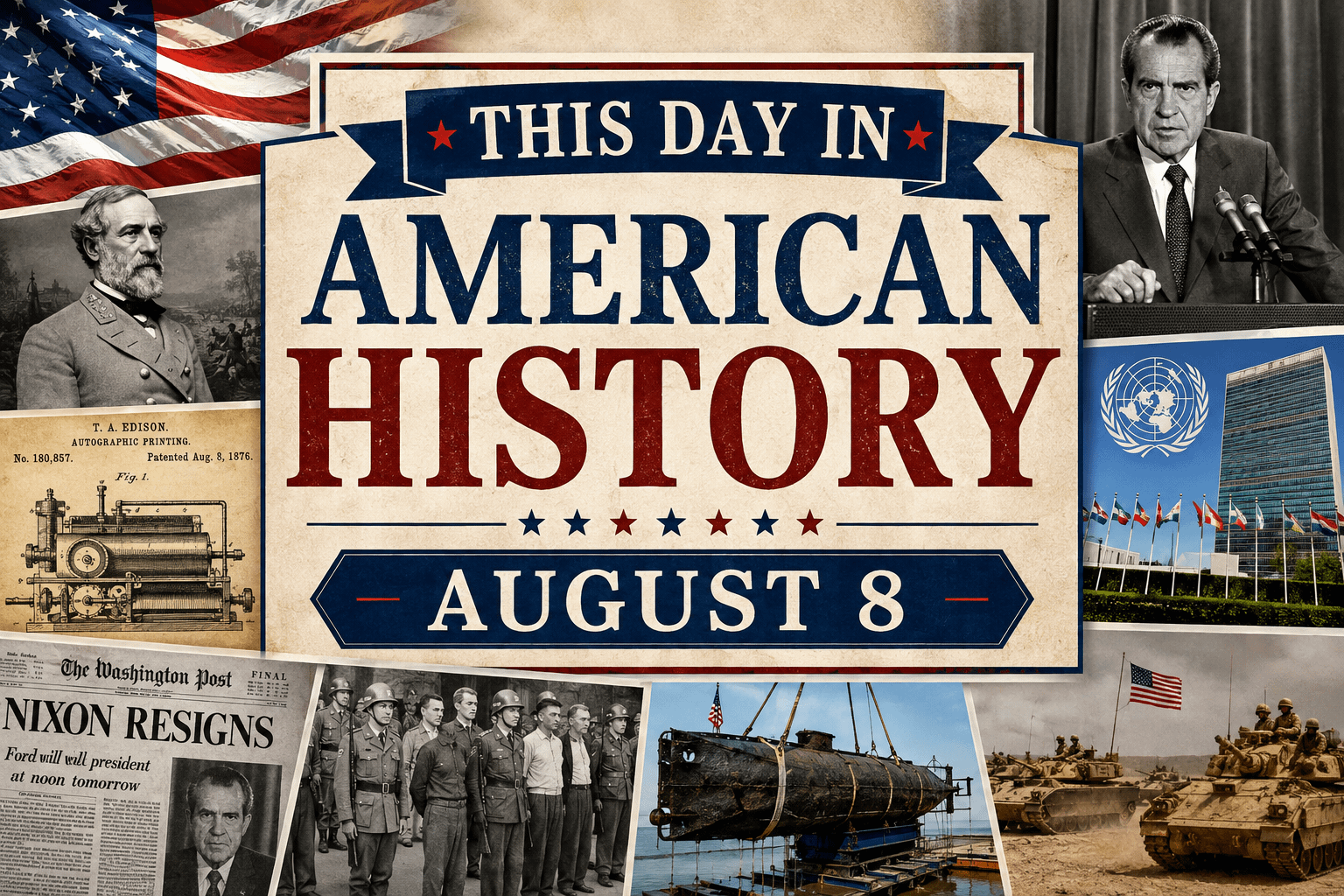
On August 8, 1974, Nixon announced that he would resign.
The resignation took effect the following day.
August 9, 1974 – Gerald Ford Becomes President
At noon on August 9, Vice President Gerald Ford became the 38th president of the United States.
The moment was historically unique.
Ford became president without having been elected either president or vice president by the American electorate.
He had been appointed vice president after Vice President Spiro Agnew resigned in 1973.
Less than a year later, Nixon resigned.
Suddenly, Ford was president.
America’s Constitutional System Is Tested
Watergate represented one of the greatest political crises in American history.
Yet the transfer of power occurred peacefully.
There were no tanks surrounding government buildings.
There was no military takeover.
The Constitution determined what happened next.
Ford took the oath of office and assumed the presidency.
During remarks following the ceremony, Ford told Americans that their “long national nightmare” was over.
His immediate challenge was enormous:
Restore trust in government.
Ford Pardons Nixon
Approximately one month later, Ford made one of the most controversial decisions of his presidency.
He granted Nixon a full presidential pardon for federal crimes Nixon might have committed while president.
Ford believed the pardon would allow the country to move beyond Watergate.
Many Americans strongly disagreed.
Critics believed Nixon should have faced possible prosecution.
The decision damaged Ford politically and may have contributed to his defeat in the 1976 presidential election.
Historians continue debating whether Ford’s decision helped the nation heal or denied the country accountability.
1974 – Philippe Petit Walks Between the Twin Towers
August 9 also sits close to one of the most remarkable cultural spectacles of the 1970s.
On August 7, 1974, French high-wire artist Philippe Petit illegally stretched a wire between the towers of New York City’s World Trade Center and walked approximately 1,350 feet above the ground.
Although the walk occurred two days before August 9, its anniversary week remains closely associated with early-August cultural history.
Petit crossed the wire repeatedly while crowds gathered below.
Police eventually arrested him.
But his stunt became legendary.
After the September 11, 2001 terrorist attacks destroyed the Twin Towers, photographs of Petit’s walk gained an entirely different emotional meaning.
Images that once represented daring and adventure also became reminders of buildings that no longer existed.
History can change the meaning of photographs.
The Cultural Meaning of August 9
Looking at these events together reveals how broad the word history really is.
History isn’t limited to presidents and wars.
It includes:
architecture,
books,
sports,
technology,
national identity,
crime,
politics,
art,
science,
and ordinary people living through extraordinary circumstances.
The Leaning Tower of Pisa shows how human creations can survive for centuries.
Walden demonstrates how ideas can continue speaking to generations long after an author dies.
Jesse Owens shows how athletic excellence can challenge powerful prejudices.
Nagasaki reminds humanity of the devastating consequences of warfare.
Singapore demonstrates how nations can transform themselves.
Watergate demonstrates both the vulnerability and resilience of democratic institutions.
Each story contributes something different to our understanding of humanity.
August 9 and the Power of Human Decisions
One theme connects many events associated with August 9:
Decisions have consequences.
Architects make decisions.
Writers make decisions.
Athletes make decisions.
Presidents make decisions.
Military leaders make decisions.
Citizens make decisions.
Sometimes those choices affect only a few people.
Sometimes they influence millions.
And occasionally, a decision changes the direction of history.
Studying history gives us the advantage of seeing consequences that the people making those decisions could not always see.
That is one reason history matters.
Remembering Both Triumph and Tragedy
Not every historical anniversary should be celebrated.
Some should be remembered.
There is a difference.
Jesse Owens’ Olympic achievements deserve celebration.
Singapore’s independence is celebrated nationally.
The destruction of Nagasaki requires remembrance and reflection.
The Manson murders remind us of victims whose lives were taken.
Watergate reminds Americans of the importance of accountability and constitutional government.
History includes humanity’s greatest accomplishments and its darkest failures.
Ignoring either side gives us an incomplete picture of the past.
What August 9 Can Teach Us Today
The events connected with August 9 happened in different countries, different centuries, and dramatically different circumstances.
Yet they continue offering lessons.
Greatness can appear where prejudice says it shouldn’t.
Jesse Owens demonstrated that in Berlin.
Technology without wisdom can become terrifying.
Nagasaki demonstrated that in 1945.
A country’s future is not always determined by its difficult beginning.
Singapore demonstrated that after independence.
Institutions matter during moments of crisis.
America’s presidential transition demonstrated that during Watergate.
Ideas can outlive the people who wrote them.
Walden demonstrates that more than a century and a half after publication.
And perhaps the Leaning Tower of Pisa offers the most unexpected lesson of all:
Something doesn’t always have to be perfect to become extraordinary.
History Is Still Being Written
It is easy to imagine history as something that exists only in old books.
But everyone currently alive is participating in history.
The conversations happening today will someday be studied.
The technologies being developed today may reshape future civilizations.
Today’s political decisions may affect generations.
Today’s cultural movements may eventually define our era.
People living through major historical moments rarely know exactly how those events will ultimately be remembered.
The people watching Jesse Owens race in Berlin couldn’t fully know what his victories would represent generations later.
Residents of Singapore in 1965 couldn’t know exactly what their country would become.
Americans watching Gerald Ford take the presidential oath couldn’t know how historians would eventually evaluate the Watergate era.
History becomes clearer with distance.
But history begins in the present.
Final Thoughts: Why August 9 Matters
August 9 contains an extraordinary mixture of human history.
It reminds us of creativity through architecture.
It reminds us of reflection through literature.
It reminds us of courage and excellence through Jesse Owens.
It reminds us of the horrifying consequences of war through Nagasaki.
It reminds us of national determination through Singapore’s independence.
It reminds us of the darkness that can exist within society through infamous crimes.
And it reminds us through Watergate that even powerful leaders remain subject to institutions, laws, and consequences.
Some August 9 stories inspire us.
Some challenge us.
Some should make us uncomfortable.
Some should never be forgotten.
Together, they demonstrate why studying history is about much more than remembering dates.
History helps us understand how we arrived where we are today.
Every generation inherits a world shaped by decisions made before it.
Every generation then makes decisions that will shape the world inherited by those who come next.
That is why looking back matters.
When we understand the achievements, mistakes, sacrifices, courage, failures, and lessons of those who came before us, we become better equipped to understand our own place in the human story.
August 9 reminds us that history is not simply behind us.
It surrounds us.
It influences us.
And every day, whether we realize it or not, we are adding another chapter.