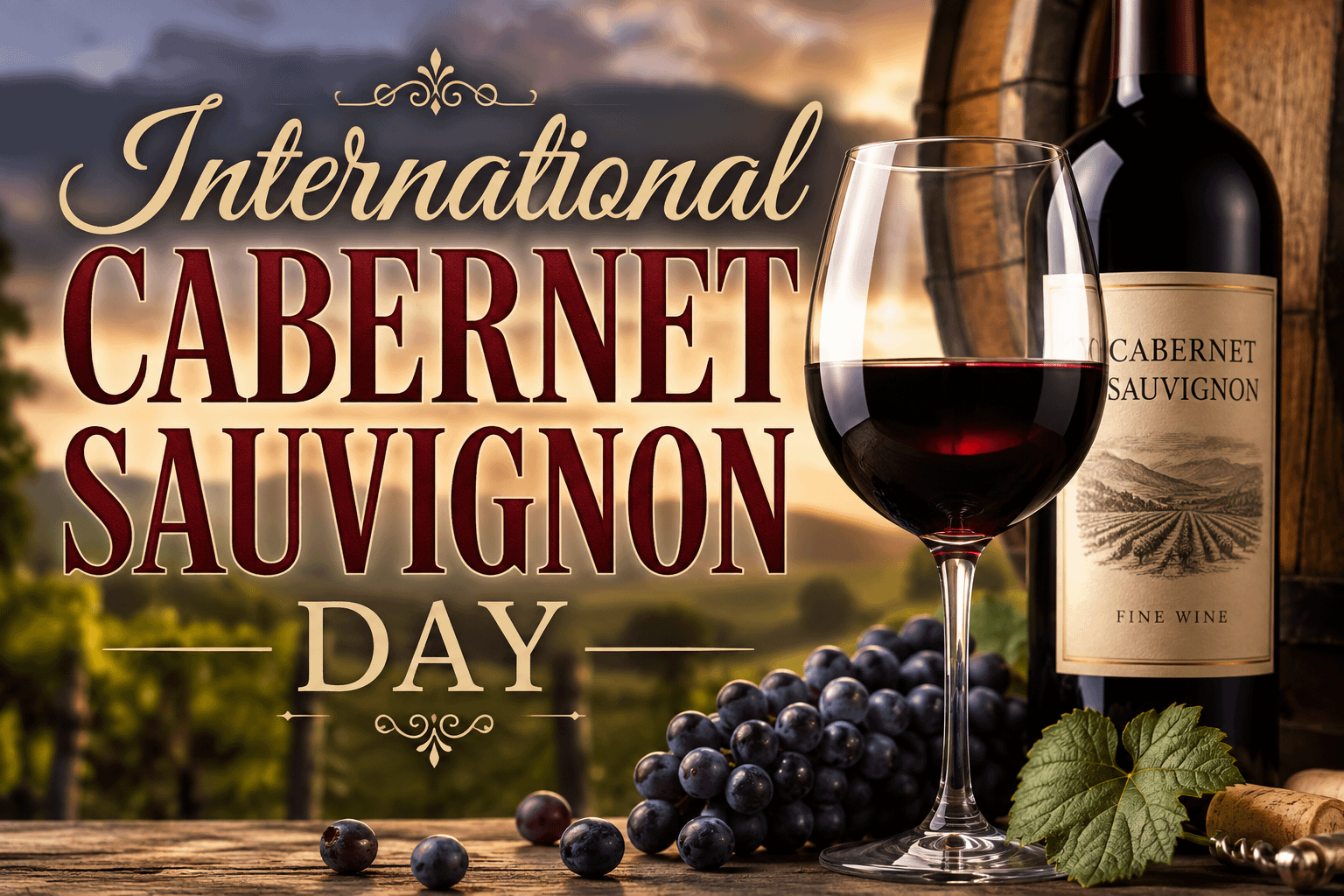
Wine lovers around the world have plenty of reasons to celebrate, but few grapes have earned the international reputation of Cabernet Sauvignon. International Cabernet Sauvignon Day is a celebration of one of the world’s most recognizable, widely planted, and beloved red wine grapes.
Known for its deep color, bold flavors, firm tannins, and impressive ability to age, Cabernet Sauvignon has become a symbol of classic red wine. From legendary vineyards in France to celebrated wineries in California and beyond, this grape has traveled the globe while maintaining its unmistakable personality.
Whether you’re already a Cabernet enthusiast or you’re discovering it for the first time, International Cabernet Sauvignon Day is the perfect occasion to pour a glass and appreciate the history, craftsmanship, and flavors behind this famous wine.
What Is International Cabernet Sauvignon Day?
International Cabernet Sauvignon Day is an annual celebration dedicated to Cabernet Sauvignon and the people who grow, produce, serve, collect, and enjoy it.
The occasion typically falls around the end of August or beginning of September, depending on how the observance is recognized. It gives wine enthusiasts an opportunity to explore different Cabernet Sauvignons, visit wineries, organize tastings, pair Cabernet with a special meal, or simply enjoy a favorite bottle at home.
You don’t need to be a wine expert to participate. Part of the fun is discovering how dramatically Cabernet Sauvignon can change depending on where the grapes were grown, how the wine was produced, and how long it has been aged.
The Story Behind Cabernet Sauvignon
Cabernet Sauvignon has a fascinating history.
The grape originated in France and is believed to have developed from a natural crossing between Cabernet Franc and Sauvignon Blanc. Despite becoming one of the most famous red wine grapes in existence, Cabernet Sauvignon is actually the offspring of a red grape and a white grape.
It became particularly important in Bordeaux, France, where Cabernet Sauvignon has long played a major role in some of the region’s most celebrated wines.
Over time, winemakers discovered that the grape could thrive far beyond France.
Today, Cabernet Sauvignon is grown in numerous wine-producing regions around the world, including California, Washington, Australia, Chile, Argentina, South Africa, Italy, and many other locations.
Why Is Cabernet Sauvignon So Popular?
Cabernet Sauvignon has several characteristics that have helped make it internationally successful.
The grape’s relatively thick skins contribute to wines with significant color, tannin, and structure. Cabernet Sauvignon can also adapt well to different climates while still maintaining many of its recognizable characteristics.
For wine drinkers, its appeal often comes from its combination of bold fruit flavors, savory notes, complexity, and aging potential.
A young Cabernet may be powerful and tannic, while years of aging can allow some bottles to develop softer textures and increasingly complex aromas.
That ability to evolve is one reason collectors frequently seek out high-quality Cabernet Sauvignon.
What Does Cabernet Sauvignon Taste Like?
Cabernet Sauvignon can offer a wide range of flavors depending on where and how it is produced.
Common characteristics may include:
- Black currant
- Blackberry
- Black cherry
- Plum
- Cedar
- Tobacco
- Vanilla
- Baking spices
- Herbs
- Graphite
- Cocoa
- Oak
Cabernets from warmer regions may showcase richer and riper fruit, while those from cooler climates can display more herbal, earthy, or savory characteristics.
Oak aging can introduce additional flavors such as vanilla, toast, cedar, and spice.
This complexity means two bottles labeled Cabernet Sauvignon can provide surprisingly different experiences.
Cabernet Sauvignon in California
California has become one of the world’s most celebrated producers of Cabernet Sauvignon, particularly in Napa Valley.
The region’s climate, soils, and winemaking traditions have helped establish Napa Cabernet as a major force in the international wine industry.
California Cabernet Sauvignon is often associated with generous dark-fruit flavors, substantial body, noticeable tannins, and oak-influenced characteristics. Styles vary considerably between vineyards and producers, however, giving wine lovers plenty to explore.
Other areas of California also produce Cabernet Sauvignon, making the grape an important part of the state’s wine culture.
Cabernet Sauvignon Around the World
One of the best ways to celebrate International Cabernet Sauvignon Day is to compare bottles from different countries.
In Bordeaux, Cabernet Sauvignon is frequently blended with grapes such as Merlot and Cabernet Franc.
In Australia, regions including Coonawarra and Margaret River have developed strong reputations for Cabernet.
Chile has also become an important Cabernet Sauvignon producer, offering wines ranging from approachable everyday bottles to premium selections.
Argentina, South Africa, Italy, and Washington State provide even more opportunities to experience how climate, soil, elevation, and winemaking techniques influence the grape.
A side-by-side tasting can turn International Cabernet Sauvignon Day into a delicious geography lesson.
What Foods Pair Well With Cabernet Sauvignon?
Cabernet Sauvignon’s bold personality makes it an excellent companion for flavorful foods.
Classic pairings include grilled steak, roast beef, lamb, burgers, beef short ribs, barbecue, aged cheeses, mushrooms, and hearty pasta dishes.
The wine’s tannins can work particularly well with fatty and protein-rich foods, which is one reason Cabernet and steak have become such a famous combination.
For a casual celebration, you don’t need an elaborate dinner. A cheeseboard featuring aged cheddar, Gouda, or other flavorful cheeses can make an excellent accompaniment.
How to Celebrate International Cabernet Sauvignon Day
Celebrating can be as simple or elaborate as you want.
Open a bottle you’ve been saving and enjoy it with dinner. Try a Cabernet Sauvignon from a country or region you’ve never explored before. Invite friends over and ask everyone to bring a different bottle for a comparative tasting.
You could even organize a blind tasting. Cover the labels, taste each wine, write down your impressions, and reveal the bottles afterward.
Another option is visiting a local winery or wine shop and asking for recommendations. Instead of choosing the bottle you normally buy, use the occasion to discover something completely new.
Try a Cabernet Sauvignon Tasting Flight
Create your own tasting experience by selecting three Cabernet Sauvignons from different regions.
For example, compare:
Napa Valley, California — Look for ripe dark fruit, structure, and oak characteristics.
Bordeaux, France — Explore Cabernet Sauvignon as part of a traditional blend with more savory and earthy complexity.
Chile — Discover another expression of Cabernet that can combine ripe fruit with herbal and spice characteristics.
Taste them side by side and notice the differences in aroma, acidity, tannin, fruit, body, and finish.
There’s no requirement to identify every flavor correctly. Wine tasting is ultimately about discovering what you personally enjoy.
A Wine Worth Celebrating
Cabernet Sauvignon has earned its place among the great grapes of the wine world.
Its journey from France to vineyards across the globe demonstrates how a single grape variety can express itself differently depending on where it is planted and how it is handled by the winemaker.
International Cabernet Sauvignon Day celebrates more than what’s inside the bottle. It recognizes vineyards, winemakers, traditions, regions, food, friendship, and the simple enjoyment of sharing a good glass of wine.
So pour responsibly, pair it with something delicious, and celebrate one of the world’s most iconic red wines.
What’s your favorite food to pair with a glass of Cabernet Sauvignon?
Leave a Reply