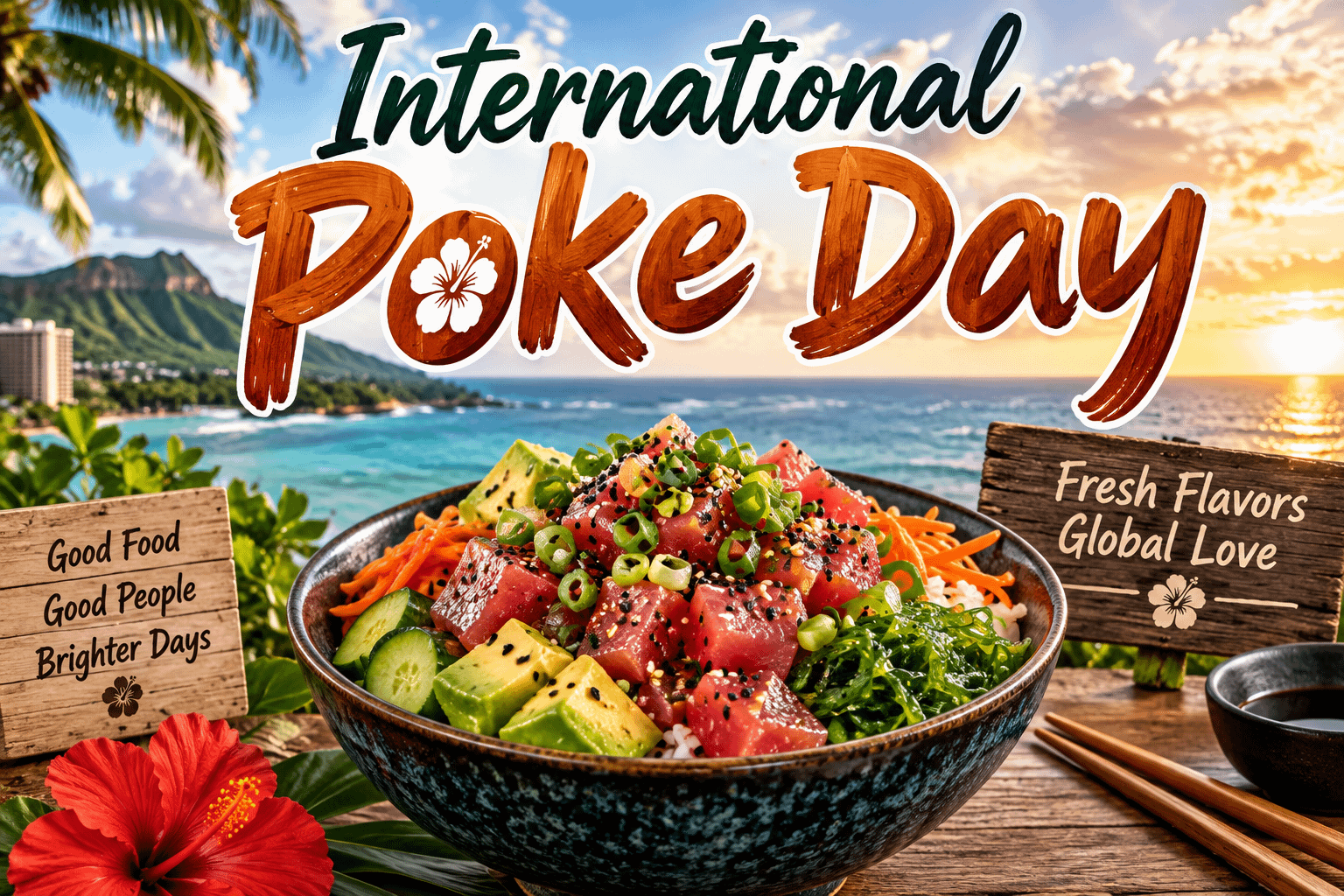
International Poke Day is a celebration of one of Hawaii’s most recognizable foods—a simple yet incredibly flavorful dish that has traveled far beyond the islands and found fans around the world.
Poke, pronounced “poh-keh,” is traditionally made with pieces of raw fish seasoned with ingredients such as sea salt, seaweed, and other local flavors. Over time, countless variations have emerged, adding soy sauce, sesame oil, onions, chili peppers, avocado, vegetables, rice, and many other ingredients.
Today, poke can be found everywhere from traditional Hawaiian markets to modern restaurants offering build-your-own poke bowls. But while the dish has evolved, International Poke Day is also an opportunity to appreciate its Hawaiian roots and the culture that gave it to the world.
What Is Poke?
The Hawaiian word poke means to cut, slice, or section into pieces. That description gets right to the heart of the dish.
Traditional poke commonly features cubed or sliced fish, particularly ahi tuna, combined with seasonings and ingredients that complement the freshness of the seafood.
Rather than being defined by one universal recipe, poke has long existed in different preparations. Modern versions have expanded the possibilities even further.
Walk into a contemporary poke restaurant and you may find a long list of choices. Customers can select a base such as white rice, brown rice, greens, or a combination, followed by fish or another protein and toppings ranging from cucumber and avocado to edamame, seaweed salad, green onion, sesame seeds, spicy sauces, and crispy garnishes.
The result is a meal that can be colorful, refreshing, filling, and highly customizable.
The Hawaiian Roots of Poke
Although poke has become an international food trend, its story begins in Hawaii.
Long before today’s elaborate poke bowls became popular, Hawaiian fishermen prepared freshly caught fish by cutting it into pieces and seasoning it with ingredients available locally.
Over generations, Hawaii’s multicultural population influenced the way poke was prepared. Japanese and other Asian culinary traditions contributed ingredients and seasonings that became common in many contemporary forms of the dish.
This history is important because poke shouldn’t simply be viewed as another trendy bowl meal.
It is a food closely associated with Hawaii and its people.
As poke restaurants have opened around the world, the dish has continued to change. New ingredients, sauces, proteins, and presentation styles have transformed it for different audiences.
International Poke Day provides an opportunity to enjoy those creations while also learning about where the food originated.
From Hawaii to the World
Poke’s international popularity demonstrates how quickly regional foods can become global favorites.
Part of its appeal comes from its simplicity.
Fresh ingredients are placed together in a bowl, allowing contrasting flavors and textures to work together. You might get the richness of tuna or salmon, the creaminess of avocado, the crunch of cucumber, the saltiness of soy-based seasoning, the nuttiness of sesame, and the heat of a spicy sauce in a single bite.
Another reason for poke’s popularity is customization.
Two people can visit the same poke restaurant and create completely different meals.
One person might choose ahi tuna over rice with seaweed, green onions, sesame oil, and soy sauce.
Another might prefer salmon with avocado, cucumber, edamame, spicy mayo, and crispy onions.
Someone who doesn’t eat raw fish might select cooked seafood, tofu, chicken, or another alternative when available.
That flexibility helped poke fit naturally into the modern build-your-own-bowl restaurant concept.
Traditional Poke and Modern Poke Bowls
There is an important distinction between traditional Hawaiian poke and many of the poke bowls served around the world today.
Traditional poke often places greater emphasis on the seasoned seafood itself.
Modern poke bowls frequently turn that seafood into one component of a larger meal featuring rice, vegetables, sauces, toppings, and garnishes.
Neither experience has to prevent someone from enjoying the other. International Poke Day can actually be a good reason to try both.
If you’re familiar only with heavily customized poke bowls, look for an opportunity to experience a more traditional Hawaiian preparation.
You may discover how delicious poke can be when relatively few ingredients are allowed to shine.
Popular Types of Poke
Ahi tuna is probably the ingredient most people immediately associate with poke.
Its firm texture makes it well suited for cutting into cubes, while its relatively mild flavor works beautifully with many seasonings.
Salmon has also become extremely popular, especially in poke restaurants outside Hawaii. Its rich flavor pairs particularly well with avocado, sesame, cucumber, spicy mayonnaise, and green onion.
Other seafood varieties can be used as well, depending on the restaurant, region, and availability.
The endless combinations are part of what makes exploring poke so enjoyable.
Build Your Own Poke Bowl
One fun way to celebrate International Poke Day is by making a poke-inspired bowl at home.
Start with your base.
Rice is a classic option for a modern poke bowl. White rice, brown rice, or sushi-style rice can all work. Greens can provide a lighter alternative, while combining greens and rice gives you some of both.
Next comes the protein.
If you’re preparing raw fish at home, food safety is extremely important. Purchase fish from a reputable supplier and specifically tell them that you intend to consume it raw. When uncertain, choose a cooked protein instead.
Then comes the fun part: toppings.
Consider ingredients such as avocado, cucumber, edamame, shredded carrots, seaweed, green onions, radishes, sesame seeds, or pickled vegetables.
Finally, add your seasonings or sauce.
Soy sauce, sesame oil, ponzu, spicy mayonnaise, chili sauce, or other complementary flavors can transform the bowl.
Just remember that more isn’t always better. Sometimes a few well-chosen ingredients create a better bowl than piling on every available topping.
A Simple Poke-Inspired Bowl
For an easy homemade version, prepare cooked rice and allow it to cool slightly.
Add your properly handled seafood or preferred cooked protein. Arrange sliced cucumber, avocado, edamame, and green onions around it.
Drizzle with a small amount of soy sauce and sesame oil, then sprinkle sesame seeds over the top.
For extra heat, add your favorite chili sauce or spicy mayonnaise.
It’s colorful, satisfying, and easy to customize.
Celebrate by Supporting Hawaiian Food and Culture
International Poke Day can be about more than eating a delicious meal.
It can also encourage curiosity about Hawaiian food traditions.
If you have access to a Hawaiian-owned restaurant or market, consider exploring its menu and learning about dishes beyond poke. Hawaiian cuisine has a rich history influenced by Native Hawaiian traditions and generations of cultural exchange.
Food often provides an approachable doorway into learning about another place.
Enjoy the meal, but don’t stop at the bowl.
Learn something about Hawaii.
Learn about the ingredients.
Learn how poke has changed over generations.
And recognize the people and traditions behind the food.
Host a Poke Bowl Night
International Poke Day can also become a fun gathering with friends or family.
Create a poke bowl bar with several bases, proteins, vegetables, sauces, and toppings.
Put everything in separate containers and allow everyone to build their own bowl.
You could offer rice and greens for bases, several protein choices, avocado, cucumber, edamame, carrots, green onions, seaweed, sesame seeds, and different sauces.
People can keep their bowls simple or create something adventurous.
The experience becomes part dinner and part activity.
Try Something New
If you regularly order the exact same poke bowl, use International Poke Day as an excuse to change things up.
Try a topping you’ve never ordered.
Choose a different sauce.
Swap your usual rice for greens.
Try a more traditional preparation.
Visit a Hawaiian restaurant you’ve never experienced.
Or make your first poke-inspired bowl at home.
Food celebrations are often most enjoyable when they encourage us to move beyond our routines.
Respecting Raw Seafood Safety
Because many varieties of poke contain raw seafood, safe handling matters.
Raw or undercooked seafood can carry foodborne illness risks. People who are pregnant, immunocompromised, older, very young, or otherwise at higher risk for foodborne illness may need to avoid raw seafood or follow medical guidance appropriate to their situation.
For home preparation, purchase seafood from a trustworthy source, keep it properly refrigerated, avoid cross-contamination, and follow appropriate food-safety practices.
You can also celebrate with cooked seafood or another fully cooked protein.
Poke-inspired flavors don’t require eating raw fish.
Why Poke Has Become So Popular
There are plenty of delicious foods in the world, but poke seems particularly well suited to modern dining.
It’s fast.
It’s customizable.
It’s visually appealing.
It can combine protein, grains, vegetables, sauces, and toppings in a single bowl.
Most importantly, it can taste incredible.
There is something satisfying about the contrast of fresh ingredients, bold seasonings, creamy toppings, crunchy vegetables, and tender seafood.
At the same time, the international popularity of poke reminds us how foods change when they travel.
A traditional dish can inspire entirely new versions thousands of miles from its original home.
That evolution can be exciting, but understanding the original culture and history remains important.
How to Celebrate International Poke Day
There are plenty of ways to make the day memorable:
- Order poke from a Hawaiian or local poke restaurant.
- Try ahi poke if you’ve never had it before.
- Make a poke-inspired bowl at home.
- Host a build-your-own poke dinner with friends.
- Learn about the Hawaiian origins of poke.
- Try a traditional preparation rather than only a modern bowl.
- Experiment with a new topping or sauce.
- Share your favorite poke combination with someone else.
- Explore other Hawaiian foods and culinary traditions.
However you celebrate, make the day about both good food and curiosity.
A Celebration of Food, Culture, and Flavor
International Poke Day celebrates a dish that started with straightforward ingredients and became an international favorite.
Poke’s journey from Hawaii to restaurants and kitchens around the world demonstrates the extraordinary way food connects people and cultures.
But its worldwide popularity shouldn’t erase where the dish began.
The best celebration recognizes both sides of the story: appreciating the creativity of modern poke while respecting its Hawaiian origins.
So grab a bowl, choose your favorite ingredients, try something you’ve never tasted before, and enjoy one of Hawaii’s most famous culinary contributions.
What would you put in your perfect poke bowl?
Leave a Reply