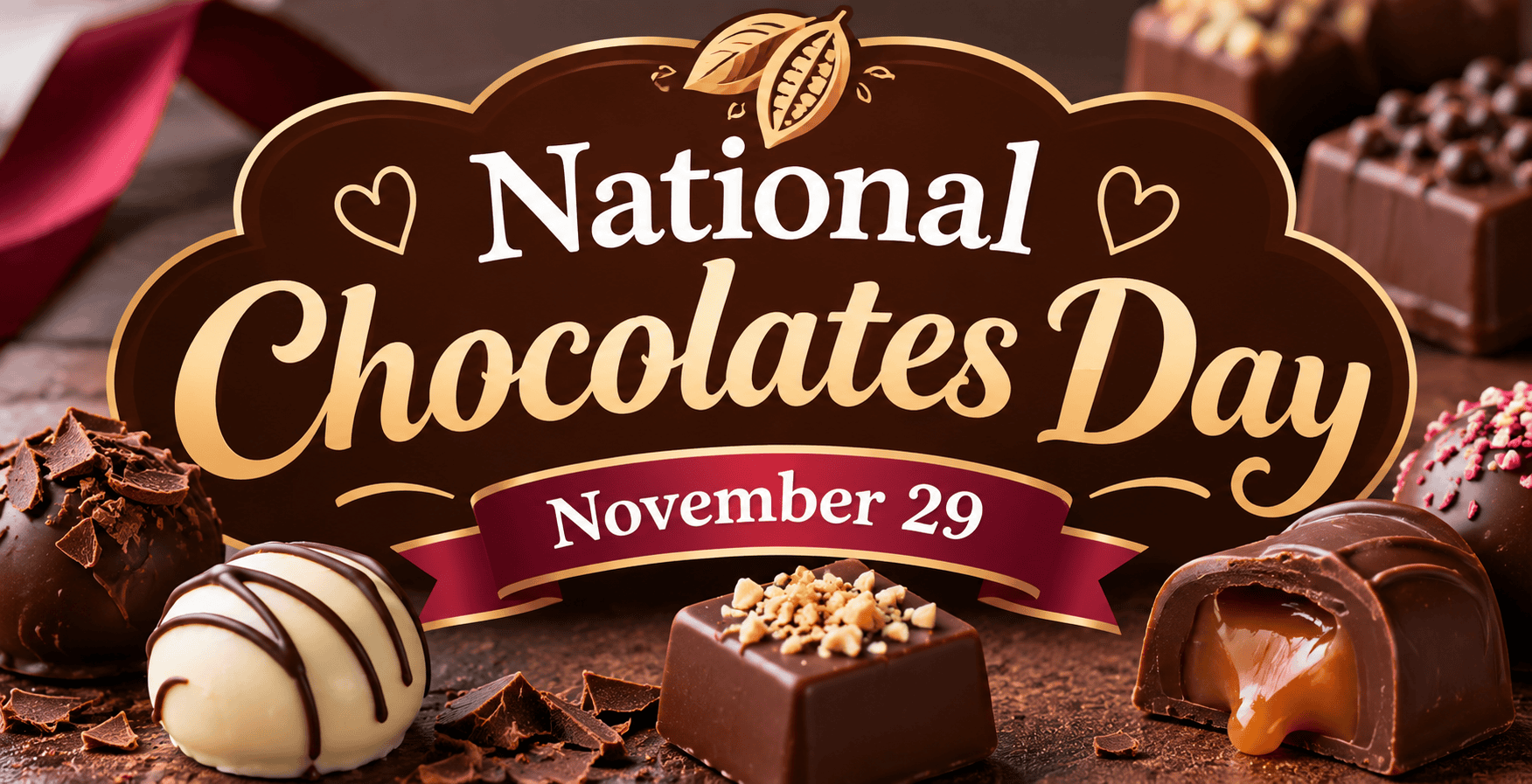
Chocolate is one of the world’s most beloved treats, bringing happiness, comfort, and indulgence to people of all ages. Whether you enjoy a rich dark chocolate truffle, a creamy milk chocolate bar, or a box of assorted chocolates, there is something special about the sweet satisfaction chocolate provides.
Every year on November 29, National Chocolates Day offers chocolate lovers another reason to celebrate their favorite confection. This delicious occasion is dedicated to appreciating the incredible variety of chocolates, their fascinating history, and the joy they bring to everyday life.
From luxurious handmade chocolates to simple chocolate-covered treats, National Chocolates Day reminds us that sometimes life’s sweetest moments come in small packages.
What Is National Chocolates Day?
National Chocolates Day is an informal food holiday celebrated annually on November 29. It is an opportunity to recognize and enjoy the many different types of chocolate confections available around the world.
Unlike National Chocolate Day, commonly observed on October 28, National Chocolates Day focuses especially on the individual chocolates and confections that people love to share, give as gifts, and enjoy.
These include chocolate truffles, filled chocolates, chocolate-covered nuts, assorted chocolate boxes, and countless other sweet creations.
Although the exact origin of National Chocolates Day is not well documented, the occasion has become a fun way for chocolate enthusiasts to celebrate their favorite treats.
Whether you prefer something simple or sophisticated, November 29 is the perfect excuse to enjoy a little chocolate.
The Fascinating History of Chocolate
Chocolate has a rich history that stretches back thousands of years.
Long before chocolate bars and candy boxes existed, cacao was an important part of ancient cultures in Mesoamerica.
Chocolate in Ancient Civilizations
The ancient Maya and other Mesoamerican civilizations prepared beverages using cacao. These drinks were often bitter and sometimes flavored with spices rather than sweetened with sugar.
Cacao also held cultural, ceremonial, and economic significance in various societies.
The Aztecs valued cacao and consumed chocolate beverages, particularly among elite members of society.
Chocolate during this period was very different from the sweet candy enjoyed today.
Chocolate Arrives in Europe
During the 1500s, cacao became known in Europe through contact between Spanish explorers, colonizers, and the peoples of the Americas.
Europeans gradually began adding sugar and other ingredients to chocolate beverages, making them sweeter and more appealing to European tastes.
Over time, chocolate became a fashionable drink among wealthy Europeans.
As production methods improved, chocolate became more widely available.
The Invention of Modern Chocolate
The 1800s brought major developments that transformed chocolate into the familiar treats we enjoy today.
In 1828, Coenraad van Houten patented a process for pressing much of the cocoa butter from cacao, helping make cocoa powder easier to produce.
In 1847, the British chocolate company J. S. Fry & Sons developed an early molded eating chocolate.
Milk chocolate emerged commercially in the 1870s, with Swiss chocolatiers playing an important role in its development.
Further improvements in chocolate manufacturing helped create the smooth, creamy texture associated with modern chocolate.
Today, chocolate is produced in countless varieties and enjoyed around the world.
Different Types of Chocolate to Enjoy
One of the best things about National Chocolates Day is the incredible selection of chocolate available.
1. Milk Chocolate
Milk chocolate is known for its creamy texture and sweet flavor. Made with cocoa ingredients, sugar, and milk ingredients, it remains one of the most popular chocolate varieties.
Milk chocolate is commonly used in candy bars, chocolate-covered treats, and assorted chocolate boxes.
2. Dark Chocolate
Dark chocolate typically contains a higher proportion of cocoa ingredients and less sugar than milk chocolate.
Its flavor can range from slightly sweet to intensely bitter, depending on the cocoa percentage and recipe.
Dark chocolate is especially popular among people who appreciate bold, rich chocolate flavors.
3. White Chocolate
White chocolate is made with cocoa butter, sugar, and milk ingredients but does not contain cocoa solids.
Its smooth texture and sweet, creamy flavor make it popular in desserts, candies, and decorative confections.
4. Chocolate Truffles
Chocolate truffles are luxurious confections traditionally made with a rich chocolate ganache center.
They may be coated in cocoa powder, nuts, or a thin layer of chocolate.
Their delicate texture makes them a favorite for special occasions and gifts.
5. Filled Chocolates
Filled chocolates feature a chocolate shell surrounding a delicious center.
Popular fillings include caramel, peanut butter, fruit creams, hazelnut paste, and ganache.
Assorted boxes of filled chocolates are especially popular during holidays and celebrations.
6. Chocolate-Covered Nuts
Chocolate-covered almonds, peanuts, cashews, and hazelnuts combine the sweetness of chocolate with the crunch of roasted nuts.
These treats are perfect for snacking or sharing.
7. Chocolate-Covered Fruit
Strawberries, cherries, raisins, and orange peels are among the fruits commonly paired with chocolate.
The combination of sweet or tart fruit and rich chocolate creates a delicious contrast.
Why Do People Love Chocolate So Much?
Chocolate is more than just a sweet treat. For many people, it is connected to happiness, comfort, celebrations, and cherished memories.
Its appeal comes from several factors.
Rich flavor: Chocolate contains a complex combination of flavors that can include roasted, fruity, nutty, earthy, and sweet notes.
Smooth texture: The cocoa butter in chocolate contributes to its distinctive melt-in-your-mouth sensation.
Emotional connections: Chocolate is often associated with birthdays, holidays, romantic gestures, and family traditions.
Variety: From simple candy bars to gourmet truffles, chocolate offers something for nearly every preference.
A sense of indulgence: Enjoying a favorite chocolate can turn an ordinary moment into a small celebration.
Chocolate’s popularity reflects both its sensory appeal and its place in cultural traditions.
10 Fun Ways to Celebrate National Chocolates Day
National Chocolates Day is the perfect opportunity to explore different flavors, share something sweet, and enjoy a little indulgence.
1. Treat Yourself to Your Favorite Chocolate
Sometimes the simplest celebration is the best. Pick up your favorite chocolate bar, truffle, or assorted chocolates and enjoy them.
2. Try a New Type of Chocolate
Explore something you have never tasted before.
Consider dark chocolate with sea salt, chocolate with chili peppers, or chocolates filled with unusual fruit flavors.
3. Create a Chocolate Tasting Experience
Purchase several different chocolates and compare their flavors, textures, and sweetness.
Try milk chocolate, dark chocolate, white chocolate, and filled chocolates to discover your favorites.
4. Make Homemade Chocolate Truffles
Homemade chocolate truffles are surprisingly simple to prepare.
A basic ganache made from chocolate and cream can be chilled, shaped, and rolled in cocoa powder.
5. Share a Box of Chocolates
Chocolate makes a thoughtful gift for friends, family members, coworkers, and neighbors.
A small box of assorted chocolates can brighten someone’s day.
6. Bake a Chocolate Dessert
Celebrate by preparing chocolate brownies, chocolate chip cookies, chocolate cake, or chocolate cupcakes.
Homemade desserts make the occasion even more special.
7. Enjoy Chocolate-Covered Strawberries
Dip fresh strawberries into melted chocolate and allow them to cool until the coating sets.
This simple treat combines fresh fruit with rich chocolate.
8. Visit a Local Chocolate Shop
Support a local chocolatier by exploring handmade chocolates and specialty confections.
You may discover unique flavors and beautiful creations.
9. Host a Chocolate-Themed Gathering
Invite friends or family over for a small chocolate celebration.
Serve chocolate desserts, hot chocolate, and assorted candies.
10. Learn About Chocolate Making
Take time to discover how cacao beans are harvested, fermented, dried, roasted, and transformed into chocolate.
Understanding the process can make your next chocolate treat even more enjoyable.
Interesting Facts About Chocolate
Chocolate has a fascinating history and several surprising characteristics.
-
Chocolate comes from cacao beans. These seeds grow inside pods on the cacao tree, Theobroma cacao.
-
The name Theobroma means “food of the gods.” The scientific name reflects cacao’s long-standing cultural significance.
-
Chocolate was originally consumed as a beverage. Solid eating chocolate became widespread much later.
-
White chocolate contains cocoa butter. However, it does not contain the nonfat cocoa solids found in milk and dark chocolate.
-
Chocolate contains theobromine. This naturally occurring compound is related to caffeine.
-
Chocolate can be dangerous for pets. Dogs and cats are particularly vulnerable to the toxic effects of theobromine and caffeine.
-
Chocolate flavor varies by origin. Growing conditions, cacao varieties, fermentation, roasting, and processing can influence the final taste.
-
Chocolate requires careful temperature control. Tempering helps chocolate develop a glossy appearance and satisfying snap.
These facts demonstrate why chocolate remains such an interesting food, beyond its delicious flavor.
Is Chocolate Good for You?
Chocolate can be enjoyed as part of a balanced diet, although its nutritional value depends on the type and amount consumed.
Dark chocolate contains cocoa compounds called flavanols, which have been studied for their potential effects on blood vessel function.
However, the amount of flavanols varies considerably between chocolate products, and eating chocolate should not be considered a substitute for healthy dietary habits or medical treatment.
Chocolate also contains calories, and many varieties have substantial amounts of added sugar and saturated fat.
Enjoying moderate portions allows you to appreciate chocolate without making it the centerpiece of your diet.
For many people, the greatest benefit of chocolate is simply the pleasure of enjoying a favorite treat.
Popular Chocolate Treats Around the World
Chocolate is enjoyed internationally, with different countries developing their own traditions and specialties.
Belgium
Belgium is famous for its pralines and beautifully crafted filled chocolates.
Belgian chocolatiers are known for creating elaborate assortments featuring ganache, caramel, and nut-based fillings.
Switzerland
Switzerland has a long history of milk chocolate production and is associated with smooth, creamy chocolate confections.
Swiss chocolate makers contributed significantly to the development of modern chocolate manufacturing.
France
French chocolate shops often feature elegant bonbons, ganaches, and truffles.
French chocolatiers frequently emphasize craftsmanship, texture, and carefully balanced flavors.
Italy
Italy is known for gianduja, a smooth combination of chocolate and hazelnuts.
The country also produces chocolate specialties such as gianduiotti, small hazelnut-chocolate confections traditionally associated with Turin.
United States
The United States has a broad chocolate tradition that includes candy bars, peanut butter cups, chocolate-covered nuts, fudge, and handmade artisan chocolates.
Chocolate is especially popular during Valentine’s Day, Halloween, Christmas, and Easter.
Easy Homemade Chocolate Bark Recipe
One delicious way to celebrate National Chocolates Day is by preparing homemade chocolate bark.
This simple recipe requires only a few ingredients and can be customized with your favorite toppings.
RECIPE DETAILS
10 minutes
Prep time
30 minutes
Chill time
12 pieces
Servings
Ingredients
-
12 ounces semisweet or milk chocolate, chopped
-
¼ cup chopped almonds
-
¼ cup dried cranberries
-
2 tablespoons shredded coconut
-
1 tablespoon colorful sprinkles (optional)
-
A small pinch of flaky sea salt (optional)
Instructions
-
Line a baking sheet with parchment paper.
-
Place the chopped chocolate in a microwave-safe bowl.
-
Microwave in 20-second intervals, stirring between each interval until the chocolate is smooth.
-
Pour the melted chocolate onto the prepared baking sheet.
-
Spread the chocolate into an even layer approximately ¼ inch thick.
-
Sprinkle the almonds, dried cranberries, coconut, and optional toppings over the chocolate.
-
Refrigerate for approximately 30 minutes or until completely firm.
-
Break the chocolate into pieces and enjoy.
Tips for the Best Chocolate Bark
Use good-quality chocolate for the best flavor and texture.
Avoid overheating the chocolate, as excessive heat can cause it to scorch or become grainy.
Experiment with different toppings such as crushed pretzels, pistachios, dried cherries, or crushed peppermint candies.
Store the finished chocolate bark in an airtight container in a cool location.
The Joy of Giving Chocolates as Gifts
Chocolate has long been associated with generosity, appreciation, affection, and celebration.
A beautifully packaged box of chocolates can express gratitude, friendship, or love without requiring an elaborate gift.
Chocolate gifts are popular because they are easy to personalize.
Someone who enjoys bold flavors may appreciate dark chocolate truffles, while a person with a sweet tooth might prefer creamy milk chocolate or caramel-filled candies.
Homemade chocolates can be particularly meaningful because they reflect the time and effort spent creating something special.
National Chocolates Day provides an opportunity to surprise someone with a thoughtful treat simply because you care.
National Chocolates Day vs. Other Chocolate Holidays
Chocolate is so popular that several informal food holidays celebrate different varieties and traditions throughout the year.
| Holiday | Date |
|---|---|
| National Chocolate-Covered Nut Day | February 25 |
| National Chocolate Day | October 28 |
| National Candy Day | November 4 |
| National Chocolates Day | November 29 |
| National Cocoa Day | December 13 |
| National Chocolate-Covered Anything Day | December 16 |
These observances are generally informal celebrations rather than official federal holidays.
Each provides another opportunity to appreciate chocolate in a different form.
Why National Chocolates Day Is Worth Celebrating
Not every celebration needs to involve elaborate plans or expensive gifts.
Sometimes happiness comes from enjoying something familiar, sharing a treat, or creating a simple memory with someone you care about.
Chocolate has a special way of bringing people together.
It appears at birthday parties, family gatherings, weddings, holiday celebrations, and quiet evenings at home.
For some people, a favorite chocolate brings back childhood memories. For others, it recalls a special gift, a family tradition, or a meaningful moment shared with a loved one.
National Chocolates Day celebrates those small pleasures that make everyday life a little sweeter.
Final Thoughts on National Chocolates Day
National Chocolates Day, celebrated every November 29, is a delicious reminder to appreciate one of the world’s most cherished treats.
From its ancient origins in Mesoamerica to the countless varieties of chocolates available today, chocolate has a remarkable history filled with innovation, tradition, and enjoyment.
Whether you celebrate with a rich chocolate truffle, homemade chocolate bark, a favorite candy bar, or a box of chocolates shared with someone special, the occasion is all about enjoying life’s sweeter moments.
You do not need an extravagant celebration to make the day meaningful. Sometimes a little chocolate, a kind gesture, and a moment of happiness are more than enough.
Happy National Chocolates Day! May your November 29 be filled with sweetness, smiles, and delicious chocolate memories.
What’s your favorite type of chocolate: milk chocolate, dark chocolate, white chocolate, or chocolate filled with caramel or nuts?



Leave a Reply