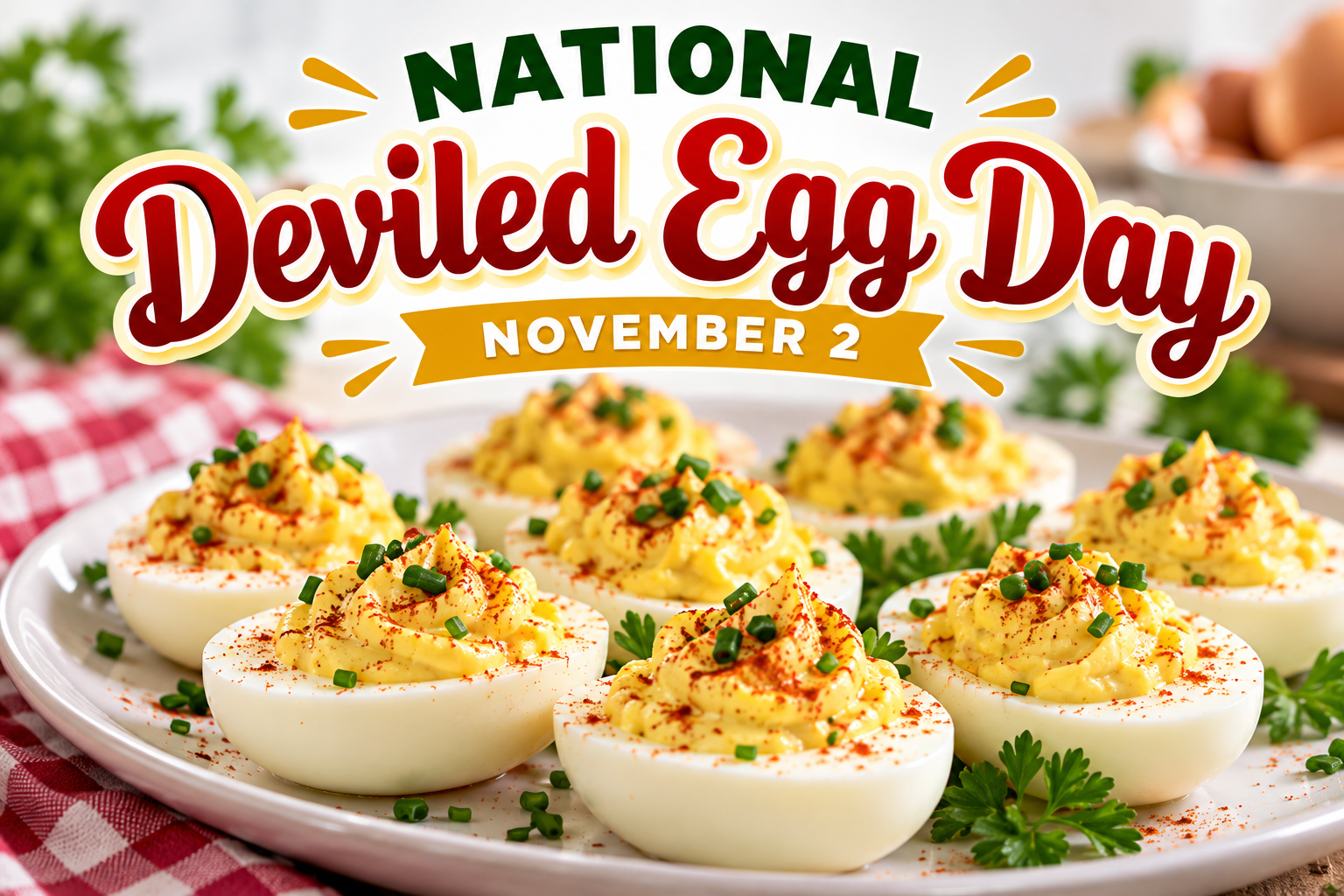
There is something special about a simple dish that brings people together. Whether served at a holiday gathering, backyard barbecue, family reunion, picnic, or potluck, deviled eggs have earned their place as one of America’s most beloved appetizers.
Every year on November 2, National Deviled Egg Day celebrates this creamy, flavorful, and surprisingly versatile dish. With just a handful of ingredients, ordinary hard-boiled eggs can become an irresistible treat that disappears from the serving platter almost as quickly as it arrives.
From traditional recipes featuring mayonnaise and mustard to creative variations loaded with bacon, avocado, jalapeños, and other delicious toppings, deviled eggs offer something for nearly everyone.
National Deviled Egg Day is the perfect opportunity to revisit an old family recipe, experiment with new flavors, or simply enjoy a few of these delicious bites.
What Is National Deviled Egg Day?
National Deviled Egg Day is observed annually on November 2 to recognize and celebrate one of the most recognizable appetizers in American cuisine.
Deviled eggs are made by cutting hard-boiled eggs in half, removing the yolks, and combining them with ingredients such as mayonnaise, mustard, vinegar, salt, and pepper. The creamy mixture is then spooned or piped back into the egg whites.
Many recipes finish the eggs with a sprinkle of paprika, giving them their familiar appearance.
Although the ingredients are simple, the possibilities are nearly endless.
For generations, deviled eggs have been associated with family gatherings, holiday celebrations, church socials, picnics, and special occasions.
They are affordable, easy to customize, and convenient to prepare ahead of time.
National Deviled Egg Day celebrates not only the food itself but also the memories and traditions surrounding it.
The History of Deviled Eggs
Deviled eggs may seem like a distinctly American creation, but their origins stretch back thousands of years.
Ancient Roman Beginnings
The concept of seasoned boiled eggs dates back to ancient Rome.
Romans commonly served eggs as part of the opening course of a meal. Some preparations included seasonings, sauces, and other flavorful ingredients.
These early dishes were not identical to modern deviled eggs, but they helped establish the tradition of serving eggs as appetizers.
Medieval European Recipes
During the Middle Ages, cooks in parts of Europe began preparing stuffed eggs.
Recipes involved boiling eggs, cutting them open, removing the yolks, and mixing those yolks with spices, herbs, and other ingredients.
The mixture was then returned to the egg whites.
These preparations closely resembled the deviled eggs we recognize today.
Why Are They Called Deviled Eggs?
The term “deviled” became associated with heavily seasoned or spicy foods in English culinary language during the 18th century.
Foods prepared with mustard, pepper, or other bold seasonings were sometimes described as deviled.
Eventually, stuffed eggs featuring mustard and other seasonings became known as deviled eggs.
Despite the dramatic name, there is nothing mysterious about the dish.
The word simply refers to its traditionally seasoned filling.
Deviled Eggs in America
Deviled eggs became especially popular in American cooking during the 19th and 20th centuries.
As mayonnaise became more widely available, it became a common ingredient in deviled egg fillings.
By the mid-20th century, deviled eggs were fixtures at family gatherings, church potlucks, holiday celebrations, and social events.
Special serving trays with individual egg-shaped compartments became popular household items.
Today, deviled eggs remain a favorite across the country.
Why Deviled Eggs Are So Popular
What makes deviled eggs such an enduring favorite?
Part of their appeal comes from their simplicity, but several other qualities help explain their popularity.
1. They Are Affordable
Eggs are generally an economical ingredient compared with many other appetizer options.
A dozen eggs can produce 24 deviled egg halves, making them convenient for feeding a group without spending a fortune.
2. They Are Easy to Make
Deviled eggs require only a few basic ingredients and relatively little preparation.
Even someone with limited cooking experience can learn to prepare a traditional batch.
3. They Are Perfect for Gatherings
Their bite-sized portions make deviled eggs easy to serve at parties and celebrations.
Guests can enjoy them without needing utensils.
4. They Can Be Customized
Deviled eggs can be mild, spicy, tangy, smoky, or savory.
Different toppings and fillings allow cooks to create versions that suit their personal tastes.
5. They Bring Back Memories
For many people, deviled eggs are connected to childhood holidays, family dinners, and recipes passed down through generations.
Sometimes the best part of a familiar dish is remembering the people who used to make it.
Classic Homemade Deviled Eggs Recipe
RECIPE • 12 SERVINGS • 24 HALVES
There is no better way to celebrate National Deviled Egg Day than by preparing a traditional batch at home.
This classic recipe delivers a creamy filling with the perfect balance of richness, tanginess, and flavor.
Ingredients
-
12 large eggs
-
½ cup mayonnaise
-
2 teaspoons yellow mustard
-
1 teaspoon white vinegar
-
¼ teaspoon salt, or to taste
-
⅛ teaspoon black pepper
-
Paprika, for garnish
-
Optional: chopped fresh chives or parsley
Instructions
Step 1: Cook the Eggs
Place the eggs in a saucepan and cover them with cold water by approximately one inch.
Bring the water to a boil, remove the saucepan from the heat, cover it, and allow the eggs to sit for approximately 10–12 minutes, adjusting as needed for egg size.
Step 2: Cool the Eggs
Transfer the cooked eggs immediately into a bowl of ice water.
Allow them to cool for approximately 10 minutes.
This helps stop the cooking process and makes peeling easier.
Step 3: Peel and Slice
Gently peel the eggs and cut each one lengthwise.
Carefully remove the yolks and place them in a mixing bowl.
Arrange the egg white halves on a serving platter.
Step 4: Prepare the Filling
Mash the cooked yolks with a fork until they become crumbly.
Add the mayonnaise, mustard, vinegar, salt, and pepper.
Mix until smooth and creamy.
Taste the mixture and adjust the seasoning as desired.
Step 5: Fill the Eggs
Spoon the yolk mixture into the egg white halves.
For a more decorative presentation, transfer the filling into a piping bag fitted with a star-shaped tip.
Pipe the filling into each egg white.
Step 6: Garnish and Serve
Sprinkle the eggs lightly with paprika.
Add chopped chives or parsley if desired.
Keep refrigerated until ready to serve.
Recipe Details
| Detail | Amount |
|---|---|
| Preparation time | 15 minutes |
| Cooking and cooling | 25 minutes |
| Total time | Approximately 40 minutes |
| Yield | 24 deviled egg halves |
| Servings | 12 (2 halves each) |
| Difficulty | Easy |
10 Delicious Deviled Egg Variations to Try
One of the most exciting things about deviled eggs is how easily they can be transformed into something new.
Here are ten variations worth trying for National Deviled Egg Day.
1. Bacon and Cheddar Deviled Eggs
Add crispy bacon pieces and shredded sharp cheddar cheese to the traditional filling.
Top each egg with additional bacon crumbles for a smoky, savory finish.
2. Spicy Jalapeño Deviled Eggs
Mix finely diced jalapeños into the yolk filling.
Add a dash of hot sauce and garnish with a thin jalapeño slice.
This variation is perfect for anyone who enjoys a little heat.
3. Avocado Deviled Eggs
Replace some or all of the mayonnaise with mashed ripe avocado.
Add lime juice, cilantro, and a pinch of garlic powder.
The result is a creamy filling with a fresh, slightly tangy flavor.
4. Buffalo Deviled Eggs
Combine the yolk mixture with Buffalo-style hot sauce.
Garnish with finely chopped celery and a small amount of blue cheese.
These eggs offer the flavors of Buffalo wings in appetizer form.
5. Dill Pickle Deviled Eggs
Add finely chopped dill pickles and a small splash of pickle juice to the filling.
Garnish with fresh dill.
This variation delivers an extra tangy flavor.
6. Everything Bagel Deviled Eggs
Sprinkle everything bagel seasoning over traditional deviled eggs.
The combination of sesame seeds, garlic, onion, and salt adds texture and flavor.
7. Smoked Salmon Deviled Eggs
Top each deviled egg with a small piece of smoked salmon.
Add fresh dill and a few capers.
This variation is especially suitable for brunches and elegant gatherings.
8. Southern-Style Deviled Eggs
Add sweet pickle relish to the traditional yolk mixture.
Some Southern-style recipes also include a small amount of pickle juice or extra yellow mustard.
The result is a sweet, tangy, creamy appetizer.
9. Garlic Parmesan Deviled Eggs
Mix finely grated Parmesan cheese and a small amount of roasted garlic into the filling.
Garnish with parsley and freshly ground black pepper.
10. Sriracha Deviled Eggs
Stir Sriracha sauce into the filling and top each egg with a small drizzle.
Add sliced green onions for a colorful finish.
This version provides a combination of creaminess and heat.
Tips for Making Perfect Deviled Eggs
Although deviled eggs are relatively easy to prepare, a few simple techniques can make a noticeable difference.
Use properly cooked eggs. Overcooked eggs can develop a greenish-gray ring around the yolk. While generally harmless, it can affect their appearance.
Cool the eggs completely. An ice-water bath helps stop cooking and makes the eggs easier to handle.
Mash the yolks thoroughly. Smooth yolks create a creamier filling. For an especially silky texture, press them through a fine-mesh sieve.
Add mayonnaise gradually. Start with a little less than the recipe calls for and add more until the filling reaches your preferred consistency.
Taste before filling. Adjust the mustard, vinegar, salt, and pepper before returning the mixture to the egg whites.
Use a piping bag. A piping bag creates an attractive presentation, particularly for holidays and parties.
Keep them cold. Refrigerate prepared deviled eggs promptly and avoid leaving them at room temperature for extended periods.
Are Deviled Eggs Healthy?
Deviled eggs can fit into a balanced eating pattern when enjoyed in reasonable portions.
Eggs naturally contain protein and several important nutrients.
They provide vitamin B12, selenium, choline, and other nutrients that support normal bodily functions.
The nutritional value of deviled eggs depends on the ingredients used and the serving size.
Traditional versions contain mayonnaise, which adds fat and calories.
However, there are ways to adjust the recipe.
Healthier Deviled Egg Ideas
-
Replace some of the mayonnaise with plain Greek yogurt.
-
Use fresh herbs to add flavor without relying heavily on salt.
-
Include avocado for a different source of fat and a creamy texture.
-
Serve deviled eggs alongside fresh vegetables.
-
Use smaller amounts of rich toppings such as bacon and cheese.
Deviled eggs can be a satisfying appetizer, especially when combined with other nutritious foods.
How to Store Deviled Eggs Safely
Because deviled eggs contain cooked eggs and typically mayonnaise, proper storage is important.
Keep these food safety recommendations in mind:
-
Refrigerate deviled eggs at 40°F or below.
-
Do not leave them at room temperature for more than two hours, or one hour when temperatures exceed 90°F.
-
Store them in a covered container.
-
Use prepared deviled eggs within two days for best quality and food safety.
-
When transporting them, use a cooler with ice packs.
For outdoor gatherings, consider placing the serving platter over a larger tray filled with ice.
This helps keep the eggs chilled while guests enjoy them.
Fun Facts About Deviled Eggs
National Deviled Egg Day is also an opportunity to discover some interesting facts about this classic appetizer.
Deviled eggs have ancient roots. Seasoned boiled eggs were enjoyed long before modern American recipes existed.
The name refers to seasoning. The culinary term “deviled” traditionally described boldly seasoned foods.
They are especially popular during Easter. Their popularity is partly connected to the holiday tradition of decorating and using hard-boiled eggs.
They have their own serving dishes. Specialized deviled egg trays feature individual compartments that keep the eggs from sliding around.
They can be made without mayonnaise. Avocado, Greek yogurt, hummus, and other ingredients can provide alternative creamy fillings.
Paprika is a classic garnish. Its reddish color creates a familiar contrast against the pale yellow filling.
They can be prepared in advance. For the freshest presentation, the filling and egg whites can be refrigerated separately and assembled shortly before serving.
Creative Ways to Celebrate National Deviled Egg Day
You do not need an elaborate party to enjoy this delicious food holiday.
Here are several simple ways to make November 2 special.
Host a Deviled Egg Taste Test
Prepare three or four different deviled egg recipes.
Invite family members or friends to sample each variation and vote for their favorite.
You might discover a new recipe worth adding to your regular menu.
Recreate a Family Recipe
If someone in your family was known for making delicious deviled eggs, consider preparing their recipe.
Food has a remarkable ability to bring back memories.
The familiar taste of a childhood favorite can remind us of holidays, family gatherings, and special moments shared around the table.
Experiment With New Ingredients
Try adding something unexpected to the filling.
Roasted red peppers, caramelized onions, fresh herbs, or different mustard varieties can create entirely new flavors.
Make a Deviled Egg Appetizer Platter
Arrange several variations on one large serving tray.
Use different garnishes to help guests identify the flavors.
This makes an attractive centerpiece for a family dinner or gathering.
Teach Someone How to Make Them
National Deviled Egg Day is an excellent opportunity to pass along a simple cooking skill.
Teach a child, grandchild, friend, or family member how to prepare this classic appetizer.
Cooking together can create memories that last much longer than the meal itself.
What Foods Go Well With Deviled Eggs?
Deviled eggs pair well with many familiar dishes, making them a versatile addition to meals and celebrations.
Some popular combinations include grilled chicken, barbecue ribs, hamburgers, sandwiches, potato salad, pasta salad, fresh vegetables, and fruit platters.
They also work beautifully as part of a holiday appetizer spread alongside cheese, crackers, vegetable trays, and other finger foods.
For brunch, deviled eggs can complement fresh fruit, toast, breakfast potatoes, and savory pastries.
Their rich filling balances particularly well with fresh, crisp, or tangy side dishes.
Why Food Traditions Matter
Sometimes the simplest recipes hold the strongest memories.
Deviled eggs may not be considered an elaborate or expensive dish, but for many families, they represent something much more meaningful.
They remind people of Thanksgiving dinners, Easter celebrations, summer picnics, birthdays, and gatherings where everyone contributed something to the table.
Perhaps a grandmother always made the deviled eggs for every holiday.
Maybe a parent had a special ingredient that made their recipe different from everyone else’s.
Or perhaps the dish brings back memories of helping prepare food in the kitchen as a child.
These traditions help connect generations.
Recipes can become part of a family’s story, preserving memories through familiar flavors and shared experiences.
National Deviled Egg Day offers a small but meaningful opportunity to celebrate those connections.
Sometimes making an old recipe is about more than preparing food.
It is about remembering the people, places, and moments that made it special.
Frequently Asked Questions About National Deviled Egg Day
When Is National Deviled Egg Day Celebrated?
National Deviled Egg Day is celebrated every year on November 2.
Why Are Deviled Eggs Called Deviled?
The term “deviled” refers to foods prepared with bold or spicy seasonings, including mustard and pepper.
Can Deviled Eggs Be Made the Night Before?
Yes. Deviled eggs can be prepared the night before and stored in the refrigerator.
For the best presentation, consider storing the egg whites and filling separately and assembling them shortly before serving.
What Is the Secret to Creamy Deviled Eggs?
The key is thoroughly mashing the yolks and combining them with enough mayonnaise or another creamy ingredient to create a smooth consistency.
Can You Freeze Deviled Eggs?
Freezing assembled deviled eggs is not recommended because the egg whites become rubbery and watery after thawing.
How Many Deviled Eggs Should You Make Per Person?
For a gathering with several appetizers, planning approximately two to three halves per person is a reasonable starting point.
If deviled eggs are especially popular with your guests, consider making extra.
What Can I Use Instead of Mayonnaise?
Plain Greek yogurt, mashed avocado, sour cream, and hummus are possible substitutes, although each changes the flavor and texture.
Final Thoughts: Celebrate National Deviled Egg Day on November 2
National Deviled Egg Day is a reminder that great food does not have to be complicated.
With a few everyday ingredients, a little creativity, and some time in the kitchen, you can prepare an appetizer that has delighted generations.
Whether you prefer traditional deviled eggs sprinkled with paprika or enjoy experimenting with bacon, jalapeños, avocado, and other flavors, there is no shortage of ways to celebrate.
November 2 is the perfect excuse to make a fresh batch, share them with someone you care about, and perhaps create a new family tradition.
After all, some of life’s best memories begin with simple food, good company, and time spent together.
What’s your favorite way to make deviled eggs? Do you stick with the traditional mayonnaise-and-mustard recipe, or does your family have a special ingredient that makes them unforgettable?



Leave a Reply