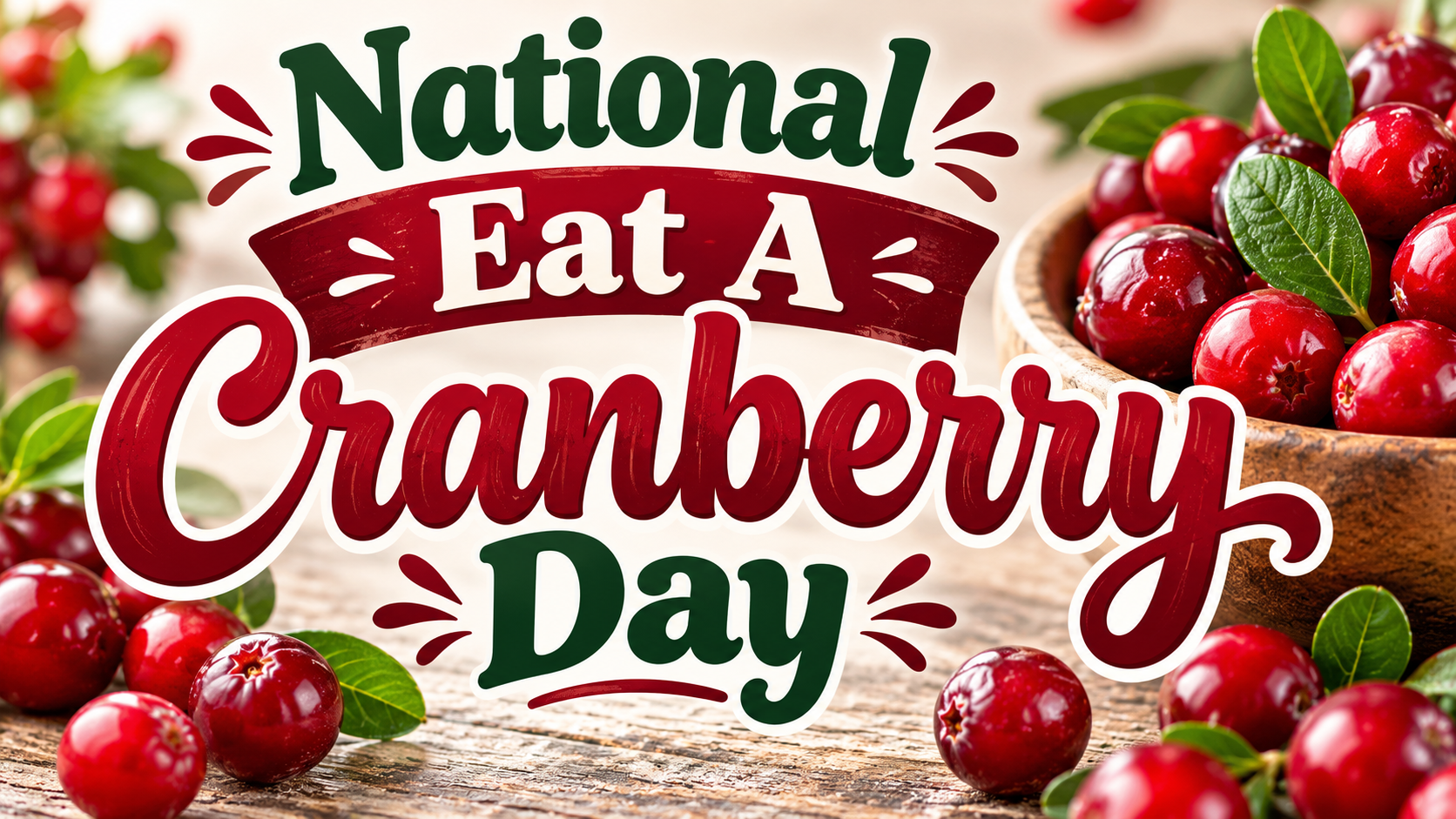
Every year on November 23, National Eat A Cranberry Day celebrates one of America’s most recognizable seasonal fruits. These small, bright red berries have become a beloved part of Thanksgiving traditions, holiday meals, and American food culture. Whether enjoyed fresh, dried, cooked into sauces, or added to baked goods, cranberries bring a distinctive tart flavor that makes them stand out.
Although cranberries are often associated with Thanksgiving dinner, there is much more to this remarkable fruit than its place beside the turkey. Cranberries have a fascinating history, offer valuable nutrients, and can be enjoyed in countless ways throughout the year.
National Eat A Cranberry Day is an opportunity to appreciate the cranberry’s journey from North American wetlands to dinner tables across the country.
When Is National Eat A Cranberry Day?
National Eat A Cranberry Day is observed annually on November 23.
This informal food holiday encourages people to enjoy cranberries and discover new ways to incorporate them into everyday meals.
Its timing is particularly appropriate because November falls during the traditional cranberry harvest and Thanksgiving season in the United States.
While the exact origins of National Eat A Cranberry Day are not well documented, the celebration highlights a fruit that has played an important role in American agriculture, cooking, and holiday traditions for generations.
The History of Cranberries in America
Cranberries are among the few commercially important fruits native to North America.
Long before European settlers arrived, Indigenous peoples harvested wild cranberries and used them for food, medicine, and other practical purposes.
Different Indigenous communities developed their own traditions involving cranberries. Some combined dried berries with meat and fat to create preserved foods that could be stored and transported.
Cranberries also served as natural coloring agents and were valued for their distinctive flavor.
When European colonists arrived in North America, they learned about cranberries and gradually incorporated them into their diets.
The fruit became especially popular in New England, where the cool climate and suitable wetlands provided favorable growing conditions.
Commercial cranberry cultivation began developing in Massachusetts during the early nineteenth century.
Over time, cranberry farming expanded into other regions, including Wisconsin, New Jersey, Oregon, and Washington.
Today, cranberries remain an important agricultural crop and a familiar part of American culinary traditions.
Why Are Cranberries Associated With Thanksgiving?
For many Americans, Thanksgiving dinner would not feel complete without cranberry sauce.
The combination of sweet and tart cranberry flavors complements traditional holiday dishes, particularly turkey, stuffing, and roasted vegetables.
However, the relationship between cranberries and Thanksgiving has developed over centuries.
Although wild cranberries were available in New England during the seventeenth century, there is no reliable evidence establishing that cranberry sauce was served at the famous 1621 harvest gathering commonly associated with the first Thanksgiving.
Sugar was expensive and not always readily available to early colonists, making the sweet cranberry sauces familiar today less practical.
As sugar became more accessible and cranberry cultivation expanded, cranberry sauces and preserves became increasingly common.
By the nineteenth and twentieth centuries, cranberry sauce had become firmly established as a Thanksgiving tradition.
Today, families enjoy everything from homemade cranberry-orange relish to the familiar canned cranberry sauce served in slices.
What Makes Cranberries So Special?
Cranberries are unique because of their naturally tart flavor, vibrant color, and impressive nutritional profile.
Unlike strawberries, blueberries, and raspberries, fresh cranberries are rarely eaten in large quantities without sweetening because of their sharp acidity.
Their distinctive flavor comes from naturally occurring organic acids.
Cranberries also contain plant compounds called polyphenols, including anthocyanins, which contribute to their red coloring.
These characteristics make cranberries especially useful in cooking.
Their acidity balances sweet ingredients, while their bright flavor complements rich, savory foods.
Cranberries can transform an ordinary recipe into something memorable with just a small amount.
The Health Benefits of Cranberries
Cranberries provide several nutrients and plant compounds that can contribute to a balanced diet.
1. A Source of Vitamin C
Fresh cranberries contain vitamin C, an essential nutrient that supports normal immune function, collagen production, and wound healing.
Vitamin C also acts as an antioxidant, helping protect cells from oxidative damage.
Although cranberries are not the highest source of vitamin C among fruits, they can contribute to overall daily intake.
2. Rich in Antioxidant Compounds
Cranberries contain several naturally occurring antioxidants, including anthocyanins and other polyphenols.
These compounds are being studied for their potential roles in supporting long-term health.
Eating a variety of colorful fruits and vegetables remains one of the best ways to obtain a broad range of beneficial plant compounds.
3. May Support Urinary Tract Health
Cranberries are widely known for their connection to urinary tract health.
Certain cranberry compounds, particularly proanthocyanidins, may make it more difficult for some bacteria to adhere to cells lining the urinary tract.
Research suggests cranberry products may help reduce recurrent urinary tract infections in certain groups of people.
However, cranberries do not treat an active urinary tract infection and should not replace appropriate medical care.
4. Provide Dietary Fiber
Whole cranberries contain dietary fiber, which supports healthy digestion and regular bowel movements.
Fiber can also contribute to feelings of fullness and help support healthy cholesterol and blood sugar management as part of an overall balanced diet.
Whole cranberries generally provide more fiber than strained cranberry juice.
5. Naturally Low in Calories
Fresh, unsweetened cranberries are relatively low in calories.
A cup of raw cranberries contains approximately 46 calories.
However, many cranberry products contain added sugar to balance their natural tartness.
Checking nutrition labels can help you choose products that fit your dietary preferences.
10 Delicious Ways to Celebrate National Eat A Cranberry Day
One of the best things about cranberries is their versatility.
Here are ten delicious ways to enjoy them on November 23.
1. Homemade cranberry sauce: Simmer fresh cranberries with water, orange zest, and your preferred sweetener for a classic holiday side dish.
2. Cranberry-orange muffins: Combine tart cranberries with sweet citrus flavors for a delicious breakfast treat.
3. Cranberry oatmeal: Add dried cranberries to warm oatmeal with cinnamon, walnuts, and a drizzle of honey.
4. Cranberry chicken: Create a sweet-and-tart glaze using cranberries, orange juice, and herbs.
5. Cranberry spinach salad: Toss dried cranberries with fresh spinach, pecans, feta cheese, and balsamic dressing.
6. Cranberry smoothies: Blend cranberries with bananas, strawberries, and yogurt for a refreshing drink.
7. Cranberry bread: Bake a moist loaf featuring cranberries, orange zest, and chopped nuts.
8. Cranberry trail mix: Combine dried cranberries with almonds, pumpkin seeds, and dark chocolate pieces.
9. Cranberry mocktail: Mix unsweetened cranberry juice with sparkling water, fresh lime, and rosemary.
10. Fresh cranberry tasting: Try a raw cranberry to experience the fruit’s naturally tart flavor. A single bite is enough to understand why cranberries are usually paired with sweeter ingredients.
How Are Cranberries Harvested?
One of the most fascinating aspects of cranberry farming is the harvesting process.
Many people believe cranberries grow underwater because photographs frequently show bright red berries floating across flooded fields.
However, cranberries actually grow on low-growing perennial vines in specially prepared beds.
Farmers generally use two harvesting methods.
Wet Harvesting
During wet harvesting, growers flood cranberry beds with water.
Mechanical equipment loosens the berries from their vines.
Because cranberries contain small internal air pockets, they float to the surface.
Farmers then gather the floating berries for collection.
This method is commonly used for cranberries destined for juice, sauces, and other processed products.
Dry Harvesting
Dry harvesting uses specialized equipment to collect berries without flooding the beds.
Dry-harvested cranberries are commonly sold fresh in grocery stores.
Both harvesting methods require careful management to protect the crop and maintain quality.
Fun Facts About Cranberries
Cranberries have several interesting characteristics that make them different from other fruits.
-
Cranberries can bounce. Healthy, firm cranberries often bounce when dropped because of their internal air chambers.
-
They are native to North America. The American cranberry has a long history of growing naturally in wetlands across parts of the continent.
-
Wisconsin is a leading producer. The state accounts for a substantial majority of commercial cranberry production in the United States.
-
Cranberries are perennial plants. Properly maintained cranberry vines can continue producing fruit for many years.
-
They contain natural pigments. Anthocyanins contribute to the deep red coloring of ripe cranberries.
-
Cranberries can be frozen. Fresh cranberries freeze well, making them convenient for cooking long after the fall harvest.
How to Choose and Store Fresh Cranberries
Fresh cranberries are usually available in American grocery stores during the fall and early winter.
When selecting cranberries, look for berries that are firm, plump, and brightly colored.
Avoid berries that appear soft, shriveled, or moldy.
Fresh cranberries can generally be stored in the refrigerator for several weeks when kept properly chilled.
For longer storage, place them in a freezer-safe container or bag.
Frozen cranberries can last for many months and can often be added directly to cooked recipes without thawing.
This makes it easy to enjoy cranberry dishes throughout the year rather than limiting them to Thanksgiving.
A Simple Homemade Cranberry Sauce Recipe
National Eat A Cranberry Day is the perfect occasion to prepare a homemade cranberry sauce.
Ingredients
-
12 ounces fresh or frozen cranberries
-
1 cup water or orange juice
-
½ to 1 cup sugar, adjusted to taste
-
1 teaspoon orange zest
-
¼ teaspoon ground cinnamon, optional
Instructions
-
Rinse the cranberries and remove any damaged berries.
-
Combine the water or orange juice and sugar in a medium saucepan.
-
Bring the mixture to a gentle boil.
-
Add the cranberries and reduce the heat to medium.
-
Simmer for approximately 10–15 minutes, stirring occasionally.
-
As the cranberries heat, they will begin to burst and release their natural juices.
-
Stir in the orange zest and optional cinnamon.
-
Remove from heat once the sauce reaches your preferred consistency.
-
Allow the sauce to cool before serving.
The sauce will naturally thicken as it cools.
Serve it alongside turkey, chicken, pork, or roasted vegetables, or use it as a topping for breakfast dishes and desserts.
Why National Eat A Cranberry Day Matters
Food holidays might seem simple, but they often provide opportunities to appreciate agricultural traditions, explore new flavors, and learn about foods that have shaped American culture.
National Eat A Cranberry Day recognizes a fruit with deep historical roots and a continuing role in American farming.
It also encourages people to look beyond familiar holiday recipes and discover new ways to enjoy nutritious foods.
For families, preparing cranberry dishes together can become a meaningful seasonal tradition.
Children can learn where cranberries come from, how they grow, and why they have become associated with Thanksgiving.
Adults can experiment with new recipes, revisit childhood favorites, or share traditional family dishes.
Sometimes, the smallest foods carry the richest stories.
How to Celebrate National Eat A Cranberry Day
Celebrating November 23 does not require an elaborate meal or special event.
You might prepare a favorite cranberry recipe, try a new dish, purchase fresh cranberries from a local grocery store, or learn more about cranberry farming.
You could also share a homemade cranberry dessert with friends, introduce someone to a cranberry recipe they have never tasted, or include cranberries in a healthy breakfast.
The goal is simply to appreciate a fruit that deserves recognition beyond the Thanksgiving table.
Final Thoughts: A Small Berry Worth Celebrating
National Eat A Cranberry Day reminds us that even the smallest foods can have remarkable histories, distinctive flavors, and meaningful cultural traditions.
From their importance to Indigenous communities to their place in modern Thanksgiving celebrations, cranberries have remained part of North American food culture for generations.
Their vibrant color, refreshing tartness, and culinary versatility make them an ingredient worth enjoying throughout the year.
On November 23, take a moment to celebrate this tiny red fruit. Whether you enjoy cranberry sauce, a warm cranberry muffin, a refreshing beverage, or a handful of dried cranberries, there are plenty of ways to participate.
Sometimes, the best traditions begin with something as simple as enjoying a favorite food.
What is your favorite way to enjoy cranberries: homemade cranberry sauce, cranberry desserts, cranberry juice, or something completely different?

Leave a Reply