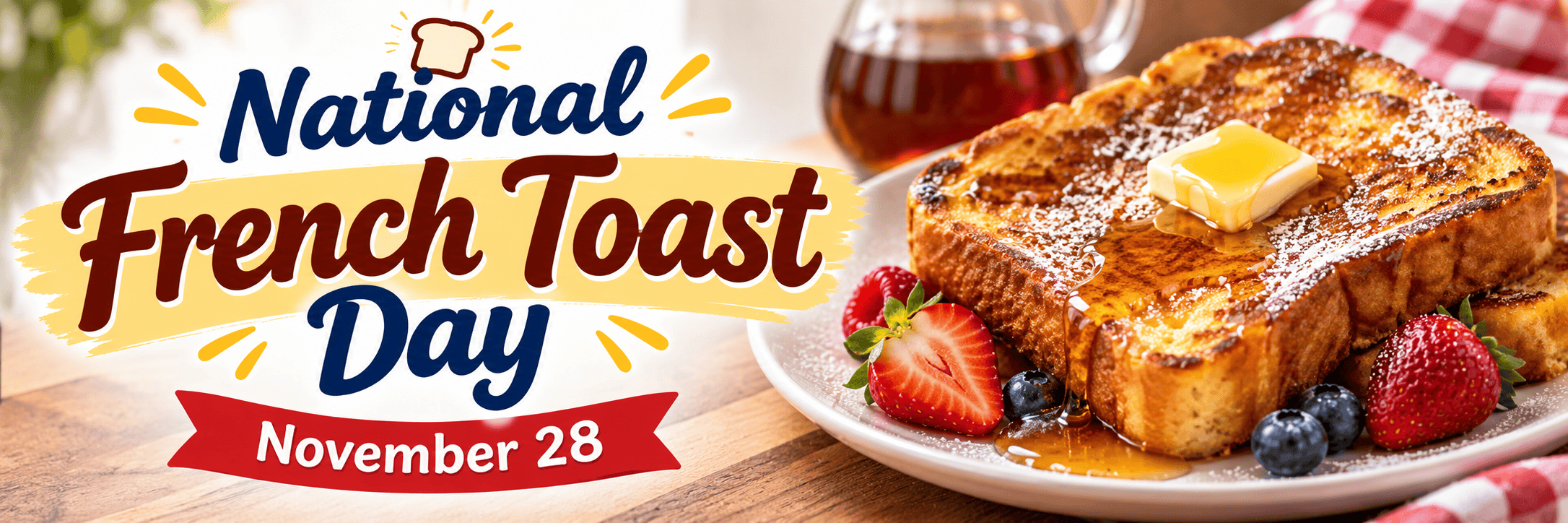
Every year on November 28, breakfast lovers across the United States celebrate National French Toast Day, a delicious occasion dedicated to one of the most comforting and versatile breakfast dishes ever created. Whether served with warm maple syrup, sprinkled with powdered sugar, topped with fresh berries, or prepared with a creative twist, French toast has earned its place as a beloved breakfast tradition.
National French Toast Day is the perfect opportunity to enjoy this golden, delicious dish while discovering its fascinating history, exploring different variations, and learning how to make the perfect French toast at home.
From its ancient origins to its popularity in modern American kitchens, French toast has a story that stretches across centuries and cultures.
When Is National French Toast Day?
National French Toast Day is celebrated annually on November 28.
In 2026, National French Toast Day falls on Saturday, November 28, making it a wonderful occasion for a relaxing weekend breakfast or family brunch.
Although National French Toast Day is an informal food holiday rather than an official federal observance, it has become a fun opportunity for home cooks, restaurants, and breakfast enthusiasts to celebrate this timeless favorite.
The day encourages people to enjoy French toast in traditional ways or experiment with new recipes, toppings, and flavors.
What Is French Toast?
French toast is a breakfast dish traditionally made by dipping slices of bread into a mixture of beaten eggs and milk before cooking them in a buttered skillet until golden brown.
Common ingredients include:
-
Bread, such as brioche, challah, Texas toast, or French bread
-
Eggs
-
Milk or cream
-
Vanilla extract
-
Ground cinnamon
-
Butter
-
Maple syrup or other toppings
The result is a warm, golden breakfast with a lightly crisp exterior and a soft, custard-like center.
French toast can be served sweet or savory, making it one of the most adaptable breakfast dishes.
While the classic American version is often topped with butter and maple syrup, other countries have developed their own delicious interpretations.
The History of French Toast
Despite its name, French toast did not necessarily originate in France.
The basic idea of soaking bread in a mixture of eggs and milk before cooking it dates back many centuries.
Ancient Roman Origins
One of the earliest known descriptions of a dish resembling French toast appears in the ancient Roman recipe collection commonly known as Apicius.
The recipe describes soaking bread in milk, frying it, and serving it with honey.
Although it was not identical to modern French toast, the preparation demonstrates that cooks were enjoying similar dishes long before the modern breakfast favorite became popular.
French Toast in Medieval Europe
During the Middle Ages, bread was an essential part of everyday life.
Rather than throwing away stale bread, families developed creative ways to make it enjoyable again.
Soaking older bread in milk and eggs before frying helped soften it and create a satisfying meal.
Versions of this preparation became popular throughout Europe, where different regions developed their own names and traditions.
Why Is It Called French Toast?
In France, a similar dish is known as pain perdu, meaning “lost bread.”
The name reflects the practice of rescuing stale bread that might otherwise have been wasted.
The exact origin of the English name “French toast” is uncertain. The term has been documented for centuries, and there is no reliable evidence supporting the popular story that it was invented by an American innkeeper named Joseph French.
Today, French toast remains popular in France, the United States, and many other countries.
How French Toast Became an American Breakfast Favorite
French toast became a familiar part of American breakfast culture through European culinary traditions and generations of home cooking.
Its popularity grew because it was affordable, filling, and easy to prepare using ingredients already found in many kitchens.
Eggs, milk, bread, and butter were common household staples, making French toast a practical breakfast choice.
Over time, American restaurants and diners began offering French toast alongside pancakes, waffles, eggs, and other breakfast classics.
Today, French toast is commonly found on breakfast menus across the country.
From neighborhood diners to upscale brunch restaurants, the dish continues to evolve with new ingredients and creative presentations.
How to Make Classic French Toast at Home
One of the best ways to celebrate National French Toast Day is by preparing a homemade batch.
This easy recipe produces French toast with a golden exterior and a soft, flavorful center.
Classic Homemade French Toast Recipe
Prep time: 10 minutes | Cook time: 15 minutes | Servings: 4
Ingredients
-
8 thick slices of bread
-
4 large eggs
-
3/4 cup whole milk
-
1 teaspoon vanilla extract
-
1 teaspoon ground cinnamon
-
1 tablespoon granulated sugar
-
1/4 teaspoon salt
-
2 tablespoons butter, plus more as needed
-
Maple syrup, for serving
-
Powdered sugar, optional
-
Fresh berries, optional
Instructions
1. In a shallow bowl, whisk together the eggs, milk, vanilla extract, cinnamon, sugar, and salt until well combined.
2. Heat a large nonstick skillet or griddle over medium heat.
3. Add a small amount of butter and allow it to melt.
4. Dip each slice of bread into the egg mixture, allowing both sides to absorb some of the liquid without becoming overly saturated.
5. Place the soaked bread into the heated skillet.
6. Cook for approximately 2–4 minutes per side, or until golden brown and cooked through.
7. Repeat with the remaining slices, adding butter as necessary.
8. Serve immediately with maple syrup, powdered sugar, fresh fruit, or your favorite toppings.
For the best results, use thick slices of slightly stale bread. They absorb the custard mixture while maintaining their structure.
The Best Bread for French Toast
Choosing the right bread can make a significant difference in flavor and texture.
1. Brioche
Brioche is one of the most popular choices for French toast because of its rich, buttery flavor and soft texture.
It creates a luxurious breakfast with a tender center.
2. Challah
Challah is an excellent choice because its soft, slightly sweet texture absorbs the egg mixture beautifully.
It produces fluffy French toast with a delicate flavor.
3. Texas Toast
Texas toast is thick and sturdy, making it ideal for traditional American-style French toast.
Its thickness helps prevent the bread from falling apart during cooking.
4. French Bread
French bread provides a slightly firmer texture and works especially well when sliced thickly.
Day-old French bread is particularly useful because it absorbs the custard without becoming too fragile.
5. Sourdough Bread
Sourdough offers a slightly tangy flavor that balances sweet toppings.
It is a great option for people who enjoy French toast with a little extra character.
10 Delicious French Toast Variations to Try
National French Toast Day is an excellent excuse to experiment with flavors beyond the traditional recipe.
1. Cinnamon Roll French Toast
Combine classic French toast with cinnamon, brown sugar, and a sweet cream cheese glaze for a breakfast inspired by cinnamon rolls.
2. Strawberry Cheesecake French Toast
Top thick French toast slices with sweetened cream cheese, fresh strawberries, and crushed graham crackers.
3. Banana Foster French Toast
Serve French toast with warm caramelized bananas, butter, brown sugar, and cinnamon for a rich breakfast treat.
4. Blueberry Lemon French Toast
Add fresh blueberries, lemon zest, and a light lemon glaze for a refreshing combination of sweet and citrus flavors.
5. Pumpkin Spice French Toast
Mix pumpkin puree and pumpkin pie spice into the custard for a seasonal breakfast perfect for November.
6. Chocolate French Toast
Add cocoa powder to the egg mixture or serve the finished toast with chocolate sauce and chocolate chips.
7. Stuffed French Toast
Fill thick bread slices with cream cheese, fruit preserves, or a sweet ricotta mixture before dipping and cooking.
8. French Toast Casserole
Arrange bread cubes in a baking dish, cover them with a sweet egg custard, and bake until golden.
This is especially convenient for feeding a crowd.
9. Peanut Butter and Banana French Toast
Spread peanut butter between slices of bread, add banana slices, and cook as stuffed French toast.
10. Savory French Toast
Skip the sugar and cinnamon and prepare the custard with herbs, salt, and pepper.
Serve with cheese, sautéed mushrooms, or eggs for a savory breakfast.
French Toast Around the World
Although Americans often associate French toast with weekend breakfasts, similar dishes are enjoyed around the world.
France: Pain Perdu
French pain perdu is traditionally prepared using stale bread soaked in an egg-and-milk mixture.
It may be served as breakfast or dessert.
United Kingdom: Eggy Bread
In Britain, eggy bread is often prepared as a savory dish.
It can be served with bacon, tomatoes, or other breakfast foods.
Spain: Torrijas
Torrijas are traditionally associated with Lent and Holy Week in Spain.
Bread is soaked in milk or another flavored liquid, coated in egg, fried, and often finished with cinnamon sugar or honey.
Hong Kong: Hong Kong-Style French Toast
Hong Kong-style French toast is a popular café dish that often features thick slices of bread with a sweet filling.
It is commonly deep-fried and served with butter and syrup or condensed milk.
Germany: Arme Ritter
Germany’s Arme Ritter, meaning “poor knights,” is another traditional preparation using bread soaked in an egg-and-milk mixture and fried.
These international variations show how one simple cooking idea developed into many beloved regional specialties.
Interesting Facts About French Toast
French toast has a surprisingly rich culinary history.
1. French toast is older than its modern name. Similar bread dishes appeared in ancient Roman cooking.
2. It was traditionally a way to use stale bread. Many European versions helped families avoid wasting food.
3. It does not have to be sweet. Savory French toast is enjoyed in different cultures.
4. Thick bread often works best. Sturdy slices can absorb more custard without breaking apart.
5. It can be baked instead of fried. French toast casseroles make preparing breakfast for large groups easier.
6. It is popular beyond breakfast. French toast can be served for brunch, dinner, or dessert.
7. Different countries use different names. Pain perdu, eggy bread, torrijas, and Arme Ritter are just a few examples.
8. Cinnamon is optional. While cinnamon is popular in American French toast, not every traditional recipe includes it.
9. Slightly stale bread can improve texture. Bread that has dried out a little may hold up better when dipped into custard.
10. French toast is highly customizable. Fruits, nuts, syrups, spices, and savory ingredients can all change the flavor.
How to Celebrate National French Toast Day
There are many enjoyable ways to participate in this delicious food holiday.
Make Breakfast for Your Family
Prepare a batch of homemade French toast and gather everyone around the breakfast table.
A simple meal can become a meaningful family tradition.
Host a French Toast Brunch
Invite friends or family over for a brunch featuring several French toast variations.
Offer different toppings so everyone can customize their plate.
Visit a Local Breakfast Restaurant
Support a neighborhood diner or café by ordering French toast.
Many breakfast restaurants offer specialty versions with fruit, whipped cream, or unique fillings.
Try a New Recipe
Experiment with a French toast recipe you have never made before.
Pumpkin spice, strawberry cheesecake, and stuffed French toast are fun options.
Create a French Toast Topping Bar
Set out bowls of toppings such as fresh berries, sliced bananas, chopped nuts, cinnamon, whipped cream, and maple syrup.
Allow everyone to build their own combination.
Share Your Creation
Take a picture of your homemade French toast and share it on social media using the hashtag #NationalFrenchToastDay.
You might inspire someone else to try a new breakfast recipe.
Tips for Making Perfect French Toast
Although French toast is relatively simple, a few techniques can help improve the results.
Use Medium Heat
Cooking over excessively high heat can burn the outside before the center has finished cooking.
Medium heat allows the bread to brown more evenly.
Do Not Oversoak the Bread
Thin bread can become soggy if left in the custard mixture too long.
Thicker slices can usually handle a longer soak.
Whisk the Custard Thoroughly
Make sure the eggs and milk are well combined.
This helps prevent uneven patches of cooked egg on the bread.
Use Butter Carefully
Butter adds wonderful flavor, but it can burn.
If necessary, combine a small amount of butter with neutral cooking oil or wipe out the pan between batches.
Serve Immediately
French toast tastes especially good when served warm, shortly after cooking.
If preparing several batches, keep finished slices on a baking sheet in a low oven until ready to serve.
Can French Toast Be Made Ahead of Time?
Yes. French toast can be prepared in advance, making it convenient for busy mornings and holiday gatherings.
Cooked French toast can be refrigerated in an airtight container for approximately 3–4 days.
It can also be frozen for longer storage, generally around 1–2 months for best quality.
To reheat, place slices in a toaster, oven, or air fryer until heated thoroughly.
French toast casseroles are another excellent make-ahead option.
Many recipes allow the bread to soak in the custard overnight in the refrigerator before baking the following morning.
This makes French toast especially convenient when preparing breakfast for guests.
Frequently Asked Questions About National French Toast Day
Is National French Toast Day Always November 28?
Yes. National French Toast Day is observed annually on November 28, regardless of which day of the week it falls on.
Who Created National French Toast Day?
The original creator of National French Toast Day is not clearly documented. It is widely recognized as an informal food observance.
Is French Toast Actually French?
The name suggests a French connection, but similar preparations existed long before modern France. The dish developed through several culinary traditions.
What Is the Difference Between French Toast and Pancakes?
French toast is made from slices of bread soaked in an egg mixture and cooked. Pancakes are made from batter poured directly onto a cooking surface.
Can French Toast Be Made Without Milk?
Yes. French toast can be made with dairy-free milk alternatives or, in some recipes, simply beaten eggs and flavorings.
What Are the Most Popular French Toast Toppings?
Maple syrup, butter, powdered sugar, strawberries, blueberries, bananas, whipped cream, and cinnamon are popular choices.
Why National French Toast Day Is Worth Celebrating
Food holidays are about more than enjoying a favorite dish. They also offer opportunities to appreciate traditions, explore culinary history, and create memories with people we care about.
French toast is a wonderful example of how a simple recipe can bring comfort and enjoyment to generations of families.
What began as a practical way to use leftover bread has evolved into a breakfast favorite enjoyed in countless forms around the world.
Whether prepared with basic ingredients or transformed into an elaborate brunch creation, French toast remains a reminder that delicious food does not always require complicated preparation.
Final Thoughts
National French Toast Day on November 28 celebrates one of the world’s most recognizable and comforting breakfast dishes.
With its golden exterior, soft center, and endless topping possibilities, French toast continues to bring joy to breakfast tables everywhere.
This November 28, consider starting your morning with a homemade batch, trying an exciting new variation, or sharing a delicious breakfast with family and friends.
Sometimes the simplest traditions create the sweetest memories.
How do you enjoy your French toast — classic with butter and maple syrup, topped with fresh fruit, or stuffed with something sweet?

Leave a Reply