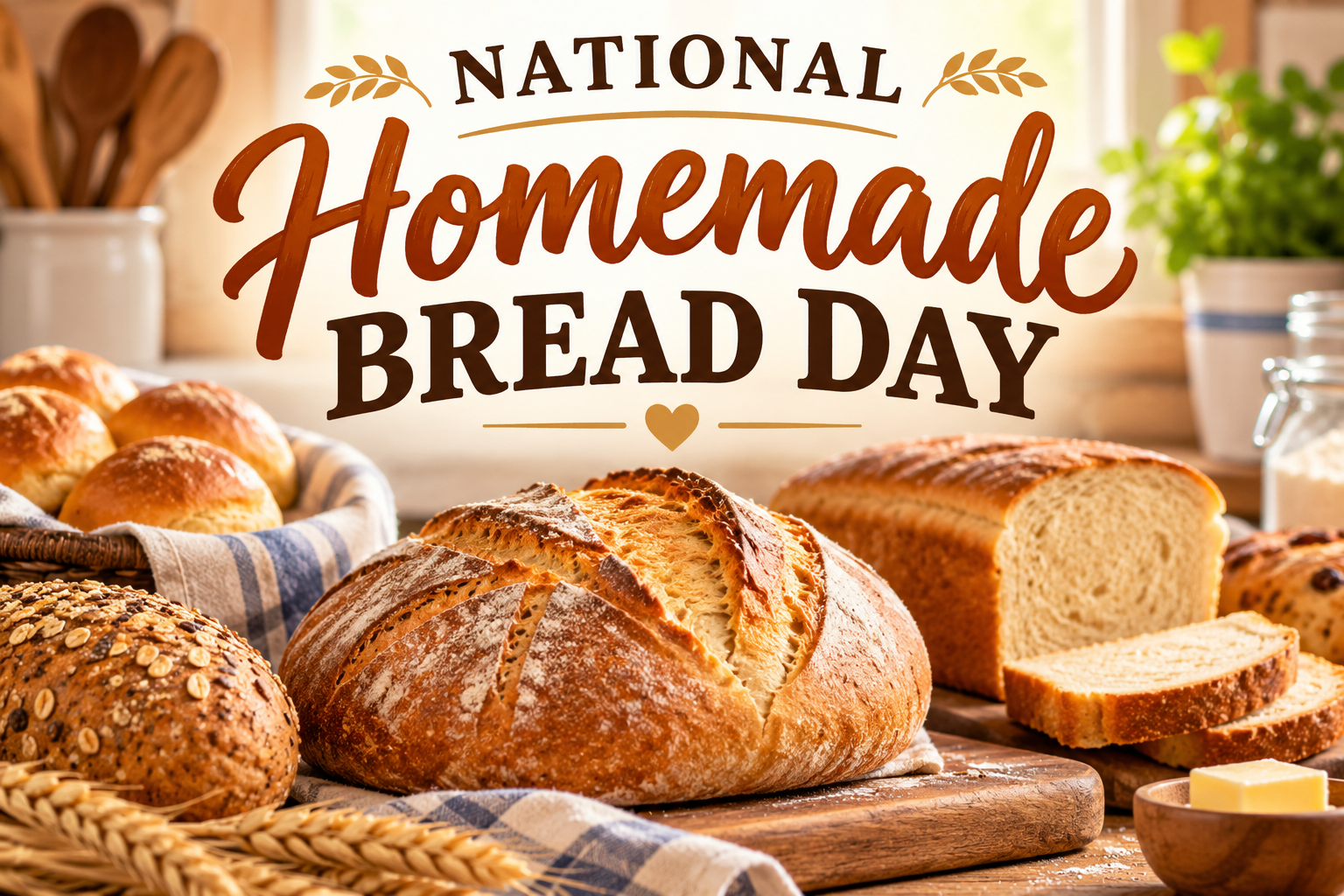
There is something truly special about the smell of freshly baked bread filling a home. The warm aroma drifting through the kitchen, the golden crust forming in the oven, and the anticipation of slicing into a soft, delicious loaf create a feeling of comfort that few other foods can match.
Every year on November 17, National Homemade Bread Day celebrates one of the oldest and most beloved culinary traditions in human history: baking bread from scratch.
Whether it is a classic loaf of white bread, hearty whole wheat bread, homemade sourdough, or sweet cinnamon bread, this special day encourages people to slow down, gather their ingredients, and experience the satisfaction of making something wonderful with their own hands.
Homemade bread is more than just food. It represents family, tradition, patience, creativity, and the comforting memories that often begin in the kitchen.
What Is National Homemade Bread Day?
National Homemade Bread Day is an annual food observance celebrated on November 17 in the United States.
The day recognizes the tradition of making bread at home and encourages people of all baking abilities to enjoy the process.
For generations, homemade bread has been a staple in households around the world. Before commercially produced bread became widely available, families regularly baked their own loaves using basic ingredients such as flour, water, yeast, and salt.
Today, baking bread at home remains a meaningful tradition, even with the convenience of grocery stores and bakeries.
National Homemade Bread Day provides an opportunity to rediscover that tradition while learning new recipes, sharing family favorites, and enjoying the unmistakable taste of fresh bread.
Although the precise origins of the observance are not well documented, its purpose is simple: celebrate homemade bread and the people who make it.
When Is National Homemade Bread Day Celebrated?
November 17, every year
In 2026, National Homemade Bread Day falls on Tuesday, November 17.
The celebration takes place during the fall season, when cooler temperatures make baking especially enjoyable.
November is also a wonderful time to prepare homemade bread for Thanksgiving gatherings, holiday dinners, and comforting family meals.
A freshly baked loaf can transform an ordinary dinner into something memorable.
The History of Homemade Bread
Bread has been part of human civilization for thousands of years.
Archaeological evidence suggests that people were making bread-like flatbreads more than 14,000 years ago, long before the widespread development of agriculture.
Early bread was generally made by grinding wild grains, combining them with water, and cooking the mixture on heated stones or over fire.
As farming developed, bread became an increasingly important food in many societies.
Bread in Ancient Egypt
Ancient Egyptians played an important role in the development of leavened bread.
They used grain, water, and fermentation techniques to produce loaves that were lighter than traditional flatbreads.
Bread was an essential part of everyday life in ancient Egypt and was closely connected to agriculture, trade, and religious practices.
Bread in Ancient Greece and Rome
Bread-making techniques continued to develop throughout ancient Greece and Rome.
Bakers experimented with different grains, shapes, and preparation methods.
In ancient Rome, commercial bakeries became important businesses, providing bread to growing urban populations.
Bread During the Middle Ages
Throughout medieval Europe, bread was a major dietary staple.
The type of bread people ate often depended on their location, available grains, and economic circumstances.
Wealthier households generally had greater access to finely milled wheat flour, while other families relied on rye, barley, oats, or mixed grains.
Bread was frequently baked in communal ovens, bringing neighbors together through a shared daily necessity.
Homemade Bread in American History
In early American households, baking bread was an important domestic skill.
Families often prepared bread using ingredients grown or purchased locally.
As American communities expanded, different cultural traditions influenced bread-making practices.
Cornbread, biscuits, sourdough, rye bread, and wheat loaves became familiar foods in different regions.
During the nineteenth and twentieth centuries, commercial bakeries and industrial bread production made store-bought bread increasingly convenient.
However, homemade bread never completely disappeared.
Today, many people are rediscovering the pleasures of baking their own bread, experimenting with traditional recipes and modern techniques.
Why Homemade Bread Is So Special
Homemade bread offers something that goes beyond convenience.
It creates an experience.
When you make bread from scratch, you participate in a process that has connected families and communities for thousands of years.
1. The Incredible Aroma
Few kitchen experiences compare to the smell of bread baking in the oven.
As the dough heats, chemical reactions create the familiar toasted, slightly sweet aroma associated with freshly baked bread.
That smell can make an entire home feel welcoming.
2. Freshness and Flavor
Homemade bread can be enjoyed shortly after baking, once it has cooled enough to slice properly.
Fresh bread often has a wonderful contrast between its crisp exterior and tender interior.
Making bread yourself also allows you to experiment with ingredients and flavors.
3. Control Over Ingredients
One advantage of homemade bread is knowing exactly what goes into it.
You can select your preferred flour, adjust the salt, experiment with seeds, or avoid certain ingredients according to your dietary needs.
However, homemade bread is not automatically healthier than commercially prepared bread. Its nutritional value depends on the ingredients and portion sizes.
4. A Meaningful Family Activity
Bread-making can bring generations together.
Children can help measure ingredients, mix dough, and shape rolls.
Parents and grandparents can share recipes and techniques that have been passed down through their families.
These experiences create memories that last long after the bread has been eaten.
5. A Sense of Accomplishment
There is genuine satisfaction in transforming a few simple ingredients into a beautiful loaf of bread.
From mixing and kneading to watching the dough rise, every step contributes to the finished result.
Even beginners can enjoy the reward of creating something from scratch.
How to Celebrate National Homemade Bread Day
You do not need to be an experienced baker to participate.
The celebration is about enjoying homemade bread, learning something new, and sharing the experience with others.
Here are ten ways to celebrate:
-
Bake your first loaf of bread. Choose a beginner-friendly recipe and enjoy learning the basics.
-
Try a family recipe. Recreate a bread that reminds you of childhood, holidays, or someone special.
-
Make bread with your children. Let younger family members help with measuring, mixing, and shaping.
-
Experiment with different flours. Try whole wheat, rye, or another flour suitable for your recipe.
-
Bake something sweet. Cinnamon swirl bread, banana bread, and pumpkin bread make delicious treats.
-
Share homemade bread with a neighbor. A freshly baked loaf is a thoughtful and personal gift.
-
Host a homemade bread dinner. Serve warm bread alongside soup, pasta, or a favorite family meal.
-
Learn about sourdough. Explore the process of maintaining a starter and naturally fermenting dough.
-
Try a bread-making technique from another culture. Explore naan, focaccia, pita, or other traditional breads.
-
Start a new family tradition. Make November 17 an annual bread-baking day.
Easy Homemade Bread Recipe for Beginners
One of the best ways to celebrate National Homemade Bread Day is by baking a classic loaf of bread.
This simple recipe uses everyday ingredients and does not require specialized equipment.
Classic Homemade White Bread
Prep & rising
About 2 hours
Bake time
30–35 minutes
Yield
1 loaf
Ingredients
Instructions
Step 1: Activate the yeast.
In a large mixing bowl, combine the warm water, sugar, and active dry yeast.
Let the mixture rest for approximately 5–10 minutes, until it becomes foamy.
If the yeast does not foam, check that it is fresh and that the water temperature is appropriate.
Step 2: Mix the dough.
Add the softened butter or oil, salt, and about 2½ cups of flour.
Mix until a soft dough begins to form.
Gradually add the remaining flour as needed.
The dough should be soft and slightly tacky without being excessively sticky.
Step 3: Knead the dough.
Transfer the dough to a lightly floured surface.
Knead for approximately 8–10 minutes, until smooth and elastic.
Kneading develops the gluten structure that helps bread hold its shape.
Step 4: Let the dough rise.
Place the dough in a lightly greased bowl.
Cover it with a clean towel or reusable cover.
Allow it to rise in a warm location for approximately 60–90 minutes, or until doubled in size.
Step 5: Shape the loaf.
Gently deflate the risen dough.
Shape it into a loaf and place it in a greased 9-by-5-inch loaf pan.
Cover and allow it to rise again for approximately 30–45 minutes, until noticeably puffy.
Step 6: Bake the bread.
Preheat the oven to 375°F.
Bake for approximately 30–35 minutes, until the top is golden brown and the bread is baked through.
An internal temperature of approximately 190–200°F is a useful indicator of doneness for this style of bread.
Step 7: Cool and enjoy.
Remove the bread from the pan and place it on a wire rack.
Allow it to cool before slicing for the best texture.
Serve with butter, jam, honey, or your favorite spread.
10 Popular Types of Homemade Bread to Try
One of the wonderful things about bread-making is the incredible variety of recipes available.
| Bread | What makes it special |
|---|---|
| White sandwich bread | Soft, fluffy, and ideal for sandwiches |
| Whole wheat bread | Hearty flavor and whole-grain ingredients |
| Sourdough bread | Naturally fermented with distinctive tanginess |
| French bread | Crisp crust and chewy interior |
| Focaccia | Olive-oil-rich Italian flatbread |
| Cinnamon swirl bread | Sweet bread with a cinnamon filling |
| Banana bread | Moist, sweet quick bread made with bananas |
| Irish soda bread | Quick bread traditionally leavened with baking soda |
| Cornbread | Classic cornmeal-based bread |
| Dinner rolls | Soft individual breads perfect for gatherings |
Each type offers a different baking experience.
Some require long fermentation times, while others can be prepared quickly without yeast.
National Homemade Bread Day is an excellent opportunity to explore these differences.
The Benefits of Baking Bread at Home
Homemade bread-making can provide practical and personal benefits.
A Creative Outlet
Baking allows people to experiment with shapes, flavors, textures, and ingredients.
You can add herbs, garlic, cheese, seeds, dried fruit, or spices to create something unique.
An Opportunity to Slow Down
Bread-making encourages patience.
Dough needs time to rise, and rushing the process can affect the final result.
For some people, the repetitive motions of mixing and kneading can also feel relaxing and help them focus on the present moment.
Potential Cost Savings
Basic homemade bread can cost less per loaf than some specialty bakery breads, depending on local ingredient prices.
However, the overall cost also includes energy use, equipment, and time.
Building Useful Kitchen Skills
Learning to bake bread helps develop an understanding of measurements, fermentation, temperature, and food preparation.
These skills can be applied to many other recipes.
Preserving Family Traditions
Perhaps one of the most meaningful benefits is the opportunity to preserve family recipes.
A handwritten bread recipe passed from one generation to another can become a treasured family keepsake.
Common Homemade Bread Mistakes and How to Avoid Them
Even experienced bakers occasionally encounter problems.
Understanding a few common mistakes can make the process easier.
Using water that is too hot: Excessively hot water can damage or kill yeast. Use a thermometer when possible.
Adding too much flour: Excess flour can produce dense, dry bread. Add flour gradually and pay attention to the dough’s texture.
Not kneading enough: Many yeast breads need sufficient gluten development to achieve a good structure.
Rushing the rising process: Dough rises according to temperature, yeast activity, and recipe conditions. Watch its size rather than relying only on the clock.
Baking at the wrong temperature: An oven that runs too hot or too cool can affect crust color and the interior texture.
Slicing bread immediately: Cutting bread while it is extremely hot can produce a gummy interior. Allowing it to cool helps the crumb set.
Remember that baking bread is a skill developed through practice.
Your first loaf does not have to be perfect to be worth celebrating.
How to Store Homemade Bread
Homemade bread often lacks the preservatives used in some commercially packaged products, so proper storage matters.
For most ordinary loaves, allow the bread to cool completely before storing it.
Keep bread in a clean, food-safe bag or container at room temperature and use it within a few days, depending on the recipe and conditions.
For longer storage, slice the loaf and freeze it in a freezer-safe bag.
Frozen slices can be toasted as needed.
Refrigeration generally speeds up staling in many types of bread, although recipes containing highly perishable fillings may require refrigeration.
Discard bread if mold develops rather than attempting to remove only the visibly affected portion.
Interesting Facts About Homemade Bread
Bread has an extraordinary history, and there are many fascinating details worth knowing.
-
Bread predates agriculture. Archaeologists have discovered evidence of bread-like food prepared by hunter-gatherers thousands of years before widespread farming.
-
Yeast produces carbon dioxide. During fermentation, yeast releases gas that helps bread dough expand.
-
Sourdough uses a living culture. A sourdough starter contains yeasts and bacteria that contribute to fermentation and flavor.
-
Bread comes in countless varieties. Different cultures have developed unique breads based on their available grains, cooking methods, and traditions.
-
The crust develops through heat-driven reactions. Browning reactions contribute to the flavor, aroma, and color of baked bread.
-
Quick breads work differently from yeast breads. Many quick breads use baking powder or baking soda instead of yeast for leavening.
-
Bread has cultural significance. Across many societies, sharing bread symbolizes hospitality, generosity, and community.
Homemade Bread and the Importance of Family Memories
For many people, homemade bread is connected to more than taste.
It brings back memories of childhood kitchens, holiday gatherings, grandparents, and family dinners.
Perhaps you remember watching someone knead dough at the kitchen counter.
Maybe you recall waiting impatiently for a loaf to come out of the oven.
Or perhaps the smell of warm bread reminds you of a loved one whose cooking made home feel special.
Food has a remarkable ability to connect us with meaningful moments from our lives.
Recipes can preserve stories.
A familiar smell can bring back a memory.
A shared meal can remind us of people and traditions that helped shape who we are.
National Homemade Bread Day is an opportunity to appreciate those connections.
For someone grieving a loved one, preparing a familiar family recipe may also become a gentle way to honor their memory. It can be comforting for some, while others may find it emotional. Both experiences are understandable.
Sometimes, the simplest traditions carry the deepest meaning.
Why Homemade Bread Still Matters Today
Modern life moves quickly.
Between work, family responsibilities, technology, and everyday demands, finding time to prepare food from scratch can feel difficult.
Homemade bread reminds us that not everything needs to happen instantly.
Some things are worth waiting for.
The process of mixing ingredients, kneading dough, allowing it to rise, and baking it teaches patience and appreciation.
It also reminds us that meaningful experiences do not always require expensive ingredients or elaborate plans.
Sometimes, a few cups of flour, a little yeast, and an afternoon in the kitchen are enough to create something wonderful.
Homemade bread can bring people together around the dinner table, inspire conversations, and encourage families to spend quality time with one another.
That is part of what makes this annual celebration meaningful.
Frequently Asked Questions About National Homemade Bread Day
Is National Homemade Bread Day a federal holiday?
No. National Homemade Bread Day is an informal food observance rather than an official federal holiday.
Businesses, schools, and government offices generally operate on their normal schedules.
What day is National Homemade Bread Day?
National Homemade Bread Day is celebrated every year on November 17.
What is the easiest bread for beginners to make?
Simple white sandwich bread and no-knead bread are excellent starting points.
Quick breads, such as banana bread and soda bread, are also beginner-friendly because they generally do not require yeast fermentation.
Can you make homemade bread without a bread machine?
Absolutely.
Most traditional homemade bread recipes require only a mixing bowl, basic utensils, an oven, and an appropriate baking pan or tray.
Can homemade bread be frozen?
Yes.
Bread freezes well when properly wrapped and stored in freezer-safe packaging.
Slicing it before freezing makes it convenient to remove individual portions.
What can you serve with homemade bread?
Fresh bread pairs beautifully with soups, stews, pasta, salads, roasted meats, butter, jam, honey, and many other dishes.
It can also be used for sandwiches, French toast, garlic bread, and homemade croutons.
Final Thoughts: Celebrate the Simple Joy of Homemade Bread
National Homemade Bread Day is a celebration of something simple yet deeply meaningful.
Bread has nourished families, supported communities, and brought people together for thousands of years.
Although the ingredients and techniques have evolved, the joy of sharing freshly baked bread remains timeless.
On November 17, take the opportunity to slow down and enjoy the experience of making bread at home.
Try a new recipe, recreate a family favorite, teach someone how to knead dough, or surprise a neighbor with a freshly baked loaf.
You do not need a perfect recipe, expensive equipment, or years of baking experience.
All you need is a willingness to try.
Because sometimes, the best memories begin with something as simple as a warm loaf of homemade bread.
Happy National Homemade Bread Day!
What is your favorite kind of homemade bread, and is there a special bread recipe that reminds you of family or childhood memories?

Leave a Reply