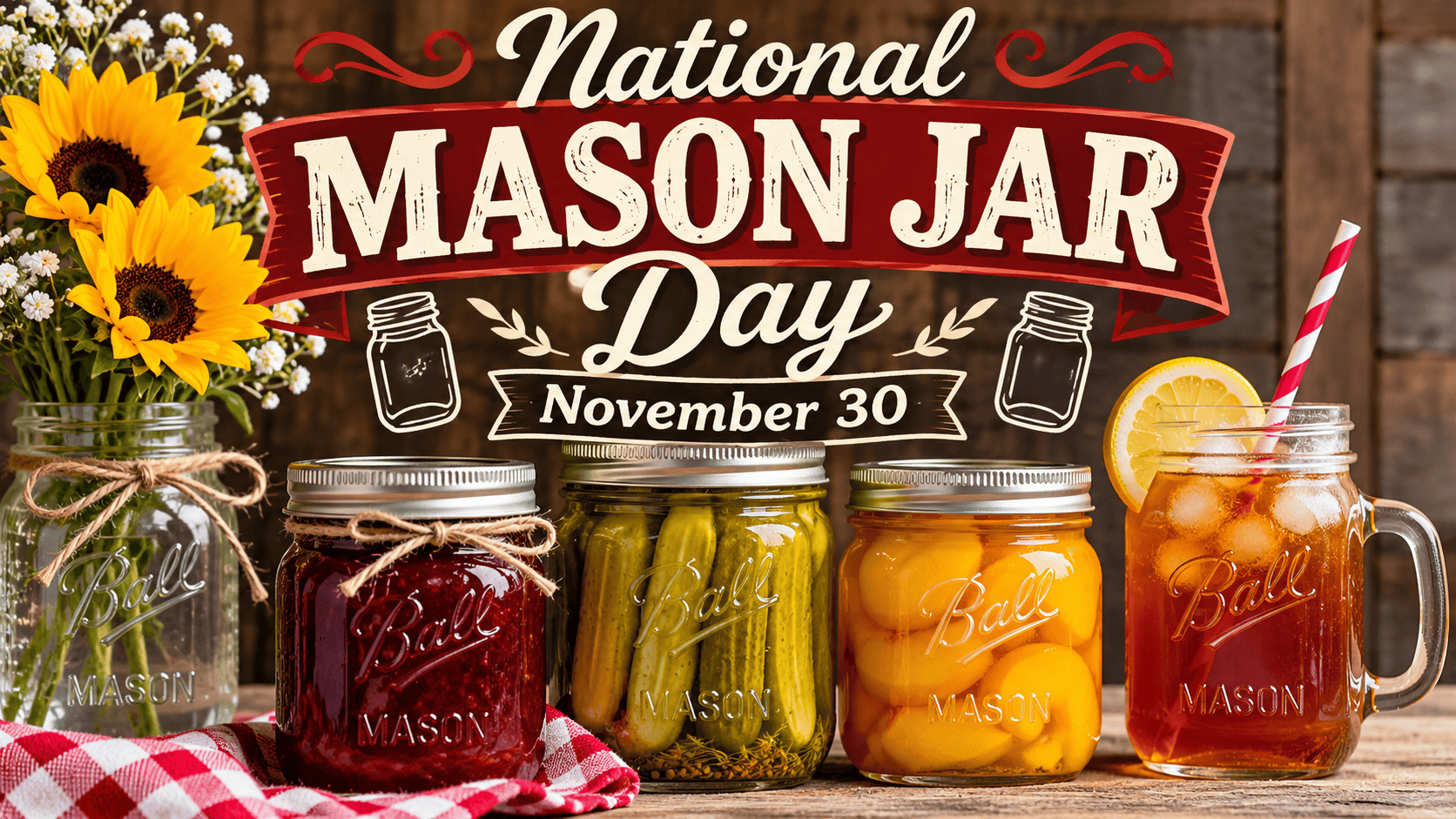
Every year on November 30, National Mason Jar Day celebrates one of the most recognizable and versatile household inventions in American history. From preserving homemade jams and pickles to serving refreshing drinks and creating beautiful decorations, Mason jars have become much more than simple glass containers.
For generations, these dependable jars have helped families preserve food, reduce waste, organize their homes, and express their creativity. Their familiar glass bodies and metal lids represent a connection between traditional homemaking and modern sustainable living.
National Mason Jar Day is an opportunity to appreciate the history, practicality, and timeless charm of an invention that continues to serve households across America.
Whether you enjoy home canning, DIY crafts, rustic decorating, or simply drinking sweet tea from a Mason jar, November 30 offers plenty of reasons to celebrate.
When Is National Mason Jar Day?
National Mason Jar Day is celebrated annually on November 30.
The date commemorates the patent granted to John Landis Mason on November 30, 1858, for his improvement to screw-top glass preserving jars.
In 2026, National Mason Jar Day falls on Monday, November 30.
Although it is not a federal holiday, the observance recognizes the lasting influence of Mason jars on American food preservation, household traditions, and everyday life.
The History of National Mason Jar Day
The story of National Mason Jar Day begins in the nineteenth century, when preserving food safely and efficiently was an essential part of daily life.
Before modern refrigeration became widely available, families depended on methods such as drying, salting, smoking, pickling, and preserving food in containers.
Keeping fruits, vegetables, and other foods available throughout the winter was especially important for farming households.
John Landis Mason and His Revolutionary Invention
John Landis Mason was an American tinsmith and inventor born in New Jersey in 1832.
On November 30, 1858, Mason received U.S. Patent No. 22,186 for an improved screw-neck glass jar.
His design helped establish a more convenient way to close glass preserving jars using a threaded neck and matching screw closure.
The invention represented an important development in food preservation because it made jars easier to seal and reuse.
Over time, Mason-style jars became increasingly popular among American households.
The Rise of Home Canning
During the late nineteenth and early twentieth centuries, home canning became an important household practice.
Families preserved seasonal harvests to provide food during colder months when fresh produce was less readily available.
Mason jars became closely associated with homemade preserves, including:
-
Strawberry jam and fruit jelly
-
Pickled cucumbers and vegetables
-
Peaches, pears, and other fruits
-
Tomato sauces and relishes
-
Applesauce and fruit preserves
As canning equipment and food preservation methods improved, Mason jars became a familiar sight in kitchens, pantries, and farmhouses.
Mason Jars During World War II
During World War II, Americans were encouraged to grow Victory Gardens and preserve homegrown produce.
Food rationing, wartime demands, and efforts to conserve resources made home food preservation especially valuable.
Glass canning jars helped families store vegetables and fruits harvested from backyard gardens.
This period strengthened the Mason jar’s association with self-reliance, resourcefulness, and community cooperation.
Mason Jars in Modern America
Today, Mason jars remain popular for food preservation, but their uses extend far beyond traditional canning.
They appear in coffee shops, restaurants, weddings, craft projects, and home organization systems.
Their combination of durability, affordability, and timeless appearance has helped them remain relevant for more than 160 years.
Why Are Mason Jars So Popular?
Mason jars have maintained their popularity because they combine practicality with a simple, recognizable design.
Unlike many single-purpose household containers, Mason jars can serve numerous functions.
1. They Are Reusable
Glass Mason jars can be washed and reused repeatedly when they remain in good condition.
This makes them useful for households looking to reduce disposable packaging.
2. They Are Versatile
A single Mason jar can store dry ingredients, hold flowers, organize small objects, or serve beverages.
Their usefulness extends into nearly every room of the home.
3. They Have a Timeless Appearance
The familiar glass shape works beautifully with farmhouse, rustic, vintage, and modern decorating styles.
4. They Help Organize the Home
Transparent glass makes it easy to identify stored items without opening every container.
5. They Connect Generations
For many families, Mason jars bring back memories of grandparents preserving peaches, making homemade jam, or storing vegetables from the garden.
These associations give an ordinary household object sentimental meaning.
10 Creative Ways to Celebrate National Mason Jar Day
National Mason Jar Day provides an excellent excuse to explore the many uses of these familiar glass containers.
1. Make Homemade Jam
Celebrate by preparing a small batch of homemade strawberry, blueberry, or raspberry jam.
Use a tested preservation recipe if you plan to store it at room temperature. Otherwise, make refrigerator jam and keep it chilled.
2. Create Mason Jar Gifts
Fill clean Mason jars with thoughtful homemade gifts such as cookie mixes, hot chocolate ingredients, or candy.
Add ribbon, a handwritten label, and a personalized message.
These make especially meaningful gifts during the holiday season.
3. Organize Your Pantry
Transfer dry pantry ingredients into clean, dry Mason jars.
Common choices include rice, oats, pasta, dried beans, and baking ingredients.
Label each jar with its contents and, when helpful, the purchase or expiration date.
4. Make Mason Jar Flower Arrangements
Turn an ordinary jar into a charming flower vase.
Add fresh flowers, greenery, or seasonal decorations to create an inexpensive centerpiece.
5. Prepare Overnight Oats
Combine rolled oats, milk, yogurt, and your favorite fruit in a Mason jar.
Refrigerate overnight for a convenient breakfast the following morning.
6. Create Holiday Decorations
Decorate jars with pinecones, ribbons, artificial snow, or battery-operated fairy lights.
They make attractive winter decorations for tables, shelves, and entryways.
7. Make Homemade Salad Dressings
Combine olive oil, vinegar, herbs, and seasonings in a jar with a secure lid.
Shake thoroughly to create a quick homemade dressing.
Refrigerate perishable dressings promptly.
8. Start a Gratitude Jar
Write something you are grateful for on a small piece of paper and place it inside a jar.
Continue adding notes throughout the year.
At the end of the year, read them as a reminder of meaningful moments and experiences.
9. Create a Mason Jar Herb Garden
Use jars to display fresh herb cuttings in water or grow suitable plants with proper drainage arrangements.
For soil-grown herbs, remember that standard Mason jars do not have drainage holes, so excess water can damage roots.
10. Share Your Favorite Mason Jar Memory
Ask family members about their experiences with home canning or preserving food.
Older generations may have wonderful stories about summer harvests, family recipes, and traditional kitchen practices.
Sharing these memories can help preserve family history.
Interesting Facts About Mason Jars
Mason jars have a surprisingly rich history, and several facts make them especially interesting.
1. Mason jars date back to 1858. John Landis Mason patented his improved preserving jar on November 30 of that year.
2. Mason jars were named after their inventor. The term comes directly from John Landis Mason’s surname.
3. Mason jars are not all made by the same company. Different manufacturers have produced Mason-style jars throughout their history.
4. Ball became one of the best-known names in home canning. Ball-branded jars have played an important role in American preserving traditions.
5. Some antique Mason jars are collectible. Their value depends on factors such as rarity, age, condition, color, and manufacturer.
6. Mason jars come in multiple sizes. Common sizes include half-pint, pint, and quart, although other sizes are available.
7. Modern home-canning lids often use two pieces. A flat sealing lid and a separate screw band work together during processing.
8. Mason jars are popular wedding decorations. Their rustic appearance makes them attractive for centerpieces, flower arrangements, and decorative displays.
9. Glass does not absorb food odors the way some materials can. Properly cleaned jars are useful for storing many different foods.
10. Not every Mason jar is safe for every use. Decorative jars, damaged jars, and jars exposed to sudden temperature changes may not be suitable for canning or heating.
Mason Jars and American Food Preservation Traditions
Food preservation has long been part of American household history.
Before supermarkets and modern refrigeration, preserving seasonal produce helped families maintain food supplies throughout the year.
Summer and autumn harvests were particularly important.
Families gathered fresh fruits and vegetables, prepared them for preservation, and stored the finished products for later use.
In many homes, canning was a family activity.
Parents and grandparents taught younger generations how to prepare produce, clean equipment, and follow preservation procedures.
These experiences created traditions that extended beyond food itself.
A jar of homemade peach preserves could represent a summer harvest, a grandmother’s recipe, or a family gathering around the kitchen table.
Today, home canning continues to connect people with these traditions.
However, modern food safety guidance remains essential. Shelf-stable home canning requires tested recipes, suitable jars and lids, and the correct processing method. Low-acid foods generally require pressure canning rather than boiling-water canning.
Mason Jars and Sustainable Living
One reason Mason jars have experienced renewed popularity is growing interest in reducing household waste.
Reusable glass containers offer practical alternatives to certain disposable products.
They can be used for storing leftovers, organizing dry ingredients, packing lunches, and preparing homemade beverages.
Their transparent design also makes it easier to see what food is available, potentially reducing forgotten ingredients.
However, sustainability depends on how products are used.
Reusing jars already owned, maintaining them carefully, and avoiding unnecessary purchases can provide greater benefits than simply replacing every household container with new glass jars.
National Mason Jar Day encourages people to appreciate the value of useful objects that can serve multiple purposes over time.
Mason Jar Crafts for the Holiday Season
Because National Mason Jar Day falls on November 30, it arrives at an ideal time for winter and Christmas crafting.
Several seasonal projects are especially popular.
Mason Jar Snow Globes
Create a decorative winter scene using miniature trees, artificial snow, and holiday figurines.
For a simple project, make a dry snow globe without water.
Mason Jar Christmas Centerpieces
Fill jars with evergreen sprigs, ornaments, pinecones, or battery-operated lights.
Arrange several jars together to create an attractive holiday table display.
Mason Jar Hot Chocolate Gifts
Layer cocoa mix, chocolate chips, and mini marshmallows inside a clean, dry jar.
Attach preparation instructions and decorate the lid with festive ribbon.
Mason Jar Memory Lights
Place battery-operated fairy lights inside a jar and decorate the outside with meaningful words, names, or symbols.
These can serve as personal keepsakes or thoughtful gifts.
Avoid using open flames in decorated jars containing combustible materials.
How to Properly Care for Mason Jars
Taking care of Mason jars helps extend their usefulness.
Wash jars thoroughly after each use and inspect them for cracks, chips, or other damage.
For everyday food storage, use clean lids that fit securely.
For home canning, follow current tested instructions regarding jar preparation, lid selection, and processing.
Standard new flat canning lids are generally intended for one-time use when creating a shelf-stable seal, although screw bands and undamaged jars can often be reused.
Avoid exposing glass jars to sudden extreme temperature changes, which may cause breakage.
Also remember that not every glass jar is designed for freezing, microwaving, or oven use. Follow the manufacturer’s instructions for the specific product.
Frequently Asked Questions About National Mason Jar Day
What day is National Mason Jar Day?
National Mason Jar Day is observed every year on November 30.
Why is National Mason Jar Day celebrated?
The day recognizes the historical importance and continued usefulness of Mason jars, particularly their role in American food preservation.
Who invented the Mason jar?
John Landis Mason, an American tinsmith and inventor, patented his improved screw-top preserving jar in 1858.
Are Mason jars still used for canning?
Yes. Mason jars designed for home canning remain widely used for preserving fruits, vegetables, jams, jellies, and other foods.
Safe preservation depends on using tested recipes and appropriate processing methods.
Can Mason jars be used for drinks?
Yes. Clean, food-safe Mason jars can be used to serve cold beverages such as lemonade, iced tea, smoothies, and mocktails.
Are antique Mason jars valuable?
Some antique jars are valuable to collectors, particularly rare colors, unusual designs, and jars associated with specific manufacturers or production periods.
However, many older jars are common and have modest resale values.
Can Mason jars go in the oven?
Standard Mason jars are generally not designed for conventional oven baking. Oven temperatures and uneven heating can cause glass breakage.
Is National Mason Jar Day an official federal holiday?
No. It is an informal national observance rather than a federal holiday.
Why National Mason Jar Day Matters
At first glance, a Mason jar may seem like an ordinary kitchen container.
However, its history reflects several important American traditions: innovation, resourcefulness, family cooperation, food preservation, and making the most of available resources.
For generations, Mason jars have helped families preserve harvests, share homemade gifts, and maintain household traditions.
They have moved from farmhouse kitchens to modern restaurants, craft studios, and contemporary homes without losing their practical appeal.
Their enduring popularity demonstrates that useful inventions do not always need complicated designs.
Sometimes, a simple idea can remain valuable for more than a century.
Final Thoughts: Celebrating National Mason Jar Day on November 30
National Mason Jar Day is more than a celebration of glass containers. It is an opportunity to recognize American ingenuity, appreciate traditional homemaking skills, and discover creative ways to reuse everyday objects.
Since John Landis Mason patented his improved preserving jar in 1858, Mason jars have become lasting symbols of practicality, preservation, and family tradition.
Whether you celebrate by making homemade jam, organizing your pantry, creating holiday decorations, or sharing family memories, November 30 is a wonderful occasion to appreciate this timeless invention.
The next time you reach for a Mason jar, remember that you are using an object connected to more than 160 years of American history.
Happy National Mason Jar Day!
What is your favorite way to use a Mason jar? Do you enjoy home canning, homemade gifts, rustic decorations, or simply drinking from one? Share your favorite Mason jar traditions and memories.


Leave a Reply