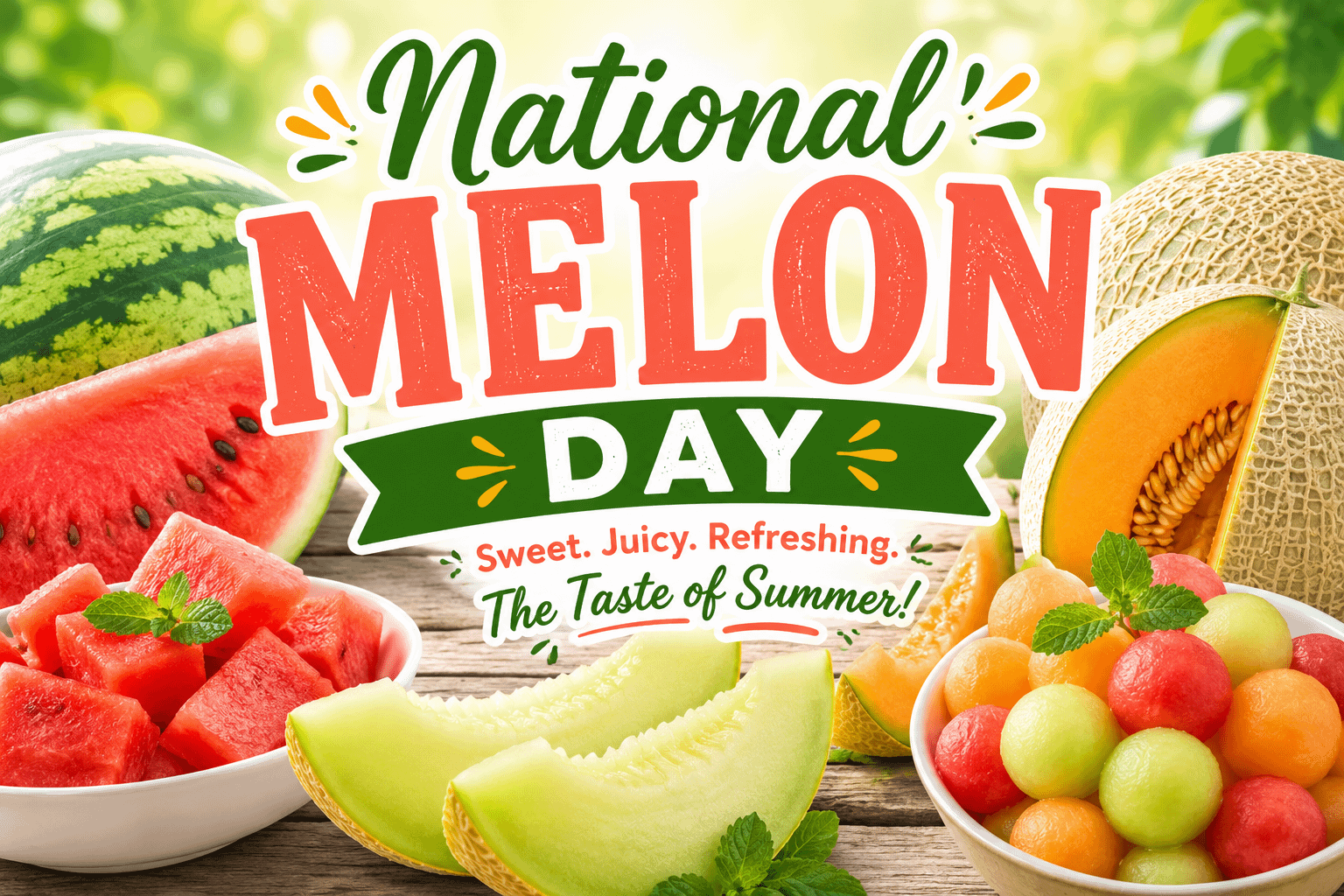
There are certain foods that immediately make you think of summer. Fresh corn on the cob, backyard barbecue, homemade lemonade, ice cream, and juicy berries all have their place, but few foods capture the refreshing taste of a hot summer day quite like melon.
National Melon Day is a delicious celebration of one of nature’s sweetest and most refreshing groups of fruits.
From enormous watermelons sliced open at backyard cookouts to bowls filled with orange cantaloupe and pale green honeydew, melons have become a familiar part of summertime eating. They’re colorful, naturally sweet, refreshing, easy to share, and incredibly versatile.
But the world of melons extends far beyond the varieties most Americans recognize.
There are melons with yellow skin, orange flesh, green flesh, white flesh, striped rinds, smooth rinds, and heavily netted exteriors. Some are extremely sweet and fragrant, while others have delicate flavors that work beautifully alongside savory ingredients.
National Melon Day provides the perfect opportunity to celebrate an ancient food that continues to bring freshness and flavor to tables around the world.
So grab your favorite melon, chill it in the refrigerator, and get ready to celebrate.
What Is National Melon Day?
National Melon Day is a food celebration dedicated to appreciating the many different fruits commonly grouped together as melons.
For many people, mentioning melon immediately brings three familiar varieties to mind:
Watermelon, cantaloupe, and honeydew.
Those are certainly among the most popular choices in the United States, but they’re only the beginning.
Depending on where you live and where you shop, you may encounter varieties including Galia, Canary, Hami, Crenshaw, Santa Claus, Casaba, Korean melon, Charentais, and many others.
National Melon Day can therefore become both a celebration and a culinary adventure.
Instead of automatically reaching for your usual watermelon or cantaloupe, look around the produce section and see whether there’s something unfamiliar waiting to be discovered.
You might find your next favorite fruit.
Melons Have Been Enjoyed for Thousands of Years
The melon sitting in your refrigerator belongs to an agricultural tradition stretching back thousands of years.
Different melon species and varieties have complicated histories, and their development took place across different regions. Evidence of ancient cultivation and consumption connects melons with parts of Africa and Asia, while generations of farmers throughout the Middle East, Mediterranean region, Europe, and elsewhere helped develop countless varieties.
As civilizations traded with one another, seeds and agricultural knowledge traveled too.
Farmers gradually selected plants based on desirable characteristics such as sweetness, size, aroma, color, texture, productivity, and adaptability.
Over generations, those choices helped produce the extraordinary diversity of melons available today.
That makes biting into a modern melon surprisingly connected to human history.
Farmers have been growing, selecting, sharing, and improving these fruits for generations.
How Melons Became a Summertime Favorite
Melons and summer naturally belong together.
Many melon varieties mature during warm weather, and their juicy flesh is particularly appealing when temperatures rise.
Before modern refrigeration, people couldn’t simply reach into the refrigerator for an ice-cold drink whenever they wanted. Fresh, water-rich fruits were especially valuable during hot weather.
Today, we have air conditioning, refrigerators, freezers, ice makers, and endless beverage choices, yet the appeal of chilled melon remains remarkably strong.
There’s something wonderfully simple about slicing open a watermelon or cantaloupe on a warm afternoon.
No complicated recipe is required.
Sometimes summer really can taste as simple as fresh fruit.
Watermelon: The Classic Summer Favorite
If one fruit could represent an American summer cookout, watermelon would be a strong contender.
The combination of green rind, vibrant interior, crisp texture, and juicy sweetness makes watermelon instantly recognizable.
It’s commonly served at:
- Backyard barbecues
- Family reunions
- Picnics
- Pool parties
- Camping trips
- Summer festivals
- Fourth of July celebrations
- Neighborhood gatherings
Watermelon is especially convenient when feeding a crowd because one large fruit can produce numerous servings.
And although bright red flesh is the version most people recognize, watermelons can come in several interior colors, including pink, yellow, and orange.
There are also seeded, seedless, miniature, round, elongated, and specialty varieties.
Cantaloupe: Sweet, Fragrant, and Versatile
Cantaloupe brings an entirely different experience.
Cut through its textured exterior and you’ll find beautiful orange flesh surrounding a central cavity filled with seeds.
A perfectly ripe cantaloupe should be sweet, juicy, fragrant, and tender without being mushy.
Cantaloupe is especially popular at breakfast and brunch.
Try serving it alongside:
- Yogurt
- Cottage cheese
- Eggs
- Granola
- Berries
- Toast
- Breakfast sandwiches
Its natural sweetness also pairs beautifully with salty ingredients.
One famous combination is melon and prosciutto, where sweet fruit contrasts with salty cured meat.
Honeydew: Mild, Cool, and Refreshing
Honeydew sometimes lives in cantaloupe’s shadow, but a perfectly ripe honeydew deserves appreciation of its own.
The fruit generally features a smooth outer rind and pale green interior.
Its flavor is usually delicate and sweet rather than overpowering.
Honeydew is especially good when thoroughly chilled.
Cube it and combine it with cantaloupe and watermelon to create one of summer’s easiest colorful fruit salads.
It can also be blended into smoothies, chilled soups, frozen drinks, or refreshing nonalcoholic beverages.
Explore Melons Beyond the Familiar Favorites
One of the best ways to celebrate National Melon Day is to try something you’ve never eaten before.
Galia Melon
Galia melon often features a netted exterior and greenish flesh.
It’s known for its sweet flavor and pleasant fragrance.
People who enjoy both cantaloupe and honeydew may particularly appreciate Galia melon.
Canary Melon
You won’t have much trouble spotting a Canary melon.
Its bright yellow exterior makes it stand out in a produce display.
Inside you’ll generally find pale flesh with a mildly sweet flavor.
Crenshaw Melon
Crenshaw melons are known for their rich sweetness and aromatic flesh.
If you encounter one at a farmers market or specialty produce store, National Melon Day is an excellent excuse to give it a try.
Casaba Melon
Casaba melons often have wrinkled yellowish skin and pale flesh.
Their flavor can be more subtle than some intensely sweet melon varieties.
Hami Melon
Hami melons are associated with China and are appreciated for their crisp texture and sweetness.
They provide another excellent reminder of how diverse the melon world really is.
Korean Melon
Korean melons are generally smaller than the large watermelons or cantaloupes many Americans are accustomed to seeing.
Their distinctive appearance and crisp texture make them an interesting addition to a National Melon Day tasting.
Charentais Melon
This small, fragrant melon is prized for its sweet orange flesh.
Trying specialty varieties like Charentais can turn a simple fruit tasting into an entirely new culinary experience.
Why Is Melon So Refreshing?
The answer is largely water.
Many melon varieties contain a substantial amount of water, which helps give them their characteristic juicy texture.
Think about biting into a cold watermelon wedge.
The juice practically bursts from the fruit.
That’s one reason watermelon and other melons are so satisfying during warm weather.
They’re sweet enough to feel like a treat while simultaneously providing the refreshing quality we crave on hot summer afternoons.
Nutritional Benefits of Melon
Melons aren’t only delicious.
Depending on the variety, they can contribute several important nutrients to your diet.
Different melons may provide nutrients and plant compounds including:
- Vitamin C
- Vitamin A or carotenoid precursors
- Potassium
- Antioxidants
- Dietary fiber
- Water
Cantaloupe’s orange color, for example, reflects the presence of carotenoid pigments.
Watermelon contains lycopene, a plant compound also famously associated with tomatoes.
Because nutritional composition varies among melon varieties and serving sizes, it’s better to appreciate melon as one component of an overall balanced eating pattern rather than treating it as a miracle food.
Still, replacing heavily processed sweets occasionally with fresh fruit can be a simple and delicious choice.
Melon Makes Hydration More Delicious
Drinking water remains important, especially during warm weather.
But foods also contribute to our overall fluid intake.
Because melons contain so much water, they can be a refreshing addition to summertime meals and snacks.
Try keeping containers of freshly cut melon refrigerated so they’re easy to grab.
When you’re craving something cold and sweet, chilled watermelon, cantaloupe, or honeydew can be incredibly satisfying.
How to Choose a Watermelon
Standing in front of a giant pile of watermelons can make anyone wonder:
Which one should I choose?
There’s no foolproof method, but there are several characteristics shoppers commonly consider.
Look for a watermelon that feels heavy for its size.
Check the exterior for major damage or unusually soft areas.
Many shoppers also examine the field spot—the area where the watermelon rested against the ground as it grew. A creamy or yellowish field spot can be associated with fruit that spent time ripening in the field.
And yes, people still tap watermelons.
Whether you’re a confident watermelon tapper or simply pretending you know what you’re listening for is another question entirely.
How to Choose a Cantaloupe
Your nose can actually help you select cantaloupe.
A ripe cantaloupe often has a noticeable sweet aroma near the blossom end.
The fruit should generally feel heavy for its size and shouldn’t have major soft, damaged, or moldy areas.
Avoid fruit that appears badly bruised or excessively mushy.
Once you’ve experienced an exceptionally ripe cantaloupe, you’ll understand why selecting one carefully matters.
How to Choose Honeydew
Honeydew can be slightly trickier.
Depending on the variety, ripe honeydew may develop a creamier or more yellowish exterior instead of remaining intensely green.
The fruit should feel heavy for its size and shouldn’t have significant bruising or damaged areas.
Ripeness cues vary among varieties, so don’t be afraid to ask someone working in the produce department or a farmer at the market for advice.
Wash Melons Before Cutting Them
Here’s one step that’s easy to overlook.
You don’t eat the rind, so why wash it?
Because your knife passes through the exterior before entering the edible flesh.
Contaminants on the rind can potentially be transferred by the knife or your hands.
Before cutting melon, wash your hands and rinse the outside of the fruit under clean running water. Use clean utensils and a clean cutting surface.
Once melon is cut, refrigerate it promptly and follow standard food-safety practices.
This small habit can make enjoying fresh melon safer.
Create the Ultimate Melon Fruit Salad
National Melon Day practically begs for a giant fruit salad.
Start with:
Watermelon + cantaloupe + honeydew.
Then customize it.
Add strawberries, blueberries, raspberries, grapes, pineapple, kiwi, peaches, or other seasonal fruits.
Fresh mint can add brightness.
A squeeze of lime can bring acidity that balances the sweetness.
The result is colorful enough for a party but simple enough for an ordinary afternoon snack.
Make a Melon Tasting Board
Forget the traditional cheese board for a moment.
Create a melon board.
Purchase several varieties and cut each into bite-sized portions.
Arrange them separately on a large platter and label each variety.
Invite everyone to taste them and choose a favorite.
You can even create categories:
Sweetest
Juiciest
Best texture
Best aroma
Most unusual
Overall favorite
It’s a simple National Melon Day activity that works particularly well for families.
Make Colorful Melon Skewers
Food somehow becomes more fun when it’s served on a stick.
Cut watermelon, cantaloupe, and honeydew into similarly sized cubes and alternate the colors on skewers.
Add strawberries, blueberries, grapes, or pineapple for additional variety.
Serve them cold at a picnic, barbecue, birthday party, or family gathering.
If serving children, make sure the skewers and fruit pieces are appropriate for their ages and supervise accordingly.
Try Watermelon and Feta Salad
Melon doesn’t always need to be sweet-on-sweet.
One of the most popular savory watermelon combinations pairs it with feta cheese.
Combine cubed watermelon with crumbled feta and fresh mint.
Depending on your preference, you might also add cucumber, lime, herbs, or a simple dressing.
The salty cheese provides a delicious contrast against the sweet, juicy watermelon.
Try the Classic Melon and Prosciutto Combination
Cantaloupe and prosciutto demonstrate how dramatically contrasting flavors can complement one another.
The melon provides sweetness and juiciness.
The cured meat provides saltiness and savory richness.
Together, they create an appetizer that feels elegant despite requiring very little preparation.
Turn Melon Into Salsa
Fruit salsa can bring something unexpected to summer meals.
Finely diced watermelon or cantaloupe can be combined with ingredients such as:
- Lime juice
- Cilantro
- Cucumber
- Red onion
- Jalapeño
- Bell pepper
Serve it alongside grilled foods or with tortilla chips.
Adjust the ingredients according to your preference, especially when it comes to heat.
Blend a Melon Smoothie
Have ripe melon that needs to be used?
Blend it.
Melon can become the foundation for an easy summertime smoothie.
Try combining chilled melon with yogurt, berries, banana, citrus, or ice.
Experiment until you find the combination you enjoy most.
Make Frozen Melon Treats
Melon becomes especially refreshing when frozen.
Cube your melon and freeze the pieces on a tray.
Once frozen, transfer them to a freezer-safe container.
Frozen melon can then be blended into smoothies or used as a cold summertime snack.
You can also puree melon and freeze it into homemade ice pops.
It’s an easy way to turn fruit into a warm-weather dessert.
Use Frozen Melon Instead of Ice Cubes
Here’s another fun idea.
Freeze small melon cubes and drop them into sparkling water or other cold beverages.
They’ll help keep your drink cold while gradually adding fruity flavor.
For a colorful combination, freeze watermelon, cantaloupe, and honeydew separately and mix them together.
Grill Your Watermelon
Yes, you can grill watermelon.
Grilling changes the fruit’s texture and concentrates some of its flavors while adding the character that comes from cooking over high heat.
Cut thick slices or wedges and grill briefly.
You can then combine grilled watermelon with ingredients such as feta, herbs, lime, or balsamic-style dressings.
It might sound strange until you try it.
Make Fresh Melon Drinks
Melons are fantastic beverage ingredients.
Blend watermelon with lime and ice for an incredibly refreshing drink.
Honeydew can produce a smooth, delicate beverage.
Cantaloupe can be blended into creamy or fruity drinks.
For National Melon Day, create a melon mocktail using pureed melon, citrus juice, fresh herbs, sparkling water, and plenty of ice.
Adults who drink alcohol may also choose to experiment responsibly with melon-inspired cocktails.
Don’t Automatically Throw Away Watermelon Rind
Most people eat the red watermelon flesh and throw away the rind.
But watermelon rind has culinary uses too.
One traditional preparation involves pickling the rind.
Recipes vary, but pickled watermelon rind can combine sweet, sour, and spiced flavors in a completely different way from the fresh fruit.
If you’re interested in reducing food waste, this can be an interesting kitchen experiment.
Use a reputable preservation recipe and follow proper food-safety procedures, particularly when canning or storing preserved foods.
Melon Seeds Have a Story Too
Depending on the melon, seeds are often discarded without much thought.
Yet seeds are the beginning of the next generation of plants.
Cutting open a melon can become a simple educational activity for children.
Show them the seeds, explain how the plant grows, and perhaps save appropriate seeds for a gardening experiment if the variety and growing conditions make that practical.
It’s an easy way to connect food with agriculture.
Growing Melons at Home
Gardeners looking for a challenge might consider growing melons.
Melon plants generally enjoy warmth, sunshine, and sufficient growing space.
Many varieties grow on sprawling vines, so garden planning is important.
Growing conditions, planting times, and recommended varieties depend heavily on climate.
Your local cooperative extension or experienced local nursery can provide guidance appropriate to your area.
Growing your own melon requires patience, but slicing into fruit you’ve grown yourself can make the experience especially rewarding.
Visit a Farmers Market
National Melon Day is a wonderful reason to visit your local farmers market.
During peak melon season, local farmers may offer varieties you’ve never seen in a conventional supermarket.
Ask the grower questions.
What variety is this?
How sweet is it?
How do I know when it’s ripe?
Should I refrigerate it immediately?
What’s your favorite way to eat it?
Farmers often have tremendous knowledge about the produce they grow.
You may leave with both a delicious melon and a better understanding of where your food comes from.
Host a National Melon Day Party
National food holidays are always more enjoyable when shared.
Invite friends or family over for a simple melon-themed summer gathering.
You don’t need elaborate decorations or an expensive menu.
Serve several melon varieties alongside dishes such as:
Watermelon and feta salad
Melon and prosciutto
Fresh melon skewers
Melon fruit salad
Watermelon salsa
Frozen melon pops
Melon smoothies
Sparkling melon mocktails
Finish everything with a blind melon taste test.
Ask guests to identify the different varieties without seeing their labels.
Have a Watermelon Seed-Spitting Contest
If you can find a traditional seeded watermelon and have a suitable outdoor space, bring back an old-fashioned summer activity.
See who can spit a watermelon seed the farthest.
Set clear boundaries, keep the competition outside, and make sure everyone knows where they’re supposed to aim.
Sometimes the simplest traditions create the funniest memories.
Create Melon Art With Kids
Melons provide plenty of opportunities for creativity.
Use cookie cutters to cut watermelon slices into stars, hearts, flowers, or other shapes.
Use a melon baller to create colorful spheres of watermelon, honeydew, and cantaloupe.
Arrange them into fruit rainbows or colorful patterns.
Children may be more interested in eating fruit when they’re involved in preparing it.
Adults should handle knives and other sharp kitchen tools as appropriate.
Have a Melon Recipe Challenge
Turn National Melon Day into a friendly cooking competition.
Give everyone the same basic ingredient—a melon—and challenge them to create something unique.
Someone might make a salad.
Another person might create salsa.
Someone else could prepare a smoothie, dessert, appetizer, or mocktail.
Then everyone tastes the creations and votes for a winner.
Melons Around the World
One of the most interesting things about melons is how many cultures have developed their own ways of growing, preparing, and enjoying them.
Depending on the region, melon might be eaten as fresh fruit, incorporated into beverages, paired with savory ingredients, preserved, served as dessert, or given as a special gift.
Exploring these traditions reminds us that even something as ordinary as a piece of fruit can connect us to agriculture, history, migration, trade, and cultural traditions around the world.
Reduce Food Waste on National Melon Day
Large melons can sometimes produce more fruit than one household can eat quickly.
Plan ahead.
Cut only what you need or refrigerate leftovers appropriately.
Extra melon can be:
- Frozen for smoothies
- Pureed into drinks
- Added to fruit salad
- Turned into frozen pops
- Used in salsa
- Shared with family or neighbors
Finding creative uses for ripe fruit helps prevent perfectly good food from ending up in the trash.
Fun Melon Facts
Here are a few conversation starters for National Melon Day:
Melons come in an incredible variety of shapes and colors. Depending on the type, flesh can be red, pink, orange, yellow, green, or pale white.
Not every watermelon is red inside. Yellow and orange-fleshed varieties exist too.
Watermelon is related to other members of the gourd family. Its relatives include cucumbers, squash, and pumpkins.
Seedless watermelon may still contain tiny undeveloped seeds. Those small, soft structures are different from the mature hard seeds found in traditional seeded watermelon.
Melons can be savory. Cheese, herbs, chili, cucumber, cured meat, citrus, and other savory ingredients can pair beautifully with them.
There are many more melon varieties than most supermarkets regularly carry. Visiting farmers markets and specialty produce stores can reveal an entirely different selection.
Simple Ways to Celebrate National Melon Day
There isn’t a wrong way to celebrate as long as melon makes an appearance.
You could:
- Slice up a cold watermelon.
- Make a giant bowl of fruit salad.
- Try a melon you’ve never eaten before.
- Visit a farmers market.
- Make melon skewers with your children or grandchildren.
- Blend a watermelon smoothie.
- Make homemade melon ice pops.
- Prepare watermelon and feta salad.
- Serve cantaloupe with prosciutto.
- Make a refreshing melon mocktail.
- Freeze melon for later.
- Learn about how melons grow.
- Plant melon seeds if your local growing season allows.
- Share fresh melon with a neighbor.
- Host a family melon tasting.
- Photograph your colorful melon creation and share it on social media.
The celebration can be as simple or elaborate as you want.
National Melon Day Is Really a Celebration of Summer
Food holidays can sometimes sound silly.
Do we really need a special day for melon?
Maybe not.
But that’s also what makes celebrations like National Melon Day fun.
They encourage us to notice and appreciate simple things we might otherwise take for granted.
Think about the memories associated with watermelon alone.
Maybe it’s your father slicing a giant watermelon at a backyard barbecue.
Maybe it’s sitting around a picnic table with cousins while juice runs down everyone’s hands.
Maybe it’s carrying a cooler to the beach.
Maybe it’s a family reunion, Fourth of July picnic, neighborhood cookout, camping trip, county fair, or quiet afternoon sitting on the porch.
Food becomes connected to memories.
And sometimes something as simple as a slice of melon can take us back to another summer entirely.
Celebrate the Sweetness of the Season
National Melon Day is the perfect excuse to appreciate one of summer’s simplest pleasures.
Melons don’t need fancy preparation.
They don’t need expensive ingredients.
Sometimes all you need is a ripe melon, a knife, a plate, and someone to share it with.
Watermelon brings crisp juiciness.
Cantaloupe delivers fragrance and sweetness.
Honeydew offers a cool, delicate flavor.
And specialty varieties remind us that there’s always something new to discover.
So on National Melon Day, visit your grocery store or local farmers market and pick out something delicious.
Try a new recipe.
Taste a new variety.
Share a bowl with your family.
Make a refreshing drink.
Or simply sit outside on a warm summer afternoon with a cold slice of melon in your hand.
Sometimes the best celebrations are the simplest ones.
Happy National Melon Day! 🍉🍈
Read More Holidays & National Days
Leave a Reply