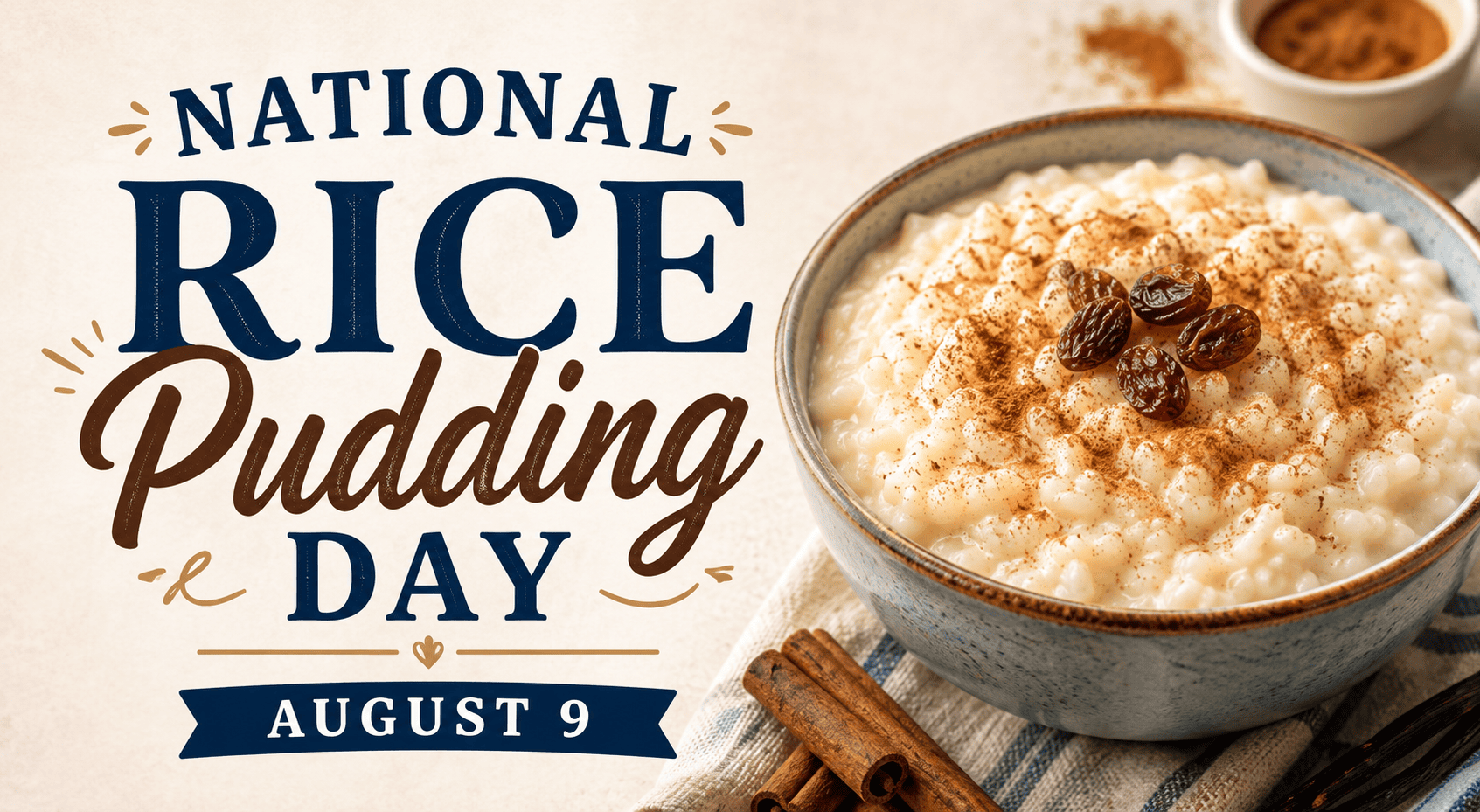
Every year on August 9, National Rice Pudding Day celebrates one of the simplest yet most comforting desserts around.
Rice pudding doesn’t require an elaborate presentation to make an impression. A bowl filled with tender rice surrounded by sweet, creamy milk and flavored with cinnamon, vanilla, nutmeg, or other spices can be enough to turn an ordinary evening into something special.
For some people, rice pudding is simply dessert.
For others, it’s a memory.
It might remind you of sitting in your grandmother’s kitchen, enjoying a homemade dessert after dinner, celebrating a family holiday, or opening the refrigerator and discovering that someone had made a fresh batch.
That’s part of what makes National Rice Pudding Day worth celebrating.
Rice pudding connects food, family, tradition, history, and cultures from around the world—all inside one humble bowl.
So grab a spoon and discover why this centuries-old comfort food deserves its own day.
When Is National Rice Pudding Day?
National Rice Pudding Day is celebrated annually on August 9.
It’s an unofficial food holiday dedicated to enjoying and appreciating the many different varieties of rice pudding.
There aren’t complicated traditions or rules surrounding the celebration.
You can celebrate by making rice pudding at home, ordering it from a restaurant, sharing your favorite recipe, experimenting with different toppings, or trying an international variation you’ve never experienced before.
The important part is enjoying the dessert.
What Exactly Is Rice Pudding?
At its most basic, rice pudding combines two familiar ingredients:
Rice and milk.
Sugar or another sweetener is generally added, along with ingredients that provide additional flavor.
Depending on the recipe, those might include:
- Vanilla
- Cinnamon
- Nutmeg
- Raisins
- Cardamom
- Coconut
- Saffron
- Rose water
- Orange blossom water
- Almonds
- Pistachios
- Fresh fruit
- Dried fruit
Some recipes include eggs to create a richer, custard-like consistency, while others depend entirely on rice starch and slow cooking to create their creamy texture.
Different types of rice also produce different results.
Short-grain rice can create an especially creamy pudding because of its higher starch content, while long-grain rice can provide a slightly different texture with more distinct grains.
Neither is necessarily better.
Like many traditional foods, the “best” rice pudding often depends on what you grew up eating.
The Long History of Rice Pudding
Pinpointing the exact origin of rice pudding isn’t easy.
Rice itself has been cultivated for thousands of years, particularly throughout Asia, and gradually became an important ingredient in cuisines around the world.
As rice traveled through trade routes and cultural exchange, people discovered countless ways to prepare it.
Early rice puddings weren’t always desserts.
Rice cooked with milk or other liquids could be prepared as a nourishing porridge or savory dish. Sweet versions became increasingly common as sugar, spices, dried fruits, and other ingredients became more widely available.
Eventually, cultures throughout Europe, Asia, the Middle East, Africa, Latin America, and elsewhere developed their own versions.
The result is fascinating.
Rice pudding isn’t really one recipe.
It’s an entire family of dishes connected by a basic idea: transforming rice into something soft, creamy, and comforting.
Why Rice Pudding Became So Popular
Rice pudding has several characteristics that helped it survive generation after generation.
First, the ingredients can be incredibly simple.
Rice, milk, and sugar are enough to create a basic pudding.
Second, the recipe is adaptable.
Families can add whatever flavors and ingredients are available locally.
Third, rice pudding can stretch ingredients.
A relatively small amount of rice can become a substantial dessert once combined with milk and other ingredients.
And finally, it’s comforting.
Some dishes disappear as food trends change.
Rice pudding continues to survive because people genuinely enjoy eating it.
Rice Pudding Around the World
One of the best ways to celebrate National Rice Pudding Day is to discover how different cultures prepare it.
Although many versions share similar ingredients, flavors and preparation techniques can vary dramatically.
Arroz con Leche
Arroz con leche, meaning “rice with milk,” is enjoyed throughout Spain and many Latin American countries.
Recipes vary by country and family, but commonly include rice, milk, sugar, cinnamon, and sometimes citrus peel.
Some versions contain raisins, while others are topped with a generous sprinkle of cinnamon.
It can be served warm or chilled.
Indian Kheer
Kheer is a traditional South Asian pudding that can be made with rice and milk slowly cooked together until rich and creamy.
Cardamom is a common flavoring, and recipes may also include saffron, almonds, pistachios, cashews, or raisins.
The combination of fragrant spices and nuts gives kheer a distinctive flavor compared with many American-style rice puddings.
Middle Eastern Rice Pudding
Various Middle Eastern cuisines have their own rice pudding traditions.
Flavorings can include rose water, orange blossom water, cinnamon, pistachios, or other aromatic ingredients.
These additions can transform a simple milk-and-rice dessert into something wonderfully fragrant.
Scandinavian Rice Pudding
Rice pudding also plays an important role in Scandinavian culinary traditions, particularly around Christmas.
Some versions are served warm with cinnamon, sugar, and butter, while leftovers may be transformed into other desserts.
British Rice Pudding
Traditional British rice pudding is often baked slowly in the oven.
The long cooking process creates a thick, creamy pudding and may produce a distinctive skin across the top—something people tend to either love or avoid entirely.
American Rice Pudding
American versions vary enormously.
Some are baked.
Others are cooked entirely on the stovetop.
Many contain vanilla, cinnamon, raisins, eggs, or nutmeg.
Some are served warm, while others are refrigerated and eaten cold.
It’s the kind of recipe that can be slightly different in every household.
Why Rice Pudding Is the Ultimate Comfort Food
There’s something special about comfort food.
It isn’t always the fanciest dish.
It isn’t necessarily expensive.
And it doesn’t need to look perfect.
Comfort food makes you feel something.
Rice pudding fits that description beautifully.
Its creamy texture and gentle sweetness make it soothing without being overly complicated.
Warm rice pudding can feel especially comforting during cooler weather, while chilled rice pudding can make a refreshing summer dessert.
But the strongest connection often comes from memory.
Maybe someone you loved made rice pudding.
Maybe it appeared at family gatherings.
Maybe you ate it when you were sick as a child.
Maybe the smell of cinnamon and vanilla instantly transports you back to another time and place.
Food has an extraordinary ability to unlock memories.
Sometimes one bite can take you decades into the past.
Classic Homemade Rice Pudding Recipe
National Rice Pudding Day wouldn’t be complete without making your own.
Here’s a simple version you can customize.
Ingredients
- 2 cups cooked white rice
- 2 cups whole milk
- 1/3 cup granulated sugar
- 1 teaspoon vanilla extract
- 1/2 teaspoon ground cinnamon
- Pinch of salt
- 1/3 cup raisins, optional
- Cinnamon or nutmeg for garnish
Instructions
Place the cooked rice, milk, sugar, and salt in a medium saucepan.
Cook over medium-low heat, stirring regularly so the mixture doesn’t stick to the bottom.
Continue cooking until the pudding thickens and becomes creamy, usually around 15–20 minutes.
Reduce the heat if necessary.
Stir in the vanilla, cinnamon, and raisins.
Cook for another two or three minutes.
Remove from heat.
The pudding may continue to thicken slightly as it cools.
Serve warm immediately or transfer it to the refrigerator and chill before serving.
Finish with cinnamon or nutmeg.
What Type of Rice Is Best?
You can make rice pudding with several varieties of rice.
Short-Grain Rice
Short-grain rice releases plenty of starch, helping create an especially creamy consistency.
Medium-Grain Rice
Medium-grain rice provides a nice balance between creaminess and recognizable rice texture.
Long-Grain Rice
Long-grain rice tends to maintain more separation between individual grains.
It can work especially well when you’re turning leftover cooked rice into pudding.
Arborio Rice
The rice traditionally associated with risotto can also produce an exceptionally rich and creamy rice pudding because of its starch content.
Don’t be afraid to experiment.
Changing the rice can noticeably change the final dessert.
The Great Rice Pudding Debate: Raisins or No Raisins?
Few rice pudding ingredients create stronger opinions than raisins.
Some people believe raisins are practically mandatory.
Others would happily remove every raisin from the bowl.
Raisins add natural sweetness and a chewy contrast to the creamy pudding. When they’re cooked directly in the mixture, they absorb moisture and become softer.
But there’s absolutely nothing wrong with leaving them out.
National Rice Pudding Day should be about enjoying rice pudding exactly the way you like it.
Warm or Cold?
Here’s another question likely to divide rice pudding fans.
Should rice pudding be served warm or cold?
Warm rice pudding tends to be softer and particularly comforting. Add cinnamon or nutmeg and you have a dessert perfect for a cozy evening.
Chilled rice pudding becomes thicker and firmer.
Because National Rice Pudding Day falls during August, cold rice pudding can be especially appealing on a hot summer afternoon.
There’s an easy solution to the debate:
Make enough to eat some warm today and save some for the refrigerator tomorrow.
Creative Rice Pudding Variations
Once you understand the basic recipe, rice pudding becomes an excellent canvas for experimentation.
Cinnamon-Vanilla Rice Pudding
Keep things traditional with vanilla and a generous sprinkle of cinnamon.
Chocolate Rice Pudding
Add cocoa powder or melted chocolate for a rich chocolate variation.
Top it with chocolate shavings for extra indulgence.
Coconut Rice Pudding
Replace some or all of the dairy milk with coconut milk.
Top with toasted coconut for even more tropical flavor.
Strawberry Rice Pudding
Add fresh sliced strawberries to chilled vanilla rice pudding.
Blueberry Rice Pudding
Fresh blueberries provide sweetness, color, and a burst of fruity flavor.
Banana Rice Pudding
Top your pudding with sliced bananas, cinnamon, and a drizzle of honey.
Apple Cinnamon Rice Pudding
Cook diced apples with cinnamon and a little brown sugar.
Spoon them over warm rice pudding.
It’s almost like combining rice pudding with apple pie.
Caramel Rice Pudding
Drizzle caramel sauce over the top and add a small sprinkle of sea salt for a sweet-and-salty variation.
Maple Rice Pudding
Use maple syrup as part of the sweetener and finish with chopped pecans.
Pumpkin Spice Rice Pudding
Add pumpkin puree and warming spices such as cinnamon, nutmeg, ginger, and cloves.
This variation is particularly good heading into fall.
Tropical Rice Pudding
Use coconut milk and top with pineapple, mango, or toasted coconut.
Pistachio Rice Pudding
Add chopped pistachios for crunch and a nutty flavor.
Build a Rice Pudding Topping Bar
Hosting friends or family?
Turn National Rice Pudding Day into a dessert party.
Make a large batch of basic vanilla rice pudding and arrange several toppings so everyone can create their own bowl.
Try offering:
- Cinnamon
- Nutmeg
- Strawberries
- Blueberries
- Raspberries
- Bananas
- Mango
- Raisins
- Dried cranberries
- Chocolate chips
- Chocolate sauce
- Caramel sauce
- Honey
- Maple syrup
- Toasted coconut
- Chopped pecans
- Walnuts
- Almonds
- Pistachios
- Whipped cream
You could even have everyone vote for the best combination.
Use Leftover Rice
One practical reason to love rice pudding is that it can provide a delicious new purpose for leftover cooked rice.
Instead of letting extra rice sit forgotten in the refrigerator, you can turn it into dessert.
Using already-cooked rice also makes the preparation faster.
Add the rice to milk with sugar, vanilla, cinnamon, and your favorite additions, then gently cook everything together until creamy.
It’s a great reminder that leftovers don’t always have to become tomorrow’s lunch.
Sometimes they can become tonight’s dessert.
Make Rice Pudding With Your Family
National Rice Pudding Day can also be an opportunity to get children involved in the kitchen.
Let them choose toppings or help measure ingredients with appropriate supervision.
Cooking together creates more than food.
It creates memories.
Years from now, they might not remember everything that happened on August 9.
But they might remember standing in the kitchen, sprinkling cinnamon over a bowl of rice pudding they helped make.
Preserve an Old Family Recipe
If someone in your family makes amazing rice pudding, ask for the recipe.
Don’t assume you’ll remember it forever.
Write down:
- The ingredients
- Exact measurements
- Cooking temperature
- Cooking time
- Special techniques
- Favorite toppings
- Family substitutions
- Who originally made the recipe
- Any story connected with it
Family recipes are small pieces of history.
When they’re preserved, future generations can experience flavors connected to people they may never have had the opportunity to meet.
Host a Rice Pudding Taste Test
Want to make the celebration more interesting?
Create several varieties of rice pudding.
For example:
Bowl #1: Classic cinnamon vanilla
Bowl #2: Coconut
Bowl #3: Chocolate
Bowl #4: Apple cinnamon
Bowl #5: Berry
Serve small portions without identifying the flavors beforehand.
Have everyone taste each bowl and rank their favorites.
You might discover a new family favorite.
Visit a Local Restaurant
Not interested in cooking?
Check local restaurants, diners, bakeries, international markets, or dessert shops.
You might discover traditional rice pudding from another culture.
National Rice Pudding Day can be a great excuse to support a local business while trying something you haven’t had before.
Fun Facts About Rice Pudding
Here are a few interesting things to remember while enjoying your bowl:
- Rice pudding exists in numerous culinary traditions around the world.
- It can be served hot, warm, room temperature, or chilled.
- Cinnamon is one of the most recognizable rice pudding toppings in the United States.
- Raisins remain one of the dessert’s most debated additions.
- Rice pudding can be prepared on the stovetop or baked in the oven.
- Slow cookers can also be used for certain recipes.
- Different rice varieties can dramatically change the pudding’s texture.
- Coconut milk can be used to create a different flavor profile.
- Many international versions use fragrant ingredients such as cardamom, saffron, rose water, or orange blossom water.
- Rice pudding can be an excellent way to transform leftover cooked rice.
- Some versions are extremely simple, while others are elaborate desserts filled with nuts, fruit, spices, and decorative toppings.
Rice Pudding Is Proof That Simple Can Be Special
Modern desserts can sometimes seem like competitions.
More layers.
More toppings.
More decorations.
More ingredients.
More elaborate presentations.
Rice pudding goes in the opposite direction.
It demonstrates how ordinary ingredients can become something memorable when they’re prepared with patience and care.
Rice.
Milk.
Sugar.
Spices.
That’s often all it takes.
There’s something refreshing about a dessert that doesn’t need to impress anyone.
It just needs to taste good.
Food Connects Generations
Recipes are often part of the stories families pass from one generation to another.
A grandmother teaches her daughter.
A father teaches his children.
Someone scribbles the recipe onto an index card.
Years later, that card sits inside a recipe box with stains around the edges from decades of use.
Eventually, someone prepares the same dish for another generation.
That’s how food becomes more than food.
It becomes history.
It becomes connection.
It becomes memory.
Rice pudding is exactly the kind of humble recipe that can carry those memories forward.
How to Celebrate National Rice Pudding Day
There are plenty of ways to enjoy August 9.
Make homemade rice pudding using a family recipe.
Try an international version you’ve never experienced before.
Experiment with a new topping.
Invite friends or relatives over for dessert.
Create a rice pudding tasting competition.
Share your recipe on social media.
Ask older relatives whether rice pudding was something they ate growing up.
Visit a local restaurant serving traditional rice pudding.
Turn leftover rice into dessert instead of throwing it away.
Or simply sit down with a bowl of your favorite rice pudding and enjoy it.
Celebrations don’t always need to be complicated.
National Rice Pudding Day and the Power of Comfort Food
Food doesn’t just satisfy hunger.
It can create connections.
Certain aromas remind us of places.
Certain flavors remind us of people.
Certain recipes remind us of moments we thought we’d forgotten.
Comfort food has that power.
It can make an ordinary day feel familiar.
It can bring people together around a table.
And sometimes it can remind us of someone who once made that same dish for us.
National Rice Pudding Day celebrates a dessert, but it can also celebrate the memories attached to it.
A Sweet August Tradition
August is filled with summer activities, family gatherings, vacations, outdoor adventures, and plenty of opportunities to enjoy good food.
National Rice Pudding Day provides a quieter kind of celebration.
You don’t need decorations.
You don’t need presents.
You don’t need an elaborate event.
All you really need is a bowl and a spoon.
Maybe that’s part of its charm.
Final Thoughts
National Rice Pudding Day on August 9 celebrates a dessert that proves some of life’s best foods don’t need to be complicated.
For generations, people around the world have transformed rice and milk into countless comforting dishes.
Some add cinnamon.
Others prefer cardamom.
Some add raisins.
Others wouldn’t dream of it.
Some eat rice pudding steaming hot from the stove.
Others believe it belongs chilled in the refrigerator.
And that’s exactly what makes rice pudding interesting.
There isn’t just one way to enjoy it.
National Rice Pudding Day gives us an opportunity to celebrate those differences while appreciating the simple idea they all share.
So on August 9, make a batch, try a family recipe, discover an international variation, or pick up your favorite prepared rice pudding.
Add your favorite toppings.
Grab a spoon.
And enjoy one of the world‘s most enduring comfort-food desserts.
Happy National Rice Pudding Day!
Read More Holidays & National Days



Leave a Reply