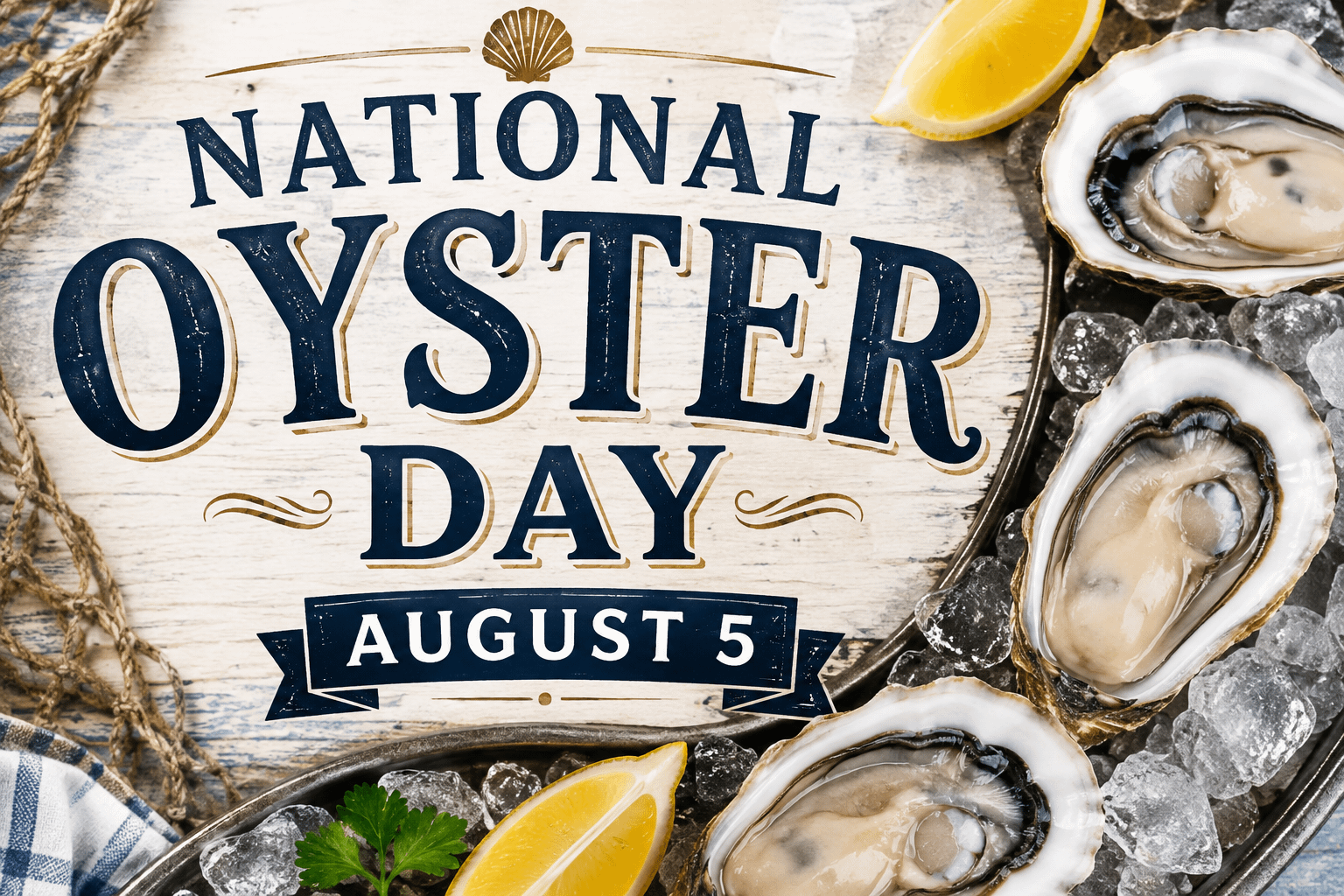
Every year on August 5, seafood enthusiasts across the United States come together to celebrate National Oyster Day, a special occasion dedicated to one of the ocean’s most treasured delicacies. Oysters have been enjoyed for thousands of years and remain a staple of coastal cuisine around the world. Whether served fresh on the half shell with a squeeze of lemon, grilled over an open flame with garlic butter, baked into an elegant Oyster Rockefeller, or simmered in a hearty chowder, oysters offer a culinary experience unlike any other.
National Oyster Day is more than just an excuse to enjoy a seafood feast. It is an opportunity to learn about the remarkable history of oysters, their nutritional value, their importance to marine ecosystems, and the hardworking fishermen and oyster farmers who make them available year-round. As sustainability becomes increasingly important, oysters have earned recognition not only as a delicious food but also as one of nature’s most valuable environmental allies.
The Ancient History of Oysters
Few foods have a history as long and fascinating as oysters. Archaeological evidence shows that humans have been harvesting and eating oysters for over 10,000 years. Massive piles of discarded oyster shells, known as shell middens, have been discovered along coastlines throughout North America, Europe, Asia, and Australia, providing proof that oysters were a dependable food source for ancient civilizations.
The ancient Egyptians, Greeks, and Romans all prized oysters. Wealthy Romans considered them a luxury item, transporting live oysters hundreds of miles across the Roman Empire using sophisticated methods to keep them alive during travel. Oysters became symbols of wealth and celebration, often appearing at lavish feasts hosted by emperors and nobles.
When European settlers arrived in North America, they encountered oyster reefs of unimaginable size. The Atlantic coastline, particularly the Chesapeake Bay, contained enormous oyster beds that supported Native American communities long before colonization. Early settlers quickly embraced oysters because they were abundant, nutritious, and relatively easy to harvest.
During the 1800s, oysters became one of America’s most consumed foods. Oyster houses appeared in nearly every major coastal city, and canned oysters allowed inland communities to enjoy them as well. At one point, New York Harbor alone produced enough oysters to supply much of the nation.
The Rise of Oyster Culture in America
Throughout the 19th century, oysters became an everyday food rather than a luxury. Street vendors sold fresh oysters from carts, while elegant restaurants featured elaborate oyster dishes for wealthy diners.
Cities like:
- New York
- Baltimore
- Boston
- Charleston
- New Orleans
- San Francisco
became famous for their thriving oyster markets.
As demand increased, overharvesting, pollution, and habitat destruction caused many wild oyster populations to decline dramatically during the early 20th century. Fortunately, advances in aquaculture have helped revive the industry. Today, sustainable oyster farming produces millions of oysters annually while helping restore damaged marine habitats.
What Makes Oysters So Special?
Oysters are unlike almost any other seafood because their flavor changes depending on where they grow. Just as wine reflects the soil and climate of a vineyard, oysters reflect the waters in which they live. This concept is known as merroir, a combination of the words “marine” and “terroir.”
Factors that influence flavor include:
- Water temperature
- Salinity
- Mineral content
- Tides
- Plankton availability
- Ocean currents
As a result, every region produces oysters with unique characteristics.
Some varieties are:
- Sweet and mild
- Rich and buttery
- Crisp and salty
- Mineral-forward
- Creamy
- Slightly cucumber-like
- Melon flavored
- Nutty
Many oyster lovers enjoy sampling oysters from different coastlines to experience these subtle flavor differences.
Popular Oyster Varieties
Several species dominate North American oyster production.
Eastern Oyster
Found along the Atlantic and Gulf coasts, Eastern oysters are known for their balanced salinity and clean finish.
Pacific Oyster
Originally introduced from Japan, Pacific oysters are now widely farmed on the West Coast. They are often sweet with a cucumber-like finish.
Olympia Oyster
Native to the Pacific Northwest, Olympia oysters are smaller than most varieties but prized for their intense flavor.
Kumamoto Oyster
Originally from Japan, Kumamoto oysters are famous for their sweet, fruity flavor and deep cups that hold plenty of briny liquor.
Nutritional Benefits of Oysters
Despite their reputation as an indulgence, oysters are among the most nutrient-rich foods available.
A typical serving provides:
- High-quality lean protein
- Very few calories
- Healthy omega-3 fatty acids
- Vitamin B12
- Zinc
- Iron
- Copper
- Selenium
- Vitamin D
- Phosphorus
Oysters are particularly famous for their high zinc content. In fact, they contain more zinc than almost any other natural food source, making them beneficial for immune function, wound healing, and overall health.
Why Oysters Are Good for the Planet
One of the most remarkable facts about oysters is that they actively improve the environment.
Unlike many forms of food production, oyster farming requires:
- No feed
- No fertilizer
- No freshwater
- No agricultural land
Instead, oysters naturally feed by filtering microscopic organisms from seawater.
An adult oyster can filter up to 50 gallons of water every single day, removing excess nutrients and improving water clarity.
Healthy oyster reefs also:
- Reduce algae blooms
- Improve oxygen levels
- Stabilize shorelines
- Protect against erosion
- Absorb wave energy during storms
- Provide habitat for hundreds of marine species
- Increase biodiversity
Because of these benefits, environmental organizations across the country actively restore oyster reefs to improve coastal ecosystems.
Oyster Farming Today
Modern oyster farming has become one of the fastest-growing sectors of sustainable aquaculture.
Farmers carefully raise oysters in:
- Floating cages
- Suspended baskets
- Bottom culture systems
- Mesh bags
- Long-line systems
These methods protect young oysters while allowing them to feed naturally from surrounding waters.
Unlike many other forms of aquaculture, oysters actually improve the water where they grow, making them one of the most environmentally friendly seafood choices available.
Popular Oyster Dishes Around the World
While many people enjoy oysters raw, countless recipes showcase their incredible versatility.
Raw on the Half Shell
Served chilled with lemon, cocktail sauce, horseradish, or mignonette.
Oysters Rockefeller
Created in New Orleans in the late 1800s, this classic dish features oysters baked with spinach, herbs, butter, breadcrumbs, and cheese.
Charbroiled Oysters
Popular along the Gulf Coast, these oysters are grilled with garlic butter, Parmesan cheese, herbs, and spices.
Fried Oysters
A Southern favorite featuring lightly breaded oysters fried until golden and crispy.
Oyster Po’ Boy
A New Orleans sandwich made with fried oysters, lettuce, tomatoes, pickles, and remoulade sauce.
Oyster Chowder
A creamy soup packed with potatoes, herbs, vegetables, and fresh oysters.
Oyster Stew
A comforting dish often served during the holidays in many coastal communities.
The Oyster and Pearl Connection
One of the most common misconceptions is that all oysters produce pearls.
While many oysters can create pearl-like formations when foreign particles enter their shells, the majority of edible oysters are not the same species commonly used for commercial pearl production.
Pearls form as oysters coat irritants with layers of nacre over several years, creating one of nature’s most beautiful gems.
Fascinating Oyster Facts
Oysters are full of surprises.
Did you know?
- Oysters have existed for over 100 million years, surviving the extinction of dinosaurs.
- Some oysters can change gender multiple times throughout their lives.
- Oyster reefs are sometimes called the “rainforests of the sea.”
- Young oysters are known as spat.
- Oysters can live for more than 20 years in the wild.
- Healthy reefs help reduce shoreline flooding.
- Oysters spend nearly their entire adult lives attached to one location.
- Their shells continue growing throughout their lifetime.
How to Celebrate National Oyster Day
There are countless ways to enjoy this delicious holiday.
Visit a Seafood Restaurant
Order fresh oysters and ask your server about their origin. Many restaurants offer oysters from multiple regions, allowing you to compare flavors.
Create an Oyster Tasting
Purchase oysters from different coasts and host a tasting party with family and friends. Compare texture, saltiness, sweetness, and finish.
Cook a New Oyster Recipe
Challenge yourself by preparing:
- Oysters Rockefeller
- Grilled oysters
- Oyster stuffing
- Oyster chowder
- Fried oyster tacos
- Oyster pasta
- Oyster casserole
Support Local Oyster Farmers
Buying locally farmed oysters helps strengthen coastal communities while supporting sustainable seafood practices.
Learn About Marine Conservation
Many environmental organizations offer volunteer opportunities to restore oyster reefs and improve coastal habitats.
Pairing Oysters with Drinks
The right beverage enhances the oyster experience.
Excellent pairings include:
White Wines
- Sauvignon Blanc
- Muscadet
- Albariño
- Chablis
- Pinot Grigio
Sparkling Wines
Champagne and sparkling wines cleanse the palate between bites.
Beer
- Pilsners
- Kölsch
- Wheat beers
- Light lagers
- Dry stouts
Cocktails
- Classic Martini
- French 75
- Gin and Tonic
- Bloody Mary
- Citrus-forward vodka cocktails
Non-Alcoholic Options
- Sparkling mineral water
- Lemon-infused water
- Iced green tea
- Citrus mocktails
Oyster Festivals Across America
Many coastal communities celebrate oysters with annual festivals featuring fresh seafood, cooking competitions, live music, and educational exhibits.
Popular oyster festivals often include:
- Oyster shucking contests
- Live cooking demonstrations
- Local seafood vendors
- Wine tastings
- Family-friendly activities
- Marine conservation exhibits
- Artisan markets
These events highlight the cultural and economic importance of oysters while bringing communities together.
Why National Oyster Day Matters
National Oyster Day is about far more than enjoying exceptional seafood. It celebrates centuries of culinary tradition, honors the hardworking people who harvest and farm oysters, and reminds us of the important role these remarkable shellfish play in maintaining healthy coastal ecosystems.
Every oyster enjoyed represents a connection between nature, history, and sustainable food production. Whether you are savoring your very first oyster or have been a lifelong fan, August 5 is the perfect day to appreciate this extraordinary gift from the sea.
As you celebrate National Oyster Day, consider trying a new variety, supporting a local oyster farm, learning about reef restoration, or simply gathering with friends and family to share a memorable seafood meal. By doing so, you’ll not only enjoy incredible flavor but also gain a deeper appreciation for one of the ocean’s most fascinating and beneficial creatures.
Happy National Oyster Day!
Read More Holidays & National Days
Leave a Reply