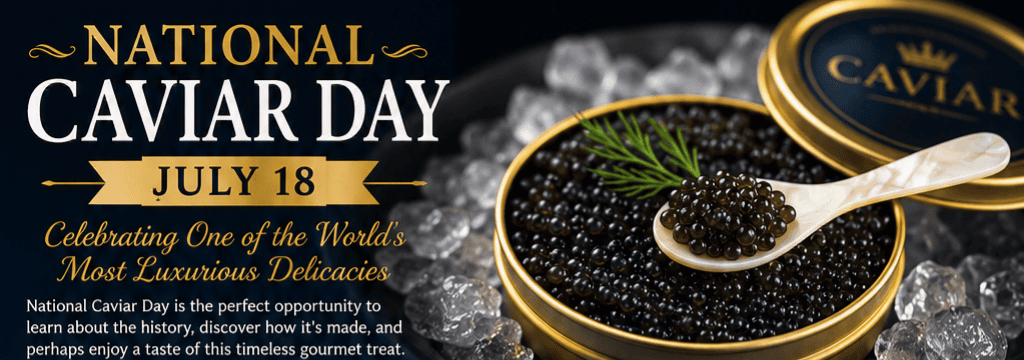
National Caviar Day is celebrated each year on July 18, honoring one of the world’s most prestigious gourmet foods. Whether enjoyed at an elegant dinner, a special celebration, or as part of a fine dining experience, caviar has long been associated with sophistication, craftsmanship, and unforgettable flavor.
While caviar may seem reserved for royalty or the wealthy, today’s growing variety of sustainable options has made this luxurious delicacy more accessible than ever. National Caviar Day is the perfect opportunity to learn about its history, discover how it’s made, and perhaps enjoy a taste for yourself.
What Is Caviar?
True caviar consists of salt-cured roe (fish eggs) harvested from sturgeon, a family of ancient fish found primarily in the Caspian Sea, Black Sea, and various rivers around the world. The eggs are carefully cleaned, lightly salted, and packaged to preserve their delicate flavor and texture.
Many products labeled as “caviar” are actually roe from other fish, including:
- Salmon
- Trout
- Paddlefish
- Whitefish
- Bowfin
- Lumpfish
- Hackleback sturgeon
While these alternatives can be delicious and more affordable, only sturgeon roe is considered true caviar.
A Delicacy with Ancient Roots
Caviar has been enjoyed for thousands of years.
Ancient Persian fishermen were among the first to recognize the value of sturgeon roe, believing it provided strength and vitality. The delicacy later spread throughout Europe, where Russian tsars and European royalty embraced caviar as a symbol of wealth and refinement.
By the 19th century, caviar had become one of the world’s most sought-after luxury foods. Ironically, during parts of American history, abundant sturgeon populations made caviar surprisingly common before overfishing dramatically reduced supplies.
Today, strict conservation efforts and sustainable aquaculture have helped protect wild sturgeon while ensuring future generations can continue enjoying authentic caviar.
Different Types of Caviar
Not all caviar tastes the same. Different sturgeon species produce eggs with unique flavors, colors, and textures.
Beluga
- Largest eggs
- Extremely creamy and buttery
- Silver to dark gray color
- One of the rarest and most expensive varieties
Osetra (Ossetra)
- Medium-sized pearls
- Rich, nutty flavor
- Gold, amber, or brown appearance
- Highly prized by chefs
Sevruga
- Smaller eggs
- Bold, briny taste
- Dark gray color
- Excellent for first-time caviar lovers
Kaluga
- Large pearls similar to Beluga
- Smooth, buttery flavor
- Sustainably farmed in many regions
American Sturgeon Caviar
Produced from farm-raised sturgeon, this variety offers outstanding quality while supporting sustainable seafood practices.
How Is Caviar Served?
One of the joys of caviar is its simplicity.
Traditional serving methods include:
- Chilled on crushed ice
- With blinis (small Russian pancakes)
- On lightly buttered toast points
- With crème fraîche
- Served with chopped egg, onion, or chives
- Accompanied by champagne or chilled vodka
Experts recommend using mother-of-pearl, bone, glass, or gold spoons, as ordinary silver utensils can subtly affect the flavor.
The Taste of Caviar
People often expect caviar to taste intensely fishy—but high-quality caviar is surprisingly delicate.
Its flavor can include notes of:
- Butter
- Sea breeze
- Hazelnuts
- Cream
- Minerals
- Umami richness
The tiny pearls gently burst in your mouth, releasing layers of flavor that linger pleasantly.
Health Benefits of Caviar
Despite its luxurious reputation, caviar also provides valuable nutrition.
It contains:
- Omega-3 fatty acids
- High-quality protein
- Vitamin B12
- Vitamin D
- Selenium
- Iron
- Calcium
- Magnesium
Omega-3 fats support heart health and brain function, while vitamin B12 helps maintain healthy nerves and red blood cells.
Because caviar is naturally high in sodium, it’s best enjoyed in moderation.
Fun Facts About Caviar
- Sturgeon have existed for over 200 million years, making them older than many dinosaur species.
- Some sturgeon can live for more than 100 years.
- Female sturgeon may take 10 to 20 years before producing their first roe.
- Premium caviar can cost hundreds or even thousands of dollars per ounce.
- Sustainable caviar farming has become the industry’s fastest-growing source of authentic caviar.
- The largest sturgeon species can weigh over 2,000 pounds.
Ways to Celebrate National Caviar Day
You don’t have to visit a five-star restaurant to enjoy National Caviar Day.
Consider celebrating by:
- Sampling authentic sturgeon caviar for the first time.
- Hosting a gourmet tasting party.
- Pairing caviar with champagne or sparkling wine.
- Learning about sustainable aquaculture and conservation.
- Trying affordable roe varieties like salmon or trout roe.
- Creating elegant appetizers for family and friends.
- Visiting a seafood market that specializes in gourmet delicacies.
Even a small tin of quality caviar can turn an ordinary evening into a memorable culinary experience.
Sustainability Matters
As demand for caviar grew over the centuries, wild sturgeon populations declined dramatically because of overfishing and habitat loss.
Today, many countries strictly regulate wild harvesting, and most premium caviar comes from responsibly managed aquaculture farms. Choosing sustainably produced caviar helps protect endangered sturgeon while supporting environmentally responsible seafood production.
When shopping, look for products certified by reputable sustainability organizations or clearly labeled as farm-raised.
Final Thoughts
National Caviar Day is about more than luxury—it’s a celebration of culinary tradition, craftsmanship, and responsible stewardship of one of nature’s most remarkable delicacies.
Whether you’re indulging in a spoonful of premium Beluga, enjoying sustainable American sturgeon caviar, or simply learning about its fascinating history, July 18 offers the perfect opportunity to appreciate the artistry behind one of the world’s most celebrated gourmet foods.
Sometimes life’s finest pleasures come in the smallest packages, and few foods capture that idea better than caviar.
Read More Holidays & National Days


Leave a Reply