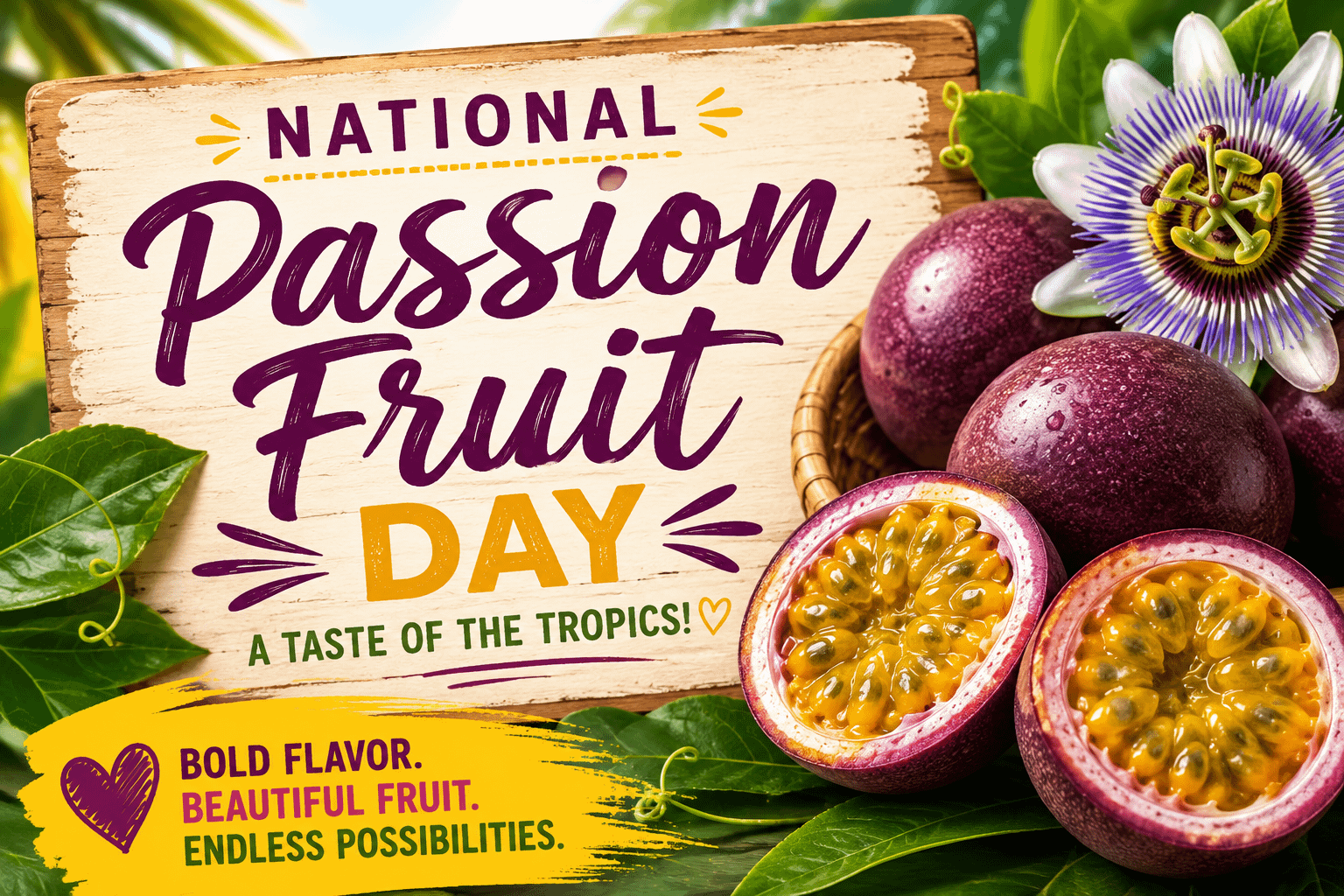
There are some fruits that are sweet, some that are tart, and others that immediately remind you of warm weather and tropical destinations. Passion fruit manages to be all three.
National Passion Fruit Day is a delicious opportunity to celebrate this small but incredibly flavorful tropical fruit. Hidden beneath its tough purple or yellow exterior is a fragrant center filled with juicy pulp and crunchy edible seeds. One spoonful delivers an unmistakable combination of sweetness, acidity, floral notes, and tropical flavor.
Passion fruit can be eaten directly from its shell, but that’s only the beginning. It can become the star ingredient in smoothies, cocktails, mocktails, lemonades, cheesecakes, sauces, sorbets, fruit salads, breakfast bowls, marinades, and countless other creations.
Whether passion fruit is already one of your favorite fruits or you’ve never tasted a fresh one, National Passion Fruit Day gives you the perfect reason to explore everything this remarkable fruit has to offer.
What Is National Passion Fruit Day?
National Passion Fruit Day is a food celebration dedicated to appreciating passion fruit and the many ways it can be enjoyed.
Like many modern food holidays, it’s also an opportunity to experiment with ingredients you might normally overlook at the grocery store.
Instead of reaching for the familiar apples, oranges, strawberries, or bananas, pick up a few passion fruits and discover what makes them special.
You don’t need an elaborate recipe to participate.
Simply slicing open a fresh passion fruit and eating the pulp with a spoon counts as a perfect celebration.
But if you’re feeling adventurous, there are dozens of delicious possibilities waiting for you.
What Is Passion Fruit?
Passion fruit is produced by certain species of passion flower vines belonging to the Passiflora genus.
The fruit is generally round or oval and roughly fits into the palm of your hand, although size varies according to variety and growing conditions.
Its exterior isn’t particularly dramatic.
Depending on the variety, passion fruit may have purple, reddish-purple, yellow, or golden skin.
The magic appears when you cut it open.
Inside is a cavity filled with fragrant yellow-orange pulp surrounding numerous dark edible seeds.
The pulp is juicy and intensely flavored, while the seeds provide a noticeable crunch.
Together they create a flavor and texture unlike most common fruits.
Where Did Passion Fruit Originate?
Passion fruit is native to South America.
Brazil, Paraguay, and surrounding regions are strongly associated with the origins of several passion flower species.
Indigenous peoples of the Americas were familiar with passion flowers and their fruits long before Europeans arrived.
As global exploration, migration, agriculture, and trade expanded, passion fruit eventually traveled far beyond its original growing region.
Today, passion fruit is cultivated in many tropical and subtropical areas around the world.
It has become an important ingredient in the cuisines and beverages of numerous countries and cultures.
The Interesting Story Behind the Name “Passion Fruit”
The name “passion fruit” often leads people to assume that it was named after romantic passion.
The real story is very different.
The name is associated with the passion flower and Christian symbolism.
European Christian missionaries who encountered passion flowers in South America interpreted parts of the unusual flower as symbols associated with the Passion of Jesus Christ.
The flower became known as the passion flower, and the fruit produced by certain passion flower vines eventually became known as passion fruit.
So despite its romantic-sounding modern name, the historical meaning of “passion” is religious rather than romantic.
The Remarkable Passion Flower
Before passion fruit develops, the vine produces one of nature’s most spectacular flowers.
Passion flowers can look almost otherworldly.
Their complex structures, bold colors, and intricate arrangements make them popular ornamental plants even among people who aren’t growing them primarily for fruit.
Depending on the species, passion flowers can feature combinations of white, purple, blue, pink, red, and other shades.
The flower eventually gives way to the fruit that we celebrate on National Passion Fruit Day.
What Does Passion Fruit Taste Like?
Passion fruit has one of the most distinctive flavors in the fruit world.
It’s often described as:
- Sweet
- Tart
- Tangy
- Floral
- Citrusy
- Tropical
- Aromatic
The exact balance changes according to variety and ripeness.
Some fruits are considerably sweeter, while others deliver a powerful tart punch.
Its concentrated flavor is one reason passion fruit works so well in recipes. You often don’t need much to make a noticeable difference.
A spoonful added to yogurt can completely transform it.
A little passion fruit added to lemonade can create an entirely different drink.
Mixed into cheesecake, mousse, or frosting, it provides a refreshing acidity that balances rich ingredients.
Popular Types of Passion Fruit
There isn’t just one type of passion fruit.
Different varieties and species are cultivated throughout the world.
Purple Passion Fruit
Purple passion fruit is one of the varieties commonly encountered in markets.
It generally develops deep purple skin as it ripens and contains fragrant golden pulp.
Its intense sweet-tart flavor makes it excellent for eating fresh or using in recipes.
Yellow Passion Fruit
Yellow passion fruit tends to be larger than many purple varieties and develops yellow or golden skin.
Its flavor can be especially tart, making it useful for juices, sauces, desserts, and other preparations where sweetness can be adjusted.
Sweet Granadilla
Sweet granadilla is a related passion fruit with an orange-colored shell.
Its interior contains familiar jelly-like pulp and edible seeds, but its flavor is typically milder and sweeter than more acidic passion fruit varieties.
Giant Granadilla
As the name suggests, giant granadilla can become much larger than typical passion fruit.
Different parts of the fruit may be used depending on preparation and regional culinary traditions.
Exploring different varieties is an excellent way to celebrate National Passion Fruit Day if you can find them.
How to Choose a Good Passion Fruit
Selecting passion fruit can feel confusing because a fruit with wrinkled skin may actually be exactly what you want.
Unlike fruits where wrinkles suggest deterioration, passion fruit commonly becomes wrinkled as it ripens.
When shopping, consider three things:
Weight: A passion fruit that feels heavy for its size generally contains plenty of juicy pulp.
Skin: Slightly wrinkled skin can indicate ripeness.
Aroma: A ripe fruit may have a noticeable tropical fragrance.
Very lightweight fruit or fruit that appears excessively dried out may have lost too much moisture.
How to Ripen Passion Fruit
If your passion fruit is still smooth and firm, you can generally leave it at room temperature until it ripens further.
As it matures, the exterior may begin to wrinkle.
Once ripe, refrigeration can help slow additional ripening.
The exact storage life varies depending on ripeness and condition, so inspect your fruit before eating.
How to Eat Fresh Passion Fruit
One of the best things about passion fruit is how little preparation it requires.
Wash the outside of the fruit.
Cut it in half.
Take a spoon.
Scoop out the pulp.
That’s it.
The seeds are edible, so there’s no need to pick them out unless you’re preparing a recipe where you want a smooth texture.
Fresh passion fruit can be eaten directly from the shell or spooned over another food.
Try adding it to:
- Greek yogurt
- Oatmeal
- Granola
- Pancakes
- Waffles
- French toast
- Cheesecake
- Vanilla ice cream
- Frozen yogurt
- Pudding
- Smoothie bowls
- Chia pudding
- Fruit salad
Sometimes the simplest preparations are the best because they allow the fruit’s natural flavor to shine.
Passion Fruit Nutrition
Passion fruit doesn’t only offer impressive flavor.
Fresh passion fruit also contains useful nutrients and naturally occurring plant compounds.
Depending on the portion and variety, passion fruit can contribute dietary fiber, vitamin C, vitamin A precursors, potassium, and other nutrients.
Its pulp and edible seeds provide fiber, something that can be reduced when fruit is heavily strained or processed.
As with other fruits, how passion fruit is prepared matters.
Fresh passion fruit and an intensely sweetened passion fruit syrup are not nutritionally equivalent.
Enjoying the whole pulp and seeds is one of the simplest ways to experience the fruit.
Passion Fruit and Vitamin C
Vitamin C is an essential nutrient that contributes to several normal functions in the human body.
Passion fruit can contribute vitamin C as part of an overall balanced diet.
It’s another reason to rotate different fruits into your meals rather than eating exactly the same fruits every day.
Passion Fruit and Fiber
One interesting advantage of eating passion fruit pulp with its seeds is the fiber it provides.
Dietary fiber is an important component of a balanced eating pattern.
Adding passion fruit to yogurt, oatmeal, or other breakfast foods is an easy way to introduce both flavor and variety.
Antioxidants in Passion Fruit
Fruits and vegetables contain numerous naturally occurring plant compounds, including antioxidants.
Passion fruit is no exception.
Rather than thinking of any single fruit as a miracle food, passion fruit can simply be one colorful and flavorful component of a varied diet rich in fruits, vegetables, whole grains, and other nutritious foods.
20 Delicious Ways to Celebrate National Passion Fruit Day
Need inspiration?
Here are some delicious ideas.
1. Eat One Fresh
Start with the simplest celebration.
Cut a ripe passion fruit in half and eat the pulp with a spoon.
2. Make Passion Fruit Lemonade
Combine fresh lemon juice with passion fruit pulp, water, ice, and sweetener.
The result is tart, refreshing, and perfect for warm weather.
3. Blend a Tropical Smoothie
Blend passion fruit with mango, pineapple, banana, yogurt, and ice.
4. Make Passion Fruit Iced Tea
Add passion fruit pulp or puree to freshly brewed iced tea.
Black tea, green tea, and herbal teas can all work.
5. Create a Passion Fruit Mocktail
Mix passion fruit with lime juice, sparkling water, ice, and mint.
6. Make a Passion Fruit Cocktail
Adults who choose to consume alcohol can combine passion fruit with rum, vodka, tequila, sparkling wine, or other spirits.
7. Spoon It Over Yogurt
Add passion fruit pulp to Greek or vanilla yogurt and top with granola.
8. Make Passion Fruit Cheesecake
The tartness of passion fruit is a wonderful contrast to rich cream cheese.
9. Create Passion Fruit Sorbet
Passion fruit’s powerful flavor makes it an excellent ingredient for refreshing frozen desserts.
10. Add It to Ice Cream
Drizzle fresh pulp over vanilla or coconut ice cream.
11. Make Passion Fruit Popsicles
Combine passion fruit puree with mango, pineapple, orange, or coconut milk and freeze it in popsicle molds.
12. Upgrade Your Pancakes
Use passion fruit pulp as a topping for pancakes or waffles.
13. Make a Tropical Fruit Salad
Combine mango, pineapple, strawberries, kiwi, banana, and passion fruit.
14. Bake Passion Fruit Cupcakes
Add passion fruit to cake batter, frosting, filling, or all three.
15. Make Passion Fruit Mousse
Its tart flavor helps balance the richness of a creamy mousse.
16. Try Passion Fruit Curd
Similar to lemon curd, passion fruit curd can be used with toast, pastries, cakes, or scones.
17. Create a Salad Dressing
Combine passion fruit with olive oil, citrus juice, and seasonings for a tropical vinaigrette.
18. Make a Tropical Salsa
Combine passion fruit with mango, pineapple, peppers, lime, cilantro, and other salsa ingredients.
19. Make Passion Fruit Sauce
Cook passion fruit pulp into a sauce for desserts or savory dishes.
20. Share It With Someone
Buy an extra passion fruit and introduce someone else to the fruit.
Food celebrations are always more fun when shared.
Easy Passion Fruit Smoothie
Celebrate National Passion Fruit Day with an easy tropical smoothie.
Ingredients
- Pulp from 2 passion fruits
- 1 banana
- 1 cup frozen mango
- ½ cup pineapple
- ¾ cup Greek yogurt
- ½ cup coconut milk or milk of choice
- Ice as needed
Directions
Add everything to a blender.
Blend until smooth.
Taste and adjust the thickness with additional milk or ice.
Pour into a glass and enjoy immediately.
Easy Passion Fruit Mocktail
Want something sparkling?
Ingredients
- Pulp from 1–2 passion fruits
- 1 tablespoon fresh lime juice
- Sparkling water
- Ice
- Fresh mint
- Sweetener, optional
Directions
Place passion fruit pulp and lime juice in a glass.
Add ice.
Top with sparkling water.
Stir gently.
Add sweetener if desired and garnish with mint.
It’s colorful, refreshing, and perfect for a tropical celebration.
Easy Passion Fruit Yogurt Bowl
National Passion Fruit Day can start at breakfast.
Ingredients
- 1 cup Greek yogurt
- 1 passion fruit
- ½ cup granola
- Fresh mango
- Fresh berries
- Honey, optional
Directions
Add yogurt to a bowl.
Top with granola, mango, and berries.
Cut the passion fruit in half and spoon the pulp over everything.
Drizzle with a little honey if desired.
Passion Fruit Flavor Pairings
Passion fruit works beautifully with many ingredients.
Some of the best combinations include:
Mango: Sweet mango balances passion fruit’s tartness.
Coconut: Creamy coconut softens the acidity.
Pineapple: Together they create an intensely tropical flavor.
Lime: Lime emphasizes passion fruit’s refreshing acidity.
Vanilla: Vanilla provides a warm contrast to its brightness.
Chocolate: Rich chocolate and tart passion fruit can create an impressive dessert combination.
Berries: Strawberries and raspberries pair especially well with passion fruit.
Banana: Banana adds sweetness and creaminess to smoothies.
Ginger: Ginger contributes warmth and spice.
Mint: Fresh mint makes passion fruit beverages especially refreshing.
Passion Fruit for Breakfast
You don’t have to wait until dessert to enjoy passion fruit.
Breakfast is actually one of the easiest times to use it.
Try passion fruit over oatmeal with sliced banana and coconut.
Spoon it onto yogurt with granola.
Add it to chia pudding.
Blend it into your morning smoothie.
Use it as a topping for pancakes or waffles.
Its strong flavor means even a small amount can make an ordinary breakfast feel special.
Passion Fruit Desserts
Dessert is where passion fruit truly shines.
Its tartness creates a natural contrast with sugar, cream, butter, chocolate, and other rich ingredients.
Popular possibilities include:
- Cheesecake
- Mousse
- Tart
- Pavlova
- Sorbet
- Ice cream
- Gelato
- Macarons
- Cupcakes
- Cake
- Panna cotta
- Custard
- Pudding
- Cookies
- Popsicles
If you’re hosting a National Passion Fruit Day celebration, a passion fruit cheesecake or mousse can make an impressive centerpiece.
Passion Fruit Drinks
Passion fruit is equally at home in a glass.
It can be used in:
- Lemonade
- Iced tea
- Smoothies
- Sparkling water
- Mocktails
- Cocktails
- Fruit punch
- Slushies
- Frozen drinks
For a quick refresher, add passion fruit pulp, lime juice, and ice to sparkling water.
Passion Fruit in Savory Cooking
Don’t assume passion fruit belongs exclusively in sweet recipes.
The fruit’s acidity can make it an interesting ingredient in savory cooking.
Passion fruit can be incorporated into vinaigrettes, glazes, sauces, marinades, and salsas.
A tropical salsa containing passion fruit, mango, lime, cilantro, and peppers can complement grilled foods.
Passion fruit vinaigrette can bring sweetness and acidity to salads featuring avocado, greens, fruit, chicken, or seafood.
Experimenting with savory uses is an excellent National Passion Fruit Day challenge for adventurous cooks.
Fun Passion Fruit Facts
How much do you know about today’s tropical star?
Passion Fruit Grows on Vines
Passion fruit doesn’t grow on a traditional fruit tree.
It develops on climbing vines.
The Seeds Are Edible
Those crunchy black seeds inside the fruit can be eaten along with the pulp.
Wrinkles Can Be Good
Don’t judge passion fruit the same way you judge an apple.
A wrinkled exterior can be associated with ripeness.
Passion Flowers Are Extraordinary
The flowers produced by passion vines are among the most distinctive flowers you’ll encounter.
There Are Numerous Passion Flower Species
The Passiflora genus contains many species, although only certain ones are cultivated primarily for edible fruit.
Passion Fruit Has a Powerful Aroma
Cutting open a ripe passion fruit can immediately release a strong tropical fragrance.
Passion Fruit Is Used Around the World
Its flavor appears in juices, desserts, sauces, candies, beverages, and traditional dishes in many regions.
Purple Isn’t the Only Color
Passion fruits can have purple, yellow, orange, or other colored exteriors depending on the type.
Growing Passion Fruit at Home
National Passion Fruit Day might even inspire you to become a gardener.
Passion fruit vines prefer climates and growing conditions appropriate to their particular variety.
Because they’re vigorous climbers, they generally require sturdy support.
A trellis, arbor, or strong fence can provide a structure for the vine to climb.
Sunlight, soil conditions, temperature, water, pollination, and variety all influence success.
Gardeners should research recommendations for their local climate before planting.
Even when fruit production isn’t the primary goal, the spectacular flowers can make passion vines fascinating garden plants.
Passion Fruit Around the World
Passion fruit’s journey from South America to other tropical and subtropical regions demonstrates how ingredients can travel and become incorporated into different food traditions.
Today you’ll encounter passion fruit beverages, desserts, sauces, yogurts, candies, and juices across many countries.
Its international popularity comes partly from its versatility.
Passion fruit can feel at home in an elegant restaurant dessert, a street-side fruit juice, a breakfast smoothie, or a homemade tropical punch.
That versatility has helped transform it from a regional fruit into an internationally recognized flavor.
Host a National Passion Fruit Day Party
Why not turn the celebration into a tropical gathering?
Create a menu featuring passion fruit and complementary tropical ingredients.
Serve passion fruit lemonade and mocktails.
Prepare mango-passion fruit salsa.
Offer a colorful tropical fruit platter.
Finish the meal with passion fruit cheesecake, mousse, or sorbet.
Decorations can feature tropical flowers, bright colors, palm leaves, and fresh fruit.
You could even create a passion fruit tasting table.
Let guests sample fresh passion fruit alongside passion fruit juice, curd, jam, sauce, candy, and dessert.
Ask everyone to vote for their favorite.
National Passion Fruit Day Activities for Kids
Passion fruit can also make National Passion Fruit Day an educational experience for children.
Let them examine the outside of the fruit before cutting it open.
Ask them to guess what it looks like inside.
Then cut it open and explore the pulp and seeds.
Children can describe its smell, texture, appearance, and flavor.
Turn it into a simple lesson about tropical agriculture, plant growth, seeds, geography, or nutrition.
Afterward, make passion fruit popsicles or smoothies together.
Learning becomes much more memorable when you can eat the lesson.
Create a Tropical Fruit Taste Test
Passion fruit doesn’t have to celebrate alone.
Purchase several tropical fruits and organize a family taste test.
Try passion fruit alongside:
- Mango
- Papaya
- Pineapple
- Dragon fruit
- Guava
- Star fruit
- Coconut
- Lychee
- Kiwi
Rate each fruit based on appearance, aroma, sweetness, tartness, and overall flavor.
Then crown your family’s tropical fruit champion.
Support Local Farmers and Markets
Depending on where you live, passion fruit may be available from local growers, specialty produce stores, international markets, or farmers markets.
National Passion Fruit Day can be an opportunity to explore somewhere new.
Talk with produce sellers about the varieties they carry and ask how they recommend eating them.
You may discover other unfamiliar fruits while you’re there.
Share Your Passion Fruit Creation
Food holidays have become especially popular because they’re easy to share.
Photograph your passion fruit smoothie, cheesecake, mocktail, fruit bowl, or fresh fruit and post it on social media.
Use hashtags such as:
#NationalPassionFruitDay
#PassionFruitDay
#PassionFruit
#TropicalFruit
#FoodHoliday
Encourage friends to share how they enjoy passion fruit too.
Why National Passion Fruit Day Is Worth Celebrating
At first glance, celebrating a fruit might seem like a small thing.
But food connects us with agriculture, geography, history, culture, family, creativity, and one another.
Trying an unfamiliar fruit can introduce us to flavors from another part of the world.
Cooking a new recipe can become a family memory.
Sharing food with someone else can create a conversation.
National Passion Fruit Day doesn’t require an elaborate celebration.
It simply gives us an excuse to be curious.
And sometimes curiosity begins with something as simple as cutting open a fruit you’ve never tried before.
Celebrate the Flavor of the Tropics
National Passion Fruit Day celebrates one of nature’s most unusual and flavorful creations.
Its exterior might not immediately attract attention, but inside you’ll discover fragrant golden pulp packed with sweet, tart, and tropical flavor.
Eat it straight from the shell.
Blend it with mango.
Mix it into lemonade.
Spoon it over yogurt.
Turn it into cheesecake.
Freeze it into sorbet.
Shake it into a tropical drink.
Or experiment with something completely new.
However you celebrate, take a moment on National Passion Fruit Day to appreciate the incredible variety of fruits grown around the world.
Sometimes the smallest fruits deliver the biggest flavors.
Read More Holidays & National Days
Leave a Reply