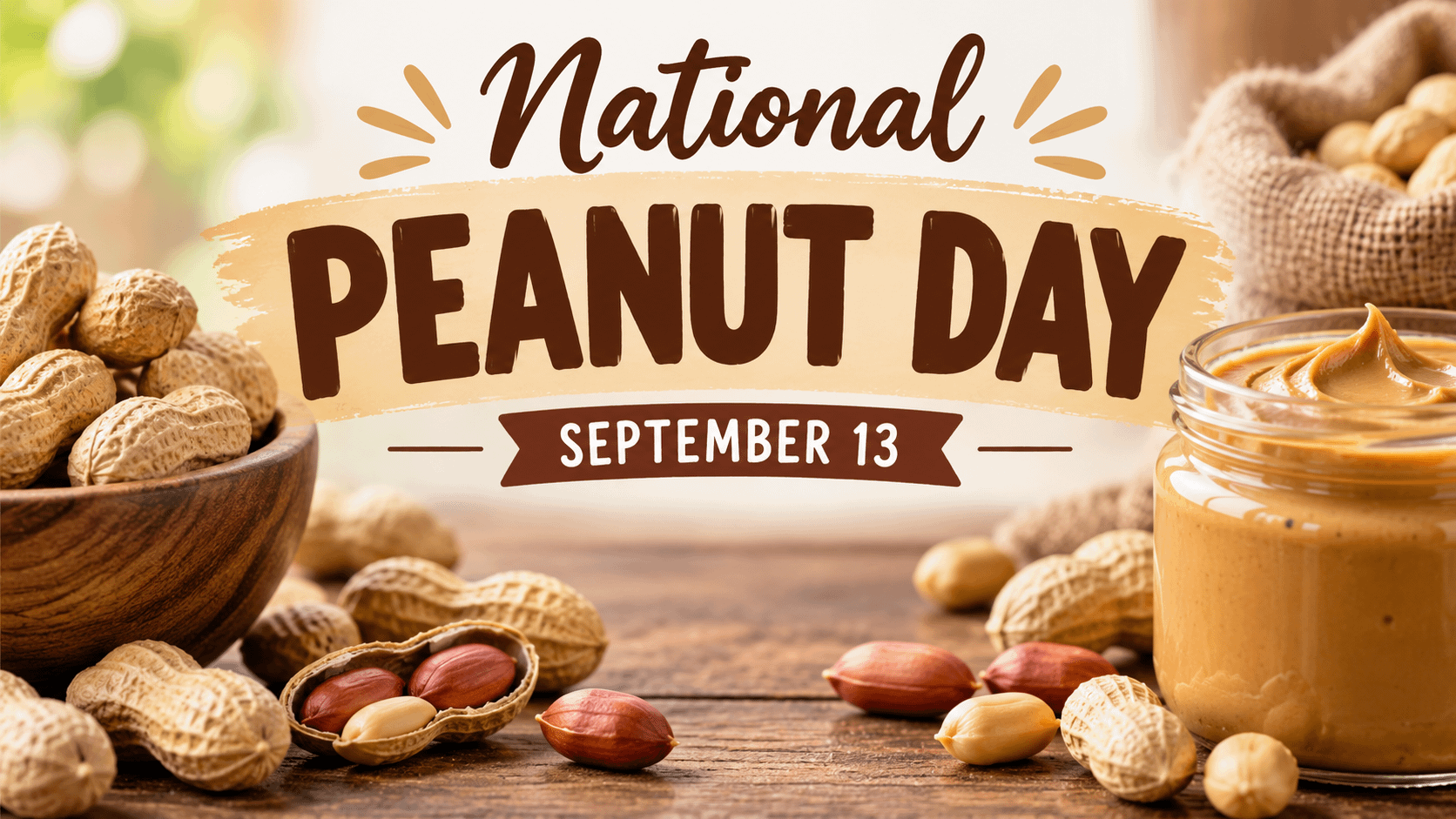
Every year on September 13, peanut lovers have an excellent excuse to grab a handful of roasted peanuts, make a classic peanut butter sandwich, or enjoy a favorite peanut-filled dessert. It’s National Peanut Day, a celebration dedicated to one of the most familiar and versatile foods in American kitchens.
Peanuts may be small, but their influence is enormous. They appear at baseball games, in candy bars, in trail mixes, in sauces, in baked goods, and, of course, in jars of peanut butter. They can be sweet, salty, crunchy, creamy, roasted, boiled, ground, or incorporated into an impressive range of dishes.
National Peanut Day is more than an opportunity to snack. It is also a chance to appreciate the history of the peanut, learn how peanuts grow, recognize their role in American agriculture, and discover a few new ways to enjoy them.
When Is National Peanut Day?
National Peanut Day is celebrated annually on September 13.
It should not be confused with National Peanut Butter Day, which is celebrated on January 24. September 13 puts the spotlight on the peanut itself and all the different ways people use it.
From a simple bowl of salted peanuts to peanut brittle, peanut sauces, peanut butter cookies, and peanut-topped ice cream, there are plenty of ways to participate.
Peanuts Aren’t Actually Nuts
Here is one of the most interesting facts about peanuts: they aren’t true nuts.
Botanically, peanuts are legumes.
That puts them in the same general plant family as foods such as beans, peas, and lentils. Unlike tree nuts such as walnuts, almonds, and pecans, peanuts develop underground.
The peanut plant produces small yellow flowers above the soil. After pollination, a structure called a peg grows downward and enters the ground. The peanut pods then develop beneath the soil.
This unusual growing process is one of the characteristics that makes peanuts so fascinating.
So while we call them “nuts” in everyday conversation, scientifically, the peanut belongs to an entirely different category.
A Brief History of Peanuts
Peanuts have been part of the human diet for thousands of years.
Evidence points to peanuts originating in South America, where Indigenous peoples cultivated and consumed them long before they became common elsewhere in the world.
European exploration and expanding global trade eventually helped carry peanuts to other continents. They became established in parts of Africa and Asia and later became an important crop in North America.
Peanuts grew in importance in the United States during the 19th century.
Their popularity increased considerably during and after the Civil War, when both soldiers and civilians became more familiar with them as an inexpensive and portable source of food.
By the late 1800s and early 1900s, peanuts were becoming increasingly associated with American entertainment and everyday life.
Roasted peanuts became a familiar concession at circuses and sporting events. Vendors selling peanuts at baseball games helped establish a tradition that remains recognizable generations later.
And then there was peanut butter.
The Rise of Peanut Butter
For many Americans, it is almost impossible to talk about peanuts without talking about peanut butter.
The development of modern peanut butter involved several inventors and food innovators rather than one single person. Various forms of ground peanut paste existed long before the familiar jars found in supermarkets today.
During the late 19th and early 20th centuries, new processing techniques helped turn peanut butter into a commercially successful product.
Eventually, peanut butter became an American household staple.
The classic peanut butter and jelly sandwich became especially iconic. It is inexpensive, easy to prepare, portable, and endlessly customizable.
Crunchy or creamy?
Grape or strawberry jelly?
White bread, wheat bread, toast, or something completely different?
People may disagree about the perfect combination, but PB&J has earned its place as one of America’s most recognizable sandwiches.
George Washington Carver and the Peanut
One of the most famous names associated with peanuts is George Washington Carver.
Carver was an agricultural scientist and educator whose work helped farmers understand the value of crop diversification and soil conservation.
He encouraged farmers, particularly in the South, to rotate crops rather than continuously planting cotton. Crops such as peanuts and sweet potatoes offered farmers alternatives while helping improve agricultural practices.
Carver also investigated numerous practical uses for agricultural crops, including peanuts.
An important misconception, however, deserves correcting: George Washington Carver did not invent peanut butter.
His connection to peanuts came primarily through agricultural research, education, and efforts to encourage new uses and markets for crops that could benefit farmers.
His work nevertheless helped make the peanut an important symbol of agricultural innovation in American history.
Why Peanuts Became So Popular
Part of the peanut’s success comes from its versatility.
You can eat peanuts straight from the shell, roast them, season them, grind them, bake with them, add them to candy, sprinkle them over desserts, or incorporate them into savory meals.
They also work well with an enormous variety of flavors.
Chocolate and peanuts are an obvious pairing. So are peanuts and caramel.
But peanuts can also complement chili peppers, garlic, soy sauce, ginger, lime, honey, cinnamon, and numerous other ingredients.
Different cultures have developed their own ways of using peanuts and peanut-based sauces, demonstrating that the peanut’s appeal extends far beyond American peanut butter sandwiches.
Peanuts at the Ballpark
Few foods have a stronger connection to American baseball culture than peanuts.
For generations, spectators have cracked peanut shells while watching innings unfold.
The association became so strong that peanuts are even immortalized in the famous baseball song “Take Me Out to the Ball Game,” with its reference to peanuts and Cracker Jack.
That connection represents something larger about food and tradition.
Sometimes a food becomes special because of where and when we eat it.
A bag of peanuts at home might simply be a snack. A bag of peanuts shared while sitting in the stands at a baseball game can become part of a memory.
National Peanut Day celebrates those traditions too.
Popular Ways to Enjoy Peanuts
You certainly don’t need an elaborate recipe to celebrate National Peanut Day.
Sometimes the simplest options are the best.
Try a handful of dry-roasted peanuts for an afternoon snack. Add chopped peanuts to oatmeal, yogurt, or a smoothie bowl for extra crunch.
Peanut butter can be spread over toast and topped with sliced bananas, apples, strawberries, or a drizzle of honey.
For something sweeter, peanuts are fantastic in cookies, brownies, fudge, chocolate bark, cakes, pies, and homemade candies.
If you prefer savory flavors, use chopped peanuts as a topping for noodles, salads, stir-fries, or vegetables.
Peanut-based sauces can also transform an ordinary meal into something much more interesting.
Classic Peanut Butter Cookies
National Peanut Day is an ideal excuse to make a batch of peanut butter cookies.
Ingredients
- 1/2 cup unsalted butter, softened
- 1/2 cup creamy peanut butter
- 1/2 cup granulated sugar
- 1/2 cup packed brown sugar
- 1 large egg
- 1 teaspoon vanilla extract
- 1 1/4 cups all-purpose flour
- 3/4 teaspoon baking soda
- 1/4 teaspoon salt
- Extra granulated sugar for rolling, optional
Directions
Preheat the oven to 350°F and line a baking sheet with parchment paper.
Cream the softened butter, peanut butter, granulated sugar, and brown sugar together until smooth and fluffy.
Add the egg and vanilla extract and mix until combined.
In a separate bowl, whisk together the flour, baking soda, and salt.
Gradually add the dry ingredients to the peanut butter mixture.
Scoop the dough into small balls. Roll them lightly in granulated sugar if desired and arrange them on the prepared baking sheet.
Use a fork to gently press each cookie in one direction and then the other, creating the familiar crisscross peanut butter cookie pattern.
Bake for approximately 9–11 minutes, or until the edges are lightly golden.
Allow the cookies to cool for several minutes on the baking sheet before transferring them to a cooling rack.
Pour yourself a glass of milk, grab a warm cookie, and National Peanut Day suddenly feels complete.
Make Your Own Peanut Trail Mix
Another easy celebration idea is creating homemade peanut trail mix.
There really isn’t a wrong combination.
Start with roasted peanuts and add ingredients such as:
- Almonds
- Cashews
- Raisins
- Dried cranberries
- Banana chips
- Pretzels
- Chocolate chips
- Dark chocolate pieces
- Sunflower seeds
- Pumpkin seeds
- Toasted coconut
- Cereal
Mix everything together and store it in an airtight container.
You can customize the proportions depending on whether you want something sweet, salty, crunchy, or a combination of all three.
Sweet and Savory Peanut Ideas
National Peanut Day is also a great opportunity to experiment.
For a sweet treat, melt chocolate and spoon small portions onto parchment paper. Sprinkle chopped peanuts over the chocolate and allow it to set. You have an incredibly simple homemade peanut chocolate bark.
For something savory, toss roasted peanuts with a little smoked paprika, garlic powder, chili powder, or cayenne pepper.
You can also combine peanut butter with ingredients such as soy sauce, lime juice, garlic, ginger, and a little sweetness to create a flavorful sauce for noodles or vegetables.
Peanuts don’t have to stay in the snack bowl.
Peanuts and Nutrition
Peanuts pack considerable nutrition into a small serving.
They provide plant-based protein, along with unsaturated fats, fiber, and several vitamins and minerals.
Because peanuts are calorie-dense, portion size can matter, particularly when they’re eaten as a casual snack. Choosing varieties without excessive added salt or sugar can also be useful depending on your dietary needs.
Peanut butter can offer similar nutritional benefits, although products vary considerably. Some contain primarily peanuts and salt, while others include added sugars and oils.
Reading the ingredient label makes it easier to choose the option that works best for you.
A Serious Note About Peanut Allergies
While National Peanut Day is fun for many people, peanuts can pose a serious health risk to people with peanut allergies.
Peanut allergies can cause severe and potentially life-threatening reactions.
If you’re preparing peanut-containing foods for a school, workplace, party, community gathering, or other shared environment, always consider whether anyone has a peanut allergy.
Cross-contact can also be dangerous, so simply removing visible peanuts from a dish may not make it safe.
Celebrating responsibly means making sure everyone can participate safely, even if their celebration involves choosing a completely peanut-free treat.
Fun Peanut Facts
Peanuts are full of surprises.
They grow underground even though the plant flowers above ground.
They are legumes rather than true botanical nuts.
They can be eaten raw in some preparations, roasted, boiled, ground into peanut butter, pressed for oil, or incorporated into countless recipes.
Peanut shells also have uses beyond simply protecting the kernels.
And despite the peanut’s close association with the United States, its history stretches much farther back and reaches across cultures and continents.
That’s quite an impressive story for something that can fit in the palm of your hand.
How to Celebrate National Peanut Day
There are countless ways to make September 13 a little more peanut-filled.
Make a peanut butter and jelly sandwich you haven’t eaten since childhood. Bake peanut butter cookies with your family. Try boiled peanuts if you’ve never experienced them. Make homemade peanut brittle. Add chopped peanuts to your favorite ice cream sundae.
You could also prepare a savory peanut sauce, experiment with spicy roasted peanuts, make peanut butter banana toast for breakfast, or assemble homemade trail mix.
Another fun idea is holding a creamy versus crunchy peanut butter taste test.
Set out several varieties and see which one wins.
For families with children, National Peanut Day can even become a small educational activity. Learn how peanut plants grow and discover why something we call a nut is actually a legume.
Just remember to verify that everyone participating can safely consume peanuts.
The Power of Simple Foods
National food days can seem silly on the surface, but they often provide an opportunity to appreciate the ordinary things that become woven into our lives.
Peanuts are a perfect example.
Maybe they remind you of cracking shells at a baseball game.
Maybe it’s the peanut butter sandwich packed in your childhood lunchbox.
Perhaps it’s your grandmother’s peanut butter cookies, peanut brittle during the holidays, chocolate peanut candies from the corner store, or the peanut butter toast you still make when you need a quick breakfast.
Food has an extraordinary ability to connect us to memories.
A smell or taste can suddenly transport us to another place and time.
That’s part of what makes days like National Peanut Day enjoyable. We aren’t merely celebrating an ingredient. We’re celebrating all the recipes, traditions, memories, and moments connected to it.
Celebrate the Peanut on September 13
From its South American origins to its enormous role in American agriculture and food culture, the humble peanut has traveled an impressive journey.
Today, peanuts appear everywhere from ballparks and lunchboxes to restaurant kitchens and dessert tables.
They can become something as simple as a handful of roasted peanuts or something as indulgent as a chocolate peanut butter dessert.
However you choose to celebrate, September 13 is a great day to appreciate one of the world’s most versatile little legumes.
Grab your favorite peanut snack, make something delicious, share it with someone you care about, and enjoy National Peanut Day.
What is your favorite way to enjoy peanuts—roasted, boiled, covered in chocolate, baked into a dessert, or turned into creamy or crunchy peanut butter?
Leave a Reply