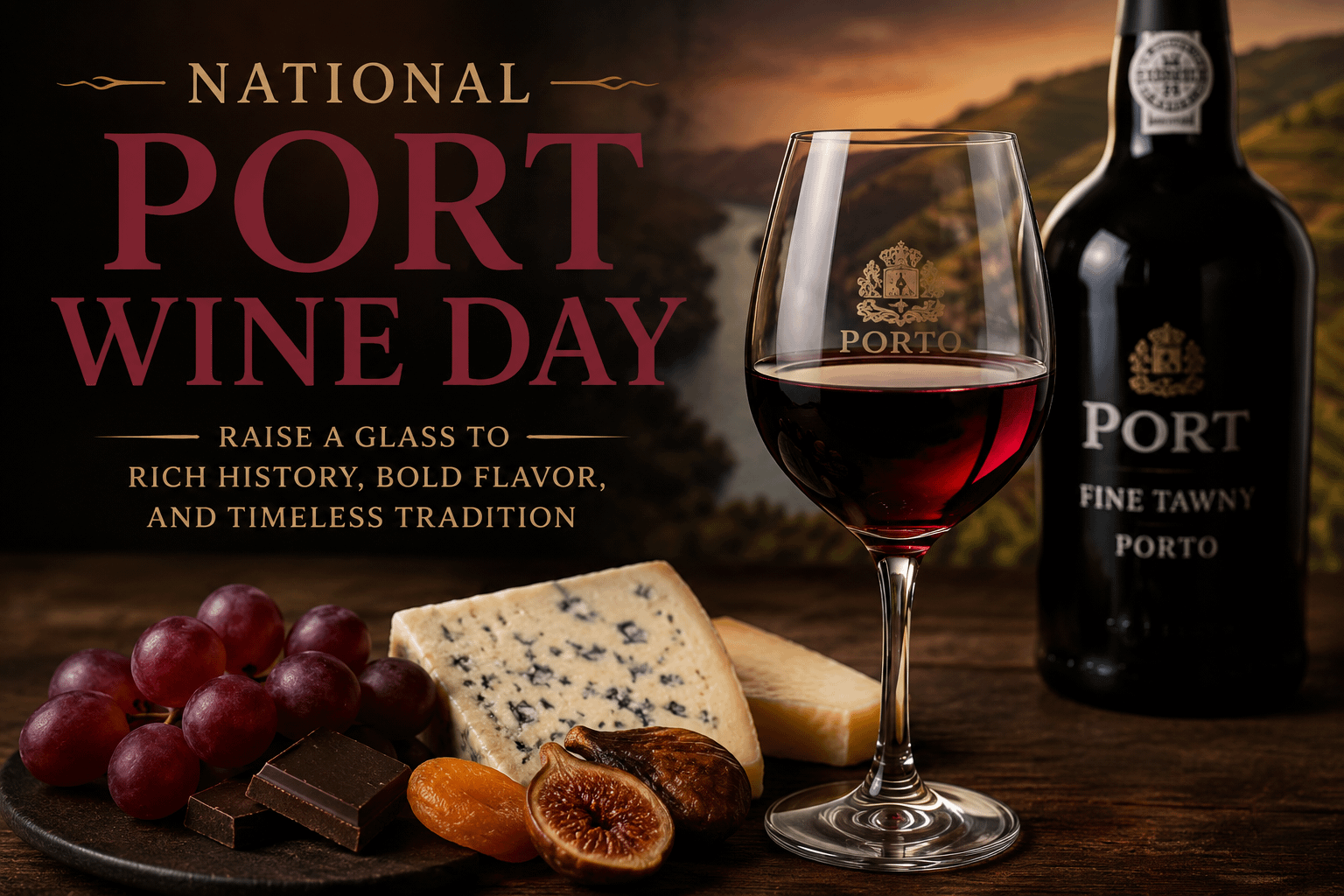
There are wines made for warm afternoons, wines that pair beautifully with dinner, and wines that seem almost designed for slowing down at the end of the evening. Port belongs firmly in that last category.
National Port Wine Day celebrates one of the world’s most distinctive fortified wines—a drink known for its rich flavors, deep history, remarkable variety, and centuries-old connection to Portugal.
From the dark fruit and chocolate notes of a Ruby Port to the nutty, caramel-like complexity of an aged Tawny Port, Port offers an experience that is very different from an ordinary glass of table wine. It can accompany dessert, complement cheese, become part of a cocktail, or simply be enjoyed slowly on its own.
National Port Wine Day is an opportunity to discover what makes this famous wine so special, learn a little about its history, and perhaps pour a small glass to appreciate a tradition that has survived for generations.
What Is Port Wine?
Port is a fortified wine traditionally produced in Portugal’s Douro Valley.
The word “fortified” is important because Port isn’t produced exactly like ordinary wine. During fermentation, grape spirit is added to the wine. This stops fermentation before all of the natural grape sugars have been converted into alcohol.
The result is typically a wine that is both sweeter and stronger than standard table wine.
Many Ports fall somewhere around 19–20% alcohol by volume, although the exact amount depends on the producer and style.
That combination of sweetness, strength, fruit, and complexity gives Port its unmistakable character.
But saying that Port is simply a “sweet wine” doesn’t really capture what makes it interesting.
Depending on the style and age, you may discover flavors and aromas reminiscent of:
- Blackberries
- Cherries
- Plums
- Raisins
- Figs
- Caramel
- Toffee
- Vanilla
- Nuts
- Chocolate
- Coffee
- Baking spices
- Dried fruit
Some Ports are intensely fruity and youthful, while others spend decades developing extraordinarily complex flavors.
That’s part of the fun of exploring Port: two bottles carrying the same general name can provide dramatically different experiences.
The Portuguese Roots of Port
Port’s identity is inseparable from Portugal.
The Douro Valley of northern Portugal is one of the world’s oldest and most celebrated wine-producing regions. Vineyards climb steep hillsides overlooking the Douro River, creating one of Europe’s most recognizable wine landscapes.
Wine has been produced in the region for centuries.
Port as we recognize it today became closely associated with international trade, particularly between Portugal and Britain.
During periods when political conflict made French wine difficult for British merchants to obtain, Portugal became an increasingly important wine supplier.
There was one problem.
The journey from Portugal to Britain could be difficult on wine.
Fortification helped stabilize the wine for transportation. Over time, producers refined their techniques, and what originally had practical benefits developed into an entirely distinctive wine style.
Port eventually became internationally famous.
The wine would become so valuable and important that regulations were established to protect its origin and production.
Today, authentic Port remains deeply connected to Portugal’s Douro region.
The Douro Valley
The landscape where Port begins is almost as impressive as the wine itself.
The Douro Valley contains steep slopes carved by the Douro River and its tributaries. Generations of growers have cultivated vineyards on hillsides that would seem almost impossible to farm.
Terraces stretch across the landscape.
During the growing season, vines cover the hillsides. When autumn arrives, the colors of the vineyards can transform the valley into shades of gold, orange, red, and brown.
The climate can also be demanding.
Summers can become extremely hot and dry, while winters may be cold.
Yet grapevines have adapted remarkably well to these conditions.
The challenging environment contributes to grapes with concentrated flavors—exactly the kind of fruit necessary for producing powerful Port wines.
How Port Wine Is Made
Port begins much like other wines.
Grapes are harvested, crushed, and fermented.
During fermentation, yeast naturally converts grape sugar into alcohol.
However, Port producers intentionally interrupt this process.
A neutral grape spirit known as aguardente is added while some natural sugar remains in the wine.
The additional alcohol stops the yeast from continuing fermentation.
Because not all the grape sugar has been converted, the wine retains noticeable sweetness.
The spirit also increases the alcohol content.
From there, the wine may follow very different aging paths depending on the style the producer wants to create.
Some Ports are aged primarily in bottles.
Others spend years—or even decades—aging in wooden barrels.
Those different aging methods help create the major styles of Port.
Ruby Port
Ruby Port is often one of the easiest introductions to Port.
As its name suggests, it usually maintains a deep ruby or purple-red color.
Ruby Ports emphasize fresh fruit flavors rather than extended oxidative aging.
Common characteristics include:
Black cherry, blackberry, raspberry, plum, chocolate, and spice.
They tend to taste youthful, fruity, sweet, and powerful.
Ruby Port can be delicious alongside chocolate desserts, brownies, chocolate cake, or strong cheeses.
It can also be enjoyed on its own after dinner.
For someone trying Port for the first time, Ruby is often an approachable place to begin.
Tawny Port
Tawny Port provides a completely different experience.
Rather than emphasizing youthful fruit, Tawny Port spends extended time aging in wooden barrels.
Exposure to small amounts of oxygen gradually transforms the wine.
Its color changes from deep red toward amber, copper, or tawny brown.
Its flavors change too.
Instead of primarily tasting fresh berries, you may discover:
Caramel, toasted nuts, dried fruit, vanilla, figs, butterscotch, cinnamon, and toffee.
Tawny Ports may carry age indications such as:
10 Year, 20 Year, 30 Year, or 40 Year.
These aren’t necessarily wines made entirely from one specific vintage. Instead, they are typically blends created to represent the character associated with that approximate age.
Older Tawny Ports can become remarkably complex.
They are wines meant to be sipped slowly.
Vintage Port
Vintage Port sits among the most prestigious styles.
It is produced from grapes harvested during a single exceptional year.
Not every year becomes a declared vintage.
When producers believe growing conditions have created extraordinary grapes capable of long-term aging, they may declare a vintage.
Vintage Port usually spends relatively little time aging in wood before being bottled.
The wine then continues developing inside the bottle.
Great Vintage Ports can age for decades.
Young Vintage Port may taste intensely fruity and powerful. As it matures, those flavors can evolve into layers of dried fruit, spice, chocolate, tobacco, and other complex characteristics.
Opening an older Vintage Port can become an occasion itself.
Because sediment naturally develops during bottle aging, mature Vintage Port is commonly decanted before serving.
Late Bottled Vintage Port
Late Bottled Vintage—usually abbreviated LBV—offers another interesting option.
Like Vintage Port, LBV comes from grapes harvested during a single year.
However, it spends considerably longer aging in barrels before bottling.
That extended aging means LBV Port is generally more approachable when purchased.
It can provide some of the depth associated with Vintage Port without requiring decades of bottle aging.
For many wine drinkers, LBV offers an excellent balance between quality, complexity, accessibility, and price.
White Port
Not all Port is red.
White Port is produced from white grape varieties.
Styles range from sweet to relatively dry.
Depending on the wine, flavors might include citrus, honey, stone fruit, nuts, flowers, or dried fruit.
White Port can be served chilled.
It is also frequently used in cocktails.
One classic Portuguese combination mixes White Port with tonic water, usually served over ice with citrus.
It creates a lighter and refreshing way to experience Port—particularly during warm weather.
Rosé Port
Rosé Port is a more modern addition to the Port family.
It combines Port’s fruit-forward personality with a lighter, fresher drinking style.
You may find flavors reminiscent of strawberries, raspberries, cherries, or other red fruits.
Rosé Port is commonly served chilled and can also work well in cocktails.
It demonstrates something important about Port:
Although the wine has centuries of tradition behind it, producers continue experimenting with new ways for people to enjoy it.
Port and Chocolate
Few combinations are more famous than Port and chocolate.
The sweetness and concentrated fruit flavors of Ruby-style Ports can complement rich chocolate desserts particularly well.
Consider pairing Port with:
Chocolate cake
Dark chocolate
Chocolate truffles
Brownies
Chocolate cheesecake
Chocolate mousse
Flourless chocolate cake
A useful rule when pairing dessert wine with dessert is to make sure the wine is at least as sweet as the food.
Otherwise, the wine may taste surprisingly bitter or thin.
A rich Ruby or LBV Port can stand up beautifully to intense chocolate flavors.
Port and Cheese
Port also has a legendary relationship with cheese.
One of the most famous combinations is Vintage Port and Stilton cheese.
The sweetness of the wine contrasts with the salty intensity of blue cheese, creating an unforgettable sweet-and-savory combination.
Other cheeses worth experimenting with include:
Aged cheddar
Gorgonzola
Roquefort
Blue cheese
Gouda
Brie
Manchego
Add walnuts, dried fruit, figs, or dark chocolate and you have the foundation for an impressive after-dinner cheese board.
What Foods Go With Port?
Although dessert and cheese receive most of the attention, Port can accompany many foods.
Depending on the style, try it with:
Roasted nuts
Dried fruit
Fig desserts
Caramel desserts
Bread pudding
Crème brûlée
Apple desserts
Pecan pie
Chocolate desserts
Strong cheeses
Tawny Port can be particularly enjoyable with nut-based and caramel desserts.
Ruby-style Ports tend to work beautifully with chocolate and berry flavors.
White Port opens even more possibilities because drier versions can work as an aperitif before dinner.
How to Serve Port
Port deserves a little more attention than simply opening the bottle and filling a large wine glass.
Because Port has a higher alcohol content and intense flavor, servings are generally smaller than traditional wine pours.
Around 2–3 ounces is often plenty.
You also don’t need an enormous glass.
A smaller wine glass works well, although dedicated Port glasses are available.
The most important thing is having enough room in the glass to experience the aromas.
Temperature matters too.
Ruby and Vintage Ports can generally be served slightly cooler than normal room temperature.
Tawny Port may also benefit from slight chilling.
White and Rosé Ports are commonly served chilled.
Experimentation is worthwhile because temperature can dramatically affect how sweetness, alcohol, and aroma are perceived.
Does Port Need to Be Decanted?
Sometimes.
Young Ruby, Tawny, and many LBV Ports can often be poured directly from the bottle.
Older Vintage Ports are different.
During years of bottle aging, sediment develops naturally.
Decanting separates the clear wine from that sediment.
It also allows the wine to interact with oxygen, which can help its aromas and flavors open.
Decanting a mature Vintage Port can become part of the experience rather than simply another step.
Port Isn’t Just for Dessert
Port has traditionally been associated with the end of dinner.
But modern bartenders and wine drinkers are finding additional uses for it.
Port can be incorporated into cocktails with spirits such as:
Bourbon
Brandy
Gin
Rum
Whiskey
It can also be combined with tonic water, sparkling wine, citrus, or bitters.
Because Port already contains sweetness and concentrated flavor, even a small amount can dramatically change a cocktail.
White Port and tonic is perhaps one of the simplest examples.
Fill a glass with ice, add White Port and tonic, garnish with citrus, and you have an easy refreshing drink that feels completely different from the traditional image of Port beside a fireplace.
A Wine Designed for Slow Moments
There is something about Port that encourages you to slow down.
You don’t normally pour a huge glass and drink it quickly.
You pour a little.
You smell it.
You taste it.
You notice how the flavors change as the wine sits in the glass.
Maybe you enjoy it alongside a piece of dark chocolate.
Maybe you pour it after a special dinner.
Maybe you share a bottle with friends while conversation continues long after the plates have been cleared.
That slower experience is part of Port’s charm.
In a world where everything seems designed to happen faster, there is something refreshing about a drink that asks for patience.
A Tradition Worth Discovering
Wine traditions survive because generations continue finding meaning and enjoyment in them.
Port has traveled from the steep vineyards of Portugal’s Douro Valley to dining rooms, restaurants, wine cellars, and bars around the world.
Its history stretches back centuries, but its appeal isn’t limited to history.
Port remains interesting because there is so much variety within the category.
Someone who doesn’t particularly enjoy a young Ruby Port may fall in love with a 20-year Tawny.
Someone who thinks Port is only an after-dinner drink may discover White Port and tonic.
Someone interested in collecting wine may discover the extraordinary aging potential of Vintage Port.
There is always something else to explore.
Celebrating National Port Wine Day
National Port Wine Day doesn’t require an elaborate celebration.
You can keep things simple.
Choose a bottle you’ve never tried before.
Pour a small glass.
Pair it with cheese, chocolate, nuts, or dessert.
Compare Ruby and Tawny Port side by side.
Try White Port chilled.
Make a White Port and tonic.
Read about Portugal’s Douro Valley.
Or gather a few friends and create a small Port tasting featuring several different styles.
The goal doesn’t need to be drinking more.
It can simply be tasting more intentionally.
Notice the aroma.
Notice the sweetness.
Notice the fruit.
Notice how the flavor changes after several minutes in the glass.
Great drinks become more interesting when we pay attention to them.
National Port Wine Day: A Toast to Centuries of Winemaking
National Port Wine Day celebrates much more than a sweet fortified wine.
It celebrates vineyards carved into Portuguese hillsides.
It celebrates generations of grape growers and winemakers.
It celebrates centuries of international wine history.
And it celebrates one of life’s simplest pleasures: sitting down with something worth savoring.
Whether your glass contains a youthful Ruby, an elegant Tawny, an impressive Vintage Port, a chilled White Port, or something completely new to you, take a moment to appreciate the craftsmanship and history behind it.
Port isn’t meant to be rushed.
Perhaps that’s exactly why it still feels special.
If you could celebrate National Port Wine Day with one pairing, would you choose Port with chocolate, cheese, dessert, or simply enjoy a glass by itself?
Leave a Reply