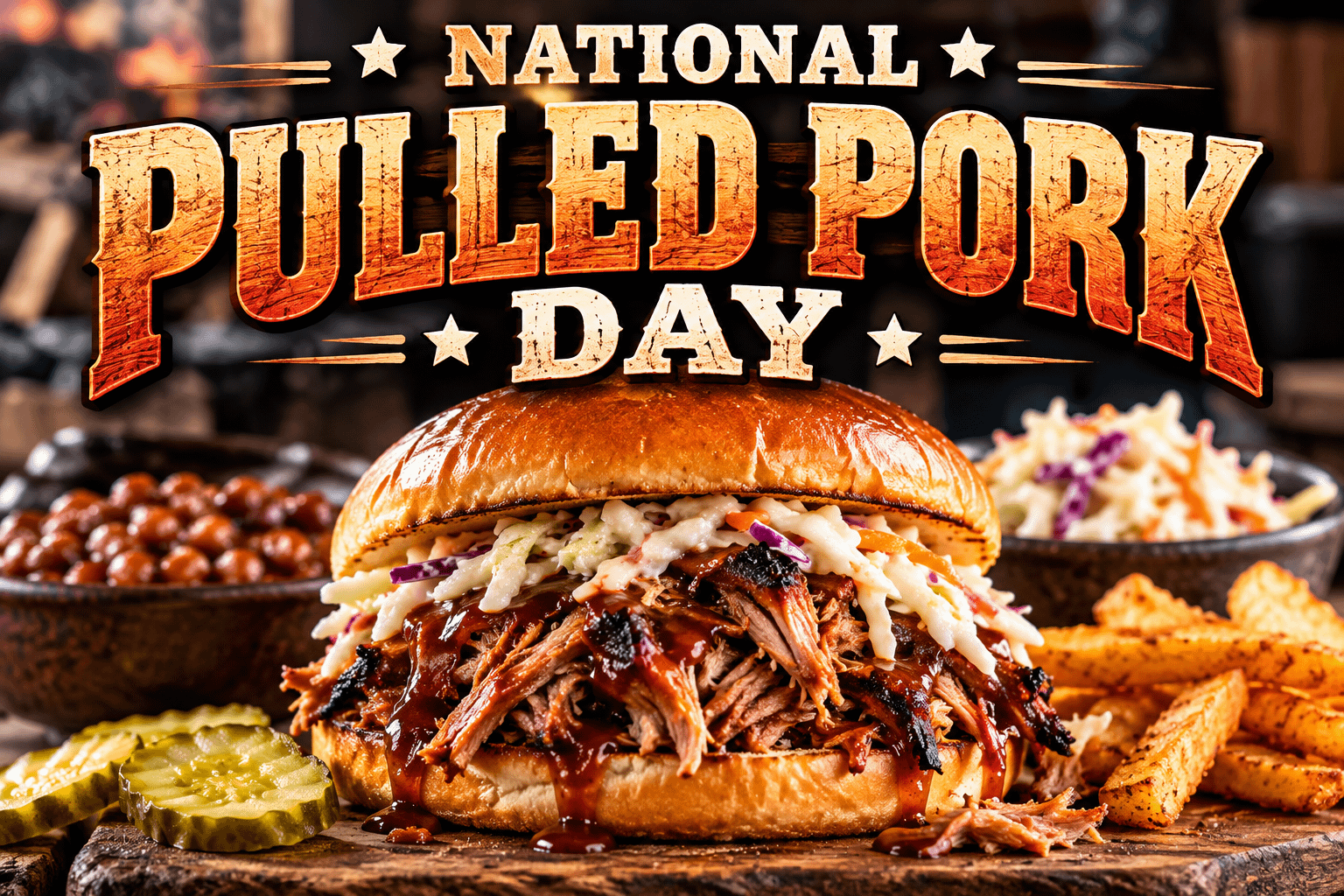
Every year on October 12, food lovers across the country celebrate National Pulled Pork Day, a day dedicated to one of the most flavorful, tender, and satisfying dishes to come out of American barbecue traditions.
Pulled pork is comfort food at its best. A pork shoulder is cooked low and slow until it becomes so tender that it can easily be pulled apart with forks or by hand. Add barbecue sauce, pile it onto a bun, serve it alongside traditional sides, or enjoy it straight from the plate, and you have a meal that is difficult to resist.
National Pulled Pork Day is the perfect excuse to fire up the smoker, slow cooker, grill, or oven and enjoy a generous helping of this barbecue classic.
What Is Pulled Pork?
Pulled pork is typically made from pork shoulder, often sold as pork butt or Boston butt. Despite the name, pork butt actually comes from the upper shoulder of the pig.
This cut contains plenty of connective tissue and fat, which makes it ideal for slow cooking. When given enough time at a relatively low temperature, the tough connective tissues break down and the meat becomes incredibly tender.
Once cooked, the pork is shredded or “pulled” into bite-sized strands.
From there, the possibilities are nearly endless.
Pulled pork can be served with barbecue sauce, seasoned with a dry rub, piled onto sandwiches, stuffed into tacos, placed over nachos, added to baked potatoes, or incorporated into dozens of other dishes.
The American Barbecue Tradition
Pulled pork has especially deep roots in the barbecue traditions of the American South.
Different regions developed their own methods for seasoning, smoking, saucing, and serving pork. Those regional differences are part of what makes American barbecue so interesting.
In parts of the Carolinas, for example, pork barbecue is traditionally associated with tangy vinegar-based sauces. Other regions may favor sweeter tomato-based sauces or sauces featuring mustard.
There are also differences in how the pork itself is prepared. Some pitmasters cook whole hogs, while others specialize in shoulders.
There may never be complete agreement over which barbecue style is the “right” one—and that’s part of the fun.
National Pulled Pork Day gives everyone an opportunity to appreciate those different traditions.
Why Low and Slow Works
Pulled pork isn’t something you want to rush.
Pork shoulder benefits from hours of slow cooking because the process gives collagen and connective tissue time to break down.
This is where the famous barbecue expression “low and slow” comes into play.
Smoking pork shoulder can take many hours depending on its size and cooking temperature. The reward for that patience is meat that practically falls apart when it’s finished.
You don’t need a professional smoker to make excellent pulled pork, either.
A slow cooker is one of the easiest methods for home cooks. Pulled pork can also be prepared successfully in an oven, pressure cooker, pellet grill, charcoal grill, or other suitable cooking setup.
Each method creates a slightly different result.
A Simple Pulled Pork Recipe
Want to celebrate National Pulled Pork Day at home? Try this simple version.
Ingredients
- 4–5 pound boneless pork shoulder
- 2 tablespoons brown sugar
- 1 tablespoon smoked paprika
- 2 teaspoons garlic powder
- 2 teaspoons onion powder
- 1 teaspoon salt
- 1 teaspoon black pepper
- 1 teaspoon chili powder
- 1 cup barbecue sauce
- 1/2 cup apple juice or chicken broth
- Hamburger or brioche buns
- Coleslaw, optional
Directions
Combine the brown sugar, paprika, garlic powder, onion powder, salt, pepper, and chili powder.
Pat the pork shoulder dry and coat it generously with the seasoning mixture.
Place the pork into your slow cooker and pour the apple juice or chicken broth around the meat.
Cover and cook on low for approximately 8–10 hours, or until the pork is very tender and pulls apart easily. Cooking time will vary depending on the size and shape of the roast and the slow cooker.
Remove the pork and shred it using two forks. Discard large pieces of excess fat.
Return the shredded pork to the slow cooker and mix in your favorite barbecue sauce. Add some of the cooking liquid if you want the meat extra juicy.
Serve warm.
For food safety, whole cuts of pork are considered safe at a lower minimum internal temperature, but pulled pork is intentionally cooked well beyond that point so the connective tissue breaks down and the meat becomes easy to shred.
Build the Perfect Pulled Pork Sandwich
One of the simplest—and arguably most satisfying—ways to enjoy pulled pork is on a sandwich.
Start with a soft bun.
Pile on plenty of warm pulled pork and add your favorite barbecue sauce. Then top it with cool, crunchy coleslaw.
That combination gives you almost everything you could want in one bite: smoky meat, sweet or tangy sauce, crunchy vegetables, and a soft bun.
Want some heat? Add sliced jalapeños.
Want more crunch? Add pickles or crispy onions.
Want to go completely over the top? Add macaroni and cheese directly onto the sandwich.
There really aren’t many rules.
The Best Sides for Pulled Pork
Pulled pork is delicious by itself, but the side dishes can turn it into a complete barbecue feast.
Classic choices include macaroni and cheese, baked beans, potato salad, coleslaw, cornbread, collard greens, corn on the cob, French fries, pickles, and roasted vegetables.
For a backyard barbecue, you could put several sides on the table and let everyone build their own plate.
It’s simple, casual, and perfect for feeding a crowd.
More Ways to Use Pulled Pork
Pulled pork doesn’t have to be limited to sandwiches.
Leftover pulled pork can become the foundation for an entirely different meal the following day.
Try making pulled pork tacos with tortillas, onions, cilantro, salsa, and lime.
Scatter pulled pork over tortilla chips with cheese, jalapeños, sour cream, and barbecue sauce for loaded pulled pork nachos.
Add it to a baked potato with cheese and green onions.
Use it as a pizza topping with barbecue sauce, red onions, and mozzarella.
You can even mix pulled pork into macaroni and cheese for an incredibly rich comfort-food dinner.
Making a large pork shoulder therefore isn’t necessarily a problem. The leftovers might be the best part.
How to Celebrate National Pulled Pork Day
The obvious way to celebrate October 12 is to eat some pulled pork.
Make your own at home and experiment with a new seasoning blend or barbecue sauce. If you have a smoker, dedicate the day to smoking a pork shoulder and enjoying the process.
You could also visit a local barbecue restaurant and see how its pitmasters prepare their pork.
Another idea is to organize a backyard barbecue with friends and family. Make pulled pork the centerpiece and ask everyone else to bring a favorite barbecue side.
For something more adventurous, create a small barbecue sauce tasting. Try vinegar-based, mustard-based, sweet, spicy, smoky, and traditional sauces and see which one everyone prefers.
A Meal Made for Sharing
There is something about barbecue that naturally brings people together.
You can place a tray of pulled pork in the middle of a table, surround it with buns, sauces, pickles, coleslaw, and side dishes, and let everyone create their own meal.
It doesn’t need to be fancy.
That’s part of its appeal.
Good barbecue is about patience, flavor, tradition, and enjoying food with other people.
Celebrate October 12 With Something Delicious
National Pulled Pork Day is a celebration of a dish that proves great food doesn’t always need complicated ingredients.
Sometimes all you need is a good piece of pork, the right seasoning, plenty of time, and a little patience.
Whether you smoke your pork for hours, let it slowly cook while you’re at work, or head to your favorite barbecue restaurant, October 12 is a great day to enjoy this American barbecue favorite.
Pile it high on a bun, drizzle it with your favorite sauce, add some coleslaw, and don’t forget the sides.
How do you like your pulled pork—sweet and smoky, spicy, vinegar-based, or covered in your favorite barbecue sauce?