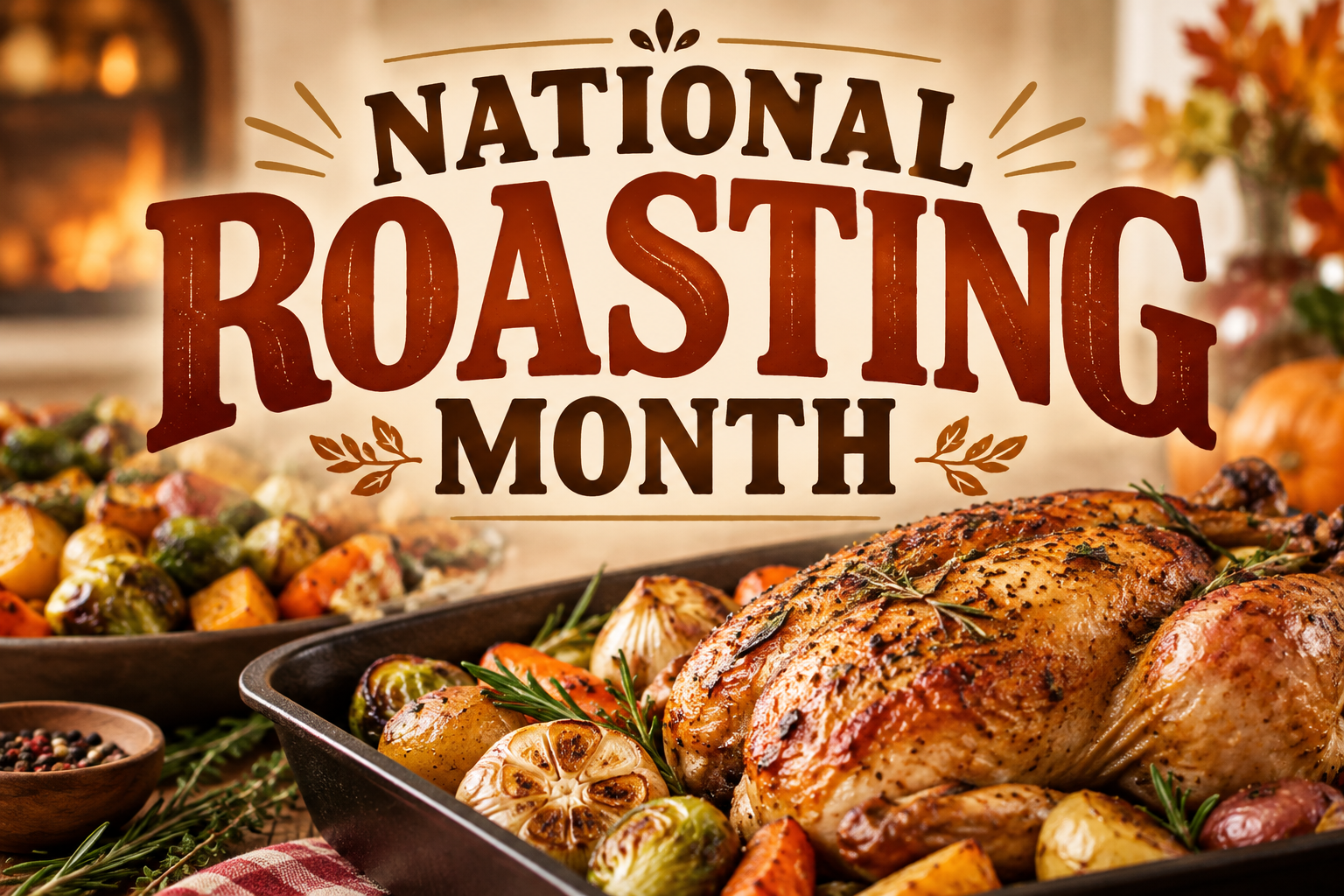
November Is National Roasting Month
There is something special about the comforting aroma of food roasting in the oven. Whether it is a golden-brown turkey, perfectly seasoned vegetables, a tender roast beef, or a delicious tray of roasted potatoes, roasting brings warmth, flavor, and tradition to the dinner table.
Every November, National Roasting Month celebrates one of the oldest and most beloved cooking methods in the world.
As temperatures begin to drop and families prepare for Thanksgiving and the upcoming holiday season, roasting becomes an essential part of home cooking.
From traditional Sunday dinners to elaborate holiday feasts, roasting has a way of bringing people together.
But National Roasting Month is about more than preparing delicious meals. It is also an opportunity to explore cooking traditions, experiment with new flavors, and appreciate the simple pleasures of homemade food.
Whether you are an experienced home cook or someone just learning your way around the kitchen, November is the perfect time to discover everything roasting has to offer.
What Is National Roasting Month?
National Roasting Month is observed throughout November and celebrates the cooking technique of roasting food using dry heat.
Roasting typically involves cooking food in an oven, over an open flame, or through another source of surrounding dry heat.
This cooking method helps develop rich flavors, appealing textures, and beautifully browned surfaces.
Some of the most popular foods prepared through roasting include:
-
Turkey and chicken
-
Beef and pork
-
Potatoes and sweet potatoes
-
Carrots and Brussels sprouts
-
Butternut squash and pumpkin
-
Garlic and onions
-
Nuts and seeds
National Roasting Month encourages people to explore traditional roasting methods while discovering new recipes and creative ways to prepare their favorite ingredients.
It is also an excellent opportunity to prepare comforting meals that can be shared with family and friends.
The History of Roasting Food
Roasting is one of humanity’s oldest cooking techniques.
Long before modern kitchens, electric ovens, and sophisticated cooking equipment existed, early humans prepared food over open fires.
The discovery and controlled use of fire transformed how people prepared and consumed food.
Cooking meat over flames made it easier to chew and digest while creating flavors that raw ingredients could not provide.
Roasting in Ancient Civilizations
Ancient civilizations developed increasingly sophisticated methods of roasting food.
The Egyptians, Greeks, and Romans prepared meats over open fires and used early ovens for cooking.
Roasted meats often appeared at celebrations, religious gatherings, and important social occasions.
In ancient Rome, elaborate feasts sometimes featured roasted poultry, pork, and other meats seasoned with herbs and spices.
These cooking traditions helped establish roasting as a method associated with hospitality and celebration.
Roasting During the Middle Ages
During medieval times, roasting became particularly popular in European kitchens.
Large pieces of meat were frequently cooked over open hearths using spits.
A spit was a long metal or wooden rod used to rotate meat above or beside a fire.
In wealthy households, servants sometimes spent hours turning roasting spits to ensure the meat cooked evenly.
Roasted meats were often served during festivals, banquets, and important celebrations.
The Development of Modern Roasting
As cooking technology improved, enclosed ovens became more common.
By the nineteenth and twentieth centuries, advances in household stoves and ovens made roasting easier and more accessible.
Today, modern kitchens offer numerous ways to roast food, including conventional ovens, convection ovens, countertop roasting ovens, and air fryers.
Although the equipment has changed, the basic principle remains the same: using heat to transform simple ingredients into flavorful meals.
Why Is National Roasting Month Celebrated in November?
November is an especially fitting month to celebrate roasting.
In the United States, Thanksgiving is one of the biggest food-centered holidays of the year.
Roasted turkey remains a traditional centerpiece of many Thanksgiving dinners.
However, November also marks the beginning of colder weather across much of the country.
As families spend more time indoors, hearty oven-roasted meals become increasingly appealing.
Seasonal vegetables such as squash, sweet potatoes, carrots, and Brussels sprouts are also excellent candidates for roasting.
National Roasting Month provides an opportunity to celebrate these comforting dishes while preparing for the holiday season.
The Science Behind Delicious Roasted Food
Have you ever wondered why roasted food tastes so delicious?
The answer involves chemistry.
When food is exposed to high temperatures, several changes occur that affect its flavor, texture, and appearance.
The Maillard Reaction
One of the most important processes involved in roasting is the Maillard reaction.
This chemical reaction occurs when amino acids and certain sugars interact under heat.
It creates many of the complex flavors and aromas associated with browned foods.
The Maillard reaction contributes to the delicious crust on roasted meats, browned potatoes, and many other savory dishes.
Caramelization
Caramelization occurs when sugars are heated and begin to break down into new compounds.
This process contributes sweetness, color, and rich flavor to many roasted vegetables.
For example, roasting carrots or onions can bring out their natural sweetness.
Sweet potatoes and butternut squash also develop delicious flavors when exposed to dry heat.
Moisture Evaporation
Roasting causes some moisture to evaporate from the surface of food.
This helps create crispy exteriors while allowing the inside to remain tender when properly cooked.
Finding the right balance between surface browning and interior moisture is one of the secrets to successful roasting.
10 Popular Foods to Enjoy During National Roasting Month
1. Roast Turkey
A classic holiday favorite, roasted turkey is especially popular during Thanksgiving. Herbs, butter or oil, and seasonings help create a flavorful centerpiece.
2. Roast Chicken
Whole roasted chicken is an affordable and versatile family dinner. Garlic, lemon, rosemary, and thyme make excellent additions.
3. Roasted Potatoes
Crispy on the outside and fluffy inside, roasted potatoes pair beautifully with nearly any main course.
4. Roasted Brussels Sprouts
Roasting gives Brussels sprouts delicious browned edges and a pleasantly nutty flavor.
5. Roast Beef
Roast beef is a traditional choice for Sunday dinners, holiday gatherings, and special occasions.
6. Roasted Sweet Potatoes
Naturally sweet and rich in nutrients, sweet potatoes become especially flavorful when roasted with cinnamon, paprika, or rosemary.
7. Roasted Butternut Squash
This seasonal favorite develops a soft texture and sweet, nutty flavor when roasted.
8. Roasted Garlic
Roasting transforms sharp garlic cloves into a soft, mellow ingredient that can be spread on bread or mixed into sauces.
9. Roasted Pork Loin
Seasoned pork loin makes a satisfying main course for family dinners and holiday celebrations.
10. Roasted Nuts
Almonds, pecans, walnuts, and cashews can be roasted to enhance their aroma and flavor. They make excellent snacks and additions to holiday recipes.
The Health Benefits of Roasting Food
Roasting can be a healthy cooking method when ingredients and preparation techniques are chosen carefully.
Unlike deep-frying, roasting generally requires relatively little added fat.
1. Encourages Vegetable Consumption
Roasting can make vegetables more appealing by enhancing their natural flavors.
People who dislike steamed or boiled vegetables may enjoy the sweeter taste and browned texture of roasted vegetables.
2. Allows Control Over Ingredients
Preparing roasted meals at home allows you to control the amount of salt, oil, sugar, and seasonings used.
This can make it easier to create meals that fit your nutritional needs.
3. Provides Opportunities for Balanced Meals
A roasted chicken breast served with roasted vegetables and a whole grain can provide protein, fiber, vitamins, and minerals.
4. Can Reduce the Need for Heavy Sauces
Because roasting develops natural flavor, foods may require fewer rich sauces or additional ingredients.
5. Supports Meal Preparation
Roasted vegetables and proteins can be prepared in larger batches and used throughout the week.
However, roasting is not automatically healthier than every other cooking method. Nutrition depends on the ingredients, cooking temperatures, portion sizes, and added fats.
Avoid excessive charring, especially when cooking meats, and use safe internal cooking temperatures.
Easy Recipe: Garlic Herb Roasted Chicken and Vegetables
One of the best ways to celebrate National Roasting Month is by preparing a simple, satisfying meal.
This garlic herb roasted chicken and vegetable recipe is perfect for a family dinner.
Ingredients
-
4 bone-in chicken thighs
-
1 pound baby potatoes, halved
-
3 large carrots, sliced
-
1 medium onion, cut into wedges
-
3 tablespoons olive oil
-
4 garlic cloves, minced
-
1 teaspoon dried rosemary
-
1 teaspoon dried thyme
-
1 teaspoon paprika
-
½ teaspoon salt, or to taste
-
½ teaspoon black pepper
-
1 lemon, cut into wedges
Instructions
-
Preheat the oven. Set your oven to 425°F (220°C).
-
Prepare the vegetables. Place potatoes, carrots, and onions in a large roasting pan.
-
Season the ingredients. Combine olive oil, garlic, rosemary, thyme, paprika, salt, and pepper. Toss the vegetables with some of the mixture.
-
Add the chicken. Place chicken thighs among the vegetables and coat them with the remaining seasoning mixture.
-
Roast. Cook for approximately 40–50 minutes, or until the chicken reaches a safe internal temperature of 165°F (74°C) and the vegetables are tender. Cooking time varies with the size of the chicken pieces.
-
Finish and serve. Let the chicken rest briefly, squeeze fresh lemon over the dish, and serve warm.
For crispier vegetables, avoid overcrowding the roasting pan. Use two pans if necessary.
Essential Tips for Perfect Roasting
Successful roasting requires more than simply placing food in the oven.
A few simple techniques can make a significant difference.
Preheat Your Oven
Always allow the oven to reach the desired temperature before adding food.
Proper preheating helps encourage consistent cooking and browning.
Avoid Overcrowding the Pan
When ingredients are packed too closely together, moisture can become trapped.
Instead of roasting, the food may begin to steam.
Leave enough space between ingredients to allow hot air to circulate.
Cut Vegetables into Similar Sizes
Uniform pieces help vegetables cook at approximately the same rate.
This prevents smaller pieces from burning before larger pieces become tender.
Use the Right Temperature
Many vegetables roast well between 400°F and 425°F.
However, larger cuts of meat may require different temperatures depending on the recipe.
Season Generously but Thoughtfully
Herbs, spices, garlic, citrus, and olive oil can enhance roasted foods without overwhelming their natural flavors.
Use a Meat Thermometer
A reliable food thermometer is one of the most important tools for roasting meat safely.
Color alone is not a dependable indicator of doneness.
For example, poultry should reach 165°F, while whole cuts of beef and pork generally require at least 145°F followed by a three-minute rest.
Let Meat Rest
Resting roasted meat before slicing helps retain moisture and improves the eating experience.
How to Celebrate National Roasting Month
There are many enjoyable ways to participate in National Roasting Month.
You do not need expensive ingredients or professional cooking equipment to celebrate.
Try a new roasted vegetable. Experiment with parsnips, turnips, cauliflower, beets, or fennel.
Prepare a traditional Sunday roast. Gather family or friends around a home-cooked meal.
Explore international roasting traditions. Discover dishes inspired by Mediterranean, Middle Eastern, Asian, African, and Latin American cuisines.
Host a roasting-themed dinner. Invite guests to bring their favorite roasted dish and share recipes.
Teach someone how to roast. Help a child, friend, or beginner cook learn a valuable kitchen skill.
Create a weekly meal plan. Roast ingredients in advance and incorporate them into lunches and dinners.
Experiment with seasoning blends. Try smoked paprika, cumin, rosemary, thyme, oregano, or garlic powder.
Reduce food waste. Roast vegetables that are still safe to eat but need to be used soon.
The goal is to enjoy the process of cooking while discovering new ways to make delicious meals.
Roasting Traditions Around the World
Roasting is not limited to American holiday meals.
Different cultures have developed their own distinctive roasting traditions.
United Kingdom: Sunday Roast
The traditional British Sunday roast often features roasted meat, potatoes, vegetables, gravy, and Yorkshire pudding.
It remains a familiar meal associated with family gatherings.
Mexico: Roasted Meats and Vegetables
Mexican cooking includes numerous roasted preparations, including meats, peppers, tomatoes, and other ingredients used in flavorful sauces and dishes.
Mediterranean Countries: Herb-Roasted Dishes
Mediterranean cooking frequently incorporates roasted vegetables, chicken, lamb, olive oil, garlic, and fresh herbs.
Middle East: Spiced Roasted Meats
Many Middle Eastern cuisines feature roasted meats seasoned with aromatic spices and served alongside rice, vegetables, or flatbreads.
East Asia: Roasted Poultry and Pork
Roasted duck, pork, and other meats have long-standing culinary traditions in several East Asian cuisines.
These examples demonstrate how roasting connects people across cultures through shared cooking techniques and distinctive flavors.
Roasting vs. Baking: What Is the Difference?
Roasting and baking are closely related cooking methods.
Both generally use dry heat inside an oven.
The distinction is often based more on culinary tradition and the type of food being prepared than on a fundamentally different heating process.
Roasting commonly refers to cooking meats, poultry, and vegetables.
Baking is more frequently associated with breads, cakes, pastries, and casseroles.
However, the terms sometimes overlap.
For example, potatoes may be described as baked potatoes or roasted potatoes depending on how they are prepared.
Both techniques can produce delicious results when the correct temperature and cooking time are used.
Budget-Friendly Roasting Ideas
One of the advantages of roasting is that it can turn inexpensive ingredients into satisfying meals.
You do not need costly cuts of meat or specialty products to enjoy roasted food.
Some affordable ideas include:
-
Roasted chicken thighs with potatoes
-
Roasted carrots with garlic and herbs
-
Sheet-pan sausage and vegetables
-
Roasted sweet potatoes with black beans
-
Roasted cauliflower with paprika
-
Whole roasted chicken with seasonal vegetables
-
Roasted chickpeas with spices
-
Roasted cabbage wedges
Buying seasonal produce and planning meals around grocery store specials can help reduce food costs.
Leftover roasted vegetables can also be added to soups, salads, wraps, grain bowls, and omelets.
Common Roasting Mistakes to Avoid
Even experienced home cooks occasionally make mistakes when roasting.
Understanding these common problems can help improve your results.
Using too much oil: Excessive oil can leave vegetables greasy instead of crisp.
Cooking everything at the same temperature and time: Different ingredients require different cooking conditions.
Opening the oven too frequently: Repeatedly opening the door causes heat loss and may affect cooking consistency.
Forgetting to turn vegetables: Turning vegetables partway through cooking can encourage more even browning.
Not checking internal temperatures: Undercooked meat can pose food safety risks.
Overcooking food: Leaving ingredients in the oven too long can cause dryness, burning, and unpleasant flavors.
Using the wrong pan: A shallow, sturdy roasting pan or rimmed baking sheet often works better for browning than a deep, crowded dish.
Small adjustments can dramatically improve the flavor and texture of roasted meals.
Fun Facts About Roasting
Roasting has a fascinating history and several interesting characteristics.
-
Roasting over open flames predates modern ovens by thousands of years.
-
The Maillard reaction is named after French chemist Louis-Camille Maillard, who described the reaction in 1912.
-
Roasting can enhance the sweetness of vegetables by concentrating flavors and promoting browning.
-
Coffee beans are roasted to develop many of the flavors and aromas associated with brewed coffee.
-
Nuts are often roasted to improve their aroma, flavor, and crunch.
-
Convection ovens circulate hot air, which can promote more even browning and sometimes reduce cooking time.
-
Roasted garlic becomes noticeably milder and sweeter than raw garlic.
-
Sheet-pan meals have become popular because they simplify preparation and cleanup.
National Roasting Month and the Importance of Family Traditions
Food has always played an important role in bringing people together.
A roasted meal can become much more than dinner.
It can represent a family tradition, a cherished holiday memory, or an opportunity to spend meaningful time with loved ones.
For some families, the aroma of a roasting turkey brings back memories of Thanksgiving celebrations.
For others, a Sunday roast recalls childhood dinners around the kitchen table.
Recipes are often passed down through generations, carrying stories and traditions along with them.
Preparing a familiar dish can provide a comforting connection to the past.
At the same time, creating new recipes and traditions allows families to build memories for the future.
National Roasting Month reminds us that cooking is not simply about preparing food.
It is also about connection, hospitality, creativity, and sharing.
Frequently Asked Questions About National Roasting Month
When is National Roasting Month celebrated?
National Roasting Month is observed throughout November.
What is the purpose of National Roasting Month?
The observance celebrates roasting as a cooking technique and encourages people to explore roasted foods, recipes, and culinary traditions.
What foods are best for roasting?
Popular choices include poultry, beef, pork, potatoes, carrots, Brussels sprouts, squash, garlic, and nuts.
Is roasting healthier than frying?
Roasting can use less added fat than deep-frying, making it a useful option for preparing balanced meals. The overall nutritional value depends on the ingredients and cooking method.
What temperature is best for roasting vegetables?
Many vegetables roast successfully at temperatures between 400°F and 425°F, although cooking times vary depending on the ingredient and size.
Can you roast vegetables without oil?
Yes. Vegetables can be roasted without oil, although the final texture and browning may differ. A small amount of oil often helps improve flavor and surface browning.
Can an air fryer be used for roasting?
Yes. Air fryers use circulating hot air and can roast many foods, including vegetables, potatoes, and smaller cuts of meat.
Why does roasted food taste different from boiled food?
Roasting encourages browning reactions and moisture evaporation, which produce flavors and textures that differ from those created by boiling.
Final Thoughts: Celebrate the Flavor and Tradition of National Roasting Month
National Roasting Month is a wonderful reminder that some of the most satisfying meals begin with simple ingredients, thoughtful seasoning, and the warmth of an oven.
From perfectly roasted vegetables to traditional holiday dinners, roasting offers endless opportunities to create delicious food.
It is a cooking method that has connected generations, crossed cultural boundaries, and remained an essential part of kitchens around the world.
As November arrives, consider experimenting with a new roasting recipe, revisiting a family favorite, or gathering loved ones around the dinner table.
You may discover that the best part of roasting is not simply the delicious food.
It is the memories, conversations, and moments of togetherness that happen while sharing it.
What is your favorite food to roast, and is there a special roasted dish that brings back memories of family gatherings or holiday celebrations?
Happy National Roasting Month!



Leave a Reply