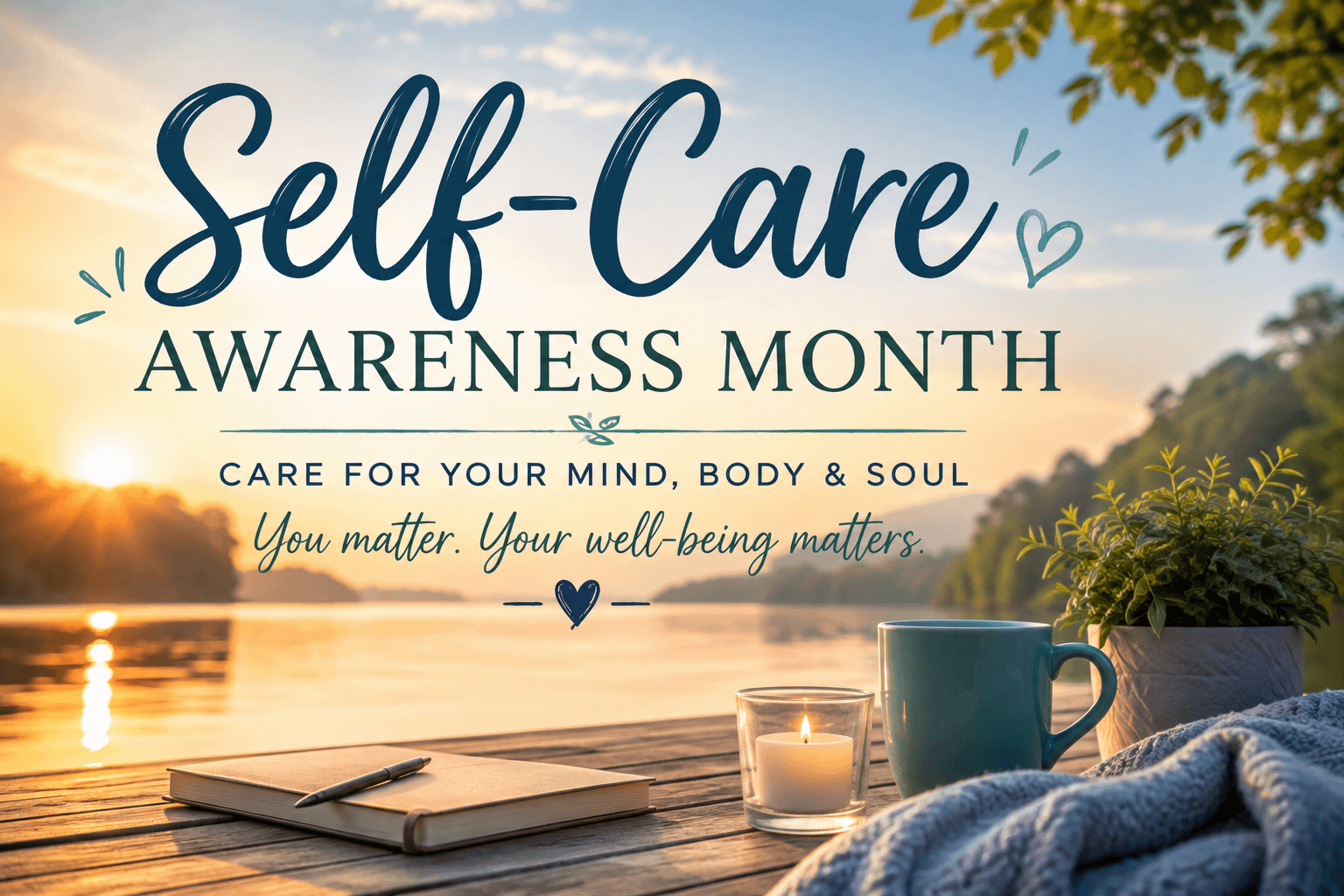
September is Self-Care Awareness Month, a time dedicated to recognizing the importance of taking care of our physical, emotional, mental, and spiritual well-being. In a world that constantly encourages us to stay busy, accomplish more, and take care of everyone around us, self-care reminds us that our own needs matter too.
Self-care isn’t necessarily about expensive vacations, spa days, or escaping from responsibilities. Often, the most meaningful forms of self-care are simple: getting enough sleep, eating nourishing foods, setting healthy boundaries, spending time outdoors, talking with someone you trust, enjoying a favorite hobby, or simply giving yourself permission to rest.
Self-Care Awareness Month encourages us to look at how we’re living and ask an important question:
Am I taking care of myself as well as I take care of everything and everyone else?
What Is Self-Care?
Self-care is the intentional practice of doing things that support your overall well-being.
It can include taking care of your body, protecting your mental health, managing stress, nurturing relationships, making time for activities you enjoy, and creating space for reflection.
Self-care looks different for everyone.
For one person, it might mean going for a morning walk. For another, it could mean reading quietly before bed. Someone else might practice self-care by attending church, praying, exercising, cooking a healthy meal, spending time with family, listening to music, or turning off their phone for an hour.
There isn’t one perfect self-care routine.
The goal is to discover what genuinely helps you feel healthier, calmer, stronger, and more connected to your life.
Self-Care Is More Than Pampering Yourself
One of the biggest misconceptions about self-care is that it’s simply about treating yourself.
While relaxing activities can certainly be part of self-care, sometimes caring for yourself means doing something difficult.
It might mean scheduling an appointment you’ve been avoiding.
It could mean saying “no” when you’re already overwhelmed.
It might mean walking away from a relationship or situation that constantly drains you.
Self-care can mean creating a budget, cleaning your home, getting more sleep, asking for help, starting an exercise routine, or having an uncomfortable but necessary conversation.
Sometimes self-care feels good immediately.
Other times, self-care means making choices today that will make your life healthier tomorrow.
Why Self-Care Matters
When we’re busy, taking care of ourselves can quickly move to the bottom of the priority list.
There are jobs to complete, bills to pay, families to support, homes to maintain, appointments to remember, and countless other responsibilities competing for our attention.
Eventually, constantly giving without restoring ourselves can leave us exhausted.
Self-care gives us opportunities to recharge.
When we regularly care for ourselves, we may be better prepared to manage stress, navigate difficult circumstances, maintain healthier relationships, and handle everyday responsibilities.
You cannot always control what happens around you.
But you can develop habits that help you respond to life’s challenges with greater strength and balance.
Physical Self-Care
Taking care of your physical health is one of the foundations of self-care.
You don’t have to completely transform your lifestyle overnight. Small improvements can become meaningful habits over time.
Physical self-care might include:
- Getting consistent, adequate sleep
- Drinking enough water
- Eating balanced and nourishing meals
- Walking or exercising regularly
- Stretching throughout the day
- Taking breaks from prolonged sitting
- Keeping routine medical and dental appointments
- Spending time outdoors
- Listening to your body when you need rest
Instead of trying to change everything at once, choose one manageable habit.
A ten-minute walk today can become twenty minutes later.
One healthier meal can lead to another.
Going to bed thirty minutes earlier can become part of a healthier nighttime routine.
Small choices matter.
Mental and Emotional Self-Care
Our minds need care just as much as our bodies.
Mental and emotional self-care involves recognizing what we’re feeling rather than constantly ignoring or suppressing those emotions.
Some days you’ll feel confident and motivated.
Other days you may feel stressed, frustrated, lonely, disappointed, or exhausted.
You don’t have to pretend every day is a good day.
Healthy emotional self-care might involve journaling, talking with someone you trust, limiting stressful media consumption, practicing mindfulness, seeking professional support when appropriate, or simply acknowledging that you’re having a difficult day.
Sometimes one of the healthiest things you can say is:
“I need some time to myself today.”
The Importance of Setting Boundaries
Boundaries are an important and sometimes overlooked part of self-care.
If you constantly say yes to everyone else, you may eventually have very little energy remaining for yourself.
You don’t have to accept every invitation.
You don’t have to answer every message immediately.
You don’t have to solve everyone’s problems.
And you don’t have to remain in situations that consistently damage your peace and well-being.
Healthy boundaries aren’t about shutting people out. They’re about recognizing your limits and communicating them respectfully.
Sometimes saying “no” to something is how you say “yes” to your own well-being.
Self-Care During Difficult Seasons
Self-care becomes especially important when life becomes painful or uncertain.
During grief, heartbreak, financial struggles, major changes, loneliness, or other difficult seasons, even basic routines can become challenging.
During these times, self-care may need to become simpler.
Maybe today your victory is getting out of bed.
Maybe it’s taking a shower.
Maybe it’s eating a meal when you didn’t feel hungry.
Maybe it’s stepping outside for five minutes.
Maybe it’s calling someone instead of isolating yourself.
When you’re going through something difficult, don’t underestimate small accomplishments.
You don’t have to have everything figured out.
Sometimes taking care of yourself simply means doing the next healthy thing you can manage.
Spiritual Self-Care
For people of faith, spiritual well-being can also be an important part of self-care.
Prayer, Scripture, worship, fellowship, gratitude, quiet reflection, and serving others can provide opportunities to reconnect with faith and purpose.
Life can become so busy that quiet moments disappear.
Creating intentional time for spiritual reflection can provide perspective when circumstances feel overwhelming.
Sometimes we need to disconnect from the noise around us long enough to reconnect with what matters most.
Digital Self-Care
Technology keeps us connected, informed, and entertained, but constant connectivity can also become exhausting.
Notifications never seem to stop.
Social media encourages comparison.
News cycles can feel overwhelming.
Emails and messages can make us feel as though we’re supposed to be available every minute of the day.
Digital self-care means creating healthier boundaries with technology.
Try putting your phone away during meals.
Stop scrolling thirty minutes before bedtime.
Turn off unnecessary notifications.
Unfollow accounts that consistently make you feel worse about yourself.
Give yourself permission to occasionally be unavailable.
The world will continue without your immediate response.
Make Time for Things You Enjoy
Adults sometimes become so consumed by responsibilities that they forget to have fun.
Think about something you genuinely enjoy doing.
When was the last time you did it?
Maybe you enjoy fishing, cooking, gardening, reading, watching movies, listening to music, photography, traveling, sports, crafts, or spending time with friends.
You don’t need to turn every hobby into a business or every activity into something productive.
You’re allowed to do something simply because it makes you happy.
Joy is valuable too.
Rest Is Productive
Many people feel guilty when they’re resting because they believe they should always be accomplishing something.
But rest isn’t wasted time.
Your body and mind need opportunities to recover.
You don’t have to earn every moment of rest by exhausting yourself first.
Sometimes taking an afternoon off, going to bed early, sitting quietly, or spending an evening doing absolutely nothing productive is exactly what you need.
Tomorrow’s responsibilities will still be there.
Give yourself permission to recharge.
Create Your Own Self-Care Routine
Self-Care Awareness Month is a great opportunity to create a simple routine you can continue throughout the year.
Start by asking yourself:
What makes me feel better physically?
What helps calm my mind?
What brings me joy?
What drains my energy?
What boundaries do I need?
What have I been neglecting?
Your answers can help you build a self-care routine that actually fits your life.
You don’t need twenty new habits.
Start with one or two.
Perhaps you’ll drink more water each day.
Maybe you’ll walk three evenings a week.
Perhaps you’ll stop checking your phone after a certain time.
Maybe you’ll reconnect with an old hobby.
Or perhaps you’ll simply schedule thirty minutes each week that belongs entirely to you.
Consistency matters more than perfection.
Self-Care Isn’t Selfish
One of the most important messages of Self-Care Awareness Month is that taking care of yourself doesn’t mean you don’t care about other people.
In fact, caring for yourself can help you show up more fully for the people and responsibilities that matter to you.
You deserve some of the same patience, kindness, encouragement, and compassion that you willingly give to others.
You don’t have to wait until you’re completely exhausted before resting.
You don’t have to wait until you’re overwhelmed before asking for help.
You don’t have to wait until something is wrong before taking care of yourself.
Celebrate Self-Care Awareness Month
This September, challenge yourself to make self-care a priority—not just for one month, but as an ongoing part of your life.
Take the walk.
Drink the water.
Get some sleep.
Set the boundary.
Call the friend.
Read the book.
Turn off the phone.
Spend time outside.
Pray.
Laugh.
Rest.
Do something that makes you feel alive.
And remember that self-care doesn’t require perfection.
Some days you’ll follow your routine beautifully. Other days life will get in the way.
That’s okay.
Start again tomorrow.
Because taking care of yourself isn’t something you finish.
It’s something you continue practicing throughout your life.
Self-Care Awareness Month is a reminder that you spend every day taking care of responsibilities, commitments, and people you care about. Make sure you’re somewhere on that list too.
What’s one thing you do for yourself that helps you relax, recharge, or feel like yourself again?
Leave a Reply