Halloween parties have become one of America’s most beloved seasonal traditions. Every October, homes, schools, neighborhoods, and entertainment venues transform into spooky celebrations filled with costumes, decorations, candy, games, music, and laughter. From elaborate haunted houses to simple backyard gatherings, Halloween parties bring people together for a night of creativity, mystery, and fun.
But Halloween parties were not always the celebrations Americans recognize today.
Long before costume contests, plastic skeletons, pumpkin-shaped candy bowls, and elaborate Halloween decorations became popular, Americans celebrated the holiday with harvest gatherings, fortune-telling games, homemade entertainment, and traditions that might seem unusual today.
In fact, the history of Halloween parties in America is filled with surprising changes. What began as a combination of immigrant customs, seasonal festivities, and community gatherings gradually evolved into one of the country’s most recognizable holiday celebrations.
Understanding how Halloween parties developed reveals a fascinating story about American culture, immigration, superstition, changing social customs, and the desire to bring communities together.
1. Halloween Parties Have Roots in Ancient Celtic Traditions
The story of Halloween parties begins long before the United States existed.
Many Halloween customs are connected to Samhain, an ancient Gaelic seasonal festival marking the transition from the harvest season into winter.
Samhain was traditionally associated with the end of summer, the beginning of the darker portion of the year, and beliefs involving the supernatural world.
Communities gathered around fires, participated in seasonal customs, and observed traditions connected to the changing seasons.
Over time, some practices associated with Samhain became intertwined with Christian observances surrounding All Saints’ Day and All Souls’ Day.
The evening before All Saints’ Day became known as All Hallows’ Eve, eventually shortened to Halloween.
Although modern Halloween parties are very different from these earlier observances, their emphasis on gathering, seasonal celebration, and supernatural themes reflects elements of this longer history.
2. Early American Halloween Celebrations Were Not Like Today’s Parties
During America’s colonial period, Halloween was not widely celebrated in the way it is today.
In many New England communities, strict Protestant religious traditions discouraged celebrations associated with supernatural beliefs and certain older European customs.
However, seasonal gatherings, harvest festivals, storytelling, and autumn entertainment remained important parts of community life.
In some regions, European immigrant communities maintained customs that would eventually contribute to American Halloween celebrations.
These early observances were generally smaller and less standardized than modern Halloween parties.
There were no commercially produced Halloween party kits, elaborate decorations, or neighborhood-wide costume competitions.
Instead, people entertained themselves through storytelling, seasonal food, traditional games, and social gatherings.
As America’s population became more culturally diverse, Halloween gradually developed into a more recognizable celebration.
3. Irish and Scottish Immigration Helped Popularize Halloween Parties
One of the most important developments in American Halloween history occurred during the nineteenth century.
Large numbers of Irish immigrants arrived in the United States, particularly during and after the Great Famine of the 1840s.
Scottish immigrants also brought traditions associated with Halloween.
These communities helped preserve and spread customs involving disguises, seasonal games, fortune-telling, storytelling, and gatherings with friends and neighbors.
As immigrant traditions mixed with existing American customs, Halloween became increasingly familiar in communities across the country.
By the late nineteenth century, Halloween parties were gaining popularity as social events.
People began organizing gatherings where guests participated in games, shared food, told ghost stories, and enjoyed activities associated with romance and superstition.
Many of these traditions would influence American Halloween parties for generations.
4. Early Halloween Parties Were Surprisingly Romantic
One of the most unexpected facts about Halloween parties is that they were once closely connected to romance and predictions about marriage.
Today, Halloween is primarily associated with scary costumes, haunted houses, and candy.
However, during the nineteenth and early twentieth centuries, many Halloween gatherings included games intended to predict a person’s future spouse.
Young adults participated in activities that supposedly revealed whom they would marry or whether romance was approaching.
One popular custom involved peeling an apple in one continuous strip and throwing the peel over a shoulder.
According to folklore, the shape formed by the fallen peel might resemble the initial of a future romantic partner.
Other traditions involved mirrors, candles, nuts, and objects hidden inside food.
Some participants believed these activities could reveal information about their romantic futures.
Although these games were generally treated as entertainment, they reflected a time when marriage and courtship were central themes of many social gatherings.
Halloween parties were not always about being frightened.
Sometimes, they were about finding love.
5. Bobbing for Apples Was Once a Major Halloween Party Attraction
Before Halloween parties featured elaborate games and expensive decorations, bobbing for apples was one of the holiday’s most recognizable activities.
Participants attempted to grab floating apples from a tub of water using only their mouths.
The challenge usually resulted in laughter, soaked faces, and friendly competition.
Apple games were especially appropriate for autumn celebrations because apples were widely available during the harvest season.
In some traditions, apple-related games were also associated with courtship and fortune-telling.
Bobbing for apples eventually became a familiar feature of Halloween parties, school celebrations, and community gatherings.
Although the activity is less common today because of hygiene concerns and changing entertainment preferences, it remains an iconic symbol of old-fashioned Halloween fun.
6. Halloween Parties Became Fashionable in the Late 1800s
By the late nineteenth century, Halloween parties were becoming increasingly fashionable in American homes.
Newspapers, magazines, and books offered suggestions for hosting seasonal gatherings.
Hosts were encouraged to decorate their homes, prepare refreshments, and organize entertaining games for guests.
Some gatherings featured candlelight, autumn leaves, pumpkins, apples, nuts, and other seasonal decorations.
Others included ghost stories, riddles, fortune-telling activities, and playful surprises.
Halloween parties became especially appealing because they offered opportunities for young people to socialize.
Unlike formal gatherings with strict expectations, Halloween celebrations often encouraged humor, imagination, and unusual entertainment.
The holiday was gradually developing into a distinct American social occasion.
7. Halloween Parties Helped Reduce Mischief and Vandalism
One surprising reason Halloween parties became popular was that communities wanted to reduce destructive pranks.
During the nineteenth and early twentieth centuries, Halloween mischief sometimes went far beyond harmless jokes.
Young people overturned objects, damaged property, moved signs, and played elaborate tricks on unsuspecting neighbors.
As American towns and cities grew, these activities became increasingly concerning.
Community leaders began encouraging organized Halloween celebrations as an alternative.
Schools, churches, civic organizations, and neighborhood groups hosted parties featuring games, costumes, refreshments, and supervised entertainment.
The idea was simple: give young people something enjoyable to do instead of allowing Halloween mischief to get out of control.
Some communities organized parades and competitions specifically to redirect youthful energy.
In Hiawatha, Kansas, an organized Halloween celebration began in 1915 and became an example of how public festivities could discourage property damage.
This transformation helped Halloween evolve from a night sometimes associated with trouble into a more welcoming community holiday.
8. Halloween Party Decorations Became a Business in the Early 1900s
Before mass-produced Halloween decorations became common, most party decorations were handmade.
Families used pumpkins, candles, autumn leaves, cornstalks, paper cutouts, and household materials to create festive settings.
However, the early twentieth century brought an important change.
Companies recognized that Americans were increasingly interested in decorating for Halloween.
One influential business was the Dennison Manufacturing Company, which promoted crepe paper decorations, party supplies, and costume-making materials.
Its Bogie Books, introduced in the early 1900s, offered ideas for Halloween decorations, costumes, menus, and party games.
These publications helped establish recognizable Halloween decorating styles.
Orange and black became particularly popular colors.
Paper witches, black cats, pumpkins, ghosts, and bats became familiar party decorations.
For the first time, hosts could follow published instructions to create coordinated Halloween celebrations.
This development helped transform Halloween parties from informal seasonal gatherings into planned, themed events.
9. The 1920s Helped Make Halloween Costume Parties Popular
The 1920s marked another important chapter in the history of Halloween parties.
Costume parties became increasingly common at schools, social clubs, community organizations, and private homes.
Guests wore masks, homemade disguises, and outfits inspired by popular characters or traditional Halloween imagery.
Some costumes were created from inexpensive crepe paper, fabric scraps, and household materials.
Halloween parties often included dancing, music, games, and refreshments.
Masquerade celebrations gave adults opportunities to dress differently, socialize, and enjoy a break from everyday expectations.
The decade also saw Halloween decorations become more recognizable and commercially available.
Although elaborate modern costumes were still decades away, the basic concept of dressing up for a Halloween party had become an established American tradition.
10. Halloween Parties Continued During the Great Depression
The Great Depression of the 1930s created financial hardships for millions of American families.
Despite these difficulties, Halloween celebrations continued.
Many communities relied on inexpensive activities, homemade decorations, and simple refreshments.
Families could create costumes using clothing and materials they already owned.
Games required little equipment, while pumpkins, apples, popcorn, and seasonal foods provided affordable entertainment.
Community parties offered opportunities for families to enjoy themselves without spending much money.
During this period, some neighborhoods also developed early versions of haunted-house attractions.
Families decorated basements, attics, and other spaces with spooky scenes.
Children could walk through darkened rooms, encounter pretend ghosts, and experience playful scares.
These activities helped lay the groundwork for the haunted attractions that later became popular across America.
Halloween proved adaptable even during difficult economic times.
11. World War II Changed Halloween Celebrations
During World War II, Halloween parties faced challenges involving wartime restrictions, shortages, and changing national priorities.
Sugar rationing affected the availability of candy and homemade sweets.
Some communities adjusted their celebrations to accommodate wartime conditions.
Families relied on simpler refreshments, homemade decorations, and activities that required fewer resources.
Halloween gatherings also provided opportunities for community connection during an uncertain period.
As Americans experienced separation, sacrifice, and concern for loved ones serving overseas, familiar traditions could offer a welcome sense of normalcy.
Following the war, Halloween celebrations entered another period of transformation.
12. The 1950s Helped Turn Halloween Into a Family Holiday
The years following World War II brought suburban expansion, growing consumer culture, and new patterns of family entertainment.
Halloween became increasingly associated with children and neighborhood activities.
School parties, community gatherings, and trick-or-treating became familiar features of the holiday.
Parents organized celebrations featuring costume contests, classroom games, cupcakes, candy, and seasonal decorations.
Neighborhoods developed traditions in which children visited homes wearing costumes and collecting treats.
Halloween parties continued to be popular among adults, but family-oriented celebrations became especially prominent.
The holiday was no longer simply an occasion for fortune-telling, masquerades, or neighborhood mischief.
It had become a major part of American childhood.
13. Television and Movies Changed Halloween Party Themes
As television and popular entertainment became increasingly influential, Halloween parties began reflecting American popular culture.
Costumes inspired by television characters, movie monsters, superheroes, and celebrities grew more recognizable.
Classic horror imagery remained popular, but party themes expanded beyond traditional witches and ghosts.
Families could decorate around favorite fictional characters or recognizable entertainment franchises.
By the 1970s and 1980s, horror films had also helped strengthen the association between Halloween and frightening entertainment.
Adult Halloween parties increasingly featured scary decorations, theatrical costumes, and horror-themed activities.
Halloween became a holiday where popular culture and traditional folklore could exist side by side.
14. The 1980s and 1990s Brought Bigger Halloween Celebrations
During the final decades of the twentieth century, Halloween parties became increasingly elaborate.
Commercial decorations, ready-made costumes, themed tableware, and specialized party supplies became more accessible.
Hosts could transform living rooms, garages, and backyards into spooky environments.
Fog machines, artificial cobwebs, flashing lights, plastic skeletons, and recorded sound effects helped create more dramatic settings.
Costume contests became common at adult parties, workplaces, schools, and community events.
Halloween-themed music and entertainment also became important parts of celebrations.
Instead of relying primarily on traditional games, many parties featured dancing, themed food, and elaborate decorations.
Halloween was becoming an opportunity for creative expression as much as a seasonal tradition.
15. Modern Halloween Parties Have Become Major Events
Today, Halloween parties take many forms.
Some families prefer small gatherings with homemade treats, classic games, and simple decorations.
Others organize large celebrations featuring professional entertainment, detailed costumes, and elaborate haunted attractions.
Restaurants, entertainment venues, schools, businesses, and community organizations host seasonal events.
Social media has also influenced modern Halloween celebrations.
Party hosts share decorating ideas, costume inspiration, recipes, and photographs online.
Themes can range from classic haunted houses to favorite movies, decades, fantasy worlds, and creative interpretations of traditional Halloween symbols.
Modern Halloween celebrations also include events designed for different age groups.
Children enjoy classroom parties and family-friendly gatherings, while adults attend costume balls, themed dinners, and seasonal celebrations.
Despite these changes, the basic purpose remains familiar.
Halloween parties give people an opportunity to gather, celebrate, and enjoy something outside their ordinary routines.
How Halloween Party Food Has Changed Over Time
Food has always played an important role in American Halloween celebrations.
However, what people served at parties has changed considerably.
Early Halloween gatherings often featured foods associated with the autumn harvest.
Apples, nuts, popcorn, cider, cakes, and seasonal desserts were popular choices.
Some foods also played a role in fortune-telling games and traditional customs.
As Halloween became more commercialized, candy and decorated desserts grew increasingly prominent.
By the middle of the twentieth century, Halloween parties frequently featured cupcakes, cookies, punch, and individually wrapped sweets.
Today, Halloween food has become an entire category of creative party entertainment.
Hosts prepare ghost-shaped cookies, monster cupcakes, mummy-inspired appetizers, pumpkin desserts, and colorful themed drinks.
Some parties feature elaborate dessert tables designed to resemble haunted graveyards or spooky laboratories.
Although modern Halloween food is often more decorative, the tradition of sharing seasonal refreshments connects today’s parties with celebrations from more than a century ago.
Why Orange and Black Became Halloween Party Colors
Few color combinations are as recognizable as orange and black during Halloween.
These colors became closely associated with Halloween decorations during the late nineteenth and early twentieth centuries.
Orange reflects the autumn harvest, pumpkins, falling leaves, and seasonal abundance.
Black suggests nighttime, darkness, mystery, and the supernatural.
Together, they create a visual identity that fits both the harvest season and Halloween’s spooky traditions.
Commercial decorating guides and party supply manufacturers helped popularize this combination.
As Halloween merchandise became more widely available, orange and black appeared on invitations, costumes, paper decorations, and party supplies.
Even today, these colors remain central to Halloween celebrations, although purple, green, red, and white are also commonly used.
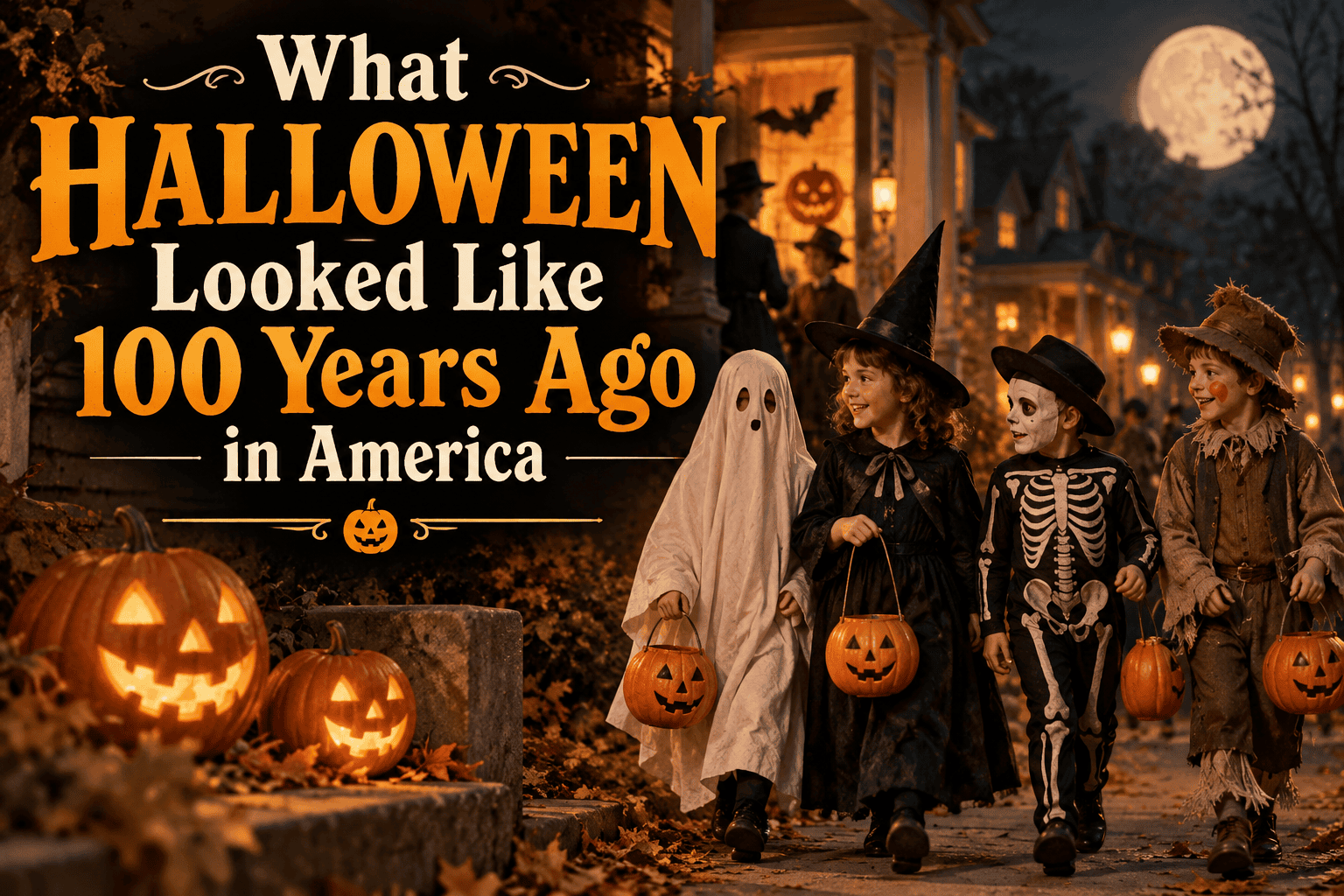
What Halloween Parties Looked Like 100 Years Ago
Imagine attending an American Halloween party in 1926.
Instead of entering a home filled with electronic decorations and animated monsters, you might find handmade paper ornaments, carved pumpkins, autumn foliage, and carefully arranged candles.
The room could be decorated with black cats, witches, and orange-and-black streamers.
Guests might arrive wearing masks or homemade costumes.
The evening could begin with refreshments such as cider, doughnuts, apples, nuts, and homemade sweets.
Entertainment might include fortune-telling games, apple bobbing, storytelling, music, and dancing.
Some guests might participate in playful activities intended to predict future romance.
Others might enjoy costume competitions or seasonal party games.
Depending on the location, the celebration could take place in a private home, school, social club, or community hall.
Although the decorations and entertainment would appear simpler than those of modern Halloween parties, the atmosphere would likely feel familiar.
People would still be gathering to laugh, socialize, dress up, and enjoy the holiday.
Frequently Asked Questions About the History of Halloween Parties
When did Halloween parties become popular in America?
Halloween parties became increasingly popular during the late nineteenth century. By the early twentieth century, they were established social events, and costume parties became especially common during the 1920s.
What did people do at Halloween parties in the 1800s?
Many Halloween gatherings included storytelling, seasonal food, apple games, fortune-telling activities, and social entertainment. Some traditions focused on predicting marriage or future romantic relationships.
Why did Americans start organizing Halloween parties?
Halloween parties developed from immigrant customs, harvest celebrations, and social traditions. Organized community parties also became popular as a way to discourage destructive Halloween pranks.
When did Halloween costume parties begin?
Costume traditions existed long before modern American Halloween celebrations, but Halloween costume parties became increasingly fashionable in the United States during the late nineteenth and early twentieth centuries.
Were Halloween parties originally for children?
No. Many early American Halloween parties were social gatherings for teenagers and adults, particularly young people interested in courtship and entertainment. Child-centered celebrations became increasingly prominent during the twentieth century.
What were traditional Halloween party foods?
Traditional foods included apples, nuts, popcorn, cider, doughnuts, cakes, and other seasonal refreshments. Many reflected the autumn harvest.
How did Halloween parties become commercialized?
Businesses began producing Halloween decorations, costumes, party supplies, and printed entertaining guides during the early twentieth century. Commercial offerings expanded substantially as Halloween grew in popularity.
Final Thoughts: How Halloween Parties Became an American Tradition
The history of Halloween parties in America is much more surprising than many people realize.
What began as a collection of seasonal customs, immigrant traditions, folklore, and community gatherings gradually became one of the country’s most recognizable celebrations.
Early Halloween parties were not primarily about elaborate costumes, frightening decorations, or enormous quantities of candy.
They were about storytelling, socializing, harvest traditions, romance, and playful superstition.
Over time, Halloween parties helped communities discourage destructive mischief, gave families inexpensive entertainment, and created opportunities for people of different generations to celebrate together.
Commercial decorations, popular entertainment, and changing American lifestyles eventually transformed these gatherings into the Halloween parties familiar today.
Yet beneath the costumes, candy, music, and decorations, something important has remained unchanged.
Halloween parties have always been about bringing people together through imagination, tradition, and shared experiences.
Whether someone is hosting an elaborate haunted-house celebration or enjoying a quiet evening with family and friends, they are participating in a tradition shaped by generations of American history.
And perhaps the most surprising part of that history is that a holiday now famous for frightening people has also spent more than a century giving Americans reasons to gather, laugh, and celebrate.
What old-fashioned Halloween party tradition would you most like to see make a comeback?

Leave a Reply