
Halloween is celebrated today with colorful costumes, glowing jack-o’-lanterns, haunted houses, candy-filled buckets, and neighborhood trick-or-treating. Children dress as their favorite characters, families decorate their homes, and communities organize parties and fall festivals. However, Halloween in America was not always the family-friendly holiday we recognize today.
There was a time when Halloween was known as a night of mischief, practical jokes, neighborhood disturbances, and sometimes outright destruction. Instead of simply knocking on doors and asking for candy, young people might remove gates, overturn outdoor furniture, soap windows, or play elaborate tricks on unsuspecting neighbors.
For generations, Halloween was an evening when ordinary rules seemed temporarily suspended. Mischief was expected, pranks were tolerated to a certain degree, and communities often accepted that November 1 would bring a little cleaning up.
But how did Halloween become associated with pranks, and why did those traditions eventually give way to trick-or-treating?
The answer involves ancient customs, European immigration, American community traditions, changing attitudes toward childhood, and efforts to transform a sometimes troublesome holiday into a celebration everyone could enjoy.
The Ancient Origins of Halloween Mischief
To understand why Halloween became associated with mischief, we must look back centuries before modern American celebrations.
Halloween developed from several historical traditions, including customs associated with the ancient Celtic festival of Samhain and later Christian observances surrounding All Saints’ Day and All Souls’ Day.
Samhain marked a seasonal transition around the end of the harvest and the beginning of winter. In parts of the Celtic world, this period was associated with supernatural beliefs, spirits, and the changing boundary between seasons.
According to traditional folklore, the time surrounding Samhain was especially significant because the supernatural world was believed to be unusually close to the human world.
People participated in seasonal gatherings, bonfires, disguises, and other customs that varied by region and historical period.
Although modern Halloween is frequently connected to Samhain, historians caution against assuming that every contemporary Halloween practice originated directly from that ancient festival.
The tradition of Halloween pranking developed through a combination of later European folk customs and American social practices.
Nevertheless, the broader association between Halloween, uncertainty, disguise, and unusual behavior helped establish the atmosphere in which mischief could flourish.
How European Traditions Influenced Halloween Pranks
European communities had long observed seasonal celebrations involving disguises, playful disorder, and practical jokes.
In Ireland and Scotland, Halloween customs included games, fortune-telling, disguises, and occasional mischief.
Young people sometimes took advantage of the darkness and festive atmosphere to play tricks on neighbors.
Removing gates, disturbing household objects, and creating harmless confusion became associated with Halloween celebrations in some communities.
Disguises made these activities especially appealing because participants could hide their identities.
A person wearing a mask or costume could temporarily become someone else, escaping the ordinary expectations of everyday life.
This freedom was part of Halloween’s appeal.
The holiday offered an opportunity to behave differently, challenge social boundaries, and participate in activities that might not be acceptable on an ordinary evening.
When Irish and Scottish immigrants brought Halloween customs to North America, these traditions gradually blended with existing American celebrations.
Over time, Halloween mischief became an increasingly recognizable feature of the holiday.
Halloween in Early America
Halloween was not celebrated uniformly throughout colonial America.
Different religious traditions, regional customs, and immigrant populations influenced whether communities observed the holiday.
In areas with strong Puritan influences, celebrations associated with supernatural beliefs and certain older European customs were often discouraged.
Elsewhere, autumn gatherings, harvest celebrations, storytelling, and seasonal games provided opportunities for communities to come together.
During the nineteenth century, increased immigration from Ireland and Scotland helped popularize Halloween traditions in the United States.
Communities began organizing Halloween gatherings that included costumes, games, food, and playful activities.
Young people especially enjoyed the opportunity to participate in mischief.
Halloween became a night when children and teenagers could test boundaries, surprise neighbors, and challenge the usual rules of respectable behavior.
What began as relatively minor practical jokes would eventually become a major concern for some American towns and cities.
The Rise of Halloween Pranks in the 1800s
By the late nineteenth century, Halloween mischief had become a familiar tradition in many American communities.
Young people took advantage of the evening to perform tricks that ranged from amusing to genuinely disruptive.
Some pranks required little preparation, while others involved elaborate planning.
Common Halloween pranks included:
-
Removing gates from fences and hiding them.
-
Soaping windows with bars of soap.
-
Moving outdoor furniture into unusual locations.
-
Knocking on doors and running away.
-
Switching signs or rearranging objects.
-
Making frightening noises outside houses.
-
Hiding household or farm equipment.
-
Blocking doorways with objects.
In rural communities, farm gates and wagons were particularly tempting targets.
A group of young pranksters might remove a gate and carry it several streets away.
Others might move a wagon into an unexpected location, leaving its owner to discover the surprise the following morning.
Some pranks were treated as humorous traditions.
Others created serious inconvenience, damaged property, or endangered people.
The distinction between playful mischief and vandalism was not always clear.
For many young participants, however, the excitement came from doing something forbidden while knowing that Halloween provided a degree of social permission.
Why Halloween Was Called Mischief Night
The term Mischief Night became associated with evenings devoted to practical jokes and youthful disorder.
However, Mischief Night did not always refer to Halloween itself.
In parts of Britain, the term historically referred to other dates, including evenings associated with seasonal or community celebrations.
In the United States, the name developed regional meanings.
Some communities used Mischief Night to describe October 30, the evening before Halloween.
Others associated the mischief directly with October 31.
In parts of New Jersey and surrounding areas, October 30 became particularly well known as Mischief Night.
Elsewhere, similar traditions developed under different names.
The central idea remained the same: young people participated in pranks during an evening when unusual behavior was expected.
For some participants, Mischief Night was an exciting opportunity to laugh with friends.
For homeowners and local authorities, it could mean an evening of unwanted surprises.
When Halloween Mischief Became Destructive
As American communities grew during the late nineteenth and early twentieth centuries, Halloween pranks sometimes became increasingly destructive.
Urban neighborhoods offered more opportunities for mischief, and groups of young people could gather in larger numbers.
Instead of simply removing gates or knocking on doors, some participants damaged public property, broke windows, interfered with transportation, or started fires.
These activities were no longer harmless practical jokes.
They created financial losses, safety hazards, and additional responsibilities for police and firefighters.
Newspapers began reporting on Halloween disturbances, and local officials increasingly viewed the holiday as a public safety concern.
Not every community experienced serious problems, and most Halloween celebrations remained relatively peaceful.
Nevertheless, the more destructive incidents attracted attention.
Parents, teachers, police officers, and civic organizations began discussing ways to redirect young people’s energy into organized activities.
This concern would eventually play an important role in shaping modern Halloween traditions.
Halloween Mischief During the Early 1900s
During the early twentieth century, Halloween became a particularly challenging evening in some American towns.
Young people continued traditional pranks, but certain incidents involved significant property damage.
The period surrounding the Great Depression brought additional social pressures, and reports of Halloween vandalism became especially concerning in some communities.
During the 1930s, Halloween disturbances helped motivate organized efforts to create safer celebrations.
Community leaders wanted to preserve the excitement of the holiday without encouraging destruction.
Schools, churches, neighborhood organizations, and local governments began offering supervised alternatives.
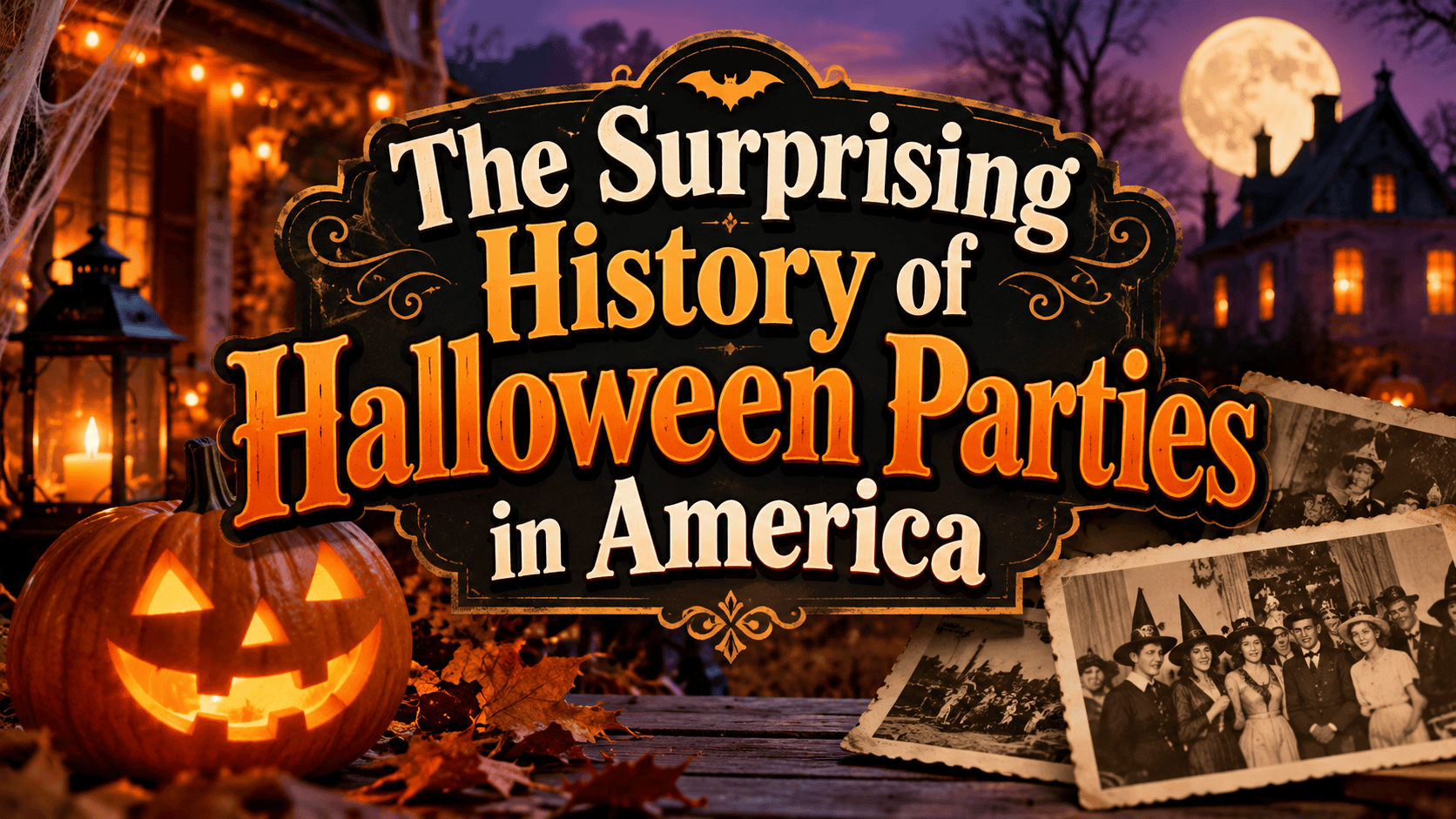
Halloween parties, costume contests, parades, and games gave children opportunities to enjoy the holiday in a more structured environment.
These activities did not immediately eliminate pranking.
However, they helped change expectations about how Halloween should be celebrated.
Instead of viewing the holiday primarily as an opportunity for mischief, communities increasingly promoted it as an occasion for entertainment and social gatherings.
The Famous Halloween Pranks of the Past
Some traditional Halloween pranks became so closely associated with the holiday that they are still remembered today.
1. Soaping Windows
One of the most familiar Halloween pranks involved rubbing soap across windows.
The resulting marks could be difficult to see through and required cleaning afterward.
Although often treated as relatively minor mischief, the prank still created unwanted work for homeowners.
2. Removing Fence Gates
In rural communities and small towns, removing gates became a recognizable Halloween tradition.
Pranksters might carry a gate to another property or hide it nearby.
Farmers and homeowners sometimes spent the following morning searching for missing gates.
3. Moving Wagons and Outdoor Equipment
Wagons, carts, and outdoor equipment were occasionally relocated as practical jokes.
Some groups attempted elaborate rearrangements intended to surprise neighbors.
These activities could become dangerous when heavy equipment was involved.
4. Knocking on Doors and Running Away
Door-knocking pranks were popular because they required little preparation.
Children would knock on a door and disappear before anyone answered.
The goal was usually to surprise or confuse the person inside.
5. Rearranging Neighborhood Objects
Outdoor chairs, signs, containers, and decorations sometimes appeared in unexpected locations after Halloween.
For pranksters, the humor came from imagining the homeowner’s reaction the next morning.
For the people affected, the experience was not always entertaining.
These traditions illustrate how Halloween mischief could range from minor inconvenience to potentially dangerous behavior.
How Trick-or-Treating Helped Change Halloween
One of the most important developments in Halloween history was the growing popularity of trick-or-treating.
The custom developed from several influences, including European traditions of visiting homes in costume, requesting food or gifts, and participating in seasonal performances.
In North America, organized door-to-door Halloween activities became increasingly familiar during the early twentieth century.
The phrase trick or treat appeared in print by the 1920s, and the practice became more widespread in subsequent decades.
The idea was simple.
Instead of allowing children to play tricks on neighbors, households could offer treats as part of a friendly exchange.
The words themselves preserved a playful suggestion of mischief.
Give us a treat, or risk a trick.
In practice, however, trick-or-treating increasingly became a cooperative neighborhood activity.
Children received candy or other small gifts, while adults participated by welcoming visitors.
The tradition offered a way to preserve Halloween’s excitement while discouraging destructive behavior.
It did not eliminate pranking entirely, but it helped establish a different understanding of the holiday.
Halloween could be fun without becoming troublesome.
The Role of Communities in Transforming Halloween
The transformation of Halloween was not the result of one organization or a single nationwide decision.
It happened gradually as communities experimented with ways to make the holiday safer and more enjoyable.
Schools organized costume parades and seasonal parties.
Churches and civic groups sponsored community gatherings.
Local businesses supported Halloween celebrations.
Neighborhood organizations encouraged supervised activities.
Parents increasingly participated in planning children’s Halloween experiences.
These efforts helped make Halloween a community-centered occasion rather than an evening dominated by unsupervised pranks.
After World War II, suburban growth, changing family life, and expanding consumer culture helped popularize trick-or-treating.
By the 1950s, the practice had become a widely recognized part of American Halloween celebrations.
Candy manufacturers, television programs, advertisements, and popular entertainment also contributed to the holiday’s changing identity.
Halloween was becoming a major cultural and commercial event.
The emphasis shifted toward costumes, candy, decorations, and family entertainment.
Why Children Loved Halloween Mischief
To understand Halloween’s mischievous past, it is important to recognize why young people found these traditions so appealing.
Halloween offered something unusual: a socially recognized opportunity to behave differently.
For one evening, children and teenagers could wear disguises, challenge expectations, and participate in activities outside their normal routines.
The darkness added excitement.
Masks provided anonymity.
Group participation created a sense of belonging.
The possibility of surprising adults made the experience even more appealing.
In some communities, Halloween pranking also reflected tensions between young people and authority figures.
Children and teenagers had relatively little control over the rules governing their everyday lives.
Halloween temporarily reversed that relationship.
Adults who normally enforced rules became the targets of jokes.
This temporary reversal helped explain why mischief remained popular even when community leaders attempted to discourage it.
Of course, not every young person participated in pranks, and not every prank was welcomed.
Still, the tradition reflected the holiday’s long-standing connection to disguise, uncertainty, and playful challenges to ordinary behavior.
How Halloween Changed After World War II
The decades following World War II marked an important turning point in American Halloween celebrations.
Growing suburban neighborhoods created environments where children could visit multiple houses within walking distance.
Families increasingly participated in community traditions.
Trick-or-treating became a familiar childhood experience.
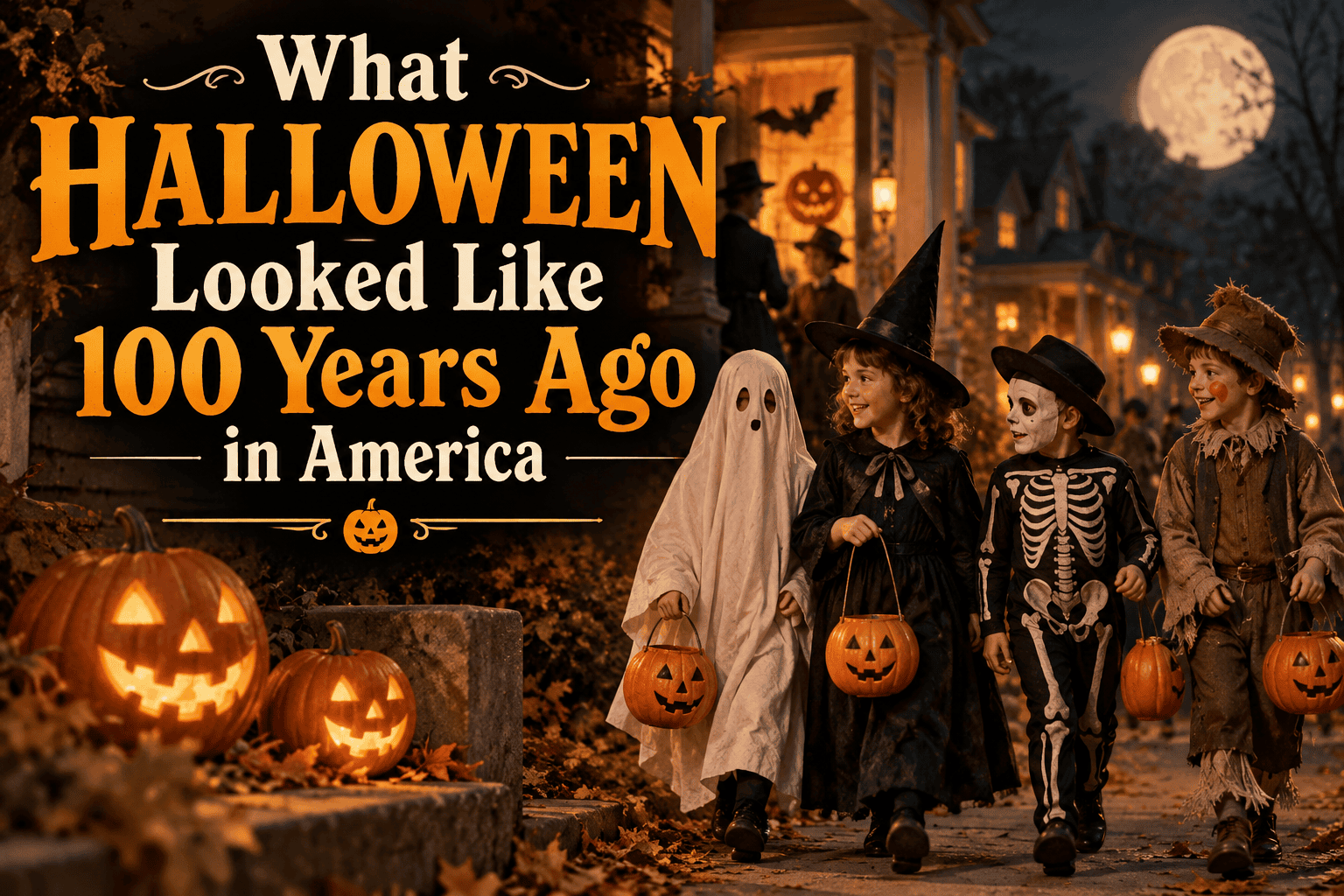
Instead of spending Halloween moving gates or soaping windows, many children went door to door collecting candy.
Costumes became increasingly influenced by movies, television, comic books, and popular culture.
Businesses began selling more commercially manufactured decorations and Halloween products.
Community celebrations expanded to include school carnivals, costume competitions, haunted attractions, and neighborhood parties.
Halloween’s identity gradually shifted from youthful disorder toward organized entertainment.
Mischief did not disappear completely.
However, it became less central to the mainstream celebration.
Why Some Places Still Celebrate Mischief Night
Although modern Halloween is strongly associated with candy and costumes, Mischief Night traditions have survived in certain regions.
In parts of the northeastern United States, October 30 remains associated with pranks and neighborhood mischief.
Regional names and customs vary.
Some communities use the term Cabbage Night, while others refer to Devil’s Night or Goosey Night.
These names do not always describe identical traditions, and their meanings have changed over time.
Detroit became especially associated with Devil’s Night, particularly during the late twentieth century when serious incidents of arson and vandalism occurred around Halloween.
Community-led efforts, including organized neighborhood patrols and volunteer activities, later worked to reduce the damage.
The history of Devil’s Night demonstrates how a tradition associated with mischief can develop into a serious public safety issue.
It also shows how communities can respond by creating safer alternatives.
Today, Halloween pranks continue in some places, but destructive behavior is generally treated as vandalism rather than an acceptable holiday custom.
The Difference Between Halloween Then and Now
Halloween has changed dramatically over the past century.
| Halloween in the past | Halloween today |
|---|---|
| Mischief and practical jokes were common in some communities. | Trick-or-treating is a major tradition. |
| Disguises sometimes helped pranksters avoid recognition. | Costumes are primarily worn for entertainment. |
| Gates, windows, and outdoor objects were frequent prank targets. | Homes are decorated with pumpkins, lights, and spooky displays. |
| Some celebrations were largely unsupervised. | Many communities offer organized family events. |
| Halloween disturbances concerned local authorities. | Public safety efforts often focus on traffic, crowds, and supervised activities. |
| Homemade costumes and traditional games were popular. | Commercial costumes, candy, and themed attractions are widespread. |
These differences reflect broader changes in American society.
Communities have become more attentive to property damage, public safety, and the organization of children’s activities.
At the same time, Halloween has grown into one of America’s most recognizable seasonal celebrations.
Did Halloween Lose Its Original Spirit?
Some people look back at old Halloween traditions with nostalgia.
Stories about harmless neighborhood pranks can create an image of a simpler time when children enjoyed greater independence.
There is something appealing about the idea of a mysterious autumn evening filled with laughter, surprises, and unexpected adventures.
However, historical nostalgia can overlook the problems that accompanied those traditions.
A prank that seemed amusing to one person might have caused frustration, financial expense, or danger for someone else.
Halloween’s evolution did not necessarily mean the holiday lost its spirit.
Instead, the celebration adapted to changing community expectations.
Modern Halloween still includes many elements that made the earlier holiday exciting.
People wear disguises.
Children explore neighborhoods after dark.
Homes become mysterious and frightening.
Families tell ghost stories and enjoy playful scares.
The sense of adventure remains.
What changed most was the way communities encouraged people to express it.
What Old Halloween Traditions Teach Us About American History
Halloween’s transformation reveals more than the history of a holiday.
It offers a glimpse into changing American attitudes toward childhood, community responsibility, entertainment, and public behavior.
During the nineteenth century, seasonal celebrations often included informal customs passed down through families and neighborhoods.
As cities expanded and communities changed, some traditions became more difficult to manage.
The rise of organized Halloween parties reflected growing interest in supervised recreation.
The popularity of trick-or-treating demonstrated how neighborhoods could replace disruptive customs with cooperative ones.
The growth of Halloween businesses showed how a traditional celebration could become part of American consumer culture.
These developments were not unique to Halloween.
Throughout American history, many holidays have evolved as social values, technology, transportation, and family life changed.
Halloween provides a particularly fascinating example because its transformation is so visible.
A holiday once associated in some places with overturned objects and nighttime disturbances became an occasion for costumes, candy, and neighborhood hospitality.
The Lasting Legacy of Halloween Mischief
Even though Halloween is now widely celebrated as a family-friendly holiday, traces of its mischievous history remain everywhere.
The phrase trick or treat is perhaps the clearest reminder.
Every time a child says those words, they repeat a playful reference to the holiday’s older association with tricks.
Practical jokes still appear in Halloween movies, television specials, and stories.
Haunted houses and frightening decorations preserve the pleasure of surprising others.
Costumes allow people to step outside their everyday identities.
Even the excitement of walking through a dark neighborhood reflects Halloween’s historical connection to mystery and adventure.
The holiday continues to balance two ideas that have existed alongside each other for generations: fear and fun.
Halloween invites people to experience something unusual while remaining part of a shared celebration.
That balance helps explain why the holiday continues to fascinate Americans of all ages.
Final Thoughts: When Halloween Was a Night of Tricks Instead of Treats
Halloween was once a night of mischief and pranks because it developed from traditions that embraced disguise, seasonal celebration, playful disorder, and temporary freedom from ordinary expectations.
European folk customs influenced American celebrations, and by the nineteenth century, practical jokes had become familiar Halloween activities in many communities.
Young people removed gates, soaped windows, rearranged objects, and surprised neighbors.
Some pranks were harmless fun.
Others caused serious damage and prompted communities to reconsider how the holiday should be celebrated.
During the twentieth century, organized parties, costume contests, neighborhood events, and trick-or-treating gradually helped transform Halloween into the celebration Americans recognize today.
Yet the mischievous spirit never completely disappeared.
It survives in costumes, spooky decorations, playful scares, and the familiar words children repeat every October 31.
Halloween’s history reminds us that traditions are constantly changing.
What began as a mixture of seasonal customs, supernatural folklore, and neighborhood mischief evolved into a holiday centered on imagination, entertainment, and community.
And perhaps the most fascinating part of Halloween’s past is that the phrase trick or treat once carried a little more meaning than it does today.
If you could travel back 100 years and experience Halloween in an American neighborhood, would you prefer the old-fashioned night of mischief and pranks or today’s tradition of costumes and candy?
Leave a Reply