Blog

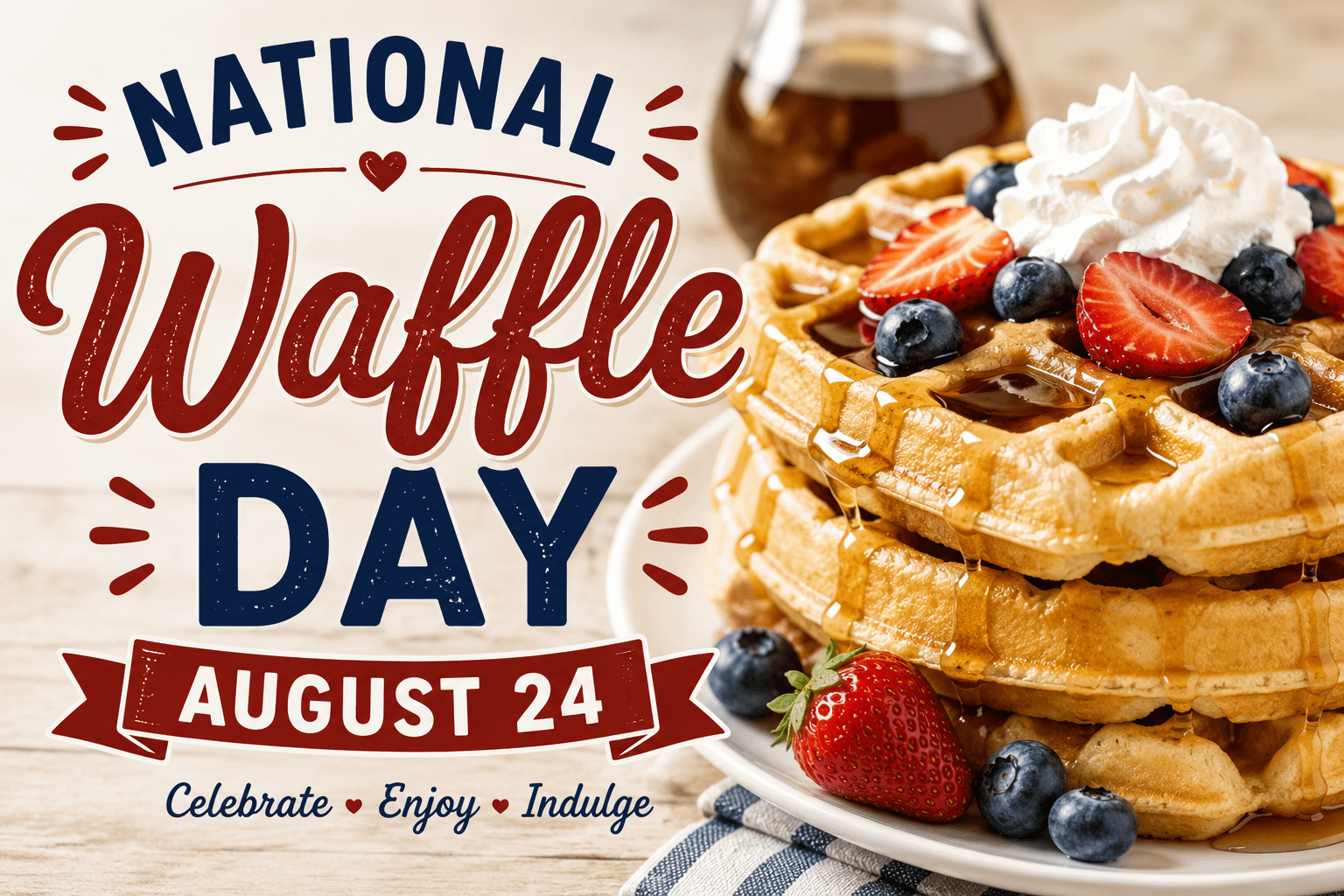
  • National Waffle Day – A Sweet and Crispy Celebration

    National Waffle Day – A Sweet and Crispy Celebration

    National Waffle Day: Celebrating the History, Flavor, and Fun of an American Breakfast Favorite

    Every year on August 24, breakfast lovers have a delicious reason to celebrate one of the most recognizable foods ever to come off a hot griddle: the waffle. National Waffle Day honors the crispy-edged, fluffy-centered breakfast favorite that has been enjoyed for generations and transformed into everything from a simple syrup-covered morning meal to an elaborate brunch or decadent dessert.

    There is something especially comforting about a freshly cooked waffle. The smell of warm batter fills the kitchen, butter begins melting the moment it touches the golden surface, and maple syrup collects perfectly inside those unmistakable square pockets.

    But waffles are much more than a tasty breakfast.

    They have a long history that stretches back centuries, and National Waffle Day itself has a fascinating connection to American innovation. The August 24 celebration commemorates an important development in waffle-making history that occurred in the United States in the 19th century.

    So heat up the waffle iron, grab the maple syrup, and discover why this humble breakfast food deserves an entire day of celebration.

    When Is National Waffle Day?

    National Waffle Day is celebrated every year on August 24 in the United States.

    The date isn’t random.

    On August 24, 1869, Cornelius Swartwout of Troy, New York, received a U.S. patent for an improved waffle iron.

    His invention came long before the convenient electric waffle makers we use today. Waffle irons of the era were generally used over a stove or open heat source, making the cooking process more challenging than simply pouring batter into an appliance and waiting for an indicator light.

    Swartwout’s design incorporated a handle and hinge arrangement that made the iron easier to open, close, and turn during cooking.

    His patent became an important milestone in the American history of waffle preparation.

    More than 150 years later, August 24 continues to provide an opportunity to celebrate waffles and the ingenuity that helped make them easier to prepare.

    Waffles Existed Long Before National Waffle Day

    Although August 24 celebrates an American waffle milestone, people were eating foods resembling waffles centuries before the United States existed.

    The earliest ancestors of waffles were relatively simple cakes cooked between heated metal plates.

    In ancient and medieval Europe, cooks prepared flat cakes between iron plates over open fires. Over time, the cooking irons became more sophisticated and decorative.

    During the Middle Ages, some irons were engraved with elaborate patterns, coats of arms, landscapes, religious imagery, and other designs.

    Eventually, the familiar grid pattern associated with modern waffles became increasingly common.

    That pattern wasn’t merely decorative. The indentations created more crispy surface area while also producing pockets capable of holding butter, sauces, fruit, and eventually syrup.

    Waffle-making traditions became especially prominent in areas that are now Belgium, the Netherlands, France, and surrounding regions.

    As Europeans migrated to North America, they brought many of their culinary traditions with them—including waffles.

    Waffles Come to America

    European settlers introduced waffle traditions to the American colonies, where the food gradually became part of the country’s developing culinary identity.

    By the 18th century, waffles were familiar enough in America to appear at meals and social gatherings.

    Waffle parties even became a form of entertainment in some communities. Guests could gather while waffles were cooked and served fresh from the iron.

    Imagine an early American version of today’s weekend brunch: friends and family gathered around the table while hot waffles arrived straight from the kitchen.

    The equipment was obviously different, but the basic appeal hasn’t changed much.

    People love freshly made waffles.

    The 1869 Waffle Iron Patent

    Cornelius Swartwout’s waffle iron patent is the historical event most closely associated with National Waffle Day.

    His improved waffle iron was designed to make the cooking process more manageable.

    Remember that cooks couldn’t simply plug an appliance into an electrical outlet in 1869.

    Cooking waffles involved heating a metal iron and carefully controlling the cooking process. The waffle had to cook evenly on both sides without burning.

    Swartwout’s design helped users turn the waffle iron more easily, allowing the batter to cook on both sides.

    The patent was granted on August 24, 1869.

    That anniversary is why Americans celebrate National Waffle Day on August 24.

    It’s a fun example of how an everyday invention can eventually become connected to a modern food holiday.

    How the Modern Waffle Maker Changed Breakfast

    Waffle-making continued evolving after Swartwout’s patent.

    One of the biggest changes came with electricity.

    Electric waffle irons eliminated the need to place heavy waffle irons directly over a stove or fire. Instead, heating elements inside the appliance could cook waffles more consistently.

    As electric appliances became increasingly common in American households during the 20th century, making waffles at home became much easier.

    Today’s waffle makers take convenience even further.

    Depending on the model, modern waffle makers may include temperature controls, nonstick cooking surfaces, rotating mechanisms, removable plates, timers, and indicators that tell you when your waffle is ready.

    There are even miniature waffle makers capable of producing tiny waffles, heart-shaped waffles, holiday-themed waffles, and other creative designs.

    What once required heavy iron plates and careful management over direct heat can now be accomplished with the push of a button.

    Belgian Waffles Become an American Sensation

    One of the most recognizable waffle styles in America is the Belgian waffle.

    Belgian-style waffles are usually thicker than traditional American waffles and have large, deep pockets. Those pockets are perfect for holding generous amounts of syrup, whipped cream, fruit, chocolate, or other toppings.

    Belgian waffles gained major attention in the United States through international exhibitions and world’s fairs during the 20th century.

    They became particularly famous among American audiences after appearing at the 1964 New York World’s Fair, where waffles served with strawberries and whipped cream became an enormous hit.

    The combination was visually impressive and delicious.

    American diners loved it.

    Soon Belgian-style waffles became increasingly common at restaurants, hotels, diners, breakfast buffets, and home kitchens.

    Today, the Belgian waffle may be one of the most recognizable styles of waffle in the country.

    Belgian Waffles and American Waffles Aren’t Exactly the Same

    Although people sometimes use the terms interchangeably, Belgian and traditional American waffles have some noticeable differences.

    Belgian waffles are generally thicker, with larger and deeper pockets. Depending on the recipe, they may also have a lighter interior.

    Traditional American waffles are typically thinner and have smaller grid patterns.

    Both styles have devoted fans.

    The better choice really depends on what you’re craving.

    If you want something crispy and relatively thin, a traditional waffle might be perfect.

    If you’re planning to pile on strawberries, whipped cream, chocolate, or syrup, the deeper pockets of a Belgian waffle provide plenty of room for toppings.

    What Makes a Perfect Waffle?

    Everyone has their own definition of the perfect waffle, but texture is usually the key.

    A great waffle should have a golden, slightly crispy exterior surrounding a warm, tender, fluffy interior.

    The contrast is what separates a memorable waffle from an ordinary one.

    Temperature matters too.

    Waffles are at their best when served quickly after leaving the waffle iron. As they sit, trapped steam can gradually soften the crispy exterior.

    That’s why the first waffle often disappears before the second one is finished cooking.

    And then there are the pockets.

    Those little squares aren’t just visually distinctive. They hold melted butter, syrup, fruit juices, chocolate sauce, and whatever else you decide to pour over your breakfast.

    Every bite becomes slightly different depending on what has collected inside each pocket.

    Easy Homemade Waffles for National Waffle Day

    You don’t need a complicated recipe to celebrate National Waffle Day.

    A basic homemade waffle batter can create a delicious breakfast using ingredients that many people already have in their kitchens.

    Ingredients

    • 2 cups all-purpose flour
    • 2 tablespoons granulated sugar
    • 1 tablespoon baking powder
    • ½ teaspoon salt
    • 2 large eggs
    • 1¾ cups milk
    • ½ cup butter, melted
    • 1 teaspoon vanilla extract

    Directions

    Preheat your waffle iron according to the manufacturer’s instructions.

    In a large mixing bowl, combine the flour, sugar, baking powder, and salt.

    In a separate bowl, whisk together the eggs, milk, melted butter, and vanilla.

    Slowly add the wet ingredients to the dry ingredients.

    Stir gently until everything is combined. Avoid excessive mixing because overworking the batter can produce waffles that are tougher instead of light and fluffy.

    Lightly grease your waffle iron if required.

    Pour the recommended amount of batter onto the hot iron.

    Close the lid and cook until the waffle becomes golden brown and crispy.

    Carefully remove the waffle and serve immediately.

    Top with butter, maple syrup, fresh fruit, powdered sugar, whipped cream, or whatever sounds delicious.

    The Classic: Butter and Maple Syrup

    With so many elaborate waffle creations available today, it’s easy to overlook the combination that helped make waffles famous.

    Butter and maple syrup.

    Sometimes simplicity wins.

    Place a pat of butter on a piping-hot waffle and watch it slowly melt into the pockets.

    Then pour warm maple syrup over the top.

    The syrup fills the grid while the butter mixes into it, creating a sweet, buttery bite nearly every time you cut into the waffle.

    Add a side of crispy bacon or sausage and you’ve created one of America’s classic breakfasts.

    Fresh Fruit Makes Waffles Even Better

    Fresh fruit provides sweetness, color, and freshness without overwhelming the waffle itself.

    Popular choices include:

    • Strawberries
    • Blueberries
    • Raspberries
    • Blackberries
    • Bananas
    • Peaches
    • Apples

    Strawberries and whipped cream remain one of the most famous waffle combinations.

    Blueberries are another excellent choice, especially when paired with lemon zest or blueberry syrup.

    During the fall, warm cinnamon apples can transform a basic waffle into something reminiscent of apple pie.

    In summer, sliced peaches and whipped cream make a wonderfully seasonal topping.

    Chocolate Lovers Can Celebrate Too

    National Waffle Day isn’t only for maple syrup fans.

    Chocolate can turn waffles into something halfway between breakfast and dessert.

    Try adding chocolate chips directly to the batter before cooking.

    You can also drizzle finished waffles with chocolate sauce and top them with strawberries and whipped cream.

    For an even richer version, make chocolate waffle batter using cocoa powder.

    Top your chocolate waffle with vanilla ice cream and you’ve officially crossed into dessert territory.

    And there is absolutely nothing wrong with that.

    It is National Waffle Day, after all.

    Chicken and Waffles: Sweet Meets Savory

    Few waffle combinations are as famous—or as satisfying—as chicken and waffles.

    The dish brings together two foods that might initially seem unrelated.

    You have crispy, savory fried chicken sitting on top of a warm, slightly sweet waffle.

    Add butter and maple syrup, and suddenly the combination makes perfect sense.

    Some versions add hot sauce.

    Others use spicy honey or hot honey.

    The result combines crispy, fluffy, sweet, salty, savory, and spicy flavors in a single meal.

    Chicken and waffles have become a brunch favorite throughout the United States and demonstrate just how versatile waffles can be.

    Savory Waffles Deserve More Attention

    Waffles don’t need to be sweet at all.

    Savory waffle batter can incorporate ingredients such as:

    • Cheddar cheese
    • Bacon
    • Green onions
    • Herbs
    • Parmesan cheese
    • Jalapeños
    • Corn
    • Ham

    Top a savory waffle with a fried egg and avocado for brunch.

    Add pulled pork and barbecue sauce for dinner.

    Serve a cheddar waffle underneath fried chicken.

    You can even use two waffles as the “bread” for a breakfast sandwich filled with eggs, bacon, sausage, and cheese.

    Once you stop thinking of waffles exclusively as breakfast food, the possibilities multiply quickly.

    Turn Waffles Into Dessert

    Waffles are remarkably good dessert foundations.

    Start with a freshly cooked waffle and add a scoop of vanilla ice cream.

    From there, almost anything goes.

    Try chocolate sauce, caramel, strawberries, bananas, crushed cookies, sprinkles, chopped nuts, whipped cream, or cherries.

    You could create a banana split waffle with bananas, ice cream, chocolate sauce, strawberries, whipped cream, nuts, and a cherry.

    Or make a s’mores waffle with chocolate, toasted marshmallows, and crushed graham crackers.

    For something inspired by apple pie, top a waffle with cinnamon-spiced apples, caramel sauce, and vanilla ice cream.

    Suddenly breakfast becomes dessert.

    Build a National Waffle Day Topping Bar

    If you’re celebrating with family or friends, turn breakfast into an activity by creating a waffle topping bar.

    Prepare a large batch of waffles and arrange bowls filled with different toppings.

    You might include:

    • Maple syrup
    • Butter
    • Strawberries
    • Blueberries
    • Bananas
    • Whipped cream
    • Chocolate chips
    • Peanut butter
    • Chocolate sauce
    • Caramel
    • Chopped pecans
    • Walnuts
    • Powdered sugar
    • Cinnamon sugar
    • Fruit preserves
    • Honey
    • Ice cream

    Everyone can create their own personalized waffle.

    Kids especially may enjoy seeing who can invent the most creative combination.

    Waffles for Breakfast, Lunch, Dinner, or Dessert

    One of the great things about waffles is that they don’t belong exclusively to any particular meal.

    Breakfast is obvious.

    But waffles work wonderfully for brunch.

    Chicken and waffles can easily become lunch or dinner.

    Savory waffles can accompany eggs, meat, vegetables, or cheese.

    Dessert waffles can be covered in ice cream and chocolate.

    And breakfast-for-dinner gives you another excuse to pull out the waffle maker.

    There really isn’t a wrong time to eat one.

    Waffles vs. Pancakes: The Great Breakfast Debate

    Eventually, almost every breakfast conversation reaches the same question:

    Waffles or pancakes?

    Pancakes have their advantages. They’re soft, fluffy, easy to prepare, and don’t require a specialized appliance.

    But waffles have something pancakes don’t.

    Pockets.

    Those perfectly shaped indentations act like tiny reservoirs for melted butter and maple syrup.

    Waffles also have more surface area exposed directly to heat, which allows them to develop crispy edges and ridges while remaining fluffy inside.

    Pancakes are wonderfully soft.

    Waffles give you both crispy and soft textures in the same bite.

    National Waffle Day is probably not the day to settle the argument fairly.

    Today, waffles win.

    Frozen Waffles Changed Busy Mornings

    Homemade waffles aren’t the only waffles that have earned a place in American food culture.

    Frozen waffles turned waffles into an incredibly convenient breakfast.

    Instead of mixing batter, heating a waffle iron, and cooking each waffle individually, families could simply place frozen waffles into a toaster.

    Within minutes, breakfast was ready.

    Frozen waffles became particularly popular with busy families and helped introduce generations of children to waffles as an everyday breakfast rather than something reserved for restaurants or special occasions.

    Today, grocery stores offer countless varieties, including classic, blueberry, chocolate chip, cinnamon, whole-grain, and miniature waffles.

    Waffle Cones Deserve Some Appreciation Too

    Waffles also made their way into another beloved treat: ice cream.

    The waffle cone uses a thin, crisp waffle-like batter that is shaped into a cone while still warm.

    Once cooled, it becomes crunchy enough to hold scoops of ice cream.

    That means the container becomes part of the dessert.

    No bowl required.

    Although waffle cones aren’t the same as breakfast waffles, they demonstrate just how versatile waffle-style batters and cooking methods can be.

    Fun Waffle Flavor Ideas

    National Waffle Day is a great excuse to experiment.

    Instead of making the same recipe you always prepare, try something different.

    Blueberry Lemon Waffles: Add blueberries and lemon zest to your batter.

    Banana Cinnamon Waffles: Mix mashed banana and cinnamon into the batter.

    Chocolate Chip Waffles: Add chocolate chips for an easy crowd-pleaser.

    Apple Cinnamon Waffles: Top classic waffles with warm cinnamon apples.

    Peach Cobbler Waffles: Add warm peaches, cinnamon, whipped cream, and crushed graham crackers.

    Strawberry Cheesecake Waffles: Top waffles with strawberries, sweetened cream cheese, and whipped cream.

    S’mores Waffles: Use chocolate, marshmallows, and graham cracker crumbs.

    Bacon Cheddar Waffles: Add crispy bacon and shredded cheddar to the batter.

    Pumpkin Spice Waffles: Add pumpkin puree and warm spices for a fall-inspired breakfast.

    Birthday Cake Waffles: Add sprinkles and top with whipped cream for a colorful celebration.

    National Waffle Day is the perfect time to invent your own signature waffle.

    How to Keep Waffles Crispy

    One challenge when making waffles for several people is keeping the first waffles crispy while you finish cooking the rest.

    Instead of stacking finished waffles on a plate, place them in a single layer on a wire rack in a warm oven.

    Stacking waffles traps steam between them, which can cause them to become soft.

    Allowing air to circulate around the waffles helps preserve that crispy exterior until everyone is ready to eat.

    It’s a small trick that can make a big difference when preparing breakfast for a crowd.

    Make National Waffle Day a Family Tradition

    Food holidays are often most enjoyable when they become an excuse to spend time together.

    National Waffle Day can become a simple annual family tradition.

    Wake up a little earlier and make homemade waffles together.

    Let children choose their own toppings.

    Have everyone invent a waffle combination and give it a funny name.

    Serve breakfast for dinner.

    Invite friends over for a waffle bar.

    Or simply sit down together with a plate of warm waffles and enjoy a meal without rushing.

    The celebration doesn’t need to be elaborate.

    Sometimes the best traditions are built around simple food and good company.

    More Ways to Celebrate National Waffle Day

    There are plenty of ways to participate on August 24.

    Visit a local diner or breakfast restaurant and order your favorite waffle.

    Try chicken and waffles if you’ve never had them.

    Purchase a waffle maker and experiment with homemade recipes.

    Create a waffle sundae for dessert.

    Make waffles for someone you love.

    Host a weekend-style brunch even if August 24 happens to fall during the workweek.

    Experiment with savory waffles for dinner.

    You could even hold a friendly family competition where everyone creates their own waffle and votes for the best combination.

    The important part is enjoying the day.

    Interesting Waffle Facts

    Here are a few fun facts to share while enjoying breakfast:

    Waffles have been around for centuries. Their ancestors were cooked between heated metal plates long before modern kitchen appliances existed.

    National Waffle Day has an American invention connection. August 24 commemorates Cornelius Swartwout’s 1869 U.S. waffle iron patent.

    Waffle irons were once used over direct heat. Early cooks didn’t have electric temperature controls or nonstick surfaces.

    Belgian-style waffles are known for their deep pockets. Those large indentations make them particularly good at holding toppings.

    Waffles can be sweet or savory. Maple syrup may be traditional, but waffles also pair wonderfully with fried chicken, cheese, eggs, and other savory foods.

    Waffles aren’t limited to breakfast. They can easily become lunch, dinner, snacks, or dessert.

    Why Do We Love Waffles So Much?

    Part of the answer is probably nostalgia.

    For many people, waffles bring back memories of weekend breakfasts, family vacations, hotel breakfast buffets, diners, childhood mornings, or special brunches.

    The smell alone can bring those memories rushing back.

    But there is also something fun about waffles.

    Their distinctive shape makes them instantly recognizable.

    Their pockets invite creativity.

    And they can be dressed up or down depending on the occasion.

    A plain waffle with butter can be comforting.

    A waffle covered in strawberries and whipped cream feels special.

    Chicken and waffles can become a full meal.

    A waffle topped with ice cream becomes dessert.

    Few foods transition so effortlessly between simple and extravagant.

    A Delicious Piece of Food History

    National Waffle Day isn’t simply an excuse to eat breakfast.

    It also provides an opportunity to appreciate how food traditions evolve.

    Waffles began as simple cakes cooked between heated plates centuries ago. Waffle-making techniques traveled across countries and generations. Inventors improved the equipment used to prepare them. Electric appliances eventually brought waffles into modern kitchens, while restaurants and world’s fairs introduced new styles and toppings to millions of people.

    Yet the fundamental experience remains remarkably familiar.

    Batter meets a hot iron.

    The lid closes.

    A few minutes later, a golden waffle appears.

    Add butter and syrup, and breakfast is served.

    Celebrate National Waffle Day on August 24

    On August 24, celebrate National Waffle Day by enjoying waffles exactly the way you like them.

    Make a homemade batch for breakfast.

    Pile them high with strawberries and whipped cream.

    Cover them in butter and maple syrup.

    Try chicken and waffles for dinner.

    Turn one into an ice cream sundae for dessert.

    Or experiment and invent a completely new combination.

    National Waffle Day reminds us that some of life’s most enjoyable celebrations don’t have to be complicated.

    Sometimes happiness looks like a warm waffle fresh from the iron, butter melting into every square and maple syrup filling every pocket.

    So fire up the waffle maker, gather your favorite toppings, and celebrate one of the most delicious days of the year.

    Happy National Waffle Day!

    National Waffle Day Engagement Question

    How do you build the perfect waffle: butter and maple syrup, strawberries and whipped cream, chocolate and bananas, chicken and waffles, or your own special combination?

    Read More Holidays & National Days
  • Just Popped Popcorn: Where Fun Meets Flavor

    Just Popped Popcorn: Where Fun Meets Flavor

    A Popcorn Business with Heart and History

    Founded in 2007, Just Popped Popcorn burst onto the scene with a simple but powerful mission: deliver fresh, natural, and delicious popcorn that makes people smile. With core values of Be Happy, Be Humble, and Be Good, the brand emphasizes joy, community, and quality in every single batch.

    An Exciting Variety of Products

    The company offers an impressive and whimsical range of popcorn offerings:

    Colored Popcorn: Their Theater Butter popcorn comes in vibrant hues to match holidays, sports themes, weddings, or any event—perfect for a custom popcorn bar.

    Holiday & Party Packs: Specialty themed assortments, such as pastel-colored sets, neon shades for festive gatherings, and multi-color unicorn options, are available—though many are often sold out.

    Gourmet Flavors: Think classic favorites like Movie Theater Butter, Caramel, White Cheddar, Cheddar & Caramel mix, Hot & Spicy Cheddar, and Kettlecorn, available in both packs and large bulk bags.

    Popcorn Gifts & Party Favors: Spacious one-gallon jars, custom-printed bags, “Popcorn Bar in a Box” kits, and themed tins make for great gifts and event treats.

    Services That Go the Extra Mile

    Just Popped Popcorn isn’t just about online shopping—they offer tailored support for events and fundraising:

    Fundraising: They host fundraising programs. Interested organizations can email Fundraising@welovejustpopped.com
    for details.

    Catering & Local Pick-Up: For those local to the St. Louis area, custom-sized bulk offerings and order pick-up are available (with at least a two business-day prep time).

    Customizations: You can request custom colors or printed labels for party favor bags, fun for personalized gifting or themed celebrations (additional charges may apply).

    Perks and Practical Info

    Real Ingredients: The Cheddar, White Cheddar, and Spicy Cheddar varieties use real cheese.

    Diet-Friendly: All products are gluten-free, and except for the cheese-based flavors, they are dairy-free. The Caramel line is made in a separate facility that handles nuts and dairy, though the main facility is peanut-free.

    Serving Size & Shelf Life: A standard serving is 2 cups, and for example, the large 175-cup bulk bag yields around 87 servings. Most packages have a 30-day shelf life if kept sealed and stored properly.

    Shipping & Handling: Orders typically take 2 business days to process before shipment; Cake Pops, Pretzels, and Cookies require 3–5 business days. Rush orders may be accommodated for an extra fee.

    Why Just Popped Stands Out

    Just Popped Popcorn is more than just a snack company. Its commitment to freshness, fun, and community connection shines through its product lineup and service offerings. Whether you’re planning a whimsical themed party, hunting for a festive corporate gift, or organizing a fundraiser, this brand delivers well beyond expectations. With customizable colors, real ingredients, dietary-conscious options, and event-support services, it’s a standout in the artisanal snack space.

    Read More Opportunities & Growth

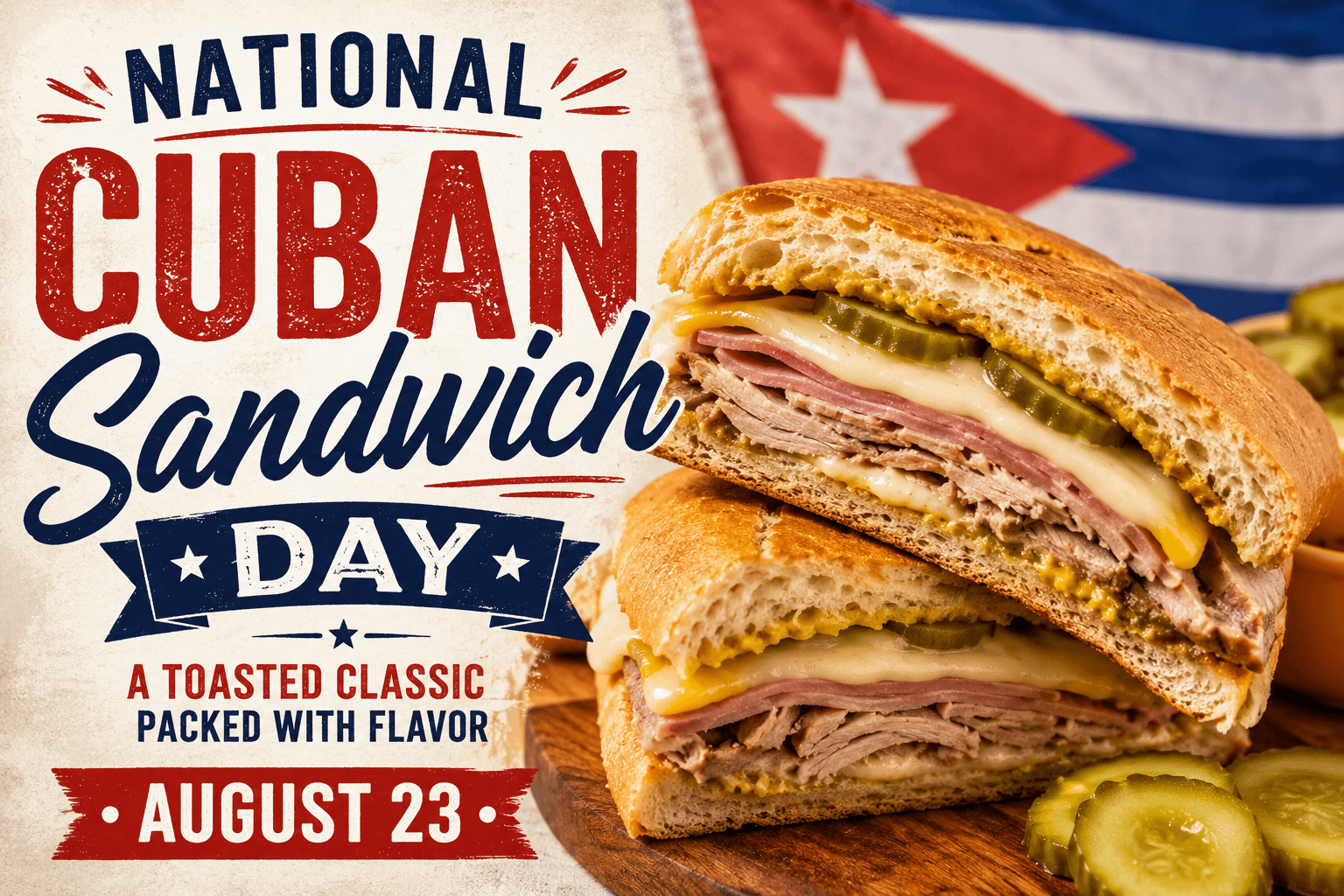
  • National Cuban Sandwich Day: Celebrating a Flavorful Classic

    National Cuban Sandwich Day: Celebrating a Flavorful Classic

    Every year on August 23, sandwich lovers have an especially delicious reason to celebrate: National Cuban Sandwich Day.

    Few sandwiches have achieved the cultural recognition of the Cuban sandwich, commonly known as the Cubano. With layers of roasted pork, sliced ham, Swiss cheese, dill pickles, and yellow mustard tucked inside Cuban bread and pressed until hot and crispy, it delivers an impressive combination of salty, savory, tangy, creamy, and crunchy flavors.

    But National Cuban Sandwich Day celebrates much more than lunch.

    The story of the Cuban sandwich is connected to immigration, working-class communities, Florida history, Cuban culture, and the way food traditions evolve when different cultures come together.

    From the historic neighborhoods of Tampa to the Cuban restaurants of Miami and sandwich shops across America, the Cubano has become an enduring favorite.

    August 23 is the perfect day to discover its history, make one at home, support a Cuban restaurant, compare regional variations, or simply enjoy one of America’s great sandwiches.

    What Is National Cuban Sandwich Day?

    National Cuban Sandwich Day is observed each year on August 23 as a celebration of the famous pressed sandwich and the culinary traditions surrounding it.

    Like many modern food holidays, the exact beginnings of the observance aren’t as important as what the day has become: an opportunity to appreciate a dish with deep cultural roots.

    Restaurants may feature Cuban sandwich specials, home cooks may prepare their own versions, and food lovers can use the occasion to explore Cuban and Cuban-American cuisine.

    And unlike some complicated culinary celebrations, participating is wonderfully easy.

    All you really need is a Cuban sandwich.

    What Exactly Is a Cuban Sandwich?

    At first glance, a Cuban sandwich seems simple.

    The classic combination generally includes:

    • Cuban bread
    • Roasted pork
    • Sliced ham
    • Swiss cheese
    • Dill pickles
    • Yellow mustard

    Depending on where the sandwich is prepared, additional ingredients may appear.

    The ingredients are layered inside the bread before the sandwich is pressed and heated until the exterior becomes crisp and golden and the Swiss cheese melts around the warm meat.

    That final pressing step is essential.

    Without it, you have a very good ham-and-pork sandwich.

    With it, you have something entirely different.

    The heat and pressure bring everything together. Cheese melts between layers of meat. Mustard spreads throughout the sandwich. The pickles provide acidity and crunch. The bread becomes beautifully toasted while absorbing some of the flavors from the filling.

    Every bite offers several different textures and flavors simultaneously.

    The Cuban Sandwich Has a Story to Tell

    The history of the Cuban sandwich is closely connected with the movement of people between Cuba and Florida.

    During the late 19th and early 20th centuries, Cuban immigrants established communities in Florida, including around Tampa and Key West. Tampa’s cigar industry became particularly important, attracting workers from several cultural backgrounds.

    Workers needed meals that were convenient, inexpensive, filling, and easy to eat during the workday.

    Sandwiches were an obvious solution.

    Bread could hold meat, cheese, pickles, and condiments together in a portable meal that required little ceremony.

    Over time, combinations of ingredients associated with Cuban communities and Florida’s multicultural population developed into what Americans today recognize as the Cuban sandwich.

    The exact origins are debated, which isn’t unusual with foods that evolved naturally within communities rather than being invented by one documented person on one specific day.

    What isn’t debated is the sandwich’s deep connection to Florida’s Cuban-American history.

    Tampa and the Cuban Sandwich

    Tampa plays an especially important role in Cuban sandwich history.

    The city’s historic Ybor City neighborhood became famous for its cigar factories and immigrant population. Cuban, Spanish, Italian, and other communities lived and worked alongside one another.

    Food naturally reflected those cultural interactions.

    One distinctive ingredient became associated with Tampa’s version of the Cuban sandwich:

    Genoa salami.

    A Tampa-style Cuban sandwich may include:

    • Cuban bread
    • Ham
    • Roasted pork
    • Genoa salami
    • Swiss cheese
    • Pickles
    • Mustard

    The salami adds another layer of saltiness, richness, and spice.

    For Tampa Cuban sandwich enthusiasts, it isn’t an optional novelty. It’s part of the tradition.

    Miami and the Cuban Sandwich

    Miami has its own strong connection to Cuban culture and Cuban-American cuisine.

    Large waves of Cuban immigration during the 20th century profoundly influenced South Florida’s culture, neighborhoods, restaurants, bakeries, coffee shops, and food traditions.

    The Miami-style Cuban sandwich generally keeps things somewhat simpler.

    It typically contains:

    • Roasted pork
    • Ham
    • Swiss cheese
    • Pickles
    • Mustard
    • Cuban bread

    Notice what’s missing?

    Salami.

    And that’s where the friendly rivalry begins.

    Tampa vs. Miami: Which Cuban Sandwich Is Authentic?

    Food debates can become surprisingly serious, and the Cuban sandwich is no exception.

    Tampa supporters point toward the city’s early Cuban communities and cigar-industry history.

    Miami supporters point toward South Florida’s enormous Cuban population and generations of Cuban-American culinary tradition.

    Then comes the biggest question:

    Does salami belong on a Cuban sandwich?

    In Tampa, the answer is often an enthusiastic yes.

    In Miami, the answer is frequently no.

    Instead of trying to declare one city the permanent winner, National Cuban Sandwich Day provides a much more enjoyable solution:

    Try both.

    Food traditions evolve differently depending on the communities preparing them. Regional variations don’t necessarily erase tradition; sometimes they become traditions of their own.

    That makes the Tampa-versus-Miami debate part of what makes the Cuban sandwich so interesting.

    Why Cuban Bread Is So Important

    Bread might appear to be merely the container holding everything together, but with a Cuban sandwich, it is one of the most important ingredients.

    Traditional Cuban bread is generally long and relatively narrow, with a thin crust and soft, airy interior.

    Fresh Cuban bread has a distinctive texture that works perfectly for pressing.

    Once heated, the exterior becomes crisp while the interior remains tender enough to absorb flavors from the pork, cheese, mustard, and other ingredients.

    The bread shouldn’t overwhelm the filling.

    Instead, it should provide structure and texture while allowing the meats, cheese, pickles, and mustard to remain the stars.

    If you live somewhere without Cuban bakeries, authentic Cuban bread can be difficult to find.

    A quality French or Italian loaf can serve as a substitute.

    It won’t create exactly the same sandwich, but it can still produce an excellent homemade Cubano.

    The Importance of Roasted Pork

    Ham is delicious.

    Swiss cheese is essential.

    Pickles and mustard provide the tang.

    But roasted pork may be the ingredient that gives the Cuban sandwich its soul.

    A beautifully seasoned pork roast creates tenderness, richness, and depth that ordinary deli meat simply can’t duplicate.

    Many Cuban-inspired pork recipes use flavors associated with mojo, which often combines citrus, garlic, herbs, and spices.

    Common ingredients may include:

    • Sour orange juice
    • Lime juice
    • Orange juice
    • Fresh garlic
    • Oregano
    • Cumin
    • Olive oil
    • Salt
    • Black pepper

    The pork is marinated and roasted until flavorful and tender.

    Once cooled enough to handle, it can be sliced thinly for sandwiches.

    If sour oranges aren’t readily available, combining orange juice with lime juice can help create a similar sweet-tart citrus profile.

    Why Pickles Matter More Than You Think

    It would be easy to dismiss pickles as a minor topping.

    They’re not.

    The meats and cheese in a Cuban sandwich are rich and salty. Without something acidic to cut through that richness, the sandwich could become heavy.

    Dill pickles solve that problem beautifully.

    They bring acidity, crunch, saltiness, and freshness.

    Every bite of pickle resets your palate just enough to make the next bite of pork, ham, and melted cheese taste exciting again.

    That’s why leaving out the pickles changes the character of the sandwich considerably.

    Don’t Forget the Mustard

    The same principle applies to yellow mustard.

    Its sharp acidity contrasts beautifully with the fatty pork, ham, and cheese.

    Some people who normally prefer fancy mustards might be tempted to substitute Dijon, honey mustard, or spicy brown mustard.

    Experimenting is perfectly fine.

    But if you’re trying to experience the traditional Cuban sandwich flavor profile, ordinary yellow mustard is difficult to beat.

    Sometimes simple really is better.

    Why Swiss Cheese Works

    Swiss cheese provides a mild, slightly nutty flavor that complements the stronger flavors around it without overpowering them.

    More importantly, it melts beautifully.

    When the sandwich is pressed, Swiss cheese softens and melts between the layers of pork and ham, helping bind the ingredients together.

    That melted cheese is part of what makes cutting into a freshly pressed Cubano so satisfying.

    The Magic Happens When the Sandwich Is Pressed

    A Cuban sandwich isn’t merely assembled.

    It’s transformed.

    Traditionally, the sandwich is heated and compressed using a sandwich press.

    The pressure flattens the bread while heat crisps the exterior and melts the cheese.

    This changes almost every ingredient.

    The bread becomes crunchy.

    The pork becomes warm.

    The ham develops additional flavor from the heat.

    The Swiss cheese melts.

    The mustard spreads.

    The pickles warm slightly while retaining their acidity.

    Instead of tasting separate layers, you begin tasting one cohesive sandwich.

    That’s why pressing is such an important part of making a proper Cubano.

    Homemade Cuban Sandwich Recipe

    Celebrating National Cuban Sandwich Day at home is easier than you might think.

    Ingredients

    For two large sandwiches:

    • 1 loaf Cuban bread
    • 6–8 ounces roasted pork, thinly sliced
    • 4–6 ounces sliced ham
    • 4 slices Swiss cheese
    • Dill pickle slices
    • Yellow mustard
    • Butter, optional
    • Genoa salami, optional for Tampa style

    Instructions

    Step 1: Prepare the bread

    Cut your Cuban bread into sandwich-sized sections.

    Slice each piece horizontally without completely crushing the soft interior.

    Step 2: Spread the mustard

    Spread yellow mustard across the inside of the bread.

    Don’t be afraid to use enough to taste it. The mustard needs to stand up against several layers of meat and cheese.

    Step 3: Add the ham

    Layer sliced ham evenly across the sandwich.

    Avoid piling everything into the center. Even distribution helps create the perfect bite from beginning to end.

    Step 4: Add the roasted pork

    Place thin slices of seasoned roasted pork over the ham.

    If the pork has been refrigerated, allowing it to come closer to room temperature before assembling the sandwich can help everything heat evenly.

    Step 5: Add salami if desired

    Making a Tampa-inspired version?

    Now is the time to add Genoa salami.

    Making a Miami-inspired version?

    Skip it.

    Step 6: Add Swiss cheese

    Arrange the cheese so that it covers most of the meat.

    This helps create melted cheese throughout the sandwich.

    Step 7: Add pickles

    Place dill pickle slices evenly across the cheese.

    You want pickle flavor in nearly every bite.

    Step 8: Close the sandwich

    Place the top portion of bread over the ingredients and gently press it together.

    Step 9: Press and cook

    Heat a sandwich press or panini maker.

    Place the sandwich inside and cook until the bread is golden and crisp and the cheese has melted.

    Don’t have a sandwich press?

    No problem.

    Place the sandwich in a heated skillet and put another heavy skillet on top. Press gently while cooking, then carefully flip the sandwich and repeat.

    Step 10: Slice and serve

    Remove the sandwich once the bread is crisp and the cheese is melted.

    Cut diagonally and serve immediately.

    Make Your Own Mojo-Style Pork

    If you want to take your homemade Cuban sandwich to another level, prepare the pork yourself.

    A simple marinade can combine:

    • Orange juice
    • Lime juice
    • Olive oil
    • Minced garlic
    • Oregano
    • Ground cumin
    • Salt
    • Black pepper

    Marinate a pork shoulder or pork roast for several hours or overnight.

    Slow-roast it until tender.

    Allow it to rest before slicing.

    Not only will you have incredible pork for your Cuban sandwiches, but leftover pork can be used for tacos, rice bowls, salads, breakfast dishes, and other meals.

    What Goes Well With a Cuban Sandwich?

    A Cubano is substantial enough to be a meal by itself, but adding a side makes the experience even better.

    Consider pairing your sandwich with:

    • Plantain chips
    • Fried plantains
    • Yuca fries
    • French fries
    • Sweet potato fries
    • Black beans
    • Rice and beans
    • Potato chips
    • Dill pickles
    • Coleslaw
    • Fresh fruit
    • Green salad
    • Corn salad

    If you’re serving Cuban sandwiches for a gathering, consider offering several sides so guests can create their own plates.

    Drinks to Serve With Your Cubano

    The sandwich’s rich and salty flavors pair especially well with cold, refreshing drinks.

    Nonalcoholic possibilities include:

    • Fresh limeade
    • Lemonade
    • Iced tea
    • Sparkling water with lime
    • Pineapple juice
    • Mango juice
    • Guava nectar
    • Cuban coffee after the meal

    A strong Cuban-style coffee can be a particularly memorable way to finish the meal.

    Turn August 23 Into Cuban Sandwich Night

    National Cuban Sandwich Day doesn’t have to be something you celebrate alone.

    Turn it into dinner with family or friends.

    Prepare roasted pork ahead of time and create a sandwich-building station containing bread, ham, pork, Swiss cheese, mustard, pickles, and salami.

    Everyone can build their preferred version.

    Then press the sandwiches individually and serve them hot.

    Add plantain chips, rice and beans, or another favorite side.

    You now have a simple themed dinner centered around both food and history.

    Hold a Tampa vs. Miami Taste Test

    Want to make the celebration even more entertaining?

    Create two Cuban sandwiches.

    Make the first using:

    Pork + Ham + Swiss + Pickles + Mustard

    Then make another using:

    Pork + Ham + Salami + Swiss + Pickles + Mustard

    Cut both into small tasting portions.

    Don’t tell everyone which is which.

    Have friends or family taste each sandwich and vote for their favorite.

    Team Miami or Team Tampa?

    You might not settle the historical debate, but you’ll probably enjoy trying.

    Support a Local Cuban Restaurant

    National food days are also opportunities to support restaurants and small businesses.

    Instead of making your sandwich at home, search for a Cuban restaurant, bakery, café, food truck, or sandwich shop in your community.

    Order a Cuban sandwich and perhaps try another Cuban dish you’ve never had before.

    Ask how the restaurant prepares its Cubano.

    Does it include salami?

    What type of bread do they use?

    How is the pork seasoned?

    You may discover that each restaurant has its own small variation while maintaining the sandwich’s recognizable identity.

    Cuban Sandwich Variations

    Once a dish becomes popular, experimentation is inevitable.

    Today you’ll find plenty of creative interpretations.

    Some restaurants and home cooks create:

    Cuban sliders using small rolls for parties.

    Cuban grilled cheese with extra melted cheese.

    Cuban quesadillas using tortillas instead of bread.

    Cuban flatbreads inspired by the sandwich’s toppings.

    Cuban breakfast sandwiches featuring eggs alongside pork and ham.

    Cuban-style burgers incorporating pickles, mustard, ham, pork, and Swiss cheese.

    Cuban sandwich pizza using traditional Cubano ingredients as toppings.

    These aren’t replacements for the classic sandwich, but they demonstrate how influential its flavor combination has become.

    What Makes the Cuban Sandwich So Good?

    Part of the answer comes down to balance.

    Consider what happens in a single bite.

    You have:

    Richness from roasted pork.

    Saltiness from ham.

    Creaminess from melted Swiss cheese.

    Acidity from pickles.

    Tanginess from mustard.

    Crunch from pressed bread.

    Tenderness from slow-roasted pork.

    Many successful dishes work because they combine contrasting flavors and textures.

    The Cubano does exactly that.

    Remove one of those components and you’ll notice the difference.

    Together, however, they produce something remarkably satisfying.

    A Sandwich Built for Sharing

    Another reason Cuban sandwiches remain popular is their simplicity.

    You don’t need formal dining.

    You don’t need expensive ingredients.

    You don’t need complicated plating.

    A Cubano can be wrapped in paper, cut in half, and enjoyed practically anywhere.

    That working-class simplicity remains part of its charm.

    It’s food meant to satisfy hunger while delivering enormous flavor.

    Food Is a Connection to History

    Food can tell us where people traveled, where they settled, who they lived alongside, and which traditions they carried with them.

    Recipes rarely remain frozen in time.

    They travel.

    They change.

    They absorb new influences.

    They become associated with neighborhoods and cities.

    Eventually, dishes that began within specific communities can become familiar far beyond those communities.

    The Cuban sandwich is an excellent example.

    Its story reflects generations of cultural exchange between Cuba, Florida, immigrant communities, restaurants, bakeries, workers, and families.

    When we celebrate a dish like the Cubano, we’re also acknowledging the people and communities who helped shape it.

    Interesting Cuban Sandwich Facts

    Here are a few things that make the sandwich especially interesting:

    It has strong Florida connections. Tampa and Miami are both deeply associated with Cuban sandwich culture.

    Tampa traditionally adds salami. This remains one of the most famous regional differences.

    Pressing is essential. Heat and pressure give the Cubano its signature texture.

    Cuban bread matters. Its light interior and crispable crust make it ideal for the sandwich.

    Pickles aren’t just decoration. Their acidity helps balance rich meats and cheese.

    Mustard provides contrast. The sharp flavor cuts through the richness of the sandwich.

    Regional arguments are part of the fun. Tampa versus Miami remains an enduring conversation among Cuban sandwich enthusiasts.

    Ways to Celebrate National Cuban Sandwich Day

    There are plenty of ways to enjoy August 23.

    You can:

    • Order a Cuban sandwich from a local Cuban restaurant.
    • Make traditional Cuban sandwiches at home.
    • Prepare homemade mojo pork.
    • Compare Tampa and Miami versions.
    • Visit a Cuban bakery.
    • Learn about Cuban-American history.
    • Try Cuban coffee.
    • Introduce someone to their first Cubano.
    • Host a Cuban sandwich dinner.
    • Share your favorite version on social media.
    • Support a locally owned Cuban restaurant or food truck.

    The celebration can be as simple as enjoying lunch or as elaborate as preparing an entire Cuban-inspired meal.

    National Cuban Sandwich Day Is About Food, Culture, and Community

    National food holidays can sometimes seem like they’re simply excuses to eat something delicious.

    And admittedly, that’s not a bad reason to celebrate.

    But food can also provide an entry point into history.

    The Cuban sandwich reminds us that some of America’s most beloved foods were shaped by immigrant communities, workers, families, local businesses, and generations of cultural exchange.

    A sandwich made from bread, pork, ham, cheese, mustard, and pickles might look simple.

    Its story is anything but.

    The Cubano represents the way food travels across borders and generations. It shows how communities preserve traditions while also adapting them to new surroundings.

    And perhaps most importantly, it demonstrates one of food’s greatest powers:

    Food brings people together.

    Celebrate National Cuban Sandwich Day on August 23

    On August 23, celebrate National Cuban Sandwich Day by treating yourself to a hot, freshly pressed Cubano.

    Find a local Cuban restaurant.

    Make one at home.

    Try both Tampa and Miami versions.

    Learn about the history behind the sandwich.

    Share one with somebody who has never experienced it.

    And when that crispy Cuban bread gives way to warm roasted pork, salty ham, melted Swiss cheese, tangy mustard, and crunchy pickles, take a moment to appreciate why this sandwich has earned such a passionate following.

    Great food doesn’t always need dozens of ingredients or complicated techniques.

    Sometimes all you need is good bread, flavorful meat, melted cheese, a few pickles, mustard, and a hot press.

    Happy National Cuban Sandwich Day!

    Are you Team Tampa with salami, Team Miami without salami, or do you simply love a great Cuban sandwich either way?

    Read More Holidays & National Days

  • Supporting People While You Deal With Your Own Grief

    Supporting People While You Deal With Your Own Grief

    Grief is a heavy, deeply personal journey. When you’re navigating the pain of your own loss, it can feel overwhelming to also support others who are struggling. Yet, many people find themselves in exactly this position—caring for loved ones, family members, or friends while trying to make sense of their own heartache. Balancing your grief with the responsibility of being there for others is not easy, but it is possible with compassion, boundaries, and self-awareness.

    Acknowledge That Your Grief Matters Too

    Often, people put their pain on hold to focus on someone else’s. While it may feel noble, burying your emotions can create exhaustion and resentment. Remind yourself that your grief deserves space and validation. You don’t have to “be strong” for everyone all the time; strength can also mean admitting that you’re hurting.

    Create Space for Shared Healing

    Supporting others doesn’t mean carrying their grief for them—it means creating a safe space where both of you can share. Something as simple as sitting together in silence, lighting a candle, or talking about memories can help everyone feel less alone. Shared rituals, like visiting a memorial or writing letters, can allow healing to become a collective experience rather than a private burden.

    Set Healthy Boundaries

    It’s okay to say, “I need a break” or “I don’t have the energy to talk about this right now.” Setting limits ensures you don’t burn out emotionally. Boundaries don’t make you less supportive; they make you more sustainable in your care for others.

    Lean on Your Own Support System

    Supporting others while grieving can leave you depleted. Make sure you also have people you can lean on—friends, therapists, spiritual leaders, or support groups. You cannot pour from an empty cup, so tending to your needs is essential.

    Find Strength in Empathy

    Sometimes your grief can make you more attuned to what others are feeling. A simple acknowledgment like, “I don’t know the right words, but I understand how much this hurts” can be powerful. You don’t need to fix anyone’s pain—just being present is often enough.

    Give Yourself Permission to Step Back

    There may be days when supporting others feels impossible. That’s okay. Healing is not linear, and neither is your ability to help. Trust that stepping back when needed doesn’t mean you’ve failed—it means you’re honoring your own healing journey.

    Final Thoughts

    Supporting others while grieving is one of the most challenging emotional balancing acts anyone can face. It requires compassion, patience, and the courage to honor both your needs and the needs of others. By acknowledging your own grief, sharing the burden of healing, and maintaining healthy boundaries, you can walk this path with others—together, even in sorrow.

    A Father’s Guide to Surviving the Loss of a Child

  • National Be an Angel Day – August 22

    National Be an Angel Day – August 22

    Every year on August 22, National Be An Angel Day gives us an opportunity to think beyond ourselves and intentionally bring kindness, compassion, encouragement, and hope into the lives of others.

    You don’t need wings or a halo to be an angel.

    You don’t need a lot of money.

    You don’t need thousands of social media followers or a position of influence.

    You don’t even need to do something extraordinary.

    Sometimes being an angel simply means noticing that someone is struggling and deciding that you aren’t going to ignore them.

    It might mean calling someone who has been unusually quiet. It might mean helping a neighbor carry groceries, buying lunch for someone who is struggling financially, encouraging a coworker, visiting an elderly relative, volunteering in your community, praying for someone going through a difficult season, or sitting beside a grieving friend who doesn’t need advice—they simply need someone who is willing to stay.

    National Be An Angel Day reminds us that some of the greatest differences we make in people’s lives begin with the smallest decisions.

    Be kind.

    Be compassionate.

    Be generous.

    Be present.

    Be the person who reminds someone that they aren’t alone.

    Because you never know when one small act of kindness might become the moment someone desperately needed.

    What Is National Be An Angel Day?

    National Be An Angel Day is observed each year on August 22 and encourages people to perform acts of kindness, help those who need support, and recognize the people who have been “angels” in their own lives.

    When we describe someone as an angel, we usually aren’t talking about something dramatic.

    We are talking about the person who showed up.

    The person who called.

    The person who listened.

    The person who helped.

    The person who stayed.

    The person who believed in us.

    The person who reminded us there was still hope when we couldn’t see much of it ourselves.

    You may have someone like that in your own life.

    Maybe they helped you financially when you were struggling.

    Maybe they gave you an opportunity when nobody else would.

    Maybe they stayed beside you after someone you loved died.

    Maybe they encouraged you through depression, heartbreak, disappointment, unemployment, loneliness, illness, or another difficult season.

    Or maybe they simply said the right thing at exactly the right moment.

    Those people become unforgettable.

    National Be An Angel Day celebrates them while challenging each of us to become that kind of person for someone else.

    The History of National Be An Angel Day

    National Be An Angel Day was created in 1993 by Jayne Howard Feldman, an author and spiritual teacher.

    The observance was created as an encouragement for people to perform acts of kindness and recognize the positive influence we can have on one another.

    The message has remained relevant because kindness never becomes outdated.

    Technology changes.

    Society changes.

    Our routines change.

    The ways we communicate change.

    But human beings will always need compassion.

    There will always be someone who needs encouragement.

    There will always be someone who feels forgotten.

    There will always be someone grieving.

    There will always be someone struggling quietly.

    There will always be opportunities to make another person’s day a little better.

    August 22 simply gives us a reason to become more intentional about finding those opportunities.

    The World Needs More Everyday Angels

    We often hear about enormous acts of generosity.

    Someone donates millions of dollars.

    A volunteer organization provides thousands of meals.

    A celebrity funds an important cause.

    Those actions deserve recognition, but they can sometimes make ordinary people believe that making a difference requires enormous resources.

    It doesn’t.

    Some of the most meaningful acts of kindness will never appear in the news.

    Nobody will post about them.

    Nobody will give out an award.

    Nobody will even know they happened except the people involved.

    A father quietly helping his adult child through a difficult time.

    A neighbor mowing the lawn for someone who is recovering from surgery.

    A stranger paying for the groceries of the person standing behind them.

    A friend driving across town because someone said, “I really need somebody right now.”

    A teacher staying after class to encourage a struggling student.

    A coworker bringing lunch to someone who forgot theirs.

    A person sitting beside someone who is grieving and allowing them to cry.

    These are everyday angels.

    And our communities need more of them.

    You Never Know What Someone Is Carrying

    One of the greatest lessons National Be An Angel Day can teach us is that appearances tell us very little about what someone is experiencing.

    People become very good at hiding pain.

    Someone can smile while grieving.

    Someone can joke while battling loneliness.

    Someone can go to work every day while experiencing serious financial problems.

    Someone can post happy photographs online while privately going through heartbreak.

    Someone can say, “I’m fine,” because explaining what they’re really feeling seems impossible.

    We pass people every day without knowing what they’re carrying.

    The cashier at the grocery store.

    The server at the restaurant.

    The person driving beside us.

    Our coworkers.

    Our neighbors.

    Even members of our own families.

    That is why kindness should never depend entirely on whether someone appears to “deserve” it.

    Sometimes the person who seems impatient is overwhelmed.

    Sometimes the person who doesn’t smile is exhausted.

    Sometimes the friend who hasn’t responded is struggling.

    We don’t know everyone’s story.

    Choosing compassion doesn’t mean allowing people to mistreat us. Healthy boundaries still matter.

    But it does mean remembering that there may be more happening beneath the surface than we realize.

    Small Acts of Kindness Are More Powerful Than We Think

    We sometimes hesitate to help because we believe what we can offer isn’t enough.

    We think:

    “I can’t fix their problem.”

    “I don’t know what to say.”

    “I don’t have much money.”

    “I’m probably bothering them.”

    “What difference would my little gesture make?”

    But kindness isn’t always about solving the problem.

    Sometimes it is simply about making sure someone doesn’t feel completely alone while facing it.

    Imagine someone having an incredibly difficult morning.

    Their alarm didn’t go off.

    They spilled coffee.

    They’re worried about money.

    They received bad news.

    They’re missing someone they love.

    They barely slept.

    Then someone unexpectedly smiles and says, “I hope you have a great day.”

    Later, a friend sends a message saying, “Just wanted you to know I’m thinking about you.”

    Then a coworker offers to help with something.

    None of those things eliminated the person’s problems.

    But each interaction communicated something important:

    You matter.

    Someone sees you.

    Someone cares.

    Sometimes that is enough to help someone keep moving forward.

    Kindness Doesn’t Have to Cost Anything

    Money can certainly help people, but generosity is much bigger than financial giving.

    Some of the most valuable gifts we can offer cost nothing.

    Give someone your time.

    Give someone your attention.

    Give someone encouragement.

    Give someone patience.

    Give someone forgiveness.

    Give someone a sincere compliment.

    Give someone another chance.

    Give someone the benefit of the doubt.

    Give someone a listening ear.

    Give someone a reason to believe in themselves.

    Send a message.

    Make a phone call.

    Open a door.

    Offer your seat.

    Help carry something.

    Smile.

    Say thank you.

    Tell someone you’re proud of them.

    Sometimes five sincere words can mean more than an expensive gift.

    Be an Angel to Someone Who Is Grieving

    One of the most meaningful ways to observe National Be An Angel Day is to remember someone who is grieving.

    Grief doesn’t follow a convenient schedule.

    After a death, there may initially be many people offering support. Friends call. Family members visit. Food arrives. Messages fill the phone. People attend the funeral or memorial.

    Then everyone returns to their lives.

    The grieving person cannot simply return to the life they had before.

    Their world has changed.

    Weeks pass.

    Months pass.

    Years can pass.

    But birthdays still arrive.

    Holidays still come.

    Anniversaries return.

    Songs bring memories.

    Photographs bring tears.

    Ordinary places can suddenly become reminders.

    Sometimes the greatest gift you can give someone who is grieving is simply remembering.

    Send them a message.

    Mention their loved one’s name.

    Ask them to share a memory.

    Let them know you’re thinking about them on difficult dates.

    Listen without trying to fix their grief.

    You don’t need perfect words.

    You can simply say:

    “I was thinking about you today.”

    Or:

    “I know you miss them. I’m here if you want to talk.”

    One compassionate message can mean more than you realize.

    Remember the People Who Feel Forgotten

    National Be An Angel Day is also an opportunity to look for people who may not receive much attention.

    Think about someone who lives alone.

    Someone elderly who rarely receives visitors.

    A single parent carrying enormous responsibilities.

    A caregiver who spends most of their time taking care of someone else.

    Someone recently divorced.

    Someone who lost a job.

    Someone experiencing homelessness.

    A veteran who feels disconnected.

    A widow or widower.

    A grieving parent.

    Someone whose children live far away.

    A person new to your community.

    A coworker who always eats lunch alone.

    Sometimes the people who need kindness most are the people who have stopped asking for it.

    They may have become accustomed to being overlooked.

    Your attention can remind them that they haven’t disappeared.

    Be the Person Who Checks In Twice

    Most of us have sent the familiar message:

    “Let me know if you need anything.”

    It is well-intentioned.

    But people who are struggling often don’t know what to ask for.

    They may not want to feel like a burden.

    They may not know what they need.

    Sometimes a more helpful approach is to be specific.

    “Can I bring dinner over tomorrow?”

    “Would you like me to drive you to your appointment?”

    “I’m going to the grocery store. Do you need anything?”

    “I have some free time Saturday. Is there something around the house I can help with?”

    And perhaps most importantly, check in again.

    Anyone can send one message.

    The people we remember are often the ones who continued checking long after everyone else stopped.

    Be an Angel by Listening

    Listening may be one of the most underrated forms of kindness.

    Many people don’t need another person telling them what they should do.

    They need someone who will actually hear them.

    Listen without checking your phone.

    Listen without immediately comparing their experience to yours.

    Listen without trying to solve everything.

    Listen without judging.

    Listen without rushing them.

    Give someone the space to tell their story.

    Sometimes people discover their own strength simply because someone finally gave them permission to speak honestly.

    Kindness Includes Patience

    There are countless opportunities to practice kindness in everyday frustrations.

    The checkout line is taking too long.

    Someone made a mistake with your order.

    Traffic is terrible.

    A new employee doesn’t know what they’re doing yet.

    Someone misunderstands what you said.

    These moments may seem unrelated to National Be An Angel Day, but they’re exactly where kindness becomes real.

    It’s easy to talk about compassion when everything is going well.

    The challenge is practicing it when we’re inconvenienced.

    That doesn’t mean accepting poor treatment or ignoring legitimate problems.

    It means remembering that we can address problems without humiliating people.

    We can disagree without cruelty.

    We can correct mistakes without destroying someone’s dignity.

    Patience can be an act of kindness too.

    Be an Angel Online

    Kindness shouldn’t stop when we pick up our phones.

    Social media has given people incredible opportunities to connect, but it has also made cruelty easier.

    People sometimes say things online that they would never say face-to-face.

    National Be An Angel Day is a good opportunity to bring more positivity into digital spaces.

    Leave an encouraging comment.

    Share someone’s small business.

    Congratulate someone on an accomplishment.

    Send a private message to someone who seems discouraged.

    Thank someone whose content helped you.

    Avoid joining unnecessary arguments.

    Don’t participate in bullying.

    Remember there is a human being behind the profile.

    A screen doesn’t remove our responsibility to treat people with dignity.

    Recognize the Angels in Your Own Life

    August 22 shouldn’t only be about helping others.

    It is also an opportunity to recognize people who have helped you.

    Think about your life.

    Who stood beside you when things fell apart?

    Who believed in you?

    Who gave you an opportunity?

    Who listened?

    Who forgave you?

    Who encouraged you?

    Who helped you when they had nothing to gain from doing so?

    Maybe it’s a parent.

    A grandparent.

    A spouse.

    A friend.

    A teacher.

    A coach.

    A coworker.

    A pastor.

    A neighbor.

    Or perhaps someone you barely knew who happened to enter your life at exactly the right moment.

    Tell them.

    Don’t assume they know.

    Send a message saying:

    “I don’t know if I’ve ever properly thanked you, but what you did for me mattered.”

    Those words can be incredibly powerful.

    Ways to Celebrate National Be An Angel Day

    There isn’t one correct way to celebrate. The best act of kindness is often the one that fits naturally into the opportunities around you.

    Consider doing something such as:

    • Call someone you haven’t spoken with recently.
    • Check on a grieving friend or family member.
    • Pay for someone’s coffee.
    • Leave a generous tip.
    • Donate food to a local pantry.
    • Volunteer in your community.
    • Help an elderly neighbor.
    • Bring dinner to someone going through a difficult time.
    • Send an encouraging text.
    • Write someone a handwritten thank-you note.
    • Compliment someone sincerely.
    • Donate clothing you no longer need.
    • Support a local charity.
    • Give blood if you’re eligible.
    • Help someone with transportation.
    • Let someone go ahead of you in line.
    • Thank a teacher, first responder, healthcare worker, caregiver, or volunteer.
    • Leave a positive review for a local business or employee.
    • Encourage someone pursuing a goal.
    • Pray for someone who needs strength.
    • Spend time with someone who is lonely.
    • Tell your family members you love them.
    • Forgive a small mistake.
    • Be patient with someone learning something new.
    • Ask someone, “How are you really doing?” and stay long enough to hear the answer.

    You don’t need to complete the entire list.

    Choose one thing.

    Then do it intentionally.

    The Ripple Effect of Kindness

    One act of kindness rarely ends with one person.

    Imagine buying coffee for the stranger behind you.

    That person is surprised.

    They arrive at work in a better mood.

    Because they’re in a better mood, they’re more patient with a coworker.

    That coworker has been struggling and needed patience that morning.

    Later, the coworker goes home feeling a little better and is more present with their family.

    You may never know any of that happened.

    All you know is that you bought someone coffee.

    That’s the beautiful thing about kindness.

    We rarely know how far the ripple travels.

    A small action can move through people’s lives in ways we’ll never witness.

    Being an Angel Sometimes Means Showing Up in the Darkness

    Not every act of kindness is cheerful.

    Sometimes being an angel means walking into someone’s darkness and sitting beside them.

    You cannot remove every person’s pain.

    You cannot fix every broken heart.

    You cannot bring back someone who died.

    You cannot erase someone’s past.

    You cannot guarantee tomorrow will be easier.

    But you can say:

    “You don’t have to go through this moment alone.”

    Sometimes that’s what people need most.

    They don’t need someone pretending everything will magically become perfect.

    They need someone willing to stay when life isn’t perfect.

    Kindness and Boundaries Can Exist Together

    Being kind doesn’t mean saying yes to everything.

    It doesn’t mean allowing people to take advantage of you.

    It doesn’t mean tolerating abuse, manipulation, disrespect, or unhealthy behavior.

    You can have boundaries and still be compassionate.

    You can say no respectfully.

    You can distance yourself from unhealthy situations without becoming cruel.

    You can forgive someone without giving them unlimited access to your life.

    Being an angel to others should never require destroying yourself.

    Healthy kindness comes from compassion, not obligation or fear.

    Let Children See Kindness in Action

    National Be An Angel Day is also a wonderful opportunity to teach children about compassion.

    Children learn kindness not only from what adults tell them but from what they see adults doing.

    Let them help choose food to donate.

    Encourage them to make a card for someone who is lonely.

    Let them help an elderly neighbor.

    Teach them to thank people.

    Encourage them to include children who feel left out.

    Show them that generosity isn’t measured by how much money someone has.

    When children grow up seeing kindness practiced, they learn that compassion is simply part of how we treat people.

    Don’t Wait for the Perfect Opportunity

    One reason people sometimes fail to act is that they’re waiting for the perfect opportunity to make a difference.

    But opportunities for kindness are everywhere.

    They’re in grocery stores.

    Restaurants.

    Workplaces.

    Schools.

    Neighborhoods.

    Churches.

    Hospitals.

    Social media.

    Family gatherings.

    Parking lots.

    Phone calls.

    Text messages.

    Sometimes the opportunity is sitting right beside you.

    Don’t wait until you can do something enormous.

    Do the small thing you can do today.

    Sometimes You Are the Angel—and Sometimes You Need One

    There will be seasons when you have the strength and resources to help others.

    There will also be seasons when you need someone to help you.

    Both are part of being human.

    People who are accustomed to helping everyone else sometimes struggle to accept kindness.

    They don’t want to burden anyone.

    They want to handle everything themselves.

    But accepting help isn’t failure.

    Allowing someone to support you gives them an opportunity to practice kindness too.

    There will be moments when you’re someone’s angel.

    There will be moments when someone unexpectedly becomes yours.

    That’s part of the beauty of human connection.

    You May Already Be Someone’s Angel

    You may never fully understand the impact you’ve had on another person’s life.

    Something you said years ago might still encourage someone today.

    Someone may remember the day you helped them financially.

    Someone may remember that you were the only person who called after a loss.

    Someone may remember that you defended them.

    Someone may remember that you believed in them.

    Someone may remember the simple words:

    “Don’t give up.”

    You might have forgotten the moment entirely.

    They may remember it forever.

    We don’t always get to see the results of our kindness.

    That doesn’t make those acts any less meaningful.

    Make Kindness Part of Who You Are

    The greatest way to honor National Be An Angel Day isn’t simply to perform one good deed on August 22.

    It’s to carry the message forward.

    Tomorrow, be kind again.

    Next week, check on someone.

    Next month, help someone.

    Keep noticing people.

    Keep encouraging.

    Keep listening.

    Keep showing compassion.

    Ask yourself regularly:

    Who could use encouragement today?

    Who haven’t I checked on recently?

    Who might feel forgotten?

    Whose burden could I make a little lighter?

    Eventually kindness stops being something you occasionally do.

    It becomes part of who you are.

    One Person Can Make a Difference

    We sometimes look at the problems in the world and feel powerless.

    There is so much suffering.

    So much division.

    So much loneliness.

    So much anger.

    So much grief.

    One person can’t fix all of it.

    But one person can make a difference for one person.

    And that matters.

    You don’t have to change the entire world.

    Change someone’s afternoon.

    Change someone’s difficult morning.

    Change someone’s belief that nobody cares.

    Change someone’s moment.

    Sometimes that’s where changing the world begins.

    Final Thoughts on National Be An Angel Day

    National Be An Angel Day on August 22 reminds us that some of the most important things we can give another person aren’t things at all.

    They’re moments.

    A moment of patience.

    A moment of compassion.

    A moment of encouragement.

    A moment of generosity.

    A moment when someone realizes:

    “I’m not alone.”

    You don’t need wings.

    You don’t need a halo.

    You don’t need recognition.

    You don’t need anyone to know what you did.

    You simply need to care enough to act.

    Call the person you’ve been thinking about.

    Check on the grieving friend.

    Help the neighbor.

    Encourage the coworker.

    Thank the person who helped you.

    Smile at the stranger.

    Listen to the person who needs to talk.

    Give what you can.

    Forgive when you can.

    Pray for someone.

    Show up.

    And when you see someone struggling, don’t automatically assume somebody else will help.

    Maybe today, you’re the somebody.

    Because sometimes angels don’t arrive with wings.

    Sometimes they arrive with groceries.

    Sometimes they arrive with dinner.

    Sometimes they arrive with a phone call.

    Sometimes they arrive with a hug.

    Sometimes they arrive with a prayer.

    Sometimes they arrive with a simple message saying, “I’m thinking about you.”

    And sometimes they simply sit beside us when everyone else has walked away.

    On this National Be An Angel Day, choose kindness.

    Choose compassion.

    Choose to notice people.

    Choose to make someone’s burden a little lighter.

    You may never know how much your kindness mattered.

    But the person who needed it just might remember it forever.

    National Be An Angel Day Challenge

    Before August 22 ends, do one act of kindness without expecting anything in return.

    Don’t do it for recognition.

    Don’t do it so you can post about it.

    Don’t do it because someone owes you something.

    Do it because another human being could use a little kindness.

    Then, if you can, do another tomorrow.

    Question of the Day

    Who has been an “angel” in your life during a difficult time, and what did they do that you will never forget?

    Read More Holidays & National Days

  • Tekmatix: All-in-One Platform for Digital Entrepreneurs

    Tekmatix: All-in-One Platform for Digital Entrepreneurs

    In today’s fast-paced digital world, business owners, coaches, and course creators are constantly searching for streamlined ways to manage and grow their online presence. Tekmatix has emerged as a powerful all-in-one platform designed to simplify the tech side of running an online business, allowing entrepreneurs to focus on what truly matters—serving their audience and scaling their impact.

    What is Tekmatix?

    Tekmatix is an integrated business platform that combines multiple digital tools under one roof. Instead of juggling a dozen different subscriptions for email marketing, online courses, memberships, funnels, calendars, and community platforms, Tekmatix brings these features together in a single, user-friendly system.

    Its mission is to reduce overwhelm for business owners by replacing “tech chaos” with an organized, scalable solution.

    Key Features

    Tekmatix provides a suite of tools to help entrepreneurs run their businesses efficiently:

    Course & Membership Hosting: Create and manage online courses, digital programs, or private memberships with customizable options.

    Email Marketing: Run powerful email campaigns, automations, and customer communications.

    Sales Funnels & Landing Pages: Build high-converting funnels without needing a separate funnel builder.

    Community Spaces: Offer members-only groups and communities without relying on social media platforms.

    CRM & Pipelines: Manage client relationships and track leads with built-in customer management tools.

    Booking System: Schedule coaching calls, sessions, or events directly through the platform.

    Payment Integrations: Sell products, services, or courses seamlessly with connected payment gateways.

    Who is Tekmatix For?

    Tekmatix is ideal for:

    Coaches and consultants

    Online course creators

    Membership site owners

    Small business owners who want to streamline operations

    Digital entrepreneurs seeking to scale without excessive tech costs

    By consolidating these tools, Tekmatix reduces the learning curve and eliminates the need to patchwork multiple apps together.

    Why Choose Tekmatix?

    The greatest advantage Tekmatix offers is simplicity and affordability. Many entrepreneurs spend hundreds of dollars monthly subscribing to different services—such as Kajabi, ClickFunnels, Mailchimp, and Slack—to achieve the same results. Tekmatix eliminates this complexity by being a one-stop solution.

    Another key benefit is that it fosters independence from social media platforms, allowing business owners to host their own communities and customer engagement spaces.

    Final Thoughts

    Tekmatix is quickly becoming a favorite among entrepreneurs who want to simplify their operations and reclaim time from tech headaches. By offering a centralized platform for courses, communities, emails, sales funnels, and more, it empowers business owners to focus on growth and impact, not troubleshooting.

    For those seeking to streamline, scale, and succeed in the digital space, Tekmatix is more than just a platform—it’s a business partner.

    Read More Opportunities & Growth

  • National Hazy IPA Day: Celebrating the Juicy Side of Craft Beer

    National Hazy IPA Day: Celebrating the Juicy Side of Craft Beer

    For craft beer enthusiasts who love bold hop aromas, tropical fruit flavors, a smooth mouthfeel, and a beautifully cloudy pour, National Hazy IPA Day is a celebration worth raising a glass to.

    Observed on the third Thursday of August, National Hazy IPA Day shines a spotlight on one of the most influential beer styles of the modern American craft brewing movement. In 2026, National Hazy IPA Day falls on Thursday, August 20.

    Hazy India Pale Ales have transformed expectations about what an IPA should look, smell, and taste like. Instead of the crystal-clear appearance and assertive bitterness traditionally associated with many American IPAs, Hazy IPAs often deliver an opaque golden appearance, intense hop aroma, tropical and citrus flavors, restrained bitterness, and a remarkably soft texture.

    Some look almost like glasses of orange juice.

    Others resemble pineapple or grapefruit juice.

    But behind that unmistakable haze is an entire brewing philosophy centered on maximizing hop aroma, flavor, and drinkability.

    National Hazy IPA Day is a chance to explore that philosophy, learn how the style developed, appreciate the creativity of craft brewers, and perhaps discover a new favorite beer along the way.

    What Exactly Is a Hazy IPA?

    A Hazy IPA is a style of India Pale Ale recognized for its cloudy appearance, strong hop aroma, fruit-forward flavors, fuller body, and comparatively soft bitterness.

    You’ll also frequently encounter the term New England IPA, commonly abbreviated as NEIPA, because the modern style developed largely through brewing innovation in the northeastern United States.

    Pour one into a glass and the difference from a traditional IPA can be immediately noticeable.

    Instead of seeing clearly through the beer, you may see an opaque liquid ranging from pale yellow to deep orange.

    Then comes the aroma.

    Depending on the hops, yeast, and brewing methods involved, you might detect characteristics reminiscent of:

    • Mango
    • Pineapple
    • Orange
    • Tangerine
    • Grapefruit
    • Passion fruit
    • Peach
    • Apricot
    • Lemon
    • Lime
    • Melon
    • Berries
    • Floral notes
    • Fresh herbs

    Take a sip and you’ll often discover that the bitterness isn’t as aggressive as the aroma might have led you to expect.

    Instead, the beer can be soft, smooth, juicy, and remarkably aromatic.

    That’s the experience that helped make Hazy IPA a craft beer sensation.

    Why Is a Hazy IPA Hazy?

    The name gives away its most obvious characteristic.

    It’s hazy.

    But why?

    Beer clarity is influenced by numerous factors, including proteins, yeast, grains, hops, brewing methods, fermentation, filtration, and conditioning.

    Hazy IPA brewers frequently use grains such as wheat and oats, which can contribute proteins and other components associated with the style’s cloudiness and fuller mouthfeel.

    Heavy hop additions can also play a role.

    Interactions among hop compounds and proteins can contribute to the persistent haze associated with many examples of the style.

    Yeast selection and fermentation practices can influence both appearance and flavor as well.

    The important point is that the haze in a properly brewed Hazy IPA generally isn’t an accident.

    It’s often an intentional result of choices made throughout the brewing process.

    Beer Didn’t Always Celebrate Cloudiness

    That’s one reason Hazy IPA was initially so controversial.

    For generations, beer drinkers were often taught that clarity was desirable. A bright, clear beer could symbolize careful brewing, conditioning, and presentation.

    Cloudiness might have caused consumers to question whether something was wrong.

    Then the craft beer movement began rewriting the rules.

    Brewers increasingly experimented with ingredients, fermentation methods, hop schedules, yeast strains, and traditional style expectations.

    Eventually, some discovered that maximizing certain desirable aromas, flavors, and textures could produce beer that wasn’t perfectly clear.

    Instead of treating that as a flaw, they embraced it.

    Drinkers did too.

    Before long, the cloudy appearance became part of the attraction.

    The New England Roots of Hazy IPA

    The modern Hazy IPA movement is strongly connected with New England, particularly Vermont and surrounding areas.

    Brewers in the region began creating hop-forward beers that tasted dramatically different from the aggressively bitter IPAs becoming famous on the West Coast.

    Rather than chasing maximum bitterness, these brewers focused heavily on aroma and hop flavor.

    The beers could be cloudy.

    They could be soft.

    They could smell intensely fruity.

    And they could deliver huge hop character without punishing the drinker’s palate with bitterness.

    At first, these beers were largely regional discoveries.

    Then craft beer enthusiasts began talking about them.

    People traveled to breweries specifically to buy limited releases. Cans became highly sought after. Beer enthusiasts traded releases with drinkers living in other states.

    Social media accelerated the excitement.

    Photos of glasses filled with thick-looking, golden-orange beer looked dramatically different from traditional lagers and clear IPAs.

    Curiosity grew.

    Breweries across the country noticed.

    Soon, Hazy IPAs began appearing everywhere.

    From Regional Curiosity to Craft Beer Staple

    The rise of Hazy IPA demonstrates just how quickly craft beer culture can evolve.

    What began as a somewhat unconventional regional approach eventually became one of the most recognizable categories on American tap lists.

    Walk into a modern craft brewery and there’s a good chance you’ll encounter at least one hazy or juicy IPA.

    Some breweries make several.

    You might see:

    Hazy Pale Ale — Lower alcohol and often lighter than a traditional Hazy IPA.

    Hazy IPA — The classic modern interpretation.

    Double Hazy IPA — Bigger in alcohol, hops, aroma, and flavor.

    Triple Hazy IPA — An even stronger interpretation designed for intense hop character.

    Session Hazy IPA — A lower-alcohol option focused on drinkability.

    The popularity of the style has encouraged brewers to experiment continuously.

    Hazy IPA vs. West Coast IPA

    One of the best ways to understand Hazy IPA is to compare it with another famous American interpretation: the West Coast IPA.

    West Coast IPAs are traditionally associated with a clearer appearance, assertive bitterness, citrus, pine, resin, and a relatively dry finish.

    Hazy IPAs typically emphasize softer bitterness, fuller body, tropical fruit aromas, and a cloudy appearance.

    Imagine two beers brewed with an emphasis on hops.

    One says:

    “Taste the bitterness.”

    The other says:

    “Smell and taste the fruit.”

    That’s an oversimplification, but it captures an important philosophical difference.

    Neither approach is better.

    They’re simply different expressions of hops.

    And many IPA enthusiasts enjoy both.

    The Incredible World of Modern Hops

    Hops are among the most fascinating ingredients in beer.

    Originally valued partly because their bitterness could balance the sweetness of malt, hops have become one of the primary creative tools of modern craft brewing.

    Different varieties can produce dramatically different sensory characteristics.

    A brewer might choose hops that suggest:

    • Mango
    • Pineapple
    • Grapefruit
    • Tangerine
    • Lemon
    • Peach
    • Passion fruit
    • Berries
    • Melon
    • Pine
    • Herbs
    • Flowers

    Some modern hop varieties have become especially popular in hop-forward beers, including Citra, Mosaic, Galaxy, Amarillo, Simcoe, El Dorado, and Nelson Sauvin.

    Brewers rarely have to limit themselves to one.

    Combining several hop varieties allows them to build layers of aroma and flavor.

    One beer might emphasize orange and grapefruit.

    Another might explode with mango and pineapple.

    Another could remind you of peach, melon, and passion fruit.

    That’s why trying different Hazy IPAs can be such an interesting experience.

    Why Does a Hazy IPA Taste So Juicy?

    “Juicy” is one of the most common words used to describe Hazy IPA.

    That doesn’t necessarily mean actual fruit juice was added.

    Much of that impression can come from hops.

    Modern hop varieties contain aromatic compounds capable of producing sensory characteristics remarkably similar to fruit.

    Brewers also carefully control when hops are introduced during brewing.

    Traditionally, hops boiled for longer periods contributed substantial bitterness.

    Modern Hazy IPA brewing often places greater emphasis on later hop additions and dry hopping, which can preserve and amplify aroma.

    The result can be an incredibly aromatic beer.

    Before you’ve even taken your first sip, your nose may already be telling your brain:

    Mango. Orange. Pineapple. Peach.

    That aroma influences how you perceive the flavor.

    What Is Dry Hopping?

    If you start exploring Hazy IPAs, you’ll quickly encounter the phrase dry hopped.

    Despite the name, it has nothing to do with making the beer dry.

    Dry hopping generally refers to adding hops during or after fermentation rather than relying exclusively on additions during the boil.

    The goal is often to extract aromatic compounds while avoiding excessive bitterness.

    Hazy IPA brewers may use substantial dry-hop additions to create the explosive aromas associated with the style.

    Some cans proudly advertise themselves as:

    Double Dry Hopped (DDH)

    or even variations involving additional hopping techniques.

    Those labels generally signal that hop aroma is intended to be a major part of the experience.

    The Role of Oats and Wheat

    Hops may get the headlines, but the grain bill plays an important supporting role.

    Many Hazy IPAs incorporate oats or wheat alongside malted barley.

    These ingredients can help contribute to the style’s recognizable body and texture.

    Instead of feeling thin or sharply dry, the beer might feel:

    • Smooth
    • Creamy
    • Silky
    • Soft
    • Full
    • Almost pillowy

    That mouthfeel works beautifully with tropical hop flavors.

    Imagine intense mango and citrus aromas combined with a harsh, watery body.

    The experience wouldn’t be the same.

    The soft texture helps tie everything together.

    Yeast Matters Too

    Yeast is another critical ingredient.

    Beer is created through fermentation, and yeast does much more than simply produce alcohol.

    Different strains can contribute different flavors and aromas.

    Certain yeast strains used in Hazy IPA production may emphasize fruity characteristics that complement the hops.

    That means the mango, peach, citrus, or tropical impressions you’re experiencing aren’t necessarily coming from one ingredient.

    They may be the result of hops, yeast, malt, water, and fermentation interacting with one another.

    That’s part of what makes brewing so fascinating.

    Water Can Change a Beer

    Water may seem like the least exciting ingredient in beer, but it’s enormously important.

    Beer is mostly water.

    Its mineral composition can influence how bitterness, malt, and mouthfeel are perceived.

    Brewers making Hazy IPAs may adjust their brewing water to encourage a softer presentation of hops and a rounder mouthfeel.

    This is another example of how much science exists behind something that appears relatively simple.

    A great Hazy IPA isn’t just “beer with lots of hops.”

    It’s the result of countless decisions.

    Why Hazy IPA Won Over So Many Drinkers

    Not everyone loves intensely bitter beer.

    That’s where Hazy IPA opened an important door.

    During earlier stages of the American IPA boom, bitterness sometimes became almost a competition.

    Brewers pushed boundaries.

    Drinkers compared bitterness.

    Some beers seemed designed to challenge the palate.

    Craft beer enthusiasts loved it.

    But newcomers sometimes took one sip and decided:

    “IPAs aren’t for me.”

    Hazy IPA changed that conversation.

    Suddenly, someone who disliked bitter IPAs could try a juicy version filled with mango, orange, and pineapple characteristics and discover that they actually enjoyed hop-forward beer.

    Hazy IPA helped demonstrate that “hoppy” and “bitter” aren’t necessarily the same thing.

    How to Properly Taste a Hazy IPA

    You don’t need to be a beer expert to appreciate one.

    Start with the appearance.

    Notice the color.

    Is it pale yellow?

    Golden?

    Deep orange?

    Slightly cloudy or completely opaque?

    Next, smell the beer before drinking it.

    Aroma is a huge part of Hazy IPA.

    Take a gentle sniff and ask yourself what you notice.

    Orange?

    Mango?

    Grapefruit?

    Pineapple?

    Peach?

    There’s no need to worry about getting the “correct” answer.

    Taste is personal.

    Then take a sip.

    Notice the initial flavor, bitterness, texture, and finish.

    Does the flavor match the aroma?

    Is the bitterness stronger or softer than expected?

    Does the beer feel creamy?

    Does the hop flavor linger?

    The more deliberately you taste, the more you’ll begin noticing differences between beers.

    Serve It in the Right Glass

    You can certainly enjoy a Hazy IPA directly from a can, but pouring it into a glass provides an important advantage:

    Aroma.

    A glass gives the beer room to release aromatic compounds.

    Tulip-shaped beer glasses, IPA glasses, and similar designs can help concentrate aromas toward your nose.

    Even an ordinary pint glass allows you to see the beer’s distinctive appearance and experience more of its aroma.

    Pour it, admire it, smell it, and then drink it.

    Freshness Is Especially Important

    Hop-forward beers are generally at their best when fresh and properly stored.

    The aromatic characteristics that make Hazy IPAs exciting can change over time.

    That’s why checking the packaging date can be useful when buying one.

    Whenever possible, follow the brewery’s recommendations regarding refrigeration and freshness.

    A freshly packaged Hazy IPA can deliver dramatically expressive hop aroma.

    That freshness is one reason visiting a local brewery can be such a rewarding way to celebrate National Hazy IPA Day.

    Food Pairings for Hazy IPA

    Hazy IPA can pair beautifully with bold foods.

    Its tropical fruit character, carbonation, and hop flavor can complement spicy, salty, smoky, and savory dishes.

    Consider pairing your Hazy IPA with:

    • Buffalo wings
    • Fried chicken
    • Cheeseburgers
    • Bacon burgers
    • Barbecue chicken
    • Pulled pork
    • Smoked brisket
    • Fish tacos
    • Carne asada tacos
    • Spicy sausage
    • Nachos
    • Jalapeño poppers
    • Spicy pizza
    • Barbecue chicken pizza
    • Thai curry
    • Spicy noodles
    • Sharp cheddar
    • Pepper Jack cheese
    • Grilled chicken sandwiches

    One particularly enjoyable combination is Hazy IPA and spicy food.

    The tropical aromas can create an interesting contrast with chili heat, while carbonation helps refresh your palate between bites.

    Pizza and Hazy IPA

    Few combinations feel more appropriate for a casual craft beer celebration than pizza and IPA.

    Try a Hazy IPA with:

    Pepperoni Pizza: Citrus and tropical hops can balance salty, spicy pepperoni.

    Hawaiian Pizza: Pineapple flavors can echo the tropical character of certain hops.

    Buffalo Chicken Pizza: Fruity hop aromas contrast with Buffalo sauce.

    BBQ Chicken Pizza: Sweet and smoky barbecue flavors work nicely alongside citrus-forward hops.

    Spicy Sausage Pizza: A soft, juicy IPA can provide balance against heat and richness.

    National Hazy IPA Day could easily become pizza night.

    Host a Hazy IPA Tasting

    Want to make the celebration more interesting?

    Invite a few friends of legal drinking age and organize a small Hazy IPA tasting.

    Choose three or four different beers.

    Instead of drinking full servings of each, pour smaller samples.

    Then compare:

    Appearance

    Which is the haziest?

    Aroma

    Which beer smells most tropical?

    Flavor

    Which fruits do you notice?

    Bitterness

    Which beer has the strongest bitterness?

    Mouthfeel

    Which feels the smoothest or creamiest?

    Finish

    Does the flavor disappear quickly or linger?

    Overall Impression

    Which would you order again?

    You might be surprised by how different each beer tastes.

    Try a Blind Tasting

    For an even more interesting experiment, hide the cans and bottles.

    Number the glasses instead.

    Without knowing the brewery, price, reputation, or label design, everyone has to judge the beer entirely on taste.

    After ranking them, reveal the beers.

    Blind tastings can produce surprising results.

    Sometimes the expensive or highly hyped beer doesn’t win.

    Sometimes the unknown local brewery becomes everyone’s favorite.

    Visit Your Local Brewery

    One of the best ways to celebrate National Hazy IPA Day is to support the people keeping craft beer creative.

    Visit a nearby brewery or taproom and ask what Hazy IPAs are currently available.

    Ask about the hops.

    You might discover that your beer was brewed with a combination you’ve never tried before.

    Ask what flavors the brewer intended.

    Then see whether you can identify them yourself.

    Breweries frequently release seasonal or limited beers that never receive widespread distribution, making taprooms excellent places for discovering something new.

    Build Your Own Hazy IPA Flight

    If your brewery offers flights, create your own mini Hazy IPA exploration.

    Try four small pours with different hop profiles.

    For example:

    Beer #1: Citrus-forward

    Beer #2: Tropical fruit-forward

    Beer #3: Peach or stone-fruit-forward

    Beer #4: Double or imperial Hazy IPA

    Taste them side by side.

    Comparing beers directly makes subtle differences much easier to recognize.

    Take Notes on What You Like

    Beer tasting doesn’t have to be complicated.

    Simply write down:

    Beer name

    Brewery

    Hops

    Favorite flavor

    Bitterness level

    Rating

    Would I buy it again?

    After trying several Hazy IPAs, patterns may emerge.

    Perhaps you consistently love beers featuring Mosaic.

    Maybe Galaxy becomes your favorite.

    Maybe you prefer citrus-forward beers rather than tropical ones.

    Knowing your preferences makes future beer shopping much easier.

    Hazy IPA and Craft Beer Creativity

    Perhaps the most important thing about Hazy IPA isn’t its appearance.

    It’s what the style represents.

    Craft beer thrives on experimentation.

    Brewers constantly ask:

    What if we change this ingredient?

    What if we use a different yeast?

    What happens if hops are added later?

    What happens if we combine these varieties?

    What if we prioritize aroma over bitterness?

    What if beer doesn’t have to be perfectly clear?

    Those questions lead to innovation.

    Hazy IPA became successful because brewers were willing to challenge expectations.

    From Controversy to Mainstream Success

    There was a time when cloudy IPA generated passionate debate among beer enthusiasts.

    Some traditionalists considered the appearance undesirable.

    Others argued that flavor mattered more than clarity.

    Eventually, consumers settled much of the argument themselves.

    They bought the beer.

    A lot of it.

    Demand encouraged breweries across the country to develop their own versions.

    Today, Hazy IPA is no longer an obscure regional experiment.

    It’s firmly established within modern craft beer culture.

    The Instagram Effect

    It’s impossible to ignore how visually distinctive Hazy IPA became during the social-media era.

    Pour a clear golden lager and photograph it.

    Then pour an opaque, glowing orange Hazy IPA beside it.

    The hazy beer immediately looks unusual.

    Photos of intensely cloudy beers helped generate curiosity.

    Consumers wanted to know:

    What does that taste like?

    Breweries also embraced colorful can artwork and creative beer names, turning many releases into visually memorable products.

    The combination of flavor, appearance, limited availability, and social sharing helped fuel the style’s rapid expansion.

    Hazy IPA Continues to Evolve

    Craft beer never stays still for long.

    Brewers continue experimenting with new hop varieties, hop products, yeast strains, brewing techniques, grain combinations, and alcohol levels.

    Some Hazy IPAs are relatively restrained and easy-drinking.

    Others are enormous double or triple IPAs packed with hop character.

    Some emphasize citrus.

    Others taste almost like tropical fruit cocktails.

    The category continues evolving because brewers continue experimenting.

    That’s exactly what makes craft beer interesting.

    How to Celebrate National Hazy IPA Day

    There are plenty of ways to participate.

    You could:

    • Visit a local craft brewery.
    • Order a Hazy IPA you’ve never tried.
    • Compare a Hazy IPA with a West Coast IPA.
    • Create a tasting flight.
    • Pair a Hazy IPA with pizza or barbecue.
    • Learn about the hops in your favorite beer.
    • Buy a fresh local release.
    • Share your favorite Hazy IPA with friends of legal drinking age.
    • Talk with a brewer about how the beer was made.
    • Support an independent brewery.
    • Photograph your favorite pour.
    • Keep notes on which hop varieties you enjoy most.

    You don’t need an elaborate celebration.

    Sometimes the best way to appreciate craft beer is simply to slow down and pay attention to what’s in your glass.

    Don’t Judge a Beer by Its Appearance

    Hazy IPA teaches an interesting lesson.

    Sometimes something that appears unconventional can become enormously successful precisely because someone was willing to challenge expectations.

    Beer was supposed to be clear.

    IPA was supposed to be aggressively bitter.

    Then brewers started asking:

    Why?

    Experimentation produced something different.

    Drinkers embraced it.

    And an entirely new chapter of American craft beer culture emerged.

    Celebrate Local Beer

    National Hazy IPA Day also offers an opportunity to appreciate your local brewing community.

    Independent breweries often become gathering places where people meet friends, celebrate birthdays, watch games, eat together, listen to music, and discover new flavors.

    When you buy a pint from a local brewery, you’re supporting the people who brewed it, served it, packaged it, designed its label, and helped bring it to your community.

    So consider making National Hazy IPA Day about more than simply drinking a beer.

    Make it about discovering who is brewing beer near you.

    A Toast to Innovation

    Hazy IPA is a perfect example of what can happen when creativity meets tradition.

    Brewers took one of the world’s most famous beer styles and reimagined it.

    They reduced the emphasis on bitterness.

    They amplified aroma.

    They experimented with hops.

    They embraced oats and wheat.

    They explored yeast.

    They adjusted water chemistry.

    And instead of hiding the haze, they celebrated it.

    The result became one of the defining beer trends of the modern craft era.

    Raise a Glass on August 20, 2026

    On Thursday, August 20, 2026, National Hazy IPA Day gives craft beer lovers an opportunity to celebrate the cloudy, juicy, hop-packed style that changed the way many people think about IPA.

    Whether you’re an experienced craft beer enthusiast or simply curious about what makes these cloudy beers so popular, use the day as an excuse to explore.

    Find a fresh Hazy IPA.

    Pour it into a glass.

    Notice its golden-orange haze.

    Take a moment to smell it before drinking.

    Look for mango, pineapple, grapefruit, orange, peach, passion fruit, or whatever else your senses discover.

    Then take a sip and appreciate the combination of brewing science, creativity, experimentation, and craftsmanship behind it.

    You may discover your new favorite beer.

    And even if Hazy IPA isn’t your preferred style, National Hazy IPA Day is still worth celebrating for what it represents: the willingness to experiment, challenge tradition, and create something new.

    Happy National Hazy IPA Day!

    Raise a glass to creativity, support your local breweries, explore a beer you’ve never tried before, and celebrate the brewers who continue pushing the boundaries of what an IPA can be.

    As always, enjoy responsibly and make sure everyone participating is of legal drinking age.

    Read More Holidays & National Days
  • National Bacon Lovers Day – August 20th

    National Bacon Lovers Day – August 20th

    Every year on August 20, bacon enthusiasts have an excellent reason to heat up the skillet, preheat the oven, or head to their favorite breakfast spot. It’s National Bacon Lovers Day, a celebration dedicated to one of the most recognizable, versatile, and beloved foods around.

    There is something unmistakable about bacon cooking.

    Long before the first bite, the aroma begins filling the kitchen. The strips slowly change from pink to golden brown as the fat renders and the edges begin to crisp. Then comes that familiar sizzling sound that can make people suddenly hungry even if breakfast wasn’t originally part of the plan.

    For bacon lovers, bacon isn’t simply another breakfast meat.

    It’s a topping.

    It’s an ingredient.

    It’s a side dish.

    It’s a sandwich centerpiece.

    It’s a burger upgrade.

    It’s an appetizer wrapper.

    And sometimes, surprisingly enough, it’s even dessert.

    From a simple plate of bacon and eggs to bacon cheeseburgers, loaded baked potatoes, BLTs, bacon-wrapped jalapeño poppers, maple bacon doughnuts, and chocolate-covered bacon, there seems to be almost no limit to what creative cooks can do with it.

    So grab a few strips and celebrate National Bacon Lovers Day on August 20 by exploring the history, flavors, traditions, cooking techniques, and delicious possibilities surrounding bacon.

    What Is National Bacon Lovers Day?

    National Bacon Lovers Day is observed annually on August 20 as an unofficial food celebration honoring bacon and the people who love it.

    It shouldn’t be confused with National Bacon Day, another bacon-centered celebration commonly observed on December 30.

    Bacon Lovers Day gives people an excuse to celebrate their favorite style of bacon, prepare a bacon-centered meal, experiment with a new recipe, or simply order extra bacon with breakfast.

    And there certainly isn’t only one way to celebrate.

    You could start the morning with bacon and eggs, have a BLT for lunch, order a bacon cheeseburger for dinner, and finish the day with something adventurous like maple bacon brownies.

    That’s the beauty of bacon.

    It can show up almost anywhere.

    The Ancient Origins of Bacon

    Although National Bacon Lovers Day is a modern food celebration, bacon itself has an incredibly long history.

    Preserving meat was essential long before refrigerators and freezers existed. Fresh meat spoiled quickly, which meant people needed reliable methods for extending its usable life.

    Salt became one of the most important tools for preservation.

    People discovered that salting and curing meat could help it last considerably longer. Pork was particularly well suited to preservation, and variations of cured pork developed throughout different cultures.

    Ancient civilizations were preserving pork thousands of years ago, meaning the basic concept behind bacon is far older than the modern breakfast plate.

    Of course, ancient cured pork wouldn’t necessarily have tasted exactly like the bacon found in today’s grocery stores. Recipes, cuts, curing techniques, smoking methods, seasonings, and preparation styles evolved considerably over time.

    But the fundamental idea—preserving pork with salt—has extremely deep culinary roots.

    Bacon Develops Across Europe

    As pork curing traditions developed throughout Europe, different regions created their own styles.

    What people called “bacon” wasn’t always identical to what Americans picture today. Different cuts of the pig could be cured, smoked, seasoned, and prepared in different ways.

    Even today, ordering bacon in another country can produce something noticeably different from American bacon.

    In the United States, bacon generally refers to streaky bacon made from pork belly. It contains alternating layers of fat and meat that become crispy and flavorful when cooked.

    British and Irish styles of bacon often incorporate pork loin, resulting in a meatier and leaner appearance.

    These differences are reminders that bacon isn’t one single product. It belongs to a much larger global tradition of curing and preserving pork.

    Bacon Comes to America

    European settlers brought pigs and their pork-curing traditions to North America.

    Pigs became valuable livestock because they could reproduce relatively quickly, adapt to different environments, and provide substantial amounts of meat and fat.

    Before modern refrigeration, preserving meat was an essential part of household food preparation.

    Families might butcher pigs during cooler months and preserve portions of the meat through salting, curing, or smoking.

    Bacon wasn’t simply a delicious indulgence.

    It was practical food.

    Over time, improved transportation, commercial meat processing, refrigeration, grocery stores, diners, restaurants, and changing American eating habits helped bacon become widely available.

    Eventually, bacon became deeply connected with the classic American breakfast.

    How Bacon Became a Breakfast Favorite

    Mention an American breakfast and certain foods immediately come to mind:

    Eggs.

    Toast.

    Hash browns.

    Pancakes.

    Coffee.

    And, of course, bacon.

    Bacon’s savory, salty flavor makes it an excellent companion for breakfast foods that might otherwise be mild or sweet.

    Think about the contrasts.

    Crispy bacon next to fluffy scrambled eggs.

    Salty bacon beside sweet pancakes covered in maple syrup.

    Crunchy bacon with creamy avocado toast.

    Smoky bacon mixed into cheesy breakfast potatoes.

    It’s easy to understand why bacon became such a popular morning food.

    But bacon’s culinary story doesn’t stop when breakfast ends.

    Why Does Bacon Taste So Good?

    Bacon combines several characteristics people tend to enjoy in food.

    It is salty, savory, smoky, rich, fatty, and often crispy.

    Cooking intensifies many of these qualities.

    As bacon heats, fat renders and the surface browns. These reactions produce complex aromas and flavors while changing the texture.

    Then there’s the contrast between crisp edges and slightly tender portions.

    The aroma is equally important.

    Smell plays a major role in how humans experience flavor, which helps explain why bacon cooking in another room can suddenly make someone hungry.

    You might not have been thinking about breakfast five minutes earlier.

    Then you smell bacon.

    Plans change.

    The Great Bacon Debate: Crispy or Chewy?

    There may be no quicker way to start a bacon argument than asking:

    How crispy should bacon be?

    Some bacon lovers want every strip extremely crispy.

    It should crunch immediately.

    No softness.

    No flexibility.

    Others prefer bacon slightly chewy, where the edges are crispy but the center remains tender.

    Then there are people who fall somewhere in between.

    Thickness also matters.

    Thin bacon tends to become crispy relatively quickly, while thick-cut bacon can provide a meatier texture and substantial bite.

    There isn’t necessarily a correct answer.

    National Bacon Lovers Day is about enjoying bacon exactly the way you like it.

    Different Types of Bacon to Try

    If your bacon experience has mostly involved traditional supermarket bacon, August 20 can be an opportunity to branch out.

    Applewood-Smoked Bacon

    Applewood smoke can provide bacon with a somewhat milder, subtly sweet smoky flavor.

    Hickory-Smoked Bacon

    Hickory tends to provide a stronger, more traditional smoky profile.

    Maple Bacon

    Maple sweetness complements bacon’s salty and smoky characteristics.

    Peppered Bacon

    Coarse black pepper adds a spicy kick that works particularly well on sandwiches and burgers.

    Thick-Cut Bacon

    Thicker slices create a meatier bite and can work wonderfully when bacon is intended to be a major component of the dish.

    Uncured-Style Bacon

    Products labeled “uncured” are typically made without certain conventionally added curing agents, though they are still preserved using curing ingredients and should not be interpreted as simply fresh pork.

    Trying several styles side by side can make for an entertaining Bacon Lovers Day tasting.

    The Classic Bacon and Eggs Breakfast

    Sometimes the simplest celebration is the best.

    Bacon and eggs remain one of America’s most recognizable breakfast combinations.

    Cook several strips of bacon to your preferred level of crispiness and pair them with eggs prepared however you like:

    Scrambled.

    Fried.

    Poached.

    Over easy.

    Sunny-side up.

    Add toast, hash browns, breakfast potatoes, fresh fruit, pancakes, or waffles and you’ve created a full breakfast worthy of National Bacon Lovers Day.

    Build the Ultimate Bacon Breakfast Sandwich

    Want to take breakfast further?

    Build a bacon breakfast sandwich.

    Start with your favorite bread:

    • English muffin
    • Bagel
    • Biscuit
    • Croissant
    • Toast
    • Brioche bun
    • Sourdough

    Then add eggs, cheese, and plenty of crispy bacon.

    You can customize it with avocado, tomato, hot sauce, jalapeños, caramelized onions, spinach, or breakfast potatoes.

    For a sweet-and-savory twist, add a small drizzle of maple syrup.

    Bacon Pancakes and Waffles

    Bacon and maple syrup are one of those combinations that shouldn’t necessarily work as well as they do.

    But they do.

    Instead of simply serving bacon beside pancakes or waffles, crumble cooked bacon directly into the batter or sprinkle it over the finished stack.

    Top with butter and maple syrup.

    The result combines sweet, salty, smoky, crispy, and fluffy elements in every bite.

    The BLT: Bacon’s Famous Sandwich

    Few sandwiches demonstrate bacon’s power better than the classic BLT.

    The ingredients are simple:

    Bacon. Lettuce. Tomato. Bread. Mayonnaise.

    That’s basically it.

    But when each ingredient is good, the combination can be exceptional.

    The bacon provides saltiness and crunch.

    The lettuce adds freshness.

    The tomato provides sweetness, juiciness, and acidity.

    The mayonnaise contributes richness.

    And toasted bread provides structure and additional texture.

    Because National Bacon Lovers Day falls in August, it arrives during a time when fresh summer tomatoes can be especially flavorful, making it an excellent occasion for a homemade BLT.

    Take Your BLT to the Next Level

    The traditional BLT is excellent, but there’s nothing wrong with experimenting.

    Try adding:

    • Avocado
    • Fried egg
    • Turkey
    • Chicken
    • Cheddar cheese
    • Pepper jack cheese
    • Spicy mayonnaise
    • Garlic aioli
    • Pickled jalapeños
    • Caramelized onions

    You can also change the bread.

    Try sourdough, rye, ciabatta, Texas toast, or a toasted brioche bun.

    Bacon Cheeseburgers

    If breakfast belongs to bacon and eggs, dinner might belong to the bacon cheeseburger.

    A juicy beef patty, melted cheese, crispy bacon, and a toasted bun create an incredibly satisfying combination.

    But why stop there?

    Build the ultimate bacon cheeseburger with toppings such as:

    Barbecue sauce.

    Caramelized onions.

    Jalapeños.

    Avocado.

    Mushrooms.

    Fried egg.

    Onion rings.

    Pickles.

    Spicy mayonnaise.

    Extra cheese.

    Or, naturally, more bacon.

    Bacon-Wrapped Foods

    Bacon has another useful culinary talent:

    It can wrap around things.

    Bacon-wrapped recipes are popular because bacon adds flavor while creating an attractive crispy exterior.

    Popular possibilities include:

    • Bacon-wrapped chicken
    • Bacon-wrapped shrimp
    • Bacon-wrapped scallops
    • Bacon-wrapped asparagus
    • Bacon-wrapped pork tenderloin
    • Bacon-wrapped meatloaf
    • Bacon-wrapped hot dogs
    • Bacon-wrapped Brussels sprouts
    • Bacon-wrapped dates
    • Bacon-wrapped jalapeños

    Among the most popular choices are bacon-wrapped jalapeño poppers.

    Bacon-Wrapped Jalapeño Poppers

    These appetizers combine several irresistible elements.

    You get heat from the jalapeño, creaminess from the cheese filling, and smoky crunch from the bacon.

    A basic version can be made by slicing jalapeños, removing some or all of the seeds depending on your preferred heat level, filling them with a cream cheese mixture, wrapping them in bacon, and cooking until the bacon is done and the peppers have softened.

    They make an excellent appetizer for parties, game days, barbecues, and Bacon Lovers Day celebrations.

    Loaded Bacon Baked Potatoes

    Bacon and potatoes belong together.

    Bake a potato until fluffy inside, slice it open, and load it with:

    Butter.

    Cheddar cheese.

    Sour cream.

    Green onions.

    And plenty of crumbled bacon.

    You can turn a loaded potato into a complete meal by adding grilled chicken, chili, broccoli, or pulled pork.

    Bacon Mac and Cheese

    Macaroni and cheese is already comfort food.

    Bacon makes it even richer.

    Crispy bacon adds texture and smokiness to creamy cheese sauce and tender pasta.

    You can incorporate bacon into the macaroni itself or sprinkle it over the top just before serving so it stays crispy.

    Add breadcrumbs and bake it for another layer of texture.

    Bacon on Pizza

    Bacon is also an excellent pizza topping.

    It works with countless combinations.

    Try bacon with:

    Chicken and ranch

    Pepperoni and bacon

    Bacon and jalapeño

    Bacon cheeseburger pizza

    Bacon and mushroom

    Bacon, pineapple, and jalapeño

    Bacon and barbecue chicken

    Or make a breakfast pizza using eggs, cheese, potatoes, sausage, and bacon.

    Bacon and Potatoes: A Perfect Match

    Beyond baked potatoes, bacon works wonderfully with almost every form of potato.

    Try adding it to:

    Hash browns.

    Mashed potatoes.

    Potato skins.

    French fries.

    Potato soup.

    Breakfast potatoes.

    Scalloped potatoes.

    Loaded potato casserole.

    One easy National Bacon Lovers Day dinner is loaded bacon cheese fries topped with melted cheddar, crispy bacon, green onions, and your favorite dipping sauce.

    Bacon Makes Salads More Exciting

    Bacon isn’t usually the first food associated with salads, but it can add a tremendous amount of flavor.

    A small amount of crumbled bacon provides crunch and saltiness without needing to dominate the entire dish.

    The classic Cobb salad is a perfect example.

    Traditionally featuring ingredients such as lettuce, chicken, egg, avocado, tomato, cheese, and bacon, it combines freshness with hearty ingredients.

    Bacon also pairs especially well with spinach salads, particularly when combined with eggs, mushrooms, onions, and a tangy dressing.

    Bacon in Soups

    Bacon can provide a smoky base for soups and chowders.

    Potato soup is an obvious example.

    Creamy potato soup topped with cheddar cheese, green onions, sour cream, and bacon tastes like a loaded baked potato transformed into a bowl of comfort food.

    Bacon can also complement bean soup, corn chowder, split pea soup, and vegetable soups.

    Bacon and Vegetables

    Want to convince someone to eat more vegetables?

    Adding bacon probably won’t hurt.

    Bacon pairs particularly well with:

    • Brussels sprouts
    • Green beans
    • Asparagus
    • Cabbage
    • Corn
    • Spinach
    • Broccoli
    • Collard greens

    A small amount of bacon can add enough smoky flavor to transform an otherwise simple vegetable side dish.

    Bacon for Dessert?

    Yes.

    Bacon has made its way into desserts, particularly recipes built around the contrast between salty and sweet flavors.

    Chocolate-Covered Bacon

    Cook bacon until crispy, allow it to cool, and coat or drizzle it with melted chocolate.

    Maple Bacon Doughnuts

    Sweet maple glaze and salty bacon pieces create a popular bakery combination.

    Bacon Brownies

    Crispy bacon can be incorporated into rich chocolate brownies or sprinkled over the top.

    Maple Bacon Cupcakes

    Maple-flavored cake or frosting can be finished with bacon crumbles.

    Bacon Chocolate Chip Cookies

    Small pieces of crispy bacon can add a surprising salty contrast to chocolate and brown sugar flavors.

    You don’t have to love every combination, but National Bacon Lovers Day is certainly an appropriate occasion to experiment.

    Candied Bacon

    One bacon treat deserves its own spotlight.

    Candied bacon combines bacon with ingredients such as brown sugar, maple syrup, or spices before baking.

    As the sugar caramelizes, the bacon develops a sticky, sweet coating while maintaining its smoky and salty characteristics.

    Some versions add black pepper, cayenne, or chili powder for a sweet-and-spicy finish.

    Serve it alongside breakfast, crumble it over desserts, add it to burgers, or simply eat it by itself.

    Three Popular Ways to Cook Bacon

    Everyone has a preferred method.

    Skillet

    The traditional frying-pan method gives you direct control.

    Cook the bacon over moderate heat and turn as needed until it reaches your preferred texture.

    Oven

    The oven is excellent when cooking larger quantities.

    Arrange strips on a rimmed baking sheet and bake until they’re cooked to your liking. Cooking time varies depending on bacon thickness and oven temperature.

    Air Fryer

    Air fryers can produce crispy bacon quickly, although cooking times and temperatures vary considerably between models.

    Whatever method you use, handle hot bacon grease carefully.

    Don’t Waste the Bacon Grease

    Many generations of home cooks have saved rendered bacon fat for cooking.

    A small amount can add flavor to:

    • Fried eggs
    • Cornbread
    • Green beans
    • Potatoes
    • Gravy
    • Beans
    • Brussels sprouts
    • Sautéed vegetables

    If you save bacon grease, keep it in a suitable container and store it safely.

    And remember: don’t pour bacon grease down the drain.

    Fat can cool and solidify inside plumbing, potentially contributing to clogged pipes.

    Throw a Bacon Lovers Day Party

    Why celebrate alone?

    Turn August 20 into a bacon-themed gathering.

    Ask everyone to bring a bacon-inspired dish.

    Your table might include bacon cheeseburger sliders, bacon-wrapped jalapeños, loaded potato skins, bacon mac and cheese, bacon pizza, BLT bites, bacon-wrapped chicken, maple bacon cupcakes, and chocolate-covered bacon.

    You could even award prizes for:

    Best Bacon Dish

    Most Creative Bacon Recipe

    Best Bacon Dessert

    Most Bacon Used in One Dish

    Best Bacon Appetizer

    It might not be the healthiest dinner you’ve ever hosted, but it could certainly be memorable.

    Have a Bacon Tasting

    Another fun celebration idea is to create a bacon tasting.

    Purchase several varieties, cook them separately, and compare them.

    Look for differences in:

    Smokiness

    Saltiness

    Sweetness

    Thickness

    Crispiness

    Pepper or seasoning

    Overall flavor

    Try applewood-smoked, hickory-smoked, maple, peppered, thick-cut, and traditional bacon.

    You may discover a new favorite.

    Visit a Local Restaurant

    You don’t have to cook to celebrate National Bacon Lovers Day.

    Visit a local breakfast restaurant, diner, burger joint, barbecue restaurant, sandwich shop, or café.

    Look for something bacon-centered on the menu.

    Maybe it’s an enormous breakfast platter.

    Maybe it’s a bacon cheeseburger.

    Maybe it’s a loaded BLT.

    Maybe it’s bacon mac and cheese.

    Or maybe it’s a ridiculous bacon creation you would never attempt at home.

    Food holidays are also an opportunity to support local restaurants and small businesses.

    Make It a Family Tradition

    National Bacon Lovers Day can also become a fun annual tradition.

    Cook breakfast together.

    Let everyone build their own breakfast sandwich.

    Create homemade bacon cheeseburgers for dinner.

    Try a new bacon recipe every August 20.

    Or hold an annual family vote for the best bacon dish.

    Simple traditions can turn ordinary days into memories people look forward to every year.

    Bacon and Food Memories

    Food isn’t only about flavor.

    It’s often connected to memory.

    The smell of bacon might remind someone of Saturday mornings growing up.

    Maybe your parents or grandparents cooked a big breakfast on Sundays.

    Perhaps bacon reminds you of family camping trips, breakfast at a neighborhood diner, holiday mornings, road-trip breakfasts, or meals shared with people you love.

    A familiar aroma can transport you back years in an instant.

    That’s part of what makes food celebrations enjoyable.

    We’re not simply celebrating ingredients.

    We’re celebrating experiences.

    Enjoy Bacon in Moderation

    As delicious as bacon can be, moderation matters.

    Bacon is a processed meat and can be relatively high in sodium and saturated fat. It is better treated as an occasional indulgence rather than something that needs to dominate every meal.

    You don’t need an enormous pile of bacon to enjoy National Bacon Lovers Day.

    A few crispy pieces alongside eggs and fruit, some crumbled bacon on a salad, or a couple of strips on a sandwich can provide plenty of bacon flavor.

    A food celebration should be about enjoyment—not excess.

    Ways to Celebrate National Bacon Lovers Day

    There are plenty of possibilities for August 20:

    • Cook bacon and eggs for breakfast.
    • Make homemade bacon breakfast sandwiches.
    • Build a fresh summer BLT.
    • Order a bacon cheeseburger.
    • Make bacon-wrapped jalapeño poppers.
    • Prepare loaded bacon cheese fries.
    • Add bacon to homemade macaroni and cheese.
    • Make bacon-topped pizza.
    • Try candied bacon.
    • Experiment with maple bacon pancakes.
    • Make chocolate-covered bacon.
    • Visit your favorite local breakfast restaurant.
    • Compare several different bacon varieties.
    • Host a bacon-themed dinner.
    • Share your favorite bacon recipe with friends.
    • Try a bacon dish you’ve never eaten before.

    Most importantly, enjoy the day.

    Happy National Bacon Lovers Day!

    There aren’t many foods capable of going from the breakfast plate to the burger grill, salad bowl, pizza oven, appetizer tray, and dessert counter.

    Bacon somehow manages it.

    Its combination of salty, smoky, savory flavor and crispy texture has helped make it one of the most recognizable foods in American cooking.

    But perhaps the greatest thing about bacon isn’t simply the food itself.

    It’s the experiences surrounding it.

    It’s waking up and smelling breakfast cooking.

    It’s sitting around the table with family.

    It’s ordering the giant breakfast while traveling.

    It’s making burgers in the backyard.

    It’s sharing appetizers during a football game.

    It’s trying some outrageous bacon-covered creation with friends just because you can.

    Food has a way of connecting people, and sometimes something as simple as a few crispy strips of bacon can become part of a memory.

    So on August 20, celebrate National Bacon Lovers Day your way.

    Make the perfect BLT.

    Cook a big breakfast.

    Build the ultimate bacon cheeseburger.

    Wrap something in bacon.

    Try candied bacon.

    Experiment with a bacon dessert.

    Or simply cook a couple of strips exactly the way you like them and enjoy every bite.

    Whether your bacon is extra crispy, thick-cut, smoky, peppered, maple-glazed, slightly chewy, or piled high on a burger, today is the day for bacon lovers to celebrate.

    Happy National Bacon Lovers Day!

    What’s your favorite way to eat bacon?

    Are you team extra crispy or team slightly chewy?

    And if you could choose only one, which would you pick: bacon and eggs, a BLT, a bacon cheeseburger, bacon-wrapped jalapeño poppers, or maple bacon?

    Share your favorite bacon dish and see how many other bacon lovers agree!

    Read More Holidays & National Days
  • Channeling Grief Into Fundraising to Honor Loved Ones

    Channeling Grief Into Fundraising to Honor Loved Ones

    Grief is one of life’s most powerful and difficult emotions. When we lose someone dear, the world often feels empty and overwhelming. Yet, many people discover that channeling their pain into purpose can be a healing path forward. One meaningful way to honor a loved one’s memory is through fundraising—transforming sorrow into something that uplifts, inspires, and makes a lasting difference.

    Finding Purpose in Loss

    When grief feels unbearable, finding a sense of purpose can help carry us through. Fundraising allows family and friends to celebrate the life of their loved one by supporting causes that mattered to them or reflect their legacy. Whether it’s raising money for medical research, scholarships, community programs, or charities close to the heart, each effort becomes a living tribute.

    A Legacy That Lives On

    By fundraising, we create ripples of change in the world, ensuring that the person we lost continues to impact others in meaningful ways. A scholarship fund might allow young people to pursue education in a loved one’s name. Donations to a medical foundation may bring researchers closer to curing the illness that took them. Supporting local community projects could provide hope and opportunity to those who need it most. Every dollar raised carries the memory of someone cherished and ensures their spirit lives on in acts of kindness.

    Healing Through Action

    Grief often leaves us feeling powerless. Taking action by organizing or participating in a fundraiser restores a sense of agency. It gives mourners an outlet to transform heavy emotions into something positive. The act of planning, collaborating, and sharing stories about a loved one can be deeply therapeutic. It also opens a space for others to show their support, reminding grieving families that they are not alone.

    Building Community and Connection

    Fundraising in memory of a loved one not only honors them but also builds community. It invites friends, family, neighbors, and even strangers to come together for a common cause. This shared act of compassion fosters connection, creating a network of support that helps ease the loneliness of loss.

    Ways to Fundraise in Memory of Loved Ones

    There are countless ways to transform grief into meaningful impact:

    Charity Walks/Runs – Participate in or organize an event in memory of your loved one.

    Scholarship Funds – Create a scholarship in their name to support students with shared passions.

    Creative Campaigns – Use art, music, or writing to raise awareness and funds for a chosen cause.

    Online Fundraising – Share their story through digital platforms to gather donations for charities.

    Memorial Events – Host gatherings, auctions, or dinners where proceeds benefit a meaningful cause.

    Turning Grief Into Hope

    Fundraising does not erase grief, nor does it lessen the love we feel for those we’ve lost. Instead, it gives that love a new direction. It turns sorrow into generosity, absence into remembrance, and pain into hope. By channeling grief into fundraising, we ensure our loved ones are never forgotten—they continue to inspire change and touch lives long after their time on earth.

    A Father’s Guide to Surviving the Loss of a Child

  • National Soft Ice Cream Day – August 19th

    National Soft Ice Cream Day – August 19th

    There is something about a perfectly swirled cone of soft ice cream that instantly feels like summer.

    On August 19th, National Soft Ice Cream Day celebrates the smooth, creamy frozen dessert commonly known as soft serve. From classic vanilla cones and chocolate-vanilla twists to towering sundaes covered with hot fudge, sprinkles, and whipped cream, soft ice cream has earned a special place in American dessert culture.

    For generations, soft serve has been associated with neighborhood ice cream stands, family road trips, amusement parks, county fairs, boardwalks, drive-ins, restaurants, and warm summer evenings.

    But National Soft Ice Cream Day isn’t only about eating ice cream.

    It is also about celebrating the memories that often come with it.

    A parent buying a child their first cone.

    Friends stopping for ice cream after spending the day outside.

    A family making an unexpected stop at a roadside ice cream stand.

    A couple sharing dessert on a summer evening.

    Kids celebrating after a baseball or soccer game.

    Sometimes the simplest traditions create the memories we remember the longest.

    So on August 19th, grab a cone, cup, or sundae and celebrate one of America’s favorite frozen treats.

    What Is Soft Ice Cream?

    Soft ice cream is a frozen dessert similar to traditional ice cream but served with a noticeably softer and lighter consistency.

    The texture comes from several factors, including the temperature at which it is served and the amount of air incorporated into the mixture during freezing.

    Traditional hard-packed ice cream is generally stored at colder temperatures. Soft serve, however, comes directly from a specialized freezing machine and is served immediately.

    That creates its signature creamy texture.

    It also makes possible one of the most recognizable dessert presentations in the world—the tall spiral of ice cream rising from a cone.

    A few quick turns of the machine’s handle can transform a simple cone into something instantly recognizable.

    Why Is It Called Soft Serve?

    The name is wonderfully straightforward.

    It is ice cream served soft.

    Instead of being scooped from a frozen container, the mixture is dispensed directly from a machine.

    The machine freezes and aerates the mixture before pushing it through a nozzle. The person serving the cone usually rotates it underneath the machine, producing the familiar spiral shape.

    It is fast, simple, and visually distinctive.

    That’s why the term soft serve became such a natural description.

    The History of Soft Ice Cream

    Like many popular foods, the exact origin of soft serve is complicated.

    Several people and companies played important roles in developing the product, machinery, and businesses that eventually helped make soft ice cream a nationwide phenomenon.

    One of the best-known stories involves Tom Carvel.

    In 1934, Carvel was operating an ice cream truck when mechanical trouble reportedly forced him to stop. Rather than allowing his inventory to go to waste, he sold the partially softened ice cream.

    Customers apparently loved the softer texture.

    Carvel eventually opened a permanent location and became an important figure in the development and popularization of soft frozen desserts.

    The Carvel business would grow considerably, helping introduce generations of Americans to soft ice cream and frozen desserts.

    Dairy Queen and the Rise of Soft Serve

    Another major name in the history of soft serve is Dairy Queen.

    The first Dairy Queen location opened in Joliet, Illinois, in 1940, helping bring soft frozen dairy desserts to a growing American audience.

    As the restaurant expanded, soft serve became closely connected with the Dairy Queen name.

    Other businesses soon adopted similar equipment and concepts.

    Soft-serve machines eventually became common at:

    • Ice cream shops
    • Drive-ins
    • Fast-food restaurants
    • Amusement parks
    • Boardwalk stands
    • Fairs and festivals
    • Convenience stores
    • Cafeterias
    • Tourist attractions
    • Family entertainment centers

    By the second half of the 20th century, soft serve had become part of everyday American food culture.

    Why Soft Serve Became So Popular

    Soft ice cream succeeds because it combines several things people love.

    First, it is affordable and accessible.

    You don’t need an expensive restaurant reservation to enjoy a cone. Soft serve has traditionally been a casual dessert that families can enjoy together.

    Second, it is customizable.

    A basic vanilla cone can become almost anything with the addition of toppings.

    Third, it is convenient.

    Soft serve can be dispensed quickly, making it ideal for busy ice cream stands, restaurants, amusement parks, and fairs.

    But perhaps most importantly, soft serve is fun.

    There is something enjoyable about receiving a tall swirl of ice cream and immediately trying to eat it before the summer heat turns it into a melting mess.

    The Classic Vanilla Soft-Serve Cone

    For all the new flavors and toppings available today, vanilla remains one of the defining flavors of soft serve.

    A plain vanilla cone might seem simple, but simplicity is part of its appeal.

    The mild sweetness of vanilla allows the creamy texture to take center stage.

    Vanilla is also the perfect foundation for toppings.

    Add rainbow sprinkles and you have a childhood classic.

    Dip it in chocolate and you have a crunchy shell surrounding creamy ice cream.

    Cover it with hot fudge and you’ve created the beginning of a sundae.

    Vanilla may be simple, but it is incredibly versatile.

    Chocolate Soft Serve

    Chocolate lovers naturally have another option.

    Chocolate soft serve provides a richer flavor while maintaining the light and creamy consistency that makes soft ice cream so appealing.

    Chocolate works particularly well with toppings such as:

    • Peanut butter sauce
    • Crushed cookies
    • Chocolate chips
    • Chopped nuts
    • Caramel
    • Brownie pieces
    • Whipped cream
    • Chocolate sprinkles

    For serious chocolate fans, combining chocolate soft serve with hot fudge and brownie pieces can turn a simple dessert into an incredibly indulgent treat.

    The Famous Chocolate-Vanilla Twist

    Then there is the choice for people who refuse to pick a side.

    The twist.

    Chocolate and vanilla soft serve are dispensed together, creating two ribbons of ice cream wrapped around one another.

    It looks great.

    It tastes great.

    And it solves the eternal problem of deciding between chocolate and vanilla.

    The twist has become such a recognizable part of soft-serve culture that many people automatically order it whenever they visit an ice cream stand.

    Cake Cone or Waffle Cone?

    Choosing your flavor is only the beginning.

    Next comes the cone.

    The traditional cake cone is lightweight, crispy, and relatively mild in flavor. It provides crunch without overpowering the ice cream.

    Waffle cones offer a sweeter and richer experience. Their larger size also makes them ideal for generous servings.

    Some shops offer sugar cones as another option.

    And then there are people who skip the cone entirely and order a cup.

    That isn’t necessarily a bad idea, especially when temperatures are high and your ice cream begins melting faster than you can eat it.

    The Race Against the Summer Sun

    Anyone who has eaten soft serve outdoors on a hot day understands the challenge.

    You receive the perfect cone.

    For approximately ten seconds, everything is under control.

    Then you notice the first drip.

    Suddenly, you’re eating ice cream at record speed.

    The sides begin melting.

    Ice cream runs toward your fingers.

    You start rotating the cone trying to catch every drip.

    Someone nearby tells you, “It’s melting!”

    As if you hadn’t noticed.

    Eventually, you’re eating dessert while simultaneously trying to prevent a minor ice cream disaster.

    And somehow, that’s part of the fun.

    Sprinkles Make Everything Better

    Few toppings are as closely associated with ice cream as sprinkles.

    Rainbow sprinkles immediately add color and nostalgia to a cone.

    Chocolate sprinkles provide a slightly more traditional chocolate flavor.

    Depending on where you live, you may even hear sprinkles called jimmies, although the terminology varies by region.

    Whatever you call them, they remain one of the easiest ways to turn a plain soft-serve cone into something festive.

    Kids love them.

    Adults love them.

    And there’s no age limit on ordering extra.

    The Magic of the Chocolate-Dipped Cone

    One of soft serve’s greatest transformations happens when the entire cone is turned upside down and dipped into liquid chocolate coating.

    For a moment, it seems like the ice cream should fall directly into the container.

    But somehow it survives.

    The coating quickly hardens when it comes into contact with the cold ice cream, creating a thin chocolate shell.

    Take a bite and the chocolate cracks.

    Underneath is the creamy soft serve.

    That combination of crunchy and creamy textures has made dipped cones a favorite for generations.

    Today, some ice cream shops offer additional coatings such as butterscotch, cherry, birthday cake, peanut butter, or seasonal flavors.

    Soft-Serve Sundaes

    Sometimes a cone simply isn’t enough.

    That’s when it’s time for a sundae.

    Soft serve provides an excellent base because its smooth texture combines easily with sauces and toppings.

    A classic sundae might include vanilla soft serve topped with:

    Hot fudge, whipped cream, chopped nuts, and a cherry.

    But there are countless possibilities.

    Try caramel and chopped pecans.

    Strawberries and whipped cream.

    Chocolate sauce and crushed cookies.

    Peanut butter sauce and brownie pieces.

    Fresh bananas and hot fudge.

    You can make your sundae as simple or extravagant as you want.

    The Banana Split

    Soft serve can also become the centerpiece of another American dessert classic: the banana split.

    Traditionally, a banana is sliced lengthwise and placed around several servings of ice cream.

    Sauces, whipped cream, nuts, and cherries complete the dessert.

    Using soft serve instead of scooped ice cream gives the banana split an especially creamy texture.

    It is also one of those desserts that feels designed for sharing—although nobody says you have to.

    Soft Serve and Milkshakes

    Soft serve can also be blended into milkshakes.

    Its smooth texture makes it particularly well suited for creating thick, creamy shakes.

    Vanilla, chocolate, and strawberry remain classics, but modern milkshake flavors can include everything from cookies and candy to peanut butter, caramel, coffee, and fruit.

    Some restaurants even mix pieces of candy, cookies, or brownies directly into soft serve to create thick frozen desserts.

    The possibilities are nearly endless.

    Soft Serve Around the World

    Soft serve may have strong connections with American ice cream culture, but its popularity extends far beyond the United States.

    Around the world, local ingredients have inspired fascinating variations.

    Depending on the country or region, you may encounter flavors such as:

    • Matcha
    • Black sesame
    • Mango
    • Coconut
    • Ube
    • Sweet potato
    • Milk tea
    • Coffee
    • Melon
    • Strawberry
    • Pistachio
    • Tropical fruit

    Travelers sometimes discover that trying local soft-serve flavors is an easy and delicious way to experience regional food culture.

    The shape may look familiar, but the flavor can be completely unexpected.

    Soft Serve and the American Road Trip

    There was a time when roadside ice cream stands were a common part of summer travel.

    Families packed into cars for long trips before GPS, smartphones, and endless entertainment options.

    Stopping for ice cream provided a welcome break.

    Stretch your legs.

    Use the restroom.

    Grab a cone.

    Then get back on the road.

    For many families, those unexpected ice cream stops became some of the best memories from the trip.

    You may forget the highway number.

    You may forget the motel.

    But somehow you remember that little roadside stand with the giant ice cream cone on the sign.

    Ice Cream After the Game

    Soft serve also has a special relationship with youth sports.

    For generations, parents have celebrated games by taking children out for ice cream.

    Sometimes it follows a victory.

    Sometimes it follows a loss.

    Sometimes nobody remembers the final score because everyone is too excited about getting ice cream afterward.

    Baseball games, soccer tournaments, softball games, swimming meets, and other summer activities often end with families gathering at a nearby ice cream shop.

    Those little traditions matter.

    Years later, people may not remember every game they played.

    But they remember sitting with teammates, laughing and eating ice cream.

    Ice Cream and First Dates

    Soft serve can even play a role in romance.

    An ice cream date is casual, affordable, and uncomplicated.

    You don’t need reservations.

    There isn’t much pressure.

    You order your favorite flavors, sit outside, walk around, and talk.

    Sometimes simple dates are the most memorable ones.

    And you can learn something surprisingly important about someone by discovering their ice cream order.

    Especially if they steal a bite of yours.

    Why Food Creates Powerful Memories

    Taste and smell are closely connected with memory.

    That is why certain foods can instantly remind us of particular people, places, or periods of our lives.

    A soft-serve cone might remind someone of their grandparents.

    Another person might remember childhood vacations.

    Someone else might think about summer evenings with their parents.

    Another person may remember taking their own children for ice cream.

    The dessert hasn’t changed much.

    But the people around the table might have.

    That is what makes nostalgic foods powerful.

    They can connect different chapters of our lives.

    Supporting Local Ice Cream Shops

    National Soft Ice Cream Day is also an excellent opportunity to support small businesses.

    Many communities still have locally owned ice cream stands that have served customers for decades.

    Some open only during warmer months.

    Others operate throughout the year.

    These shops often become community landmarks where generations of families return.

    Grandparents who visited as children may eventually bring their grandchildren.

    Parents recreate traditions from their own childhoods.

    Employees become familiar faces.

    Customers know exactly what they’re ordering before reaching the window.

    Supporting these businesses helps preserve the local traditions that make communities unique.

    Have a Soft-Serve Taste Test

    Looking for a fun National Soft Ice Cream Day activity?

    Create your own taste test.

    Visit several local ice cream shops and order a small vanilla cone from each location.

    Then compare them.

    Consider:

    • Creaminess
    • Sweetness
    • Vanilla flavor
    • Texture
    • Cone quality
    • Portion size
    • Presentation

    You could even invite friends or family and vote for your favorite.

    Just remember—the purpose is to have fun, not start a neighborhood ice cream rivalry.

    Build a Soft-Serve Sundae Bar

    If you’re celebrating with family or friends, create a topping station.

    Start with vanilla and chocolate soft serve and provide bowls filled with different toppings.

    Possible options include:

    • Rainbow sprinkles
    • Chocolate sprinkles
    • Mini chocolate chips
    • Crushed Oreos
    • Brownie pieces
    • Chopped peanuts
    • Pecans
    • Strawberries
    • Blueberries
    • Bananas
    • Cherries
    • Gummy candies
    • Caramel sauce
    • Hot fudge
    • Strawberry sauce
    • Peanut butter sauce
    • Whipped cream
    • Crushed waffle cones

    Let everyone create their own dessert.

    You could even vote on categories such as “Most Creative,” “Most Chocolate,” “Most Colorful,” and “Most Likely to Collapse.”

    Create a Signature Sundae

    National Soft Ice Cream Day is also a good excuse to invent your own signature dessert.

    Choose your base.

    Pick a sauce.

    Add something crunchy.

    Add something sweet.

    Finish with whipped cream.

    For example:

    Chocolate Peanut Butter Crunch

    Start with chocolate soft serve and add peanut butter sauce, crushed chocolate cookies, chopped peanuts, whipped cream, and chocolate drizzle.

    Strawberry Shortcake Sundae

    Start with vanilla soft serve and add fresh strawberries, strawberry sauce, pieces of shortcake, and whipped cream.

    Caramel Brownie Explosion

    Combine vanilla-chocolate twist soft serve with warm brownie pieces, caramel sauce, chocolate chips, whipped cream, and a cherry.

    Banana Cream Sundae

    Top vanilla soft serve with sliced bananas, crushed vanilla cookies, caramel sauce, whipped cream, and chopped nuts.

    The best part is that there really are no rules.

    Fun Soft Ice Cream Facts

    Here are a few fun facts to share while celebrating:

    Soft serve is served warmer than traditional hard ice cream.
    That warmer serving temperature contributes to its smooth texture.

    Air is important.
    Air incorporated during freezing helps create soft serve’s light consistency.

    The swirl is part of the experience.
    The recognizable spiral comes from rotating the cone or cup as the ice cream is dispensed.

    Vanilla and chocolate remain iconic choices.
    Despite countless modern flavors, the classics continue to dominate.

    Soft serve isn’t limited to cones.
    It can be used in sundaes, shakes, floats, frozen desserts, and countless specialty creations.

    It is enjoyed around the world.
    Different cultures have adapted soft serve using regional flavors and ingredients.

    How to Celebrate National Soft Ice Cream Day

    Celebrating on August 19th doesn’t have to be complicated.

    Visit your favorite local ice cream stand.

    Order a classic vanilla cone.

    Try chocolate if that’s your favorite.

    Choose a twist if you can’t decide.

    Add rainbow sprinkles.

    Try a dipped cone.

    Build an enormous sundae.

    Take the kids or grandchildren out for ice cream.

    Invite a friend.

    Surprise a coworker with a frozen treat.

    Try a flavor you’ve never ordered before.

    Take a picture of your creation.

    Ask your friends what they would order.

    Most importantly, enjoy the moment.

    Start a New Family Tradition

    National food holidays can be more than an excuse to eat something delicious.

    They can become traditions.

    Imagine making August 19th your family’s annual ice cream night.

    Every year, everyone visits the same local shop.

    Take a picture.

    Order your favorite desserts.

    Talk.

    Laugh.

    Enjoy the evening.

    After several years, you’ll have a collection of photos showing how everyone has changed.

    Something that began as a fun food holiday could become a meaningful family tradition.

    Sometimes traditions don’t need to be complicated.

    They simply need to be repeated.

    Soft Serve Reminds Us to Enjoy the Simple Things

    Modern life moves quickly.

    There is always another responsibility.

    Another appointment.

    Another notification.

    Another deadline.

    Another problem demanding attention.

    National Soft Ice Cream Day isn’t going to solve those problems.

    But perhaps it can provide a small reminder.

    Life also contains simple moments worth enjoying.

    Sitting outside with someone you care about.

    Laughing when your cone starts melting.

    Watching a child become completely covered in ice cream.

    Taking an evening drive to your favorite local stand.

    Talking with an old friend over a sundae.

    These moments may seem ordinary when they happen.

    Years later, they can become treasured memories.

    A Dessert That Connects Generations

    One reason soft serve remains popular is that multiple generations recognize it.

    Grandparents enjoyed soft ice cream.

    Parents grew up eating it.

    Children today still get excited when they see a towering swirl in a cone.

    The toppings may change.

    The shops may change.

    New flavors will come and go.

    But the basic experience remains surprisingly familiar.

    Cone in hand.

    Ice cream melting.

    Everyone smiling.

    That is a tradition capable of surviving generations.

    Celebrate August 19th With a Cone

    On National Soft Ice Cream Day – August 19th, give yourself permission to enjoy something simple.

    Find a local ice cream stand.

    Bring someone with you.

    Order your favorite flavor.

    Add the sprinkles.

    Get the chocolate dip.

    Try the ridiculous sundae you’ve always wanted.

    Or keep everything traditional with a plain vanilla cone.

    Then find somewhere to sit and enjoy it.

    Because National Soft Ice Cream Day isn’t really about finding the fanciest dessert.

    It is about appreciating a classic treat that has been creating smiles and memories for generations.

    Sometimes happiness really can be as simple as a soft-serve cone on a warm summer evening.

    Just remember one important rule:

    Eat it before it melts.

    Happy National Soft Ice Cream Day!

    What’s your ultimate soft-serve order?

    Are you choosing vanilla, chocolate, or twist?

    And most importantly—what toppings are going on your cone or sundae?

    Share your favorite combination and celebrate National Soft Ice Cream Day on August 19th!

    Read More Holidays & National Days