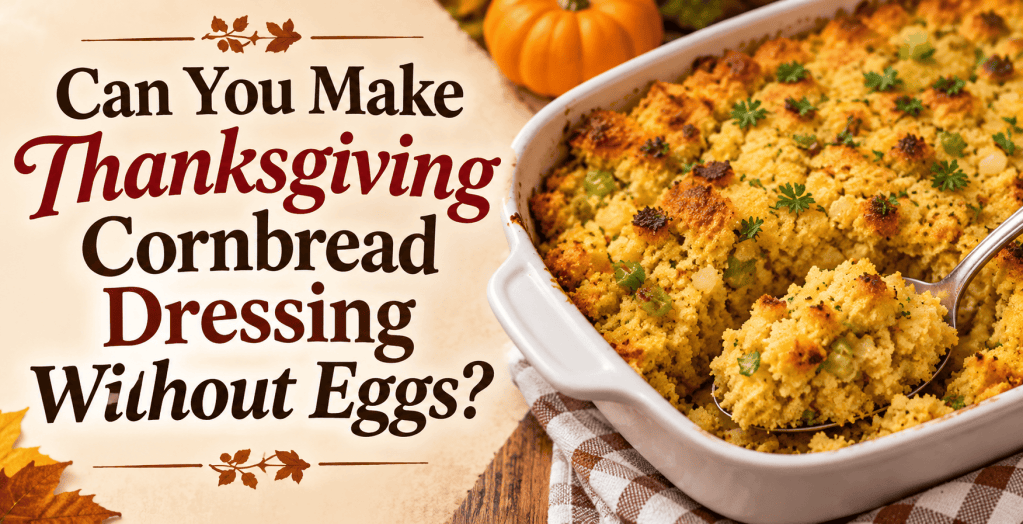
Thanksgiving cornbread dressing is a beloved holiday side dish, especially in Southern kitchens where it has been served for generations. With its savory flavor, tender texture, and comforting combination of cornbread, vegetables, broth, and seasonings, it is often one of the most anticipated dishes on the Thanksgiving table.
Many traditional cornbread dressing recipes include eggs to help bind the ingredients together. However, what happens if you run out of eggs, have an egg allergy, or simply prefer to prepare your dressing without them?
The good news is that you can absolutely make Thanksgiving cornbread dressing without eggs. In fact, egg-free cornbread dressing can be just as flavorful, moist, and satisfying as traditional versions when prepared correctly.
The secret is understanding how to balance the cornbread, broth, vegetables, and moisture so the dressing holds together without becoming dry or mushy.
Whether you are preparing a traditional Southern Thanksgiving dinner or looking for an easy egg-free alternative, this guide explains everything you need to know.
Do You Need Eggs to Make Cornbread Dressing?
No, eggs are not required to make delicious cornbread dressing.
Traditional recipes frequently use eggs because they help bind the ingredients together during baking. As the eggs cook, their proteins firm up, creating a more cohesive texture that allows the dressing to hold its shape when served.
However, cornbread naturally absorbs liquid, and its starches help create a soft, tender consistency.
When you combine crumbled cornbread with flavorful broth, sautéed vegetables, and seasonings, you can create a delicious dressing without adding eggs.
The main difference is texture.
Cornbread dressing made with eggs generally has a slightly firmer, more structured consistency. Egg-free dressing tends to be softer, more crumbly, and sometimes more rustic.
For many families, that softer texture is exactly what makes homemade Southern cornbread dressing so comforting.
What Happens If You Leave Eggs Out of Cornbread Dressing?
Leaving eggs out of cornbread dressing changes the texture more than the flavor.
Eggs do not contribute much to the savory taste of dressing. Most of its flavor comes from cornbread, onions, celery, butter, broth, sage, and other seasonings.
Without eggs, you may notice several differences.
A softer texture: Egg-free dressing usually has a more tender consistency because there are no cooked egg proteins helping it firm up.
A slightly crumbly structure: The dressing may not hold together in neat squares when served.
A moist interior: Properly prepared egg-free dressing can remain wonderfully moist without becoming soggy.
A crisp golden top: Baking uncovered toward the end allows the surface to develop a lightly crisp texture.
These differences do not mean your dressing is missing anything important.
In fact, many traditional Southern cooks prefer dressing that is soft enough to scoop rather than firm enough to slice.
How Do You Make Thanksgiving Cornbread Dressing Without Eggs?
Making homemade egg-free cornbread dressing is surprisingly simple.
The key is using properly prepared cornbread, enough broth to create moisture, and the right balance of seasonings.
Ingredients
This recipe makes approximately 8 servings.
-
8 cups crumbled, fully baked cornbread, preferably a day old
-
2 tablespoons unsalted butter
-
1 medium yellow onion, finely chopped
-
3 celery stalks, finely chopped
-
2½ to 3½ cups chicken or vegetable broth
-
1 teaspoon dried rubbed sage
-
1 teaspoon poultry seasoning
-
½ teaspoon dried thyme
-
½ teaspoon garlic powder
-
½ teaspoon black pepper
-
½ teaspoon salt, or to taste
-
2 tablespoons melted butter for the topping
-
2 tablespoons chopped fresh parsley, optional
Make sure the cornbread itself was prepared without eggs if you need the entire dish to be egg-free.
Step 1: Prepare the Cornbread
Start with fully baked cornbread that has cooled completely.
Day-old cornbread works particularly well because it has had time to lose some moisture.
Crumble the cornbread into a large mixing bowl.
The pieces should vary slightly in size. Some fine crumbs help create a cohesive dressing, while larger pieces provide texture.
Avoid turning all the cornbread into a fine powder.
Step 2: Cook the Vegetables
Melt 2 tablespoons of butter in a large skillet over medium heat.
Add the chopped onion and celery.
Cook for approximately 6–8 minutes, stirring occasionally, until the vegetables soften and the onions become translucent.
This step is important because raw onions and celery may remain too firm after the dressing finishes baking.
Cooking them first also develops a sweeter, more balanced flavor.
Step 3: Add the Seasonings
Stir the sage, poultry seasoning, thyme, garlic powder, black pepper, and salt into the cooked vegetables.
Allow the seasonings to cook for approximately 30 seconds.
This helps release their aromas and distributes their flavors throughout the butter and vegetables.
Step 4: Combine With Cornbread
Transfer the seasoned vegetables to the bowl containing the crumbled cornbread.
Gently stir everything together until the vegetables are evenly distributed.
Avoid excessive mixing, which can break down the cornbread too much.
Step 5: Add the Broth
Gradually pour in approximately 2½ cups of broth while gently stirring.
Allow the cornbread to absorb the liquid before deciding whether more broth is needed.
Continue adding broth in small amounts until the mixture is very moist but not swimming in liquid.
The exact amount depends on how dry your cornbread is and how much moisture it naturally absorbs.
The mixture should hold together loosely when pressed with a spoon.
Step 6: Transfer to a Baking Dish
Preheat your oven to 350°F.
Lightly grease a 9-by-13-inch baking dish.
Spoon the cornbread mixture into the prepared dish and spread it evenly.
Do not press it down tightly.
A lightly packed dressing develops a more tender texture.
Drizzle the remaining melted butter over the top.
Step 7: Bake Until Golden
Cover the baking dish with aluminum foil.
Bake for approximately 25 minutes.
Remove the foil and continue baking for another 15–20 minutes, until the top is lightly golden and the center is hot.
For food safety, the center of the dressing should reach 165°F.
If the top begins browning too quickly, loosely cover it with foil again.
Step 8: Let the Dressing Rest
Remove the dressing from the oven and allow it to rest for approximately 10 minutes before serving.
This gives the cornbread time to absorb and redistribute some of the remaining moisture.
Serve warm alongside turkey, gravy, cranberry sauce, and your favorite Thanksgiving side dishes.
What Can You Use Instead of Eggs in Cornbread Dressing?
Although eggs are not necessary, several ingredients can help improve the texture of egg-free cornbread dressing.
The best option depends on whether you want a firmer dressing or a softer traditional Southern consistency.
1. Extra Broth
Adding a little additional broth is one of the simplest ways to compensate for the moisture normally provided by eggs.
Broth helps soften the cornbread and brings the ingredients together.
However, it does not provide the same binding structure as eggs.
Add it gradually to prevent the dressing from becoming watery.
2. Mashed Potatoes
A small amount of plain mashed potatoes can help bind cornbread dressing.
Try adding approximately ¼ to ½ cup of mashed potatoes for every 8 cups of crumbled cornbread.
The starch helps create a more cohesive texture.
Use plain mashed potatoes rather than heavily seasoned leftovers to avoid changing the dressing’s flavor.
3. Ground Flaxseed
Ground flaxseed mixed with water can work as an egg substitute.
Combine 1 tablespoon of ground flaxseed with 3 tablespoons of water.
Allow the mixture to sit for approximately 5–10 minutes until thickened.
This mixture can help bind ingredients, although it may add a slightly nutty flavor and darker flecks.
4. Unsweetened Applesauce
Unsweetened applesauce provides moisture and some binding ability.
Use approximately ¼ cup to replace one egg.
However, applesauce can introduce a subtle sweetness that may not appeal to everyone in savory Southern dressing.
For that reason, it is not usually my first choice.
5. Cornstarch Slurry
Cornstarch can help create a slightly firmer texture.
Mix 1 tablespoon of cornstarch with 2 tablespoons of cold broth until smooth.
Stir the mixture into the dressing before baking.
As the dressing heats, the cornstarch thickens some of the moisture and helps hold the ingredients together.
For a traditional savory flavor, extra broth combined with a small amount of cornstarch or mashed potatoes is often a better option than sweet egg substitutes.
How Do You Keep Egg-Free Cornbread Dressing From Falling Apart?
One of the most common concerns about making cornbread dressing without eggs is whether it will hold together.
Fortunately, several techniques can improve its consistency.
First, use a combination of fine and coarse cornbread crumbs. Smaller crumbs absorb moisture and help connect the larger pieces.
Second, make sure the dressing contains enough broth. Dry cornbread cannot form a cohesive mixture without adequate moisture.
Third, avoid overmixing. Stirring too aggressively can create an unpleasant paste rather than tender dressing.
Fourth, allow the finished dressing to rest before serving. The resting period helps the mixture settle.
Finally, remember that traditional Southern cornbread dressing does not necessarily need to hold its shape like a casserole.
A soft, spoonable texture is perfectly acceptable.
How Much Broth Should You Add to Cornbread Dressing Without Eggs?
For approximately 8 cups of crumbled cornbread, start with 2½ cups of broth.
Depending on the cornbread’s dryness, you may need as much as 3½ cups or slightly more.
The goal is to create a moist mixture without leaving excess liquid pooling in the bottom of the bowl.
A useful test is to scoop up a spoonful of dressing mixture.
It should look thoroughly moistened and loosely hold together, but it should not drip liquid.
Remember that the dressing will lose some moisture as it bakes.
Starting with a mixture that is slightly wetter than you want the finished dish to be can help prevent dryness.
Can You Make Southern Cornbread Dressing Without Eggs and Milk?
Yes. You can prepare Southern cornbread dressing without either eggs or milk.
Most dressing recipes already rely on broth rather than milk for moisture.
The main consideration is the cornbread itself.
Many traditional cornbread recipes contain eggs, milk, or buttermilk.
To make the entire dish egg-free and dairy-free, use cornbread prepared without those ingredients.
You can substitute plant-based milk when making the cornbread and use vegetable broth instead of chicken broth.
Replace butter with olive oil or a suitable dairy-free butter alternative.
The finished dressing can still have a delicious savory flavor and tender consistency.
Should Cornbread Be Dry Before Making Dressing?
Yes. Slightly dried cornbread generally produces better dressing.
Fresh cornbread contains more moisture and can become overly soft when combined with broth.
Day-old cornbread absorbs liquid more predictably and helps create a better texture.
If you only have freshly baked cornbread, you can dry it in the oven.
Crumble or cube the cornbread and spread it across a baking sheet.
Place it in a 250°F oven for approximately 20–30 minutes, stirring occasionally, until it feels dry but is not deeply browned.
Allow it to cool before mixing the dressing.
This simple preparation step can make a noticeable difference.
How Do You Keep Cornbread Dressing Moist Without Eggs?
Moisture is especially important when making egg-free dressing.
The most effective way to prevent dryness is to begin with enough broth.
However, other ingredients and cooking techniques also help.
Sautéed onions and celery contribute moisture while adding flavor.
Butter provides richness and helps keep the finished dressing tender.
Covering the baking dish during the first portion of cooking reduces excessive moisture loss.
Removing the foil toward the end creates a golden surface without drying out the entire casserole.
If the dressing looks dry before it finishes baking, drizzle a small amount of warm broth over the top.
Avoid adding too much at once.
Can You Make Egg-Free Cornbread Dressing Ahead of Thanksgiving?
Yes. Egg-free cornbread dressing is an excellent make-ahead Thanksgiving side dish.
Preparing it in advance can save valuable time when you are cooking turkey, mashed potatoes, gravy, and other holiday favorites.
For the best results, prepare the cornbread one or two days ahead.
You can also chop and sauté the vegetables in advance.
Store the prepared components separately in the refrigerator.
On Thanksgiving Day, combine the cornbread, vegetables, seasonings, and broth before baking.
If you prefer to assemble the entire dressing ahead of time, refrigerate it promptly in a covered baking dish for up to 24 hours before baking.
Because the cornbread absorbs moisture while refrigerated, you may need to add a little extra broth before putting it in the oven.
Bake until the center reaches 165°F.
Can You Freeze Cornbread Dressing Without Eggs?
Yes. Cornbread dressing without eggs can be frozen either before or after baking.
For unbaked dressing, assemble the mixture in a freezer-safe container and wrap it tightly.
For cooked dressing, allow it to cool promptly before transferring it to freezer-safe containers.
For the best flavor and texture, use frozen dressing within approximately 2–3 months.
Thaw it in the refrigerator rather than on the counter.
When reheating cooked dressing, add a small amount of broth if necessary and cover the dish with foil.
Heat until the center reaches 165°F.
Egg-free dressing may become slightly more crumbly after freezing, but proper moisture management helps preserve its texture.
What Are the Most Common Mistakes When Making Cornbread Dressing Without Eggs?
Even a simple recipe can turn out poorly when a few important details are overlooked.
Adding Too Much Broth
Excessive broth can create dressing that is watery or mushy.
Add liquid gradually and allow the cornbread time to absorb it.
Not Adding Enough Broth
Too little liquid produces dry, crumbly dressing.
Remember that the cornbread will continue absorbing moisture during baking.
Using Too Much Sage
Sage is a traditional ingredient in Southern cornbread dressing, but its flavor can become overpowering.
Start with a moderate amount and adjust according to taste.
Skipping the Vegetable Sauté
Raw onions and celery may not soften sufficiently during baking.
Cooking them beforehand improves both flavor and texture.
Baking Too Long
Overbaking removes moisture and can leave the dressing dry around the edges.
Use a thermometer to confirm that the center reaches 165°F, then remove the dish once it is heated through and lightly golden.
Using Cornbread That Already Contains Eggs
If you are preparing the dish for someone with an egg allergy, remember that removing eggs from the dressing mixture is not enough.
The cornbread and any packaged ingredients must also be egg-free. Check ingredient labels and avoid cross-contact during preparation.
Is Egg-Free Cornbread Dressing Better With Chicken Broth or Vegetable Broth?
Both options work well.
Chicken broth provides a rich, savory flavor commonly associated with traditional Southern cornbread dressing.
Vegetable broth creates a lighter flavor and is a good choice for vegetarian Thanksgiving meals.
The quality of the broth matters more than the type.
Choose a broth that tastes good on its own because it contributes significantly to the finished dish.
Low-sodium broth is especially helpful because it allows you to control the salt level.
For additional flavor, you can simmer your broth briefly with onion, celery, thyme, or bay leaves before adding it to the cornbread.
Can You Add Sausage or Other Ingredients to Egg-Free Cornbread Dressing?
Absolutely.
Egg-free cornbread dressing is versatile and can be customized with many traditional Thanksgiving ingredients.
Popular additions include:
-
Cooked and crumbled breakfast sausage
-
Sautéed mushrooms
-
Diced apples
-
Dried cranberries
-
Chopped pecans
-
Fresh rosemary
-
Caramelized onions
-
Roasted garlic
-
Cooked turkey pieces
If adding sausage, cook it thoroughly before combining it with the dressing.
If using apples or cranberries, keep the quantities moderate so the sweetness does not overpower the savory seasonings.
For a classic Southern version, sausage, onions, celery, and sage make an especially flavorful combination.
Frequently Asked Questions
Will Cornbread Dressing Set Without Eggs?
Yes, although it will generally be softer and less firmly bound than dressing made with eggs. Proper moisture levels, starch from the cornbread, and a short resting period help the mixture hold together.
Can You Substitute Mayonnaise for Eggs in Cornbread Dressing?
Mayonnaise can add moisture and richness, but it is not an ideal direct substitute for the binding properties of eggs. Regular mayonnaise also typically contains eggs, making it unsuitable for an egg-free diet unless you use an egg-free version.
Why Is My Cornbread Dressing Mushy?
Mushy dressing usually results from too much broth, overly moist cornbread, or excessive mixing. Use slightly dried cornbread and add broth gradually.
Can You Make Cornbread Dressing Without Eggs or Butter?
Yes. Replace butter with olive oil or another suitable cooking oil. The dressing will still develop plenty of flavor from broth, vegetables, and seasonings.
How Long Does Egg-Free Cornbread Dressing Last in the Refrigerator?
Properly refrigerated cooked cornbread dressing generally keeps for 3–4 days. Refrigerate it within two hours of cooking and reheat leftovers to 165°F.
Is Cornbread Dressing Without Eggs Still Traditional?
Yes. Although many Southern recipes include eggs, homemade cornbread dressing varies widely among families and regions. Egg-free versions can still deliver the classic flavors associated with Thanksgiving.
Final Thoughts: Can You Make Thanksgiving Cornbread Dressing Without Eggs?
Yes, you can make delicious Thanksgiving cornbread dressing without eggs, and you do not have to sacrifice the comforting flavors that make this holiday side dish so special.
While eggs help traditional dressing hold together, they are not essential for creating a moist, savory, satisfying casserole.
With properly dried cornbread, flavorful broth, sautéed onions and celery, and classic seasonings such as sage and thyme, you can prepare a dressing that tastes right at home on any Thanksgiving table.
The most important things to remember are to add broth gradually, avoid overmixing, and allow the finished dressing to rest before serving.
Whether you are accommodating an egg allergy, adjusting a family recipe, or simply working with ingredients already in your kitchen, egg-free cornbread dressing is an easy and practical alternative.
And when Thanksgiving dinner is served, a warm spoonful of homemade cornbread dressing covered in rich turkey gravy can be every bit as comforting without a single egg in the recipe.





Leave a Reply