Thanksgiving dinner would not feel complete without a warm, savory dish made with bread, herbs, vegetables, and flavorful seasonings. Whether your family calls it stuffing or dressing, this traditional side dish has earned a permanent place alongside roasted turkey, mashed potatoes, gravy, and cranberry sauce.
However, one question continues to create friendly debates around Thanksgiving tables: What is the difference between Thanksgiving stuffing and dressing?
Some people believe stuffing and dressing are exactly the same thing, while others insist that the two dishes have important differences. The answer depends on how the dish is prepared, where you live, and the traditions your family follows.
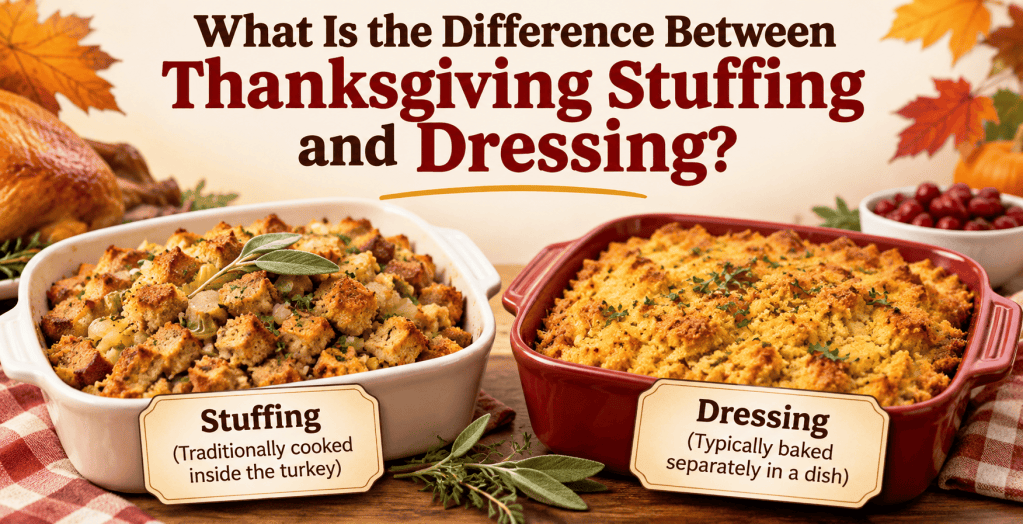
Traditionally, stuffing is cooked inside the turkey, while dressing is baked separately in a casserole dish. However, regional customs have blurred that distinction, and many Americans use the two names interchangeably.
Understanding the differences can help you choose the best preparation method for your Thanksgiving dinner.
What Is Thanksgiving Stuffing?
Thanksgiving stuffing is a savory mixture traditionally placed inside the cavity of a turkey before roasting.
The mixture usually contains bread cubes, onions, celery, butter, broth, and herbs such as sage, thyme, rosemary, and parsley.
As the turkey roasts, the stuffing absorbs some of the flavorful juices released by the meat. This creates a moist, rich side dish with flavors closely associated with roasted turkey.
Common ingredients in traditional Thanksgiving stuffing include:
-
Cubed white bread, sourdough, or French bread
-
Butter
-
Chopped onions
-
Diced celery
-
Chicken or turkey broth
-
Fresh or dried sage
-
Thyme and rosemary
-
Salt and black pepper
-
Optional sausage, apples, mushrooms, or dried cranberries
Although stuffing was historically prepared inside poultry, many modern recipes use the name even when the mixture is baked separately.
This is particularly common in Northern and Midwestern households, where stuffing remains the preferred term regardless of the cooking method.
What Is Thanksgiving Dressing?
Thanksgiving dressing is a savory bread-based side dish that is generally prepared and baked separately from the turkey.
Instead of being placed inside the bird, dressing is combined in a baking dish and cooked in the oven until heated through and lightly browned.
This method allows the top to develop a golden crust while the inside remains soft and moist.
Dressing can contain many of the same ingredients as stuffing, including bread, onions, celery, broth, butter, and herbs.
However, certain regional variations have their own distinctive ingredients and textures.
Southern cornbread dressing, for example, commonly includes crumbled cornbread, sautéed vegetables, poultry broth, sage, and sometimes eggs.
Some families also add sausage, oysters, chopped chicken, or hard-boiled eggs.
Because dressing is cooked separately, it is easier to control its moisture level and achieve a crispy surface.
What Is the Main Difference Between Stuffing and Dressing?
The traditional distinction between stuffing and dressing comes down to where the mixture is cooked.
| Feature | Stuffing | Dressing |
|---|---|---|
| Traditional cooking method | Inside the turkey | In a separate baking dish |
| Texture | Usually softer and moister | Often crispy on top and moist inside |
| Flavor | May absorb turkey juices | Flavor comes primarily from broth and seasonings |
| Common bread | White bread or sourdough | White bread or cornbread |
| Regional popularity | North and Midwest | South |
| Cooking control | Depends partly on turkey roasting | Easier to control independently |
These differences are traditional rather than absolute.
A dish called stuffing may be baked in a casserole, while a family recipe called dressing might be cooked inside a turkey.
The ingredients and cooking methods matter more than the name.
Why Do Southerners Call It Dressing Instead of Stuffing?
In much of the Southern United States, dressing is the traditional name for this Thanksgiving side dish.
Southern cooking has a long history of preparing cornbread-based dishes, and cornbread dressing became an important part of holiday meals.
Rather than relying exclusively on cubed white bread, Southern dressing often uses homemade cornbread that has been baked, cooled, and crumbled.
The cornbread is combined with vegetables, broth, eggs, and seasonings before being baked in a casserole dish.
Southern dressing is often:
-
Rich in sage and poultry seasoning
-
Made primarily with cornbread
-
Soft and moist in the center
-
Lightly browned around the edges
-
Served with turkey gravy
-
Prepared using recipes passed down through generations
For many Southern families, calling the dish stuffing simply sounds unfamiliar, even when the ingredients are similar.
Regional language and family traditions play a major role in determining which name people use.
Is Cornbread Dressing the Same as Traditional Stuffing?
Cornbread dressing and traditional bread stuffing share many ingredients, but their flavors and textures can be noticeably different.
Traditional stuffing often uses dried white bread cubes that retain some structure after absorbing broth.
Cornbread dressing uses crumbled cornbread, which creates a softer and sometimes more cohesive texture.
Cornbread also contributes a distinctive corn flavor that is not present in most white-bread stuffing recipes.
Another difference is seasoning.
Southern cornbread dressing frequently emphasizes sage, black pepper, and poultry seasoning. Some versions also contain chicken, sausage, or hard-boiled eggs.
Traditional bread stuffing may highlight thyme, rosemary, parsley, and other aromatic herbs.
Both dishes can be delicious, and neither is inherently better.
The choice depends on your preferred texture, flavor, and Thanksgiving traditions.
Does Stuffing Taste Different When Cooked Inside the Turkey?
Stuffing cooked inside a turkey can develop a different flavor from stuffing baked separately.
As the turkey roasts, juices from the meat can enter the bread mixture, contributing richness and savory flavor.
The stuffing also absorbs aromas from the seasonings and ingredients surrounding it.
However, this cooking method has disadvantages.
The turkey and stuffing do not always finish cooking at the same time.
A turkey breast may reach its safe temperature before the stuffing in the center of the bird has heated sufficiently.
This creates a food safety concern because stuffing can absorb raw poultry juices.
According to USDA food safety guidance, the center of stuffing cooked inside poultry must reach 165°F.
For this reason, cooking stuffing separately is generally recommended.
You can still create rich turkey flavor by using turkey broth, sautéed vegetables, butter, and fresh herbs.
Is It Safer to Cook Dressing Separately From the Turkey?
Yes. Cooking dressing separately is generally the safer and more convenient option.
When stuffing is placed inside a turkey, heat must travel through the bird before reaching the center of the stuffing.
This can make it difficult to ensure that both the turkey and stuffing are fully cooked without overcooking part of the meal.
Baking dressing in its own casserole dish provides more consistent heating and makes it easier to check the internal temperature.
For food safety:
-
Cook stuffing or dressing to an internal temperature of 165°F.
-
Use a food thermometer to check the center.
-
Do not place stuffing inside a turkey the night before cooking.
-
Refrigerate perishable ingredients promptly.
-
Refrigerate leftovers within two hours of cooking.
-
Reheat leftovers to 165°F.
If you prefer traditional stuffing cooked inside the turkey, stuff the bird loosely immediately before roasting and verify that the stuffing reaches the required temperature.
Cooking the mixture separately remains the simpler option for most home cooks.
Which Is Better for Thanksgiving: Stuffing or Dressing?
The better choice depends on the texture and flavor you want.
If you enjoy a soft, bread-based side dish with a traditional turkey flavor, classic stuffing may be your favorite.
If you prefer golden edges, a lightly crispy top, and greater control over moisture, baked dressing may be the better option.
Consider the following preferences.
Choose traditional bread stuffing if you enjoy:
-
Soft bread cubes
-
Classic herb flavors
-
A familiar holiday taste
-
White bread or sourdough
-
A tender, moist texture
Choose baked dressing if you enjoy:
-
Crispy, golden edges
-
A soft interior
-
Cornbread-based recipes
-
Rich sage seasoning
-
Easy preparation in a casserole dish
You can also prepare two different versions for Thanksgiving.
Some families serve traditional bread stuffing alongside Southern cornbread dressing to accommodate different preferences.
How Do You Make Classic Thanksgiving Stuffing?
Classic Thanksgiving stuffing is relatively simple to prepare, especially when baked separately.
Ingredients
-
12 cups dried bread cubes
-
¾ cup unsalted butter
-
2 medium onions, diced
-
3 celery stalks, diced
-
2½ to 3 cups chicken or turkey broth
-
2 teaspoons dried sage
-
1 teaspoon dried thyme
-
1 teaspoon dried rosemary
-
½ teaspoon black pepper
-
1 teaspoon salt, adjusted to taste
-
¼ cup chopped fresh parsley
Instructions
-
Preheat the oven to 350°F.
-
Lightly grease a large baking dish.
-
Melt the butter in a skillet over medium heat.
-
Add the onions and celery, cooking until softened.
-
Stir in the sage, thyme, rosemary, salt, and pepper.
-
Place the dried bread cubes in a large mixing bowl.
-
Pour the cooked vegetables and melted butter over the bread.
-
Gradually add the broth, stirring until the bread is evenly moistened without becoming soggy.
-
Fold in the chopped parsley.
-
Transfer the mixture to the prepared baking dish.
-
Cover with foil and bake for approximately 25–30 minutes.
-
Remove the foil and continue baking for another 15–20 minutes, until the top is golden and the center reaches 165°F.
For a crispier top, leave the dish uncovered during the final portion of baking.
For softer stuffing, keep it covered longer and add a little additional broth if necessary.
How Do You Make Southern Cornbread Dressing?
Southern cornbread dressing has a distinctive flavor and texture that makes it especially popular during Thanksgiving.
Ingredients
-
8 cups crumbled, cooled cornbread
-
2 cups dried white bread cubes
-
½ cup butter
-
1 large onion, diced
-
3 celery stalks, diced
-
3 to 4 cups chicken or turkey broth
-
2 large eggs, beaten
-
2 teaspoons dried sage
-
1 teaspoon poultry seasoning
-
½ teaspoon black pepper
-
Salt to taste
Instructions
-
Preheat the oven to 350°F.
-
Grease a large casserole dish.
-
Melt the butter in a skillet over medium heat.
-
Cook the onion and celery until tender.
-
Combine the crumbled cornbread and dried bread cubes in a large bowl.
-
Add the cooked vegetables and seasonings.
-
Stir in enough broth to create a very moist mixture.
-
Allow the mixture to cool if it is hot, then stir in the beaten eggs.
-
Pour everything into the prepared casserole dish.
-
Bake uncovered for approximately 40–50 minutes, until the center reaches 165°F and the top is lightly browned.
The finished dressing should be moist and tender without being watery.
For extra flavor, use homemade turkey broth or add cooked, shredded chicken.
Can You Make Thanksgiving Stuffing or Dressing Ahead of Time?
Yes. Both stuffing and dressing can be prepared ahead of Thanksgiving, making holiday meal planning much easier.
One convenient approach is to prepare the ingredients separately a day or two before cooking.
You can:
-
Cut and dry the bread cubes.
-
Bake the cornbread.
-
Chop the onions and celery.
-
Measure the seasonings.
-
Prepare homemade broth.
-
Cook sausage or other meat additions.
Store prepared perishable ingredients in the refrigerator until needed.
For the safest approach, combine the wet and dry ingredients shortly before baking.
If you want to fully prepare the dish in advance, bake it completely, cool it promptly, and refrigerate it. Reheat the cooked dish to 165°F before serving.
This approach reduces Thanksgiving Day preparation while keeping the meal safe.
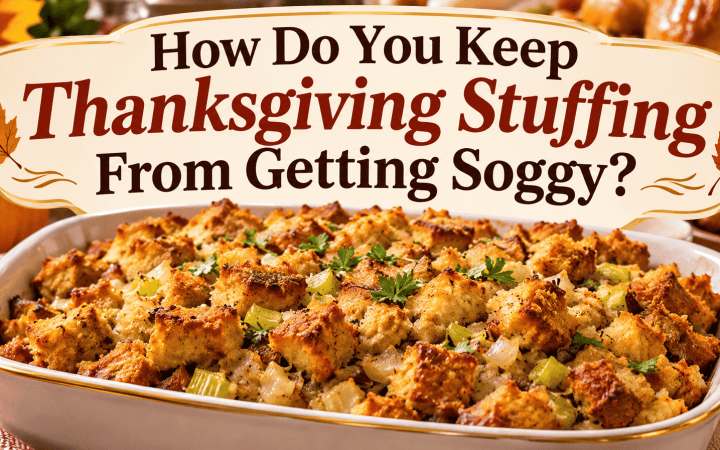
How Do You Keep Stuffing and Dressing From Becoming Soggy?
One of the most common Thanksgiving cooking problems is stuffing or dressing that turns out overly wet.
The main cause is usually adding too much broth or using bread that has not been dried properly.
Fresh bread absorbs moisture differently from stale or toasted bread.
When the bread is already soft, adding broth can quickly create a mushy texture.
To prevent soggy stuffing or dressing, start with dried bread and gradually add the liquid.
The mixture should be moist enough to hold together loosely without having excess liquid collecting at the bottom of the bowl.
Other helpful techniques include using a wide baking dish, avoiding excessive stirring, and uncovering the dish near the end of baking.
Remember that cornbread dressing naturally has a softer texture than many traditional bread stuffings.
A moist center is desirable, but a watery or paste-like consistency is not.
Can You Use the Same Recipe for Stuffing and Dressing?
Yes. Most traditional stuffing recipes can be baked separately and served as dressing.
The main adjustment involves the cooking method and moisture level.
Stuffing cooked inside a turkey may absorb juices from the bird, while dressing baked separately needs enough broth to stay moist.
If converting a stuffing recipe into baked dressing, gradually add additional broth as needed.
Transfer the mixture to a greased baking dish and bake until heated through, golden on top, and at least 165°F in the center.
Similarly, a dressing recipe may technically be used to stuff a turkey, but doing so requires careful attention to food safety and cooking temperatures.
For convenience and consistent results, baking separately is usually preferable.
What Are the Most Popular Thanksgiving Stuffing and Dressing Variations?
Stuffing and dressing recipes vary widely across American households.
Some families prefer simple bread and herbs, while others add meats, fruits, nuts, or regional ingredients.
Popular variations include:
Sausage stuffing: Combines seasoned pork sausage with bread cubes, onions, celery, and herbs for a rich, savory flavor.
Southern cornbread dressing: Uses crumbled cornbread, poultry broth, sage, and vegetables for a soft, traditional Southern side dish.
Apple and sausage stuffing: Adds diced apples for a sweet contrast to savory sausage and herbs.
Oyster dressing: A traditional coastal variation featuring oysters, bread or cornbread, vegetables, and seasonings.
Mushroom stuffing: Uses sautéed mushrooms to add earthy flavor and a satisfying texture.
Wild rice dressing: Incorporates cooked wild rice, vegetables, herbs, and sometimes dried cranberries or nuts.
Cranberry and pecan stuffing: Combines tart dried cranberries and crunchy pecans with savory bread and herbs.
Each variation offers a different way to personalize Thanksgiving dinner while preserving the familiar flavors of the holiday.
Frequently Asked Questions About Thanksgiving Stuffing and Dressing
Is stuffing always cooked inside the turkey?
No. Although stuffing traditionally refers to a mixture cooked inside poultry, many families use the term for bread-based mixtures baked separately.
Is dressing always made with cornbread?
No. Cornbread dressing is particularly popular in the South, but dressing can also be made with white bread, sourdough, biscuits, or other bread varieties.
Why is stuffing called dressing in the South?
Dressing became the customary regional name for this holiday side dish. Southern cornbread traditions also helped establish dressing as a distinct part of holiday cooking.
Can you serve stuffing and dressing together?
Yes. Some Thanksgiving meals include both traditional bread stuffing and cornbread dressing, especially when family members have different preferences.
Does dressing need eggs?
Not always. Eggs are common in many Southern cornbread dressing recipes because they help bind the ingredients, but numerous bread dressing recipes do not require them.
Should stuffing or dressing be covered while baking?
Covering the dish initially helps retain moisture. Removing the foil near the end allows the surface to brown and develop a slightly crispy texture.
Can you freeze leftover stuffing or dressing?
Yes. Cool leftovers promptly, divide them into airtight containers, and freeze for approximately two to three months for best quality. Reheat thoroughly to 165°F before serving.
What kind of bread is best for Thanksgiving stuffing?
Sturdy breads such as French bread, sourdough, and traditional white sandwich bread work well. Slightly stale or toasted bread generally provides better texture than fresh, soft bread.
Is stuffing or dressing better with turkey gravy?
Both pair beautifully with turkey gravy. Gravy adds moisture and savory flavor, especially when the stuffing or dressing has developed a crispy surface during baking.
Final Thoughts: Thanksgiving Stuffing vs. Dressing
The difference between Thanksgiving stuffing and dressing is simpler than many people realize.
Traditionally, stuffing is cooked inside the turkey, while dressing is baked separately in a casserole dish. Regional traditions, however, have made the names interchangeable in many households.
Southern families often prefer cornbread dressing, while traditional bread stuffing remains especially familiar in Northern and Midwestern Thanksgiving celebrations.
Both dishes feature comforting ingredients, fragrant herbs, and the familiar flavors that make Thanksgiving dinner special.
Whether you prefer soft bread stuffing, golden cornbread dressing, or a family recipe passed down through generations, the most important part is preparing a dish that everyone around your table can enjoy.
Ultimately, the best Thanksgiving stuffing or dressing is the one that brings familiar flavors, cherished memories, and a little extra comfort to your holiday meal.
Leave a Reply