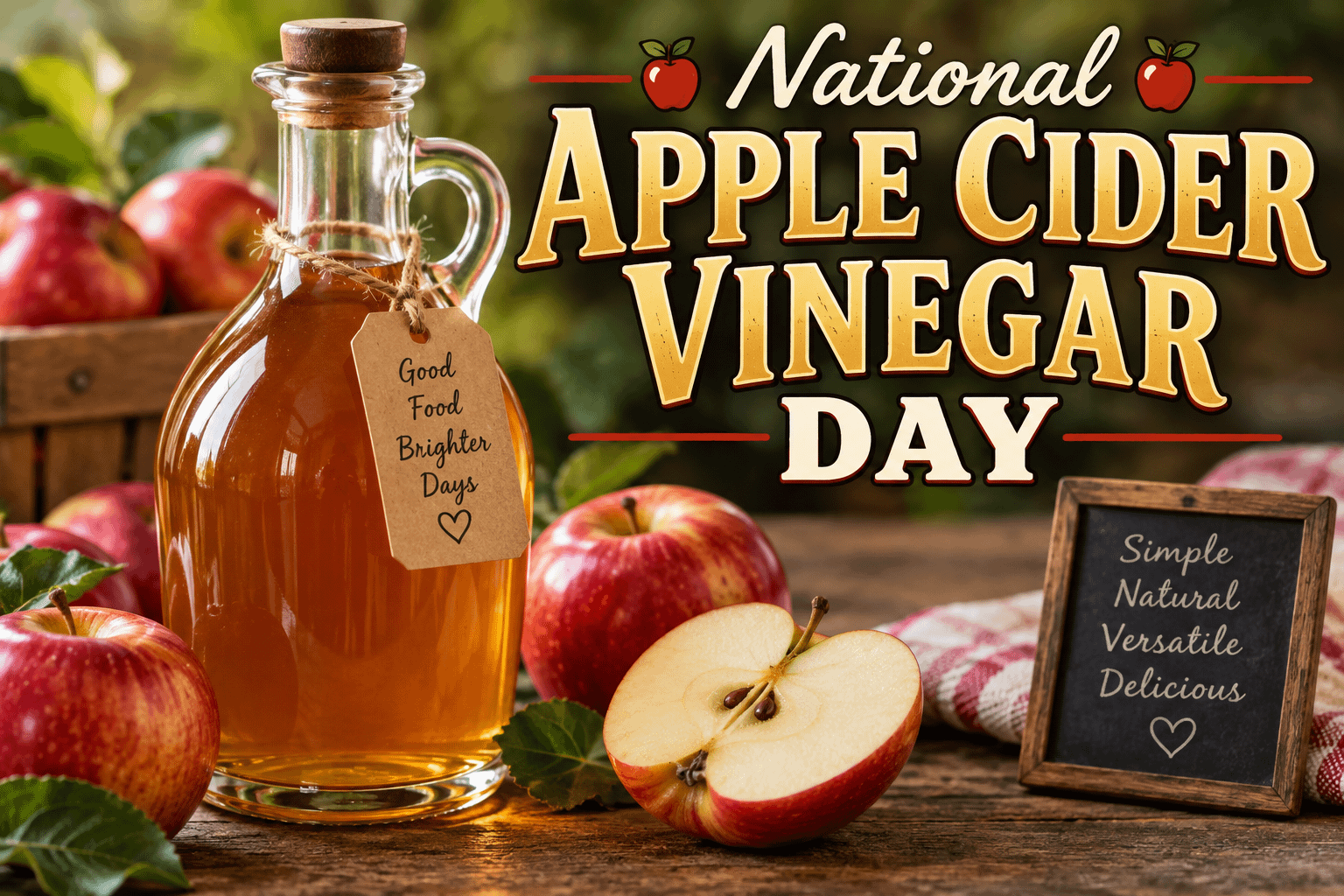
Apple cider vinegar may be one of the simplest ingredients sitting in the pantry, but it has developed an impressive reputation over the years. From salad dressings and marinades to pickling, sauces, household uses, and wellness routines, this tangy vinegar has found its way into countless kitchens.
National Apple Cider Vinegar Day is an opportunity to celebrate this versatile ingredient, learn how it is made, discover new ways to use it, and separate some of its legitimate benefits from the exaggerated claims that sometimes surround it.
Whether you already keep a bottle in your kitchen or rarely use it, today is a good excuse to discover what apple cider vinegar can do.
What Is Apple Cider Vinegar?
Apple cider vinegar, commonly abbreviated as ACV, is vinegar produced from fermented apple juice.
The process begins by crushing apples and extracting their juice. Yeast helps convert the natural sugars in the juice into alcohol. Bacteria then convert that alcohol into acetic acid.
Acetic acid is responsible for much of vinegar’s distinctive sour flavor and strong aroma.
The result is a sharp, acidic ingredient that can add brightness and complexity to foods without requiring much of it.
Some bottles of apple cider vinegar are filtered and pasteurized, producing a clear appearance. Others are sold raw or unfiltered and may contain a cloudy substance commonly called “the mother.”
The mother consists of material formed during fermentation, including bacteria and other fermentation byproducts. Its appearance may surprise someone opening an unfiltered bottle for the first time, but cloudiness or strands in this type of vinegar can be completely normal.
A Long History of Vinegar
Vinegar itself has been used for thousands of years.
Long before modern refrigeration, people discovered fermentation and learned that vinegar could be useful for preparing and preserving food. Different cultures eventually developed vinegar from whatever fermentable ingredients were readily available.
Wine could become wine vinegar. Rice could become rice vinegar. Malted grains could become malt vinegar. Apples could become cider vinegar.
Apple cider vinegar became especially natural in regions where apples and hard cider were commonly produced.
What began as a practical product eventually became an everyday kitchen ingredient.
Today, you can find apple cider vinegar in grocery stores around the world.
Why Apple Cider Vinegar Remains So Popular
Few pantry ingredients can move between so many different roles.
Apple cider vinegar can provide acidity in a salad dressing, balance sweetness in barbecue sauce, brighten a soup, tenderize ingredients in a marinade, and contribute to pickling.
That versatility is one of the biggest reasons it has remained popular.
A bottle can last quite a while because most recipes require only a tablespoon or two.
Its flavor is also distinctive.
White vinegar tends to have a particularly sharp, straightforward acidity. Apple cider vinegar brings acidity while retaining subtle fruity characteristics from its apple origins.
That can make it especially useful in recipes featuring pork, chicken, cabbage, carrots, apples, mustard, maple, honey, and many other ingredients.
Cooking With Apple Cider Vinegar
One of the best ways to celebrate National Apple Cider Vinegar Day is simply to cook with it.
Homemade Salad Dressing
Apple cider vinegar makes an excellent base for vinaigrette.
Try combining:
- 3 tablespoons olive oil
- 1 tablespoon apple cider vinegar
- 1 teaspoon Dijon mustard
- 1 teaspoon honey
- Salt and black pepper to taste
Whisk everything together until combined.
You can adjust the vinegar, oil, or honey according to your preference. Add garlic, herbs, shallots, or spices to create your own variation.
Coleslaw
Apple cider vinegar works particularly well with cabbage.
Instead of making a heavy mayonnaise-based dressing, combine apple cider vinegar with a little oil, mustard, honey or sugar, salt, and pepper.
Toss it with shredded cabbage and carrots for a crisp, tangy side dish.
Marinades
Acid is commonly used in marinades, and apple cider vinegar provides plenty of it.
Combine a small amount with oil, herbs, garlic, spices, and your preferred seasonings.
The important thing is not to assume that more vinegar automatically means a better marinade. Too much acid or excessive marinating time can negatively affect the texture of certain foods.
Barbecue Sauce
Apple cider vinegar and barbecue sauce are natural partners.
The acidity helps balance ingredients such as brown sugar, molasses, honey, or ketchup.
Some barbecue traditions rely heavily on vinegar-based sauces, creating a sharp contrast to the thick and sweet sauces many people associate with barbecue.
Pickling
Vinegar is an essential ingredient in many pickling recipes.
Apple cider vinegar can provide both acidity and flavor.
However, food preservation requires proper acidity and tested procedures. When canning or preserving food for shelf storage, don’t casually substitute vinegars or change the proportions in a tested recipe. Follow reliable food-safety instructions.
Soups, Beans, and Stews
Sometimes a dish tastes like it is missing something even though it has enough salt.
The missing ingredient may be acid.
A small splash of apple cider vinegar added near the end of cooking can brighten certain soups, beans, lentils, greens, and stews.
You don’t necessarily want the finished dish to taste like vinegar. A small amount can simply make the other flavors seem more noticeable.
Apple Cider Vinegar and Health
Apple cider vinegar has become particularly famous because of claims about its potential health benefits.
This is an area where it’s important to distinguish promising research from internet hype.
Researchers have studied vinegar in connection with areas such as blood glucose and metabolic health. Some research suggests vinegar consumption may have modest effects on blood sugar responses in certain circumstances.
That does not mean apple cider vinegar is a miracle treatment.
Claims that it can cure serious diseases, rapidly melt away body fat, “detox” the body, or replace medications should be treated skeptically.
No single ingredient can compensate for an unhealthy overall lifestyle.
Health is influenced by the bigger picture: nutrition, physical activity, sleep, stress, medical care, genetics, environment, and many other factors.
Apple cider vinegar can be part of someone’s diet, but it shouldn’t be viewed as a magical solution.
Don’t Drink Apple Cider Vinegar Straight
One of the biggest misconceptions surrounding apple cider vinegar is that drinking it straight from the bottle is somehow better.
Apple cider vinegar is highly acidic.
Regular exposure to concentrated vinegar can irritate the mouth, throat, or digestive system and potentially damage tooth enamel.
Anyone who chooses to consume apple cider vinegar as a beverage should dilute it appropriately rather than taking concentrated “shots.”
It is also worth remembering that apple cider vinegar can interact with certain medications or be inappropriate for some medical conditions. Anyone considering regularly consuming significant amounts for health purposes should discuss it with an appropriate healthcare professional, particularly if they take medications or have an existing health condition.
Using apple cider vinegar as a normal culinary ingredient is a very different situation from consuming large quantities as a supplement.
The Difference Between Filtered and Unfiltered Apple Cider Vinegar
Walk through the vinegar aisle and you may notice several different varieties.
Filtered apple cider vinegar usually appears relatively clear.
Unfiltered apple cider vinegar may appear cloudy and contain visible sediment or strands associated with the mother.
Both can be useful in cooking.
The best choice often depends on what you’re making and your personal preference.
For everyday salad dressings, marinades, sauces, and similar recipes, either variety can work depending on the recipe.
Don’t assume that a cloudy bottle is automatically spoiled. If it is an unfiltered product, that appearance may be intentional.
Apple Cider Vinegar Beyond the Kitchen
Apple cider vinegar is also sometimes used for household purposes.
Vinegar’s acidity can make it useful for certain cleaning jobs and removing mineral deposits.
However, natural doesn’t mean universally safe.
Acidic vinegar can damage some materials and surfaces, including certain natural stones and finishes. It also should never be mixed casually with household chemicals. In particular, never mix vinegar with chlorine bleach, because the combination can release dangerous chlorine gas.
For household use, follow the manufacturer’s cleaning recommendations for whatever surface or appliance you’re working with.
A Simple Apple Cider Vinegar Honey Drink
If you enjoy the flavor of apple cider vinegar, you can turn it into a diluted beverage.
Ingredients
- 8–12 ounces water
- 1 teaspoon apple cider vinegar
- 1 teaspoon honey
- Fresh lemon juice, optional
- A small pinch of cinnamon, optional
Directions
Add the water to a glass.
Stir in the apple cider vinegar and honey until combined.
Add a squeeze of fresh lemon or a small amount of cinnamon if desired.
Serve chilled or over ice.
This should be enjoyed because you like it—not because you’re expecting it to perform miracles.
Easy Apple Cider Vinaigrette
Another great way to celebrate is with a homemade dressing.
Ingredients
- 1/4 cup apple cider vinegar
- 1/2 cup extra-virgin olive oil
- 1 tablespoon Dijon mustard
- 1 tablespoon honey
- 1 small garlic clove, minced
- Salt
- Black pepper
Directions
Place the apple cider vinegar, Dijon mustard, honey, and garlic into a bowl.
Slowly whisk in the olive oil until the dressing begins to emulsify.
Season with salt and freshly ground black pepper.
Taste and adjust the ingredients according to your preference.
Use it on mixed greens, spinach salads, roasted vegetables, grain bowls, or grilled chicken.
Store leftovers in the refrigerator and shake or whisk before serving.
Ways to Celebrate National Apple Cider Vinegar Day
National Apple Cider Vinegar Day doesn’t require an elaborate celebration.
Make a homemade vinaigrette instead of reaching for bottled salad dressing.
Experiment with a vinegar-based barbecue sauce.
Prepare quick-pickled vegetables.
Add a splash to greens, beans, or soup.
Try using it in a marinade.
Compare filtered and unfiltered varieties.
Learn about fermentation and how vinegar is produced.
Or share your favorite apple cider vinegar recipe with someone who loves experimenting in the kitchen.
You might discover an entirely new use for an ingredient that has been sitting unnoticed in your pantry.
Appreciate the Simple Ingredients
Some of the most useful ingredients aren’t complicated.
Apple cider vinegar is a perfect example.
Apples, fermentation, and time transform something sweet into something completely different: sharp, acidic, flavorful, and remarkably versatile.
It doesn’t need extraordinary health claims to be worth celebrating.
Its value can be found in the everyday things it does exceptionally well—brightening food, balancing sweetness, building dressings, enhancing sauces, supporting pickling, and giving cooks another way to control flavor.
Final Thoughts
National Apple Cider Vinegar Day celebrates an ingredient with humble origins and an impressive number of uses.
Apple cider vinegar has traveled from traditional fermentation and food preservation into modern kitchens, restaurants, recipes, and wellness conversations.
Some of its supposed benefits have been exaggerated, but its usefulness in the kitchen certainly hasn’t.
So today, pull that bottle out of the pantry and give it another look.
Whisk it into a homemade dressing. Add a splash to your favorite recipe. Experiment with a new marinade. Make some quick-pickled vegetables. Or learn a little more about the fascinating fermentation process that transforms apple juice into vinegar.
Sometimes the ingredients we overlook are the ones capable of bringing an entire dish to life.
What’s your favorite way to use apple cider vinegar?
Leave a Reply