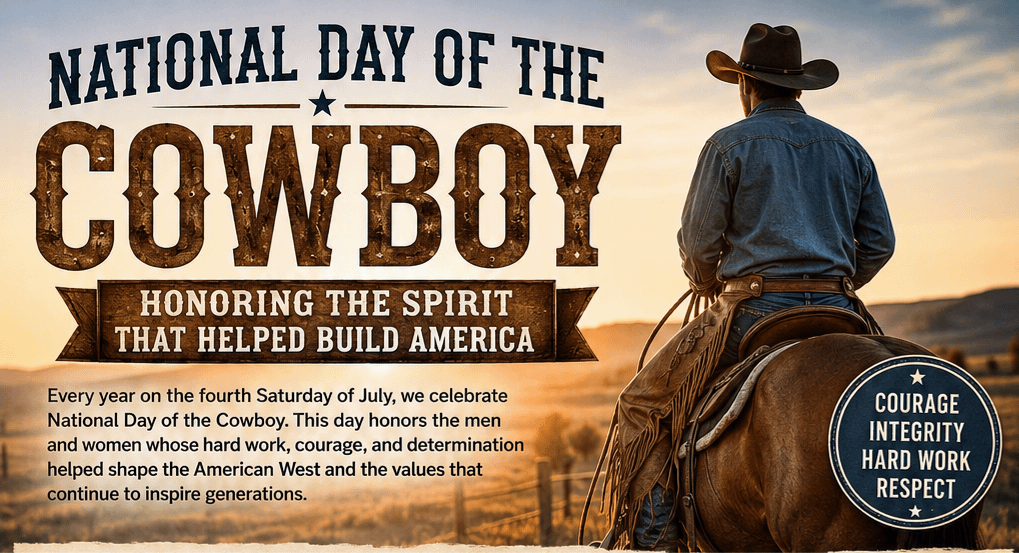
Every year on the fourth Saturday of July, Americans celebrate National Day of the Cowboy, a day dedicated to recognizing the men and women whose hard work, courage, and determination helped shape the American West. More than a celebration of cowboys on horseback, this day honors the enduring values of integrity, resilience, faith, responsibility, and community that continue to inspire generations.
Whether you’re a rancher, a rodeo fan, a lover of Western history, or simply someone who admires the cowboy way of life, National Day of the Cowboy is an opportunity to reflect on one of America’s most recognizable and respected traditions.
The History of National Day of the Cowboy
National Day of the Cowboy was established in 2005 through the efforts of the National Day of the Cowboy Organization, whose mission is to preserve the history, heritage, and culture of the American cowboy.
Although Hollywood often portrayed cowboys as lone gunslingers riding into the sunset, the reality was quite different. Cowboys were hardworking individuals responsible for managing cattle, repairing fences, branding livestock, protecting herds, and surviving some of the harshest environments imaginable.
Following the Civil War, the cattle industry expanded rapidly. Millions of cattle roamed Texas, and demand for beef grew throughout the country. Cowboys drove massive herds hundreds of miles along famous cattle trails like:
- The Chisholm Trail
- The Goodnight-Loving Trail
- The Western Trail
These dangerous cattle drives required incredible endurance. Cowboys faced:
- Extreme weather
- Flash floods
- Stampedes
- River crossings
- Long weeks away from home
- Limited food and supplies
Their determination became a symbol of perseverance that still resonates today.
The Real Cowboy Was More Diverse Than Many Realize
One of the greatest misconceptions about the American cowboy is that they all looked alike.
History tells a different story.
Cowboys came from many backgrounds, including:
- African Americans
- Mexican vaqueros
- Native Americans
- European immigrants
- Women who worked ranches alongside men
In fact, historians estimate that nearly one in four cowboys was African American, while Mexican vaqueros introduced many of the riding techniques, equipment, and ranching traditions still used today.
The cowboy story is truly one of diversity, cooperation, and shared determination.
Cowboy Values That Still Matter Today
Although most people no longer spend their days herding cattle across open plains, the cowboy code continues to influence modern life.
Hard Work
Cowboys understood that success came through consistent effort—not shortcuts.
Showing up every day and doing the job well remains one of life’s greatest lessons.
Responsibility
A cowboy cared for livestock, horses, equipment, and fellow riders.
Others depended on them.
Responsibility meant doing what needed to be done, even when nobody was watching.
Integrity
A handshake often served as a contract.
Keeping your word was everything.
The cowboy reputation was built upon honesty and trust.
Courage
Life on the frontier was dangerous.
Cowboys regularly faced situations where courage wasn’t optional.
Real courage wasn’t the absence of fear—it was doing the right thing despite fear.
Respect
Cowboys respected:
- Nature
- Animals
- Fellow workers
- Family
- Their communities
Respect was earned through actions rather than words.
Famous Cowboys in American History
Many real-life cowboys became legendary figures.
Some of the best-known include:
- Wyatt Earp
- Charles Goodnight
- Bill Pickett
- Annie Oakley
- Buffalo Bill Cody
- Tom Threepersons
These individuals helped shape both Western history and American folklore, though many legends have grown larger than life over time.
Cowboys in American Culture
The cowboy became one of America’s most recognizable symbols thanks to:
- Western novels
- Rodeos
- Country music
- Television shows
- Hollywood films
Actors such as John Wayne, Clint Eastwood, and Sam Elliott helped popularize the cowboy image around the world.
Yet beyond entertainment, the cowboy remains a symbol of freedom, independence, grit, and perseverance.
How to Celebrate National Day of the Cowboy
There are many meaningful ways to observe the day.
Visit a Local Rodeo
Experience barrel racing, bull riding, team roping, bronc riding, and steer wrestling while supporting local competitors.
Support Local Ranchers
Purchase beef, leather goods, or handmade Western products from local producers.
Visit a Western Museum
Learn about frontier life, cattle drives, Native American history, and ranching traditions.
Read Western History
Explore biographies of famous cowboys or books about the settlement of the American West.
Watch a Classic Western
Some favorites include:
- True Grit
- The Searchers
- Tombstone
- Open Range
- Lonesome Dove
Wear Western Attire
Dust off your cowboy hat, boots, belt buckle, or denim and celebrate Western heritage with pride.
The Cowboy Spirit Lives On
Today’s cowboys and cowgirls continue to work on ranches across America.
Long before sunrise, they feed livestock, mend fences, care for horses, and work tirelessly to provide food for families nationwide.
Modern ranching may include GPS technology, trucks, and advanced equipment, but the values remain remarkably unchanged.
Hard work still matters.
Character still matters.
Keeping your word still matters.
Why National Day of the Cowboy Matters
In a fast-paced digital world, National Day of the Cowboy reminds us that some values never go out of style.
The cowboy represents:
- Faith in difficult times
- Commitment to family
- Pride in honest work
- Respect for the land
- Service to others
- Perseverance through hardship
These timeless principles continue to inspire people far beyond the ranch.
Final Thoughts
National Day of the Cowboy is more than a tribute to the Old West—it’s a celebration of the enduring spirit that helped build America. The cowboy legacy reminds us that strength is found in humility, courage is shown through action, and true character is revealed by how we treat others and fulfill our responsibilities.
Whether you spend the day at a rodeo, visit a local ranch, enjoy a classic Western, or simply reflect on the values that cowboys embodied, take a moment to appreciate those whose grit and determination left an unforgettable mark on American history.
The cowboy’s trail may stretch into the past, but the lessons of honesty, resilience, and hard work continue to guide the way forward.
Read More Holidays & National Days
Leave a Reply