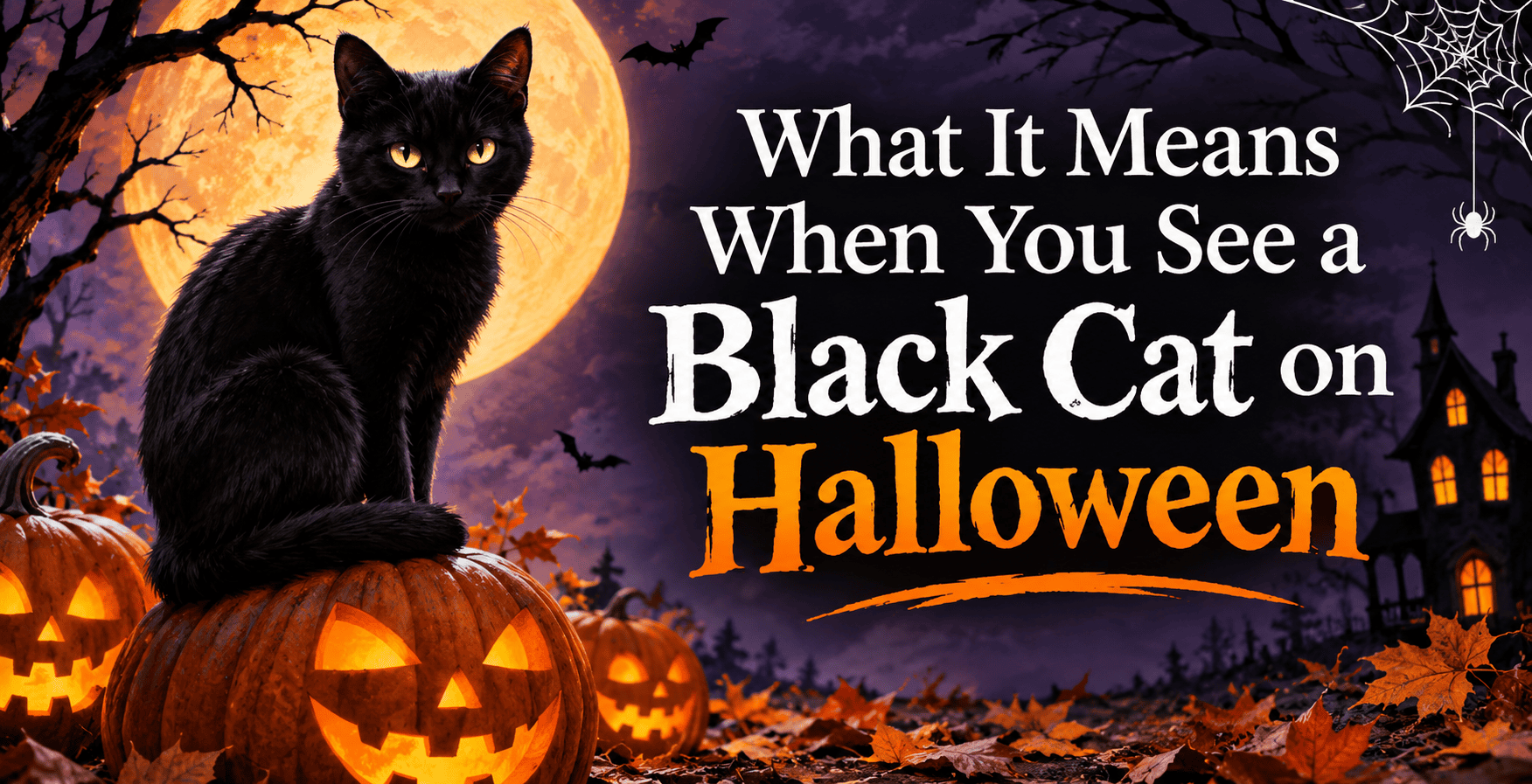
Halloween is a night filled with mystery, superstition, and centuries-old traditions. From glowing jack-o’-lanterns and haunted houses to witches flying across the moon, certain symbols have become inseparable from October 31. Among the most recognizable is the black cat, an animal surrounded by fascinating legends and conflicting beliefs.
But what does it actually mean when you see a black cat on Halloween?
For some people, spotting a black cat on Halloween is considered a warning of bad luck or an encounter with supernatural forces. For others, it represents good fortune, protection, prosperity, or even a positive change approaching in life.
The meaning depends largely on cultural traditions, historical beliefs, and personal interpretations.
The truth is that black cats have been misunderstood for centuries. Their mysterious reputation has less to do with the animals themselves and more to do with the stories humans have created about them.
Let’s explore the history, symbolism, folklore, and surprising meanings behind seeing a black cat on Halloween.
Why Are Black Cats Associated With Halloween?
Black cats became associated with Halloween through centuries of European folklore involving witchcraft, magic, spirits, and the supernatural.
During the Middle Ages and early modern period, certain European communities believed witches possessed magical abilities that allowed them to communicate with animals or transform into them.
Black cats became particularly connected to these stories because of their dark coloring, quiet movements, and ability to navigate dimly lit surroundings.
In some traditions, people believed witches could disguise themselves as black cats to travel unnoticed.
Other legends suggested that black cats served as witches’ familiars, supernatural companions believed to assist with magical practices.
These stories contributed to the association between black cats and witchcraft.
As Halloween celebrations developed and became increasingly popular in America, images of black cats appeared alongside witches, pumpkins, ghosts, and bats.
By the late nineteenth and early twentieth centuries, black cats were common features of Halloween postcards, decorations, and seasonal illustrations.
Today, the silhouette of a black cat with an arched back remains one of Halloween’s most recognizable symbols.
1. Seeing a Black Cat on Halloween Can Symbolize Good Luck
Although black cats are frequently associated with bad luck in American superstition, many cultures have traditionally viewed them as symbols of good fortune.
In parts of Britain, black cats have been associated with prosperity and happiness.
Scottish folklore includes the belief that a strange black cat appearing at someone’s home may signal approaching prosperity.
In Japan, black cats have also been regarded positively in certain traditions, including beliefs connecting them with romantic good fortune.
Because of these traditions, some people interpret seeing a black cat on Halloween as a fortunate encounter.
Rather than assuming something unpleasant is about to happen, they view the experience as a reminder that unexpected blessings can appear when least expected.
Folklore meaning: Good fortune, prosperity, happiness, or positive opportunities may be approaching.
These interpretations are cultural beliefs rather than predictions of actual future events.
2. A Black Cat Crossing Your Path May Have Different Meanings
One of the most familiar superstitions involves a black cat crossing directly in front of someone.
In American folklore, this encounter is often described as a sign of bad luck.
However, the superstition is far from universal.
In some British traditions, black cats have been considered lucky, while other regional beliefs distinguish between the direction a cat travels.
Some people historically believed that the direction of the crossing determined whether the encounter represented good or bad fortune.
The variation demonstrates something important about superstition: the same event can carry completely different meanings depending on where the story originated.
If a black cat crosses your path on Halloween, there is no evidence that the encounter predicts anything about your future.
It is simply a cat going somewhere.
Still, the experience can feel especially memorable on a night already associated with mystery and unusual happenings.
3. Seeing a Black Cat May Represent Mystery and the Unknown
Black cats have long symbolized mystery because their appearance naturally connects them with darkness and nighttime.
Their dark coats can make them difficult to see in shadows, and their reflective eyes can appear especially striking after sunset.
These characteristics helped inspire supernatural stories.
Halloween itself developed around traditions connected to seasonal change, death, remembrance, and the mysterious.
In modern symbolic interpretations, encountering a black cat on Halloween may represent curiosity about the unknown.
It can encourage someone to question assumptions, explore unfamiliar ideas, or recognize that appearances do not always reveal the truth.
Symbolic meaning: Mystery, curiosity, intuition, and the willingness to explore unfamiliar possibilities.
Rather than something frightening, mystery can represent an opportunity to discover something new.
4. Black Cats Were Once Believed to Offer Protection
Not every historical superstition portrayed black cats as threatening.
In some traditions, black cats were considered protective animals.
Sailors and their families sometimes regarded black cats as lucky companions.
Cats were also valuable aboard ships because they helped control rodents that threatened food supplies and cargo.
Over time, practical appreciation and superstition became intertwined.
Some sailors believed that having a black cat aboard a ship could bring favorable conditions or protect the crew from misfortune.
These beliefs helped establish a very different reputation from the frightening stories associated with witchcraft.
For someone who enjoys traditional symbolism, seeing a black cat on Halloween can therefore represent protection rather than danger.
It is an interesting reminder that animals once feared in one community could be welcomed and celebrated in another.
5. A Black Cat on Halloween Can Symbolize Transformation
Halloween occurs during a season of noticeable change.
Leaves fall, temperatures cool, daylight decreases, and the natural world prepares for winter.
Because of this seasonal transition, Halloween is often symbolically associated with endings, beginnings, and transformation.
Black cats sometimes appear in modern spiritual interpretations as symbols of independence, adaptability, and personal change.
Seeing one on Halloween may inspire someone to reflect on changes happening in their own life.
Perhaps they are beginning a new chapter, reconsidering an important decision, or moving away from something that no longer serves them.
The encounter does not predict transformation, but it can become a meaningful personal reminder.
Symbolic meaning: Change, independence, personal growth, and new beginnings.
Sometimes the meaning we find in an ordinary moment comes from the thoughts it inspires rather than from the event itself.
6. Why Did People Once Fear Black Cats?
To understand the superstition, it helps to examine the historical fear surrounding witchcraft.
During periods of witch trials and religious persecution in Europe, accusations of witchcraft sometimes included claims about relationships between people and animals.
Cats appeared in various stories involving supposed magical practices.
Black cats became especially vulnerable to suspicion because their appearance was associated with darkness.
In some communities, encountering a black cat could be interpreted as evidence that a witch was nearby.
Other stories suggested that witches could take the shape of cats.
These beliefs contributed to fear and mistreatment of both animals and people accused of witchcraft.
However, the historical relationship between cats and superstition was complicated. Cats were also valued for controlling pests, providing companionship, and protecting food stores.
The idea that everyone in medieval Europe feared black cats is an oversimplification.
Beliefs varied considerably by region, community, and historical period.
Today, there is no scientific basis for believing that a black cat possesses supernatural powers or brings misfortune.
7. What Does It Mean if a Black Cat Appears at Your Door on Halloween?
A black cat appearing outside someone’s home on Halloween might seem like a scene from a spooky movie.
However, traditional interpretations vary.
In Scottish folklore, an unfamiliar black cat arriving at a home has sometimes been associated with prosperity.
Other interpretations connect visiting cats with hospitality, comfort, or unexpected companionship.
From a practical perspective, a cat may approach a house because it smells food, recognizes a familiar person, seeks shelter, or simply enjoys exploring.
Halloween can also create unusual conditions for neighborhood animals.
Open doors, outdoor decorations, visitors, and increased activity may attract curious cats or frighten them away from familiar areas.
If a black cat appears at your door, the best response is to consider its safety.
A friendly cat may belong to a neighbor, while a frightened cat may need a quiet space away from Halloween crowds.
There is no reason to interpret its arrival as a warning of danger.
8. Are Black Cats Connected to Spirits on Halloween?
Some modern Halloween stories connect black cats with ghosts, spirits, and the supernatural.
This association draws partly from older beliefs about witchcraft and partly from traditions surrounding Halloween itself.
Halloween has historical connections to Samhain, a Gaelic seasonal festival marking the transition toward winter.
Some accounts of Samhain describe beliefs involving the closeness of the human world and the Otherworld.
Over time, Halloween accumulated additional traditions involving spirits, the dead, and supernatural encounters.
Black cats became part of this imagery through their separate associations with witches and magic.
However, there is no reliable evidence that black cats can detect spirits, communicate with the dead, or predict supernatural activity.
Their excellent hearing, sensitive whiskers, and ability to notice subtle movements can sometimes make their behavior seem mysterious.
A cat staring into a dark corner may simply be watching an insect or listening to a sound that a person cannot easily detect.
9. Why Are Black Cats Considered Lucky in Some Cultures?
The contrasting reputations of black cats reveal how cultural traditions shape the meanings assigned to animals.
In Japan, black cats have sometimes been associated with good fortune and romantic opportunities.
In Scotland, the appearance of an unfamiliar black cat near a home has been linked to prosperity.
British maritime folklore also includes traditions in which black cats were considered fortunate companions for sailors.
Meanwhile, certain European and American superstitions portray black cats crossing someone’s path as an unlucky event.
These examples demonstrate that black cats have never had one universal meaning.
Their reputation changes according to the traditions of the people telling the stories.
The same animal can symbolize protection, prosperity, fear, mystery, or independence.
That makes the black cat one of the most interesting examples of how folklore evolves across cultures.
10. What Does Seeing Two Black Cats on Halloween Mean?
Seeing two black cats together on Halloween may seem especially unusual.
Some modern interpretations associate pairs of black cats with companionship, balance, or doubled good fortune.
However, there is no widely established historical superstition that gives two black cats a single, universally recognized meaning.
Many claims about the significance of seeing two or three black cats are modern symbolic interpretations rather than documented traditional beliefs.
In reality, cats may travel together because they live in the same household, belong to a neighborhood colony, or have established a friendly relationship.
If you enjoy assigning personal meaning to unusual encounters, seeing two black cats could serve as a reminder of companionship and connection.
But there is no reason to believe that the number of cats determines future luck.
11. Why Do Black Cats Appear in Halloween Decorations?
Black cats became popular Halloween decorations because their distinctive silhouettes are easy to recognize.
An arched black cat with a raised tail creates a dramatic shape against a glowing orange moon.
This image became particularly popular in vintage Halloween artwork.
Early twentieth-century Halloween postcards frequently featured black cats alongside witches, pumpkins, owls, and other seasonal symbols.
The combination of black and orange also became strongly associated with Halloween.
Black suggests nighttime, darkness, and mystery, while orange evokes autumn leaves, pumpkins, and the harvest season.
Together, these colors helped establish the holiday’s familiar visual identity.
Today, black cats appear on costumes, greeting cards, decorations, candy packaging, and seasonal merchandise.
Their presence is now as much about Halloween tradition and visual design as it is about superstition.
12. Are Black Cats Really Unlucky?
No. There is no scientific evidence that black cats cause bad luck.
A cat’s coat color does not determine whether someone will experience success, disappointment, happiness, or misfortune.
Black fur results from genetics and pigmentation, not supernatural influence.
The belief that black cats bring bad luck is an example of superstition passed down through generations.
People sometimes remember unusual events that appear to confirm a belief while overlooking countless occasions when nothing happens.
For example, someone who sees a black cat and later experiences a frustrating day might connect the two events.
But the same person may encounter many black cats without anything unusual occurring.
The association is created by interpretation rather than demonstrated cause and effect.
Black cats are ordinary domestic cats with individual personalities, behaviors, and needs.
They can be affectionate, playful, independent, curious, and loyal companions.
Their color does not make them dangerous or mysterious in any supernatural sense.
13. Why Black Cats Deserve Extra Kindness on Halloween
Although black cats are celebrated in Halloween decorations, the superstitions surrounding them can contribute to unfair treatment.
Some people continue to associate black cats with danger, witchcraft, or misfortune.
These outdated beliefs can influence how animals are perceived.
Halloween also presents practical risks for pets of every color.
Frequent doorbell ringing, unfamiliar visitors, loud noises, costumes, and outdoor activity can create stressful conditions.
Cats that normally spend time outside may become frightened or disoriented.
Pet owners can help protect their animals by keeping them safely indoors during busy Halloween celebrations.
Candy and chocolate should remain out of reach, and decorations with strings, electrical cords, or small detachable pieces should be monitored.
It is also important not to disturb unfamiliar cats for photographs, pranks, or Halloween entertainment.
Black cats deserve the same care, respect, and protection as any other animal.
One positive way to celebrate Halloween is to challenge harmful superstitions and encourage responsible pet ownership.
14. What Should You Do if You See a Black Cat on Halloween?
If you encounter a black cat on October 31, there is no need to panic, change your plans, or worry that something unfortunate is about to happen.
You can simply appreciate the experience.
If the cat appears friendly, observe it respectfully without forcing interaction.
If it seems frightened, give it space.
If it appears injured or in immediate danger, contact an appropriate local animal rescue organization or animal control service.
And if you enjoy Halloween folklore, you can choose to see the encounter as a charming reminder of the holiday’s history.
For some, a black cat represents good fortune.
For others, it represents mystery or independence.
For many animal lovers, it represents nothing more complicated than a beautiful cat enjoying its surroundings.
There is no single interpretation that everyone must accept.
15. The Deeper Meaning Behind Black Cat Superstitions
Perhaps the most interesting lesson behind black cat folklore has little to do with luck.
It concerns how easily appearances can influence judgment.
For centuries, black cats have been praised in some places and feared in others.
Yet the animals themselves have not changed.
What changed was the meaning people assigned to them.
This offers a broader lesson about assumptions and misunderstanding.
Something unfamiliar does not have to be dangerous.
Something associated with darkness does not have to represent evil.
And something that has been feared for generations may deserve a closer, kinder examination.
Halloween provides an opportunity to enjoy mysterious stories while recognizing the difference between folklore and reality.
Black cats remind us that the unknown can inspire curiosity rather than fear.
Frequently Asked Questions About Seeing a Black Cat on Halloween
Is seeing a black cat on Halloween good luck or bad luck?
It depends on cultural tradition. Some superstitions associate black cats with bad luck, while others consider them symbols of prosperity, protection, and good fortune. There is no evidence that encountering one affects future events.
What does it mean when a black cat crosses in front of you on Halloween?
In some American and European folklore, a black cat crossing your path is considered unlucky. Other traditions view black cats positively. In reality, the cat is simply moving through its environment.
Is it lucky if a black cat comes to your house on Halloween?
Certain Scottish traditions associate an unfamiliar black cat arriving at a home with prosperity. However, the appearance of a cat does not predict wealth or future luck.
Are black cats associated with witches?
Yes. European folklore connected black cats with witches, magical transformations, and supernatural familiars. These beliefs helped establish the modern Halloween association.
Do black cats have spiritual powers?
There is no scientific evidence that black cats possess supernatural abilities. Their behavior can sometimes appear mysterious because cats have highly developed senses and are naturally observant animals.
Why are black cats so popular at Halloween?
Their historical connections with witchcraft, their distinctive silhouettes, and their appearance in vintage Halloween artwork made black cats enduring holiday symbols.
Should you be afraid of a black cat on Halloween?
No. Black cats are no more inherently dangerous than cats of other colors. Their behavior depends on factors such as temperament, health, socialization, and circumstances rather than superstition.
Final Thoughts: What Does It Really Mean When You See a Black Cat on Halloween?
Seeing a black cat on Halloween can mean many different things depending on the traditions and stories you grew up hearing.
In some cultures, it symbolizes good luck, prosperity, and protection.
In others, it has historically been associated with witchcraft, mystery, and misfortune.
But beneath these legends is a much simpler truth.
A black cat is not a warning of something terrible about to happen. It is not responsible for bad luck, and it does not possess the power to change someone’s future.
It is an animal that has carried the weight of human imagination for hundreds of years.
Perhaps that is what makes black cats such fitting symbols of Halloween. They remind us of a time when people explained the unknown through stories, legends, and supernatural beliefs.
And they remind us that what appears mysterious is not necessarily something to fear.
So, if you happen to see a black cat walking beneath the moonlight this Halloween, consider yourself fortunate to witness one of the holiday’s most iconic living symbols.
Instead of worrying about bad luck, appreciate the beauty, history, and mystery surrounding the encounter.
Because sometimes a black cat crossing your path is not a sign of anything supernatural. Sometimes it is simply a beautiful creature reminding us that not everything mysterious needs to be feared.
What have you always believed about black cats? Do you consider them lucky, unlucky, or simply misunderstood?

Leave a Reply