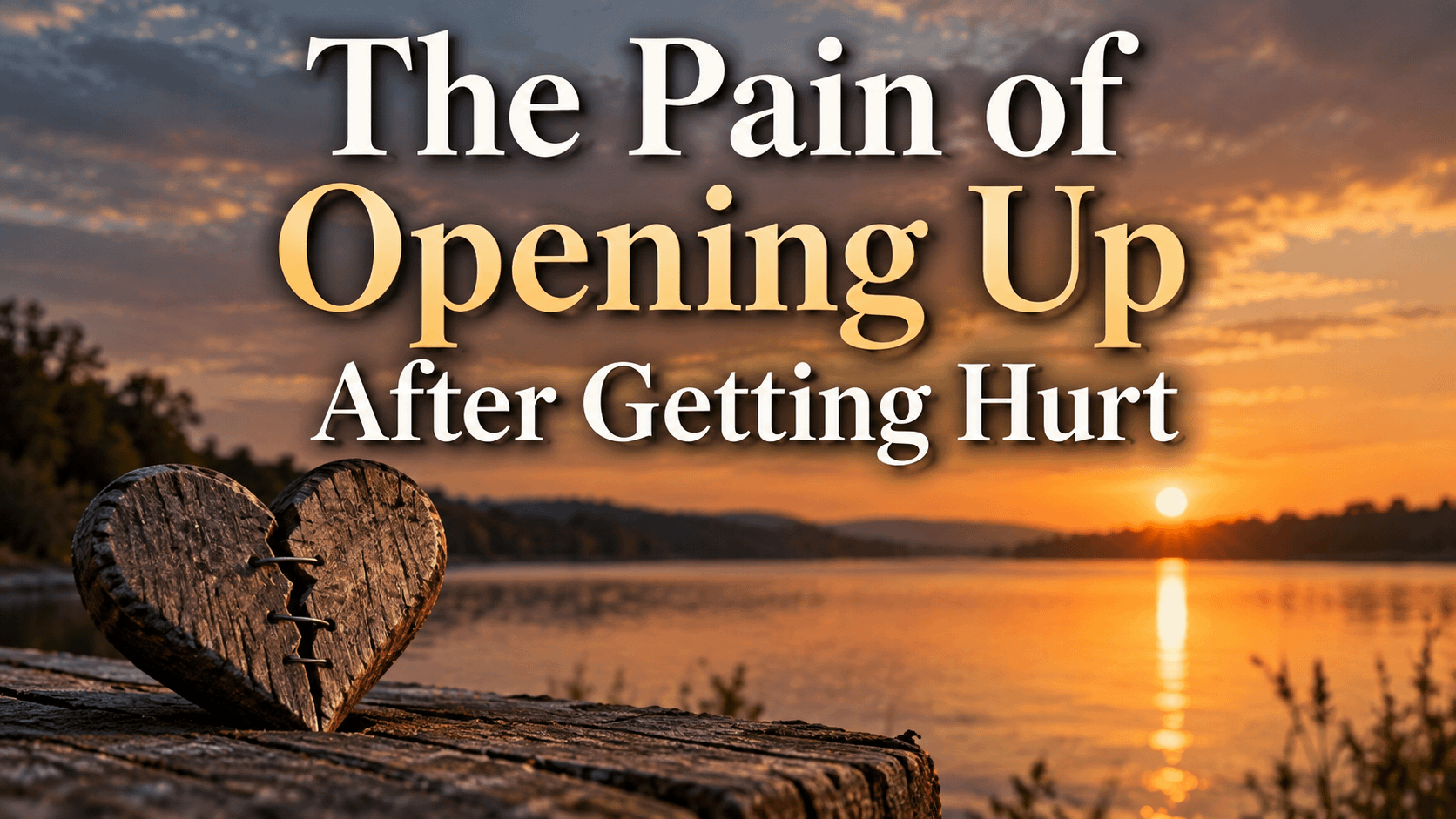
Opening your heart to someone can be one of the most beautiful parts of life. It can also be one of the most frightening—especially when you already know what it feels like to have that heart broken.
Once you’ve been deeply hurt, love doesn’t feel quite as simple anymore.
You may still want companionship. You may still want someone to talk to at the end of the day. You may still miss having someone beside you, someone who knows the real you, someone you can laugh with, trust, hold, and build a life with.
But wanting love and being ready to become vulnerable again aren’t always the same thing.
Sometimes your heart whispers, “I want to love again,” while another part of you warns, “Remember what happened last time.”
That is the painful reality of opening up after you’ve been hurt.
When Trust Has Been Broken
Trust is one of those things we often don’t fully appreciate until someone destroys it.
Before you’ve been seriously hurt, you might give someone the benefit of the doubt. You believe their words. You assume their intentions are good. You don’t analyze every delayed text message, every change in tone, or every unusual behavior.
Then someone betrays you.
Maybe they cheated.
Maybe they lied repeatedly.
Maybe they abandoned you when you needed them most.
Maybe they manipulated your feelings, made promises they never intended to keep, or slowly convinced you that your feelings didn’t matter.
Maybe you gave someone everything you had emotionally, only to discover they didn’t value your heart the way you valued theirs.
Whatever happened, you learned something you never wanted to learn:
Someone you love can hurt you deeply.
And once you learn that lesson, it’s difficult to forget.
The Next Person Isn’t Fighting Only for Your Love
This is something people don’t always understand.
When someone new enters your life after you’ve been hurt, they’re not starting with a completely blank page.
Your past comes with you.
Not because you’re intentionally holding onto it, but because experiences shape how we protect ourselves.
Someone might genuinely care about you, yet you still hesitate.
They say, “You can trust me.”
You’ve heard that before.
They say, “I’m not going anywhere.”
You’ve heard that before too.
They tell you how important you are.
And somewhere inside you, there’s a voice asking:
“But will you still feel that way tomorrow?”
That’s what heartbreak can do.
It can make sincere affection feel suspicious.
It can make consistency feel temporary.
It can make happiness frightening because you’ve learned how quickly happiness can disappear.
You Start Looking for Warning Signs
After you’ve been hurt, you sometimes become an investigator in your own relationship.
You’re looking for changes.
You’re listening to tone.
You’re noticing how long messages take to receive a response.
You’re wondering why something feels slightly different today than yesterday.
A simple misunderstanding can suddenly feel like the beginning of something terrible.
You might find yourself thinking:
“Here we go again.”
But nothing may actually be happening.
Your heart simply remembers.
That’s one of the hardest things about emotional wounds: the situation can change long before your instincts do.
Your mind understands that this is a different person.
Your heart may need considerably longer to believe it.
You Want to Say How You Feel—but You’re Afraid
There are moments when you want to tell someone exactly what they mean to you.
The words are right there.
You want to say:
“I care about you.”
“I miss you.”
“You make me happy.”
Maybe even:
“I’m falling in love with you.”
But then fear steps in.
What if they don’t feel the same?
What if telling them changes everything?
What if they eventually use your vulnerability against you?
What if you finally let yourself believe in love again—and lose it?
So instead of saying everything you’re feeling, you say a fraction of it.
You hold back.
You pretend something doesn’t matter when it actually matters tremendously.
You tell yourself you’re just being careful.
Sometimes you are.
But sometimes you’re hiding.
And there is a difference.
Protecting Yourself Can Become a Prison
Building emotional walls after heartbreak makes sense.
Walls can protect us.
But walls don’t have doors unless we put them there.
If nobody can get close enough to hurt you, nobody can get close enough to truly love you either.
That’s the difficult tradeoff.
You can protect yourself from rejection, but you may also protect yourself from connection.
You can avoid heartbreak, but you may also avoid intimacy.
You can keep everyone at a safe distance, but eventually that distance can become loneliness.
Healing isn’t necessarily about tearing every wall down overnight.
It’s about learning when it’s safe to build a door.
Opening Up Doesn’t Mean Telling Someone Everything Immediately
There is another extreme worth avoiding.
Being vulnerable doesn’t mean you have to reveal every painful part of your history on the first date.
You don’t owe someone immediate access to every scar you carry.
Trust can be earned gradually.
Tell them something small and see how they handle it.
Share something meaningful and notice whether they listen.
Set a boundary and watch whether they respect it.
Tell them something you’re afraid to admit and notice whether they treat your vulnerability with kindness.
Trust isn’t built through one giant emotional confession.
It’s usually built through hundreds of small moments.
Someone says they’ll call—and they call.
They promise to show up—and they show up.
You tell them something personal—and they protect it.
You disagree—and they remain respectful.
You have a difficult day—and they don’t disappear.
Those moments slowly teach your heart:
“Maybe I’m safe here.”
Don’t Punish Someone New for Someone Else’s Mistakes
This can be difficult to hear when you’ve been hurt, but it’s important.
The person standing in front of you today shouldn’t automatically have to pay the emotional debt created by someone from your past.
Caution is understandable.
Boundaries are healthy.
Paying attention to warning signs is wise.
But assuming betrayal before it happens can destroy something good before it has the opportunity to grow.
There is a difference between recognizing patterns and expecting history to repeat itself.
Someone new deserves the opportunity to show you who they are.
And you deserve the opportunity to discover that your future doesn’t have to look like your past.
Actions Matter More Than Promises
If opening up scares you, don’t force yourself to believe someone’s words immediately.
Watch their actions.
Anyone can say:
“I care about you.”
“I’ll never hurt you.”
“You can trust me.”
“I’m different.”
Words matter, but consistency gives those words meaning.
Pay attention to how someone treats you when things aren’t perfect.
How do they respond when you’re struggling?
How do they handle disagreements?
Do they respect your boundaries?
Can they admit when they’re wrong?
Do they communicate instead of disappearing?
Do their actions consistently match what they’re telling you?
You don’t have to hand someone your entire heart because they made a beautiful promise.
Let trust grow from evidence.
Vulnerability Is Not Weakness
Many people, especially those who have spent years surviving difficult experiences, begin believing that showing emotion makes them weak.
So they become good at saying:
“I’m fine.”
“I don’t care.”
“It doesn’t bother me.”
“I can handle it.”
Sometimes those statements are true.
Sometimes they’re armor.
There is tremendous strength in being able to look at someone and say:
“I care about you, and that scares me.”
Because now you’re being seen.
You aren’t hiding behind indifference.
You’re acknowledging that this person matters enough to have an effect on your heart.
That’s vulnerability.
And vulnerability requires courage.
You May Never Feel Completely Ready
People sometimes believe they’ll eventually reach a point where all fear disappears.
Maybe it won’t.
There may never be a magical morning when you wake up and think:
“I’m completely healed. Nothing scares me anymore. I’m ready to love without hesitation.”
Healing rarely works that neatly.
You may still have scars.
You may still remember what happened.
Certain situations may still trigger old fears.
But being ready for love doesn’t necessarily mean being fearless.
Sometimes it simply means fear no longer gets to make every decision for you.
You can be afraid and still take one small step forward.
You can be cautious and still let someone know you care.
You can remember what happened and still believe something different might happen this time.
The Right Person Won’t Rush Your Heart
Someone who genuinely cares about you should understand that trust takes time.
They shouldn’t pressure you into revealing things you’re not ready to discuss.
They shouldn’t mock your fears.
They shouldn’t intentionally trigger your insecurities.
They shouldn’t demand trust they haven’t earned.
Instead, they’ll give you something much more valuable than promises:
consistency.
They’ll keep showing up.
They’ll communicate.
They’ll respect your boundaries.
They’ll understand that your hesitation isn’t necessarily rejection.
And eventually, their behavior may become louder than the memories you’re carrying.
Tell Them You’re Afraid
Sometimes the most powerful thing you can do is simply admit the truth.
You don’t have to pretend you’re fearless.
You might say:
“I really like where this is going, but I’ve been hurt before, and opening up isn’t easy for me.”
That one sentence can change everything.
You’re not blaming them.
You’re not asking them to repair damage they didn’t cause.
You’re simply allowing them to understand you.
And if someone responds to that honesty with patience, compassion, and respect, you’ve learned something important about them.
If they respond with pressure, anger, ridicule, or manipulation, you’ve learned something important too.
Either way, honesty reveals things hiding cannot.
Don’t Let the Person Who Hurt You Control Your Future
There is one final truth worth remembering.
If someone hurt you badly enough that you’re afraid to love again, don’t give them permanent control over what happens next.
They already took enough from you.
They don’t deserve to decide whether you experience love again.
They don’t deserve to determine whether you trust again.
They don’t deserve to keep your heart locked away years after they’re gone.
Healing doesn’t mean pretending the past didn’t happen.
It means refusing to allow what happened yesterday to control every tomorrow.
The scars may remain.
The memories may remain.
Some fear may remain.
But so does your ability to love.
Love Tip of the Day
Don’t force yourself to open your heart before you’re ready—but don’t keep it closed forever because someone once treated it carelessly.
Take your time.
Pay attention to actions.
Set healthy boundaries.
Communicate honestly.
Let trust develop naturally.
And when you meet someone who consistently shows you that your feelings are safe with them, allow yourself to open the door a little wider.
You don’t have to give them everything at once.
Just give them the opportunity to prove that they’re not the person who hurt you.
Because one of the greatest tragedies of heartbreak would be allowing someone from your past to prevent someone genuine from loving you in your future.
Have you ever wanted to open your heart to someone new but found yourself afraid because of what happened the last time you trusted someone?