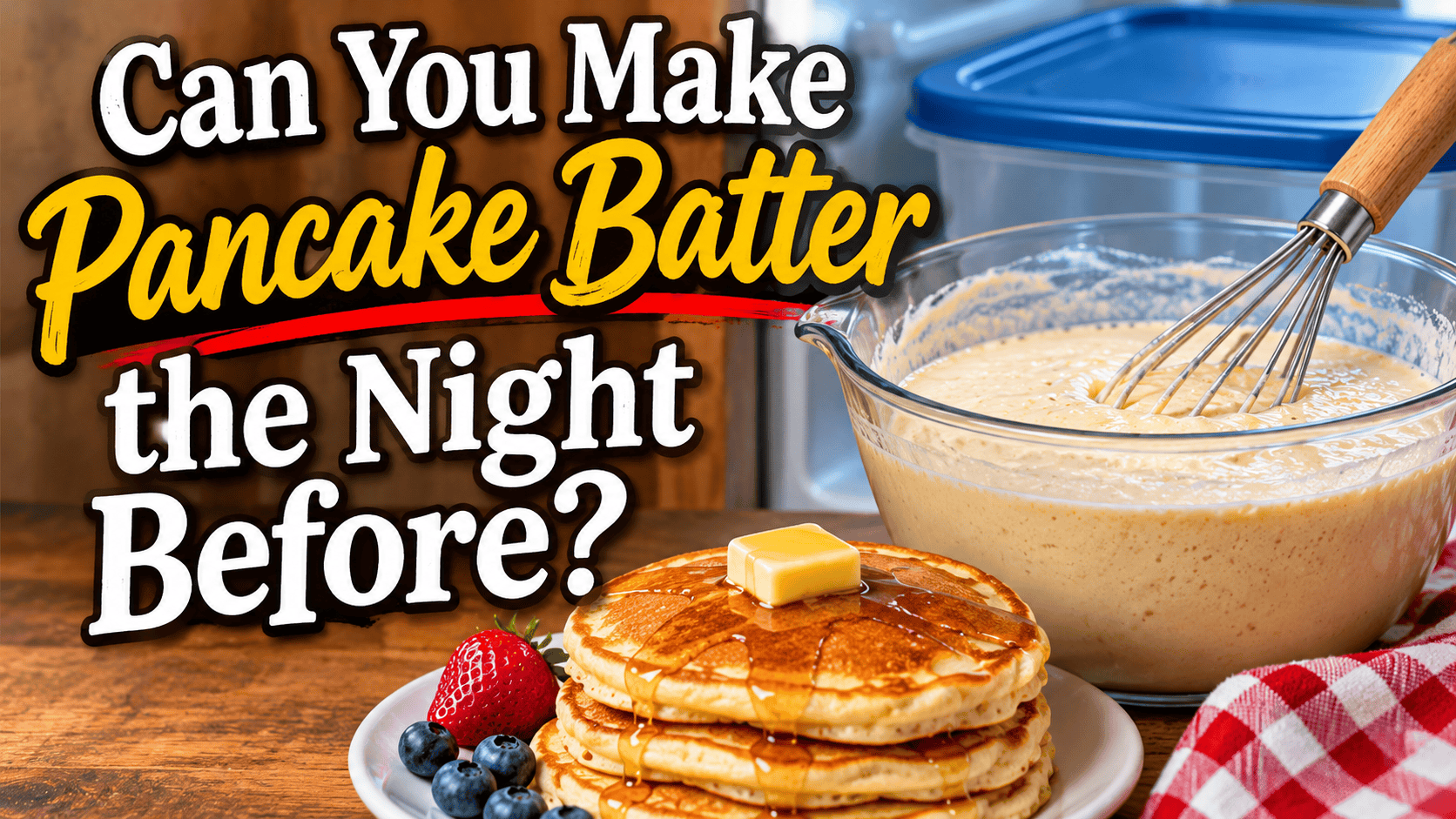
Pancakes are one of the most comforting breakfast foods, but preparing everything from scratch in the morning can feel like a lot of work. Whether you are feeding a busy family, planning a weekend brunch, or simply trying to make your mornings easier, you might wonder: Can you make pancake batter the night before?
Yes, you can make pancake batter the night before and store it in the refrigerator. However, the results depend on the ingredients in your recipe, how you store the batter, and whether you take a few extra steps to preserve its texture.
Some pancake batters hold up beautifully overnight, while others lose some of their rising power and produce flatter pancakes.
Understanding what happens to pancake batter while it rests can help you prepare delicious, fluffy pancakes without spending your entire morning mixing ingredients.
Is It Okay to Make Pancake Batter the Night Before?
Making pancake batter ahead of time is generally safe and convenient when you refrigerate it properly.
Most traditional pancake batters contain flour, milk, eggs, baking powder, sugar, and butter or oil. These ingredients can be combined and refrigerated overnight, provided the batter is stored in a covered container at 40°F or below.
However, pancake batter changes as it sits.
When flour absorbs moisture, the batter becomes more hydrated. This can improve the texture of some pancakes, making them tender and evenly cooked.
At the same time, baking powder and baking soda begin reacting when they come into contact with liquid ingredients.
If too much of their leavening power is used up before cooking, the pancakes may not rise as much as they would with freshly prepared batter.
The good news is that you can avoid many of these problems with a few simple adjustments.
What Happens When Pancake Batter Sits Overnight?
Several changes occur when pancake batter rests in the refrigerator.
1. The Flour Absorbs More Liquid
Flour needs time to absorb moisture from milk, eggs, and other liquid ingredients.
When pancake batter rests, the flour becomes more fully hydrated.
This can create a smoother consistency and help pancakes cook more evenly.
However, the batter may also become noticeably thicker overnight.
If that happens, you can add a small amount of milk before cooking.
2. Baking Powder Begins Losing Some of Its Effectiveness
Baking powder creates gas bubbles that help pancakes rise.
Most baking powders sold in grocery stores are double-acting, meaning they produce gas when mixed with liquid and again when heated.
When batter sits overnight, some of the initial gas bubbles escape.
Although double-acting baking powder can still provide lift during cooking, refrigerated batter may produce slightly less fluffy pancakes.
3. Baking Soda Reacts With Acidic Ingredients
Recipes containing buttermilk, yogurt, or sour cream often use baking soda.
Baking soda reacts quickly with acidic ingredients, producing carbon dioxide.
Much of this reaction happens shortly after the ingredients are combined.
If the batter rests overnight, the resulting pancakes may have less lift.
4. The Batter May Become Thicker
As flour continues absorbing moisture, pancake batter can become thicker.
This is normal and does not necessarily mean the batter has gone bad.
Adding milk one tablespoon at a time can help restore the desired consistency.
Avoid adding too much liquid, since thin batter can spread excessively across the griddle.
How to Store Pancake Batter Overnight
Proper storage is essential for maintaining freshness, flavor, and food safety.
Follow these simple steps.
Step 1: Prepare the Pancake Batter
Mix your pancake ingredients according to your recipe.
Avoid overmixing. A few small lumps are perfectly normal.
Overmixing develops gluten, which can make pancakes tough or chewy.
Step 2: Transfer the Batter to an Airtight Container
Place the batter in a clean container with a secure lid.
A glass or food-safe plastic container works well.
Choose a container with enough extra space to accommodate slight expansion.
Step 3: Refrigerate Immediately
Place the covered batter in the refrigerator at 40°F or below.
Do not leave pancake batter containing milk or eggs sitting on the counter overnight.
Refrigerate it promptly, within two hours of preparation, or within one hour if the surrounding temperature is above 90°F.
Step 4: Use the Batter the Following Morning
For the best texture and rising ability, use refrigerated pancake batter within approximately 24 hours.
Some recipes may remain safe longer under proper refrigeration, but overnight storage is the most reliable approach for maintaining quality.
Step 5: Adjust the Consistency Before Cooking
Remove the batter from the refrigerator when you are ready to cook.
If it has thickened, gently fold in a tablespoon or two of milk.
Avoid vigorous stirring because it can knock out remaining air bubbles and develop additional gluten.
Cook the batter promptly rather than leaving it at room temperature to warm up.
How to Keep Overnight Pancake Batter Fluffy
The biggest concern with preparing pancake batter ahead of time is losing the light, fluffy texture that makes homemade pancakes so delicious.
Fortunately, several techniques can help.
Add Baking Powder in the Morning
One of the most effective methods is to reserve the baking powder until just before cooking.
Prepare the remaining ingredients the night before, then gently incorporate the baking powder in the morning.
For the most even distribution, however, it is often easier to keep all dry ingredients separate until cooking time.
This prevents the leavening ingredients from reacting prematurely.
Use Double-Acting Baking Powder
Double-acting baking powder provides an additional rise when heated.
Although some leavening activity occurs during overnight storage, the heat-activated reaction can still help the pancakes rise.
This makes it a better choice for overnight batter than relying entirely on baking soda.
Avoid Overmixing
Overmixing pancake batter can make pancakes dense and rubbery.
Mix only until the ingredients are combined.
Small lumps are normal and usually disappear during cooking.
Cook at the Right Temperature
A properly heated griddle helps pancakes rise and develop golden-brown surfaces.
For most pancakes, a griddle temperature around 350°F works well.
If the surface is too hot, the outside may burn before the center cooks.
If it is too cool, pancakes may spread and cook unevenly.
Is It Better to Refrigerate Pancake Batter or Dry Ingredients Separately?
Although overnight pancake batter is convenient, storing the dry and wet ingredients separately often produces better results.
This approach is particularly helpful when using baking soda or recipes that depend on freshly activated leavening agents.
Prepare the dry ingredients in one container and refrigerate the wet ingredients in another.
In the morning, combine the two mixtures and cook immediately.
This takes only a few extra minutes while preserving more of the batter’s rising power.
Here is a simple comparison.
| Preparation Method | Convenience | Expected Pancake Texture |
|---|---|---|
| Fully mixed overnight batter | Very high | Tender, sometimes less fluffy |
| Dry and wet ingredients stored separately | High | Light and fluffy |
| Freshly prepared batter | Moderate | Light and fluffy |
| Overnight yeast pancake batter | High | Airy, with developed flavor |
For anyone who wants the fluffiest possible pancakes, preparing the ingredients separately the night before is usually the best option.
Best Overnight Pancake Batter Recipe
If you want to prepare pancakes ahead of time, this simple recipe uses common ingredients and works well for a convenient morning breakfast.
Ingredients
-
1½ cups all-purpose flour
-
2 tablespoons granulated sugar
-
2 teaspoons double-acting baking powder
-
½ teaspoon salt
-
1¼ cups milk
-
1 large egg
-
3 tablespoons melted butter, cooled slightly
-
1 teaspoon vanilla extract
Instructions
The Night Before
-
In a medium bowl, combine the flour, sugar, baking powder, and salt.
-
Cover the dry ingredients and store them in a cool, dry location.
-
In a separate container, whisk together the milk, egg, melted butter, and vanilla extract.
-
Cover the wet ingredients and refrigerate overnight.
The Next Morning
-
Preheat a nonstick skillet or griddle to medium heat, approximately 350°F.
-
Pour the refrigerated wet ingredients into the dry ingredients.
-
Gently mix until just combined. Small lumps are fine.
-
Lightly grease the cooking surface with butter or oil.
-
Pour approximately ¼ cup of batter onto the griddle for each pancake.
-
Cook until bubbles appear on the surface and the edges begin to look set, approximately 2–3 minutes.
-
Flip and cook for another 1–2 minutes, or until golden brown and cooked through.
-
Serve immediately with your favorite toppings.
This method gives you the convenience of overnight preparation without sacrificing the rising power of your baking powder.
Can You Fully Mix This Recipe the Night Before?
Yes.
If you prefer to have the batter completely ready in the morning, combine all the ingredients the night before and refrigerate in an airtight container.
The pancakes may be slightly less fluffy, but they should still taste delicious.
Gently adjust the thickness with milk if necessary before cooking.
Can You Make Buttermilk Pancake Batter the Night Before?
Yes, but buttermilk pancake batter requires a little extra attention.
Buttermilk is acidic, and many traditional buttermilk pancake recipes contain baking soda.
When baking soda comes into contact with buttermilk, the ingredients react immediately.
This reaction creates gas bubbles that make pancakes rise.
Unfortunately, much of that gas can escape while the batter sits overnight.
As a result, fully mixed buttermilk pancake batter may produce flatter pancakes.
For better results, combine the dry ingredients separately and refrigerate the buttermilk, eggs, and melted butter together.
Mix everything just before cooking.
This allows the baking soda to react at the right time.
Can You Make Banana Pancake Batter the Night Before?
Banana pancake batter can be prepared ahead of time, but fresh bananas are usually preferable.
Mashed bananas naturally darken when exposed to oxygen.
This process, known as enzymatic browning, can affect the appearance of the batter.
Although browning does not automatically make the batter unsafe, it may change its color and flavor.
For the best results, prepare the basic pancake ingredients ahead of time and mash the banana immediately before cooking.
If you fully prepare banana pancake batter overnight, refrigerate it promptly in an airtight container and use it the following morning.
Can You Make Protein Pancake Batter the Night Before?
Protein pancake batter can often be refrigerated overnight, but the results depend on the ingredients.
Protein powders absorb liquid differently than ordinary flour.
Some protein powders continue thickening the batter as they sit.
This can produce pancakes that are dry, dense, or difficult to spread.
If your protein pancake batter becomes too thick overnight, gently add a small amount of milk or water.
Protein pancakes containing eggs, yogurt, cottage cheese, or milk must be refrigerated properly.
For recipes containing baking powder, preparing the dry and wet ingredients separately may improve the final texture.
Can You Freeze Pancake Batter Instead of Refrigerating It?
Yes, many pancake batters can be frozen for later use.
Freezing is helpful when you want to prepare several breakfasts in advance.
However, the texture and rising ability may change after thawing.
To freeze pancake batter:
-
Prepare the batter according to your recipe.
-
Transfer it to a freezer-safe container or resealable freezer bag.
-
Leave some room for expansion.
-
Label the container with the preparation date.
-
Freeze promptly.
For the best quality, use frozen pancake batter within approximately one to two months.
Thaw it overnight in the refrigerator, never on the countertop.
Once thawed, gently mix the batter if it has separated.
Keep in mind that freezing can affect the performance of baking powder and baking soda.
For maximum convenience and consistent results, freezing already-cooked pancakes is often a better option.
Is It Better to Make Pancakes Ahead of Time Instead of Batter?
If your goal is to save time, preparing and cooking pancakes in advance may be the easiest solution.
Cooked pancakes can be refrigerated or frozen and reheated whenever needed.
Unlike raw pancake batter, fully cooked pancakes do not depend on preserving active leavening ingredients.
They are also easier to portion and store.
How to Refrigerate Cooked Pancakes
Allow freshly cooked pancakes to cool briefly, then refrigerate them promptly in an airtight container.
For best quality, enjoy them within three to four days.
How to Freeze Cooked Pancakes
Arrange cooked pancakes in a single layer on a baking sheet.
Freeze until firm, then transfer them to a freezer-safe bag or container.
Place parchment paper between pancakes if needed to prevent sticking.
For the best flavor and texture, use them within two to three months.
How to Reheat Pancakes
Frozen or refrigerated pancakes can be reheated using a toaster, microwave, oven, or skillet.
For oven reheating, arrange pancakes on a baking sheet and warm them at approximately 350°F until heated through.
Reheat refrigerated leftovers thoroughly to 165°F.
This approach makes busy weekday breakfasts significantly easier.
Common Mistakes When Making Pancake Batter Ahead of Time
Even simple pancake recipes can go wrong when prepared in advance.
Avoid these common mistakes.
Leaving Batter at Room Temperature Overnight
Pancake batter containing eggs or dairy should never be left at room temperature overnight.
Bacteria can multiply rapidly when perishable ingredients are held at unsafe temperatures.
Always refrigerate prepared batter promptly.
Adding Too Much Milk in the Morning
Refrigerated batter may thicken overnight, but adding too much milk can make pancakes thin and flat.
Start with one tablespoon at a time until the batter reaches the desired consistency.
Stirring the Batter Too Much
Vigorous stirring can remove trapped air bubbles and develop gluten.
Both can negatively affect the texture.
Use a gentle folding motion instead.
Using Too Much Baking Powder
Adding extra baking powder may seem like an easy way to compensate for overnight storage.
However, excessive baking powder can create an unpleasant bitter or metallic taste.
It can also cause pancakes to rise rapidly and then collapse.
Follow the recipe’s recommended amount rather than adding large quantities.
Cooking on a Griddle That Is Too Hot
A very hot griddle can brown pancakes before the centers have enough time to cook.
Use moderate heat and adjust as necessary.
How Long Can Pancake Batter Stay in the Refrigerator?
For the best flavor, consistency, and rising ability, plan to use homemade pancake batter within 24 hours.
Properly refrigerated batter may remain safe for longer depending on the ingredients and their freshness, but its quality can decline.
Batters containing fresh fruit, dairy, or other highly perishable ingredients deserve particular care.
If the batter develops mold, unusual discoloration, or an unpleasant odor, discard it.
However, harmful bacteria do not always produce noticeable changes in smell or appearance.
Never taste raw pancake batter to determine whether it is safe. Raw flour and raw eggs can contain harmful microorganisms.
When in doubt about storage conditions, discard the batter.
Frequently Asked Questions
Can I Make Pancake Batter 12 Hours Ahead?
Yes. Preparing pancake batter 12 hours ahead is a convenient option when it is stored properly in the refrigerator. Some loss of rising power is possible, particularly with baking soda-based recipes.
Should You Stir Pancake Batter After Refrigerating It?
Yes, but only gently and when necessary. A few slow folds can help recombine separated ingredients without excessively developing gluten or removing remaining air bubbles.
Why Did My Overnight Pancake Batter Turn Gray?
Some ingredients, particularly bananas or whole-grain flours, can undergo natural color changes. However, gray discoloration can also have other causes. If the change is unexpected or accompanied by signs of spoilage, discard the batter.
Can You Leave Pancake Batter Out Overnight?
No. Batter containing eggs, milk, or other perishable ingredients should not be left at room temperature overnight. Refrigeration is necessary to reduce food safety risks.
Does Refrigerating Pancake Batter Make Pancakes Fluffier?
Not necessarily. Resting allows flour to absorb moisture, which may improve tenderness, but it can also reduce the effectiveness of chemical leavening agents. For the fluffiest pancakes, mixing the wet and dry ingredients shortly before cooking is generally preferable.
Can You Make Pancake Batter Two Days in Advance?
Some refrigerated batters may remain usable for two days, but their rising ability and overall quality can deteriorate. Preparing the ingredients separately is a more reliable option when planning that far ahead.
Can You Store Pancake Batter in a Ziploc Bag?
Yes. A clean, food-safe resealable bag can be used to refrigerate pancake batter. Seal it securely, place it inside another container to prevent leaks, and keep it refrigerated.
Should Pancake Batter Be Cold Before Cooking?
Cold pancake batter can be cooked directly from the refrigerator. There is no need to leave it on the countertop until it reaches room temperature.
The first pancake may take slightly longer to cook, so adjust the heat and cooking time as needed.
Final Thoughts: Can You Make Pancake Batter the Night Before?
Yes, making pancake batter the night before is an easy way to simplify breakfast preparation.
Refrigerating prepared batter overnight can save valuable time, especially when cooking for a family, preparing for a weekend brunch, or planning a busy morning.
However, the type of pancake batter matters.
Traditional batters made with double-acting baking powder generally tolerate overnight refrigeration better than recipes that rely heavily on baking soda.
For the fluffiest pancakes, preparing the wet and dry ingredients separately and combining them immediately before cooking is usually the best approach.
If convenience matters more than achieving maximum fluffiness, fully mixed overnight batter can still produce a delicious breakfast.
The secret is simple: refrigerate the batter properly, avoid overmixing, and cook it on a well-heated griddle.
With a little planning, you can wake up knowing that a warm stack of homemade pancakes is only minutes away.
Leave a Reply